Review: When the Church Harms God’s People

When the Church Harms God’s People

By Diane Langberg (Brazos Press)

“A body that does not follow its head is a very sick body.” Diane Langberg initially made that observation while watching her once-athletic father struggle with the effects of Parkinson’s. Later, as she counseled victims of sexual abuse within Christian circles, she applied that same principle to the body of Christ. When the church fails to follow Christ and cares more about preserving institutions than protecting vulnerable people, it is seriously ill.

In When the Church Harms God’s People, Langberg writes as one who loves the church enough to offer an honest diagnosis of its sickness in order to help restore its health. She draws upon more than 50 years of experience as an internationally recognized psychologist and trauma expert and as former chair of the board of the American Association of Christian Counselors.

Langberg identifies how unhealthy churches unwittingly encourage and enable predators, including those in key positions as pastors and ministry leaders, to prey upon people when they are most vulnerable. She explores how domestic violence or abusive behavior—even in the homes of ministers—can be ignored or even excused in a culture of self-deception.

However, she doesn’t just diagnose illness in the body of Christ. She also prescribes actions: calling the church to genuine repentance, speaking a healing message to those who have been victimized, and urging ministers to heed the example of the Good Shepherd. While she offers no easy answers to complex problems of systemic abuse, she does provide guidance. If churches heed her counsel, they can become caring communities that reflect the heart and mind of Christ.

Ken Camp, managing editor

Baptist Standard


Connect360: Are You Rich in Jesus?

  • Lesson 2 in the Connect360 unit “The Immeasurable Love of Christ” focuses on Ephesians 1:15-23.

It may seem elementary to say the source of our spiritual power and insight is God. However, this is the foundational understanding to putting that power to work in our daily lives. Paul’s prayer can be your prayer, but only when offered in the power of the death and resurrection of Christ.

Scripture speaks of two earthquakes in the crucifixion story, one at the cross and one at the tomb. Can you imagine the power required to resurrect a dead body? It’s no wonder the earth shook!

Paul used three intense words in succession as he described this explosiveness: power, strength and exerted. Incredibly, this is the same power that transforms the life of any believer. Christians must tap into the truth that the same power that raised Jesus from the dead stands ready to energize Christ-like living today. Beware of any who would suggest this power is for a special class of believer. The only condition is obedience.

Battery innovation has progressed immensely over the past 100 years. Your grandfather’s 6-volt flashlight battery weighed about two lbs. The wafer-thin battery in your smartphone is virtually imperceptible and provides more intense light. For all the technological advancement, batteries cannot sustain themselves. They must be replaced or recharged.

It is impossible for the finite human mind to fully comprehend the resurrection power that was made available at your salvation. It continues full strength, never waning. The question we believers must confront for ourselves is whether we will maintain our access to God’s awesome power.

In John 15, Jesus taught this idea using the Greek word meno, to continue, remain or abide. Because we who believe have been reborn by the resurrection power of Christ, we can remain in the vine and bear fruit for the kingdom.

To learn more about GC2 Press and the Connect360 Bible study series, or to order materials, click here.


Review: Letters to a Future Saint

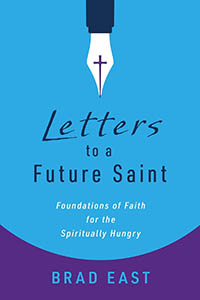
Letters to a Future Saint

By Brad East (Eerdmans)

My third-born child was stubbornly receptive to the classic hymn “Jesus Loves Me.” He refused to let me stop at one verse following the first night I sang him more.

Like the additional verses to “Jesus Loves Me,” the depths of Christianity remain unknown to too many Christians. Brad East seeks to remedy this in Letters to a Future Saint.
In the third of 93 letters, East shares with the future saint that we seek to know Christ because he first loved us, and “to know Christ is to love him” (p. 8). East’s letters for the volume were inspired by writing letters to the future saints in his own life.

One of the beauties of East’s work is the depth he plumbs with simple writing, even in the brevity offered in each letter. Most of the letters could be read in about the time one could sing “Jesus Loves Me” through once or twice.

Also to be expected in letters, but still delightfully refreshing from a theology professor, is the transparency into East’s own heart. In the 40th letter, East describes his own sin struggles, encouraging the future saint to do the same, allowing the church to act as AA but for sinners—“Sinners Anonymous” (p. 100).

The transparency doesn’t stop with his confession, either. East is unapologetic about raising his children to be Christians. Bluntly, East notes, “fine: we brainwash our kids to love Jesus” (p. 195). This line brought the greatest grin as I read, because it is probably the one I agreed with the most. The grin, however, was also because the line appears in the same letter (the 75th) in which East advocates for pedobaptism—the practice with which I most disagree.

There are other opportunities to disagree theologically with East. However, one should be careful to be as charitable in disagreement as East exemplifies in his own disagreement with Baptists on baptism and Young Earth Creationists on creation.

These virtues and enjoyments found in East’s work, along with consistent quotations from the saints, allow him to model the love one can practice in knowing Christ (and theology) more. Inspired by St. Augustine’s mother, Monica, East reflects, “I want to pray my children into heaven” (p. 214).

That should be a want for us all, and in knowing Christ more, we will want it more.

Ben Faus, pastor

First Baptist Church, Crawford


Review: Confronting Sexism in the Church: How We Got Here and What We Can Do About It

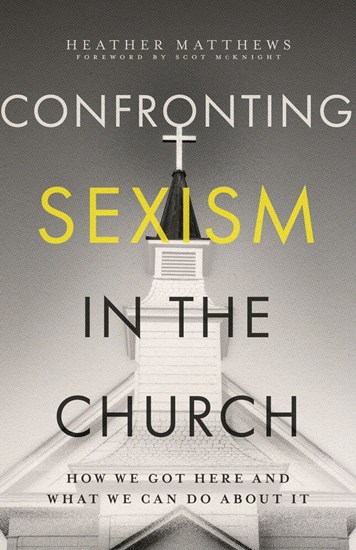
Confronting Sexism in the Church: How We Got Here and What We Can Do About It

By Heather Matthews (IVP)

Quite a few books attempting to describe and discharge the subjugation of women in the church have been written in recent years. Some of these books look at the issue from a biblical perspective, others a feminist perspective, and still others from the perspective of influential, faithful men—allies who hope to help right a wrong.

Some of these books are more helpful than others in reaching the audience Matthews notes most needs to hear, to understand, the reach and impact of sexism in the church—within evangelical Christianity most especially, where sexism is “baked into the cake.” That audience is men.
Matthews has this audience in mind as she writes. At times sharing personal stories, she tackles the topic as a caring, well-informed sister.

In the first half of the book, she defines sexism, discusses the theology of sexism, provides brief histories of sexism and antisexism in the church, elaborates on the price women pay, and discusses factors that have contributed to sexism’s perpetuation.

While an honest conversation about sexism in the church cannot be undertaken without using the word “patriarchy,” she seems mindful of overusing language that might keep some in her target audience from hearing the truth of what she has to say. So, if that word bothers you, don’t stop reading when you get to it.

That’s not to say reading this book won’t be uncomfortable for some—men or women, who were raised in the overt sexism of the Southern Baptist Convention, as was Matthews, or other denominations of similar mindsets. But God doesn’t call us to be comfortable. He calls us to grace—grace to learn and listen—and grace to confront practices which harm women and the entire community of the faithful.

In the second half of the book, Matthews offers suggestions on beginning to confront the “malignancy” of sexism in our churches, in a variety of ways and levels.

There is hope for change, because “God sees women,” Matthews asserts. And he’s working in the world to have the imago Dei in women honored fully.

Matthews doesn’t deal with “difficult” Scriptures. If you’re looking for help with those, you’ll need to look elsewhere. But if you’re looking for practical, accessible help in understanding and addressing sexism in the church, add this book to your library.

Calli Keener

Baptist Standard


Review: The New Testament in Color: A Multiethnic Bible Commentary

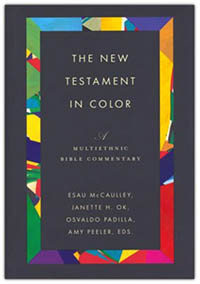
The New Testament in Color: A Multiethnic Bible Commentary

Edited by Esau McCaulley, Janette Ok, Osvaldo Padilla & Amy Peeler (IVP Academic)

With so many biblical commentaries out there, why another one? Because this one is different. How so? This one—a one-volume commentary on the New Testament—is written predominantly by North American ethnic minority men and women. That may seem like an unnecessary sea of qualifiers, but those qualifiers matter, because those perspectives have gone largely unconsidered.

The New Testament in Color is composed of 22 commentaries on the books of the New Testament written by 20 different scholars, along with five introductory chapters on biblical interpretation from five ethnic perspectives—African American, Asian American, Hispanic, Native American (Turtle Island) and Majority-Culture (Anglo)—and chapters on gender, mental health, linguistics and immigration.

The writers are not meant to represent an entire ethnicity but comment on their respective books of the New Testament from their perspective within their given ethnicities. In this way, all students of Scripture may encounter the Gospels, Acts, Revelation, and the many letters of the New Testament through eyes shaped by differing social situations.

In fact, this volume ought to be included in one’s study library because “socially located biblical interpretation is nothing less than the record of the Spirit’s work through scriptural engagement among the different ethnicities and cultures of the world” (xii). In an increasingly diverse world, understanding numerous views of Scripture is necessary.

The varying perspectives on the New Testament benefit the reader in at least two more ways. When the reader realizes just how much agreement on Scripture there is across cultures, there arises a sense of brotherhood and sisterhood perhaps previously unrealized. When readers encounter differing views of biblical truth, there arises awe and wonder at seeing new facets of Scripture previously obscured.

Lest someone think this project is heavy on ethnicity and light on serious biblical scholarship, lead editor Esau McCaulley explains: “All the contributors in this volume labored hard to gain [a “proper understanding” of necessary interpretive skills]. It is precisely because I believe that biblical texts are God’s inspired word to his people that we must do our very best to read them well and carefully” (xii).

So why add another commentary to your library? Because I bet you don’t have one like this one, and you should.

Eric Black, executive director/publisher/editor
Baptist Standard


Connect360: Signed, Sealed and Delivered

  • Lesson 1 in the Connect360 unit “The Immeasurable Love of Christ” focuses on Ephesians1:3-12.

During the “Trial of the Tarts” in Alice in Wonderland, the king declared, “Begin at the beginning.” Paul began this letter at the proper beginning by offering praise to God. Praise and bless are from the same word family; the NIV uses them to distinguish between a benefit we receive from God (bless) and the praise we offer to God.

What is the reason for this praise? The blessings given to all who are in Christ. Psalm 103:2 commands us to “Praise the Lord, my soul, and forget not all his benefits.” We might say the raw material of these benefits was mined in heaven. The blessings of God stand ready at the believer’s disposal, activated by faith. In the verses that follow, Paul defined what he meant by spiritual blessings.

Who is the “us” in verse 4? God’s holy people, the faithful in Christ. What has been chosen for us? Spiritual blessings. The first of these blessings is that we would be separate and unblemished. In Romans 8:29 Paul frames this concept in the language of conformity. God determined that believers would be formed in the perfect image of Jesus Christ.

God’s foreknowledge cannot be compared to human intuition, in which he makes a good guess based on prior knowledge. It is not looking forward into time. It is not even a “Back to the Future” scenario in which God has bounced back and forth through time. Our Creator is not bound by time; in fact, God exists outside of time. Wrap your mind around that! We live in the confines of time; God does not. The good news is he entered our timeline and bought our salvation.

The second blessing, or benefit, is that God predetermined all who received Christ would be adopted. Some would argue this choosing and predestining is about the believer’s individual salvation. It could be said this is Paul’s follow up to the wonderful news—“For God so loved the world…” (John 3:16).

Think about it for a moment: God chose to formalize for you all the benefits of what it means to be a child of God. What you have as a result of your relationship with God is not an accident. The blessings are intentional.

To learn more about GC2 Press and the Connect360 Bible study series, or to order materials, click here.


Connect360: Christ and the Fullness of God

  • Lesson 13 in the Connect360 unit “Sacred Life: God’s Plan for Us” focuses on Colossians 1:15-20.

There are several important reasons why the humanity of Jesus is critical to understanding the significance of his salvation and superiority and how it defines the sanctity of human life.

The humanity of Jesus allows us to relate to him. Time and time again throughout the Gospels, we see examples testifying to the humanity of Jesus Christ. He physically grew (Luke 2:40). He felt temptation (Matthew 4:1–11). He felt hunger (Luke 4:2), exhaustion (John 4:6), and pain and agony (Hebrew 5:8). Jesus’ human experience not only allows him to relate to us, but also allows us to look to him, the sinless example, which we aspire to follow.

Jesus experienced the host of human emotions to the fullest extent but did not sin. The writer of Hebrews summarizes it, saying in 4:15, “we do not have a high priest who is unable to empathize with our weaknesses, but we have one who has been tempted in every way, just as we are—yet he did not sin.” Because he was fully human, Jesus is fully able to relate to humanity, and his life provides the roadmap to a full and fruitful life.

The humanity of Jesus fulfills the prophetic messianic anticipation. The Old Testament prophesied a Messiah who would be born as a human being (Isaiah 7:14). Jesus’ human birth, life, death and resurrection fulfilled these prophecies, validating the authenticity of the Scriptures and God’s salvation plan.

Jesus’ life as a human being was necessary for the redemption of humanity. Only a human could appropriately represent humanity and bear the weight of human sins. The humanity of Jesus allows for the salvation of all. Scripture teaches that through one man, Adam, sin entered the world. Alternatively, salvation must also come from someone who is also equally and fully human if that salvation is to extend to all.

Moreover, Jesus had to be fully human and fully sinless, because the wages of sin is death (Romans 3:23). Even one sin during his earthly ministry would have disqualified him. Humanity’s Savior needed to be both fully human and fully sinless. Jesus was the only one qualified to be the perfect sacrifice for the sins of humanity. His human nature allowed him to suffer and die, which was essential for atoning for human sins. In being fully human, Jesus bridged the gap between God and humanity, enabling reconciliation (2 Corinthians 5:18–19).

The humanity of Jesus allows the redemption and resurrection of all. Jesus’s death as fully human and fully sinless made possible the forgiveness of sins. By offering himself as a blameless sacrifice, humanity’s debt was fully covered and God’s wrath against sin was fully appeased (Romans 3:25). However, his physical conquering of death and his resurrection creates the ability and pathway for the rest of creation. All things are reconciled and made at peace through Christ specifically because he is “the firstborn from among the dead.” The title “firstborn from among the dead” signifies that Jesus is the first person to be resurrected to eternal life.

By Katie Frugé, director for the Center for Cultural Engagement and the Christian Life Commission of Texas Baptists.

To learn more about GC2 Press and the Connect360 Bible study series, or to order materials, click here.


Review: Shelterwood: A Novel

Shelterwood: A Novel

By Lisa Wingate (Ballantine)

Literary scholars sometimes debate the difference between historical fiction and fictionalized history. Once again in Shelterwood, Lisa Wingate walks that fine line as she explores a heartbreaking period in the history of Oklahoma, the state of the best-selling author’s childhood and college years.

Painstakingly researched in old newspapers, oral histories, congressional records, court cases and other primary sources, Wingate interweaves historical events and real people like social reformer Kate Barnard into a novel that tells of a time when powerful men exploited or eliminated Choctaw and other tribal children to wrest control of their valuable, oil-rich land.

Shelterwood unfolds as a tale of greed in the past and greed in the present in a single geographic location through alternating chapters narrated in 1909 by 11-year-old “Ollie” Olive August Peele Radley of Pushmataha County, Okla., and in 1990 by Valerie Boren-Odell of Talihina, Okla. Recently transferred, Boren-Odell has become a law enforcement ranger at the newly opened Horsethief Trail National Park, where the mystery begins when an anonymous caller reports the discovery of human skeletal remains in a cave on Horsethief Trail land.

In 1909, after her father is murdered, Ollie’s mother remarries and becomes addicted to whiskey and opium. Fearing her stepfather and what he’ll do not only to her but to the family’s young Choctaw ward, Ollie flees taking Nessa and becomes her strong, smart protector. The two girls connect with similar children, mostly Choctaw, trying to hide and survive in the woods and wilderness under horrific conditions. Occasionally, they encounter kindness, but not often.

In 1990, outsider Boren-Odell finds herself distrusted by bosses and co-workers. She learns by accident about the bones of the three girls who died in the early part of the century. As the widowed mother of a young son, seeing the remains touches her soul, and she becomes obsessed with unearthing their story. It’s up to Val and her one ally, Choctaw Tribal Policeman Curtis Enhoe, to uncover the truth of the abandoned children, a truth that proves as dangerous to a female ranger in 1990 as to Ollie and Nessa 80 years earlier.

Ultimately, the two stories converge as old secrets, greed, graft and conflicts over ownership of the land and its wealth transcend the years. Everything should have changed, but seemingly nothing has as the tales of exploitation and making problems disappear continue, at least until three generations unite and fight for answers, justice and resolution, risking their lives in the process.

As in Before We Were Yours, Lisa Wingate carves in Shelterwood a powerful, heartbreaking, yet heartwarming novel written from the pages of history and told through the composite eyes of those who lived and survived. Reading or listening to the audible book evokes anger, sadness, grief and disbelief, but also reveals resilience, courage, compassion and selflessness. Despite occasional tears, you’ll be glad you read Shelterwood. I was.

Kathy Robinson Hillman, former president

Texas WMU and Baptist General Convention of Texas

Waco


Review: Your Jesus is Too American

Your Jesus is Too American: Calling the Church to Reclaim Kingdom Values over the American Dream

By Steve Bezner (Brazos Press)

This world is not a perfect match for the kingdom of heaven, however near the kingdom of heaven is to this world. There is the way things are here, but that doesn’t mean that’s the way things ought to be. Your Jesus is Too American examines the gap between the two.

American Christians’ values may mirror America more than Christ, particularly when it comes to power, enemies, money, sexuality, politics, race and suffering. Steve Bezner holds up an American view of these seven areas and compares it against Scripture. In particular, he compares the American view against what Jesus taught regarding the kingdom of heaven.

The German state church accommodation of National Socialist values in the 1930s led Dietrich Bonhoeffer to write Cost of Discipleship. He sought to combat the forsaking of heavenly kingdom values in favor of worldly kingdom values. Bezner sees the same tendency in the American church.

Kingdom values look more like cooperation and collaboration than competition, sacrifice more than grasping, giving more than accumulating, self-denial more than self-promotion, love more than self-protection. In short, kingdom values seem to be an inversion of worldly values. Or maybe it’s vice versa.

As firm as the title is punchy, Bezner’s comparison is gentle. He leads with his own weaknesses, admitting where and when his values have mirrored the world more than they have imitated Jesus. His honesty is refreshing and disarming. We all could use a dose of that.

Your Jesus is Too American is scheduled for release Oct. 8.

Eric Black, executive director/publisher/editor
Baptist Standard


Connect360: Wholly Sanctified Life: Human Sanctity and Salvation

  • Lesson 12 in the Connect360 unit “Sacred Life: God’s Plan for Us” focuses on Romans 12:1-2.

There is a direct and beautiful connection for God’s children between salvation and sanctification. As image bearers called to mirror our Creator in holiness, the first step in the act of our sanctification begins at the moment of salvation.

The primary meaning of sanctification is to consecrate or set something apart. In the act of salvation, God creates life where there was previously only death. God’s act of our spiritual salvation is the process through which we become set apart for a new purpose—not a purpose of our own making or schemes, but a purpose that ultimately finds its completion once we are conformed to the image of Christ himself (Romans 8:29).

This sanctification that occurs through salvation is what Paul was talking about when he stated in 1 Corinthians 6:11, “And that is what some of you were. But you were washed, you were sanctified, you were justified in the name of the Lord Jesus Christ and by the Spirit of our God.”

Notice the passive uses of the phrases to indicate this was something that already had occurred—Paul was referring to those who were formally dead in their sin but, because of God’s salvation (were washed), have a separateness fundamentally different from who or what they were previously (You were sanctified, you were justified).

From this perspective, the phrase “sanctity of human life” could be considered more descriptive than declarative when discussing a believer in Christ. For those who are made alive in God, we are set apart—sanctified—and live according to a new purpose and priorities.

The process of sanctification does not culminate at the moment of salvation, but it certainly must start there. The Bible tells us that all have sinned and fallen short of the glory of God (Romans 3:23). But through the death and resurrection of Jesus Christ, salvation is freely offered to all who would put their trust in Christ Jesus. Anyone who repents and places their trust in Jesus for their salvation is immediately and irreversible set apart (sanctified) and enjoys a new life in Christ.

Sanctification is a status gifted by God. At salvation, God makes that person sanctified. But that is not the only component to the concept of sanctification. Rather, sanctification presents a beautiful paradox. It is both an immediate gift and an ongoing journey.

At the moment of salvation, a believer is sanctified, set apart, and made holy through the sacrifice of Jesus Christ. This instant sanctification is a profound, transformative act of God’s grace, marking the believer as redeemed and righteous in his sight.

However, the Bible also teaches that sanctification is an ongoing process in the life of a believer. It is not just a single event but a continuous journey of spiritual growth and maturity. This process is beautifully illustrated in verses like 2 Corinthians 3:18, which speaks of believers being transformed into the image of Christ “from glory to glory.”

This ongoing sanctification is a collaborative effort between the believer and God, where the believer is actively involved in pursuing holiness, guided and empowered by the Spirit. In this way, the immediate sanctification at salvation and the progressive sanctification throughout a believer’s life are intricately connected, showcasing the dynamic and evolving nature of the Christian walk.

By Katie Frugé, director for the Center for Cultural Engagement and the Christian Life Commission of Texas Baptists.

To learn more about GC2 Press and the Connect360 Bible study series, or to order materials, click here.


Connect360: Sanctified Stages of Life

  • Lesson 11 in the Connect360 unit “Sacred Life: God’s Plan for Us” focuses on Proverbs 31:8.

From beginning to end, the Bible presents a holistic view of life. This view not only calls for the protection of life in its most vulnerable forms but also advocates for a quality of life marked by justice, compassion and dignity for all.

It is a view that challenges believers to extend love and support not just in words but in concrete actions that uphold the value and dignity of every human being. The fullest expression of the Christian faith is one that sees and supports the sanctity of life and acts on that conviction in a meaningful way.

This holistic and total affirmation of the sanctity of life, as an expression of our Christian faith, involves a commitment to extend the dignity and value of all human beings, regardless of age, ability, gender, race or socioeconomic status. This includes caring for the elderly, supporting the disabled, aiding the poor, and advocating for those who are vulnerable, marginalized or oppressed.

In the Old Testament, God consistently told the Israelites to act differently than those around them. In a culture that had little regard for those living on the margins, God’s people were to make margin for them, to cultivate their fields in a way that intentionally provided space for all and welcome all (Leviticus 23:22).

In the New Testament the first Christians of Acts created ministries that cared for the overlooked and neglected (Acts 6:2–3). This reminds us that across the biblical witness, God consistently demonstrates special care and concern for the vulnerable and marginalized, affirming the inherent dignity of every individual at every stage and place of life.

Scriptures are replete with mandates to protect and advocate for the weak, the poor, the oppressed and the voiceless, reflecting God’s heart for those often overlooked by society. This divine emphasis highlights the sanctity of human life, underpinned by the belief that all people are created in the image of God and therefore possess intrinsic worth.

The good news is that God’s children have already been doing this, which reflects this deep commitment to the sanctity of life at all stages. Across the United States, churches and faith-based organizations serve as pillars of their community, offering comprehensive ministries that reflect the holistic span of the sanctity of human life. From adoption and foster care ministries to addiction recovery, to marriage and family support, to crisis pregnancy centers and beyond, Christian ministries lead the charge in what it means to support the sanctity of human life at every stage.

The pro-life belief, at its best, is about creating a society that cares for and values life at every stage, to care for those who cannot speak for themselves and the common dignity and justice of the destitute. The call to everyone who claims the name of Christ is not: “Should I care about the sanctity of life?” Rather the question is: “How am I actively living out my commitment to the sanctity of human life?”

By Katie Frugé, director for the Center for Cultural Engagement and the Christian Life Commission of Texas Baptists.

To learn more about GC2 Press and the Connect360 Bible study series, or to order materials, click here.


Connect360: Sacred Life of the Preborn

  • Lesson 10 in the Connect360 unit “Sacred Life: God’s Plan for Us” focuses on Psalm 139:13-16.

As lesson 9 noted, one of the clearest and most direct biblical passages affirming the preborn life’s beautiful and sacred nature is found in Psalm 139:13–16. This passage is a poignant testament to the value and sanctity of the preborn life in Christian teaching. These verses poetically express the truth that God’s involvement in human life begins right from the womb.

The imagery of being “knit together” in the mother’s womb conveys a sense of intimate, careful creation, revealing that each person is not just a biological accident but a purposefully crafted being. This psalm affirms that a person’s identity and existence are already known to God before birth, implying a deep level of divine care and intentionality.

The phrase “all the days ordained for me were written in your book before one of them came to be” further strengthens the idea that every life has a predetermined purpose and significance, established even before birth.

For God’s children, this passage is a powerful testimony to the profound worth and dignity of the preborn, seeing them as fully human and cherished in the eyes of God, deserving of protection and respect.

In Hebrew, the phrase “knit together” has a stronger connotation that a soft blanket someone made for a loved one. Rather, this phrase commonly means to “cover” or “overshadow.” In a literal sense, it can refer to covering something in a protective or shielding manner.

This word appears in various contexts in the Old Testament often with the connotation of providing protection or shelter. In the context of Psalm 139, God is weaving a person together in their mother’s womb means God is both the one creating them and simultaneously protecting them. It reflects God’s protective and formative action in creating a person. This term points to the protective, nurturing aspect of God’s relationship with every individual even before birth, highlighting a deep, personal connection and care from the very beginning of life.

Other biblical passages directly speak to the preborn’s personhood and subsequent dignity and value. Jeremiah 1:5 is a common verse many point to as a testimony to the personhood of the preborn—“Before I formed you in the womb I knew you, before you were born I set you apart; I appointed you as a prophet to the nations.”

While God is speaking directly to the prophet, this passage demonstrates the innate personhood and individuality of Jeremiah when he was still inside his mother’s womb. Moreover, notice how God speaks to the current and yet-to-be-nature of Jeremiah’s calling. Before he was born, God had already set him apart for a special purpose and plan.

In Luke 1:41–44, when Mary, the mother of Jesus Christ, comes to visit her pregnant cousin Elizabeth, who is also pregnant with her son John the Baptist, Elizabeth exclaims: “Blessed are you among women, and blessed is the child you will bear! But why am I so favored, that the mother of my Lord should come to me? As soon as the sound of your greeting reached my ears, the baby in my womb leaped for joy.” Filled with the Holy Spirit, the unborn John the Baptist leaped for joy at the presence of the unborn Christ.

By Katie Frugé, director for the Center for Cultural Engagement and the Christian Life Commission of Texas Baptists.

To learn more about GC2 Press and the Connect360 Bible study series, or to order materials, click here.