Connect360: Shine!
- Lesson 10 in the Connect360 unit “The Immeasurable Love of Christ” focuses on Ephesians 5:8-14.
Paul contrasted the lives of these Ephesians before they knew Christ with their current lives as people of faith. He wrote, “You were once darkness … you are now light in the Lord.”
Note that he didn’t say they once lived in darkness. He said they “were once darkness.” That’s pretty serious. Darkness wasn’t external but internal. It penetrated their whole lives. But once they found Christ, they became light, and that light began to illuminate their lives all the way to the center.
How does that work? God is light, and as we embrace his dramatic transformation, we will find ourselves shining as lights in a world that loves darkness.
God’s grace ensures you will grow more like Christ over time. If we desire to speak, act and think in such ways that are consistent with our Christian identity, we must talk, behave and think in almost the exact opposite ways of current culture. We are not to participate with those who don’t imitate God. We are children of light, not darkness.
Christians who walk in the light don’t waste time pursuing fruitless darkness. They don’t expend energy doing the kinds of things that displease God and harm their neighbors. Christians don’t do or say the kinds of empty things that cause divisions among people. Verse 13 says the light of their lives should expose sin rather than join sin.
Curiously, if there were no Christians in the world, there would be no need for excuses. Who would notice or care how anyone lived? Who would decide right from wrong? But Christians call attention to sin by the way they live.
Paul commanded believers to walk or live “as children of light.” Just as Jesus is the light of the world, so Christians are to walk as He walked—as lights of the world. In fact, Jesus himself said to His followers, “You are the light of the world” (Matthew 5:14).
As believers, let us commit to living every day reflecting the light of God that is in us. We walk in light by exhibiting light, exposing darkness, and exhorting unbelievers.
To learn more about GC2 Press and the Connect360 Bible study series, or to order materials, click here.
 Lundgren begins by defining a host of terms and concepts related to safety. He then offers an extended examination of human conceptions of danger in the premodern, early-modern and late-modern eras. Premodern people viewed danger in relation to a world filled with gods and spirits. The disenchanted world of the early-modern era understood danger as a natural feature of the material world. For the late-modern world, danger resides within us.
 It also happened much more recently to some members of Mars Hill Church when they dared question the authority of Pastor Mark Driscoll, who had become—in the eyes of many in the church—the center of their universe.
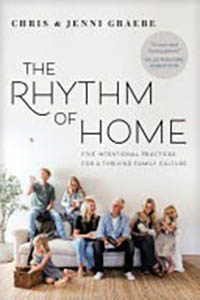 That’s a tall order, but the faith leaders in local church ministry fill the pages of The Rhythm of Home: Five Intentional Practices for a Thriving Family Culture with wisdom, truth, grace, honesty and practical ideas gleaned from their own successes and failures. Each chapter begins with a Scripture or quote, and the Graebes stress starting with a shared vision, establishing a loving home and building a strong community of support.
 In When the Church Harms God’s People, Langberg writes as one who loves the church enough to offer an honest diagnosis of its sickness in order to help restore its health. She draws upon more than 50 years of experience as an internationally recognized psychologist and trauma expert and as former chair of the board of the American Association of Christian Counselors.