Hispanic Trump adviser acknowledges widespread fear

(RNS)—Samuel Rodriguez, a Hispanic evangelical adviser to President Donald Trump, is urging government leaders to recognize the “innocent people” who are being swept up in detention quotas.

Rodriguez, president of the National Hispanic Christian Leadership Conference and pastor of New Season Church in Sacramento, Calif., cited significant drops in church attendance in the face of immigration raids and mass deportations.
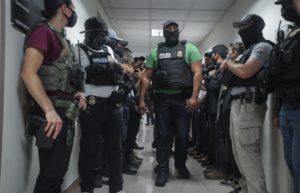
Masked federal agents wait outside an immigration courtroom on Tuesday, July 8, 2025, in New York. (AP Photo/Olga Fedorova)

In an Oct. 16 interview, he noted some churches in the NHCLC network are seeing Sunday attendance drop by 25 percent to 35 percent due to fear of immigration raids.

Other leaders of Latino and immigrant congregations throughout the United States have reported drops in Sunday attendance, especially in Washington, Chicago and Los Angeles, where the Trump administration has launched major federal operations.

“In my conversations with the White House, with members of Congress and so forth, there is a constant affirmation that the priority is deporting the criminal element,” Rodriguez said.

 But, in his view, “the 25 percent to 30 percent that are being deported that are not the criminal element are a direct result of a daily quota of 3,000 deportations,” referring to goals set by the Department of Homeland Security.

Urging support for the Dignity Act

Rodriguez said he has been mobilizing Latino evangelical Christians to support the bipartisan immigration reform known as the Dignity Act, urging them to gather at church to pray for Congress to pass the bill, led by U.S. Reps. María Elvira Salazar, R-Fla., and Veronica Escobar, D-Texas.

Department of Homeland Security spokesperson Tricia McLaughlin said in late September, 70 percent of Immigration and Customs Enforcement detainees are “criminal illegal aliens who have been convicted or have pending charges in the US,” but data at the time of her statement shows 36 percent of those arrested have no criminal record.

Rodriguez supports the deportation of criminals but claimed ICE is forced into making arrests of criminals and non-criminals alike, because leaders in blue states won’t grant ICE access to their incarcerated populations.

“Let’s say, hypothetically speaking, they reach 2,500 a day that are complete criminals, gang bangers, pedophiles, rapists, drug dealers, et cetera,” Rodriguez said.

“If the blue states primarily don’t cooperate and give ICE access to their prisons and jails, then they have to find the other 500 because they have a quota of 3,000. … Not that I’m affirming that. I’m not celebrating that.”

Hold asylum seekers in ‘humanitarian campuses’

At the NHCLC’s annual summit on Oct. 14, the organization heard from Salazar, whose bill would increase enforcement resources at the U.S. borders while allowing unauthorized immigrants without criminal records who have been in the country more than five years to earn legal status if they pay taxes and $7,000 in restitution.

The bill would expedite the asylum process but would hold asylum seekers in “humanitarian campuses,” rather than releasing them into the United States while they wait for a court decision, as has been the practice for decades.

It would pay for U.S. citizens to receive workforce training, funded by the immigrants’ restitution payments. It would also make changes to immigration visas.

“There’s never been a more conservative proposal. None ever, ever, ever,” Rodriguez said. “This does not grant citizenship. This is the opposite of amnesty.”

‘Don’t have to live in fear’

Instead, he said, it offers the chance for immigrants who have entered illegally to work legally.

“You don’t have to live in fear,” he said. “It gives people dignity, and that dignity status to me is beautiful. It’s because we’re all created in the image of God.”

Rodriguez did not express confidence in the bill’s swift passage.

“Right now, I think I have faith, and hopefully that faith will convert to hope, because faith is the conviction of things hoped for and the assurance of things not seen.”

He asserted “the same administration that brought an end to a war in Gaza” was capable of immigration reform, calling it “a layup in comparison.”

Focus on antisemitism

The Dignity Act is just one priority of the NHCLC’s newly launched Center for Public Policy, which will focus on antisemitism through a partnership with the Anti-Defamation League.

“Latino evangelicals must be at the forefront of protecting our Jewish brothers and sisters around the world, speaking up on behalf of the nation of Israel,” Rodriguez said.

“It doesn’t mean that we are in perfect alignment with everything (Israeli Prime Minister) Benjamin Netanyahu says or does. That’s silly. No politician is perfect. No administration is above criticism, but we are in favor of the state of Israel.”

Another partner will be the Faith & Freedom Coalition, an evangelical voter-turnout organization long aligned with the GOP.

“We don’t lean right. We don’t lean left,” Rodriguez said. “We stand on the finished work of Christ.”

The center’s other priorities will include “issues that impact life from womb to tomb,” family tax credits, early childhood education and parental rights, a priority often intertwined with anti-LGBTQ+ positions.

Last year the organization launched the Center for Ministerial Health, which hosted 15 mental health symposiums in the past year.

“The response has been more than amazing, literally saving families, marriages, ministries and lives,” Rodriguez said.

The NHCLC celebrated its recent expansion internationally, an effort to establish chapters in Latin America, Spain and Latino diasporas in other Western countries, led by Colombian pastor Iván Delgado Glenn.

Build a ‘firewall’ against encroaching Marxism

“We’re going to build a firewall against ideologies that take away our rights, our freedom of speech, our freedom of religious liberty, and so if the church rises up, light wins and darkness loses because we believe in the image of God,” Rodriguez told RNS.

“The majority of countries already have the national evangelical alliances. We’re not there to replace them at all. We’re there to resource them.”

The new initiative will assist in “building a firewall against the encroachment of Marxism” in foreign policy, including in Venezuela, said Rodriguez.

On this score, Rodriguez blamed the leftist President Luiz Inácio Lula da Silva for the seizure of prominent Brazilian pastor Silas Malafaia’s passport, calling it a religious liberty issue.

Malafaia, who has been linked to dominion theology—the idea that Christians should control all aspects of society—is an ally of former Brazilian President Jair Bolsonaro, recently sentenced to 27 years in prison for planning a coup.

While fighting on these fronts abroad, Rodriguez advised his organization’s constituents to brave the pressures of immigration enforcement at home, telling them to go to church.

“Church is the safer space. There is no safer space than the church,” Rodriguez said. “We need to come together and believe that the God of the impossible who changed the hearts and minds of leaders in the Old and New Testament will do it again for us.

“He doesn’t change. So, we believe the Holy Spirit is still moving. He can change hearts and minds. So, go to church.”


Hearing focuses on state control of religion in China

WASHINGTON (BP)—Chinese Pastor Ezra Jin Mingri—one of 22 pastors jailed in China on erroneous charges—lived in the United States with his wife Chunli Liu and their children before returning to China in 2007 to plant Zion Church.

His wife, who has remained in the United States to raise their children, who are U.S. citizens, is appealing for prayer as the United States advocates for her husband’s release.

The U.S. Commission on International Religious Freedom noted Chunli’s comments Oct. 16 among testimony of the Chinese Community Party’s religious persecution, including transnational aggressions, during the virtual hearing it hosted on the atrocities.

Chinese Communist Party officers raided the home of Zion Church Pastor Sun Cong in its increasing crackdown on unregistered churches. (CSW Photo)

Commission Chair Vicky Hartzler, joined by Vice Chair Asif Mahmood, is among those condemning the persecution of Jin and others.

“I condemn these arrests and I call for the release of Ezra Jin and of all those who have been detained by the CCP for exercising their right to practice their faith,” Hartzler said in opening the hearing. “China’s treatment of religious groups blatantly contradicts international human rights standards.

“No government has the right to dictate the beliefs of its citizens. No government has the right to choose which religious leaders are legitimate.

“No government has the right …  to impose its political interest onto its citizens’ conscience and its citizens’ faith. And no government has the right to imprison religious leaders for leading their religious communities.”

Christians branded as ‘disruptors’

Among those appearing before the commission was Jin’s friend Corey Jackson, founder and president of The Luke Alliance, advocating for the religious freedom of persecuted Christians in China.

“The CCP intends to control every area of your life including your heart, your mind, your soul and your emotions. They want to control your gathering in public, in private, online, even gathering with your own children to teach them about your faith,” Jackson told USCIRF.

“So how should we respond? Our concern should go beyond prisoners of conscience to the 99 percent of other Christians who do not make the headlines. There are between 80 (million) and 100 million Protestants in China, maybe 10 million Catholics, potentially more. Xi (Chinese President Xi Jinping) brands Christians as disruptors, and in reality, they are a cohesive force for good in society.”

Jackson, a former North Carolina Presbyterian pastor who served several years in China in ministry, documents on the Luke Alliance website the arrest of Jin and 21 others held at Beihai No. 2 Detention Center in Guangxi Province.

The Luke Alliance also posts an open letter from Chunli, describing Jin’s commitment to the ministry. Before his arrest and since 2018, Jin had been forbidden to leave China under a CCP-issued exit ban, and he had been subjected to constant surveillance.

“I feel a mixture of shock, sadness, worry, anxiety and anger,” Chunli wrote. “I firmly believe that Pastor Jin simply did what any good pastor would do. In whatever circumstance, online or in-person, he did what every pastor in the universal church does: preach the gospel to everyone and proclaim his faith in Jesus Christ. He is innocent!”

‘Dissent is occurring … every single day’

In the hearing, “State-Controlled Religion in China,” Commissioner Stephen Schneck posed the question of whether USCIRF’s advocacy under the International Religious Freedom Act, as well as sanctions imposed by the U.S. State Department, has exacted any improvements for persecuted Christians and other religious adherents in China.

Schneck, who is in his fourth year at the commission, said: “I have to say that in the course of those four years, I’ve seen things only get worse and worse in regards to China. Sinicization is continuing apace. The genocide of the Uyghurs and the cultural genocide of the Tibetans is continuing apace.

“And I’m really wondering if, over these four years, USCIRF has had any effect at all. If any of the recommendations that we’ve made to Congress, if any of the recommendations that we’ve made now to two different administrations, have had any success at all in changing the situation of religious freedom in China.”

Annie Wilcox Boyajian, president of Freedom House and a speaker at the hearing, assured commissioners of their positive impact.

“I would jump in and say ‘yes, and.’ There are a whole bunch of recommendations that the religious community has made for decades that haven’t ever been fully implemented,” Boyajian said.

“The other thing to remember is dissent is occurring, and just because we don’t necessarily see it from where we sit here in the United States, it happens every single day.”

Advocacy makes a difference

Boyajian noted Freedom House’s China Dissent Monitor, sourced from on-the-ground contacts and others, to document dissent from religious communities.

“We have seen more than 400 instances over the last three years where people see religious restrictions and choose to worship anyway, or where they’re even actually protesting,” Boyajian said. “This comes back to, from our perspective, the deep and utter importance of raising individual cases because we do hear that it makes a difference.

“And when USCIRF encourages the State Department to designate China as a Country of Particular Concern, it matters. The Chinese government cares about that. They raise it in meetings.”

The commission’s hearing followed U.S. Secretary of State Marco Rubio’s Oct. 12 statement urging China to release Jin and others.

At its hearing, USCIRF also heard from additional advocates and Congressional leaders including U.S. Sen. James Risch, chairman of the Senate Foreign Relations Committee; U.S. Rep. James McGovern, a member of the Congressional-Executive Commission on China and the bipartisan Tom Lantos Human Rights Commission; Rushan Abbas, founder and executive director of the Campaign for Uyghurs, and chairwoman of the Executive Committee of the World Uyghur Congress; and Norgay Tenzin, a research analyst with the International Campaign for Tibet.


One-fourth of U.S. adults consider Bible ‘just another book’

PHILADELPHIA, Pa. (BP)—About a quarter of surveyed U.S. adults think the Bible is “just another book of teachings written by people,” the American Bible Society said in its latest release from the 2025 State of the Bible.

More people are skeptical of the Bible’s teachings than those who think the Bible is “totally accurate in all the principles it presents,” the American Bible Society said Oct. 14 in releasing the study’s chapter focused on trust.

“A half-century ago, Americans generally trusted the Bible. Attitudes are more complex these days,” John Plake, ABS chief innovation officer and State of the Bible editor-in-chief, said of the findings. “Our latest survey finds a mixture of belief and questioning in the American public.”

Research revealed:

  • 24 percent think the Bible is just another book of instruction.
  • 18 percent think the Bible was written to control and manipulate people.
  • 36 percent agree the Bible is totally accurate.
  • 39 percent disagree that the Bible is totally accurate.

“It’s true that nearly one in five Americans think the Bible was written to control and manipulate, but twice that many trust the Bible as ‘totally accurate in all the principles it presents,’” Plake said. “The numbers show a nation grappling with Scripture—and its meaning for our lives.”

The non-religious—or the 25 percent of U.S. adults considered Nones—are more distrustful of Scripture, with 60 percent believing the Bible is just another book of advice and stories written by others, and half of Nones saying the Bible was written to control and manipulate others.

Majority say Bible has transformed their lives

Despite the numbers, most Americans—58 percent—say the Bible has transformed their lives. The percentage statistically represents 148 million adults, researchers said.

“They might define those terms in various ways, they may understand the message differently, the transformation might be big or small,” researchers wrote of the 148 million, “but these people … are willing to say on a survey that they’ve been changed by the Bible’s message.”

In the chapter focused on interpersonal and institutional trust, researchers not only queried levels of trust in Scripture, but also asked how much respondents trust institutions to do what they’re intended to do, including medicine, education, the government, religion, arts and entertainment, banking and business, and the media.

Researchers gauged interpersonal trust in family and other individuals, and how variables such as Scripture engagement, age, political beliefs and trauma impact institutional and interpersonal trust.

Scripture-engaged individuals are more trusting of others, researchers said, with 35 percent of Scripture-engaged adults have a high level of interpersonal trust, compared to 23 percent of Scripture-disengaged, and 24 percent of those in the movable middle, a category of people whose Bible use falls between Scripture-engaged and Scripture-disengaged.

“It appears that many of those who read and apply the Scriptures are trying to practice Christian love by thinking the best of people, by giving them the benefit of the doubt, by trusting them,” researchers wrote.

Regarding trust in institutions, the Scripture-engaged register higher levels of trust in families, religion, and banking and business, lower levels of trust in arts and entertainment, and slightly lower or about the same levels of trust as Scripture-disengaged and the movable middle in medicine, education, government and media.

Trust is ‘often a casualty of trauma’

Trust—in Scripture, in institutions such as the church and in interpersonal relationships—“is often a casualty of trauma,” the report states.

Nearly half of Americans (46 percent) have “experienced or witnessed physical, psychological or emotional trauma,” and trauma continues to impact individuals “far into the future,” researchers wrote.

Assault, abuse and unwanted sexual contact damage interpersonal trust, researchers found.

“These traumatic events all happen at the hands of other people, often people whom the sufferer knows and perhaps has trusted,” researchers wrote. “For people who rate the continuing effects of these traumatic events ‘moderate’ to ‘overwhelming,’ there’s a significant drop in interpersonal trust.”

But suffering the violent or sudden death of a friend impacts interpersonal trust only minimally, researchers said, and suffering a life-threatening illness or injury actually improves interpersonal trust, “suggesting that perhaps they have learned to depend on other helpful people.”

Researchers also explored the link between forgiveness and trust. Two-thirds of all respondents (66 percent) agreed—at least somewhat— with the statement, “I am able to sincerely forgive whatever someone else has done to me, regardless of whether they ever ask for forgiveness or not.”

“Trauma survivors often need to travel a long, hard road toward forgiveness,” researchers wrote. “Volumes have been written on what forgiveness is and isn’t; it’s a worthy study.

“Yet we find that the ability to forgive is connected to higher levels of interpersonal trust. Just as trauma damages trust, forgiveness may restore it.”

The State of the Bible is based on a nationally representative online survey of 2,656 adults in all 50 states and the District of Columbia, conducted Jan. 2 -21 for ABS by NORC at the University of Chicago, using its AmeriSpeak panel.

With additional reporting by Managing Editor Ken Camp.


Truett Seminary establishes Anglican Episcopal House

Baylor University’s Truett Theological Seminary announced Oct. 13 the formation of an Anglican Episcopal House of Studies.

In making its announcement, the seminary stated the graduate-level program “will cultivate theologically grounded, liturgically formed and missionally engaged clergy and lay leaders for service in Anglican and Episcopal contexts.”

Todd Still (Baylor Photo)

“Since its inception, Baylor’s Truett Seminary has welcomed and trained ministers both within and beyond Baptist life. In recent years, especially through Truett’s Wesley House of Studies, our seminary has enjoyed an influx of students from other Christian denominations,” Dean Todd Still said.

“Indeed, there are currently no less than 26 different denominations represented in our school’s student body.”

Currently, 15 Truett Seminary students are enrolled from various dioceses within the Anglican Church in North America, The Episcopal Church and from other provinces internationally.

“The launching of the Anglican Episcopal House of Studies at Truett is due primarily to our commitment and desire to equip more fully the Anglican and Episcopalian students who are already studying with us and have been entrusted to us,” Still said.

“Our present and future hope is that we would prepare them and other such seminarians well so that they might thoughtfully, faithfully and skillfully serve as ministers of the gospel across this vast and vibrant communion of believers around the world.”

Truett aims to strengthen support for current students while deepening relationships with the ecclesial bodies already represented at the seminary. The seminary also will seek to build new connections with other like-minded bishops, rectors and prospective students, the announcement stated.

On Oct. 28-29, Rowan Williams, Archbishop of Canterbury from 2002 to 2012, will deliver the annual Parchman Lectures at Truett Seminary.

Once the Anglican Episcopal House of Studies is firmly in place at Truett Seminary’s Waco campus, the seminary will expand its course offerings to its Houston and San Antonio campuses.

Matthew Aughtry named acting director

Truett Seminary has appointed Matthew Aughtry as acting director of the Anglican Episcopal House of Studies. A priest in the Anglican Church in North America and resident within the Diocese of Churches for the Sake of Others, Aughtry’s time as an Anglican has primarily been defined by assisting various church plants in both Los Angeles and Waco.

Truett Theological Seminary has appointed Matthew Aughtry as acting director of its Anglican Episcopal House of Studies.

He also serves Baylor University as an associate chaplain, working as the assistant director for chapel and ministry in the arts in Baylor Spiritual Life.

Aughtry, who grew up in a small-town Baptist church, was drawn to the Anglican tradition through the writings of C.S. Lewis.

He particularly cited Mere Christianity, “with vision of the Church as a mansion—its broad hallways full of lively conversation, yet its rooms alone reserved for offering food, fire and rest.”

“Seminary ushered me into the Anglican room of this great estate,” Aughtry said. “The Prayer Book’s sustaining patterns have become a safe harbor for me through years of church-planting and ministry in Baylor Chapel.

“I am honored by Dean Still’s invitation to join the launch of this initiative at Truett Seminary, a place I have experienced as akin to Mere Christianity’s magnificent mansion. It is my joy to serve this room, and I anticipate the ways doing so will further the mission of the entire home.”

Charles Ramsey, university chaplain and dean of Spiritual Life at Baylor, expressed “joy” at the launch of Truett Seminary’s Anglican Episcopal House of Studies.

“Faithful proclamation of the gospel in word and deed is at the heart of Baylor University and Truett Seminary. God has blessed this faithfulness and is drawing people from across denominational lines to become formed and equipped for kingdom service,” Ramsey said.

“It is a joy to celebrate the opening of the Anglican Episcopal House of Studies at Truett Seminary and to welcome these brothers and sisters as we seek to glorify and serve God together in the church and the world.”

‘Serve the broader body of Christ’

The announcement from Baylor University quoted Stephen Stookey, director of theological education and institutional engagement with Texas Baptists, who voiced support for Truett Seminary’s decision to launch the Anglican Episcopal House of Studies.

“This initiative is a thoughtful and faithful effort to serve the broader body of Christ through ecumenical engagement and academic excellence, rooted in the historic Christian faith,” Stookey said.

“As a Baptist community, we value our distinctives while also embracing opportunities to collaborate with Christian sisters and brothers who seek to proclaim the gospel, foster spiritual formation, and equip leaders for Great Commandment/Great Commission ministry.”

By establishing the Anglican Episcopal House of Studies, Truett Seminary is demonstrating its “ongoing commitment to forming ministers from a variety of traditions within the one body of Christ,” Stookey said.

“I am confident that this new initiative will enrich the seminary community, broaden theological dialogue, and enhance the preparation of students called to serve in their respective ecclesial contexts,” he said.

“It is my prayer that this partnership will bear lasting fruit for the kingdom of God.”

‘A prophetic vision’

Chris Backert, senior director of Ascent Movement, an emerging mission network, praised Truett Seminary for its willingness to collaborate outside of Baptist circles.

“Truett Seminary has uplifted a prophetic vision to offer space for distinction in polity and Christian heritage within a broader commitment to a globally engaged, evangelically orthodox theological witness,” Backert said.

By launching the Anglican Episcopal House of Studies alongside its Wesley House of Studies, Truett Seminary is demonstrating “for theological education what the wider church must attend to in other arenas,” he said.

“If the broader, joyfully confessional evangelical community can find its way together to prepare future church leaders, then perhaps our congregations, denominational structures, mission agencies and the like will follow suit,” Backert said.

Elizabeth Newman, vice chair of the Baptist World Alliance Commission on Baptist Doctrine and Christian Unity, praised Truett Seminary for continuing to “expand its vision of theological education by establishing an Anglican Episcopal House of Studies.”

“This initiative opens up rich possibilities for ecumenical formation while also enhancing the mission of the church,” said Newman, adjunct professor of theology at Duke Divinity School.

“I am delighted to see this kind of seminary response to Jesus’ prayer that all may be one so that the world may know.”

A Truett Seminary spokesperson said the “next area of focus” will be the Baptist World Alliance program approved this summer. The seminary is now preparing to search for a candidate to fill the newly created Lampsato Endowed Chair of Baptist World Missional Engagement.


Review: Silent No More: Bible Women Speak Up, A Poetic Meditation

Silent No More: Bible Women Speak Up, A Poetic Meditation

By Christine Kohler (Resource Publications)

This brief book (only 59 pages) offers a collection of poems written from the perspectives of female Bible characters of varying fame from across the Old and New Testaments.

As the subtitle suggests, each poem invites the reader to take in a character’s perspective deliberately and contemplatively.

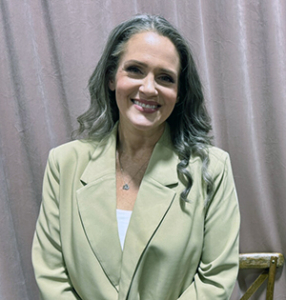
The book offers a welcome invitation to pause and think about these women. Their stories often seem to serve as asides, included in the biblical narrative or in sermons merely as supports for the “main characters” we’re really supposed to learn from in the Bible—the males.

Only a handful of women in the Bible could be classified as having “main character energy,” as my Gen Z kids would say. Few of those biblical women who could be described as having “main character energy” are praised.

Reading these poems the way Kohler intended them to be enjoyed—as meditations—I cannot help but conclude, we sorely have missed out by not spending more time considering the human experiences of these remarkable women.

Their place in God’s supernatural story made the women of each poem important enough to appear in Scripture. Even so, I feel like I’m meeting them for the first time in Kohler’s poems.

Silent No More is a beautiful book, well worth spending time to contemplate. Seeing biblical women with fresh eyes evokes a surprising depth of emotion, perhaps because Kohler and her poems accomplish something many women need, in Baptist life and ministry especially —a sense of community.

Hearing the once silent voices of the women of the Bible, I not only understood them better, but also felt, in a new way, the great cloud of witnesses to be found in Yahweh’s daughters before me.

Dare I say, in seeing and hearing the once silent women of the Bible, I, too, felt more heard and seen?

I’d gift this book to my sisters in the faith who are struggling or to my own sons in the hope it might help them be more attuned to voices that often go unheard.

I am certain I will come back often to the poems in Silent No More, anytime I need a reminder of God’s care for the quiet ones, the ones who didn’t assert “main character energy,” but who God saw as essential in telling his story.

Calli Keener

Amherst, N.H.


U.S. urges release of jailed Chinese pastors

BEIJING (BP)—China falsely claimed Oct. 13 to protect religious freedoms after U.S. Secretary of State Marco Rubio urged the country’s government to release several pastors arrested in house church raids.

“The Chinese government governs religious affairs in accordance with law, protects the religious freedom of the citizens and the normal religious activities,” Foreign Ministry spokesman Lin Jian said Monday at a regular briefing, MSN reported. “We firmly oppose the U.S. interfering in China’s internal affairs with the so-called religious issues.”

China persecutes Christians and other religious groups through an intensive campaign to control religious activities and communication, claiming churches oppose the government, several religious liberty watchdog groups have reported with extensive evidence.

Rubio called for the release of an estimated 20 house church pastors and leaders arrested in at least seven cities since Oct. 10, Christian Solidarity Worldwide reported, as the Chinese Communist Party raided several locations of Zion Church, an unregistered Protestant congregation.

“We call on the CCP to immediately release the detained church leaders and to allow all people of faith, including members of house churches, to engage in religious activities without fear of retribution,” Rubio said, naming Senior Pastor Ezra Jin Mingri among those arrested.

“This crackdown further demonstrates how the CCP exercises hostility towards Christians who reject Party interference in their faith and choose to worship at unregistered house churches.”

China and U.S. in trade policy dispute

The exchange comes as U.S. President Donald Trump spars with China over trade policy, threatening a 100 percent tariff on China in addition to a 55 percent tariff already in place. Trump threatened the increase after China announced export controls on rare earths, effective in November. China holds 49 percent of the world’s rare earths, including 17 metallic elements considered crucial for modern technology and energy, NBC News reported.

Rubio called for the release of leaders after China initially arrested 30 leaders, with about 20 remaining in custody as recently as early Oct. 14, CSW reported.

“CSW sources suggest these arrests form part of the largest nationwide crackdown on house churches in decades, and many Chinese house church leaders have openly expressed support for Zion Church despite facing significant pressures themselves,” CSW stated.

“One church member also pointed out that repression targeting house churches typically intensifies whenever relations deteriorate between China and the West.”

Sean Long, a Chinese Zion Church pastor studying in the U.S., told the Associated Press the leaders may face charges of “illegal dissemination of religious content via the internet,” although it’s not currently known whether the pastors are charged with any infraction.

“This is a very disturbing and distressing moment,” the AP quoted Long. “This is a brutal violation of freedom of religion, which is written into the Chinese constitution. We want our pastors to be released immediately.”

‘Cease harassment of unregistered churches’

Zion Church has perhaps 5,000 members who worship at 100 sites across 40 cities, Long told AP, with services held in apartments, restaurants and even karaoke bars. Jin was handcuffed and arrested the morning of Oct. 11 after officers raided his home in Behai, Guangxi Province the previous evening and searched the home throughout the night, CSW reported.

CSW’s CEO Scot Bower also urged China to release the pastors and leaders.

“CSW echoes calls for the immediate release of Pastor Jin and the other leaders and members of Zion Church who were detained in this latest crackdown,” Bower said.

“We call on the Chinese Communist Party to cease its harassment of unregistered churches and religious groups, and to guarantee to all religious and belief communities, in law and in practice, the right to publicly manifest their religion or belief in worship, observance, practice and teaching without interference.”

Commission cites China as among worst violators

China’s religious freedom policies are among the worst in the world, the U.S. Commission on International Religious Freedom said in its 2025 Annual Report.

Through its “sinicization of religion” policy, China requires the “complete loyalty and subordination of recognized religious groups to the CCP, its political ideology, and its policy agenda,” USCIRF wrote in its report.

China is widely condemned for its stringent restrictions and persecution including unwarranted arrests, forced disappearances, high-tech surveillance of churches, suppressed speech, removal of crosses, confiscation of religious materials and the criminalization of Bibles and evangelism.

The U.S. State Department as recently as 2023 named China a Country of Particular Concern for systematic, ongoing, and egregious violations of religious freedom, as defined by the International Religious Freedom Act.


Obituary: Eleanor Davis

Eleanor Frances White Davis, a missions advocate, musician and former officer of Woman’s Missionary Union of Texas, died Oct. 8 in Granbury. She was 92. She was born Sept. 30, 1933, in Waco. She earned her undergraduate degree from the University of Texas at El Paso. She taught public schools several years, before devoting herself to raising her children. However, throughout her life, she continued to teach piano and to teach English classes for international students. She had a career as a professional singer, performing in musicals and many other choral settings. She held leading roles in productions including “Madame Butterfly” and “Amahl and the Night Visitors.” She also became a prolific composer, writing many songs featured in her church work. She served alongside her husband Leslie in his ministry in Spring Branch, Baytown, Stephenville, Brownwood, Wichita Falls and Arlington, as well as in Alabama, Louisiana, Mississippi and Nassau, Bahamas. Usually in each church, she would play the piano, sing in choirs, teach Bible studies and lead women’s groups. She also was involved in WMU at the local church, associational and state levels. She served on the WMU of Texas Executive Board and was vice president of Texas WMU from 1994 to 1998. She was preceded in death by her husband Leslie Wayne Davis, sister Margaret Eisenbeck and brother James Robert White. She is survived by son Robert Leslie and wife Susan, of Longmont, Colo.; son David Wayne and wife Marci of Granbury; son Paul Arthur and wife Lindsay, of Denton; six grandchildren and two step-grandchildren. A visitation will be held from 4:30 to 6:30 on Oct.16 in the chapel at Wilkirson-Hatch-Bailey Funeral Home in Waco. Services will be at 11:30 a.m. Friday, Oct.17, also in the funeral home chapel.


Akin announces retirement from Southeastern Seminary

(RNS)—Daniel Akin, president of Southeastern Baptist Theological Seminary, announced to students gathered for a chapel service on Oct. 14 his plans to retire next summer.

Reading from a short letter—the same one he sent to the school’s trustees a day earlier—Akin said he planned to step down effective July 31, 2026.

Speaking on behalf of his wife, Charlotte, too, he said: “We love this school. … We are filled with incredible gratitude and thanksgiving for God’s grace in bringing us here almost 22 years ago. It is time to hand off the baton of leadership to those whom God will raise up to lead this Great Commission school into the future.”

The occasion he chose was Southeastern’s 75th anniversary, which is being celebrated on the campus in Wake Forest, a suburban town north of Raleigh, N.C.

Akin will turn 69 in January and has led the seminary—one of six in the Southern Baptist Convention—for much of his career.

Significant growth in last two decades

Last academic year, Southeastern had 2,263 students, half of them full-time equivalents, according to data from the Association of Theological Schools. That’s a 40 percent increase over 2004, the year Akin started, when Southeastern had 1,619 students.

About a third of the seminary’s students—776—were studying for the Master of Divinity degree in the 2024-25 school year. Of those, 441 were full-time students.

Southeastern is now the third largest of the denomination’s six seminaries, after Midwestern in Kansas City, Mo., and Southern in Louisville, Ky. The verdant campus, originally the site of Wake Forest University, also includes an undergraduate school, Judson College, with an enrollment of 1,603 students.

Akin—a theological conservative—has acknowledged the reality of structural racism and said change is needed to broaden the predominantly white ranks of SBC membership. He said one of the major goals at Southeastern is boosting the number of racial minority students.

He also has acknowledged the sins of sexual abuse in the denomination. When a former assistant accused the late Paul Pressler—one of the most influential leaders of the self-identified conservative resurgence in the denomination—of sexual abuse, Akin said he believed the testimony of the victim.

“We can’t deny the reality of the accusations,” Akin said.

Ten years ago, he even agreed to do a video spot for Openly Secular, a group of atheists, freethinkers, agnostics and humanists, in which he said that no one should be discriminated against for their belief or nonbelief.

Served previously at Southern Seminary

A former athlete from Georgia, Akin once had dreams of playing baseball, but after an injury, he answered a call to ministry, graduating in 1980 from Criswell College in Dallas.

He first came to Southeastern in 1992 as dean of students and then moved on to Southern Seminary, where he served as dean of the School of Theology, and senior vice president for academic administration for eight years.

In 2004 he was chosen to replace Paige Patterson, one of the leaders of the conservative resurgence in the Southern Baptist Convention, as president of Southeastern.

 In his retirement letter, Akin noted: “I am often asked, ‘Is it hard to be a seminary president?’ My answer is always the same: ‘Not for me.’ My answer is simply a testimony to the people that make up the Southeastern family.”

Akin and his wife have four adult children, all of whom are serving in ministry.

National reporter Bob Smietana contributed to this report.


Aid to Gaza resumes, including from faith-based agencies

(RNS)—With President Donald Trump announcing “the war is over” on Oct. 13—and Israel and Hamas trading hostages for Palestinian prisoners—aid from the United Nations and faith-based agencies began to flow into the Gaza Strip, with hopes of stemming a humanitarian disaster.

Trump’s 20-point Gaza ceasefire plan names the United Nations, the Red Crescent and other international institutions as the entities responsible to deliver aid to Palestinians who are in the grips of a profound humanitarian crisis.

It does not cite the Gaza Humanitarian Foundation, a private entity created by the United States and Israel to circumvent the United Nations, which the latter alleged was allowing Hamas to steal aid.

Over the past 36 hours, the United Nations, which has seen its agencies hampered or outright banned by Israel during the two-year war, resumed its work in Gaza.

The United Nation’s Office for the Coordination of Humanitarian Affairs reported that “for the first time since March, cooking gas entered the Strip,” and frozen meat, fresh fruit, flour and medicines also crossed into Gaza throughout the day on Monday.

Israel broke an earlier ceasefire agreement in mid-March, leading to an 11-week halt of all humanitarian relief entering Gaza. Since then the Israeli government has been allowing a small amount of aid into Gaza but has been unable to stamp out spreading starvation.

U.N. has 60-day plan for humanitarian relief

Tom Fletcher, undersecretary-general for the U.N. humanitarian affairs office, briefed the media late last week on 60-day plans to immediately scale up distribution of food and medicine, repair water and sewage lines and provide thousands of tents, tarps and other supplies to the strip, which now lies in rubble.

“This is the plan. We can deliver it. We’ve done it before, and we will do it again,” Fletcher said.

Until last week, the Gaza Humanitarian Foundation was operating four militarized distribution sites.

But Sunday night, The Associated Press reported that three of its four distribution points, where more than 1,000 Palestinians were killed by Israeli forces guarding from the perimeters, have been abandoned. Palestinians had torn down the structures, dragging off wood and metal fences.

The report cited an unnamed official suggesting that the Gaza Humanitarian Foundation no longer would be involved, but the group denied it was shutting down.

In an email to RNS, a spokesman said: “There will be tactical changes in GHF operations and temporary closures of some distribution sites may occur. There is no change to our long-term plan.”

But it wasn’t clear if the Gaza Humanitarian Foundation was prepared to continue to function without the Israeli military in the vicinity.

Nor was it clear why Palestinians would choose to receive aid from militarized sites guarded by U.S. contractors, especially given the number of Palestinians killed approaching those sites, when they could revert to the U.N.’s civilian delivery system that included some 400 distribution locations before the war.

Samaritan’s Purse in ‘wait-and-see pattern’

Samaritan’s Purse, which joined the Gaza Humanitarian Foundation—primarily to provide supplemental food packets and first aid at its distribution sites—suspended its flights from North Carolina to the region.

“We’re in a wait-and-see holding pattern,” said Ken Isaacs, vice president of programs and government relations for Samaritan’s Purse.

“We want to help the people of Gaza in any and all ways that we can, and we’re waiting to see what the finalized results of the peace agreement are so that we know where and how are the best ways to help.”

The lifting of restrictions on aid was welcomed by a host of humanitarian groups, including Catholic Relief Services. Bill O’Keefe, executive vice president for mission, mobilization and advocacy at CRS, said the organization was “aggressively ramping up.”

“We are anticipating deliveries of large supplies of shelter materials that we’ve had in Jordan and Egypt, and we’ve secured more warehouse space,” O’Keefe said.

“We reopened our office in Gaza City and are really doing everything we possibly can to meet as many needs as we can as quickly as we can.”

Catholic Relief Services has a staff of 65 in Gaza, all of them Gazan residents, but its work has been slowed significantly by Israel’s restrictions on aid. When Israel has allowed in aid, it has mostly privileged the Gaza Humanitarian Foundation.

O’Keefe said his staff has seen a big opening for aid and hopes the end of hostilities will allow even more.

“There are lots of questions in terms of how many access points will be opened,” he said, adding, “We hope all of them.”


Conference rallies Christian women for culture-war battles

ALLEN (RNS)—“Welcome to the fight—the fight for truth, the fight for our Christian faith, the fight for our children, the fight for the nation,” commentator Allie Beth Stuckey said as she greeted 6,700 conservative Christian women assembled in a suburban Dallas arena.

Allie Beth Stuckey (Facebook profile photo)

Among Stuckey’s hundreds of thousands of social media followers, that fight often is waged in podcast recordings, comment sections, PTA meetings and local elections.

But the battle converged in a Dallas suburb Oct. 11 during Stuckey’s second annual “Share the Arrows” women’s conference, where throngs of Bible-wielding Christian women gathered at the Credit Union Texas Event Center in Allen.

Program personalities included online influencers, including Jinger Duggar Vuolo from the hit show “19 Kids and Counting” and homeschooling “momfluencer” Abbie Halberstadt.

Held just one month since the assassination of Charlie Kirk, the event also served as a rallying cry for women whose faith has been reignited by the death of the conservative political activist.

“There’s a new ache in all of our hearts since Charlie passed, and we’re just so excited to keep this fire burning. This is a great way to rekindle that in all of us,” Rachel Jonson, a 28-year-old mother from Corinth, near Denton, told RNS as she sat near the back of the arena, rocking the infant wrapped to her chest.

To these women, Kirk was an evangelist turned martyr who died for defending conservative beliefs about Scripture, family, abortion, gender and sexuality that they, too, hold sacred. In the weeks after Kirk’s passing, the conference saw a swell of more than 2,000 women purchase tickets.

Call to a ‘spiritual battle’

The conference aimed to equip these women to boldly enter the fray of the culture wars. Though Stuckey argues the battle is primarily about defending biblical truths, she says political engagement is a byproduct.

“This is a fight to which every single Christian is called, and it’s not fought on a physical battlefield or even only in the public square,” Stuckey said from the conference stage. “This is a spiritual battle that is waged in our homes and in our neighborhoods, at school, at your job.”

“Share the Arrows” women’s conference attendees line up before doors open early Saturday, Oct. 11, 2025, at the Credit Union of Texas Event Center in Allen. (RNS photo/Kathryn Post)

Nearly everyone who spoke with RNS said they were excited to be with likeminded women. Waiting in her seat before the event, Anna Tumulty, 40, from Springtown, said she brought her daughter Lily to the conference for her 16th birthday “to help prepare her for her future walk with Christ, and to prepare her to face the problems in today’s culture.”

Carolina Graver, 29, flew in from Alaska to see Stuckey in person. Listening to Stuckey’s hit podcast, “Relatable,” in 2020 inspired her to serve on her local city council, she said. Though she attended the conference alone, Graver said her fellow conferencegoers were an “extension” of her local faith community.

“I don’t know them, but they’re still in the same family of Christians as I am,” Graver said.

The “Share the Arrows” conference was designed with women like Graver in mind. Stuckey—best known for her sharp political, cultural and theological commentary and for her 2024 book Toxic Empathy: How Progressives Exploit Christian Compassion—told RNS the idea for the event was born in the wake of 2020, when many conservative women feared speaking their minds.

Speakers see attacks on values

Despite President Donald Trump’s 2024 election win, this year’s event wasn’t framed as a victory lap. The phrase “share the arrows” refers to the idea that when a conservative believer is attacked, likeminded Christians should rally around them.

Kirk’s assassination was cited repeatedly as evidence conservative views remain under threat.

“The pattern that we see of Christianity for the past 2,000 years, much to the disappointment of the tyrants that have tried to stop us, is that Christians tell the truth, Christians are persecuted, Christians multiply,” Stuckey said during the conference.

The values being targeted, according to the event speakers, include convictions about the dangers of “transgenderism” and queer identity, the belief that abortion is murder, and the upholding of traditional roles for men and women in marriage.

Satan was frequently described as the one slinging the “arrows,” though it was often fellow Christians, rather than the secular left, who were accused of distorting what the conference framed as objective biblical truths.

Alisa Childers (RNS Photo by Kathryn Post)

Alisa Childers, the former Christian musician turned author and apologist, condemned longtime NIH director and evangelical Francis Collins for supporting fetal tissue research, LGBTQ+ rights, DEI and “Darwinian evolution.”

Childers then received laughter and applause for calling out evangelical author Jen Hatmaker, who is also LGBTQ-affirming.

“We have groups of people that call themselves Christians, that will say: ‘Well, the Bible doesn’t really mean what we thought it meant for 2,000 years. Words don’t have objective meaning,’” Childers said during her talk.

Hillary Morgan Ferrer, founder of nonprofit Mama Bear Apologetics, described progressives not as enemies, but as captives.

“We have to realize that people have ideological Stockholm Syndrome, especially when it comes to the whole alphabet brigade, because they think these ideas are the things that give me purpose. They give me acceptance,” Ferrer said, in reference to the LGBTQ+ acronym.

Children’s Rights nonprofit founder Katy Faust noted that it’s possible to love gay people without compromising conservative convictions but also framed same-sex marriage as a justice issue that deprives children of a mother or father. She rejected no-fault divorce, IVF and surrogacy, saying these practices prioritize parental preferences over the rights of children.

Appeal to MAHA mothers

While cultural battles were a through-line of the conference, there were lighthearted moments, too. Speakers peppered their conversations with jokes about chicken coops and sourdough starters, and panels on motherhood and health doled out practical advice on how to control children’s access to social media and avoid processed foods.

The event’s sponsors—including a Texas-based, antibiotic-free meat company; a pro-life, chemical-free baby essentials brand; and a sustainable fashion brand—revealed a significant overlap with MAHA—Make America Healthy Again—mothers, or, as Childers put it, moms of the “crunchy” variety.

Stuckey told RNS “Share the Arrows” has a “pretty narrow” theology and politics, and unlike other Christian women’s conferences “who dabble in the social and racial justice,” Stuckey has “zero tolerance” for that.

Even with its narrow focus, Stuckey said: “This is probably one of the biggest Christian women’s conferences out there, too, and it’s only our second year. I do think that tells us a little bit about where Christian women are headed.”

In the wake of Kirk’s death, Stuckey has joined many conservative faith leaders in talking about the possibility of revival.

In her speech, Childers hinted at Stuckey’s role in that movement, describing Stuckey as “exactly like a female Charlie Kirk” who had “rallied together 6,500 Charlie Kirks to come together.”

Stuckey, though, insisted that Kirk was an anomaly.

“I and maybe 100 other people represent a sliver of what Charlie was,” Stuckey told RNS. “If I am part of the team that takes the baton of evangelizing and being an apologist for the faith in the conservative realm, I will be honored to take that.”


BWA names first ambassador to the Middle East

The Baptist World Alliance appointed Nabeeh Abbassi, a leader in the Jordan Baptist Convention, as its first ambassador to the Middle East.

The BWA trustee committee unanimously approved the appointment, which includes a five-year term of service and membership within the BWA Leadership Council.

“This is a sign of our commitment to the historic witness of the church from Jesus to today in this region and our prayers in action for peace and wellbeing,” said Elijah Brown, BWA general secretary and CEO.

“We are thankful for Dr. Abbassi’s years of faithful service and dedication to the Lord, and I look forward to working closely with him to continue the incredible work of Baptists in the Middle East.”

BWA ambassadors serve as volunteer leaders who provide pastoral presence, specialized expertise and global representation in advancing strategic ministry priorities.

Working under the guidance of the BWA general secretary and alongside a designated BWA staff liaison, ambassadors serve as catalysts for strengthening relationships, equipping churches and elevating the global witness of the Baptist family.

Focus on building bridges

Abbassi, will focus on building bridges between local churches and the global Baptist family, strengthening relationships with governments and faith leaders, and amplifying the voice of Middle Eastern Baptists in the global public square.

“I receive my appointment as the first BWA ambassador to the Middle East with gratitude and humility. It is not an honorary title but a call to serve as a bridge builder, a companion in reconciliation, and a witness for religious freedom and just peace,” Abbassi said.

Newly appointed Baptist World Alliance Ambassador to the Middle East Nabeeh Abbassi and European Baptist Federation General Secretary Alan Donaldson are pictured with Jordanian dignitaries at the EBF 75th Anniversary Celebration Gala Dinner in Amman. (Photo courtesy of Laith Farage)

“I see this role as an opportunity to bring local churches into closer fellowship with the global Baptist family and to represent their voice before governments, religious leaders, and wider society so that the gospel may shine with greater clarity and compassion.

“My prayer is that the Holy Spirit will guide us as faithful witnesses of Christ, working together for unity in the church, the flourishing of gospel witness, and the deepening of Baptist partnership across the Middle East and the world.”

In addition to several pastorates, Abbassi served as chairman of the Amman Baptist School board of trustees, president of Jordan Baptist Convention, founder of the Arab Center for Consulting and Training Services and regional director for Christar in the Middle East, North Africa and Europe.

Abbassi’s new role was announced when the 2025 European Baptist Federation Council convened in Amman, Jordan, Sept. 24-27.


Pastor continues to serve in Ukraine after losses

KYIV, Ukraine (BP)—“I’m alive,” Pastor Mark Sergeev’s oldest son Christopher, 13, called from debris that seconds earlier was the third floor of the Sergeev family home in Kyiv.

Everyone was accounted for except Sergeev’s youngest and 8-year-old son Aaron.

Pastor Mark Sergeev, his wife Jane and their three sons, who were asleep in their home on the third floor — blown away (at right) — in a Russian missile attack, survived uninjured.

“I think I’m going to take my kids down to the first floor,” Sergeev’s wife Jane had said moments earlier. Their three sons sleep on the third floor, and the first floor was the closest the family had to a bomb shelter.

 “In the moment that she told me that, in a second, the rocket came, fell down,” Sergeev said days after the explosion.

The rocket was a 550-pound Escondare Russian missile, one of 48 missiles Forbes reported Russia rained across Ukraine in a 12-hour span overnight Sept. 27-28, in addition to 593 drones. Ukraine neutralized as many as 611 of the weapons, Forbes reported, but the Escondare was evidently among five missiles and 30 drones Forbes said struck 16 locations across Ukraine.

“We’re OK,” Sergeev heard Christopher scream again. “I picked up my phone and started recording the video and going up. I found my youngest son Aaron.”

Sergeev dug Aaron from the rubble, alive. The family, including their 10-year-old son Nathan, made it to the street outside.

“When we got out on the street, I saw, it’s a miracle,” Sergeev told Baptist Press. “It’s only one wall that saved our lives. A couple of feet more, and I think the kids would have to be dead.

“I told Christopher: ‘If God has not put his angel at that wall, you would be dead. But now, you’re standing here and smiling.’”

Second home lost to the war

At least four people died in Kyiv that night, Forbes reported. The 13 injured in the city were among 70 injuries nationwide in the barrage. Russia is intensifying air strikes and targeting utility plants as winter nears.

Pastor Mark Sergeev, his wife Jane and their three sons, who were asleep in their home on the third floor — blown away (at right) — in a Russian missile attack, survived uninjured.

This is the second home Sergeev, pastor of Kyiv Ecclesia Church, has lost to the war. Russia confiscated his first home in Melitopol, he told Baptist Press, as well as his first church, Melitopol Christian Church, founded by his parents some 30 years ago in southeastern Ukraine. The family moved to Kyiv and planted Ecclesia in September 2024.

Colby Barrett, a U.S. engineer and documentary producer, spoke to Baptist Press along with Sergeev on Zoom as the family recovered. Barrett, who chronicles the struggles of Ukraine’s church community in the documentary series Faith Under Siege, traveled to Kyiv to hear Sergeev’s story.

“The drywall in his house, it’s all gone. All the windows are gone. The force of the explosion was so strong, it blew all of the drywall off, and nobody should have survived that, especially the kids on the third floor,” Barrett said. “It’s not physically possible, so God’s hand was right there.”

Chose to remain and minister

Sergeev chooses to remain in Ukraine and minister to the nation as it defends itself against Russia.

“Everybody in this world has a calling. I understand that I have a calling for Ukraine. Somebody has to be here,” Sergeev said. “And I see how many miracles happen here, right now—how many people come into the church.”

Sergeev baptized more than 10 soldiers, all new believers, within the past two months at Ecclesia, he said, as the church continues to grow. Soldiers, reservists and their families often visit the church.

“Some of them never before believed in God, but now they’re giving their lives to Christ. That’s why I understand that this is a very important opportunity for us as the pastors to lead and help them,” Sergeev said.

“It’s encouraging me to do another wave, to do something, to build a church. That’s why I’m still here with my family.”

Ecclesia was just ending its monthly three-day fast Oct. 4 when Sergeev spoke with Baptist Press. His family is living in a home provided by an Ecclesia member, and he believes the church’s and family’s perseverance are a testimony of faith for his children and future leaders.

“I want America to know that Ukraine is still a conservative Christian country,” he said, referencing the people of the nation that upholds religious freedom.

“We still have a stronghold of Christianity in Europe. We’re still fighting for our family values. We’re building churches.”

Pastor views the war as a spiritual battle

Sergeev asks Americans to pray for Ukraine, as he believes the war is a spiritual battle of Satan attacking the church.

“I want to ask, still pray, still stand with us, because this battle is not only about this piece of land,” he said. “This is a spiritual battle. The enemy came to destroy, to kill kids, people, cities, to destroy cities.”

Barrett continues to chronicle Ukraine’s Protestant and Evangelical churches as they suffer persecution in Russia’s war on Ukraine. He hopes to add additional installments to the four-part Faith Under Siege series currently streaming on Angel.com and the Angel app.

“We are incredibly grateful that the A Faith Under Siege series is available exclusively on Angel,” Barrett said in a press release. “Witnessing how Christians in Ukraine have held firm through torture, drone attacks, and even the abduction of their children by invading Russian forces has deepened my own faith.”

‘I want to be in the center of God’s will’

Barrett, working on the documentary series with executive producers Steven Moore and Anna Shvetsova, appreciates the faith and faithfulness of Christians in Ukraine.

“Every time I come here, it is just so uplifting,” Barrett said. “In the U.S., if it snows a couple inches, church is canceled. Mark, right after his house was bombed, goes to two different services, led two different services.

“There’s video of him that day. He’s wearing black pants, and there are still drywall stains on his pants. He’s dirty, he’s sweaty, but just no fear,” Barrett said. “This is crazy with faith, with the love of God, and just surrender.”

Sergeev believes it is God’s will that he continues to spread the gospel in Ukraine.

“God is preparing something. He has a plan, 100 percent,” Sergeev said. “Even if tomorrow my life will be ended, this is his plan. He understands. But I want to be in the center of God’s will, whatever he wants to do right now.

“That’s why I’ve not escaped from the country.”