TBM volunteers respond to disasters in East Texas and Oklahoma

LINDALE—Texas Baptist Men disaster relief crews responded to needs in Lindale after tornadoes swept through parts of East Texas, and in Yukon, Okla., when an ice storm laid havoc to homes.

Six volunteers with chainsaws and heavy equipment worked to clear debris and tree limbs in Lindale after a tornado hit the area Dec. 12.

Ben Moberley of Spring Branch, coordinator of TBM’s chainsaw crews, reported “a good two to three days’ work” in the area, totaling four chainsaw jobs and eight hours of heavy-equipment work. 

First Baptist Church in Lindale provided food and lodging for the volunteers.

Twenty TBM volunteers worked in Yukon, said Ralph Rogers of Amarillo, vice president of TBM disaster relief ministries. The response began Dec. 4 and included three chainsaw crews, two skid-steer teams and a heavy-equipment crew. 

As of Dec. 16, TBM volunteers completed 104 jobs, including clearing debris, trimming trees and removing fallen branches and limbs from homes. They also distributed 72 Bibles and made 58 ministry contacts. They presented the gospel message of salvation at least eight times, and two people made professions of faith in Christ as a result of the volunteers’ witness.

“Once again, Texas Baptist Men volunteers have answered the call to provide help to hurting people,” Rogers said. “God was still at work, and TBM volunteers were dedicated to the task of sharing the love of Jesus.”


Baptist Standard Publishing streamlines operations in 2016

PLANO—Effective Jan. 1, Baptist Standard Publishing will eliminate three staff positions and cut the frequency of CommonCall magazine as part of a series of cost-cutting measures.

Staff will be reduced from seven full-time employees to four, losing the executive assistant, staff writer and webmaster positions. Cumulative tenure of the three affected employees—Beth Campbell, George Henson and John Rutledge—surpasses 75 years on the Baptist Standard staff.

“This was a difficult decision for our board of directors to make and for the staff to implement,” Editor Marv Knox said. “Beth, George and John all have served Texas Baptists extraordinarily for a long, long time. They are exemplary ministers and wonderful friends. We won’t be the same without them, and we will miss them every day.”

‘Perfect storm’ of challenges

Like other denominational publications—and news periodicals in general—the Baptist Standard has experienced declining circulation for about three decades. It has been affected by what Knox referred to as a “perfect storm” of challenges.

“The newspaper industry began to decline nationwide in the 1980s, and it spiraled with the advent of the Internet and digital media,” he explained. “Simultaneously, Baptists endured civil war, and at its conclusion, post-denominationalism engulfed American churches, weakening state and national conventions.

“And finally, the cycles of economic recession pinched church budgets, forcing them to cut items—such as newspaper subscriptions—they did not feel were mandatory.”

Making adjustments

Along the way, the Baptist Standard made several accommodations. The weekly newspaper became a biweekly publication in 2003. Three years ago, the Standard shifted to digital-only delivery and launched CommonCall as a feature-oriented monthly magazine. Soon afterward, the Standard returned to weekly frequency, delivered by email rather than the U.S. Postal Service.

Declines in advertising by the Baptist General Convention of Texas, as well as the challenge of monetizing digital media, made the latest cutbacks mandatory, Knox said. Baptist Standard Publishing is the only Baptist news organization not subsidized by a state, regional or national convention. It does not receive a Cooperative Program allocation and supports its ministry through subscription and advertising sales, as well as a development program.

Publication schedule

commoncall dec 2015 300CommonCall will be published quarterly in 2016. Subscribers will receive issues in February, May, August and November.

The Baptist Standard will continue to be produced weekly and distributed by email every Monday. Every subscription to CommonCall comes with two free Baptist Standard subscriptions. This is true whether subscriptions are purchased individually or in bulk. So, magazine subscribers who have not taken advantage of that offer can close their news gap by emailing subscribe@baptiststandard.com or calling (214) 630-4571, ext. 1014.

The website, baptiststandard.com, will be updated daily most weekdays and more often when necessary.

Discontinuing some items

As an additional cost-cutting measure—and to enable remaining staff to focus time on producing news and features of interest to Texas Baptists—several longstanding content areas will be discontinued:

• Down Home will appear as an occasional column rather than every-other week.

• After producing more than 300 columns on ethical issues, Right or Wrong will be eliminated.

• The number of Bible studies per week will be reduced from three curriculum series to the one that draws the greatest number of readers, LifeWay’s Explore the Bible. This change will take effect when the current quarter ends in February.

• The Texas Tidbits and Baptist Briefs columns will be eliminated. Items that appeared previously in Texas Tidbits will appear in Around the State. Items that had been condensed into Baptist Briefs will appear as links to the original national news sources.

“As you might imagine, we’re not pleased to implement these changes,” Knox said. “But although we are a news ministry, we’re also a small business that must support itself. So, we embraced these changes in order to ensure Texas Baptists continue their access to a free and unfettered source of news about and for them.

“Ironically, while funding our ministry never has been more difficult, the tools for delivering news and information never have been better. The power of the Internet is astounding. We’re committed to continuing our 127-year legacy and mandate for Texas Baptists.”

Who to contact:

Notifications about deaths, church anniversaries, ordinations, church staff transitions and other events typically reported in Around the State or On the Move should be sent to Managing Editor Ken Camp at kencamp@baptiststandard.com.

Inquiries about display and classified advertising should be directed to Sales and Marketing Manager Julie Sorrels at julie.sorrels@baptiststandard.com.

Subscription updates and financial considerations should be directed to Finance Manager Kayla Peltoma at kayla.peltoma@baptiststandard.com.

For all other issues, contact Knox at marvknox@baptiststandard.com.


Noncanonical sources still influence Christian traditions

WACO—Nativity depictions—from paintings in the Middle Ages, to stained glass imagery, to contemporary scenes in suburban front yards—often feature a donkey and ox near the manger where Baby Jesus slept. But that likely wouldn’t be the case if not for the so-called “Lost Gospels,” a historian at Baylor University noted.

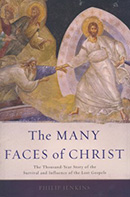
many faces of Christ 130While the Gospel of Luke mentions shepherds and a manger, nowhere in the New Testament accounts of the nativity do cattle or donkeys appear, said Philip Jenkins, author of the new book The Many Faces of Christ: The Thousand-Year Story of the Survival and Influence of the Lost Gospels.

Instead, they figure into a noncanonical account known as “Pseudo-Matthew,” said Jenkins, distinguished professor of history in Baylor’s Institute for Studies of Religion.

Conventional wisdom suggests the church selected four Gospels—Matthew, Mark, Luke and John—while other collected stories about Jesus were lost, hidden or obliterated.

philip jenkins 130Philip Jenkins But Jenkins’ research suggests the early church never really lost many of the other accounts. Instead, they remained influential until the Reformation—and even today play a major role in shaping the beliefs of some Christians, although they may not realize it.

“There’s this kind of myth that all these gospels went underground around the year 400 and were destroyed or lost,” Jenkins said.

But numerous have been found since the late 1770s—perhaps most notably in 1945, when farmers found a sealed jar near caves not far from the Egyptian city of Nag Hammadi. Inside were a dozen leather-bound papyrus books containing more than 50 texts, including some quotations attributed to Jesus.

Although church leaders centuries before did not ultimately accept as genuine sacred accounts such writings as “the Gospel of Nicodemus,” “Gospel of James” and various gospels of Mary, the accounts nevertheless were well known during the spread of the church, Jenkins said.

In Ireland, which began converting to Christianity in the fifth century, “people were freely using gospels that nobody knew hadn’t been approved,” Jenkins said. While today word travels fast via the Internet, “It’s as if centuries ago, they didn’t get the memo.”

During the Middle Ages, people even used some of the texts as the basis for poems and “mystery plays,” Jenkins said.

“These are probably plays that Shakespeare saw, and they probably disappeared around the time he was in his teens,” he said.

Some of the writings continue to have a strong impact today—particularly in Eastern Orthodox churches, Jenkins said. Some are considered canonical in Ethiopian churches, he added.

“However completely a text seems to have disappeared, its words and images often survived and were accepted, provided they met a powerful popular need,” Jenkins writes in his book. “Demand trumped censorship.”

Editor’s Note: The 7th paragraph was corrected after it was originally posted to correct an editing error, making reference to the Dead Sea Scrolls.


There’s no place like church for the holidays—if invited

NASHVILLE, Tenn.—Christmas is a great time to invite someone to church, a recent study by LifeWay Research reveals.

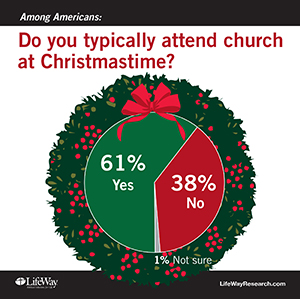
attend at Christmas 300In a poll of 1,000 people, LifeWay Research found six out of 10 Americans typically attend church at Christmastime.

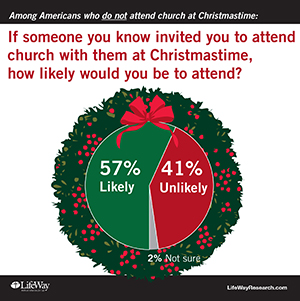
But among those who don’t attend church during the Christmas season, a majority—57 percent—say they likely would attend if someone they knew invited them.

“Regular churchgoers may assume the rest of America has already made up their mind not to attend church,” said Scott McConnell, vice president of LifeWay Research. “In reality, many would welcome going to a Christmas service with someone they know.”

invited Christmas 300Americans living in the South (66 percent) and Midwest (64 percent) are more likely to attend church during the Christmas season than those in the Northeast (57 percent) and West (53 percent).

Throughout the United States, more women than men are likely to attend Christmas church services—66 percent vs. 56 percent.

Those who attend church most frequently throughout the year (once a week or more) are the most likely (91 percent) to say they will attend church at Christmas.

Younger Americans are less likely to participate in a Christmas service than their elders. Fifty-three percent of those 18 to 24 say they attend church at Christmas, compared to 68 percent of those 65 and older and 67 percent of 35- to 44-year-olds.

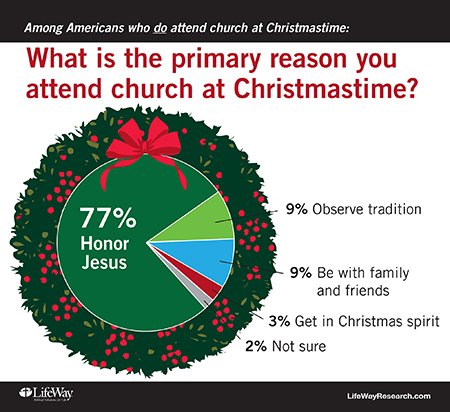
reason to attend 450For those who do go to church at Christmas, more than three-fourths—77 percent—say their reason for attending is “to honor Jesus.” Other reasons Americans chose lagged considerably, with 9 percent saying they attend church at Christmas to be with family and friends, another 9 percent attend to observe tradition, and 3 percent go to get in the Christmas spirit.

Even among the 29 percent of nonreligious who typically attend church at Christmas, 47 percent say it’s to honor Jesus, 20 percent say they do so to observe tradition, 27 percent to be with friends and family, and 6 percent to get in the Christmas spirit.

“Those invited to a church service at Christmastime may not attend for the same reasons as those who already plan to go. But the majority are open to going,” McConnell noted.

Researchers conducted the phone survey of Americans Sept. 14-28 using Random Digit Dialing. Fifty percent of completes were among landlines, and 50 percent were among cell phones. Analysts applied maximum quotas and slight weights for gender, region, age, ethnicity and education to reflect the population more accurately. The completed sample of 1,000 surveys provides 95 percent confidence the sampling error does not exceed plus or minus 3.6 percent. Margins of error are higher in sub-groups.


Americans fear terrorism, mass shootings—and often Muslims

WASHINGTON (RNS)—Terrorism and mass shootings trouble an overwhelming number of Americans today, and the religious identity of the killers influences how they are viewed.

A new survey, conducted in the aftermath of the San Bernardino, Calif., killings by two radical Muslims, found 96 percent of adults in the United States see terrorism as a critical issue or an important concern.

Mass shootings also are a critical or important issue for 94 percent of Americans, according to the Public Religion Research Institute/Religion News Service poll. 

And they take this fear personally:

• Four years ago, only 53 percent told researchers terrorism was a critical issue. Now, it’s 75 percent.

• Nearly half (47 percent) say they are very or somewhat worried they or someone in their family will be a victim of terrorism, up from 33 percent in 2014.

• Two in three of those surveyed (67 percent) called mass shootings a critical issue, and another 27 percent say it’s an important concern.

Fear level high

News of mass shootings in 2015—including in Charleston, S.C.; Chattanooga, Tenn.; Roseburg, Ore.; Paris; and most recently in San Bernardino—could be driving the responses, said Dan Cox, research director for the institute.

“The fear level seems terribly high given the actual likelihood of this happening to an individual. That speaks to the deep-seated feelings of anxiety that people have and their response to some of the current, heated political rhetoric,” Cox said.

Attitudes toward Muslims

Survey AMERICAN MUSLIMS425Muslims are the focus of the hottest news—and some of the most volatile political rhetoric—right now.

The FBI describes the California shooters, Tashfeen Malik and Syed Rizwan Farook, as ISIS-radicalized Muslims out to terrorize the United States by mowing down Farook’s co-workers.

GOP presidential contender Donald Trump—whose call for a ban on allowing Muslims to enter the United States came after the survey was conducted—has fulminated for weeks against allowing Syrian refugees into the United States. And his rival Ben Carson has said Islam is not in accord with American values.

The PRRI/RNS survey found this rhetorical climate might have influenced views on whether American Muslims are seen as “an important part of the U.S. religious community.”

Overall, 57 percent of Americans say yes, they are. However, views on the virtue of such diversity vary by religious identification—and by how personally afraid of terrorism someone feels.

Those who see Muslims as important to U.S. religious life include:

• Nearly seven in 10 (67 percent) of those with no religious identity.

• Majorities of nonwhite Protestants (56 percent) and Catholics (55 percent).

• About half of white mainline Protestants (51 percent) and white evangelical Protestants (47 percent).

Jews, Muslims and other minority religious groups were too small to be analyzed in statistical comparisons.

The survey’s results are based on phone interviews with 1,003 adults, conducted Dec. 2-6. The margin of error is plus or minus 3.7 percentage points overall but larger for subgroups.

Survey Syrian Refugees 425“Despite the heated rhetoric we are hearing from people like Donald Trump, the majority of the public (53 percent) are in favor of letting Syrian refugees come to the U.S. if they go through stringent security checking,” Cox said. Among those who oppose this, a majority (57 percent) cited security fears.

Fewer than half of Protestants—whether white or black, evangelical or mainline—say they support U.S. entry for Syrian refugees. By contrast, 57 percent of Catholics and 60 percent of those who claim no religious identification favor such resettlement.

Statistics reveal some dissonance

Most Americans (83 percent) say they know little or nothing about the religious practices and beliefs of Muslims. And 62 percent say they seldom or never have conversations with anyone they know to be Muslim.

Even so, 47 percent overall say they believe the values of Islam are at odds with American values and way of life. More than four in 10 (43 percent) disagree, while one in 10 (10 percent) offers no opinion or refuses to answer.

A majority (53 percent) said Muslims have not done enough to combat extremism in their own communities. In 2011, only 46 percent held this view.

The survey also suggests a double standard in American attitudes toward violence, one based on a killer’s religious identity. Three in four (75 percent) say self-identified Christians who “commit acts of violence in the name of Christianity are not really Christian.” But only 50 percent say self-proclaimed Muslims who commit violent acts in the name of Islam “are not really Muslim.”


Baylor offers prayers for Muslim students

WACO—During finals week, Baylor University assured its Muslim students—who number about 150—whatever rhetoric they hear around the nation, they are welcome and safe at the Texas Baptist school.

More than 400 students, faculty, staff, plus a few Waco residents, participated in a ceremony of prayer and support for Muslim students on campus Dec. 11.

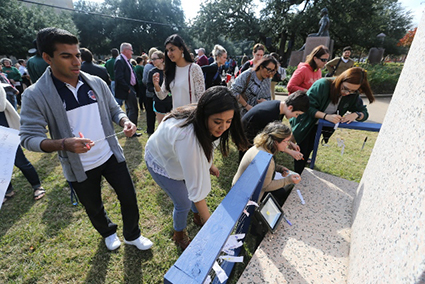
With print, radio and television media looking on, participants gathered at the Judge Baylor statue. They read aloud words of support and love, and they voiced prayers for victims of violence and for Muslims at Baylor. They then sang the hymn “For the Healing of the Nations.”

“People sang out,” said University Chaplain Burt Burleson, who helped organize the 25-minute event. “It was very powerful.”

BAYLORMUSLIMPRAYER2 425Participants tie supportive messages to a wall that will be given to Muslim students. (Baylor Marketing & Communications/ Robert Rogers)Also moving, he added, was seeing people write positive messages on strips of cloth that were then tied to a board.

Those messages included “No more injustice,” “We are all children of God” and “We stand with you,” as seen in photos on Baylor’s Facebook page.

“We are going to gather them,” so Muslims students can see the love and support they enjoy at Baylor, Burleson said.

Burleson noted he’s seen little pushback to the event and the sentiments behind it.

One person commented on Facebook the victims of terrorism should have been the focus of Friday’s prayers. Burleson pointed out one of the Muslim students replied, “We did do that.”

And someone from Dallas sent an email expressing hope that participants in the prayer gathering didn’t mean it when they referred to Muslims as brothers and sisters.

But the vast majority of responses, including some from some conservative evangelicals, communicated the message, “This is what we should be about,” Burleson said.

A conversation about a week before the event sparked it, he said. A friend asked how—in the midst of anti-Muslim rhetoric swirling through the media—the university’s Muslim students were handling the pressure.

“I said: ‘I’m glad you asked me. I will find out,’” he said.

It isn’t an unusual step, he added. When natural disasters strike other parts of the country, Baylor students from those regions typically are contacted and offered support.

Muslim students report feeling respected and welcomed at Baylor, Burleson said.

“We’ve invited them here, so it’s about hospitality in the biblical understanding of that word,” he said.


Buckner brings hope to at-risk East Texas families

LONGVIEW—Imagine living in a run-down apartment complex without air conditioning in the middle of a muggy East Texas summer. You want a job in order to move out of the apartment complex, but you can’t afford child care without a job.

Many Longview residents face this reality. And thousands more families there live below the poverty line without education, jobs or resources.

Despite bleak circumstances, Buckner International offers a ray of hope.

Project HOPES—Healthy Outcomes through Prevention and Early Support—is a preventive and early-intervention federal grant from the Texas Department of Family and Protective Services. It allows Buckner and other social services agencies to educate at-risk families about parenting and child development.

Initial doubts overcome

Project HOPES 8 300Shi Edwards’ son, Jermiah, 3, plays with other children in the Project HOPES program during a retreat at Camp Buckner in Burnet this past summer.Shi Edwards has been involved in nearly every program Buckner Longview offers, including Jobs For Life, Fit Life, and Faith and Finances, but she wasn’t so sure about Project HOPES. As a busy single mother of two young boys, Trent and Jermiah, she just wasn’t sure she had the time or energy to be successful.

She recalled when a Buckner caseworker said: “Hey, my friend, Travelle, is going to be one of the parent-educators. Just meet with her once and see how it goes.”

She agreed to a meeting but told the caseworker, “If I don’t like her, I’m going to call you back!”

Edwards credited the parent-educator, Travelle Robinson, with making a significant difference in her life.

“Honestly, if it weren’t for Travelle, I wouldn’t have stayed in the program, and I wouldn’t have been successful,” she said.

‘Running out of options’

Several years ago, Edwards moved back to Longview from Dallas, into a low-income apartment complex. Her youngest son about to turn 1.

“It was either we move here or we end up homeless, because we were running out of options,” Edwards said. “I wasn’t working. I wasn’t going to school. Things were just a mess. I was doing really bad.”

Her family helped for awhile, but eventually they told her they couldn’t help any longer.

She found out about Buckner through its summer feeding program at an apartment complex and built relationships with some of the staff. From there, Family Hope Center Director Jane Ann Crowson invited her to attend a Fit Life class to learn about healthy living and healthy eating.

When she completed that program, she decided to see what else Buckner had to offer. Turns out, it was a lot.

“I actually got a job because of Buckner’s help,” Edwards said. “So, without it, I would probably still be struggling. Without a doubt, I think I would still be there. I might have gotten a job, but it wouldn’t have been one that was good enough to get me and my kids away from there.”

Connect at-risk families to parent education

Gregg County, where Longview is the county seat, has one of the highest rates of reported child abuse in Texas, said Project HOPES Program Director Michelle Heflin.

Buckner Project HOPES is a free program that connects at-risk families to in-home parent education. Parent educators are the key to the whole program. They are adults, most parents themselves, who have been certified in a nationally recognized course called Parents as Teachers. The parent educator provides support and education for the parent while helping children with school readiness.

“What’s really helpful for families is that we come in and are able to provide assessments and screening for their children. So, if there are any early health risks or any other issues that are going on, we can help address those,” Heflin said. “We are able then to help connect resources for those issues the family needs to address more.”

All the families in the program start out with eight foundational visits. Those visits cover topics like child development and social and emotional skills. After the eighth visit, the parent educator tailors the home visit to whatever the family and child need, such as sleep schedules, routines and transitions.

Experience normal child development

All of the subjects are prime opportunities for children to experience normal child development.

“Normal child development can often be frustrating for parents, like when a child is having a meltdown in the store or getting upset about not getting a specific toy,” Heflin said.

“But being able to recognize a child’s need and then being able to respond with, ‘Thank you for telling me that you’re wanting this toy,’ or ‘Thank you for verbally telling me that you’re tired and sleepy,’ can be very empowering for parents.

“The parent is then able to respond to the child’s need and not get caught up on the feeling of the child is purposefully trying to upset the parent in the store.”

Each educator has about 18 to 20 families in his or her caseload. In addition to the monthly home visits, there’s a monthly group connection—a time for all the families in HOPES to come together and enjoy a meal together. They can network with each other and build camaraderie.

“When you’re raising your children, it just feels so great to be able to normalize some of the challenges that arise,” Heflin said.

Making progress

Since entering the program, Edwards found a job working for a local fast-food restaurant, got married and has seen huge changes in her relationship with her sons. The parent educator who worked with her noted her progress.

“Shi has always been driven,” Robinson said. “She’s always had that determination. She’s always said, ‘Oh, I’m going to provide.’ But I’ve seen more of a mom side come out with her children.”

Robinson has worked with the family to develop motor skills using objects in the Edwards’ home, which is a key strategy of Project HOPES.

“We’re not bringing in expensive toys that families can’t afford,” Heflin said. “We’re showing them how to use objects in their homes to help teach their children.”

Edwards also started reading more to her sons—a cornerstone of the program. She has seen many changes in her sons’ behavior, in part because they moved out of the apartment complex where they lived previously.

“I go back and volunteer there now once a week,” she said. “I think it’s really helpful, because most of the people who were living out there when I was living out there, the ones who wanted to make changes in their lives, they’ve gotten jobs and have started moving away. I think it helps to show others they can succeed, too.”


Book Reviews: 40/40 Vision and Project Inspired

40/40 Vision: Clarifying Your Mission in Midlife

By Peter Greer & Greg Lafferty (IVP Books)

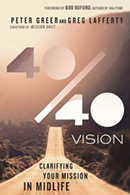
40 40 130Peter Greer and Greg Lafferty pack 40/40 Vision with wonderful answers to the questions: “What am I here for? Why is life so meaningless? What really counts?” The authors point readers to the Old Testament book of Ecclesiastes for clarity as they masterfully present Bible verses, Bible stories and personal testimonies. Greer and Lafferty encourage readers to place hope in things beyond the sun, not below the sun.

Even though 40/40 Vision doesn’t read as a how-to manual, the authors reinforce the importance of trusting God, not circumstances or the past. Greer and Lafferty provide simple suggestions to connect with God—volunteering and joining home groups. The authors lace 40/40 Vision with Bible verses expressing God’s grace and mercy. Greer and Lafferty remind readers Jesus has gone to prepare a home above the sun for his followers.

My midlife crisis hit when I turned 66 and my job of caregiving ended. 40/40 Vision landed in my hands at the time I needed to hear the encouraging words from Ecclesiastes. 40/40 Vision is an inspiring, well-written book full of encouragement, no matter where you fall on the age bar. Greer and Lafferty write, “Midlife is the time to narrow your focus of your to-do list.”

Bobbie Bomar-Brown

Estes Park, Colo.

Project Inspired: Tips and Tricks for Staying True to Who You Are

By Nicole Weider with Kristin Billerbeck (Zondervan, 2015)

project inspired 130Model and former actress Nicole Weider founded and maintains Project Inspired, “the largest online community of Christian teen girls.” As an outgrowth, she has written Project Inspired: Tips and Tricks for Staying True to Who You Are with “Christian chick lit” author Kristen Billerbeck.
Project Inspired helps girls navigate the challenging teen years with a focus on Christ rather than contemporary culture. Weider fills the pages with personal stories and biblical examples designed to inspire choices that honor God in all areas of life. Practical tips, Scripture and illustrative images add appeal to the volume.

Chapters include such topics as “True Beauty & Your Wardrobe Essentials,” “Defining Your Look & Must-Have Accessories,” “Etiquette,” “Friendships & Fun Activities” “Navigating Entertainment,” “Boys, Heartbreak & Relationships” and “Overcoming Depression.” A list of “Modesty Tips & Tricks” addresses skirt length, swimsuits, undergarments and more. Even more helpful for girls are nine traits to look for and 16 warning signs to avoid in guys. The section on spiritual gifts affirms the intersection of gifts, talents, dreams and discerning God’s voice.

Project Inspired would be a great gift for teen or late pre-teen girls, their parents, youth ministers or others who love them. Instead of preaching, “Don’t,” the author offers things to do, affirmation and a refreshing take on living the Christian life, in but not of the world.

Kathy Robinson Hillman, librarian

Baylor University

Waco


UT-Rio Grande Valley: Depending on God

As a campus missionary, I have done some things that pushed me outside my comfort zone.

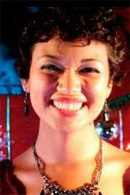
alexandra granda130Alexandra GrandaThis semester, I led Bible studies for the first time in my life, and I was scared at the thought of it. My expectations for someone leading a Bible study were very high, and I knew I couldn’t meet many of them. How could I possibly be ready for those hard questions people might have about God? I was sure I didn’t know all the answers.

Dependency on God allowed me to overcome these difficulties and be reminded that the Holy Spirit works through us. In my small group, we covered two great Bible studies that dealt with foundations on how to live a life led by the Holy Spirit. Each week, I was reminded how the Holy Spirit is indeed a divine Person with a mind, emotions and a will and the character of God (1 Corinthians 2:10-11).

My small group soon became a bigger group, and many of the students ended up leading Bible studies. To depend in God is one of the hardest but most rewarding things one can do. I have been able to see God transform lives and hearts of students walking toward the path to live a life led by the Spirit. 

Alexandra Granda served this semester with Go Now Missions as a campus missionary intern at the Baptist Student Ministry at the University of Texas-Rio Grande Valley.


Wayland business students help Kenyan women

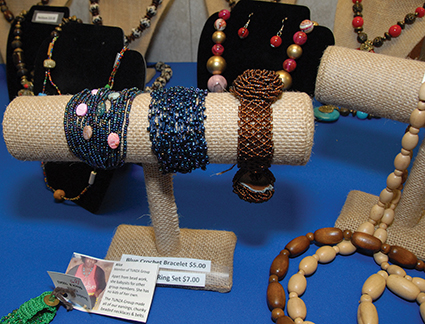
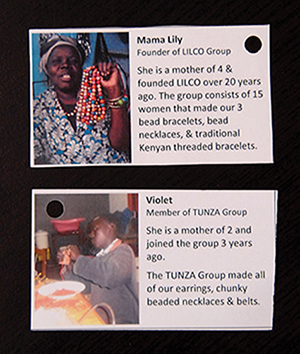
Kenya cards 300Each piece of jewelry comes with a card with a picture of a Kenyan woman working on the pieces. The card gives the woman’s name and tells a little bit about her.PLAINVIEW—Visitors to the office suite in Wayland Baptist University’s School of Business immediately see a table filled with colorful beaded and woven necklaces, earrings and bracelets. A card attached to each piece of jewelry pictures a Kenyan woman hard at work, identified by name and a description of what she is doing.

For the past year, Enactus, Wayland’s student entrepreneurial group, has sold handmade jewelry from Kenya to raise funds for trips to Africa, as well as providing additional income for women who produce the inventory.

Offering entrepreneurial training

But what ended as a fundraising opportunity for students began as a teaching and service opportunity nearly two years ago, when a Wayland group traveled to Kenya to offer basic entrepreneurial training.

Barry Evans, dean of the School of Business, explained the unemployment rate among women actively seeking jobs in Kenya is more than 48 percent. Many people who want to work or start their own businesses simply don’t know where to begin.

Enactus sought to use what the students had learned and present it to potential entrepreneurs in Kenya to help them develop businesses to improve their livelihood.

Echols jewelry 2 425Jessica Echols, a senior at Wayland Baptist University, was among the group of Enactus students who helped set up the Kenya jewelry fundraiser at Wayland. The fundraising effort partners directly with small businesses in Kenya, benefitting not only Wayland students, but also the women working in jewelry making groups.“We went over there to do entrepreneurial training,” said Jessica Echols, who graduated Dec. 12 with a degree in business administration. “We really put an emphasis on marketing. From what we were told, that was a major concept that they didn’t understand. But we also did finance, accounting, management and different things like that.”

Students met with the people and divided them into small groups with similar interests, such as agriculture or other areas of commerce. Wayland students worked with these groups to help set up business plans and teach the Kenyans how to look at finances and evaluate the cost of production to determine what to charge.

In small villages outside Nairobi, tourists can purchase jewelry at markets. A middle-man typically asks what people are seeking, collects the inventory and sells it to the interested party, pocketing most of the money and returning a few dollars to the artisans who made it. Some of those manufacturers are groups of women who string beads and produce jewelry in an attempt to earn enough money to put food on the table for their families.

Cut out the middle-man

One student returned from the initial trip with some handmade jewelry. Evans wondered if the Wayland students could work directly with these groups of women to raise funds for future trips.

Kenya jewelry 3 425“I thought a better way to do it would be to contract directly with the women who make the jewelry,” said Evans, who was familiar with the market system used in Kenya. “The middle-man in that system was the one who pretty much made all the money. It didn’t really help solve any problems rather than provide a few meals for them.”
Gilbert Werema, an online marketing professor for the School of Business, has a sister who lives in Kenya. She helped contact the groups and set up the direct line through which Evans was able to order merchandise.

‘Life-changing for the women’

Evans and the students viewed samples of the jewelry and tried to decide what would sell locally. Last fall, they placed an order for about $3,000 worth of merchandise. “That was life-changing for the women in the village,” Evans said. “That was more money than they had seen at one time in their lives.”

Group organizers used the money to purchase new inventory and hire more women to help fill the order. Echols commented it was nice to see their investment pay dividends for the workers in Kenya.

“Now, (one of the founders of a work group) has a huge box. … It’s just a big box with a glass side and it has every type of bead, different colors, things like that,” Echols explained. “Before we made our investment, she didn’t have that. It was a way to expand her business.”

Expand the fundraiser

Enactus has spent the last year selling the jewelry, and the $3,000 order has turned into approximately $6,000 in sales. The group wants to expand the fundraiser, offering beaded bracelets in school colors to the Plainview High School Band Boosters to sell as a fundraiser for the band. Evans called it “a win-win-win proposition” as the band boosters stand to make the most profit, while Enactus will also clear some profit, and it all benefits the women in Kenya.

Evans hopes to work with other groups interested in selling the bracelets as a fundraiser. The women can produce them in whatever color combination is needed.

How to order

Jewelry can be purchased online by clicking on the merchandise link here. (http://bookstore.wbu.edu/) Look for the Enactus Kenyan jewelry link in the side bar.

For more information about the program, contact the School of Business at (806) 291-1020.


Commission calls on U.S. government to designate ISIS atrocities ‘genocide’

WASHINGTON—The U.S. Commission on International Religious Freedom urged the government to designate religious minorities in Iraq and Syria as “victims of genocide” by ISIS.

The commission issued a statement Dec. 7 formally calling on the U.S. government to “designate the Christian, Yazidi, Shi’a, Turkmen and Shabak communities of Iraq and Syria as victims of genocide” by the group variously referred to as the Islamic State, ISIL or ISIS.

Crimes against humanity

The commission also urged American and world leaders “to condemn the genocidal actions and crimes against humanity of ISIL that have been directed at these groups and other ethnic and religious groups.”

In its annual report, the commission recommended the U.S. government should refer the human rights abuses to the U.N. Security Council, so it can convene a formal commission of inquiry to investigate. That opens the door to sanctions and prosecution of offenders by the International Criminal Court.

“The hallmark of genocide is the intent to destroy a national, racial, ethnic or religious group, in whole or in part. ISIL’s intent to destroy religious groups that do not subscribe to its extremist ideology in the areas in Iraq and Syria that it controls, or seeks to control, is evident in not only its barbarous acts, but also its own propaganda,” said Robert George, chairman of the commission.

‘The word that wakes up the world’

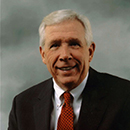
Frank Wolf 130Frank Wolf Frank Wolf, former U.S. congressman from Virginia, said the commission’s declaration “adds a strong and long-awaited voice to the chorus of those calling upon the U.S. government and the global community to properly and unequivocally designate ISIS’ actions as genocide.”

“The importance of using this powerful term is simple: Genocide is the word that wakes up the world,” said Wolf,the inaugural Wilson Chair in Religious Freedom at Baylor University and distinguished senior fellow with the 21st Century Wilberforce Initiative.

He was the author of the legislation that amended the International Religious Freedom Act of 1998 to reauthorize the U.S. Commission on International Religious Freedom as an independent government advisory body through 2019.

“The U.S. government should swiftly designate Christian, Yazidi, Shi’a, Turkmen and Shabak communities of Iraq and Syria as victims of genocide and take all possible action to protect the remaining members of those communities, destroy ISIS and prosecute the leaders of the insurgency to the full extent of international law,” Wolf said.

Honor the victims

The 21st Century Wilberforce Initiative, a human rights and religious liberty organization headed by Randel Everett, former executive director of the Baptist General Convention of Texas, has led a campaign to persuade national and international officials to apply the term “genocide” to ISIS’ oppression of religious minorities.

“We have come to believe what is happening at the hands of the Islamic State in Iraq is genocide and constitutes crimes against humanity,” Elijah Brown, executive vice president of the 21st Century Wilberforce Initiative, told a Texas Baptist gathering on the eve of the BGCT annual meeting.

Governments and international bodies apply the term “genocide” sparingly, but “the atrocious acts perpetrated by the Islamic State” against religious minorities fit the definition as determined by the United Nations, said Brown, former professor at East Texas Baptist University.

“Using that language honors the victims,” he said.


Book Review: God of Justice

God of Justice: The IJM Institute Global Church Curriculum

By Abraham George & Nikki A. Toyama-Szeto (IVP Connect)

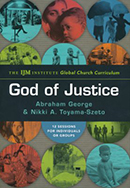
God of Justice 130With its clear biblical worldview and evangelical focus, International Justice Mission tirelessly works to rescue people around the world from oppression and modern-day slavery. The group gives those trapped in environments of poverty and violence hope in Jesus Christ and the knowledge they are created with dignity in the image of a holy God. International Justice Mission also calls on the church to engage the world with the power of the gospel to free the captives and fight for justice.

God of Justice is designed for use either as a group-study curriculum or for individual study. Each of the 12 sessions explores specific Bible passages teaching about aspects of God’s character and his activity to advance his kingdom, shares current inspirational stories of people International Justice Mission has helped, and asks challenging questions of one’s personal life and call to justice.

If you and your church are looking for a theological spark to help meet the needs of people in a world of injustice, this resource is an excellent place to start. Then consider following up by reading International Justice Mission President Gary Haugen’s books for further discussion.

Greg Bowman, pastor

Brock Baptist Church

Brock