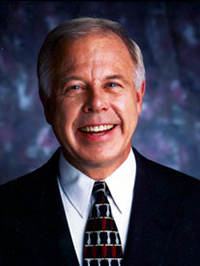
Daniel John Yeary, longtime Baptist minister, died Jan. 4 in Houston. He was 81. He was born Dec. 28, 1938, to John and Eileen Yeary in Miami, Okla. He grew up in Cleburne, where he earned nine varsity sports letters at Cleburne High School and was a student leader at First Baptist Church. Yeary then attended Hardin-Simmons University where he played quarterback under Coach Sammy Baugh and was president of the Baptist Student Union. As a student at HSU, he served on staff at Colonial Hill Baptist Church in Snyder and Southside Baptist Church in Abilene. He and Melinda Millican married on March 31, 1961. Following Yeary’s graduation from Southwestern Theological Seminary in Fort Worth, where he received the J. M. Price Scholarship Award as outstanding student in the School of Religious Education, he began leading student work for the Kentucky Baptist Convention. After two years, he was called to lead the college ministry at First Baptist Church in Lubbock. Under his leadership, the ministry grew so large the church initiated one of the first student-led worship services in the country. More than 1,000 students attended each Sunday. From Lubbock, the Yearys moved to South Main Baptist Church in Houston, where he served as associate pastor and developed a pioneering ministry to single adults. In 1975, he was called to University Baptist Church in Coral Gables, Fla., as senior pastor. Under his leadership, the church grew to exceed 2,000 in attendance any given Sunday. After 18 years in Florida, the Yearys followed God’s call to Arizona, where for two decades he served as pastor of North Phoenix Baptist Church, one of the nation’s largest churches. Facing the challenge of leading the church and being his wife’s primary caregiver during her long struggle with Multiple Sclerosis, Yeary stepped down from his pastorate at North Phoenix. The couple moved to Waco in 2013, where he was interim pastor of First Woodway Baptist Church and adjunct professor at Baylor University’s Truett Theological Seminary. Following Melinda’s death in 2016, he moved to Houston in 2017 to be closer to his children and grandchildren. Hardin-Simmons University awarded Yeary an honorary doctorate in 1996, granted him the HSU Distinguished Alumni Award in 2003, and named him to the HSU Hall of Leaders in 2009. Yeary was preceded in death by his beloved wife of 55 years, Melinda, and his brother, Ron (Speedy) Yeary. He is survived by son Wes Yeary and daughter-in-law Erica; daughter Missy Yeary Wells and son-in-law Steve; son Doak Yeary and daughter-in-law Amy; and 10 grandchildren. He was looking forward to the birth of his first great-grandchild at the end of this month. A service celebrating his life and faith will be held at 1 p.m. on Jan. 10 at South Main Baptist Church in Houston. In lieu of flowers, the family requested memorial gifts be made to South Main Baptist Church in Houston or the Fellowship of Christian Athletes.
South Texas: Broken heart and border blessings
January 9, 2020
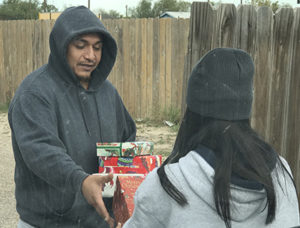
I have a broken heart. One of the things my student missions team did while on the field in South Texas was partner with Angel Tree, a ministry that allows inmates in prison to write a message to their children from prison. Through donations, Angel Tree sends each child a Christmas present. Our task was to wrap the presents, put the message from the incarcerated mother or father on it, and hand-deliver the present to the home of the children.
Student missionaries wrap Angel Tree gifts. (Photo courtesy of Halle Smith)
Recently, my family experienced something similar. About six months ago my brother-in-law was convicted of a crime and initially received a 10-year sentence, plus an additional 10 years of probation after that. My sister would have been responsible for taking care of their three kids—ages 3 months, 18 months and 3 years—with no job. God was gracious to our family, and he wasn’t sent to jail. However, he had to go two months without being able to see his children, and that alone wrecked all of us.
I came down here to the Texas/Mexico border thinking I wouldn’t be able to relate in any way to the people. I am not Hispanic, and I have never had to experience part of my family being stuck on the other side of the border.
Student missionaries deliver Angel Tree gifts. (Photo courtesy of Halle Smith)
But God knew why I was placed here. I was able to hand-deliver presents to children, knowing something about the pain of the mother—or father—and of the children receiving the gift. It’s not something I can put into words. The pain of not having your parent. The pain of not getting the see your child or children. God used me—used my team—to bridge that gap between parent and child this week. And it gave me such a clear and beautiful image of how Jesus bridged the gap between us and our Father.
God was very gracious in what he did in my heart and in what he did for the families we were able to serve. It was nothing we did. God just used our hands to spread his hope and love to those who needed it this Christmas. We serve a wonderful God.
Halle Smith, a student at the University of Texas at Tyler, served with Go Now Missions in Mission, Texas, during Christmas break.
Explore the Bible: Honored
January 9, 2020
The Explore the Bible lesson for Jan. 26 focuses on Deuteronomy 4:1-9.
One Sunday morning, I received a text message from the fourth and fifth grade Sunday school teacher. The teacher was sick and asked if I could teach the class. I agreed, not knowing what I was getting myself into.
After the large-group session, the class broke into small groups. I called my class and went in to our classroom. This is where the chaos began. The children began to talk, run and hit each other regardless of my presence. Exasperated, I tried to regain control of the class but it was too late. I raised my voice loud enough so they could hear me and asked them, “Can you listen and follow my instructions?”
They looked at me. For a moment, I thought I had won the battle, but I was so wrong.
Sometimes I wonder: Is this how God feels every time he tells us something, through his word or by other means, and we do not listen? This is a call-to-action lesson. God invites us to listen and honor him so we can teach others about his blessing and wonders.
Listen (Deuteronomy 4:1-5)
Moses commands the people of Israel to obey God and his laws. But before they are able to obey, they must listen to God’s commands. Moses begins this section by calling the people to action; that is, he calls on them to listen. Moses invites the Israelites to leave their daily routines and gather together in order to hear a message that can drastically change the course of their lives.
Moses simply retold what happened at Baal Peor. Some people were destroyed because they worshiped the Baal. Others, who remained faithful to the Lord, were still alive. This has been the pattern in the books of Numbers and Deuteronomy—listen, follow and obey.
As leaders, pastors or teachers, this is our responsibility before the Lord—to encourage others to listen, follow and obey God’s word and commands. Jesus followed the same outline with his disciples. They listened, followed and obeyed God’s command. Paul, in his first letter to Timothy, encouraged him with these words: “My son Timothy, I am giving you this command … by remembering them, you can fight the battle well (1 Timothy 1:18). The only way we can follow and obey God’s command is by listening.
Honor (Deuteronomy 4:6-8)
The first reaction that came to mind after reading this section was that it’s an invitation to boast and brag about your God. Moses understood the importance of following the commands. He knew that if the nations looked at the behavior of the Israelites, they would be convinced there was a God superior to theirs. Imagine living in a lawlessness world and your God commands you to behave as wise and understanding people. That was certainly a culture-shock for many.
In verse 7, Moses made an intimate comment. He told the people God is nearby every time they pray to him. Consequently, he challenged them with a question, “What other nation is great enough to have its gods that close to them?”
God wanted them to feel proud of serving and following a God who was close to them every time they needed him. This section reminded me of my kids when they were in preschool. They were so proud of me as their dad that they would tell their friends, “That’s my dad!” God wanted the Israelites to feel the same way about him:“That’s my God!”
Teach (Deuteronomy 4:9)
This last section is a picture of what could happen if the people keep the commands alive. Moses warns them to not be careless and to “keep their soul diligently” (ESV). He also encouraged them to keep alive the things their eyes have seen as long as they live. The purpose of keeping these wonders active in their minds was to teach them to their children and their children after them.
It is important to keep these commands in mind. We need to be mindful to teach future generations about God’s wonders and love. Failing to do this can bring destructive consequences.
In his second letter to Timothy, Paul wrote: “I remember your honest faith and true faith. It was alive first in your grandmother Lois and in your mother Eunice. And I am certain that it is now alive in you also (2 Timothy 1:5).” Timothy’s faith was the end result of the commands given by God to the people long time before he was even born.
As leaders, teachers, parents, and followers of Christ, we have an immense challenge before us to teach the future generations to keep alive one’s own memory of God’s presence, guidance and blessings. What are you doing to teach the future generations about God?
Jaime Cortez is discipleship pastor at First Baptist Church in Athens, Texas.
Review: What If … God Has Other Plans?
January 9, 2020
What If…God Has Other Plans? Finding Hope When Life Throws You the Unexpected
By Charles R. Swindoll (Tyndale)
Many people face each day wondering what to do if their carefully laid plans are not those God has for them. What if God’s will is not my will? Charles R. Swindoll, long-time pastor and writer, addresses such questions in What If…God Has Other Plans?
Swindoll deals with a variety of questions, including: “What if you suddenly lose everything?” “What if a longtime friend deceives you?” and “What if you need a second chance?” With each issue addressed, Swindoll approaches the topic on two levels: one, as a pastor would deal with such a situation in the church; two, as an individual would deal with such problems in his/her life.
From the chapter on “What If . . . a Person Is an Unrepentant Troublemaker?” he suggests what he calls “a helpful formula that has been used in the church over the centuries.” The approach works “in most situations where not everyone agrees but where all desire harmony rather than strife,” Swindoll writes. “I suggest you memorize it and then put it into practice: In essentials…unity; in nonessentials…liberty; in all things…charity.”
Wise and timely advice permeates the book and makes it a valuable resource for resolving interpersonal conflicts.
Alice Thomas
Conroe
Faith leaders seek to combat stigma of mental illness
January 9, 2020
LOS ANGELES—Kurt Lange, lead pastor at East Coast International Church north of Boston, texted Kristen Kansiewicz, “How do you know if a person is emotionally healthy?”
While that is a big question—one Kansiewicz ended up writing an entire book about, instead of just responding in a text—it’s not uncommon for Kansiewicz, a licensed counselor and staff member at East Coast International Church, to get texts like that as Lange or one of the other pastors is writing their sermon.
Kansiewicz also is the founder of Church Therapy, which provides low cost mental health services in churches and offers training for counselors specializing in Christian integration.
Her model is about getting counselors in church settings—not only to ensure congregants get the professional resources they need, but also in the hopes of prompting pastors to talk more openly about mental health.
“My presence keeps mental health at the front,” she said. “Decreasing stigma happens all the way from the sermon on Sunday to the way we interact with people who arrive at our church.”
One in five adults in the United States experience mental illness, and suicide is the second leading cause of death among people ages 10 to 34, according to the National Alliance on Mental Illness.
But historically, faith traditions have been reluctant to talk about mental health and categorized suicide as a sin, often leaving survivors and family feeling neglected and hurt.
“That lack of community, that lack of inclusion, that lack of feeling that you are part of the body of Christ contributes to suicidality,” said author and pastor Rachael Keefe.
Stuck in the in-between
When Matt Stanford, CEO of the Hope and Health Center & Institute in Houston, started his career, churches were resistant to even having a conversation about mental health.
Mental health offers churches a great missions opportunity, Matthew Stanford of the Hope and Healing Center in Houston told the No Need Among You Conference. (Photo / Ken Camp)
Although there still are examples of faith leaders continuing to condemn suicide, over the years, Stanford said, he has seen many faith groups starting to move away from viewing suicide as an “unforgivable sin,” and the conversation is starting to change—with Hope and Health Center providing mental health training to about 80 faith communities around Houston and a new training at least once a week.
But that doesn’t mean faith groups have fully dealt with their past.
“I think the problem right now is that it’s more of a conversation, like, yes, there’s a problem. Yes, we need to be involved. And that’s kind of where it is. It hasn’t been able to move forward yet,” said Stanford, who earned his doctorate in behavioral neuroscience at Baylor University.
But that “in-between place,” without a new alternative narrative, still is contributing to the problem, Keefe said.
“If we don’t speak out against the shame and stigma, then we are participating in it,” she said. “Suicide is mentioned seven times in the Bible; not one tells us God’s response.”
The idea of addressing the shame and stigma can be a Goliath-level challenge for some places of worship.
“I think a lot of faith communities don’t know how to address it,” said Melinda Moore, clinical psychologist and assistant professor in the department of psychology at Eastern Kentucky University and co-lead for the Action Alliance’s Faith Communities Task Force.
The task force, she said, is “trying to demonstrate some leadership on how faith communities could address the problem of suicide in a loving, prayerful way.”
Moore lost her husband to suicide over 20 years ago. She continued going to church, but, she said, “I did not feel supported by my church.”
She did, however, feel supported by Christ and, for her, that was enough at the time.
“But faith communities can be doing so much more,” she said. “Unless the pastor or the rabbi or the priest addresses the issue of suicide, (parishioners) are not going to know it’s OK to open up about it.”
Bible-centered counseling
Pastoral and biblical counseling have been common in the past and often are still present in churches today. In 2012, Spotswood Baptist Church in Fredericksburg, Va., created an entirely separate biblical counseling center.
The center focuses on using “biblical perspectives” to help patients and keeps the cost for each visit on a donation-basis; its counselors pray at the beginning and end of each session.
Gene Willis, director of biblical counseling, said they always let people know they aren’t approaching this from your typical clinical basis and that it’s from a biblical perspective—and that’s why people come, he said.
“People come because they know that,” Willis said. “We want to be different. We don’t want to be your typical analysis where it takes God out of the picture. We put God in the picture.”
Willis said they’ve seen thousands of people since they’ve opened and are usually booked a month out. Spotswood’s senior pastor, Drew Landry, knows that nobody is immune from the “difficult, dark days of life,” including those in the Bible.
“There are people in Scripture who went through things like this,” Landry said. “Their faith has enabled them to persevere through the difficult seasons of life.”
For him as the pastor, it has been important to have a place to refer someone when they come to him with larger problems. And, he said, it has allowed the entire congregation to be more open about their own mental health.
“Because we have a counseling center, we have also had one of our staff members be pretty transparent when he’s had an opportunity to preach and teach,” Landry said. “I guess we’ve kind of given our congregation permission to have the conversation.”
Although two of their staff members currently are working toward getting their license, Spotswood currently doesn’t have a licensed therapist on staff.
Kansiewicz said there’s always going to be a place for pastoral counseling but hopes churches will look for licensed therapists for people who need longer-term or deep psychological help.
“That’s important to not get in over your head,” she said. “But also, a licensed counselor is mandated in more situations than a pastor is.”
Stretched thin
Stanford recognizes faith organizations already are stretched thin. But it would be a misconception to think any church is immune to this problem, he said.
“They look at their community and think it’s not important because nobody is talking about it,” he said.
But, he pointed out, they likely aren’t talking about it because of the stigma—not because it’s not a problem.
“Everyone has a story,” Keefe said. “If one in (five) people have a mental health challenge, everyone has a story. If you’re not the one struggling, someone you know and love has had mental health struggles.”
But faith groups don’t have to start an entire counseling center to impact their communities. For some places of worship, the next step might simply be mentioning mental illness and suicide in a newsletter or during prayer.
“It’s a very simple way to start bringing some of that in,” said Keefe. “And when that becomes more comfortable for people, when it becomes routine that these kinds of prayers are accepted, maybe they will share their own prayer requests.”
Some churches post the Suicide Prevention Lifeline in a highly trafficked area or put up information about what support groups are around the area. Other faith organizations bring in speakers, start support groups or find training events in their area.
Stanford said people are more likely to go to clergy before they go to a mental health care provider or physician. It’s important to train faith leaders how to respond and where they can lead people to get the help they need—instead of trying to stand in for psychiatrists and psychologists.
Stanford said one of the most important things they do at his center is try to help faith leaders recognize and identify what to look for, develop safe and effective responses, facilitate small groups and become a “Peer Mental Health Coach.”
“(People) don’t walk in the door and say, ‘Hey, I woke up this morning, and today is the first day of a six-month decline in depression in my mood. And then six weeks from now, I’m going to be in a depressive episode, so I need you to help me,” Stanford said.
Instead, he said, they walk in the door complaining about losing another job or about not getting along with their spouse.
“(Faith leaders) tend to focus on the now,” he said. “‘OK, you’re not getting along with your wife—well, that’s a problem. We got a marriage class. Or you’re not getting along with your wife—it’s a communication issue, start praying together.’”
Kansiewicz has noticed there are not enough licensed counselors that understand how to bridge traditional secular counseling with that of people’s faith.
“People come to me because they’re like, ‘Oh, I would never go to counseling except for I know who you are when you’re in the church building.’ And so, it makes them feel safe,” she said.
Her program is working to address that problem in churches—and at little cost.
“(We) really train up our counselors and teach them that it’s possible to work in a church setting,” she said. “A lot of students that I went to school with really have a heart for working with the church, and they just don’t think it’s possible.”
When there’s a therapist present, the culture of mental health in the church really changes, she said. Now her congregation sees going to Kansiewicz as “a badge of honor”—whereas most of her patients hadn’t ever gone to counseling before.
“That’s the sign they’re really serious about moving forward emotionally and spiritually,” she said. “They want to tackle the stuff they’ve never dealt with before.”
Editor’s note: Texas Baptists’ Counseling Services offers confidential assessment, counseling and referral services for ministers and their families, along with counseling resources for all Texas Baptists and group presentations on mental health topics. Contact Katie Swafford at (800) 388-2005 or email counselingservices@texasbaptists.org.
On the Move: Mendez
January 9, 2020
Luke Mendez to Calvary Baptist Church in Abilene as youth pastor.
Around the State: Waxahachie choir performs at Carnegie Hall
January 9, 2020
Chett Haynes, associate pastor of administration and worship at First Baptist Church, led the group of 68 singers and 36 guests from Waxahachie to New York to perform at Carnegie Hall.
Choral musicians from First Baptist Church in Waxahachie performed at Carnegie Hall recently. As part of the Distinguished Concerts Orchestra and Singers, they presented the premiere of “Sing Christmas!” by composers Mary McDonald and Joel Raney. The choir performed the cantata before a sold-out crowd in the Stern Auditorium, with McDonald conducting and Raney providing piano accompaniment. “It was a full house that heard the gospel through music that evening,” said Chett Haynes, associate pastor of administration and worship at First Baptist Church. Haynes led the group of 68 singers and 36 guests from Waxahachie to New York at the invitation of Hope Publishing Company.
Ferrell Foster
Ferrell Foster, director of ethics and justice with the Texas Baptist Christian Life Commission, will begin work in February as content specialist for care and communication with Prosper Waco. He will work with Prosper Waco CEO Suzii Paynter March, former CLC director and past executive coordinator of the Cooperative Baptist Fellowship, on projects and initiatives that advance benchmark indicators in health. He also will implement partnerships to build and strengthen a continuum of care for behavioral and mental health services in Waco. Foster has served with the Baptist General Convention of Texas Executive Board staff since 2000, working several years in the communications office before joining the CLC. He is the former editor of the Illinois Baptist. He holds a doctor of ministry degree in Christian ethics from Hardin-Simmons University’s Logsdon Seminary.
Texas Baptist Men disaster relief workers responded to a dozen disasters in multiple locations in 2019, giving more than 72,000 volunteer hours. Deployments included flooding throughout Southeast Texas and tornadoes in the Dallas area. When combined with out-of-state ministry partners who worked in Texas under TBM supervision, disaster relief workers donated more than 86,500 volunteer hours. TBM crews prepared more than 52,000 meals, distributed more than 1,000 Bibles and recorded 83 professions of faith in Christ that resulted from more than 8,100 ministry contacts.
Jesse Rincones, executive director of the Hispanic Baptist Convention of Texas, spoke at Dallas Baptist University’s winter commencement.
Dallas Baptist University granted an honorary Doctor of Humanities degree to Jesse Rincones, executive director of the Hispanic Baptist Convention of Texas. Rincones, former pastor of Alliance Church in Lubbock, spoke at DBU winter commencement services. He encouraged the new graduates to face the challenges of their calling with faith and not to underestimate the impact of doing small things with excellence.
Ten years after graduating from Hardin-Simmons University, motivational speaker Roy Juarez Jr. returned to the Abilene campus recently for a public reading from his recently published autobiography, Homeless by Choice: A Memoir of Love, Hate and Forgiveness. Juarez spent his adolescent years homeless in San Antonio due to domestic violence. Eventually, he graduated from high school and went on to earn a business degree from HSU. Since 2010, he has traveled extensively, speaking to more than 450,000 students, educators and parents.
Jeffry Archer, associate dean of user services at McGill University in Montreal, Canada, will join Baylor University as dean of university libraries, effective June 1. As dean, Archer will lead the Baylor University Libraries, which includes special collections such as the Armstrong Browning Library; the Texas Collection and University Archives; the Institute for Oral History; the Keston Center for Religion, Politics, and Society; and the W. R. Poage Legislative Library. Archer went to work with the McGill University Library and Archives in January 2017. Before joining McGill, Archer served more than two decades with the University of Chicago library.
Connect360: The Miraculous Feeding
January 9, 2020
Lesson 8 in the BaptistWay Press Connect360 unit “Miracles: The Transforming Power of Jesus” focuses on Matthew 14:14-21.
The Old Testament tells the story of how God tested Abraham’s faith by challenging him to sacrifice his beloved son Isaac (Genesis 22:1–19). In response to Abraham’s unquestioning obedience, God stepped in to spare Isaac by providing an acceptable substitute sacrifice, a ram ensnared by bushes.
This account introduced a new name for God—Yahweh-Yireh (God Provides). The full meaning of the name does not imply that God responds to needs as they arise, but rather that God sees ahead and has already made provision for a need before it even comes up.
Jesus Provides
His disciples knew Jesus as a teacher and healer whose authority came from God. Jesus wanted to open their eyes to the truth that he was the same Yahweh-Yireh who had provided the ram for Abraham’s sacrifice. It was no harder for Jesus to heal the sick, raise the dead or feed a multitude of thousands than it was for him to increase the faith of a group of bewildered disciples.
When the disciples surrendered to Jesus their meager store of food, he gave thanks for God’s provision. The miracle was already in progress before Jesus began to pull apart the first piece of bread. That is the true nature of faith. It rests in the certainty that God has already decided what he will do and has already begun to act upon it—and that God’s decision and action are always right and best, regardless of what they are. The disciples waited to see what Jesus would do with five bun-sized loaves of bread and two dried fish. Jesus watched to see if his disciples would truly comprehend who he was.
While all four Gospel writers give us the number of men in the crowd that day, Matthew is the only one who tells us that women and children were also present. Such information immediately doubles the number of people there, at least, and allows for the total attendance to grow well past 10,000. That number exceeded the population of the entire area. Even had the crowd dispersed to find food in nearby villages, there was little chance of finding that much provision in local stores. Many people would have gone hungry until they returned to their homes.
Some people today spend so much effort worrying about their overwhelming needs that they miss the power and provision of Yahweh-Yireh. Jesus is the spiritual bread that satisfies our deepest hunger and embodies God’s presence with us. He can multiply blessings in believers’ lives as readily as he increased food for the crowd. He can replenish with spiritual wealth the poverty of our broken spirits.
Compiled by Stan Granberry, marketing coordinator for BaptistWay Press.
To learn more about BaptistWay Press and the Connect360 Bible study series, or to order materials, click here.
East Asia: Sharing the gospel, encouraging believers
January 9, 2020
A Go Now Mission team served in East Asia over Christmas break, working in a city where more than 1 million college students live and study. So, their task was to meet college students, help lead English classes and attend Christmas parties, looking for opportunities to share the gospel.
One of the team members shared a conversation she had with a new friend:
(Courtesy of Go Now Missions)
“It was lunch time when we shared the gospel with two students. One of them turned to me and asked if I believe all this. I said yes! The student asked, ‘How can I believe this if my environment never taught me about it, not even my family?’ I explained to the student that there was a time in my life when someone spoke to me about the gospel, just like we did to them. But I was never taught about it at home, so I had to choose. I explained many more things and answered more questions. At the end the student really amazed said, ‘After you explain this to me, I think I can believe more about God.’”
Another student on the team told about an opportunity they had to study the Bible with a believer and some of her friends. “We sat in a circle and sang worship songs. After that, we talked about what the songs meant and why we sang them. We read Scripture and talked about who God is. The students were engaged and asked questions, and we were able to share our testimonies with them. Both the students agreed to continue meeting with our friends to read the Bible together.”
Pray for these new friends as they continue studying Scripture. Pray for the other many college students in this city who do not know God personally, that those who are believers would be bold in sharing the gospel with those who have never heard. And pray for the Go Now students, that as they return to their own campus for the spring semester they would continue to share the gospel with students who have not heard.
Compiled by Erica Harnisch with Texas Baptists’ Collegiate Ministries, from reports submitted by students who served with Go Now Missions.
Montaño continúa siguiendo a Dios a donde Él le lleve
January 9, 2020
Carlos Montaño sintió el llamado de servir a Dios a temprana edad, pero no fue a algo específico al principio. Aun así, Montaño sabe que Dios ha guiado su vida y continúa llevándolo a lugares a los que él nunca imaginó.
“Mi llamado ha sido un proceso en el que el Señor ha abierto puertas y yo entro por ellas,” él dijo.
Montaño creció en Bolivia, con dos hermanas y tres hermanos, en un hogar con padres que dedicaron sus vidas al ministerio. Estudió en un instituto de arte en Cochabamba donde se concentró en música. De los 42 estudiantes que empezaron con él en el cuarto grado, él fue uno de los 15 que se graduaron del duodécimo grado.
A principios de los 80s, recibió la oportunidad de una iglesia en Georgia para estudiar la universidad en Estados Unidos. Como estudiante, él continúo usando sus dones para servir en iglesias en Georgia, donde tuvo responsabilidades como ministro de jóvenes y de música. También trabajó extensivamente ministrando a través de conciertos, conferencias, avivamientos y otros trabajos misioneros.
Esas experiencias eventualmente lo llevaron a Southwestern Baptist Theological Seminary en Fort Worth, donde él y su esposa hicieron su hogar y criaron a sus hijos.
Un asunto de familia
Su hija Carlena y sus hijos, Charly y Caleb, se hicieron participes del ministerio de sus padres instantáneamente. Ya que sus hijos estudiaron en casa, ellos podían viajar con sus padres, mientras también usaban la música para hablar de Jesús con otras personas—y mostrar un poco de la cultura latinoamericana.
“Hemos disfrutado mucho esto. Ha sido un privilegio servir en el ministerio,” Montaño dijo.
Él notó que el ministerio de la familia muchas veces proveía a algunas iglesias en Estados Unidos la oportunidad de interactuar por primera vez con alguien de América Latina.
Mientras estudiaba en la universidad, Montaño solo conoció a otros cuatro estudiantes de América Latina, y Atlanta era la única ciudad en Georgia en la que él podía encontrar algunas iglesias hispanas. Fuera de la universidad y en algunas iglesias localizadas en áreas metropolitanas, Montaño cuenta que sus interacciones con otros hispanos—usualmente inmigrantes de primera generación—ocurrían en los ranchos o granjas de miembros de iglesias que él visitaba y donde ellos trabajaban.
Él vio eso como una puerta abierta para que no solo pudiera adorar con las iglesias, pero también introducir su cultura con iglesias anglo y ayudarles a ver cómo Dios se comunica a través de otros idiomas y otras culturas, él dijo.
Con un estilo de música de las tribus indígenas Aymara y Quechua de las Montañas Andes, la familia ofrece una “probadita de esas culturas,” Montaño mencionó.
Muchas veces, miembros de las iglesias que ellos visitaban también invitaban a la familia de Montaño a sus casas, dando oportunidad para estrechar la relación y conocer más de la cultura.
Apoyando a las iglesias de América Latina
Mientras iglesias en Estados Unidos conocían por primera vez de las culturas en Latinoamérica, Montaño les informaba cómo grupos indígenas todavía no han escuchado de Dios.
Carlos Montaño y su familia han viajado a través del país y del mundo presentando el evangelio y dando apoyo a los ministerios de diferentes iglesias. (Foto cortesía de Carlos Montaño)
Gracias a las relaciones que los Montaño han hecho con iglesias en América Latina, ellos han podido encontrar apoyo para sus ministerios.
El ministerio de la familia Montaño continúa cambiando, dependiendo del contexto en el cual se encuentran. A veces buscan juntar fondos para comprar útiles escolares para familias en Centroamérica o la construcción de un nuevo edificio para una iglesia.
El ministerio ha abierto las puertas para que la familia experimente cosas hermosas y también algunas situaciones difíciles, Montaño dijo.
Mas de la mitad de su ministerio se ha realizado en zonas rurales de Latinoamérica, donde Montaño y su familia han aprendido cómo muchas personas viven con mucho menos que las familias en Estados Unidos, él notó.
Ya que le dan mucha importancia a la contextualización, los Montaño han encontrado ministros que necesitan apoyo en sus localidades y aprenden cómo les pueden ayudar. También quieren que otros cristianos descubran sus llamados.
“Así como Dios ha usado diferentes eventos en mi vida para guiarme, también queremos que Dios nos use en las vidas de otros para que ellos sigan su llamado,” Montaño explicó.
Tiempos cambian, nuevas puertas se abren
Dios ha usado a los Montaño en conciertos para miles de personas en América Latina, donde muchas personas han escuchado por primera vez acerca de Jesús. También han apoyado a iglesias en crecimiento con materiales de construcción, programas para niños y ayuda médica misionera.
“Oro que Dios siga abriéndoles las puertas, así como Él lo hizo conmigo,” él dijo.
Ahora Montaño entiende que Dios puede estar abriendo otra puerta para él y su familia.
Sus hijos ya son adultos, y ellos están empezando a tener sus propias familias con sus parejas.
Aunque no tengan la oportunidad de viajar y ministrar juntos, Montaño sabe que esto puede traer una nueva etapa en su servicio a Dios. También entiende que Dios puede estar guiando a sus hijos a usar los que ellos han aprendido y conectarse con otras áreas del ministerio por sí solos, así como él lo hizo antes.
“No me importa donde Dios los ponga. Solo espero que ellos nunca dejen de servirle,” Montaño dijo. “Espero que ellos siempre digan, ‘yo debo de vivir para otros y no para mí.’”
Después de 38 años de ministerio, Montaño dijo que él ha aprendido que confiar en Dios es la única manera en la que los cristianos llegaran a donde tienen que ir. Sin importar cual sea el reto o el problema, Dios tiene un plan, él dijo.
“Tal vez no sepamos a donde iremos al final, pero siempre es grandioso seguir a Dios a través de las puertas que Él abre,” Montaño dijo.
Trump tells evangelicals God is ‘on our side’
January 9, 2020
MIAMI (RNS)—President Donald Trump insisted he is favored by God during a Jan. 3 speech to evangelicals.
He also went through a roll call of evangelical rallying points and challenged the faith of his Democratic rivals as he kicked off a new campaign initiative aimed at conservative Christians.
“I really do believe we have God on our side,” Trump told the crowd of roughly 5,000 gathered at El Rey Jesús Church in Miami.
Trump was at the church to launch “Evangelicals for Trump,” a new initiative for his 2020 reelection bid. Many in the audience wore red hats emblazoned with the president’s campaign slogan: Make America Great Again.
The event came in the wake of a bombshell editorial calling for Trump’s removal from office published in December at the evangelical magazine Christianity Today. The editor-in-chief of the magazine, founded by famed evangelist Billy Graham, described the president as “morally lost and confused” and said the impeachment case against him was solid and “unambiguous.”
Trump dismissed Christianity Today as “far left” at the time, and he has appeared eager to reinforce his support among evangelicals in recent weeks.
Familiar themes
He regularly invoked Christian nationalist themes throughout his address in Miami, tying faith to the country’s history and future. He described the United States as “not built by religion-hating socialists” but by “churchgoing, God-worshipping, freedom-loving patriots.”
He argued that “a society without religion cannot prosper, a nation without faith cannot endure, because justice, goodness and peace cannot prevail without the glory of Almighty God.”
He then extended the theme to his own reelection, saying, “We’re going to win another monumental victory for faith and family, God and country, flag and freedom.”
Trump spent much of the speech touching on subjects he often mentions when speaking to evangelical Christian audiences—religious freedom, Israel, his administration’s opposition to abortion and his claim that he has made it permissible to say “Merry Christmas” again.
“Above all else in America we don’t worship government, we worship God,” Trump said as the crowd erupted in applause.
The president repeatedly characterized religion itself as under attack or “under siege” in the United States, saying that people of faith have no greater champion than him. He noted a recent shooting at a church in Texas and the stabbing of Jews at a Hanukkah gathering in New York, adding that he would strive to combat anti-Semitism.
He did not mention his controversial travel ban—originally proposed as a ban on Muslims entering the country—or attacks on Muslim Americans and their houses of worship that have occurred during his presidency.
Challenged faith of Democratic challengers
However, Trump did take shots at the field of Democratic candidates vying to replace him.
“As we speak, every Democrat candidate is trying to punish religious believers, and silence our churches and our pastors,” Trump said. “Our opponents want to shut out God from the public square so they can impose their extreme anti-religious and socialist agenda on America.”
It is unclear what Trump meant by “punish religious believers,” although he made reference to a short-lived proposal by former candidate Beto O’Rourke of Texas, who once suggested faith-based institutions should lose their tax-exempt status if they don’t support same-sex marriage. O’Rourke later clarified that he was referring only to religious institutions that provide public services, not individual houses of worship.
Trump also mocked Pete Buttigieg, until recently mayor of South Bend, Ind., who has referenced faith repeatedly during his presidential campaign. The president joked that “nobody can pronounce (Buttigieg’s) name” before questioning the authenticity of the Democrat’s religious beliefs.
“All of a sudden he has become extremely religious,” Trump said. “This happened about two weeks ago.”
Buttigieg, an Episcopalian, has discussed his faith repeatedly since he first initiated his presidential bid in January 2019. The Democratic candidate also tweeted a reference to faith after Trump’s speech, saying, “God does not belong to a political party.”
Trump’s quips regarding the Democratic candidates’ religious views contrast with remarks he made during his 2016 campaign. After Pope Francis seemed to suggest the businessman was “not a Christian” in February of that year, Trump responded by arguing that such theological critique was inappropriate.
“No leader, especially a religious leader, has the right to question another man’s religion or faith,” Trump said at the time.
Surrounded by supporters
The Miami event opened with several evangelical leaders praying over Trump. Paula White, newly minted head of the White House’s Faith and Opportunity Initiative, and Jack Graham of Prestonwood Baptist Church in Plano, flanked the president as Pastor Jentezen Franklin of Gainesville, Georgia, called Trump “a fighter and a champion for freedom” and thanked God for sending him to the Oval Office.
“I thank you, Lord, that he doesn’t claim to be perfect, but he is passionate,” Franklin said. He closed with a line that appeared to reference Trump’s campaign slogan: “Lord, do something so great in him and in this nation that the pundits on TV and the news anchors will be amazed at how great America is because God is great in America again.”
Some observers speculated the choice of venue—El Rey Jesús Church, a massive congregation of mostly Spanish-speaking worshippers—may have been a strategic play by Trump’s campaign team to garner support among Hispanic evangelicals. The subgroup of Christian conservatives does not fit squarely within either major political party and has been touted as an important swing vote ahead of the 2020 election.
Samuel Rodriguez
“It is not only logical but—arguably—politically brilliant that the President will kick off 2020 with the launch of his reelection’s evangelical outreach at a Latino megachurch in the state of Florida,” Samuel Rodriguez, president of the National Hispanic Christian Leadership Conference, told Religion News Service.
“According to exit polls, 29 to 30 percent of Latinos voted for President Trump in 2016. The driving forces behind that Hispanic support may this time garner even greater support: faith values and economic opportunity.”
Also in attendance at the Miami event was Tony Suarez, a vice president of the National Hispanic Christian Leadership Conference, who endorsed Trump in 2016. Suarez said he attended the gathering because he supports the president, and he predicted evangelicals of all stripes would back Trump come Election Day.
“Other than one article from (Christianity Today) that I believe to be an anomaly, Evangelical support for our president is as strong as it’s ever been,” Suarez said via text message. “Beyond Evangelical support, no one expected President Trump to receive much of the Latino vote as he did in 2016 and I predict it’ll be even higher in 2020.”
There are signs that securing Hispanic evangelical support will not be uncomplicated for Trump, however—especially when it comes to immigration policies, on which Hispanic evangelicals are less conservative than white evangelicals. Ahead of his visit, Guillermo Maldonado, pastor of El Rey Jesús, assured his congregants that they would not risk deportation if they decided to attend the event.
Progressive evangelicals respond
Trump may also have difficulty winning over evangelicals who are already unhappy with his presidency. Red Letter Christians, a progressive-leaning evangelical group, broadcast a response to his speech over Facebook.
Lisa Sharon Harper, founder of Freedom Road and the person chosen to deliver the response, singled out Trump’s recent decision to kill Iranian military leader Qassem Soleimani, which the president celebrated at the beginning of his speech.
“We oppose President Trump’s order to assassinate Gen. Qassem Soleimani last night,” Harper said. “Our faith compels us to speak, and our conscience will not permit us to be silent. … We speak here as followers of Jesus, who said, ‘Blessed are the peacemakers, for they shall be called the children of God.’”
She also bemoaned Trump’s support among her fellow evangelical Christians.
“We must not lend support to compromised evangelicals with our silence,” she said. “History will remember this unholy collusion between white evangelicals and Donald Trump. We must speak up.”
Feinstein to be nominated for SBC 2nd vice president
January 9, 2020
ELKTON, Tenn. (BP)—Stephen Feinstein, pastor of Sovereign Way Christian Church in Hesperia, Calif., will be nominated for second vice president of the Southern Baptist Convention at the SBC annual meeting in June 2020 in Orlando.
Chris Bolt, pastor of Elkton Baptist Church in Elkton, Tenn., announced on Dec. 31 his intention to nominate Feinstein, saying he is a representative of the SBC’s future: “a future which likely includes more bivocational pastors serving smaller and more diverse churches in increasingly hostile ministry contexts.”
Feinstein said his main goal with the position is to be an example of a small-church pastor who gets a seat at the SBC table.
“The vast majority of SBC churches are small,” he said. “Yet our convention celebrates large churches and the pastors of large churches. It would be nice for other pastors of small churches to know that the convention values us, too.”
Feinstein said one way the SBC can communicate its belief in the importance of all faithful churches—not just the large ones—is by including on the annual meeting platform more small-church pastors who are faithful to the Scriptures.
“This will communicate that pastors don’t have to buy their way into office with large (Cooperative Program) donations from their megachurches,” Feinstein said. “If my election in even a small way can communicate this, then that is my main goal.”
According to Annual Church Profile records, Sovereign Way Christian Church has reported no Cooperative Program giving, no Lottie Moon Christmas Offering giving, and no Annie Armstrong Giving in any of the past three years.
However, the church did report Great Commission giving of $7,857 in 2019 with a budget of $235,226.22 (3.3 percent Great Commission giving). The church also reported a membership of 95 and average worship attendance of 123 in 2019.
Experience as a bivocational minister
Feinstein said the nature of his ministry and outside work has prepared him for the future landscape of the SBC.
“Being a bivocational pastor for as long as I was certainly taught me how to maintain faithful ministry to the people of God, and yet have a strong reputation with those outside of the church,” he said.
Feinstein was raised in a secular Jewish family but became a Christian when he was 17, according to Bolt. He began his teaching ministry at age 20 and began serving as pastor 10 years later.
In addition to his pastoral ministry, Feinstein is a major in the U.S. Army Reserve and has served as a chaplain through the North American Mission Board since 2009.
He holds a master of arts from Liberty University and a master of divinity from Southern Baptist Theological Seminary.
 Daniel John Yeary, longtime Baptist minister, died Jan. 4 in Houston. He was 81. He was born Dec. 28, 1938, to John and Eileen Yeary in Miami, Okla. He grew up in Cleburne, where he earned nine varsity sports letters at Cleburne High School and was a student leader at First Baptist Church. Yeary then attended Hardin-Simmons University where he played quarterback under Coach Sammy Baugh and was president of the Baptist Student Union. As a student at HSU, he served on staff at Colonial Hill Baptist Church in Snyder and Southside Baptist Church in Abilene. He and Melinda Millican married on March 31, 1961. Following Yeary’s graduation from Southwestern Theological Seminary in Fort Worth, where he received the J. M. Price Scholarship Award as outstanding student in the School of Religious Education, he began leading student work for the Kentucky Baptist Convention. After two years, he was called to lead the college ministry at First Baptist Church in Lubbock. Under his leadership, the ministry grew so large the church initiated one of the first student-led worship services in the country. More than 1,000 students attended each Sunday. From Lubbock, the Yearys moved to South Main Baptist Church in Houston, where he served as associate pastor and developed a pioneering ministry to single adults. In 1975, he was called to University Baptist Church in Coral Gables, Fla., as senior pastor. Under his leadership, the church grew to exceed 2,000 in attendance any given Sunday. After 18 years in Florida, the Yearys followed God’s call to Arizona, where for two decades he served as pastor of North Phoenix Baptist Church, one of the nation’s largest churches. Facing the challenge of leading the church and being his wife’s primary caregiver during her long struggle with Multiple Sclerosis, Yeary stepped down from his pastorate at North Phoenix. The couple moved to Waco in 2013, where he was interim pastor of First Woodway Baptist Church and adjunct professor at Baylor University’s Truett Theological Seminary. Following Melinda’s death in 2016, he moved to Houston in 2017 to be closer to his children and grandchildren. Hardin-Simmons University awarded Yeary an honorary doctorate in 1996, granted him the HSU Distinguished Alumni Award in 2003, and named him to the HSU Hall of Leaders in 2009. Yeary was preceded in death by his beloved wife of 55 years, Melinda, and his brother, Ron (Speedy) Yeary. He is survived by son Wes Yeary and daughter-in-law Erica; daughter Missy Yeary Wells and son-in-law Steve; son Doak Yeary and daughter-in-law Amy; and 10 grandchildren. He was looking forward to the birth of his first great-grandchild at the end of this month. A service celebrating his life and faith will be held at 1 p.m. on Jan. 10 at South Main Baptist Church in Houston. In lieu of flowers, the family requested memorial gifts be made to South Main Baptist Church in Houston or the Fellowship of Christian Athletes.
 Swindoll deals with a variety of questions, including: “What if you suddenly lose everything?” “What if a longtime friend deceives you?” and “What if you need a second chance?” With each issue addressed, Swindoll approaches the topic on two levels: one, as a pastor would deal with such a situation in the church; two, as an individual would deal with such problems in his/her life.


 Ten years after graduating from Hardin-Simmons University, motivational speaker Roy Juarez Jr. returned to the Abilene campus recently for a public reading from his recently published autobiography,

