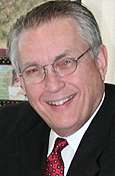
Habitual Sin: Pastor’s experience shows Christians can find freedom

Posted: 1/04/08

Habitual Sin: Pastor's experience
shows Christians can find freedom

By George Henson

Staff Writer

JAYTON—For years, David Erik Jones worked hard to keep his sin hidden. But now it seems everyone knows—probably all 513 people living in Jayton. They know because he told them, and he wrote about it in his book—My Struggle, Your Struggle: Breaking Free from Habitual Sin.

“I can’t believe I’m actually talking about something that I worked so hard for so many years to keep hidden,” Jones said. But he hopes his confession will help other Christians confront their sin and discover hope in his story of deliverance from a longtime addiction to pornography.

Jones believes his addiction started at age 9 when he looked at a Playboy magazine at a neighbor’s home. It remained a struggle for Jones until about seven years ago, when God enabled him to control the power lust had on his life.

He succeeded in keeping his problem a secret from just about everyone except his wife and daughters until about three years ago, when he revealed it to his congregation at First Baptist Church in Jayton.

“About six months after coming here as pastor, I shared with the church that I struggled with pornography, but not with any detail at all,” he said. “Still, it was probably the most difficult sermon I’ve ever preached.”

In the days following that sermon, three men came to him to say they struggled in similar areas, and an informal support group sprung up.

Unlike that initial sermon, Jones’ book goes into some detail—not graphic, and in no sense glorifying his sin-laden past, but direct and to the point.

“This brought up some painful memories for me—some things I had probably tried really hard to suppress. I’ve cried a lot, and it’s probably been harder on my wife than on me,” he confessed.

He credits his wife of 18 years, Vallarie, with providing the support that enabled him to continue the fight to overcome his sin rather than just give in.

“I hope it comes through in everything I say and everything I wrote how much I love and appreciate her,” Jones said. “I couldn’t have done it without her, and I know I can’t begin to understand the depth of her pain.”

His daughters, ages 17 and 13, also have been supportive throughout the process as Jones has become increasingly open about his problem with pornography.

“What in the past I hid in shame can now bring glory to God. What I did in darkness can now point people to the light.”

“My daughters knew of my struggle but not the depth of how it affected my life. I can’t think of one time when they have let me see that they were ashamed of me,” Jones said, as tears rolled down his face. “I can’t help but get emotional about that. If I thought they were ashamed of me, it would kill me.”

Most of his congregation likewise have encouraged and affirmed him.

“The majority were supportive and understand why I’m sharing my story—to reach out and help others. A lady told me yesterday, ‘This makes you more human,’” Jones said.

“The way I’ve tried to think about this is, if someone stands up and says, ‘I have an alcohol problem,’ we all surround them with love and support. But if someone admits some sort of sexual sin, then too often they are shunned. And that can be particularly true in the church.”

Jones hopes his book and the Scripture that helped him find his way will benefit people who struggle with any type of habitual sin.

“The book focuses on my struggle with pornography, but I hope it is helpful to those who struggle with alcohol, drugs, envy, pride—all those things that can be handled in the same way—turning our struggle over to God,” Jones said.

For many years, Jones wanted to quit, but nothing really changed until he stopped trying merely to extract the sin from his life, he said. He finally discovered he needed to fill that void in his life with the things of God.

“That’s been the greatest discovery,” Jones said. “For the longest time, I said: ‘This is wrong. It’s hurting your family. It’s hurting your life. It’s wrong. Stop it, stop it, stop it.’ I’d quit for a while and go right back to it a few days, weeks or months later. I finally began to earnestly seek God’s plan for dealing with sin and putting that into action. I didn’t realize it at the time, but God and his word were taking up the hole in my life where lust had been.”

While the first half of the book deals with Jones’ struggle with pornography, the second half is prescription taken from the Bible on how to deal with habitual sin—regardless of its nature. More than anything, Jones said, he wants people who struggle with sin to know there is hope.

“I know that there are people who are in this struggle or one like it, and I hope this brings hope to those who think their sin is forever and that they will never be able to break free.”

For years, he lived a life without hope, he said.

“Lust was an old friend to me,” Jones said. “It was who I was. I still have a propensity toward lust, but I know with Christ’s help, I can live a life of purity. I don’t have to walk around with this darkness surrounding me. I can walk in the light.”

Awareness of people who think they have no hope—especially Christians whose spiritual walk is hampered by sin—prompted Jones to step out instead of keeping his struggle and victory over it private.

“There are many, many young people—and even older adults—who struggle with these things, and someone needs to step up for them and give them the support and hope they so desperately need,” Jones said. “I can’t just stand back and say, ‘I hope someone else does that,’ and stay hidden.

“I’m passionate; this is how God made me. I can empathize with people locked in sin, whether it’s pornography, alcohol or some other sin. I know what it is like to be controlled by sin.”

Jones hopes he will be asked to speak to youth and college groups, as well as men’s groups, to offer the hope he has found.

“What in the past I hid in shame can now bring glory to God. What I did in darkness can now point people to the light,” he said.

News of religion, faith, missions, Bible study and Christian ministry among Baptist churches, in Texas, the BGCT, the nation and around the world.


Prayer heals honest Brit’s legs but cannot cure bureaucracy with no ‘miracle’ button

Posted: 1/04/08

Prayer heals honest Brit’s legs but cannot
cure bureaucracy with no ‘miracle’ button

By Al Webb

Religion News Service

LONDON (RNS)—A British pastor’s wife who claims the power of prayer cured her injuries was told her incapacity benefits could not be stopped because the government’s computers didn’t have a “miracle” button.

As a result, June Clarke of Plymouth, England, received more than $7,000 she didn’t even want—and she could not get the government to take it back.

The 56-year-old woman spent six years in a wheelchair after she was injured in a fall on a slippery floor while at work. Her hip, pelvis and spine were badly damaged, and she had to give up her job when her condition worsened.

But Clarke says she was healed one year ago after her husband, Stuart Clarke, pastor at Hooe Baptist Church in Plymouth, prayed every day for her to be made well.

When she realized four months later that the cure appeared permanent, she asked the government to stop the incapacity payments, saying, “I felt uncomfortable taking benefits when I didn’t need them.”

But when she contacted the benefits office, she said, she was told its computers weren’t programmed to recognize an apparently miraculous recovery and that “we haven’t got a button to push that says ‘miracle.’”

Eventually, Mrs. Clarke managed to get the monthly $1,200-plus benefits checks stopped, but the government still won’t allow her to return the $7,000-plus she already had received.

“It wasn’t ours to spend,” her husband insisted. “It can’t be that often that a government gets a complaint about unwanted cash.”

Mrs. Clarke reports she finally worked out an agreement with the benefits office under which she can work as a care provider to get the money back into government coffers.


News of religion, faith, missions, Bible study and Christian ministry among Baptist churches, in Texas, the BGCT, the nation and around the world.


Mayors’ report says cities seeing more emergency food requests

Posted: 1/04/08

Mayors’ report says cities seeing
more emergency food requests

By Adelle M. Banks

Religion News Service

WASHINGTON (RNS)—A majority of U.S. cities participating in a recent survey have seen an increase in the number of requests for emergency food assistance, the U.S. Conference of Mayors reports.

The Washington-based conference recently issued its annual Hunger and Homelessness Survey, saying 16 of the 19 cities that responded to questions about hunger saw increases in requests for emergency food aid in the last year. In addition, an average of 17 percent of people seeking food assistance are not receiving it.

Lawaune Stockton sits with her cup in front of a downtown fast-food restaurant in Washington and makes about $20 a day. The U.S. Conference of Mayors recently issued its annual Hunger and Homelessness Survey. (RNS photo/Ann-Marie VanTassell)

The report by the conference analyzed homelessness and hunger in 23 of America’s major cities, including Boston, Los Angeles and Miami.

Nineteen of those cities said they expect requests for food assistance to increase in 2008.

“Although 87 percent of our nation’s wealth is generated in our nation’s cities, hunger and homelessness persist in most of our country’s cities and urban centers,” said Conference President Douglas Palmer, mayor of Trenton, N.J.

The survey found the lack of affordable housing was the most common cause of homelessness for households with children. Other causes included poverty and domestic violence. For single individuals, mental illness and substance abuse were among the most common causes.

Twelve of the cities in the survey—or 52 percent—reported homeless people seeking shelter are turned away some or all of the time. But that number is a marked decrease from 2006, when 77 percent reported homeless people were turned away from emergency shelters.

For more than two decades, the conference has documented the extent of homelessness and hunger. The 23 participating cities in the 2007 survey are members of the conference’s task force addressing those issues.


News of religion, faith, missions, Bible study and Christian ministry among Baptist churches, in Texas, the BGCT, the nation and around the world.


Texas Baptist Forum

Posted: 1/04/08

Texas Baptist Forum

Remove applause cause

I asked one of my students who was in a college singing ensemble how the summer tour went. He told of singing at a megachurch in the Midwest. The group thought they were to be the special feature at the Sunday morning service, only to find out they were to be squeezed in between the free china giveaway and the parachute drop.

Jump to online-only letters below
Letters are welcomed. Send them to marvknox@baptiststandard.com; 250 words maximum.

“Americans have tested that wall (of separation between church and state) in every possible way. We’ve run trucks up against it, we’ve thrown firecrackers at it, and the wall has stood pretty strongly. And it requires, I think, constant vigilance.”
Jon Meacham
Newsweek editor (CBS News Sunday Morning)

“We find ourselves capable of worry, but I heard recently a great saying that I want to pass on to you: Control those things of which you have control and let go of everything else.”
Roland Barlowe
Baptist minister affiliated with Marketplace Chaplains USA (RNS)

“He who does not know how to say ‘no’ to himself does not know how to say ‘yes’ to his neighbors.”
Raniero Cantalamessa
Preacher to the papal household, speaking about how lust hurts both individuals and other people (Catholic News Service/ RNS)

Do you feel your church is moving in that direction? The solution to this problem is simple. Here is a way to convert your church from an entertainment center to a worship center: Remove all elements in the Sunday morning service for which there is applause.

What remains are congregational singing, prayers, Scripture reading, responsive reading and sermon. I know it seems odd today to have only these things, but you will be amazed at what the Holy Spirit can do with them.

What about baptisms? I know that in some churches baptisms have come to be viewed as highly entertaining, as though a half-gainer or double backflip had been performed. The answer is to have private baptisms, as were most of those recorded in the New Testament. The few references to large numbers being baptized were not at Christian worship services, nor was any applause recorded. Baptism should be a reverent, meaningful experience, as are prayers and the hearing of God’s word.

The problem is not applause per se, but having things for which people will want to applaud.

Richard Berry

Longview


Welcome return

The Baptist General Convention of Texas evangelism conference is returning, Jan. 13-15. Welcome—not to the good old days but to these present days. I remember days when we would have 15,000 to 20,000 attend the evangelism conference. It was a time of fellowship and renewal. And it kept the focus on why we are here, who we are and Whose we are. Those days are past, but the gospel is fresh and alive! And always will be.

In our midst are churches that no longer have the name Baptist. We are better known for our feuding than our faith. It is time for us to be known for our faith, our willingness to understand the people of today, and to share the gospel of Jesus Christ in the culture of today.

BGCT Evangelism Director Jon Randles knows how to communicate with the culture of today. Pray for him and the conference.

The greatest convenant we could have is in uniting to share the gospel to the state of Texas.

Henry Adrion

Hilltop Lakes


Science & Scripture

While seeking an integrated understanding of spiritual and physical lives—merging cultural understandings of science and Christian views of Scripture—is admirable, the explanation espoused in “God and science” (Dec. 17) exemplifies the ill-conceived methods “space-age” readers attempt in order to apply sacred texts that originated in nonscientific cultures.

To suggest a “scientific” explanation for a miraculous account such as that found in Joshua 10 is an injustice. The text does not need the vainglorious affirmation of modern science to confirm the spiritual truth of God’s redemptive actions among his people. To do so forces biblical readers to reject the very science that has built our modern lives in favor of a fundamentalist and literal reading of the Bible that was never the intent of the authors nor the understanding of our Jewish or Christian ancestors.

If the “Earth stopped turning for about a full day” as the letter suggested, it is not an example of God’s miraculous power nor a witnessing opportunity, but a confirmation that the laws of physics are invalid: A car’s internal combustion engine is a fraud, antibiotics are bogus, and gravity does not hold us to the face of this spinning planet. Other, perfectly acceptable “Christian”—even “Baptist”—interpretations exist. Most are truer to Scripture than the barest reading of the details.

Well-meaning Christians might best stick to the message of God’s saving grace in Christ and not misuse concepts beyond our competency by parading our scientific and philosophical weaknesses to a world seeking a deeper spiritual experience.

David Maltsberger

Boerne


Priesthood of believers

Mother said a child reached the years of accountability at age 12. Her children would be saved and baptized at age 12. I didn’t understand that concept of salvation. How could baptism alone save me?

During Vacation Bible School at First Baptist Church in Anthony, N.M., Brother Brock, our pastor, walked into our junior department, introducing us to Jesus. He knew this Jesus I had heard about all my life on a very personal basis. That is when I probably began talking to Jesus more personally, also.

A few years later, in January of 1953, a two-week revival was held at the church. My two brothers and I were saved during that revival. I was only 11, but Mother let me be baptized anyway. Accepting Jesus for my salvation, Lord of my life and following him in baptism finally made sense to my 11-year-old reasoning.

Some years back, my fifth grade Sunday school students were studying the plan of salvation one quarter. A child told me she had been saved at age 4 or 5, but one Sunday morning, it was like a light went on for her. That Sunday night, the little girl practically danced down the aisle of our church when the invitation was given. Without the doctrine of priesthood of all believers, how can we lead people to a personal relationship with Jesus?

Joyce Brumley

Grand Prairie


Where credit is due

I’m confused. My wife and I read the Nov. 19 2nd Opinion column and felt this young minister shows a lack of knowledge about his own contrarian Baptist history.

We are the first to admit some Baptists have gone too far trying to balance a liberal theological “slippery slope” with rampant fundamentalism. But, interestingly enough, the Southern Baptist Convention still is intact, and we still fellowship with other Southern Baptist churches, unlike many major denominations that have split over such issues as homosexual ministers.

We ought to give credit where credit is due: Regardless of what we think about Fundamentalists, they are trying to stem the tide of liberal policies that just might destroy Christianity in America.

My question to the young pastor is simple: Are we to stop being salt and light in the name of tolerance? Do we want to avoid being unpopular? Is Christ a skandalon or not? It is a tough call at times, I know.

We should work harder to feed the hungry, clothe the naked and visit those in prison! But we can do all that and still take a stand when our society goes astray. The two are not mutually exclusive.

Eric Whitmore

Okinawa, Japan


Church & homosexuals

Regarding “NC Baptists expel gay-affirming Charlotte church,” Pastor Steve Shoemaker stated that Jesus welcomed those considered outcasts, as sinners by those religious, into the kingdom of God drawing near.

Jesus welcomed, and still does, all who come to him by repentance. Repentance means to change the direction, to go the other way. All through Scripture, when Jesus called someone, they changed. He loves each of us and will forgive each of us, but he calls us to change to his standard as set forth in the Scriptures, not just tack him onto what we want to do. He told the woman caught in adultery to “Go and sin no more.”

Also, there was a statement made in an article on women leaders in the church that the Bible says in Galatians 3:28, “There is neither Jew nor Greek, there is neither slave nor free man, there is neither male nor female; for you are all one in Christ Jesus” and that this meant women are equal to men in leadership in the church. This passage is referring to salvation, not to leadership. Paul stated he did not allow women to teach or have authority over men, but to remain quiet (1 Timothy 2:12).

Scripture is interpreted by Scripture, and it either means what it says or it doesn’t. We can’t pick and choose what parts we want to believe and which parts we don’t.

It’s all or nothing.

Nelda Garmon

Winnsboro


Regarding “Conservative Christians show growing acceptance of divorce”:

Neither the Ten Commandments nor Jesus mention homosexuality, but Jesus condemned divorce and said anyone who divorced and remarried committed adultery (Mark 10:11, 12). One of the Ten Command-ments forbids adultery, but some in the clergy and many in the pews have been able to remain in good standing with their church despite divorce and remarriage.

Are homosexuals our lepers or our Samaritans?

Robert Flynn

San Antonio


What do you think? Send letters to Editor Marv Knox by mail: P.O. Box 660267, Dallas 75266-0267; or by e-mail: marvknox@baptiststandard.com. Length limit is 250 words.

News of religion, faith, missions, Bible study and Christian ministry among Baptist churches, in Texas, the BGCT, the nation and around the world.


2007 a quiet year, but signs of change in the air

Posted: 1/04/08

2007 a quiet year, but
signs of change in the air

By Kevin Eckstrom

Religion News Service

WASHINGTON (RNS)—History books are full of dates that mark seminal events: 1517, when Martin Luther nailed his 95 theses to the church door and launched the Protestant Reformation; or 1973, when the Supreme Court legalized abortion.

But boldface dates are preceded by less prominent but nonetheless decisive times: 1516, when a Dominican named Johann Tetzel led the sale of indulgences that deeply angered Luther; and 1970, when a young Texas woman named Norma McCorvey (Jane Roe) filed suit to obtain an abortion.

The Christian Coalition decided to sit out the 2008 presidential race.

Similarly, 2007 may be recorded as a pivotal year for religion and politics—relatively quiet, unremarkable at first glance, but nonetheless significant as a harbinger of things to come.

“There are a lot of discrete things, but if you put them all together, you get the sense that change is in the air,” said John Green, a senior fellow at the Pew Forum on Religion & Public Life.

The realignment of the Religious Right is perhaps the biggest religion story of 2007 and the one most likely to affect 2008. The Religious Right is far from dead, but it leaves the year significantly altered:

• The deaths of Jerry Falwell, D. James Kennedy and even Tammy Faye Bakker Messner signaled a passing of the guard to a new generation of less-doctrinaire conservatives with a broader social agenda.

• The Christian Coalition decided to sit out the 2008 presidential race, and the new president of the National Association of Evangelicals said he’d rather conduct a wedding or funeral than meet with White House hopefuls.

• Pat Robertson pronounced Rudy Giuliani an “acceptable” choice despite his support of abortion rights, civil unions and his own three marriages. “To me, the overriding issue … is the defense of our population from the bloodlust of Islamic terrorists,” Robertson said.

In other indications that something is shifting, a Mormon won the endorsement of the head of fundamentalist Bob Jones University; an anti-abortion former Southern Baptist pastor-turned-governor from the Bible Belt initially struggled to gain traction—although he surged at year’s end; and megachurch pastor Rick Warren invited Hillary Clinton to talk about AIDS.

Even some of the biggest names in religious broadcasting ended the year under a cloud of scrutiny after Sen. Chuck Grassley, R-Iowa, requested financial records in a probe of lavish spending by six television ministries.

“The religious right is not dead,” said Laura Olson, a political scientist at Clemson University in South Carolina. “But it certainly has begun to look different lately.”

All of this could change—dramatically—once nominees are chosen in the first months of 2008. A Clinton win could rally evangelical “values voters” against her, just as a Giuliani win could mobilize at least some evangelicals against him.

“Most would still vote for Giuliani or Mitt Romney against Hillary Clinton, but there’d be a lot less enthusiasm,” said Marvin Olasky, editor of the conservative World magazine.

“Would they stay home? Most would not, but a significant slice might. Would they vote for a third party? Most would not, but again, a significant slice might, to make a big difference.”

Either way, the Religious Right seems uncharacteristically splintered, demoralized and disengaged heading into an 2008 election year. Alan Wolfe, director of the Boisi Center for Religion and American Life at Boston College, maintains religion is losing its grip on the voting booth.

“We’ve got big foreign policy problems, a suffering economy—those are the rock-bottom issues that people are going back to, and religion doesn’t really help with those issues,” he said.

One issue that remains unsettled is how Giuliani, a Catholic, will navigate relations with the church hierarchy over his support of abortion rights. In November, Catholic bishops said abortion remains a pre-eminent issue and warned Catholic voters that electoral decisions “may affect the individual’s salvation.”

It’s unclear whether abortion will become the same albatross for Giuliani that it was for Sen. John Kerry in 2004, although a handful of bishops already have been critical. “That’s one of the biggest questions to watch,” Wolfe said.

News of religion, faith, missions, Bible study and Christian ministry among Baptist churches, in Texas, the BGCT, the nation and around the world.


On the move

Posted: 1/04/08

On the move

Bill Anderson to First Church in Wichita Falls as interim pastor.

Vernon Andrews to First Church in Waelder as pastor from Choate Church in Kenedy.

John Cox has resigned as pastor of McMahan Church in Dale.

Kim Greer to First Church in Oklahoma City as minister of music and worship from First Church in Lewisville, where she was music minister/children, middle school and creative arts.

David Hardage has resigned as director of Waco Regional Baptist Network to become director of development for Truett Seminary.

Scott Jones to First Church in Rockport as pastor from Forest Avenue Church in Sherman.

Darrell Mayhew to Midway Church in Springtown as youth minister.

Don Nichols to Lone Oak Church in Harleton as pastor.

Michael Smiley to Parkway Church in Victoria as interim pastor.

Jerry Smith has resigned as camp director at Latham Springs Encampment in Aquilla.

News of religion, faith, missions, Bible study and Christian ministry among Baptist churches, in Texas, the BGCT, the nation and around the world.


College students’ spiritual interests increase; worship attendance drops

Posted: 1/04/08

College students’ spiritual interests
increase; worship attendance drops

By Adelle M. Banks

Religion News Service

LOS ANGELES (RNS)—Though college students’ attendance at worship services declines, their interest in spiritual matters grows during their time on campus, a new UCLA study shows.

UCLA’s Higher Education Re-search Institute compared the views of students who were freshmen in the fall of 2004 with the same students’ thoughts in the spring of 2007, when they were juniors.

The survey of more than 14,000 students found more than 50 percent of students considered “integrating spirituality into my life” very important or essential in 2007, an increase of almost 10 percentage points from 2004.

Likewise, more students thought “developing a meaningful philosophy of life” was essential or very important.

While their spiritual interests increased, their worship attendance did not.

Slightly more than half the students said they attended services in college at about the same rate as they attended them in high school.

Almost 40 percent, however, said they worshipped less frequently. Seven percent said they worshipped more.

Researchers also concluded an increasing percentage of students had an “ecumenical worldview.” In 2004, 42 percent said they endorsed “improving my understanding of other countries and cultures;” 55 percent said the same in 2007.

Students showed increasing agreement over time with the idea that nonreligious people can lead lives as moral as those of religious believers, with 90 percent approving the statement this year.

“The data suggest that college is influencing students in positive ways that will better prepare them for leadership roles in our global society,” said UCLA emeritus professor Alexander Astin, one of the principal investigators for the research.

The research included 14,527 students attending 136 U.S. colleges and universities. Its margin of error is between 1 and 2 percentage points. The John Templeton Foundation funds the project, now in its fifth year.

News of religion, faith, missions, Bible study and Christian ministry among Baptist churches, in Texas, the BGCT, the nation and around the world.


Texas Tidbits

Posted: 1/04/08

Texas Tidbits

Texas Acteens Panelists named. Two teenaged Texas Baptists—one from Garland and the other from Austin—have been named to the Texas Acteens Advisory Panel for the next year. Carrie Busha from Freeman Heights Baptist Church in Garland is a senior at Naaman Forest High School. Laura Herrera from Hyde Park Baptist Church in Austin is a senior at McCallum High School. Texas Acteens Panelists were selected on the basis of demonstrated commitment to ministry, missions awareness and servant leadership.

Carrie Busha Laura Herrera

Wayland names mission center director. Veteran missionary Richard Shaw has been named director of the Wayland Baptist University Mission Center. Shaw will develop curriculum for the new center, as well as serve as an assistant professor of religion and dean of Wayland’s Kenya campus. Shaw’s goal in developing the curriculum is to incorporate all disciplines of study into a mission emphasis. Shaw served 12 years with the Cooperative Baptist Fellowship in Albania, Macedonia and Kosovo. He also worked with the United Nations, serving as a human rights advocate and working with women, children and people with HIV/AIDS. He and his wife, Martha, have two children living at home—Benjamin, 9, and Grace, 7. Their older daughter, Faith, is a student at Asbury Theological Seminary, and their son, James, recently graduated from Baylor University.


Clarification: Due to a pending vote in Congress, Rep. Chet Edwards was unable to attend the Baylor University commencement Dec. 15 to receive the Abner V. McCall Religious Liberty Award. Baylor will present the award to Edwards at a later date.


News of religion, faith, missions, Bible study and Christian ministry among Baptist churches, in Texas, the BGCT, the nation and around the world.


Religion writers name evangelicals in election as last year’s top story

Posted: 1/04/08

Religion writers name evangelicals
in election as last year’s top story

By Adelle M. Banks

Religion News Service

WASHINGTON (RNS)—The nation’s religion writers considered political grappling of evangelicals for a GOP presidential candidate the top religion story of 2007.

Members of the Religion Newswriters Association named their Top 10 list of religion stories for the year.

1. Evangelical voters ponder if they can support the eventual Republican candidate due to questions about the leaders’ platforms and/or faith.

2. Leading Democratic presidential candidates make conscious efforts to attract faith-based voters after acknowledging their failure to do so in 2004.

Democrats tried to attract faith-based voters.

3. The role of gay and lesbian clergy continues to be a deeply divisive issue, with the Episcopal Church’s pledge of restraint on gay issues failing to halt the number of congregations making plans to leave the denomination.

4. Global warming increases in importance among religious groups, with mainline leaders considering it a high priority and evangelical leaders divided over its importance compared to other issues.

5. Religious groups and leaders debate illegal immigration, with some taking an active role in affirming undocumented immigrants.

6. Thousands of Buddhist monks in Myanmar lead a pro-democracy protest that is harshly put down after a week.

7. Some conservative Episcopalians in the United States realign with Anglican bishops in Africa and other parts of the “Global South,” setting off church property legal disputes.

8. The Supreme Court rules in favor of conservative positions in three major cases—upholding a ban on partial-birth abortions, permitting schools to create some limits on students’ free speech and denying a challenge to the White House Office of Faith-based and Community Initiatives.

9. Deaths among prominent evangelical leaders included Jerry Falwell, Rex Humbard and D. James Kennedy, as well as Ruth Graham, wife of evangelist Billy Graham, and Tammy Faye Messner, ex-wife of disgraced televangelist Jim Bakker.

10. The cost of priestly sex abuse to the U.S. Roman Catholic Church exceeds $2.1 billion, with a record $660 million settlement involving the Archdiocese of Los Angeles and earlier settlements in Portland, Ore., and Spokane, Wash.

The survey polled active RNA members via electronic ballot Dec. 7-13. With 80 people responding, there was a 27 percent response rate.

News of religion, faith, missions, Bible study and Christian ministry among Baptist churches, in Texas, the BGCT, the nation and around the world.


Book reviews

Posted: 1/04/07

Book reviews

Flawed Families of the Bible: How God’s Grace Works through Imperfect Relationships by David E. Garland and Diana R. Garland (Brazos Press)

We frequently hear discouraging statistics about family life in the United States—failed marriages, sexual abuse, violence and chaos. We don’t frequently hear reminders that the Bible, especially the Old Testament, brims with stories of the same problems. Some of them make today’s headlines look pale in comparison.

Diana and David Garland have provided a book that helps us face these stories and the issues they raise. Although the book makes a lot of guesses about what was going on in the minds of the biblical figures, it shines a reliable spotlight into dark corners that we need to see. The chapter on David and Bathsheba especially is eye-opening.

What are you reading that other Texas Baptists would find helpful? Send suggestions and reviews to books@baptiststandard.com.

When reading through the whole Bible for the first time, or for the first time in years, people often ask, “Why in the world is that in there?!” Now we have a wise guidebook to explain why and to show “how God’s grace works through imperfect relationships.”

Rick Willis, pastor

First Baptist Church, Lampasas

Praying the Psalms of Jesus by James W. Sire (InterVarsity Press)

Providing answers as to why Jesus often quoted from the Psalms as well as discussing the Psalms that refer to Jesus qualifies this book to be of interest to many readers. The book could serve as a commentary, but it is more. Each chapter has a section for small-group discussion, as well a prayer suggestions.

The first part, “Jesus in the Psalms,” covers Psalms 22, 110, 118, 2 and 69, while the second part, “The Psalms in Jesus,” covers Psalms 29, 23, 45 and 80. In discussing these nine specific Psalms, James Sire has written a very helpful and useful study. He discusses in detail Jesus’ use of the Psalms and why he quoted them. He also thoroughly treats those Psalms that refer to Jesus.

Through this study of these Psalms, the reader gets to know Jesus more intimately. By praying these Psalms, the reader gains a more accurate knowledge of how they affected Jesus. Thus we come to realize that the Psalms are just as important to us today as they were for our Master.

Ed Spann, retired dean

College of Fine Arts

Dallas Baptist University, Dallas

The Beautiful Fight: Surrendering to the Transforming Presence of God Every Day of Your Life by Gary Thomas (Zondervan)

In The Beautiful Fight, the reader gets a taste of Gary Thomas’ passion—the human struggle with what it means to be a Christ follower.

Taking its cues from 2 Timothy 4:7, The Beautiful Fight is about transformation. Thomas makes a point many have missed—transformation for God’s glory is the point of the gospel.

Indeed, Thomas states that in “real transformation and sacrificial service, our souls have everything they need to feel alive.” In the opening chapter, Thomas asks this penetrating question: “Is the Christianity taught today large enough to seize our hearts?” Drawing upon his deep understanding of Scripture and his encyclopedic knowledge of Christian spirituality, Thomas crafts a riveting book that paints a picture of Christianity precisely able to seize our hearts and transform our lives.

The Beautiful Fight is filled with personal anecdotes, penetrating questions and summaries for reflection. This is an outstanding selection for personal or small-group study

Jay Smith, assistant professor

School of Christian Studies

Howard Payne University, Brownwood


News of religion, faith, missions, Bible study and Christian ministry among Baptist churches, in Texas, the BGCT, the nation and around the world.


EDITORIAL: BGCT in ’08: Purpose over pander

Posted: 1/04/07

EDITORIAL:
BGCT in ’08: Purpose over pander

This will be a pivotal year for the Baptist General Convention of Texas. The outcome will turn on several factors, but none more important than this: We must focus on our historic purpose, not pander to self-interest.

The BGCT Constitution defines the “nature” of the convention straight-up: “This convention is and always shall remain, only and solely a medium through which Baptist churches shall work harmoniously in cooperation with each other, promoting the work and objects set forth in this constitution.” And what are those “objects”? “To awake and stimulate among the churches evangelism, missions, Christian education and benevolent work and enterprises; to cultivate a closer cooperation among the churches and promote harmony of feeling and concert of action in advancing all the interests of the Redeemer’s Kingdom.”

knox_new

For generations, Baptists have set aside ego, turf and even minor theological differences to cooperate. We have done so based on this truth: We can do more together than we can alone. But I’m not sure we still believe it.

That’s because we mirror society, particularly the me-first Baby Boom generation, which idolizes the individual. From politics, to advertising, to education, to about everything in-between, it’s all about what “I” wants.

For Baptists, the corollary to “I” is the local church. Don’t misunderstand: The local church is our bedrock institution. It can be our most vibrant, visionary component. But churches acting alone cannot accomplish our enormous tasks of evangelism, missions, education and benevolence. Churches must cooperate if we are going to advance Christ’s kingdom. That’s why we need a convention.

Unfortunately, we have adopted a church-first mindset. This unnaturally places the church—not Christ—at the center of the convention. We can see why this came about: It sounds great. It’s what churches want to hear. And churches have needs conventions typically fulfill.

This has created a “What have you done for me lately?” mindset. Churches have come to think of the convention like homeowners think of big-box hardware stores. It’s where you go to get all the stuff you need to “do church.” This is wrong, because it narrows the purpose of the convention to the walls of the congregations. Also, when another store offers better products or more focused service—think Saddleback and Willow Creek—then the convention is seen as practically useless. That’s hard to say, but I’ve heard it from the tongues of scores of pastors.

This year, the BGCT must rebuild. We face many challenges and numerous obstacles. But if we don’t first affirm the convention is necessary precisely because its “objects” transcend the local program needs of our churches, we’ll continue to decline. And the spiral may be irreversible.

That would be tragic, not just because it would signal the end of the BGCT. It would diminish our churches and impede our ability to advance “the Redeemer’s Kingdom.”

So, what do we do?

• Reconstruct our budget to fund constitution-mandated “objects.” Place top priority on the endeavors that require cooperation—church planting, education, benevolence and hands-on evangelism and missions ministry.

• Exercise stewardship of our institutions, God’s great blessing to the BGCT. Outsource to them the practical leadership—including church support—of ministries for which they are uniquely suited. Equip them with the financial resources, through budget and offerings, they need to succeed. We all benefit when they succeed.

• Streamline according to our values. This will mean eliminating some good in order to excel at the best. That is an agonizingly difficult task. It is necessary.

Texas Baptists always respond to God-sized challenges. Our path is steep and difficult. But Texas Baptists will persevere in order to advance “the Redeemer’s Kingdom.”

News of religion, faith, missions, Bible study and Christian ministry among Baptist churches, in Texas, the BGCT, the nation and around the world.


TOGETHER: Gospel means evangelism & ministry

Posted: 1/04/08

TOGETHER:
Gospel means evangelism & ministry

I have sounded the twin notes of evangelism and ministry throughout my time as your executive director. I have done this because I am convinced both notes must be played in harmony if our churches are to have a full and healthy response to Christ’s call to “follow me.” The spiritual idea that drives me is that we have been called to be a Jesus kind of people and to build Jesus kind of churches.

Jesus came preaching the good news of God: “The time has come. The kingdom of God is near. Repent and believe the good news” (Mark 1:15). Sin has broken everyone and separated us from God, but God loves us so much that he doesn’t want to spend eternity without us. He sent Jesus into the world to make sure we knew that. And the followers of Christ respond to that love and salvation by reaching out to others.

wademug
Executive Director
BGCT Executive Board

Jesus also came demonstrating the heart of God and the will of God to the world. He spent time with the poor as well as the rich. He called those who have much to be generous in their attitudes and stewardship toward the needy. He demonstrated that people who love God also will love the hungry, the thirsty, the stranger, the naked, the sick and the prisoners (Matthew 4:23-24; 25:37-40; Luke 4:18-19).

These are not two gospels. There is only one gospel, and Jesus embodied all of it.

Two conferences are planned this month that will help you and your church be more effective in evangelism and ministry. Both conferences will encourage evangelism and ministry.

Jon Randles, our Baptist General Convention of Texas evangelism leader, spoke to our staff chapel this week and laid on our hearts the passion of God for those who are lost. I want what happened in my heart that day to happen in yours. Our churches need encouragement in reaching out to the lost all around us. I am praying God will fall upon our Engage conference with a mighty spiritual awakening and will use this time to help all of our pastors and churches to evangelize Texas. Go to the www.bgct.org/evangelism website for details on this Jan. 13-15 meeting at Lake Pointe Church in Rockwall.

Baptists from across North America will gather in Atlanta Jan. 30-Feb. 1 for the New Baptist Covenant celebration. It will be a historic meeting to proclaim what it would look like if Baptists were to take Jesus’ words to heart and go everywhere preaching the good news and binding up the wounded and broken-hearted. There will be memorable sermons and addresses, inspiring music and practical workshops where you can take back to your church ideas that are effective in other churches and could be useful in yours. There is more information at www.newbaptistcelebration.org.

These are the kinds of meetings you need to make calendar changes in order to be involved. You will not be able to duplicate what God can do for you and through you as you gather with fellow Baptists in Texas and in Atlanta this January.

We are loved.

Charles Wade is executive director of the Baptist General Convention of Texas Executive Board.

News of religion, faith, missions, Bible study and Christian ministry among Baptist churches, in Texas, the BGCT, the nation and around the world.