patterson_62303

Posted 6/19/03

Patterson to be nominated as
president of Southwestern Seminary

By Mark Wingfield

Managing Editor

FORT WORTH–Paige Patterson will be nominated as president of Southwestern Baptist Theological Seminary in a called meeting of seminary trustees June 24.

A seminary spokesman confirmed to the Fort Worth Star-Telegram and the Dallas Morning News that Southwestern's trustees have been called to a special meeting in Fort Worth June 24.

Paige Patterson

Patterson, president of Southeastern Baptist Theological Seminary in Wake Forest, N.C., confirmed to the Morning News that he is the candidate and will be in Fort Worth for the meeting. The Star-Telegram reported that Patterson previously met with the presidential search committee two weeks ago.

The Star-Telegram article quotes several sources close to Southwestern and Southeastern praising Patterson as the right person for the job and indicating he is the candidate.

Patterson would succeed Ken Hemphill, who is leaving to accept a newly created position in Nashville, Tenn., as national strategist for the Southern Baptist Convention's Empowering Kingdom Growth emphasis.

Hemphill and other seminary leaders have denied previous reports that Hemphill was pressured to leave the seminary presidency. However, numerous sources related to the seminary have told the Baptist Standard, the Star-Telegram and the Morning News that Hemphill was forced to leave by a group of fundamentalist trustees acting in concert with other SBC leadership.

Trustees reportedly have wanted a stronger personality at the helm who will sweep out all faculty deemed not in agreement with the SBC's fundamentalist theology and conservative politics.

Patterson is viewed as an ideal choice for the task, because he was one of two architects of the so-called “conservative resurgence” that has reshaped the SBC since 1979. Along with Paul Pressler of Houston, Patterson sounded an alarm about alleged liberalism in SBC schools and agencies, rallying busloads of messengers to SBC annual meetings to elect a string of ultra-conservative presidents. Those presidents in turn influenced the selection of trustee boards.

Supporters of that conservative movement hail Patterson as a defender of the faith.

“Dr. Patterson is one of the heroes of our denomination,” Southwestern trustee Lolley Cogswell of Sherman told the Star-Telegram.

Bob Pearle, pastor of Birchman Baptist Church in Fort Worth, told the newspaper Patterson would be an excellent choice at Southwestern.

Likewise, former SBC President Tom Elliff of Del City, Okla., commended Patterson as a proactive, visionary leader and told the Star-Telegram: “It would not surprise me if the committee chose him.”

The Morning News quoted former SBC President James Merritt of Atlanta: “I don't think you could find a finer man to lead any educational institution than Dr. Paige Patterson.”

Patterson twice was elected president of the SBC, and he has been credited with pulling Southeastern Seminary out of a near-death spiral. In 11 years there, he not only stopped an exodus of students but grew student enrollment from 700 to 2,400.

If Patterson comes to the Texas post, it would be a homecoming of sorts–and a symbol of how the Baptist landscape has changed.

Patterson is a native Texan. His father, T.A. Patterson, was executive director of the Baptist General Convention of Texas from 1961 to 1973.

After earning an undergraduate degree at Hardin-Simmons University in Abilene, a BGCT-affiliated school, Patterson left Texas to attend New Orleans Baptist Theological Seminary in Louisiana.

He returned to Texas as a pastor and educator, serving as president of the Criswell Center for Biblical Studies, which today is Criswell College. The Bible college was started out of First Baptist Church of Dallas and was considered a more conservative alternative to BGCT-related schools or SBC seminaries, including nearby Southwestern.

From his post at Criswell, Patterson launched the crusade to turn the SBC in a more conservative direction.

Relations between Southwestern and the BGCT, once highly cordial and cooperative, have grown strained in recent years as the SBC has pushed for more doctrinal conformity. One key area of disagreement is the SBC's new faith statement, drafted during Patterson's tenure as convention president. Southwestern and other SBC seminaries require faculty to sign the Baptist Faith & Message 2000, a document the BGCT has refused to endorse.

If Patterson takes the helm at Southwestern, the choice facing Texas Baptist churches will become clearer than ever, predicted David Currie, executive director of Texas Baptists Committed, an organization that has sought to keep the BGCT free of SBC-style fundamentalism.

“There's one good thing I can see, but it's selfish,” Currie admitted. “It probably guarantees the existence of Texas Baptists Committed 15 more years.”

Patterson “obviously will bring a much more hard-line fundamentalism to Southwestern,” he said.

“It just clarifies for Texas Baptists that everybody ultimately is going to have to decide” if they will follow the SBC's current theology or not, said Currie, who praised two BGCT-affiliated seminaries as more palatable alternatives.

The battle for Texas will be fought on the local level as churches choose between pastors and staff members educated at Southwestern or at more BGCT-friendly schools like Baylor University's Truett Seminary and Hardin-Simmons University's Logsdon School of Theology, Currie said.

“Texas Baptists Committed has got to be more aggressive in explaining why fundamentalism is not” the right choice, he said. “This means that Truett and Logsdon need to quadruple their efforts at recruitment so they are supplying more pastors to Texas than Southwestern.”

Currie places the responsibility for educating Texas Baptist churches about this choice squarely on the shoulders of their pastors.

“Every pastor that's not a fundamentalist should be explaining to their church why fundamentalism is wrong and why they don't want to call a fundamentalist as pastor,” he urged. “But that's not happening. It's the biggest problem we have–pastors not educating their churches. … Pastors have got to show courageous leadership and educate their people.”

While Currie said he disagrees with Patterson on theology, he expressed admiration for Patterson's political skills.

“He is a good thinker and he presents their case in a sellable fashion,” Currie said.


sbc_black_62303

Posted 6/18/03

SBC: Black History Project focuses on Black leaders

PHOENIX (BP)–African-American pastors can become leaders among Southern Baptists when they get involved enough to be known and respected, said E.W. McCall, longtime pastor of St. Stephen Baptist Church in La Puente, Calif.

Lott Carey, a freed slave supported by Baptists in Richmond, Va., inaugurated missions work in the African country of Liberia in 1821.
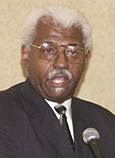
George O. McCalep Jr., president of the African American Fellowship of the Southern Baptist Convention.

McCall offered his advice during the inaugural seminar of the Black History Project June 14 at Bethesda Community Baptist Church in Phoenix. The seminar was hosted by the Black Southern Baptist Denominational Servants Network.

“Get involved on the local level,” McCall said. “Stay involved when you're popular and when you're not.”

He urged African-American pastors to be a friend and be friendly, even when ignored by whites or castigated by blacks.

“Show up at local, associational, state and national events,” he said. “… And bring your people with you. There's something to be said for the theology of presence, what you do, the way you carry yourself.”

He added: “When you're not given opportunities, you can't give up. You can't get discouraged.”

Once elected to leadership positions, African-American leaders must keep those denominational roles a priority, he advised. “You must serve well when elected. You're there to help, not hinder. Listen twice as much as you talk. Be known as a team player. Do your part. Carry your load.”

He also urged being more “Christ-centered” than “Afro-centric.”

Roy Cotton, a church starting strategist with the Baptist General Convention of Texas, was one of five co-chairmen for the seminar. Cotton served this year as president of the Black Southern Baptist Denominational Servants Network.

“For the first time, we come together to focus on the history of African-Americans in the Southern Baptist Convention,” Cotton said in his opening remarks.

The story of Southern Baptists and blacks is a tale of the “good, the bad and the ugly,” said Kevin Smith, another event co-chairman and a doctoral student at Southern Baptist Theological Seminary.

He urged telling the whole story, even the bad parts. In time, he said, “we'll get to the point of God's people working together for the exaltation of Christ.”

Smith called for the denomination to financially support the study of African-Americans' involvement in the Southern Baptist Convention. Until now, he said, it has been perhaps a chapter, paragraph or even footnote in what has been written in Southern Baptist history.

George McCalep Jr., pastor of Greenforest Community Baptist Church in Decatur, Ga., and president of the SBC's African-American Fellowship, recounted the formation of the fellowship, while Cotton spoke on the formation of the Denominational Servant's Network.

Leon May, pastor of Greater Friendship Baptist Church in Anchorage, Alaska, talked about that church's past, present and future. Greater Friendship in 1951 was the first African-American congregation to join the SBC in the 20th century. In an era of separatism, many African-American churches had left the SBC by the 1970s.

Andre Punch, church growth and African-American consultant with the BGCT, moderated a panel discussion on seminary education. Panel participants were Smith; McCalep; McCall; Leroy Gainey, pastor of First Baptist Church of Vacaville, Calif.; and Sadie McCalep, George McCalep's wife and coordinator of career/technology education in the Atlanta school system.

Gainey encouraged black Baptists to “do more writing” to get their story taught in seminary classrooms. “If you don't put it in print, it won't get taught,” he said.

At the seminar, participants received the first issue of the Journal of African American Southern Baptist History produced by the Denominational Servants Network.

At the annual meeting of the servants network, Cotton called on his peers to “risk to win the next generations.”

“New challenges call for new strategies. … Vision and values are not negotiable, but goals and strategies are negotiable and must be adapted to new situations,” he said. “Our message does not change, but our methods do.

Some people are cop-outs, hold-outs and drop-outs, he noted, but denominational servants are “all-outs who set goals, commit to them and pay the price to reach them.”

Currently, about 200 African-Americans are employed by Southern Baptist Convention agencies and state Baptist conventions. The Denominational Servants Network brings them together for fellowship and networking.

Officers elected for 2003-04 are President Rosevelt Morris, director of the South Carolina Baptist Convention's office of prayer and spiritual awakening; Vice President Dennis Mitchell, director of the SBC North American Mission Board's church multiplication team; Secretary Ken Ellis, associate director of institutional chaplaincy for NAMB; Treasurer Maxie Miller, church planting coordinator in the Florida Baptist Convention's African-American ministries division; and Parliamentarian Michael Evans, director of African-American ministries for the BGCT.

The network presented its Emmanuel McCall Denominational Servant Award to Tom Kelly, who was director of the California Southern Baptist Convention's black church relations department from 1982 to 2003.

Hall of Servanthood awards for “outstanding career contributions” were given to Emmanuel McCall, Bill Johnson and Willie Simmons, three men who pioneered Southern Baptist work among African-Americans.

The Faithful Servant Award was given to Sid Smith, director of the Florida Baptist Convention's African-American ministries.


sbc_election_62303

Posted 6/18/03

Jack Graham re-elected
president of SBC without opposition

PHOENIX–Jack Graham, pastor of Prestonwood Baptist Church in Plano, Texas, was re-elected president of the Southern Baptist Convention June 17 without opposition.

Graham won by one vote but it was the only vote that counted. With no other nominees, Registration Secretary James Wells was instructed to cast the vote on behalf of the messengers, giving Graham the traditional second term as leader of the nation's largest non-Catholic denomination. At the time of the election, 6,830 messengers had registered during the first day of the annual meeting.

Bobby Welch, pastor of First Baptist Church of Daytona Beach, Fla., nominated Graham, calling him an “energetic, focused soul-winner.” He said Graham led the SBC “with certainty and conviction” during 12 months “loaded” with controversy.

Earlier in the day, during his president's address, Graham urged Southern Baptists to penetrate a “decaying” culture with the gospel rather than retreat into an ineffective subculture.

Graham, whose church is in suburban Dallas, is the 12th person to serve as SBC president since the so-called “conservative resurgence” began in 1979.


sbc_graham_62303

Posted 6/18/03

Graham calls Southern
Baptists to be salt and light

By Michael Clingenpeel

Virginia Religious Herald

PHOENIX–President Jack Graham urged the Southern Baptist Convention to penetrate a decaying culture and illuminate a dark world rather than retreat into a subculture that makes no difference in the world.

During his address to about 7,000 messengers and guests at the opening session of the SBC annual meeting in Phoenix, Graham asked his audience to make “Kingdom First” a way of life, not just the convention's theme.

“Our priority, our prayer, our purpose, our passion is exalting the King and expanding the kingdom,” said Graham, who delivered his 40-minute address based on Jesus' Sermon on the Mount. Southern Baptists, said the Plano, Texas, pastor, must seize an opportunity to demonstrate God's kingdom, not just define it.

Jack Graham

The world is “a decaying, dark place,” where man is “inventing new ways to demonstrate his sinful depravity,” Graham warned. Recalling truths he learned as a Sunbeam, a missions group popular in Southern Baptist churches almost a half century ago, Graham said Southern Baptists can “engage our culture and maximize our influence” by becoming “salt and sunshine.”

The president lamented that there is so little difference between the way Christians live and the way the world lives, citing a divorce rate among Christians that rivals divorce among non-believers. Southern Baptists cannot “retreat from the battle,” he said.

Playing off Jesus' metaphor for disciples as “the salt of the earth,” Graham invited the crowd to preserve, irritate and stimulate the culture rather than compromising or keeping the gospel to themselves.

“Can you imagine the moral condition of our world without Bible-believing, kingdom-living Christians?” he asked. In a veiled reference to the SBC's revision of the Baptist Faith & Message in 2000, he congratulated the convention for preaching Jesus' “salty truth without compromise.”

Graham, pastor of 21,000-member Prestonwood Baptist Church, also asked messengers to become lights in a dark world by being conspicuous, consistent, compelling and consumed in their witness. Believers walk the fine line between being "audio-visual for Jesus Christ" without "turning the spotlight on us."

“The world doesn't expect perfection in us, but they should expect consistency from us,” said Graham, who cited the International Mission Board's campaign to collect food for Iraqis, the ministry of Southern Baptist military chaplains during Gulf War II and the North American Mission Board's disaster relief teams in New York City following 9/11 as examples of ways “Southern Baptists are glowing for Jesus Christ.”

Graham applauded the efforts of Southern Baptists in opposition of abortion and commended legislation outlawing “partial-birth abortion” President Bush is expected to sign soon. But he said the best way to be light is “not to outshout the darkness, but to outlive the darkness.”

The most important question Southern Baptists face, according to Graham, is whether they will “shine and salt the culture in the extreme darkness and decay of our time” by becoming “companies of salt and light.”

Messengers ended the session by reciting the Lord's Prayer, twice repeating the phrase “Thine is the kingdom.”


sbc_mohler_62303

Posted 6/18/03

Mohler: Scripture mandates evangelism 'to the Jew first'

PHOENIX–Jewish evangelism, homosexuality and the authority of Scripture are three “trip wires” confronting the evangelical Christian church, Al Mohler told a gathering of Messianic Jews June 16.

Mohler, president of Southern Baptist Theological Seminary in Louisville, Ky., and a frequent apologist for the Southern Baptist Convention on national TV, spoke to the Southern Baptist Messianic Fellowship. The fellowship held its gathering prior to the SBC annual meeting in Phoenix.

Jewish evangelism relates to homosexuality, Mohler declared, because both issues are based on the authority of the Bible.

If Christians reject the Bible's authority on Jewish evangelism, they also loosen the Bible's authority to call homosexuality sinful, he asserted, according to a Baptist Press report. “The bottom-line question is this: Will we obey or disobey the word of God?”

The Bible must be the absolute standard of truth and authority, Mohler said.

He called upon Romans 1:16 and passages in the Book of Acts to declare the Christian gospel is “the power of God unto salvation for the Jew first and then the Greek.”

“In the Book of Acts and in the apostolic age and in the opening chapter of Romans, you see there is no question about the necessity of Jewish evangelism,” Mohler said. “Not only that, but there is even a priority indicated in the text.”

Jewish evangelism begins with the understanding that Jesus Christ rightly claimed to be the promised Messiah who fulfilled Old Testament prophecies, he explained. “It is clear from the biblical text, in the Gospels, that Jesus is claiming to be none other than the Messiah, the promised one of Israel.”

Christians who shy away from Jewish evangelism misunderstand what it means to be a Jew, Mohler asserted. Previously, he said, a person who identified himself as a Jew made a statement about adherence to the Jewish faith, but today, claiming to be a Jew may mean only an ethnic designation, he added.

Thus, evangelism of Jews is viewed as aggressive imperialism or “ethnic genocide,” he said.

“Judaism has been turned into a folkway, a way of life, an ethnic identity, and it is now considered impossible in a postmodern society to address Jewish people theologically.”

Also, Christians who avoid Jewish evangelism by arguing that God established one covenant with Jews and another covenant with everyone else wrongly interpret Scripture, Mohler said.

Jews must hear the gospel just as much as anyone else who does not profess faith in Christ as the Messiah, Mohler said, comparing evangelists to doctors who warn patients about life-threatening tumors.

“The act of Christian truth-telling, telling the truth of the gospel to an unbeliever, Jew or Gentile, is the ultimate act of Christian love,” Mohler said.


sbc_pastorsconf_62303

Posted 6/18/03

Family first priority at
SBC Pastors' Conference

By Stella Prather, Jennifer Rash & Stacy Hamby

PHOENIX–“Kingdom families” captured the spotlight of the 2003 Southern Baptist Pastors' Conference, even as participants heard a new version of the Monday Night Football song from evangelist Hank Williams.

Headlining the two-day meeting was the first-ever Southern Baptist Convention Kingdom Family Rally held during the closing session June 16. The Pastors' Conference met June 15-16 in Phoenix, immediately prior to the SBC annual meeting.

Ergun Caner, an assistant professor at Criswell College, Dallas, speaks during the second session of the Southern Baptist Pastors' Conference June 15-16 in the Phoenix Civic Center prior to the SBC annual meeting, June 17-18. Caner will begin teaching at Lynchburg's Liberty University in the fall.

Leading up to the Monday evening rally, Pastors' Conference speakers focused their sermons around the family theme. Music was provided by the Annie Moses Band, Wintley Phipps and the Rick Webb Trio. Choirs from First Baptist Church of Dallas also performed.

Away from the convention hall, ministers took advantage of a free family counseling service organized by Pastors' Conference President Mac Brunson of Dallas.

“We know pastors are experiencing difficult days,” Bruson said as he urged participants to take advantage of the counseling. “If Satan can cause our families to fall, he will affect a church for a generation.”

The conference opened on Father's Day, with evangelist Williams performing a special ode to fathers.

Williams joked that anyone expecting to hear from Hank Williams the popular country singer was going to be disappointed. However, he shared his own rendition of the country singer's Monday Night Football theme song, “Are you ready for some football?”

“Are you ready for some preaching, some real Sunday night preaching?” the evangelist wittingly said, adding, “I've got my Bible in my hand and the devil on the run, and all my rowdy friends are going to have some fun tonight.”

On a more serious note, Williams turned to what he called the biblical priorities of a minister–God, family and church.

Unfortunately, many ministers since the beginning of time, have struggled to maintain these priorities, he acknowledged.

The Hebrew patriarch Moses, for example, “failed to understand his family was his first priority,” Williams said.

He warned pastors: “If you don't have a family, you don't have a ministry.”

And if pastors can't manage their own family, “you have no business managing the church and the people of God,” he added.

Howard Hendricks of Dallas Theological Seminary drew from Nehemiah 3 to offer advice for developing a winning team in marriages and families.

A winning team, he said, consists of two or more individuals moving along a path of interaction marked by three characteristics. Team members must be totally cooperative, completely organized and successfully competing for a single objective, he explained.

Christian apologist Josh McDowell, a popular author and youth speaker from Dallas, cautioned parents of temptations facing their children–particularly temptations to believe non-Christian doctrine.

He cited a poll that found 65 percent of “Bible-believing, church going, born-again children” don't believe Satan is real and 68 percent aren't sure Christianity is true.

The poll, he added, also said 65 percent of church youth believe there is no way to tell what is absolute truth.

Only 9 percent believe in absolute truth, he explained, while only 33 percent say God and the church will play a part in their lives when they leave home.

These statistics illustrate the No. 1 problem in America, McDowell said, which is fathers not living up to their responsibility as Christian leaders of their homes and children.

“We are losing our kids not because they are not hearing the truth, but because we are not building relationships with them,” he exclaimed. “Truth without relationships will lead to rejection in most cases.”

It is up to parents to “help kids become so convinced that Christianity is the truth they will take a stand regardless of the consequences,” McDowell said. “If we don't, we have failed this generation.”

Humorist Dennis Swanberg sparked laughter during the Monday morning session as he told stories about his grandparents, parents, wife and children. He challenged pastors to live with laughter, love and without limits.

Chip Roberson, pastor of Bethel Baptist Church in Chesapeake, Va., warned pastors about the dangers of letting the flesh rule. Preaching from Ecclesiastes 10:1 and 1 Samuel 25, Roberson said, “When you let the power of the flesh overlord the power of God's Spirit, you are in danger.”

A minister may have spent years maintaining the proper image and doing the right things, but it can all be thrown away by one bad decision such as looking at Internet pornography, he warned.

“When we allow our lives to go unguarded, when we are in danger of losing it all, God always sends a restrainer,” he said, noting “the sovereignty of God does not overrule the free will of man. You don't have to miss God's calling or timing very much to lose it all.”

Johnny Hunt, pastor of First Baptist Church of Woodstock, Ga., offered a plea for Baptist families to increase their financial support of the SBC's International Mission Board.

“You are never more like Jesus than when you are giving,” he said. “It is time for the Southern Baptist Convention to rise up and say we believe in missions. Now's the day to say: 'Lord, listen. I want to be part of a family who refuses to leave this world the way we found it.'”

Ergun Caner, assistant professor at Criswell College in Dallas, garnered sustained applause, bursts of laughter and a few moments of shock from those attending the Monday morning session.

Preaching from Romans 8, Caner, a former Muslim, answered the question, “Is God a man or a woman?”

While the recent controversy over a gender-neutral or “gender-accurate” Bible served as the foundation of his sermon, Caner also dealt with the concepts of a gender-neutral God and political correctness.

“Political correctness has an agenda,” he warned. “Nobody is responsible, … thus I am a victim. Political correctness turns everyone into a victim.

“Political correctness also has given us hyphenated Americans,” Caner continued, noting the labels African-American, Spanish-American and others.

Caner, a Turkish-American, said, “Stop hyphenating me and each other. Just be American; stop hyphenating.”

With a taunt to the media about his opposition to political correctness, Caner looked directly into the camera and said: “I spank my child, … not to leave a mark but to leave an impression, out of love, and I love him a lot.

“If social services shows up at my door, I will spank you too,” he said.

Political correctness also has shaped the church's teaching on God and gender, Caner said, causing many to miss the point.

“God is not male in relation to his gender,” the professor asserted. “God is Father in relation to his children. This is a theological issue, not a biological issue. To remove God as Father robs us of our divine rights as his children.”

He later added: “For all embedded media, get the message right. Southern Baptists don't believe God is our God, but the God, the one and only God. Is God a man? No. Is God a Woman? No. More than a man, more than a woman, he is Father.”

Ken Whitten, pastor of Idlewild Baptist Church in Tampa, Fla., focused on the pastor's family with a sermon from James 3.

“It is not easy living in a pastor's home,” Whitten said. “It is not easy being a parent of a preacher's kids.

He outlined five dangers for pastors' kids–pride produced by praise, woundedness, rebellion from restrictions, familiarity with the faith and bitterness borne of battles.

“If you don't guard your heart, offenses are passed down to your children,” he said. “The greatest thing we can tell our kids is be obedient because you are God's sons and daughters, not because you are the pastor's kids.”

New officers for the 2004 Pastors' Conference were elected without opposition: President Ted Traylor, pastor of Olive Baptist Church of Pensacola, Fla.; Vice President Bryan Smith, pastor of First Baptist Church of Van Buren, Ark.; Secretary Hal Kitchings, pastor of First Baptist Church of Eustis, Fla.


sbc_vines_62303

Posted 6/18/03

Vines tells Pastors' Conference
'All religions not the same'

Jerry Vines, pastor of First Baptist Church, Jacksonville, Fla., speaks during the opening session of the Southern Baptist Pastors' Conference June 15-16 in the Phoenix Civic Center prior to the SBC annual meeting, June 17-18.

PHOENIX–Just in case America didn't hear him the first time, Jerry Vines made a point of speaking clearly at this year's Southern Baptist Pastor's Conference: “All religions are not the same. All religions are not equally true.”

Vines, pastor of First Baptist Church of Jacksonville, Fla., and a former president of the Southern Baptist Convention, drew the ire of Muslims and others when at last year's Pastors' Conference he called the founder of Islam a “demon-possessed pedophile” as he marched toward declaring that Christianity is superior to Islam.

That led to a later segment aired on the “NBC Nightly News” in which anchor Tom Brokaw described Vines as “preaching hate.”

Speaking in Phoenix this year, Vines acknowledged the media waiting to hear whether he would address the topic again. He didn't disappoint, although he did not speak specifically of Islam.

“I'm going to give all you media what you came for, and I'm going to say it slowly, so that even Tom Brokaw can get it,” he said to a round of applause. “All religions are not the same. All religions are not equally true. There is no other name under heaven given to men whereby we must be saved except the name of Jesus.”

In a conference organized around a family emphasis, Vines preached on the Old Testament prophet Enoch, whom Scripture says “walked with God.”

He urged pastors to “walk on” and live “in step with God,” continually preaching the Bible rather than sugar-coating the truth.

God's children, like Enoch, will “walk out” of this world either through death or resurrection, Vines said. “Ladies and gentlemen, if you will walk with God, one day you will walk out.”


sbc_rally_62303

Posted 6/18/03

Kingdom Family Rally promotes
'Seven Pillars' to strengthen families

By Tony Cartledge

North Carolina Biblical Recorder

PHOENIX–After three years of planning, the Southern Baptist Convention unveiled seven “pillars” leaders believe will strengthen American families.

A Kingdom Family Rally held June 16, on the eve of the SBC annual meeting in Phoenix, took a time slot normally given to the SBC Pastors' Conference. The rally attracted more than 4,000 participants, about half of whom remained through the nearly two-and-a-half-hour program.

An opening video portrayed the decline of the American family and described the SBC's attempt to reverse the trend.

Award-winning Christian vocal artist and composer Steve Green sings "Children Are a Treasure from the Lord" with his wife, Marijean, during the Southern Baptist Convention's first-ever Kingdom Family Rally June 16 in Phoenix. Green he would not be where he is today "were it not for my strong family."

In 2000, SBC Executive Committee President Morris Chapman called for formation of a council on family life to develop a comprehensive strategy to “call families back to God.”

Tom Elliff, pastor of First Southern Baptist Church of Del City, Okla., was named chairman. The council studied statistics related to American family life, brainstormed with people like James Dobson of Focus on the Family and Dennis Rainey of Family Life Today and searched the Bible for texts relating to family issues.

Building on principles Elliff has used in his pre-marital and family counseling, the council developed a statement of Christian family principles called “The Seven Pillars of a Kingdom Family.”

Contemporary Christian artist Steve Green and his wife, Marijean, billed as hosts of the event, sang “Household of Faith” and talked about how they have helped care for Green's father, a former missionary who suffers from Parkinson's disease.

Elliff and his wife, Jeannie, reviewed statistics describing sharp increases since 1960 in the rates of divorce, cohabitation and children born out of wedlock as evidence of a need for change in American families.

In a video presentation, James Dobson said he never had known a denomination devoting itself so energetically and creatively to family issues as the SBC.

The “anti-family” trend that began in the 1960s has peaked, Dobson reported, noting a shift toward conservative, pro-moral, pro-family values. As evidence, he reported that favorable attitudes toward abortion are declining among young people, and the acceptance of sexual abstinence is growing.

Rainey told the Baptists he is “bullish on the SBC” and the Kingdom Families initiative. It is the most important battle the SBC has fought since the struggle for the inerrancy of scripture, he said. The SBC won that battle, he said, and cannot afford to lose the battle for the family.

“No nation, state or church can survive the breakdown of the family,” he warned.

The Bible begins with the marriage of Adam and Eve and ends with the marriage of Christ and the church, he said. Marriage and family were designed by God to reflect his image to a fallen earth, he said, so it's no wonder Satan has worked so hard to break into Christian homes, resulting in a divorce rate for Christians that is no different from non-Christians.

Rainey said his organization's research shows that less than 3 percent of Christian couples in churches pray together. “I believe we could slash the divorce rate if we could just get husbands and wives to pray together every day,” he said.

A parade of presidents from various SBC entities spoke briefly as each of the “seven pillars” rose symbolically from the stage floor. “Mystery guests” gave testimonies relating to each pillar's emphasis:

Honor God's authority. Families are called to live under God's authority, explained Morris Chapman. Husbands, especially, need to stand in the front door and protect their families from the fiery darts of the devil, he said.

Chapman introduced Chaplain Jeff Struecker of “Black Hawk Down” fame, who is based at Fort Bragg and currently stationed in Afghanistan. Struecker used the insignia of his uniform to illustrate that he is under the authority of others and called to lead those under his authority by example.

Respect human life. Richard Land, president of the SBC Ethics & Religious Liberty Commission, said respect for human life is a central pillar of faith that also should be central to the family. Life must be treasured from conception to death, he said, including faithful care for children with special needs and for aging parents.

Land introduced Trey and Brenda Palmer, who have five children, but also help care for an uncle who was seriously injured in an electrical accident. Palmer said his great-grandfather, who spoke to the convention in 1949, was one of the first black men to address the SBC. Respect for human life “is paramount for a civil, free and progressive society,” he said.

Exercise moral purity. The third pillar was previewed by Al Mohler, president of Southern Baptist Theological Seminary, who said: "We are living in a day of moral confusion leading to moral anarchy."

The church is called to be a holy nation and a holy people, which should be reflected in Christian families, he said. That would allow others to observe them and say that only the existence of an omnipotent and sovereign God could explain the holiness of this people, he added.

Mohler introduced Pete and Debbie Livingston, who have two birth children and five children by adoption. The Livingstons' marriage survived a rocky 10-year start during which he was devoted to work and she had an extra-marital affair. After she became a Christian, they put their marriage back together.

“Folks, there is no Plan B for our marriages,” Mrs. Livingston said. “There is only God's radical plan.”

Serve the church. Jimmy Draper, president of LifeWay Christian Resources, challenged Baptists to guide their churches to lead others in faithfully serving the church. Draper introduced Gary Chapman, a staff member at Calvary Baptist Church in Winston-Salem, N.C. Chapman, author of popular books such as "The Five Love Languages," said Jesus taught servant leadership.

Chapman's own marriage improved when he learned to ask his wife how he could serve her better and be a better husband, he said. “When I let her teach me how to serve her, my wife began to reach out to me.”

Use time wisely. SBC President Jack Graham said he never regretted a moment of the time he has given to his wife and children. "Time is a treasure, and we are to use it wisely," he admonished.

Graham introduced motivational speaker Zig Ziglar, who said building a successful marriage involves a lot of little things, beginning with the understanding that men and women are different and a commitment to work together.

“There has never been a man or woman as smart as both together as a team” following God's principles for the family, he said.

Practice biblical stewardship. Annuity Board President O.S. Hawkins spoke briefly on the importance of stewardship and introduced professional bass fisherman Jimmy Houston, who spoke via videotape.

Houston, who has given up prize money because he refuses to wear the patch of a beer company that sponsors a bass fishing circuit, said Christians should give both tithes and offerings to God. Those who don't tithe are not short-changing God but themselves, he said.

Share the gospel of Jesus Christ. The final pillar was introduced by North American Mission Board President Bob Reccord and International Mission Board President Jerry Rankin. Both cited their own experience to promote family-oriented evangelism.

Reccord promoted the value of families participating together in mission trips. Rankin spoke of how all family members contribute to the effectiveness of missionaries.

Participants in the rally were given a card and encouraged to sign a covenant declaring they will encourage their families to “build their lives upon these seven pillars of the kingdom family.”


sbc_wmu_62303

Posted 6/18/03

WMU focuses on God's call,
inspirational testimonies

By Charlie Warren, John Loudat & Bill Webb

Arkansas Baptist, Baptist New Mexican and Word & Way

PHOENIX–“Survivor” could have been the theme of this year's annual meeting of Woman's Missionary Union, but viewers of the popular TV show would have found a message of faith rather than fear on this stage.

Gathered in Phoenix prior to the Southern Baptist Convention's annual meeting, WMU members heard testimonies from a breast cancer survivor, a survivor of a shooting in a mission hospital and a former missionary who survived her husband's death at a young age.

The women also celebrated the 90th anniversary of Girls in Action, the mission organization for pre-teen girls, and re-elected Janet Hoffman as president and Yolanda Calderon as recording secretary.

WMU Executive Director Wanda Lee announced a new GA Alumnae of Distinction Award named in memory of Martha Myers, one of three Southern Baptist missionaries slain at the Baptist hospital in Jibla, Yemen, Dec. 30. The award will be given annually to a GA who exhibits a missions lifestyle.

Mission worker Don Caswell, who was wounded by the gunman in Yemen, and his wife, Teri, testified of their call to return to Yemen.

Caswell told how the gunman entered the pharmacy where he was at work and fired three shots, two of which wounded him. He did not know if he would live or die, he said, but in those moments, God clearly revealed several things.

First, Caswell said, he became aware that God is sovereign and is in control. He felt God's presence and the assurance of his final destination, and said, and he realized surrender to God must occur daily.

God's grace is always sufficient, he said. “The times we are in the biggest storms and trials are the times we draw closer to God and he draws closer to us. He gives us peace through the Holy Spirit. It was like God wrapped his arms around me and gave me a feeling of peace and comfort.”

Caswell said he remembers telling God, “I'm ready if you want to take me.”

Mrs. Caswell told of their initial call to go to Yemen as mission volunteers. She admitted that they struggled with going to a difficult and dangerous location. However, God spoke to her through Luke 5, a record of Jesus' Sermon on the Mount and his admonition to love enemies.

After their ordeal, and as her husband began to heal, they struggled again with God's will for them, she said. God spoke to her again through Luke 6:27, which admonishes that worry cannot add a single hour to life.

“On Aug. 1, we plan to go back to Yemen,” she said. “By his grace and mercy, we will stand. God will walk us through. He has proven himself to us.”

Brenda Ladun, a TV news anchor in Birmingham, Ala., and author of “Getting Better, Not Bitter,” said the day she learned she had breast cancer was the worst day of her life.

But God turned it into a blessing, she added. God used cancer, “a terrible, despicable thing,” to bring her to her knees, thanking God for all God had done in her life.

“The only thing we need in our lives is the Lord Jesus Christ,” Ladun said. “God took the worst day of my life and made it the best day of my life. I learned I'm not in control anymore. God is in control.”

When she noticed a lump on her breast, her husband encouraged her to get it checked out, she said, encouraging the women to get a medical exam at the first sign of a lump or any other irregularity.

While performing her mastectomy, the doctor discovered the cancer was worse than he had expected, requiring a double mastectomy. Then came chemotherapy and the resultant loss of hair, a difficult proposition for a TV personality.

Her husband shaved her head, an experience she said drew them closer than ever before. Her son gathered her hair up in a plastic bag to take to show and tell. Then the family went out for pizza and celebrated life.

“Hair really isn't that important,” Ladun said. “Prayer is important. Faith in God is important.”

Her young children showed maturity and wisdom during the family's trauma, she said.

“Angels will take care of you,” her daughter told her.

“I feel God's arms around us right now,” her son said.

“Together we fielded one of life's curve balls,” Ladun said. “I'm going to give God the glory … I am in remission. God gave me every single thing I needed to pull me through.”

Christina Beatty Olson, whose missionary husband, Charles, addressed the SBC annual two years ago before dying of cancer, told the God likes happy endings.

After the pain and grief of losing her husband, she was not looking for a happy ending, she admitted. But God placed in her path a missionary whose wife had died. The two began to commiserate and console each other's grief.

“With all the pain we had both experienced, God gave each of us someone who truly understood,” she said.

They married in December, blending their eight children into a new family. Now, they believe God has called them to return to North Africa and the Middle East as missionaries.

“God's goal is not about making us happy,” she said. “It is not about us. It's about him. His plan, through our pain and our sorrow and our joy, is to see people all around the world come to know him. His plan is to bring glory to himself.”

Testimonies highlighted each of the WMU annual meeting's four general sessions. Among them:

Sandy Wisdom-Martin, executive director of Illinois WMU, told of leading a 15-woman team to Ghana to build homes for the needy.

Lucy Driggers, who serves with her husband, Larry, International Mission Board associate for West Africa, traced her pilgrimage from her call to missions as a GA at age 12 through various places of service. "Don't park your car beside the road," she said. "Keep going down that winding road" with God.

A missionary working among Muslims in Southeast Asia told of his own pilgrimage of faith as a college student, learning to disciple others, becoming a summer missionary in Branson, Mo., and later serving a missionary journeyman to Aberdeen, Scotland. In the work he and his wife have done among Muslims, they have seen God do "amazing things," he said.

Gihwang and Hye Sun Shin of Federal Way, Wash., told of their call to reach other Korean-Americans for Christ by working with Korean churches, opening their home to Korean neighbors and praying for opportunities to share God's love.

In her address, WMU President Janet Hoffman recounted the call of Samuel, Saul and Moses to illustrate both the differences and similarities in God's call to different people.

God's call comes in different places and in different ways, she said, noting that call is always unique and specific and is “empowered by his Spirit.”

“God is calling,” she said. “While the souls of men are dying, the Master calls for you.”

Debra Berry, a ministry consultant for national WMU, addressed aspects of the conference theme during each session.

She urged those present to consider Mary of Bethany, who anointed the feet of Jesus with perfume.

Mary's love was “extravagant,” Berry said, noting the perfume she poured on Jesus would cost more than $20,000 today. “She was willing to move beyond the minimum to give the maximum to God.”

In another session, Berry used the story of Timothy's heritage to illustrate how God calls families to missions. “Timothy was strong in the faith because he had a strong foundation through the fires of ministry started in the home by his mother, Lois, and his grandmother, Eunice.

“What is the best gift we can give our children?” she asked. “It is more valuable than anything Bill Gates can give his children. We can give them the gift of life eternal and a life with purpose.”


history_hymns_62303

Posted: 6/13/03

Coleman, Penn played key role
in church music, history society told

By Ken Camp

Texas Baptist Communications

BELTON–Texas Baptists probably wouldn’t be singing the last verse of "Amazing Grace" or singing to the accompaniment of an organ at all if not for Robert H. Coleman and William E. Penn.

The Texas Baptist music pioneers figured prominently in a session on "Frontiers in Baptist Church Music" during the Baptist History & Heritage Society’s annual meeting, May 22-24 at the University of Mary Hardin-Baylor.

Tim Studstill, a leader in music and worship for the Baptist General Convention of Texas, surveyed Coleman’s influence on Southern Baptist hymn-singing. Mike Linder, choral director at North Central Texas College in Gainesville, explored Penn’s contributions.

Terry York, associate professor of Christian ministry and church music at Baylor University and Truett Seminary, also explored Baylor’s role on the church music and Christian music "frontier."

Coleman, longtime assistant to George W. Truett at First Baptist Church in Dallas, built what became one of the largest hymn publishing companies in the United States during the early 1900s.

"His collections were instrumental in bringing hymnic unity and identity to Southern Baptist congregations during the first half of the 20th century," Studstill noted.

Coleman Publishing Company produced 34 hymn collections between 1909 and 1939, and Coleman enlisted famed songwriter B.B. McKinney to serve as his music editor most of that time. Ultimately, the Baptist Sunday School Board bought Coleman Publishing and its copyrights.

"Coleman owned approximately 800 copyrighted songs. Of these, he considered about 200 to be ‘choice’ copyrights," Studstill noted. They included "He Keeps Me Singing," "Love is the Theme," "Love Lifted Me" and "Have Faith in God."

Coleman also popularized the songs of other publishers, particularly copyrights held by E.O. Excell, an evangelistic singer and hymnal publisher in Chicago. A prime example was Excell’s arrangement of "Amazing Grace," including the final anonymous stanza beginning, "When we’ve been there 10,000 years … ." It appeared in Coleman’s second hymn collection in 1911 and in all of his succeeding collections, except for men’s quartet books.

"Coleman is largely responsible for popularizing this particular hymn among Southern Baptists, as well as others, through his songbooks," Studstill said.

Evangelist Penn also left his mark on Baptist church music in the South, particularly in Texas. He considered his "Harvest Bells" collections of hymns in the 1880s and 1890s "the only hymnal of the day that was distinctly Southern Baptist in thought, doctrine and regional appeal," Linder noted.

Another lasting contribution by Penn was the introduction of reed organs into his evangelistic tent revival meetings.

"Penn used the organ at a time when deep-seated prejudice existed against all forms of instrumental music in the churches," Linder observed.

But the organ music became a novelty and an attraction for Penn’s rural audiences at camp meetings, as many listeners heard an organ for the first time.

"Penn’s utilization of the organ continued throughout his ministry and is credited for the acceptance and popularization of the instrument in Texas Baptist churches," Linder concluded.

News of religion, faith, missions, Bible study and Christian ministry among Texas Baptist churches, in the BGCT, the Southern Baptist Convention ( SBC ) and around the world.


nc_giving_62303

Posted: 6/13/03

NC giving plan OK,
study committee reports

By Tony Cartledge

North Carolina Biblical Recorder

CARY, N.C. (ABP)–The giving plan that allows North Carolina Baptists to send mission funds to the Cooperative Baptist Fellowship instead of the Southern Baptist Convention does not violate the state convention's constitution, according to a study committee.

The six-member committee, equally divided between conservatives and moderates, was asked to determine if the so-called Plan C–which funds the CBF but not SBC–is consistent with the constitution of the Baptist State Convention of North Carolina.

The constitution says, in part, “The purposes of the convention shall be to assist the churches in their divinely appointed mission; to promote missions, evangelism, education, social services, the distribution of the Bible and sound religious literature; and to cooperate with the work of the Southern Baptist Convention.”

The heart of the committee's report, according to chair Charles Page of Charlotte, is the finding that, “It is neither logically nor legally necessary that each action of the Baptist State Convention fulfill each purpose of the convention in order for the action to be in furtherance of the multiple purposes of the convention.”

“In other words,” Page told convention leaders, “not every thing deals with every thing.”

Plan C giving fulfills all the purposes of the convention with the exception of cooperation with the SBC, Page said.

Convention churches choose which of four funding plans they want to support. The other three giving plans send national missions money to the SBC. Churches in those plans also have the option of excluding the SBC or any other budget items included in the plan.

The study was the result of a motion at the annual state convention meeting last year and will be reported to the convention in November.

The one-page report acknowledged differences in Baptist life but said North Carolina Baptists have a tradition of cooperating in ways that transcend differences between and within the SBC and the CBF.

News of religion, faith, missions, Bible study and Christian ministry among Texas Baptist churches, in the BGCT, the Southern Baptist Convention ( SBC ) and around the world.


presbyterians_62303

Posted: 6/13/03

Presbyterians avoid
fight over homosexuality

By Kevin Eckstrom

Religion News Service

DENVER (RNS)–The Presbyterian Church (USA) stepped back from another divisive fight over homosexuality May 30, rejecting a third church-wide vote on whether to allow non-celibate gays and lesbians to serve as pastors and elders.

Delegates to the church's annual general assembly voted 431-92 to refer all questions on gay ordination to a blue-ribbon task force that is studying the “peace, purity and unity of the church.”

The task force, appointed two years ago, will make its final report in 2006 on how to bridge the deep differences on sexuality and theology within the 2.5 million-member denomination.

In voting to defer the issue to the task force, the delegates rejected a resolution from churches in Des Moines, Iowa, that would have overturned a six-year-old ban against non-celibate gay clergy.

The current policy requires pastors and elders to live in “fidelity within the covenant of marriage between a man and a woman, or chastity in singleness.”

Two previous assemblies in 1997 and 2001 voted to repeal the ban, but both efforts failed in ratifying votes by regional bodies called presbyteries. The 2000 assembly rejected an attempt to rescind the ban.

Delegates also voted 354-160 to keep intact another church policy that prohibits “self-affirming practicing homosexuals” from serving as clergy.

Both liberals and conservatives said the church is weary from constant debate on the gay issue and seemed to agree that another round of voting would only cause the church further pain.

Church policy allows gay clergy as long as they agree to remain celibate. Liberals in the church said the denomination is continuing an unspoken policy of discrimination by keeping active gays out of the ministry.

While the ordination issue loomed over the assembly all week, conservatives and liberals within the church also tasseled on a number of other minor issues.

Delegates voted to refer a controversial report on “non-traditional families” back to its authors for further study. Conservatives said the 47-page report downplayed the importance of traditional nuclear families and gave too much credence to gay parents and other “committed relationships” among non-married adults.

News of religion, faith, missions, Bible study and Christian ministry among Texas Baptist churches, in the BGCT, the Southern Baptist Convention ( SBC ) and around the world.