Books probe God factor in U.S. politics

Posted: 2/29/08

Books probe God factor in U.S. politics

By Daniel Burke

Religion News Service

WASHINGTON (RNS)—According to the old saying, there are two things a person never should discuss at a dinner party—religion and politics. But nothing says people can’t read about them. And as the presidential campaign season heats up, American publishers are releasing a flood of books on faith and public life.

Frank Lambert’s Religion in American Politics traces the tense interplay between pulpits and the public square through nearly two centuries of U.S. history. Some things, Lambert writes, never change.

For instance, pushes to proclaim the United States a “Christian nation,” stretch back to 1827, when the Calvinist minister Ezra Stiles Ely tried to mobilize a “Christian party in politics” to fight the delivery of mail on Sundays, among other causes.

Still, any group’s attempt to represent the nation’s religious heritage or claim to be its moral conscience is met with opposition, Lambert writes. The Purdue University professor’s book revisits some of those battles, from the nation’s founding to the possible re-emergence of the “religious left.”

E.J. Dionne, Souled Out.

Over the last few years, perhaps no one has worked harder to promote that liberal re-emergence than Jim Wallis, an evangelical author and founder of Sojourners/Call to Renewal in Washington, D.C.

Wallis’ 2004 book, God’s Politics, struck a nerve with liberals reeling from the re-election of President Bush on the strength of “values voting” conservative evangelicals. But Wallis says change is in the air, and his latest tome, The Great Awakening, hopes to “revive faith and politics in a post-Religious Right America.”

Wallis’ work runs through the history of progressive religious movements, lays out seven basic commitments (such as “God hates injustice”) for Christians engaged in politics, and attempts to ground those principles in biblical narratives and theology.

Like Wallis, Washington Post columnist E.J. Dionne says “the religious winds are changing.” Similarly, for Dionne, who writes from the liberal Catholic tradition, that means the political dominance of the Religious Right is over.

In Souled Out, the columnist explores the roots of American liberalism, diagnoses injuries caused by culture-war politics, reckons with the papacies of John Paul II and Benedict XVI and points the way to a future when “Christianity’s liberal commitments will be seen as more relevant than its conservative impulses.”

But religious liberals and Democrats can’t “level the praying field” if they don’t acknowledge mistakes made in the recent past, writes Time magazine editor Amy Sullivan.

David Gushee, The Future of Faith in American Politics

Sullivan’s The Party Faithful: How and Why Democrats are Closing the God Gap argues the party’s fall from grace was abetted by liberals who belittled religious voters and Democratic leaders who wrote them off.

“National polls consistently show that two-thirds of Democratic voters attend worship services regularly,” Sullivan writes. “Yet the people who run the Democratic Party largely believe that the ‘God gap’ is an immutable law of the political universe.”

Sullivan sees reasons for hope, however, with the rise of Democratic candidates such as Sens. Barack Obama and Hillary Clinton, who have made concerted efforts to reach people of faith in their presidential campaigns.

Both Obama and Clinton, in fact, have made a play for centrist evangelicals, who evangelical scholar David Gushee says are “emerging with growing confidence and impact these days.”

In The Future of Faith in American Politics, Gushee offers an “insider’s account” of evangelicals weary of the partisan politicking and “angry entitlement” of their brethren on the right and yet wary of wish-washy liberals.

Typically, centrist evangelicals are strongly against abortion, gay marriage and euthanasia, but they also see room on a “broad and holistic agenda” for human rights, the plight of the poor and peacemaking, says Gushee, a Southern Baptist ethics professor at Mercer University.

Like Gushee, Florida megachurch pastor Joel Hunter, in his book, A New Kind of Conservative, says it’s time for evangelicals to focus on issues beyond abortion and homosexuality.
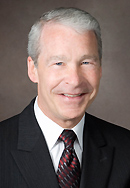
Joel Hunter, A New Kind of Conservative.

Hunter offers seven reasons why “the current strategy of the Religious Right” fails to resonate with conservative Christians, including personal attacks, too much emphasis on “below the belt” issues, a focus on political wins rather than spiritual results and a lack of intellectual heft.

“Jesus didn’t teach us what political platform would best represent the faith; but he did teach us by example how to help those who are in need,” Hunter writes.

Finally, for the political neophyte, Wheaton College political scientist Amy E. Black offers a crash course in Beyond Left and Right: Helping Christians Make Sense of American Politics.

With chapters dedicated to the U.S. Constitution and the separation of powers as well as the art of compromise and the application of faith to politics, Black navigates some of the trickier spheres of public life and brings them home to the kitchen table.

“At that proverbial dinner party, in our churches, or even in the comfort of our own homes, it won’t always be easy or comfortable to talk about religion and politics,” Black writes. “But the challenge is both worthy and worthwhile.”



News of religion, faith, missions, Bible study and Christian ministry among Baptist churches, in Texas, the BGCT, the nation and around the world.


Baptist Briefs

Posted: 2/29/08

Baptist Briefs

Mohler faces surgery, bows out of SBC race. Al Mohler, president of Southern Baptist Theological Seminary and spokesman for conservative social causes, will bow out of the race for Southern Baptist Convention president. Mohler, 48, will undergo surgery for a pre-cancerous tumor in his colon, according to a release posted on the seminary website. Doctors discovered the tumor during a routine colonoscopy, and a subsequent biopsy revealed it was pre-cancerous. Three other candidates for the SBC presidency already have been announced—Georgia pastor Frank Cox and Californians Wiley Drake and Bill Wagner.


Tornado causes minimal damage to rare books. The Ryan Center for Biblical Studies at Union University lost about 10 percent of its holdings when a tornado swept through the Jackson, Tenn., campus last month. The center is located on the top floor of Jennings Hall, which had half its roof ripped off in the tornado. Most of the damage was caused by water, mildew or mold. A nearly 400-year-old Geneva Bible, the oldest book in the library’s possession, was untouched since it is kept in a glass case along with three other rare books—an English Hexapla, a Basal New Testament and a copy of the Wycliffe New Testament.


Graham released from hospital. Billy Graham was released from the hospital Feb. 19 and is resting at his mountain home in Montreat, N.C., where he is expected to continue working on a book about the joys and challenges of growing old. The 89-year-old evangelist was hospitalized in Asheville Feb. 13 for an elective procedure to replace a valve in a shunt designed to drain excess fluid from his brain. The new valve was an update to a shunt installed at the Mayo Clinic in Rochester, Minn., in 2000 to alleviate the condition hydrocephalus, a buildup of fluid within the brain that can cause symptoms similar to Parkinson’s disease. At a recent checkup at the Mayo Clinic in Jacksonville, Fla., doctors found the shunt no longer was draining the fluid properly, and they proposed an operation.


Baptist worker in Asia dies from bus mishap injuries. Linda Lipscomb, an International Mission Board worker, died Feb. 14 in Bangkok, Thailand, from complications following a bus accident. She was 63. Lipscomb, a former nurse, and her husband, J.P., were spending their retirement years serving overseas. Four weeks before her death, in another part of Asia, Lipscomb stood just inside the door of a bus, preparing to step off and walk to a coffee shop. Without warning, the brakes released and the bus rolled forward, throwing her to the ground. The fall broke her left femur and wrist. She was medically evacuated to Bangkok the day after the accident.


Huckabee & Warren headline preaching conference. Republican presidential candidate and former Arkansas governor Mike Huckabee and best-selling author Rick Warren, both ordained Southern Baptist pastors, will speak about how to use the pulpit to address political, social and cultural issues at a preaching conference April 7-9 in Washington, D.C. They will top the bill at the 19th annual national conference on preaching hosted by Preaching Magazine and preaching.com. Other speakers at the event include Charles Colson, founder of Prison Fellowship; William Willimon, bishop of the North Alabama Conference of the United Methodist Church; and national columnist Cal Thomas.


News of religion, faith, missions, Bible study and Christian ministry among Baptist churches, in Texas, the BGCT, the nation and around the world.


Cartoon

Posted: 2/29/08


News of religion, faith, missions, Bible study and Christian ministry among Baptist churches, in Texas, the BGCT, the nation and around the world.


Cash receipts and disbursements present challenges for churches

Posted: 2/29/08

Cash receipts and disbursements
present challenges for churches

By Ken Camp

Managing Editor

DALLAS—Handling cash presents some of the greatest challenges—and potential problems—for churches in terms of finances, said Roger Hall, retired chief financial officer and treasurer for the Baptist General Convention of Texas.

“The biggest risk involves cash before it gets on the books,” said Hall, who works part-time as business administrator for First Baptist Church in Waxahachie and serves as a consultant with several nonprofit ministries.

See Related Articles:
Follow the Money
• Cash receipts and disbursements present challenges for churches

He suggests when it comes to handling cash receipts, a good starting place for churches is to remember there’s safety in numbers. Two or more people should monitor offerings when they are taken from the church’s sanctuary or Sunday school classes to the church office, two or more should count the cash, and two or more should take locked moneybags to the bank for deposit, he said.

“Have the counting committee members bonded as money handlers,” Hall suggested, adding that check signers and other financial personnel also should be bonded.

When it comes to disbursements, Hall offered several recommendations:

• Use only church-approved bank accounts.

• Have all checks signed by two approved parties, and designate back-up signers for times when the principle signers are unavailable.

• Use only pre-numbered checks.

• Do not sign blank checks or make checks payable to cash.

• Have approved invoices or documents available to review at the time checks are signed.

• Reconcile bank accounts monthly. That task should be performed by a person other than the individual who prepares the checks.

• Make sure checks are made out to approved budget or designated accounts from which authorized funds are available.

Hall recommends a division of labor regarding a church’s legal and financial matters. Trustees should sign legal documents on behalf of the church after congregational approval. The treasurer should provide financial reports to the church business meetings, work with the financial secretary on financial matters and oversee the conducting of an independent audit.

The financial secretary’s handling of money should be limited, Hall said.

Ideally, he sees the financial secretary’s job carrying a six-fold responsibility:

• Maintain accounting records.

• Prepare checks for signature by authorized individuals.

• Prepare financial statements.

• Maintain individual contribution records.

• Handle payroll and re-ports.

• Oversee petty cash.

As a church considers its policies about handling finances, Hall said, it should keep in mind a clear sense of purpose—“to see that resources are handled properly, ensure accountability and keep the church family informed.”


News of religion, faith, missions, Bible study and Christian ministry among Baptist churches, in Texas, the BGCT, the nation and around the world.


Follow the Money

Posted: 2/29/08

Follow the Money

Churches’ budgets reveal something
about priorities – but what?

By Ken Camp

Managing Editor

Most observers of congregational life agree—a person can tell a lot about a church by looking at its budget. But exactly what conclusions can be drawn about a church’s priorities remains an open question.

“It's a question I’ve raised with students in my classes for years,” said Bill Tillman, who holds the T.B. Maston Chair of Christian Ethics at Hardin-Simmons University’s Logsdon Seminary.

“The whole matter of economic and financial stewardship is such a vital part of the practice of the Christian life, whether for an individual, a family or a congregation.”

A church’s budget reflects its priorities, he noted. How much a church spends on ministries inside its walls and how much it devotes to ministries beyond itself offers one measure, but Tillman warns against rushing to judgment.

See Related Articles:
• Follow the Money
Cash receipts and disbursements present challenges for churches

“What happens always has to be held in tension and viewed in context,” he urged. “For instance, we can’t say a church never should build a new facility. A new building may be what is needed in a particular community.”

At the same time, a church should ask whether its financial decisions are shaped more by biblical teachings or by cultural values, he stressed.

“The larger culture says we should spend money to make things comfortable for us,” Tillman said.

Churches should ask what lessons are being taught to families as they look at the congregation’s budget, he said. And church leaders should not shy away from talking about money.

“That conversation is difficult,” Tillman acknowledged. “One of my basic assumptions is that the world of money is one of the last points where conversion and redemption happen.”

Each church not only needs to keep in mind the legitimate needs of its own members, but also extend its vision to include God’s work in the world at large, he urged.

“It all should be qualified by the question of whether what we are doing is kingdom work,” Tillman said.

Members of Cross Lanes Baptist Church, near Charleston, W. Va., decided five years ago the best way they could be involved in “kingdom work” was by devoting a larger percentage of undesignated offerings to missions causes.

When Seth Polk arrived as pastor, the church gave 7 percent of undesignated receipts to the Cooperative Program unified budget and 3 percent to associational missions. Polk challenged the church to increase its missions giving incrementally each year.

Now, Cross Lanes Baptist Church gives one-fourth of its undesignated receipts to missions—11 percent to the Cooperative Program, 4 percent to associational missions and 10 percent to other missions causes. Those causes range from local benevolence ministries and church-starting initiatives to global initiatives such as Children’s Emergency Relief International’s work in Transnistria and Moldova. Children’s Emergency Relief International is the global arm of Baptist Child & Family Services.

“We believe that as a church becomes more outwardly focused, God will bless that church at home,” Polk said.

At the same time the church increased the percentage of budget offerings it devotes to missions and increased giving to seasonal missions offerings and world hunger relief, it also entered a $3.5 million building campaign.

Cross Lanes—which leads the West Virginia Convention of Southern Baptists in total missions giving—doubled in worship attendance and undesignated giving over the last five years.

“We want to focus on what really matters to God,” Polk said.

A clear focus and sense of purpose help a church make wise decisions when it develops its budget—and make adjustments when receipts don’t match the budget, said Roger Hall, retired chief financial officer and treasurer for the Baptist General Conven-tion of Texas.

“A church needs to know its purpose, its goals and what it wants to accomplish. The budget is a plan of action to get there,” said Hall, who serves part-time as business administrator at First Baptist Church in Waxahachie.

No one-size-fits-all rules of thumb apply for all churches in terms of establishing percentages for different areas of the budget. Just add a few of the often-cited maximum percentages for various categories—50 percent for personnel, 35 percent for debt service and 25 percent for administration—and the numbers already exceed 100 percent, he observed.

“Take that approach, and ministry is often what gets crowded out,” he noted. And if ministry and missions are the professed focus of the church, the problem becomes apparent.

Trouble develops when a church fails to define its purpose, deviates from its purpose or neglects to follow proper processes and procedures in making financial decisions, he said.

A church’s budget or finance committee should begin the budgeting process by reviewing historical records for past receipts and expenditures, he suggested. Then, the committee should look at other factors such as anticipated growth or decline as it considers what may be realistic giving goals for the upcoming year.

Next, Hall recommended, the committee that is working on the budget should announce its schedule of budget preparation to the church, solicit budget requests from staff and committee chairs and then set a budget hearing meeting to allow people who are making requests to present their rationale and prioritize their requests.

“The budget should not be a product of just one committee. It should not be the product of just the staff or pastor’s recommendations. It needs ownership by the entire congregation,” Hall said.

That sense of ownership grows out of communication each step of the way in the budget-preparation process, not just from an up-or-down annual vote in a church business meeting. And the congregation’s “buy-in” of the budget has both ethical and practical implications, he noted.

“When the budget is understood and owned by the congregation, members have a sense of rightness about it,” he said. “And if they feel like this is a good plan and they are confident in the processes, they are more apt to support it with their tithes and offerings.”


News of religion, faith, missions, Bible study and Christian ministry among Baptist churches, in Texas, the BGCT, the nation and around the world.


2nd Opinion: Sermons, storytelling & novels

Posted: 2/29/08

2nd Opinion:
Sermons, storytelling & novels

Bill Moyers, the ol’ East Texas boy who did good, interviewed novelist John Grisham recently on his PBS program Bill Moyers’ Journal. After Grisham talked about his storytelling ability, Moyers asked if he had heard a lot of sermons.

Grisham said he had heard them all, “from the long sermon on Sunday morning to the revivalist, tent crusades … where the whole town turned up. It was kind of exciting at times and boring at times. But I’ve heard a lot of sermons.”

Then Moyers asked the question seldom asked on national television, “Were you born again?”

“Sure,” Grisham replied, “When I was 8 years old, I felt the call to become a Christian. I felt the need to. I talked to my parents. I talked to my pastor. And I accepted Christ when I was just a little small boy. That was very much a part of growing up.”

Moyers wanted to know how that experience or moment had played out in Grisham’s life and work.

“Once you make that conversion, you are and always will be something different,” Grisham explained.

His books are popular not only because they are well-written, but also because they are exceptionally clean. You can give his books to your 15-year-old son or your 80-year-old mother and not be embarrassed. Grisham shared this idea when I heard him speak in Waco years ago. (Grisham loves baseball, and the Baylor baseball coach knew him in Mississippi and promised he could sit on the bench for a Baylor game if he would come. He came, he spoke, but the game was rained out.)

“My books are exceptionally clean by today’s standards,” Grisham said. “I wrote a sex scene one time and showed it to my wife. And she burst out laughing. She said, ‘What do you know about sex?’”

Moyers, himself a Baptist, said, “Spoken like a true Baptist.”


Britt Towery is a retired missionary, teacher and pastor who lives in San Angelo. His weekly column appears in the Brownwood Bulletin.


News of religion, faith, missions, Bible study and Christian ministry among Baptist churches, in Texas, the BGCT, the nation and around the world.


Does God protect selected disaster victims but not others?

Posted: 2/29/08

Students gather for prayer and support at Union University in Jackson, Tenn., after a tornado tore through campus. (RNS photo/Morris Abernathy/Union University)

Does God protect selected
disaster victims but not others?

By Brittani Hamm & Adelle Banks

Religion News Service

JACKSON, Tenn. (RNS)—As Kristen Fabrizio felt the vibrations preceding the tornado that ripped across the campus of Union University in Jackson, Tenn., last month, she clung to her friends, who in turn clung to their faith.

“You can definitely see God’s hands if you look at our campus,” said Fabrizio, a history major at the Baptist-affiliated school. “No one’s supposed to be alive.”

But many are. Those who made it through the storm thank God for protection. But what about the dozens of people across the South who died in the storms, who weren’t so lucky—or blessed? Did God not protect them?

It’s the kind of question often raised after a disaster, manmade or otherwise. Was God looking the other way when 32 died in a shooting massacre last April at Virginia Tech, or when the seas swallowed more than 200,000 souls in the 2004 tsunami?

Put another way: Does God protect some, but not all?

At Union’s devastated campus and across Tennessee, religion scholars and students alike say such a disaster raises more theological questions than answers.

“Sometimes you just have these weather events,” said Ron Lowery, a United Methodist district superintendent in central Tennessee. “And nobody would wish that upon you, and God would himself not have that come upon us.”

Lowery has been dealt a double blow after the tornado. Two days after the storm, Michael Welch of Lafayette (Tenn.) United Methodist Church was helping coordinate relief efforts when his car was hit by a truck. Welch and three family members died.

That prompts another question: Why was Welch protected from the storm but not the oncoming truck? Lowery says he isn’t spending much time trying to make sense out of the senseless.

“You begin to see there are just circumstances that just come our way,” he said. “These things just happen, and it’s not by some divine power that’s put upon you.”

For now, Union students say they are focusing on gratitude, not questions, as they set out on the long road toward recovery.

“We as humans will question why this is happening and why we were the target,” said Brittany Howerton, a senior public relations major. “Despite all of that, we have to rest assured that God’s plan is best. We are not called to understand things. We are called to trust him.”

Rabbi Harold Kushner, author of the best-selling book When Bad Things Happen to Good People, said he does not believe the tornado was an act of God—even though insurance companies categorize natural disasters that way.

“It was an act of nature,” he said. “Nature is morally blind. Nature can be beautiful, but it has no conscience. … I find God not in the tornado, but in the many responses to the tornado, whether it’s the courage to go on or the resilience to put your life back together or the impulse to help victims.”

Kushner, who lived through the 1989 San Francisco earthquake, said he is inspired by the biblical story of the prophet Elijah, who sought God in the wind, the fire and an earthquake, but ultimately found God in a “still, small voice.”

“When we ask, ‘Why did God let this happen?’ what I learned from that … is God responds not with an explanation but with an agenda,” said Kushner, whose most recent book is Overcoming Life’s Disappointments. “In other words, what you do about it is not make sense of it, but do something to help.”

David Gushee, professor of Christian ethics at Mercer University in Atlanta and a former professor at Union, has a daughter who’s a student at Union and is thankful for her protection.

But he also thinks of the story in the Gospel of John, in which Jesus’ disciples asked if a man was born blind because of his sin or the sins of his parents. Jesus responded that “the works of God” would be revealed in him.

“I think we almost always get in trouble when we then attempt to offer theological explanations of what happened to that other person,” Gushee said. “I’d rather not speculate on the why, as much as when Christians and others reach out to their neighbors and feed them and rebuild their houses … and do all the concrete things that are needed; then God is present.”


News of religion, faith, missions, Bible study and Christian ministry among Baptist churches, in Texas, the BGCT, the nation and around the world.


DOWN HOME: Coming in 1st place in a dog contest

Posted: 2/29/08

DOWN HOME:
Coming in 1st place in a dog contest

“You’re better company than the dog,” Joanna told me the other night, shortly after I returned home from a three-day trip.

My wife really knows how to dish out the compliments. Jo went on to compare my behavior favorably to the habits of our puppy, Topanga. She listed several canine proclivities I won’t mention in a family newspaper. Thankfully, I’ve never attempted any of them.

Since Jo laughed, then kissed me and hugged me and treated me to a terrific home-cooked dinner, I assume she really enjoys my company.

But contrasting my company with Topanga’s wasn’t exactly high praise. At least not from my wife. She’s had this duty before, when our daughters were toddlers and I traveled and she couldn’t get a moment of privacy, much less peace and quiet, until way after bedtime.

Topanga’s 15 months old, and she’s kind of like a toddler, except without the diapers. She wants attention from the time she’s up in the morning until she goes to bed at night. You can’t even go to the bathroom without listening to her cry at the door. She leaves her toys everywhere in the house. If you walk toward another part of the house and stop quickly, she’ll run into the back of your leg. She’ll eat food off the floor. She really doesn’t want you to do “grown up” things, like washing dishes or reading books, because that takes your attention away from her. Oh, and did I mention she has some disgusting habits?

So, that’s why I think Jo has less patience for the dog than I do. Before we ever had a dog, she lived that life with two little girls. She’s ready for peace and quiet in the evening.

Now, I’ve wondered why I tolerate all this better than Jo.

The obvious reason is the same as why I look more fondly on our girls’ baby and toddler years than Jo does: I was Daddy in their world from about 5:30 in the afternoon until bedtime. Jo was Mama around the clock. For me, it was all fun and games. For her (and she enjoyed being a mom as much as any mother I know), it was nonstop work. So, she spent her quota of parental patience on parenthood, not dog ownership.

A secondary reason is my wife is a much more sane and secure person than I am. I’ve given this quite a bit of thought, and I’ve decided I like having a dog so much because I miss the attention that comes with having kids in the house.

Why else would a grown man allow a puppy to lick his ear and place dog toys on top of his head? Why would he look forward to the end of the day so he can get in the floor and wrestle and play fetch? Canine attention is good and fun.

And I hope you won’t think I’m being flippant when I say this, but the affection of my dog reminds me in a small way of God’s love: Absolute. Unmerited. Unconditional.

So, maybe being compared favorably to Topanga is a dog-gone fine compliment.

–Marv Knox


News of religion, faith, missions, Bible study and Christian ministry among Baptist churches, in Texas, the BGCT, the nation and around the world.


EDITORIAL: Fresh beginning & the way forward

Posted: 2/29/08

EDITORIAL:
Fresh beginning & the way forward

Humans naturally gravitate to beginnings. It’s no coincidence New Year’s Eve is the biggest party night of the year. Weddings and the birth of babies are the most significant events in almost every family’s history. Grand openings and the first games of a new season always draw huge crowds. In churches, building dedications inevitably mark milestone moments.

The Baptist General Convention of Texas is no exception. And so the election of a new executive director stands out for its singularity. The BGCT Executive Board selected Randel Everett for that role Feb. 26. The eyes of Texas Baptists now look toward March 31, when Everett begins his tenure and the convention enters a new era.

knox_new

Newness always highlights possibility. Every team is a potential champion on Opening Day. Every child is a potential president, Oscar winner, star athlete, life-changing leader and life-giving healer on the day of its birth.

The BGCT executive director is no exception. As Everett prepares to take up the mantle of leadership, Texas Baptists look ahead with longing. We’re ready for hope. In the past decade, many BGCT churches left to affiliate with a competing convention. The fallout of 9/11 wreaked financial havoc. An overall decline in denominationalism sapped energy and enthusiasm. A church-starting scandal siphoned trust. Tight budgets and staff layoffs eroded confidence and optimism.

Just as those difficulties were not the fault of any lone individual or the result of any single circumstance, so too the way forward will not be blazed by any individual or assured by any specific accomplishment. Still, the advent of new leadership provides a historical moment to hope once again. As we contemplate a new administration, we give ourselves permission to dream anew, to aspire to what we want for our convention in the years ahead.

As we look to the horizon, we would do well to consider several important facts:

“The BGCT” is bigger than the Executive Board. Much of our malaise has focused on the tightness of our budget, which is collected and administered by the board, and staff downsizing, which has taken place at the Baptist Building. But “the BGCT” is all of us—more than 1 million Baptists, 5,500 churches, more than 100 associations and 27 agencies and institutions. Despite our troubles, the BGCT is strong and vital, full of potential and promise, if we work together.

Vision is the way forward. Everett has advocated a “common, clear vision” that embraces missions, Christian education and advocacy for people who have no other advocates. That’s a tremendous foundation upon which to build a vision. And it’s a tried-and-tested foundation, one laid out in our BGCT constitution. These are the purposes of our convention, the reason it was founded. They’re God-sized tasks our churches cannot accomplish acting alone. They’re bracing challenges that have propelled the BGCT through hard times before. And if we keep our eyes on the vision, they can pull us forward again.

Priorities demand discipline. The BGCT does not possess all the financial resources it once owned. Everyone who has studied the budget carefully realizes we cannot afford to do everything we would like to do, much less all we previously have done. So, we must evaluate our priorities in light of our vision. We must rank those priorities carefully and clearly. Then we must determine to support the highest priorities at a level that will ensure success, and we must release lower priorities. If we continue to try to do everything, we aren’t likely to do anything well. We must make difficult choices, then follow them courageously.

Discipline, compassion and courage produce confidence. We can restore confidence in the convention, but it must be earned by these qualities, demonstrated over time. We’re in it for the long haul. We must persevere.


News of religion, faith, missions, Bible study and Christian ministry among Baptist churches, in Texas, the BGCT, the nation and around the world.


Church of England short on Bibles

Posted: 2/29/08

Church of England short on Bibles

By Al Webb

Religion News Service

LONDON (RNS)—The Church of England has discovered a shortage of a basic piece of equipment it really cannot afford to do without—an adequate supply of Bibles for its churches.

The church’s General Synod recently voted to ensure that everyone visiting a church should have “easy and unfettered access” to a Bible, after delegates complained many churches were failing to make them available.

No exact figures were available. But one briefing paper, presented to the synod by delegate Tim Cox, said some churches keep Bibles under lock and key, and that one had removed them on grounds that “they were too difficult to dust.”

While the Church of England was hiding away its Bibles, organizations including hotels, schools, hospitals and even prisons were providing the Scriptures to their clients, visitors and inmates, Cox said.

One organization, Gideon International, was credited with distributing nearly a million copies of the Bible across England in 2007, many of which went into schools.

In 1536, King Henry VIII, whose six marriages had landed him in trouble with religious authorities of the day, ordered that an English version of the Bible be placed in every church. The Bibles often had to be shackled to the pulpit to guard them against violators of the Eighth Commandment, “Thou shalt not steal.”

Although the 16th century Bibles had to be chained down, Archbishop of Malmesbury Alan Hawker told the Synod, at least it was there in a place where it was “critically important” that it was available for use.


News of religion, faith, missions, Bible study and Christian ministry among Baptist churches, in Texas, the BGCT, the nation and around the world.


BGCT board allocates funds, approves missions partnership, hears reports

Posted: 2/29/08

BGCT board allocates funds, approves
missions partnership, hears reports

By Marv Knox

Editor

The Baptist General Convention of Texas Executive Board handled a broad range of business during a day dominated by the election of a new executive director.

After the board chose Randel Everett to succeed Charles Wade as the convention’s staff leader Feb. 26, members turned their attention to an agenda that ranged from money to missions and institutions to internal audits.

Among their actions and reports, the Executive Board:

Ratified allocation of more than $3.8 million to fund church starts this year. That amount includes $890,574 from the budget for church-starting staff funding and more than $1.3 million from the budget earmarked for church starts. Other funds include $1.2 million from the Mary Hill Davis Offering for Texas Missions, $250,000 from interest earned off of new-church endowment funds and $200,000 from the J.K. Wadley Mission Fund.

David Cooke of Devine raises a question at the BGCT Executive Board meeting in Dallas.

Voted to purchase a new “constituent relationship management system”—a sophisticated computer program that will track a wide array of information regarding the convention, its churches and the state. The BGCT’s current system, purchased a little more than two years ago, needs to be upgraded, but even then will not provide the convention the service it needs without additional expensive customization, said Lynn Eckeberger, head of research and development for the convention.

The Siebel CRM System is manufactured by Oracle, one of 12 vendors vetted for the project, Eckeberger said. It will cost about $1.7 million.

Some Executive Board members expressed reservations about spending that much money on a software system, especially since the board laid off about 30 staff late last year due to budget constraints.

Executive Board Chairman John Petty explained the current system must be upgraded. He also noted the money allocated for the project will come from funds designated for administrative support and could not have been used for personnel.

Harold Richardson, a certified public accountant and chairman of the board’s Audit Committee, predicted the software eventually will pay for itself in cost savings and productivity.

Learned the theme for the BGCT annual meeting Nov. 10-11 in Fort Worth will be “Texas, Our Texas.”

BGCT President Joy Fenner announced the theme. Messengers to the annual meeting will explore three sub-themes. “Why Texas?” will focus on reaching the state with the gospel and also strengthening the convention’s base for conducting mission work. “Which Texas?” will examine the diversity of people and needs in the state, as well as the ministries required to serve them. And “Whose Texas?” will acknowledge Texas belongs to God, and if Baptists don’t spread the gospel throughout the state, God will use another group to do it.

Authorized distribution of more than $13.2 million from wills and trusts to help underwrite convention budget expenses.

Renewed a partnership between the BGCT and La Convencion Nacional Bautista de Mexico—the Mexico Baptist Convention—for three years beginning March 1.

Learned the Texas portion of the Cooperative Program unified budget totaled $5,039,361 in January. That amount represents 94.75 percent of the goal.

BGCT Chief Financial Officer David Nabors announced the Executive Board would operate on 95 percent of budget to accommodate the in-state shortfall.

The worldwide portion of the Cooperative Program for January totaled $2,191,752, or 105.75 percent of its goal.

Total Cooperative Program receipts—both state and worldwide—were $7,231,113, or 103.13 percent of the goal.

The BGCT also received $6,615,765 in missions offerings, representing 98.6 percent of the monthly goal. Miscellaneous income totaled $786,273, for 93.35 percent of the goal.

Total January revenue was $14,633,151, or 100.49 percent of expectation.

Heard that President Fenner and other convention officers have named co-chairs to lead a strategy committee authorized by messengers to last year’s BGCT annual meeting. They are Stephen Hatfield, pastor of First Baptist Church in Lewisville, and Andy Pittman, pastor of First Baptist Church in Lufkin. Other committee members will be announced when their participation is confirmed, Fenner said.

Elected four members to fill vacancies on the Executive Board—Debbie Ferrier, a lay member of Tallowood Baptist Church in Houston; Jo Ann Gartman, a layperson from Calvary Baptist Church in McAllen; John Wheat, pastor of First Baptist Church in Kenedy; and Darrell Miles, a layperson from Field Street Baptist Church in Cleburne.

Approved the selection of two individuals to fill vacancies on boards of BGCT-affiliated ministries. Susie Jaynes, a layperson from First Baptist Church in Waco, joins the San Marcos Baptist Academy board, and Toby Summers, a lay member of Trinity Baptist Church in San Antonio, becomes a member of the Baptist Health Foundation of San Antonio board.

Elected Michael Evans, pastor of Bethlehem Baptist Church in Mansfield, to a vacancy on the Christian Life Commission.

Learned a recommendation from the board’s Institutional Relations Committee to bring the salaries of Baptist Student Ministries staff within the convention’s compensation guidelines is being referred to the interim executive director and incoming executive director, as well as the Finance Subcommittee and Administration Support Committee.

Baptist Student Ministries staff were not included when other Executive Board staff positions were “graded” a few years ago, and many of those positions are compensated below levels afforded to comparable Executive Board positions.

Received an update on leadership at three BGCT institutions.

Vic Schmidt, president of San Marcos Baptist Academy, will retire this year. Craig Turner, president of Hardin-Simmons University, has announced his resignation to become president of Catawba College in North Carolina. And Pat Graham, former president of Valley Baptist Missions/Education Center, is expected to stand trial for alleged embezzlement later this year.

Heard that two motions made at the 2007 BGCT annual meeting had been referred to the new executive director for follow-up. They are proposals to study the effectiveness of the Executive Board’s outbound call center and to determine if the Executive Board needs a chief operating officer, a position that has been vacant since Ron Gunter resigned late last year.

Re-named a college scholarship program for children of staff of the Executive Board, the Baptist Church Loan Corporation, Texas Baptist Men, Woman’s Missionary Union of Texas and WorldconneX in honor of recently retired Executive Director Wade.

Received a report that the Executive Board’s new internal auditing process has been active and effective. Audit Committee Chairman Richardson provided updates on internal audits covering budget and planning, network security, events, credit card policies, database administration and church-starting.

Learned the Executive Board would discontinue its outsourcing relationship with the HR Houston firm, which has managed the board’s human resources function for several years. Interim Executive Director Jan Daehnert predicted the move would save about $100,000 per year.

Voted to pray for Broadway Baptist Church in Fort Worth, which has experienced conflict since some homosexual members asked to be photographed as couples in the church directory.

The BGCT is on record affirming churches that minister to homosexuals but has described homosexual behavior as sinful. The convention has rejected financial contributions from a church that endorses homosexual behavior, essentially removing that church from affiliation with the convention.

During discussion of the Broadway statement, some board members expressed reservations about taking any action that might undermine the autonomy of a congregation. Chairman Petty, who proposed the statement, said the document notes the BGCT “reflects and respects the autonomy of the local church.”

Members also questioned why the board needed to make a statement, since the church had not taken specific action regarding its stand on homosexual behavior. Petty noted the situation has been covered broadly by the Dallas-Fort Worth media and suggested the convention should be proactive.

“The right approach for the Executive Board right now is to pray for this congregation as they work through their internal matters, that the Holy Spirit would lead them to a redemptive outcome,” the statement says, noting the board’s officers will monitor the situation and report back to the board.


News of religion, faith, missions, Bible study and Christian ministry among Baptist churches, in Texas, the BGCT, the nation and around the world.


Faith Digest

osted: 2/29/08

Faith Digest

Amazing Grace takes top honors. Amazing Grace, the big-budget film that traced the life of abolitionist William Wilberforce, won Most Inspiring Movie of 2007 and Best Movie for Mature Audiences at the 16th annual Movieguide Faith and Values Awards in Beverly Hills, Calif. The film stars Ioan Gruffudd as Wilberforce, a member of Parliament who fought to end the slave trade in the 18th century British Empire. The historical drama was awarded the $50,000 Epiphany Prize, sponsored by the John Templeton Foundation, which provides $100,000 annually to films and television shows that reflect a “dramatic increase in either man’s love of God or man’s understanding of God,” according to the Epiphany Prizes’ website.


Jehovah’s Witnesses fastest-growing faith in America. Jehovah’s Witnesses are the fastest-growing church body in the United States and Canada, with more than 1 million members, according to new figures that track church membership. The 2008 Yearbook of Canadian and American Churches, produced by the National Council of Churches, recorded growth trends in 224 national church bodies with a combined membership of 147 million Americans, based on self-reported membership figures for 2006, the most recent year available. Although Jehovah’s Witnesses ranked 24th on the list of 25 largest churches, they reported the largest growth rate—2.25 percent—of all churches. The badly divided Episcopal Church, meanwhile, reported the largest drop, at 4.15 percent.


Writer sues Gibson over Passion profits. The screenwriter of The Passion of the Christ has slapped creator Mel Gibson with a $5 million lawsuit, claiming the actor/director grossly underpaid him for writing the 2004 blockbuster’s script. Ben Fitzgerald claimed Gibson and Gibson’s Icon Productions deceived him regarding the Passion budget. The lawsuit does not list how much Fitzgerald was paid for writing the screenplay. Instead, it claims Fitzgerald was told in 2001 by the film’s production team that it was a small $4 million to $7 million film and accordingly the amount available for a writer’s fee was relatively small. Fitzgerald claims he was left out of sharing in the film’s $611 million global box office receipts. A Gibson spokesman did not return a call for comment.


Turkey to allow headscarves. The Turkish Parliament passed two constitutional amendments granting Muslim women the right to wear Islamic headscarves in universities, despite protests from thousands of secular Turks. The first amendment grants equal treatment to everyone by state institutions, and the second amendment states, “No one can be deprived of (his or her) right to higher education.” Turkey, which is predominantly Muslim, was founded as a secular country by Mustafa Kemal Ataturk, who prohibited wearing religious attire in public. Secular Turks fear lifting the ban on hijabs, or Islamic head scarves, is the first step toward allowing religious symbols in all aspects of public life. The amendments still require the signature of President Abdullah Gul, an observant Muslim, to be made official.


News of religion, faith, missions, Bible study and Christian ministry among Baptist churches, in Texas, the BGCT, the nation and around the world.