Judge dismisses most of lawsuit challenging faith-based initiative_122004

Posted: 12/17/04

Judge dismisses most of lawsuit
challenging faith-based initiative

By Robert Marus

ABP Washington Bureau

WASHINGTON (ABP)–A federal judge has dismissed the most sweeping portions of a lawsuit that challenged President Bush's faith-based initiative as unconstitutional.

Judge John Shabaz of the U.S. District Court of Western Wisconsin dismissed most of the claims in Freedom From Religion Foundation vs. Towey, the suit filed in June by the Wisconsin-based foundation.

It launched a broad assault on the philosophy and specifics of Bush's program to provide more government funding to churches and other religious charities for social services.

A few days before Shabaz's ruling, the Freedom From Religion Foundation voluntarily narrowed the scope of the lawsuit to two programs funded through grants from the federal Department of Health and Human Services.

The suit originally claimed Jim Towey, director of the White House Office of Faith-Based and Community Initiatives and other administration officials violated the First Amendment's ban on government endorsement of religion “by using federal taxpayer appropriations to support activities that endorse religion and give faith-based organizations preferred positions as political insiders.”

The complaint claimed agencies showed favoritism toward religion by providing “capacity-building” assistance to churches and other religious groups to enable them to better compete with secular groups for government grants. It also said guidelines the administration provides to religious service providers are insufficient to prevent public funds from subsidizing ostensibly “secular” services pervaded by religious components.

But Shabaz ruled the Wisconsin group, which has about 5,000 members and advocates for strict church-state separation, does not have standing to challenge the perceived violations of the First Amendment by the executive branch.

News of religion, faith, missions, Bible study and Christian ministry among Texas Baptist churches, in the BGCT, the Southern Baptist Convention ( SBC ) and around the world.


LifeWay Family Bible Series for Dec. 26: Announce Jesus Christ, the source for new life_122004

Posted: 12/17/04

LifeWay Family Bible Series for Dec. 26

Announce Jesus Christ, the source for new life

John 4:1-45

By Leroy Fenton

Baptist Standard, Dallas

The Samaritan woman meeting Jesus at Jacob's well was such a refreshing and forceful experience that John included it in his witness to the identity of Christ as the Messiah (4:25-26).

What takes place is almost unbelievable. This Samaritan woman, considered inferior to men, an outcast of her social community, a member of the most despised racial group in Israel, a sexually immoral individual having a live-in partner not her husband, experienced the saving grace of Christ. As a result, she transcends race, sex, immorality, religion and prejudice in becoming what all Christians should be–an avid, vibrant witness to Christ, the Son of God.

Her excitement in announcing the good news of Christ is a captivating highlight of this passage. Profound biblical truths are taught concerning the task and opportunities of the church. Unfortunately, the Great Commission that calls Christian to “go” and “make disciples” often is substituted for “come” and “make fellowship.”

Announce the need for new life

Jesus, as always, was a friend to sinners. This woman needed to know Jesus as her personal Savior. Jesus treated her with respect even though she was a social outcast and a moral misfit. Amazed this Jewish Jesus would associate with her because of an expected intolerance (v. 9), she opened up her mind to listen. Jesus turned his searching eye upon her dark side to reveal his knowledge of her five previous husbands and current live-in who was not her husband (v. 17). Jesus' knowledge of one's sinful condition tips the scales toward guilt, confession and faith.

study3

Taking the common need to drink water to quench physical thirst, Jesus used this play on words as a metaphor to point out the common human spiritual thirst. Verse 10 superbly answers the question of source (Jesus), need (eternal life) and resolution (ask): “If you knew the gift of God and who it is that asks you for a drink, you would have asked him and he would have given you living water.” Just as an individual has to have water to live in this life, the “gift of God” (v. 10) or “living water” is necessary to have eternal life (v. 13). The metaphor continues as Jesus adds, “but whoever drinks the water I give him will never thirst” for it is the spring-like living fountain of “eternal life” (vv. 13-14).

“Never thirst” is a double negative with the sense of “most assuredly will not thirst.” She turned from being earthbound, “give me this water so that I won't get thirsty and have to keep coming here to draw water” (v. 15), to drinking the “living water” of faith in Christ, the Messiah (v.26), the “gift of God” (v. 10), “the Savior of the world” (v. 42), who she could “worship in spirit and in truth” (v. 26).

Announce your testimony of new life

This tainted Samaritan woman came to the well at a time when no one else would be there so she could avoid the scorn and criticism from her peers. She looked at herself as being unworthy and unfit. All of that changed when she discovered this Jesus was the Messiah Christ “who told me everything I ever did” (v. 29).

Her transformation is remarkable. Her demeanor became charged with emotion. She left her water pot and rushed back into the village exuberantly with good news of her discovery. In a few short minutes of profound discussion with Jesus, her whole world was turned upside down. She changed the way she looked at herself, how she looked at God and how she looked at others. God burst into her life and then burst forth from her life, and the contrast was astonishing.

Her message and her manner brought the villagers “out of town … toward him” (v. 30). This outcast became an evangelist. God uses a divorced, immoral, half-breed woman to share the gospel with a lost village. Individuals who announce their faith bring the nonbelievers out of their doubting retreat to consider the truth about Christ Jesus.

Announce the urgency for new life

Visualize the swarm of people who came from their homes and village toward Christ. To Jesus, these Samaritans appeared as grain waiting to be harvested. The urgency is obvious for both the disciple and the nonbeliever. Jesus used this agricultural image to teach that a disciple does not have to wait (v. 35) to find people responsive. The window of opportunity is there if the believer will “open your eyes and look at the fields! They are ripe for harvest” (v. 35). … Even now he harvests the crop for eternal life” (v. 36).

Announce the results of new life

The Samaritans accepted the basic beliefs of Judaism and were worshipers of one God. They, too, awaited the coming Messiah. The woman's testimony was believable (v. 39) and many were converted. Jesus stayed with them two days and “many more became believers” (v. 41). Unexpected results will happen if Christians will be faithful always to proclaim Jesus as Son of God.

Discussion question

bluebull How can Christians announce that Jesus is the source of new life through their actions?

News of religion, faith, missions, Bible study and Christian ministry among Texas Baptist churches, in the BGCT, the Southern Baptist Convention ( SBC ) and around the world.


LifeWay Family Bible Series for Jan. 2: Integrity is a necessary credential for a Christian_122004

Posted: 12/17/04

LifeWay Family Bible Series for Jan. 2

Integrity is a necessary credential for a Christian

Titus 2:1, 11­3:8

By Leroy Fenton

Baptist Standard, Dallas

Hypocrisy, betrayal, untruthfulness, selfishness and greed are troubling this nation's soul. Common decency is no longer common. A lack of integrity is the emerging pattern in the moral conscience of America. This is the ultimate double cross, the enemy of democracy and of a civil society. A fragile consensus of hope holds our society together in spite of the despair over character. Finding an individual who conducts his affairs with integrity is a great discovery.

Loss of integrity is brought into the church through shenanigans as cruel as any secular misdeed–all too often in the name of God. The integrity of denominational leaders, of the congregation and the staff has eternal consequences for those who look for life's answers and then turn away in disgust and mockery. An irrelevant gospel is no gospel at all. The only Bible some will see is the life of a Christian acquaintance.

study3

A few years ago, I baptized a man in his mid 70s whose faith rested on his observation of a chaplain in World War II who lived what he preached. He was impressed enough that when given an opportunity by two laymen years later, he invited Christ into his life.

Integrity is an unimpaired, strict adherence to a code of morality. Integrity has the simple idea of being complete or formed and blended into a whole. Integrity, for the Christian, is the incorporation of the complete teachings, lifestyle, thoughts and behavior of Christ into one's own being. Paul defined integrity: “In everything set them an example by doing what is good. In your teaching show integrity, seriousness and soundness of speech that cannot be condemned, so that those who oppose you may be ashamed because they have nothing bad to say about us” (Titus 2:7-8).

Integrity comes from God

God the Father, by his nature, character and holiness, is the source of a believer's highest integrity. Paul writes to Titus who is ministering in Crete, a desperate and sinful society. A prophet of Crete said of his peers, “Cretans are always liars, evil brutes, lazy gluttons” (v. 12). Paul, the apostle, defined for Titus the qualities of the Christian life that are pleasing to God and that will reflect the light of the gospel to the nonbeliever in a pagan or secular society.

“But for you …” (v. 1) highlights the contrast Paul expects between Titus and the false teachers. “Teach” (actually “speak”) is an imperative. Titus was commanded to “teach what is in accord with sound doctrine” (v. 1). These sound teachings are from the heart and voice of God and are placed in our lives as values and principles of living to be practiced every day.

Integrity is possible without being a Christian. However, without the teachings of a moral God, morality is less likely because of the sinful nature of man. Education in goodness is inadequate alone to sustain noble behavior.

Integrity is the necessary credential for the Christian, an outgrowth of the very nature of God. All of the evils of mankind ultimately are defeated through salvation, God's saving grace. Salvation in Christ teaches us “to say 'no' to ungodliness and worldly passion,” “to live self-controlled, upright and godly lives,” motivated in anticipation of the “glorious appearing of our great God and Savior, Jesus Christ,” who redeems us and purifies us (his church) “for himself” (vv. 11-14).

Titus was told to “encourage” and also “rebuke with all authority” (v. 15). Both are powerful tools of a godly teacher. “Bringing salvation to all men” (v. 11) balances any call for an exclusive Calvinistic doctrine of election favoring salvation for a select few.

Integrity enhances relationships

Cretans often engaged in rebellion against their Roman superiors. Titus was to “keep on reminding” the people to continue to respect rulers in civic and spiritual authority by being submissive and obedient (3:1). Paul, himself, taught and lived the spirit of submission in order to preach the gospel to Gentiles and Jews and “to be ready for every good deed” (v. 1).

Quiet submission is the attitude and obedience is the act for all of God's children in all relationships–men, women, children and slaves (2:5, 9). Submission and obedience are intrinsic to integrity in order that one can be “peaceable, gentle, showing every consideration for all men” (3:2).

We can safely assume that disobedience to human authority would only be appropriate when obedience would defy God. In verse 3, Paul describes the unregenerate human condition as foolish, senseless, deceived, enslaved, malicious, envious and hateful.

God empowers us to act with integrity

How does God turn his power into the human spiritual fruit of purity, righteousness and holiness? The answer is a classic resolve of Christian theology. God's grace empowers the believer. God releases his power through his own “kindness and love” and because “of his mercy” (vv. 4-5). “He saved us” (v. 5) not because we deserved it but because of his ceaseless mercy in our behalf. “Justified by his grace, we … become heirs having the hope of eternal life” (v. 7). Clearly, those who trust in the Lord must “be careful to devote themselves to doing what is good. These things are excellent and profitable for everyone” (v. 8). If a person is saved in response to God's grace, then man's grace will help to draw others to God.

Discussion question

bluebull How would you define integrity?

News of religion, faith, missions, Bible study and Christian ministry among Texas Baptist churches, in the BGCT, the Southern Baptist Convention ( SBC ) and around the world.


Texas Baptist universities ask students: ‘Are you ready for some football?’_122004

Posted: 12/17/04

Hardin-Simmons University and Howard Payne University square off for an NCAA Division III gridiron matchup in Brownwood (left). At right, HSU quarterback takes a snap during another game.

Texas Baptist universities ask students:
'Are you ready for some football?'

By Marv Knox

Editor

The Mary Hardin-Baylor Crusaders defeated the Hardin-Simmons Cowboys in the second round of the 2004 football playoffs, but both schools went home winners.

The same goes for East Texas Baptist University and Howard Payne University, whose teams didn’t make the playoffs this year.

That’s because no matter what happens on the gridiron, football has been a winner for these Baptist General Convention of Texas schools, their presidents insist.

Football boosts campus life, strengthens recruitment and raises the level of other sports, the presidents said. So, football victories are like a successful extra point after an 85-yard touchdown drive—a great deal, but not the main objective.

The universities compete in the American Southwest Conference. They participate in NCAA Division III, and member schools are not allowed to offer athletic scholarships.

“It’s sports like it used to be and still should be,” said Jerry Bawcom, president of the University of Mary Hardin-Baylor, whose Crusaders competed for the Division III title in the Amos Alonzo Stagg Bowl Dec. 18.

University of Mary Hardin-Baylor students overflowing with school spirit cheer on the Crusaders as they advance to the national championship playoffs.

Mary Hardin-Baylor has achieved national prominence in only its seventh football season. East Texas Baptist restarted its football program in 2000, after a 50-year absence. Hardin-Simmons kicked off again in 1990, 27 years after its last game. And Howard Payne has maintained its program for decades.

When Mary Hardin-Baylor started football in 1998, the first focus was on increasing the number of male students on campus, Bawcom said. Similarly, Hardin-Simmons reinstituted football under President Jesse Fletcher to correct the school’s “gender imbalance,” current President Craig Turner explained. “Far more young women than young men will go to your college if you don’t have football.”

But football is a male-student magnet, the presidents said.

More than 100 young men attend Howard Payne so they can play football, President Lanny Hall reported. “When we started football, we increased our enrollment by 100 male students,” added President Bob Riley at East Texas Baptist. The numbers are even higher elsewhere—160 to 170 at Hardin-Simmons and 170 to 180 at Mary Hardin-Baylor.

Football can attract a surprising number of players to a non-scholarship program—where a good high school player can have a chance at making the team. “In our first year, we had to add a junior varsity,” Bawcom said of the influx of gridiron hopefuls.

All those potential football players translate into a “tremendous plus for enrollment, and it helps us with the gender that we’re looking for,” Turner said, noting Hardin-Simmons’ female-to-male student ratio now is a “reasonable” 56-44. “But when you have a lot more women than men, it’s a very negative impact, and some schools have experienced that.”

So, each year, football brings to the Hardin-Simmons campus nearly 200 male students that no amount of non-football recruiting could attract, he said.

Thanks to the influence of football, the gender balance is about two-thirds female and one-third male at Mary Hardin-Baylor, which was all-female prior to 1971. At East Texas Baptist, the balance is about 50-50, a swing of 10 percentage points in both directions since football kicked off, Riley said. And at Howard Payne, “we’re pretty well balanced, but football helps us,” Hall said.

And football attracts other students who don’t go out for the team.

“Athletes bring their friends and their girlfriends,” Bawcom observed.

East Texas Baptist University wide receiver Frank Wilson tries to out run University of Mary Hardin-Baylor defensive end Shawn Williams.

“You bring in some outstanding student leaders, who are Pied Pipers,” added Hall, who was president and chancellor at Hardin-Simmons before taking the helm at Howard Payne. “They have a following and bring with them others from their high schools. I’ve seen non-athletes follow a leader. These students might not have heard about Howard Payne or Hardin-Simmons before, but because the leader is coming, they will follow. This helps build and sustain enrollment.”

For example, Mary Hardin-Baylor’s student headcount has increased by about 350 to 400 students since football began seven years ago, but less than half those students play football, Bawcom said.

Football also strengthens a predominantly Anglo university like Hardin-Simmons by adding diversity, Turner said. “Football helps us recruit minorities,” he explained. “We have some African American and Hispanic players that otherwise we could not recruit. … Some of them could afford to go anywhere, but they wanted to come here to play football.”

NCAA Division III’s non-scholarship sports programs also enrich the universities without busting their budgets, the presidents said.

Since the players don’t receive athletic scholarships, the tuition they pay creates a net financial gain for the universities, not a net loss in expenses.

“Before we started football, we completed a study … and determined we would need 60 to 65 players to make football work financially,” Bawcom recalled. “That first year, we had over 200 kids show up to play football.”

“Without offering them athletic scholarships, our student athletes pay the same as other students,” Turner added. “Whatever it costs us to run the program, we more than make up for with the tuition of the students.”

That contrasts with Hardin-Simmons’ past experience, when it provided football scholarships and competed with state schools many times the university’s size.

“Up to 1963, a significant number of the kids playing football weren’t paying tuition at all,” he said, noting football in the old days ran the university into debt.

“Football pays for itself,” Riley said. “We assured our faculty, staff, trustees and friends of the university that if we got football going, it would generate enough revenue to pay for itself.”

“If we eliminated football today, we would have a financial loss,” Bawcom said. “That’s one thing most alumni and donors don’t understand about a non-scholarship program. It adds to the university, especially if you’ve got good coaches and run a clean program. All of these schools do; they run fine programs.”

And clean programs, too, Turner added. Although some outsiders have accused the schools of compensating for not offering athletic scholarships by recruiting athletes with other scholarships, he insisted that’s not true.

“The percentage of financial aid we provide to athletes and non-athletes is similar,” he said. “Our financial aid program is athletics-blind. It has nothing to do with athletics, which is not even on the (financial aid) application. We provide scholarships based on need and merit.”

“In fact, if they’re a good bass or tenor, we can give them a choir scholarship, but not one for football,” Hall quipped.

The American Southwest Conference compiles annual statistics that detail the kinds of financial aid received by athletes and compares that aid to aid provided to non-athletes, and it shares that material with the NCAA every year, Riley said.

“We hear stories (about alleged cheating), but it would be too easy to see when the statistics come out,” Turner said. “Besides, … these schools are schools of integrity.”

Football also impacts their campuses beyond the stadiums, the Baptist presidents reported.

“We started football primarily to increase male enrollment, but the more important benefits have been improved campus life, campus pride and campus spirit,” Bawcom said.

“It wasn’t as simple as just starting to play football,” he added. “It was a philosophical change in the athletic program.”

Mary Hardin-Baylor wanted to be fair to women’s athletics, so it added some female sports to its roster, he said. The university also started a marching band, which improved its fine arts program, and the cheerleading corps also improved.

“Campus spirit and pride have improved significantly,” Bawcom said. “We’ve doubled the number of kids living on campus—to 1,100 from between 500 and 600. We’ve changed campus life. That’s due to more things than sports, but it was initiated by the change in the athletics program.”

The other presidents echoed those sentiments.

“The Cowboy Band has always been part of Hardin-Simmons’ history, but the Cowboy Band’s greatest exposure to campus is at football games,” Turner noted. “The cheerleading squad is significantly larger for football, and those students and their friends are tremendously involved. The dance team performs at halftime, and we wouldn’t have them without football.

“But more significantly, football gives our kids an activity that cuts across so many lines of separation. They come from different high schools, different parts of the country, but most of them come from schools where football is important.”

“It’s a great fall activity,” Hall said. “We’re fighting for (student) retention. Football gives you a Saturday activity that keeps your students on campus on the weekends. … The school spirit is important.”

Not only has football rejuvenated East Texas Baptist’s homecoming and given students a reason to stay on campus during the weekend, but it gave the university a reason to offer a highly popular new program—marching band, Riley said.

“We have an outstanding music program, one of the best in Texas,” he noted. “We had kids who would come to us and say: ‘I love ETBU, and I love music. I want to come here and be a band director.’ And we’d have to tell them they couldn’t study to be a band director at ETBU, because we didn’t have a marching band.”

But now the university has a 70-member marching band, and many of those students are music majors, preparing to direct bands themselves.

More importantly, football has positively impacted the campuses’ Christian spirit, Riley said.

“There’s something about football players, with their personalities and drive and energy, that’s a little different from other sports and our normal student,” he explained, noting football players bring a “muscular Christianity” to campus.

“That’s certainly not to say we have not had strong Christian young men who are not football players,” he added. “But these guys are impressive. They’re very outgoing. So that has created a difference on our campus. They are conspicuous on campus because of their size and because there are so many of them.

“We had some outstanding young men before football, but the potential for developing more leaders out of our student body now exists.”

And the rising tide of football lifts other sports as well.

Hardin-Simmons beat Mary Hardin-Baylor in their first game this season, and the Cowboys were ranked fourth in the nation until the Crusaders beat them in the playoffs.

“The success of our football team has been an incentive for our other sports to succeed and improve, and that’s been very important,” Turner said.

“Football has made a carryover to the other sports,” Bawcom agreed. “When the football players get out and cheer (other athletic teams), they make a big difference.”

The large football teams also build up the Fellowship of Christian Athletes chapters at the schools, Hall added.

And they’re producing fine Christian coaches for school systems across the state and beyond, Hall and Riley said.

“You’ve had all these athletes come into these non-scholarship programs in our Baptist schools. In the past decade, they’ve had good role models as Christian coaches. It’s impressive the number of coaches produced at Hardin-Simmons and Howard Payne in the past decade.”

“We’re training distinctively Christian young men to go out and be high school football coaches,” Riley confirmed. “For young men who play football, the high school football coach is a major influence. We know we are going to train young men who will make a difference for Christ in the high schools. And it’s the same thing with the band directors we’re training now, too—young men and women who would not be at ETBU if we did not have a marching band, which we would not have if we had not started a football program.”

The non-scholarship aspect of the schools’ football programs helps them embody the collegiate ideal, the presidents insisted.

“We’ve wanted to emphasize the student first and the athlete second,” Bawcom said, noting that’s a major reason why Mary Hardin-Baylor settled on NCAA Division III instead of Division II, which offers scholarships.

“Our kids are truly student athletes,” Turner agreed. “And for our coaches, this is a ministry. (HSU head coach) Jimmy Keeling said to one of our alumni meetings that he could’ve retired earlier, but he continues to do this because he enjoys the opportunity to minister—particularly to young men who have not had a male influence on their lives. A number of kids have made public testimony that Keeling has been like a father and a tremendous influence on their lives.”

“God has really blessed our schools by sending us the kinds of men we needed to direct these programs,” Riley added. “It’s been a blessing for all of us.”

“This brand of football puts football and intercollegiate athletics in the right perspective,” Hall said. “We talk about football building character. I believe in the type of coaches we recruit, and I feel good about what we do with students and how we build character in these young men.”

News of religion, faith, missions, Bible study and Christian ministry among Texas Baptist churches, in the BGCT, the Southern Baptist Convention ( SBC ) and around the world.



Pioneering home missionary, bilingual early-childhood educator, dies at 89_122004

Posted: 12/17/04

Pioneering home missionary, bilingual
early-childhood educator, dies at 89

By George Henson

Staff Writer

SAN ANTONIO–Jovita Galan, a pioneer in bilingual early-childhood education and a Southern Baptist Home Mission Board missionary for more than 40 years, died Dec. 5 at the age of 89.

Galan served in the San Antonio area during most of her ministry. “She was a Home Mission Board appointee, and served during the years when the HMB used the kindergarten as a church strategy to minister and evangelize the community,” explained Jimmy Garcia, director of the office of Hispanic work at the Baptist General Convention of Texas and a longtime friend.

Jovita Galan is pictured with one of the South Texas children in whose lives she invested her own life. (Everett Hullum Photo)

“A good number of churches in Texas started kindergartens using this strategy,” he said. “Jovita was perhaps the last of the surviving Hispanic Christian ladies in Texas that committed their lives to this ministry.”

Garcia said Galan and the others involved in this ministry were breaking new ground in education.

“Before there was a bilingual program in the public schools, Jovita and others like her were trailblazers in the bilingual education of Hispanic children in Texas,” he said.

“Their success rate was far better than any bilingual program in Texas today.”

Galan served as a Home Mission Board summer missionary in 1945.

Following her appointment as a home missionary in 1947 , she worked in Alice until 1951, when she began serving at Antioch Mexican Baptist Church in San Antonio.

She served in Pearsall for a year beginning in 1955. She moved back to San Antonio in 1956, serving there until her retirement in 1990, except for three years when she helped prepare preschool material for the BGCT's River Ministry and served as a seminar leader for preschool caregivers.

Her longest tenure was at Iglesia Bautista Central in San Antonio, where she served from 1962 until 1986 when not helping with River Ministry.

She continued to serve as a Mission Service Corps volunteer after retirement.

Joshua Grajalva remembers serving with Galan at Antioch Mexican Baptist Church. “I once told her, 'I'm going to call you Miss Always.' When she asked why, I told her, 'Anytime I see you, you always have a smile, you're always ready to help and you're always ready to do that which honors the Lord.'”

Galan's influence was obvious at her funeral ceremony, he noted. “At her service, eight pastors gave testimony as to how influential she was in their lives,” he reported.

Rudy Sanchez, longtime pastor and Hispanic leader in Texas, remembers her influence on his own life as well.

“She was my counselor, my mentor,” he said. “She was a legend in our barrio.”

News of religion, faith, missions, Bible study and Christian ministry among Texas Baptist churches, in the BGCT, the Southern Baptist Convention ( SBC ) and around the world.


Church tops off Christmas season with high-powered gift to community_122004

Posted: 12/17/04

Church tops off Christmas season
with high-powered gift to community

By George Henson

Staff Writer

FORT WORTH–River Oaks Baptist Church in Fort Worth hopes its Christmas present to the community will provide recipients the “get up and go” they need to come to church.

The congregation contracted with the gas station closest to the church to mark gasoline down to $1.25 per gallon from 10 a.m. until noon Dec. 18, with the church making up the price difference.

A few days prior to the event, Pastor Jim Lemons was excited about the possibilities.

“We'll have a captive audience for at least 20 minutes or so while they are waiting in line,” he said.

During that wait, church members planned to wash windows, check air pressure in tires, hand out hot chocolate, distribute tracts and build relational bridges. Twenty to 30 people were expected to help in the ministry, coordinated by the church's men's ministry team.

Lemons said the idea was born out of hearing radio stations during similar events. “If a radio station can do it, why not the church?” he said. “I guess this is a just a modern-day version of giving a cup of cold water in Jesus' name.”

He said the church's outreach team began talking about discounting gasoline as a means of reaching out to the community in late summer.

“As we talked about it, we decided: 'Why not wait until Christmas? People are looking to save a little money at Christmas.' This is our little Christmas gift to the community.”

While it may be a “little Christmas gift,” it will not be free.

“We realize we have to invest where the future of the church is, and that is in growing the church,” Lemons said. “If it costs us $1,000 to impact 100 people on a Saturday morning, so be it.”

News of religion, faith, missions, Bible study and Christian ministry among Texas Baptist churches, in the BGCT, the Southern Baptist Convention ( SBC ) and around the world.


Christians complicit in worst instances of genocide in 20th century, researcher insists_122004

Posted: 12/17/04

Christians complicit in worst instances
of genocide in 20th century, researcher insists

By Jana Peairson

Samford University

BIRMINGHAM, Ala. (ABP)– Christians reading the biblical accounts of Jesus' birth often are jolted by King Herod's act of genocide. When told by the wise men of the birth of a Jewish king, Herod ordered all the male Jewish infants in Bethlehem slaughtered to eliminate potential rivals, according to the second chapter of Matthew.

Although Jesus escaped the killing, the story continues to shock Christians at Christmas time.

Even so, one researcher says Christians are all too familiar with genocide. In fact, they have been complicit in some of the worst cases of genocide in the last century.

James Waller, professor of psychology at Whitworth College in Spokane, Wash., said the fusion of Christian beliefs with ethnic and national identities in Germany, Rwanda and Bosnia contributed to genocide in all three countries.

In each case, Waller said, the church provided a theological justification for an “us versus them” mentality. When that happens, he said, Christians may abandon their moral obligation to help persecuted people.

Waller talked about Christians and genocide during a recent human-rights conference at Samford University in Birmingham, Ala. He also recounted his research in his book “Becoming Evil: How Ordinary People Commit Genocide and Mass Killing,” published in 2002.

The 20th century, dubbed the “Age of Genocide” by some historians, saw more than 60 million people fall victim to state-sponsored killing, with ethnic cleansings and purges in countries such as Germany, Ukraine, Cambodia, East Timor, Rwanda and the former Yugoslavia–not all at the hands of Christians or other religious groups.

But Waller said the Christian church was silent, compliant and resigned to mass murder during the Holocaust and incidences of genocide in Rwanda and Bosnia.

In Rwanda, where more than 500,000 Tutsis were killed by Hutus in 1994, evidence indicates the worst massacres occurred in churches and mission compounds, Waller said, and some clergy participated in the killing.

As evidence that Christian intervention can make a difference, Waller pointed to an event in the early stages of the Holocaust. Before Hitler began killing Jews, he gassed hundreds of Germans who had physical or mental disabilities. The church spoke out against Hitler's actions, and the killings stopped. Later, however, when Hitler began killing Jews, the church was silent, Waller said.

After genocide occurs, Waller's research found, the church tends to overstate its degree of victimization or persecution, often retelling the story of genocide in a way that appropriates the victims' suffering. The church often glorifies individual Christian heroes or martyrs, such as Dietrich Bonhoeffer in Germany, taking credit as a group for what is done by an individual.

Although the church typically has made official declarations of contrition in the wake of genocide, Waller said these lacked any real self-analysis or acceptance of culpability. The church seems to assume that self-critique doesn't matter, he said, because genocide “won't happen again.”

"To what degree can Christian institutions redeem themselves–and the world–by being involved in post-genocidal reconciliation?" Waller asked. Above all, he said, Christian communities should think about what the church did wrong and what it can do differently next time, because, he said, "There will be a next time."

News of religion, faith, missions, Bible study and Christian ministry among Texas Baptist churches, in the BGCT, the Southern Baptist Convention ( SBC ) and around the world.


HOPE ministry helps fill Christmas stockings for needy Round Rock children_122004

Posted: 12/17/04

HOPE ministry helps fill Christmas
stockings for needy Round Rock children

By Miranda Bradley

Texas Baptist Children's Home

ROUND ROCK–More than 50 children waited impatiently in a line outside the Chisholm Trail Apartments community center, eager to catch a glimpse of Santa and the toys he brought just for them.

The HOPE–Healthy Opportunities that Protect and Empower–program, a community outreach ministry through Texas Baptist Children's Home, sponsored the event that provided stockings to children who otherwise would not have them.

“It's just great for the kids,” said Lisa Gallardo, a Chisholm Trail resident and former client of the children's home's family care program. “My son didn't have a stocking, so this really helps for the holidays.”

Texas Baptist Children's Home's HOPE program partnerered with Austin Young Women's League to provide filled Christmas stockings for children who otherwise might have gone without any Christmas treats.

But these were more than plain stockings. They were handmade by volunteers and embroidered with each child's name.

“These things are just jam-packed with stuff,” said Melanie Martinez, HOPE program supervisor.

“For the babies, they have rattles and teethers. For the older girls, they are filled with hairspray and perfume. Everyone just put a lot of thought into this.”

Teaming up with HOPE for the first time was Austin Young Women's League, a Christian service organization that helped coordinate the event.

“I feel awesome,” said Cindy Hathaway, president of the league. “There's nothing better than doing something like this for kids who need it.”

Once inside the doors of the community center, children were given a cookie and a Bible. Then they decorated their own sugar cookies while watching a puppet show about the true story of Christmas.

“We wanted to find a way to share Christ with the children that they could relate to and understand,” Hathaway said.

Before leaving, children spent some time with Santa and received their personalized stockings.

Christy Hackney, a former TBCH family care program client, let her 6-month-old open his stocking early.

“He really likes the rattle that was inside,” she said. “I like the stockings a lot.”

“Yeah, it's great to have the extra support,” said Gallardo, who met Hackney while they were in family care together.

“It makes it easier when you don't feel like you're all alone.”

Many organizations pitched in to help with the event, and Hathaway believes they were God's instruments.

“God is good,” she said. “What has happened here today is people are sincerely giving from the heart, and that comes from their love of Christ.”

News of religion, faith, missions, Bible study and Christian ministry among Texas Baptist churches, in the BGCT, the Southern Baptist Convention ( SBC ) and around the world.


Howard Payne students send Christmas cheer to Iraq_122004

Posted: 12/17/04

Howard Payne students
send Christmas cheer to Iraq

Howard Payne University freshman student representatives (left to right) Amanda Alvey, Ellen Belgie and Demetria Menifield participate in a student government-sponsored project to send handmade Christmas cards to military personnel stationed in Iraq. Student government is a campus organization comprised of class officers and representatives from student organizations.

News of religion, faith, missions, Bible study and Christian ministry among Texas Baptist churches, in the BGCT, the Southern Baptist Convention ( SBC ) and around the world.


Latin American students serve in India_122004

Posted: 12/17/04

Juan Acuña (left), a student at Baptist University of the Americas, participates in a Christian worship service among the Banjara Gypsies of India.

Latin American students serve in India

By Ken Camp

Managing Editor

SAN ANTONIO–Two Baptist University of the Americas students–one from Mexico, the other from Nicaragua–spent the fall semester working with Banjara Gypsies in India.

Leaders of the Texas Baptist theological university hope all their students have the opportunity for a similar short-term, cross-cultural missions experience before they graduate, said Javier Elizondo, dean of academic affairs at Baptist University of the Americas.

See Related Stories:
'As India goes, so goes the Great Commission'

Latin American students serve in India

Veteran missionary called to bring healing in Christ's name

San Antonio church provides BUA scholarships for two students from India

He worked with two former BUA students, Eddie and Macarena Aldape, and their Cooperative Baptist Fellowship colleagues in India, James and Robbi Francovich, to plan the semester-long missions immersion program.

As he learned about the Aldapes' and Francoviches' work with the Banjara Gypsy people-group in India and their desire to have students serve alongside them for a short-term internship, Elizondo grew intrigued by the possibility of placing BUA students in India for a semester.

“India, Africa and the Arab world are exactly where we'd like to place some of our students for missions service,” he said.

That's true, at least in part, because Hispanics share many physical characteristics with people in that part of the world and can blend in with the general population, he explained.

Elizondo had a clear idea of what kind of student he wanted to enlist for the pilot project in India.

“I wanted somebody who was bicultural, bilingual and self-motivated,” he said.

He also wanted somebody with roots in Latin America, who would not be so overwhelmed by Third World poverty that he would be unable to serve effectively.

The idea of placing a student from Catholic-dominated Latin America in a culture permeated by non-Christian religions also captivated Elizondo.

Allan Escobar (left) enjoys a time of fellowship, worship and Bible study with Banjara Gypsies in India.

“I wanted the students to have the challenging task of reaching a group of people who are not easy to reach,” he said.

“In Latin America, there is still a Christian influence. I wanted them to see how to evangelize in an unreached place like India and to see how much distance there is to bridge there, as opposed to bridging the distance from Catholic non-born-again to evangelical born-again.”

Elizondo enlisted Juan Acuña, a Californian born in Monterrey, Mexico, and Allan Escobar, who lived in Nicaragua until age 16, when he moved to Fort Worth.

The students served through the CBF Student.Go program.

Francovich served as field supervisor and professor-of-record for the students' fall semester, and they received credit at BUA for the work they did in India. He directed their studies as they read a book a week, and he provided mentorship for their cross-cultural learning experience.

Acuña and Escobar spent the first half of their semester in India with the Francoviches, visiting Banjara Gypsy villages, learning about the people and sharing their faith when given the opportunity.

The Texas students experienced some culture shock upon arriving in India.

Escobar acknowledged the first challenge he faced in India was to “see beyond the poverty.”

The students learned British English spoken with an Indian accent and Texas English spoken with a Spanish accent bear little resemblance to each other. Slang acceptable to one group could be offensive to a different group, they discovered.

Escobar was taken aback when he saw Indian men holding hands and embracing each other closely until he recognized it as a cultural characteristic.

Even so, Acuña insisted the greatest surprise for him was not the differences he observed but the similarities.

“Indian culture has a lot of similarities with Hispanic culture,” he noted. “Both are very family-oriented.”

During the second half of their time in India, the students worked with the Aldapes and focused primarily on youth. They visited clinics, preached in several churches and taught at a conference for youth leaders.

At one clinic, Acuña performed a sleight-of-hand illusion to capture the attention of young people who were waiting in line.

“Once I grabbed their attention, I was able to share Christ with them,” he recalled.

Acuña noted Indian young people in the cities are more westernized than their rural peers, and their curiosity about all things American provided the Texas students an open door to share their faith.

“They're interested in talking with people from the United States, and we had several opportunities to share Christ,” he said.

He recalled an encounter with two girls in a coffee shop who initially started talking with him about movies. In time, the conversation shifted to a school project one of the girls was researching about the causes of depression among young people.

Acuña explained his belief that many young people experience depression because they lack a relationship with God.

He gave one of the young women a copy of Philip Yancey's book, “Disappointment with God.”

“She wrote an e-mail to me, and she said she's reading it,” Acuña said, adding he has continued to stay in e-mail contact with several young people he met in India.

Elizondo already has made arrangements for Escobar and Acuña to share their insights with students at BUA in a variety of venues, including a chapel service and several classes. He hopes they will be “the first of many” BUA students who will have similar semester-long missions experiences.

“We are really excited about the mission of BUA to provide cross-cultural mission experiences for their students and for the great opportunity to guide students through first-hand experiences among an unreached people group in a Third World country,” Francovich wrote in an e-mail.

“Many Latin Americans have responded to the call to missions and are living in our country, and we pray that through this partnership between BUA and CBF, many more Hispanic Americans and Latin American students will be challenged to find their place of service in making disciples of all nations.”

News of religion, faith, missions, Bible study and Christian ministry among Texas Baptist churches, in the BGCT, the Southern Baptist Convention ( SBC ) and around the world.


‘As India goes, so goes the Great Commission’_122004

Posted: 12/17/04

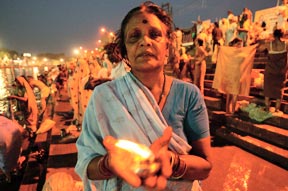
As many as 30 million pilgrims flooded the Hindu holy city of Ujjain to seek spiritual cleansing in the sacred Shipra River. India alone is home to 14 "super-mega" people groups with more than 10 million members each who are currently "unengaged" by a church-planting movement strategy. (Matt Jones Photo)

'As India goes, so goes the Great Commission'

By Erich Bridges

International Mission Board

MUMBAI, India (BP)–What country is home to thousands of millionaires and nine of the world's richest billionaires, makes more movies than Hollywood, boasts the world's largest democracy and is home to 24 million Christians, including 19 million evangelicals?

India.

Americans whose most vivid impressions of India come from old National Geographics and Rudyard Kipling's jungle stories might update their mental file with these facts:

bluebull Eighty percent of India's 1.07 billion people–second only to China in total population–are Hindu.

See Related Stories:
'As India goes, so goes the Great Commission'

Latin American students serve in India

Veteran missionary called to bring healing in Christ's name

San Antonio church provides BUA scholarships for two students from India

But more than 130 million Muslims call India home, and some estimates range above 150 million. That rivals the combined population of all countries in the Arab Middle East.

bluebull The Indian middle class–those earning $2,000 to $4,000 annually–now numbers 300 million, larger than the entire U.S. population. It's expected to approach 450 million within the next five years.

bluebull Massive rural-to-urban migration likely will double the population of India's cities within two decades. That's equal to “all of Europe, all of a sudden, needing water, sanitation, drainage, power, transportation, housing,” says an Asian Development Bank official.
bluebull No fewer than 555 million Indians are under the age of 25, and Indian universities produce more than 1.5 million graduates each year.

bluebull The booming Indian economy was forecast to grow 8 percent this year as Indian industries match or surpass some of the world's top producers.

bluebull India has some 200 million English-speakers. The nation's vast collection of people groups also speaks several hundred other languages and dialects.

Pilgrims seeking spiritual cleansing in the sacred Shipra River offer fire to their gods. (Matt Jones Photo)

bluebull Three Indians made Time magazine's list of the world's 100 most powerful and influential people this year–Bollywood superstar Aishwarya Rai, former Prime Minister Atal Bihari Vajpayee and information technology mogul Azim Premji–reputedly the world's fourth-richest man.

Make no mistake: India still faces enormous problems of poverty and need. The poor in some 800,000 towns and villages still account for the great majority of the population. About 300 million people live on less than a dollar a day. As many as 3,000 Indian farmers in a single state–Andhra Pradesh–have killed themselves over the last six years because of debt and drought.

India has the world's largest number of working children–up to 115 million. Many toil in sweatshops. At least half the population cannot read.

Meanwhile, many of the graduates pouring out of the nation's universities can't find decent jobs. Despite economic growth, too many applicants are competing for too few positions. The government counts 40 million jobless workers, while the vaunted Indian info tech industry employs fewer than 1 million.

But India has made amazing progress on many fronts–economic expansion, education, technology. Its scientists, academics, computer specialists, entrepreneurs and entertainers are challenging–and often surpassing–the best other countries can offer. Expectations are soaring.

Hundreds of India's ethnic, religious and caste groups live in geographical or social isolation from each other, looking at the rest of this vast “nation of nations” with curiosity or suspicion. Many a south Indian, if set down somewhere in the north, would be as bewildered by the customs and languages as someone from the U.S. heartland parachuting into Scandinavia.

In other places, particularly the cities, different peoples and cultures mix and mingle in seemingly countless combinations. Mumbai–or Bombay, as it also is known–is India's largest city and is a world unto itself.

India boasts nearly 20 million evangelicals, such as this member of Andheri Baptist Church. Yet 80 percent of the country's 1.05 billion people are Hindu. (Matt Jones Photo)

With more than 17 million people jammed into a 180-square-mile peninsula, Mumbai is the financial capital of India, the film capital, the organized crime capital, the AIDS and prostitution capital. It is the home of India's most expensive real estate–and Asia's biggest slum. Multitudes live under plastic tarps on the streets, and others dine with old money at the exclusive stadium cricket club, where the joining fee is $30,000.

Travelers on Mumbai's sidewalks and crowded commuter trains can rub shoulders with stock traders in $1,000 suits, beggars, college students, Muslim women covered by black burqas, Punjabis, Tamils, Kashmiris, Bengalis, Assamese, Gujaratis, Keralites.

“Diversity is India,” observes a leading Christian strategist who lives there. “You can lose yourself in all the challenges and unlimited horizons for missions in this country. You could pour a thousand lifetimes into India and never exhaust it.”

India's 24-million-member Christian community is growing, but it remains a small minority of the national population of 1.07 billion.

India and its immediate South Asian neighbors have more than 200 people groups with populations exceeding 1 million. Nearly half of the world's unreached people groups live in India and the South Asian region. South Asia, which includes India, has half of the world's Last Frontier population–more than any other region.

India alone is home to 14 “super-mega” people groups with more than 10 million members each currently “unengaged” by a church-planting movement strategy. In other words, Christians are not yet focusing on any of these groups in a way that will result in growing, self-sustaining church movements. Just one of these ethnic peoples, the Rajput, totals 40 million souls.

“As India goes,” the Christian strategist said, “so goes the Great Commission.”

News of religion, faith, missions, Bible study and Christian ministry among Texas Baptist churches, in the BGCT, the Southern Baptist Convention ( SBC ) and around the world.


Veteran missionary called to bring healing in Christ’s name_122004

Posted: 12/17/04

Veteran missionary called to bring healing in Christ's name

BANGALORE, India (BP)–Ask people around Bangalore, India, what a Christian looks like, and many would describe Rebekah Naylor, the Southern Baptist missionary surgeon who has labored at Bangalore Baptist Hospital the past 30 years.

Some Indians have seen Naylor–who currently is clinical assistant professor and surgeon at the University of Texas Southwestern Medical Center at Dallas– as a cool, precise, professional medical doctor who has performed countless surgeries and other medical procedures.

She has saved lives, delivered babies and relieved suffering for thousands of people over her years in India.

Rebekah Naylor, who has served at the Bangalore Baptist Hospital more than 30 years, has come to be accepted as an honorary “auntie” to hundreds and hundreds of Indian young people and children.

But others know Naylor through her soft-spoken but persistent sharing of the gospel, her training and encouragement of Indian Baptists in how to witness and plant churches. In this role, she has helped thousands of people find eternal life in Christ.

For Naylor, the missionary calling and the drive to become a physician were one calling.

“I experienced a call to missions specifically when I was 13 years old,” she said. “God spoke to me very clearly about personal involvement in foreign missions service.” That calling combined with her interest in medicine.

“My ambition in medicine was basically to use it as an avenue to share my faith in Jesus Christ,” she said, summing up a vision for her life she pursued with steadfast devotion over the following decades. Already she had plowed new ground. Few women became physicians, much less surgeons, in the 1960s.

By the time she arrived in India as a newly appointed missionary in 1974, she had managed to get through university, medical school and related training. From a comfortable home in Fort Worth, the medical and missionary newbie found herself stepping through India's poor who slept on sidewalks for want of homes.

See Related Stories:
'As India goes, so goes the Great Commission'

Latin American students serve in India

Veteran missionary called to bring healing in Christ's name

San Antonio church provides BUA scholarships for two students from India

She arrived at Bangalore Baptist Hospital when it had been open just six months. The building sat then on a bare, 15-acre site outside the city. Although she was anxious, the Indian staff and the 12 patients welcomed the American warmly.

“The foreign doctors were supposed to know something more than others, so they came hoping that they would find excellent care. They did find excellent care, but they also found people who really cared about them,” she said.

As years passed, the city grew out to surround the hospital compound, and the hospital also grew, from 80 beds to 160. The hospital began to help educate doctors and train Indians to become X-ray and lab technicians.

Today the hospital delivers 1,500 babies a year–an average of about four babies a day. Doctors there treat more than 100,000 patients a year and impact five times that many for the gospel.

Naylor served in several key roles at the hospital, including administrator, coming to be accepted more as family than foreign staffer. She also became honorary “auntie” to hundreds and hundreds of Indian young people and children.

From its inception, the hospital maintained pastoral ministry and outreach. “Its reason to exist was to tell people about Jesus Christ,” she said.

Today, Indian Baptists point to a map of Bangalore that is dotted with Baptist churches, most the result of the hospital's outreach. When workers went to one community a couple of miles from the hospital years ago, there were no Christians and no churches. Within a year, there were 20 baptized believers. Today Trinity Baptist Church is a thriving congregation that has started 18 other churches and is working in many other communities to start more.

News of religion, faith, missions, Bible study and Christian ministry among Texas Baptist churches, in the BGCT, the Southern Baptist Convention ( SBC ) and around the world.