Astros’ Pettitte makes a pitch for sexual purity_40405

Posted: 4/01/05

Astros' Pettitte makes a pitch for sexual purity

By Shawn Hendricks

LifeWay Christian Resources

NASHVILLE–Houston Astros pitcher Andy Pettitte has played 10 seasons in the major leagues and knows all about the physical and emotional rigors of being a professional athlete. But, he said, living a life of spiritual integrity and sexual purity is just as challenging.

Pettitte began his baseball career in 1990 when the New York Yankees selected him in the 22nd round of the draft. He eventually helped lead the Yankees to four World Series titles and also has become known for his success off the field as a man of faith.

Pettitte, along with co-author Bob Reccord, president of the Southern Baptist North American Mission Board, examines how young boys can live godly lives in the book, Strike Zone: Targeting a Life of Integrity and Purity, released by Broadman & Holman Publishers of LifeWay Christian Resources.

Pitcher Andy Pettitte offers encouragement to help young Christians pursue lives of integrity and purity.

Pettitte and Reccord explain to young boys that a Christ-filled life can still be maintained in a society where steroids, promiscuous sex, pornography and various types of criminal behavior often grace the headlines of today's sports pages.

“Let's be honest,” Pettitte writes. “The world doesn't expect a lot out of us as guys. Everyone pretty much expects us to cuss and to cheat and to be obsessed with sex, … but they are wrong.”

No one knows temptation more than Pettitte, who admits he's made plenty of mistakes. But one mistake he feels blessed to have avoided is engaging in premarital sex. He shares how that decision has strengthened his Christian testimony and blessed his marriage.

Along with stories of how young men can succeed and fail every day in their spiritual lives, the book also provides study questions for each reader to answer and apply to his life. The chapters address a variety of contemporary issues, but the book generally focuses on sexual purity.

Reccord says today's society has gradually watered down the definition of sex and created a generation of “technical virgins.”

“A trend is sweeping the country, even into junior high,” he writes. “People fool themselves into thinking that if they refrain from intercourse, they remain virgins, even if they engage in a variety of other sexual activity. But this is nothing more than a word game that can lead to tragic consequences.”

Living a pure life is about more than just avoiding sexual activity, the authors explain.

“A life of purity means honoring the Lord in the language you use, the movies you watch, the way you conduct yourself in class,” Pettitte writes.

One of the keys to avoiding these temptations is through establishing relationships with those who will act as accountability partners.

God “works in our lives through people, especially the people who care the most about us,” Pettitte says. “We need the wisdom and guidance of our parents, our pastors and other Christians who have walked this path before us.”

As important as consistency is on the mound for Pettitte, he shares it is equally important in a person's spiritual life.

“If you aren't consistent, if you don't live out your convictions and exercise self-control, no one will listen if you try to speak out,” he insists. “There comes a point when a silent witness isn't enough. You have to stand up for what is right.”

News of religion, faith, missions, Bible study and Christian ministry among Texas Baptist churches, in the BGCT, the Southern Baptist Convention ( SBC ) and around the world.


Purity pledges offer teens a counter-cultural alternative_40405

Posted: 4/01/05

Purity pledges offer teens a
counter-cultural alternative

By David Briggs

Religion News Service

CLEVELAND–Luvirt Parker was 16 years old when he first pledged at a True Love Waits rally to remain a virgin until his wedding day.

Seven years later, the Cleveland State University graduate was back to tell several hundred youths at Mount Zion Church of Oakwood, Ohio, he has remained true to his word and is looking forward to being married this month to a woman who shares his beliefs.

“I love her so much, I want to wait until the wedding night,” Parker told participants at a sexual purity rally. “There's nothing like knowing you're pure before God. Your conscience is clear.”

At the end of the rally, about 150 northeastern Ohio youths made commitments to wait until they are married to have sex, joining more than 2.4 million youths across the country who have taken the True Love Waits pledge.

The Southern Baptist-led True Love Waits campaign and the Silver Ring Thing are among several abstinence-only movements gaining strength throughout the nation as more churches push abstinence over safe-sex campaigns.

Abstinence educators say many youths embrace alternatives to a popular culture that glamorizes teen sex.

“There's almost like an innocence that had been lost that has returned,” said Denny Pattyn, executive director of Silver Ring Thing, based in Pennsylvania, which uses sketch comedy and music videos as part of its faith-based abstinence program. “Kids overwhelmingly want a strong abstinence agenda.”

But the growing phenomenon comes amid conflicting evidence about the value of educational approaches emphasizing abstinence.

A study by the nonpartisan research center ChildTrends showed the number of teens having sex declined from 54 percent in 1991 to 46 percent in 2001.

Another study by researchers at Yale and Columbia universities showed that teens who made a one-time pledge to refrain from sex before marriage were likely to delay having sex, have fewer partners and get married earlier. However, they also were less likely to use contraception when they became sexually active.

The study found no significant statistical difference among pledgers and non-pledgers in their rates of contracting a sexually transmitted disease.

Some say abstinence-only programs can endanger youths by leaving them unprepared for the consequences of sexual activity.

Ann Hanson, minister for Children, Family and Human Sexuality of the Cleveland-based United Church of Christ, said the denomination's approach is to provide youths with age-appropriate information about their options, including contraception and abortion.

“If youth have complete and accurate information about issues of sexuality, they will make more informed decisions about sexual health,” she said, adding her approach can be summed up as “Just say 'know.'”

But others say teenagers are searching for moral guidance and peer support to make appropriate choices.

“I think there is a fair percentage of teenagers who are offended by messages from teachers, government leaders and sometimes even parents that seem to suggest teenagers are almost barnyard animals,” said Richard Ross, founder of True Love Waits.

“What is refreshing about True Love Waits is that young people are hearing voices that say, 'We fully believe in you and your generation.'”

New research also indicates abstinence programs may work better with some groups of youths than others.

A recent study of more than 3,000 teenagers and their parents, the most comprehensive research ever done on faith and adolescence, found many religious youths make choices based on traditional moral standards.

The National Study of Youth and Religion found, for example, that 95 percent of teens classified as devoted believe in waiting for marriage to have sex, compared with only 24 percent of unaffiliated teens who hold that view.

“Abstinence isn't for everybody,” Pattyn said. “It's for kids who want to step up to that level. There should be a program for them.”

Ross and Pattyn said it is important in evaluating national research to distinguish among abstinence-only programs.

For example, Ross said, many faith-based programs encourage follow-up and require a commitment beyond writing in a notebook in a health education class.

“For True Love Waits young people, the promise is to God Almighty. That is remarkably different in power,” Ross said.

News of religion, faith, missions, Bible study and Christian ministry among Texas Baptist churches, in the BGCT, the Southern Baptist Convention ( SBC ) and around the world.


Book Reviews_40405

Posted: 4/01/05

Book reviews

Evangelism in the Early Church by Michael Green (Eerdmans)

One of the most effective churches I have ever seen in evangelism was St. Aldate's Church in Oxford, England, when Michael Green was the pastor in the 1980s.

Green, who later taught at Regent College in Vancouver and then returned to his homeland to serve the Church of England in evangelism and missions, details here the key reasons Christianity spread so rapidly in its first centuries. While doing careful analysis, he never reduces this story to technique. It is always about the will of God, the good news of the cross of Jesus and the power of the Holy Spirit.

What are you reading that other Texas Baptists would find helpful? Send suggestions and reviews to books@baptiststandard.com.

For a church seeking solid direction on evangelism, Green's book is superb.

This volume, first published 35 years ago, is listed by Christian History magazine as a classic. Evangelism in the Early Church is over 400 pages long, and although well written, it requires a motivated reader.

Where you can find it still available, Green did a shorter version titled Evangelism Now & Then.

Bill Blackburn, president

Partners in Ministry

Kerrville

The Rise of Evangelicalism: The Age of Edwards, Whitefield and the Wesleys by Mark Noll (InterVarsity Press)

Mark Noll provides a wonderfully readable historical survey of the roots of evangelicalism in early America and Europe. For the historically curious, this work looks at the spiritual and cultural forces as well as the personalities who traversed a growing movement that today is trying to chart its future course.

Reading history helps thoughtful believers understand the events that brought us to the present time. It also gives us guidance about what is ahead. Our response to the present issues in which we all are immersed or entangled can benefit from framing them in historical perspectives. Knoll has done this well, as he helps us understand the emergence of the basic tenets of historic evangelicalism and the currents of conflict and division. I found his treatment of Calvinism and Arminianism during this period helpful, given the present attention on the re-emergence of Calvinism in Baptist life.

If you want to know more about these early days of American evangelicalism, you might enjoy this first of a projected five-volume history.

Michael R. Chancellor, pastor

Crescent Heights Baptist Church

Abilene

The Winter Pearl by Molly Noble Bull (Steeple Hill)

Molly Noble Bull, a member of First Baptist Church in Uvalde, has created a beautiful story, full of emotions and characters you can believe in. Honor battles self-doubt and her confused reactions to the pastor's biblical lessons. The pastor has conflicting feelings for the young woman who isn't a believer. Or is she? He can't control his need to protect her, but he can't let himself declare his love until he knows she shares his faith.

Most surprising in The Winter Pearl is the complex story of Uncle Lucas. Rather than make Lucas pure evil, Bull explores the mindset of an alcoholic, following all the downward steps that took him to the place where he's ended up. Bull gives him a depth unusual in a villain.

The Winter Pearl simply is well done. Any story can be told well or poorly, and the mark of a gifted author is how deeply she pulls you into the story and how much she makes you care.

The Winter Pearl is one of the good ones. Sweet, sentimental and honest.

Mary Connealy

Decatur

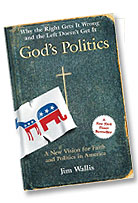
God's Politics: Why the Right Gets It Wrong and the Left Doesn't Get It by Jim Wallis (Harper-SanFrancisco)

The subtitle to Jim Wallis' book accurately reveals his criticism of both political extremes in the United States, the divide that exists between them and their relationship with people of religious faith. Wallis calls for people of faith to reclaim a prophetic role in the public debate, free from ties to either political party that speaks to issues from a consistently applied Christian ethic. He envisions an option in which Christians combine a conservative stance on values with progressive views on social policy, where believers can consistently apply the expectations of the gospel to public debate.

God's Politics will be valuable reading to any person who has grown tired of the divisive nature of American politics and hopes for a more complete expression of the gospel in public discussion. While one may not agree with all of Wallis' conclusions, serious readers will benefit from interacting with the questions he raises.

God's Politics will challenge readers to apply their faith to a broad range of public issues.

John Thielepape, pastor

Meadow Lane Baptist Church

Arlington

News of religion, faith, missions, Bible study and Christian ministry among Texas Baptist churches, in the BGCT, the Southern Baptist Convention ( SBC ) and around the world.


Baptist Briefs_40405

Posted: 4/01/05

Journal focuses on the Baptist community. The Baptist History and Heritage Society recently released The Baptist Community, the society's winter 2005 journal issue. Baptist World Alliance General Secretary Denton Lotz wrote the introductory article, "Who and Where in the World are the Baptists?" Other articles address the history and work of the Hispanic Baptist Convention of Texas, Progressive National Baptists, Korean Baptists, Pentecostal Free Will Baptists and Seventh Day Baptists. To order the journal, e-mail pdurso@tnbaptist.org or call (800) 966-2278. The cost is $8 plus shipping.

CBF offers sabbatical grants. The Cooperative Baptist Fellowship's Initiative for Ministerial Excellence is accepting applications for 45 sabbatical grants to be awarded in 2006. Pastors who have been in the same ministry setting for at least seven years are eligible to apply for the $2,500 grants. The pastor's congregation must approve the sabbatical, which must be a minimum of four weeks. The sabbatical program is part of a $1.9 million Lilly Endowment grant that also has created 56 peer learning networks and ministry residencies for recent seminary graduates. For more information, call (804) 379-0915.

GuideStone seeks needy retirees. GuideStone Financial Resources–formerly the Southern Baptist Annuity Board–wants to locate retired Southern Baptist workers, ministers or widows whose income is insufficient to meet their daily needs and offer assistance through its Adopt an Annuitant program. The program is open to retirees age 65 or older with 10 years or more paid Southern Baptist service who have income of less than $1,250 per month for single applicants and less than $1,665 per month for married applicants. Applicants also must have less than $30,000 in assets, excluding their home. A widow or widower married at least 10 years to an individual who would have met the qualifications also is eligible to apply. Qualified individuals receive $200 a month, and qualified couples receive $265 a month. Depending on their situation, they may receive monthly support, a one-time grant or emergency assistance. For information, e-mail adopt@GuideStone.org, call (800) 262-0511, or visit the website at www.guidestone.org and select Adopt an Annuitant from the menu.

CBF offers weekly online sermons. The Cooperative Baptist Fellowship has launched a "sermon of the week" feature on its website. CBF of Georgia Coordinator Frank Broome is managing the project. Sermons must be submitted in electronic format for consideration. The complete manuscript must be positive, biblically based and appropriate for the season. It must have been preached at a CBF partner church within the past year. A new sermon will be featured each Monday at www.thefellowship.info/News/sermon.icm.

Companions in Christ training offered. The Cooperative Baptist Fellowship Faith Formation Initiative will offer Companions in Christ training in both English and Spanish June 29 during the CBF General Assembly in Grapevine. Carolyn Shapard of Wilshire Baptist Church in Dallas and Jorene Swift from Broadway Baptist Church in Fort Worth will be the English facilitators. Carmen Gaud, international editor for Upper Room Ministries, will facilitate the Hispanic session. The cost for the training is $100, which includes all sessions, meals and materials used in the training sessions.

CBF co-sponsors spiritual formation conference. The Cooperative Baptist is a sponsoring organization for Renovaré's International Conference June 19-22 in Denver, Colo. Keynote speakers will be author and Renovaré founder Richard Foster and Dallas Willard, author and professor of philosophy at the University of Southern California. Fellowship participants can register at a discount rate of $149. More information is available at www.renovare.org/journey_events_2005ic.htm.

News of religion, faith, missions, Bible study and Christian ministry among Texas Baptist churches, in the BGCT, the Southern Baptist Convention ( SBC ) and around the world.


My Brother’s Keeper shelter a haven for homeless in Waco_40405

Posted: 4/01/05

Burrell Steele (left), a volunteer at the My Brother's Keeper shelter, offers assistance. (Photos by Sarah Farris)

My Brother's Keeper shelter
a haven for homeless in Waco

By Sarah Farris

Special to the Baptist Standard

WACO–A sign in Mission Waco office says: “If you're here for an appointment, welcome. Otherwise, if you're sitting here, be ready to volunteer.”

That service-oriented, volunteer-driven philosophy led the ministry to create a haven for Waco's homeless.

Mission Waco decided to begin its shelter when two homeless men in the community died while sleeping in an abandoned home that caught fire.

“It grew out of seeing (the homeless) as friends,” said Mission Waco Executive Director Jimmy Dorrell.

With $100,00 raised by the community, along with several large donations and grants, My Brother's Keeper homeless shelter opened late last December. The 48-bed shelter serves the emergency homeless, as well as the chronically homeless–people who have been continually homeless for a year or more.

The Meyer Center offers daytime services to Waco's homeless population.

Since Dec. 21, the shelter has aided more than 150 men and women, with an average of 27 beds occupied each night, Dorrell said.

The Meyer Center, the shelter's daytime facility, is located at a former church in downtown Waco. It houses what Dorrell called “a one-stop-shop to aid homeless and the poor.” At this location, people can shower and receive mail, personal hygiene products, legal assistance and case management counseling, explained Rita Cone, social services director of the shelter.

Currently the shelter, located in a former warehouse, only has beds on a night-by-night basis. Therefore, people must attempt to get a bed each night.

The shelter already has impacted the lives of some of Waco's homeless.

“A few men are getting work because they have a stable place to sleep every night and have had enough rest to work,” Cone said. “It's hard to go to work without a safe place to sleep the night before–help had to start somewhere.”

Mission Waco also has partnered with Baylor University's graduate program in psychology to assess and diagnose homeless people with mental disabilities so they can receive government assistance. Without this partnership, the high costs of physiological consultations would be too costly for the shelter.

Thanks to a grant from the U.S. Department of Housing and Urban Development, the shelter will make available 18 beds this summer to the transitional homeless–people who have the potential to move from homelessness and unemployment to self-sufficiency. Participants in the program will work on a transitional plan developed in consultation with shelter staff.

About 1 percent of the population of any city in the United States is homeless, Cone noted. Among homeless adults, roughly one-third have mental health problems, one-third have substance abuse problems and one-third are veterans, Cone noted. There are about 600 chronically homeless individuals in Waco, she said, but added it is difficult to determine the exact number of homeless in a city.

“Sleeping in the street is loitering, and sleeping in an abandoned building is trespassing,” she said. “If you are homeless, you have to be ingenious to find a place to sleep.”

A shelter for Waco's chronic homeless population cuts down on vandalism and the human cost of homelessness. But also, Cone said, “it takes care of community citizens, because most folks are members of the community in which they are homeless.”

Working closely with homeless people shatters stereotypes, she noted.

“Just because someone is homeless, it does not mean they are not intelligent,” she said, citing times she has met homeless people who were registered nurses and university graduates.

“We owe it to take care of everybody,” she said. “Fight for the poor. Be champions of for the homeless. Love justice; do mercy. It's a command, and (the Bible) doesn't say it's optional.”

Mission Waco is an interdenominational Christian ministry serving the poor and the local church that builds relations of empowerment to the poor and marginalized, mobilizes the local church and addresses social injustices that effect the marginalized. For more information, visit www.missionwaco.com.

News of religion, faith, missions, Bible study and Christian ministry among Texas Baptist churches, in the BGCT, the Southern Baptist Convention ( SBC ) and around the world.


Cartoon_40405

Posted: 4/01/05

“Before I call up God, what time is it in heaven?”

News of religion, faith, missions, Bible study and Christian ministry among Texas Baptist churches, in the BGCT, the Southern Baptist Convention ( SBC ) and around the world.


2nd Opinion: Baptists together in Christ: 1905-2005_40405

Posted: 4/01/05

Baptists together in Christ: 1905-2005

By Denton Lotz

In this, the Baptist World Alliance's 100th year, we thank God for his awesome grace and providence that have guided us from 1905 to 2005. Ebenezer: “Thus far the Lord has helped us” (1 Samuel 7:12). Indeed, we can raise our Ebenezer, because for 100 years, the Lord has blessed the work of the Baptist World Alliance

In 1905 when the BWA was founded in London, optimism was in the air. This was going to be “The Christian Century.” But alas, the guns of August soon destroyed this fantasy. Instead, these 100 years have been one of the most tumultuous times in world history. World Wars I and II doomed the so-called Christian West to extinction. No longer was the Christian faith the dominant theme of Europe. Even the European Union recently refused to acknowledge a Christian history as part of its new constitution!

During this century of the BWA, positive historical developments contributed to the progress of the Chris-tian mission and an ever-growing Christian presence in the Two-Thirds World. In 1905 when the BWA began, more than 85 percent of Christians lived in Europe and North America. In 2005, 60 percent of Christians live in Asia, Africa and Latin America! The former missionary-receiving countries have become missionary-sending countries. While in 1905 Spurgeon's Tabernacle was the largest Baptist church with thousands of white English worshippers, today the largest Baptist church in Britain is Ghanaian/Nigerian, comprised of African immigrants! This is one of the many paradigm shifts of the past century of Baptist life!

These 100 years have seen dramatic changes in world politics–the end of U.S. segregation in 1965, the fall of communism in 1989, the end of apartheid in South Africa in 1991. Sept. 11, 2001, brought terrorism into mainstream political life, the consequences of which the world and the church still are trying to figure out. All of these changes meant the church had to develop new strategies for mission, with new opportunities in Eastern Europe and Africa and new hindrances in the Middle East.

With the end of colonialism in the 1960s, Baptist conventions/unions grew rapidly and became independent leaders of their own churches. Consequently, representation in the BWA from the southern hemisphere began to grow, as Africans, Asians and Latin Americans voiced their concerns about where we were going! In 1960, after 55 years of English and North American leadership, the BWA elected its first president from the developing world, Jao Soren of Brazil. Then came Tolbert of Liberia, Wong of China and Kim of Korea. Indeed, we have become internationalized–and more sensitive to the needs of the growing majority of the BWA.

The 20th century was a time of dramatic breakthroughs in technology. No longer would we travel by steamship, but airplanes would take us to far-off places in hours. The telegraph and telephone were replaced by e-mail, and a major part of communications is done on the Internet! Television has made the world a global village indeed! Now, joy and sorrow enter our living room daily! Disunity in the world also has expressed itself in disunity within the church. We rejoice at the great unity among Baptists worldwide as expressed in the Baptist World Alliance. In spite of the recent Southern Baptist exodus, we rejoice at the tremendous support for the BWA from its 211 member bodies in every part of the globe!

The past 100 years saw great Baptist spiritual and political leaders–Martin Luther King Jr., Billy Graham and Jimmy Carter. These men represent significant aspects of the gospel for which most Baptists have stood for many years–social justice, evangelism and human rights. Who will be the new leaders in the next century of Baptist life? Let us pray that God will send men and women to the Baptist World Alliance with a prophetic and biblical word for bringing renewal, kingdom growth and advance for Christ and his kingdom!

We are grateful to God Almighty for his love and grace. We can say with the Psalmist, “His steadfast love endures forever!”

Happy 100th birthday to the Baptist World Alliance! What a celebration we will have in Birmingham, England, July 27-31! Make your plans to attend now!

Denton Lotz is general secretary of the Baptist World Alliance

News of religion, faith, missions, Bible study and Christian ministry among Texas Baptist churches, in the BGCT, the Southern Baptist Convention ( SBC ) and around the world.


Criswell Foundation dispute ends in arbitration_40405

Posted: 4/01/05

Criswell Foundation dispute ends in arbitration

By Ken Camp

Managing Editor

After five years of legal wrangling, a three-member arbitration panel settled a dispute between the W.A. Criswell Foundation, Criswell College and a computer contractor by granting the Kerrville-based business a fraction of the multi-million dollar award its owner wanted.

The panel awarded $265,000 to International Data Systems–$131,000 for claims related to the contract with the Criswell entities and $134,000 for legal costs and other fees. But John Thomas, founder and president of IDS, claimed his legal bills exceeded $900,000 and the Criswell entities spent at least an equal amount on their legal team.

Last October, a district judge in Dallas dismissed complaints by IDS against the foundation and college filed under the Racketeering Influenced Corrupt Organizations Act. By finding no evidence of racketeering, she reduced the claim for damages from more than $46 million to about $15.5 million. Anti-racketeering statutes allow recovery of three-fold damages.

The dispute arose from an agreement Thomas reached in 1995 to digitize tapes, transcripts and outlines of sermons by W.A. Criswell, longtime pastor of First Baptist Church in Dallas. As a Baptist layman, Thomas claimed, he agreed to donate his own time and charge only what it would cost him to complete work on the Criswell Legacy Project.

Criswell College paid on invoices received for services and equipment through October 1999. In the months that followed, relations between the contractor and representatives of the Criswell Legacy Project deteriorated, and the Criswell entities stopped paying on invoices IDS presented. After that, each party accused the other of trying to change the terms of the earlier agreement.

Eventually, the Criswell entities ended any relationship with IDS and entered a contract with another company to complete the project. Thomas claimed the sermon preservation project essentially was completed at that point, a matter the foundation disputed. He also alleged financial conflict of interest involving the foundation's board.

Thomas stated his case–and included his allegations–in a March 12, 2003, letter he mailed to Criswell College trustees and former trustees, leaders at First Baptist Church in Dallas and more than 100 prominent Baptists, ranging from leaders of the Southern Baptist Convention's six seminaries and the Baptist General Convention of Texas to former President Jimmy Carter.

The Criswell Foundation claimed the letter alleged self-dealing and other financial misdeeds, and it sought damages of at least $2.5 million. A judge dismissed the libel and defamation charges last November, and at that point, the parties involved agreed to enter into arbitration.

The legal dispute “destroyed my business. I've had zero sales the last two years,” Thomas said. But he considered the arbitration panel's decision as a vindication of his position.

“It took a five-year fight, but I cleared my name,” he said.

But Blake Beckham, lead attorney for the Criswell Foundation, characterized a $131,000 award for claims as “a slap in the face” considering IDS was seeking more than $15 million in actual damages.

“Considering that's less than 1 percent of what he (Thomas) was seeking, we'll take this as a 99 percent victory,” he said, pointing out that claims of racketeering, fraud and copyright infringement all were rejected.

“It's a horrible shame so much money that could have been spent doing God's work had to be spent defending claims that were 99 percent frivolous.”

News of religion, faith, missions, Bible study and Christian ministry among Texas Baptist churches, in the BGCT, the Southern Baptist Convention ( SBC ) and around the world.


Violence, suffering an ever-present reality in Western Sudan_40405

Posted: 4/01/05

Violence, suffering an
ever-present reality in Western Sudan

By Chris Herlinger

Religion News Service

NYALA, Sudan (RNS)–War is not hard to find in Darfur.

You hear it behind gated compounds as bands of security forces roam the streets and fire off their guns.

You feel it as a plane flies over a hamlet, and fearful villagers grimly look overhead, wondering if it is a military craft.

You see it as rebel soldiers–none older than 25 and many much, much younger–man checkpoints and wave through buses or humanitarian vehicles on dusty, ramshackle roads.

A member of one of Darfur's rebel groups on a road outside the city of Nyala in southern Darfur. (Photo by Chris Herlinger/RNS)

Indeed, one mark of the absurdity of war in Darfur is that less than an hour's drive from Nyala, a major city firmly in control of local authorities, anti-government rebels have controlled the roads and whatever infrastructure is left in areas blighted by more than a year of violence.

It is this violence that has drawn moral concern from religious groups, humanitarian organizations and human rights activists, both in the United States and elsewhere in the world.

Normalcy in such situations is short-lived–a village seemingly at peace one moment can be gone in the next, as a group of visitors learned when they heard that a small hamlet they recently visited had been destroyed in an anti-rebel military incursion.

While such news should not, by normal standards, be shocking–the hamlet was, after all, located in an effective war zone, as is all of Darfur–it still came as an unwelcome, stunning jolt.

Just weeks before, this was a place where the almost-melodic rhythms of cattle roaming by day and resting by night evoked a gentle cycle of life, however fragile or threatened by war.

It also was a place where villagers and visitors alike could, at night, marvel at a star-lit sky so large and expansive that when the moon rose over the horizon, it almost was as bright as a sunrise.

That place is no more.

What happened to its residents is hard to know–though there are sketchy reports that a few people are now returning to the area.

Many of those who fled were children, most were women, and many had been uprooted and displaced before. Some may have been killed; others, most likely, got up and fled to new ground.

This now-common experience of movement exacts a severe physical and mental toll.

Not far from this village is an expanse of open land where, one afternoon several weeks before the attack, a 20-year-old woman and her six young children took their rest.

The woman's name was Radija and she and her family already had been displaced twice, most recently in an earlier attack on another nearby community.

Her children were suffering from the effects of diarrhea, and Radija was doing her best to comfort them. All that protected the family was a small piece of plastic sheeting to shield against Darfur's unforgiving mid-day heat and sun.

Radija's husband had gone to fetch the family water, she said, and it would be some hours before he returned.

Radija was not overly eager to speak to visitors, some of whom were assessing conditions for a possible humanitarian operation in the area.

With the far-away look of someone who had experienced real trauma, Radija spoke of the family's displacement, of the need for a bit of food and for hay to feed a donkey that was carrying the family's belongings.

“We have so many problems,” she said quietly.

The Sudanese government and rebels, known as the Sudan Liberation Army, have argued about who ultimately is to blame for Darfur's problems, and those arguments will continue, perhaps to be resolved one day, perhaps not.

But the concrete result of what has happened in Darfur easily is evinced, and proves what anthropologist Carolyn Nordstrom has said about the central truth of today's wars in Africa and much of the world.

“Contrary to popular assumptions, war is not primarily about adult male soldiers doing battle,” she wrote in a 1997 study of contemporary war.

“Children and adults, women and men, fight and die, some in uniforms and some as civilians in wars they neither started nor support.”

There are more than a million people like Radija–women and children, mostly–who did not seek war and did not want to spend their days roaming Darfur's harsh desert in search of shelter or succor.

Unfortunately, they know all too well that war is not hard to find in Darfur.

News of religion, faith, missions, Bible study and Christian ministry among Texas Baptist churches, in the BGCT, the Southern Baptist Convention ( SBC ) and around the world.


Darfur crisis fades from headlines, but needs continue_40405

Posted: 4/01/05

Displaced Sudanese refugees await water at a camp on the outskirts of Zalengei in western Darfur. (Photos by Chris Herlinger/RNS)

Darfur crisis fades from
headlines, but needs continue

By Chris Herlinger

Religion News Service

ZALENGEI, Sudan (RNS)–On a recent late afternoon, as Darfur's intense midday heat began to ease a bit and a small office proved a welcome respite from the glaring sun, a humanitarian official mused about the seeming quiet.

His warning to a group of visitors: Don't let any surface calm fool you.

“This is a tinderbox,” he said, pointing to a map. “And we're right in the middle of it. People are in great despair, and they are losing hope.”

That pinched and brittle reality may set the next chapter in the sad and brutal saga of Darfur, the western Sudanese region that, prior to the South Asian tsunami of Dec. 26, 2004, was the site of what the United Nations called the world's worst humanitarian crisis.

Born of a variety of causes–civil, ethnic, political and economic–the Darfur crisis now is in something like limbo–an unresolved problem that has begun fading a bit from international concern and attention. Still, it remains a burning moral and ethical concern for religious groups straddling a wide theological spectrum, as well as humanitarian organizations and human rights activists.

A child peers out of a village not far from Nyala, a village recently affected by violence in southern Darfur.

One unresolved issue that continues to animate debate about the crisis is whether genocide has occurred in Darfur. The United States has said it has. The United Nations in a recent report said it has not, but it was highly critical of the Sudanese government, as it was of militias aligned with the government and rebel groups opposing it.

At least 70,000–and by some estimates, perhaps as many as five times that number–have died in Darfur since 2003 due to war, disease or malnutrition. And at least 1.5 million Darfur residents have fled their homes and villages.

They were driven away by what human rights groups and other observers claim was a government-led campaign of violence linked with so-called “Janjaweed” militias.

The Sudanese government repeatedly and passionately has denied the charges, saying it has no control over the militias. It blames the crisis in Darfur on a guerrilla insurgency and has said recent international accusations against it are groundless and unfair.

A recent peace agreement ending two decades of war between the Islamic government based in the capital of Khartoum and the predominantly Christian and animist south recently has overshadowed the situation in Darfur–though the agreement also has provided a measure of hope that Darfur's problems might yet be settled by peaceful means.

While Darfur's humanitarian crisis may have eased a bit in the last six months, it is far from being resolved, and many are worried the humanitarian problems may become worse.

Those in the displacement camps display a quiet but seething anger fueled by a potent mixture of boredom and despair, of ennui and hopelessness. These one-time farmers and villagers now endure a life of confinement inside what some Westerners compare to prison camps.

The Sudanese prefer another comparison–in informal discussions, sometimes on camp pathways, others over a cup of tea, they speak of being like “hens in cages.”

“We and our families are in prison here,” one man said. Another groaned: “We don't do anything. We sit without work and can't go back to our land.”

The situation for women is even worse and has become an issue of international concern. By tradition, women collect firewood for cooking for their families. For those now in the camps, this means having to cross camp boundaries to find kindling. But in the process, the journey exposes women to rape and other acts of violence, reportedly by roving Janjaweed militas.

It is not easy for an outsider, particularly a male, to speak openly with women in the camps, and even Sudanese men speak modestly and elliptically about women being “beaten” or “badly hurt.”

But one Western female humanitarian worker–who, like the Sudanese, was uncomfortable being quoted by name–said rape remains a serious, real and constant threat to women in Darfur. Many women already had been raped while fleeing their villages.

“It's a problem here on a daily basis.” she said.

Such realities do not bode well for the coming year, observers predict.

The Sudanese government wants to initiate a program of return to the villages, but people in the camps–however eager they are to return home–steadfastly refuse to leave until a stronger level of security can be guaranteed.

“2005 could be a disaster,” an official with a religious relief agency said, noting that with farmers away from their fields, the land now stands idle and a cycle of dependency on international assistance is well under way.

If trust in government authorities is at a low ebb among those in the camps, the situation on the ground “is still very fluid,” a U.S. government official said.

War between the government and anti-government rebels continues throughout Darfur, and security and protection of the displaced remain watchwords in an uneasy and unresolved situation.

Retribution could also prove to be a potent problem in 2005. One humanitarian official said the “knives are sharpening,” a reference to what may prove to be one of the knottier problems in Darfur–permanent hatred between different ethnic and social groups.

If the Darfur crisis proves anything, it may be the volatility of war within borders.

“When your own people are your enemies, that's the worst thing you can go through,” warned a nutritionist who experienced the civil war in Somalia in the early 1990s.

Don't bet on reconciliation in Darfur any time soon, said another observer, a Western journalist with long experience in Sudan.

“Maybe you can talk about reconciliation beginning in five years. Maybe,” the journalist said.

“But for now,” he added, motioning toward his neck, “the hate is up to here.”

News of religion, faith, missions, Bible study and Christian ministry among Texas Baptist churches, in the BGCT, the Southern Baptist Convention ( SBC ) and around the world.


DOWN HOME: Who knew Tax Day is Thanksgiving_40405

Posted: 4/01/05

DOWN HOME:
Who knew Tax Day is Thanksgiving?

This is one of the times of the year when I realize Joanna better out-live me.

If you're a normal person, you're probably scurrying around trying to finish your taxes on time. You're looking for old receipts, gathering bank statements, upgrading your tax-return software on your computer. Maybe you're looking up the phone number of the CPA in your church, the one with the older car and kids in public schools, the one who, rumor has it, doesn't charge too much.

You're doing whatever it is that people who file tax returns do in the last two weeks leading up to April 15.

I don't have a clue what you're up to.

The last time I filled out a tax return, I wrote a handful of numbers on a form the size of a postcard. That was in 1979, the spring I got married.

No, I'm not a tax-dodger. As far as I know, no IRS gumshoes are hot on my trail. I'm a solid, tax-paying citizen.

Or maybe I should say my wife is a solid, tax-paying citizen. I just sign the form where she tells me to. Then, I either share her jubilation if she says Uncle Sam owes us money or participate in mutual consolation if we've got to pay up.

This is a good deal. And don't think I don't know it. I've heard that people either (a) pay good money or (b) tear their hair out to get their taxes done every year. Since I have precious little hair to tear, I'd be shelling out cash, I guess.

Just before we got married, Jo suggested I keep our books and file our tax returns. Her high school Sunday school teacher had been a true apostle of a guru who preached strict family hierarchy. And part of his hierarchy was (don't faint) money. The husband was supposed to control it, dole it out, handle it.

So, according to this theory, my godly duty would be to dump all our financial records on the kitchen table and do the taxes. The sanctity of our marriage would depend upon my 1040, or whatever it's called.

Now, I can spell really well. But when it comes to numbers, I'm dyslexic. Is it “$139.52″ or $391.25”? I could see disaster looming.

So, in my most non-hierarchical voice, I told my bride-to-be: “That's the craziest thing I've ever heard you say. You're the one with the business degree. You're the one who loves numbers. If the IRS wants an essay about what we think they should do with our tax money, I'm your man. If they need a dollar figure for how much they owe us, you da woman.”

She agreed, and we've enjoyed marital bliss (almost) ever since.

So, every Tax Day, I say an extra prayer of thanksgiving for my wife. And also for God's Rule of Complementary Matrimony, more commonly known as “opposites attract.”

If I designed the universe, I'd probably think couples should fall in love because they're so much alike. But God knows we need spouses who are strong where we're weak, whose stability balances our instability. Spouses who complete us.

What a surprise. What a blessing.

News of religion, faith, missions, Bible study and Christian ministry among Texas Baptist churches, in the BGCT, the Southern Baptist Convention ( SBC ) and around the world.


EDITORIAL: Does suffering have a true purpose?_40405

Posted: 4/01/05

EDITORIAL:
Does suffering have a true purpose?

Listen, and you'll hear the soundtrack of human existence–a chorus of sighs and groans synthesized by suffering.

That sounds pessimistic. Not so. Call it realism.

Since Adam and Eve bit the forbidden fruit, humanity has clasped hands over ears to shut out the wailing song of suffering. At times–notoriously during wars and amidst calamity–shared suffering of gargantuan proportions dominates societies, like an symphony reverberating off the walls of a concert hall. More often, suffering afflicts only a few people and occasionally floats past others, like blues wafting from an open window.

Occasionally, we can't help but hear thundering tones of suffering. An earthquake or tsunami. A terrorist's bomb. A teenager on a rampage. Other times, we barely notice. The latest home fire recounted on the evening news. Another drunken husband beating a wife. A late-night wreck fueled by alcohol.

knox_new

Of course, some suffering never makes the news. But its bent notes ring in the ears of friends and family. A stillborn baby. The “C” word flying from a doctor's lips. A once-happy marriage draining into dissolution.

During the past weeks, suffering's discordant melodies mesmerized all who would hear. Our listening has felt almost clandestine. Under normal circumstances, such sufferers and their families play the final notes of their pain in private. But one is a young woman whose end-of-life decisions have been made in courtrooms and legislative halls. The other is an aged man called “father” by hundreds of millions of Roman Catholics worldwide.

So, we have absorbed the slow, sad dirges of suffering for Terri Schiavo and John Paul II. We cannot seem to shake their notes of agony. They play in our minds. We rehearse them over and over, hoping to find a phrase of understanding, a passage of illumination for our own suffering.

Human nature beckons us to find meaning in suffering. What's suffering for if it doesn't mean anything? And so the talk-show pundits and news analysts have discussed these cases for untold hours. Frankly, most of their talk has sounded tired and familiar, like the camp songs of our childhood, which no longer move us, but we can't forget. In contrast, a Vatican lawyer said something startling and unfamiliar. Seeking to validate the agony of John Paul's steadily deteriorating health, he theorized that perhaps the pope's suffering serves a purpose because he is suffering for the church.

Catholic and Baptist theology differ at many points. Our understanding of the pope is one of those points. Catholics believe he completes an unbroken line of succession from the Apostle Peter, whom they claim was the first pope. In certain circumstances, they believe, his word is infallible. Baptists believe all Christians are priests, both privileged and responsible to relate directly to God. So, no one–pope, priest, preacher or pew-sitter–holds a superior or authoritative position over other Christians.

This notion that John Paul might be suffering for the church also is a foreign notion. It implies the pope's suffering has a redemptive purpose for other Christians. The only One whose suffering ever redeemed others was Jesus. He sacrificed his life to provide eternal atonement for our sins, to bridge the chasm between human brokenness and divine wholeness. Human suffering pales in contrast; it serves no redemptive purpose.

So, what do we make of suffering? What purpose can come from suffering? You can think of many answers; three stand out:

bluebull Suffering enables us to identify with Jesus. When we suffer spiritually and physically, we more closely understand and identify with his lament at Lazarus' tomb, his anguish in Gethsemane, his agony on the cross. If we ask God to guide us, we can turn suffering into a meditation on Jesus' love–he would accept such suffering to identify with us and free us from our sin.

bluebull Suffering can help sanctify us. Sanctification is the part of salvation that the Apostle Paul refers to as “being saved.” It is the process of spiritual progress, of becoming more Christlike. Suffering crystallizes what is truly important. It eliminates distractions, helps us focus. Suffering leads us to seek a right relationship with God, to purify our souls.

bluebull Suffering reminds us we are not alone. As we ponder the Christ of the gospels and read Romans, we understand that God suffered in Christ because he already suffered the estrangement caused by our sin. God suffered for us before we knew to suffer ourselves. When we suffer, God is the first to grieve. God feels the sting of every tear, the ache of every broken heart. Ultimately, God will refine our sorrow into pure, distilled joy.

And that is a song for the ages.

News of religion, faith, missions, Bible study and Christian ministry among Texas Baptist churches, in the BGCT, the Southern Baptist Convention ( SBC ) and around the world.