Evangelicals sitting on sidelines in immigration debate

Posted: 2/17/06

Evangelicals sitting on sidelines in immigration debate

By G. Jeffrey MacDonald

Religion News Service

WASHINGTON (RNS)—Advocates at World Relief, the humanitarian arm of the National Association of Evangelicals, usually can expect a warm greeting from large evangelical groups wielding clout in the halls of Congress.

But this year, they’re getting a downright chilly reception to one of their priority agenda items—immigration reform.

As Congress grapples with legislation regarding an estimated 11 million undocumented immigrants, the nation’s most powerful conservative Christian organizations have been watching from the sidelines. This occurs despite decades of evangelical initiative to make America a hospitable haven for religious and political refugees.

The search to explain the silence leads through several layers of reasoning.

For starters, the Christian Right says it has other issues at the moment, such as the confirmation of conservative judges and the battle against same-sex marriage. Beyond that, some suspect evangelicals don’t want to appear soft on lawbreakers of any kind. And on a level that plumbs the depths of what it means to bear Christian witness, evangelicals confide they still are struggling as a community to determine the right thing to do.

Among Southern Baptists, for instance, “there’s no consensus about what to do about the (illegal immigrants) who are already here or about how we would allow legal immigration,” said Richard Land, president of the Southern Baptist Ethics & Religious Liberty Commission. Southern Baptists “see a basic distinction between people who are refugees, who are in fear of losing their life and home … and those who are coming over primarily for economic reasons and are not abiding by the immigration laws.”

Because mass deportation “isn’t realistic,” Land said, the denomination needs to wrestle longer with what to do.

Amber Hildebrand, a spokesperson for the Washington-based Family Research Council, explains: “It’s not that we don’t think (immigration policy) is important. There have just been other issues the FRC has chosen to focus on.”

Colorado-based Focus on the Family spokesperson Gwen Stein gives the same reason for her group’s reticence to take a stand.

The National Association of Evangelicals hasn’t taken a position on immigration since 1985. At that time, as President Reagan was ushering in what was in effect an amnesty program for illegal aliens, the NAE pledged “to eliminate the spirit of racism in any of our responses” and “show personal and corporate hospitality to those who seek a new life in our nation.”

Led by evangelical organizers at World Relief, 42 national religious groups and 69 local ones signed a statement in October calling for a process to let undocumented immigrants apply for legal status. Signatories ranged from the Union for Reform Judaism to the United States Conference of Catholic Bishops.

In Congress, debate hinges largely on whether immigrants who pay a fine and other penalties should be able to then seek legal status. A bill proposed by Sens. John McCain, R-Ariz., and Edward Kennedy, D-Mass., would allow for such a process. President Bush’s guest worker proposal would require the undocumented to leave after a designated period. Whether family members should be separated or kept together also looms large as an issue up for grabs.

Evangelical groups, if determined to appear tough on illegal immigration, could endorse the House-approved bill, which provides for a fence along 700 miles of the 2,000-mile U.S.-Mexican border, although it doesn’t address the question of what to do with undocumented immigrants.

But evangelicals who appear unsympathetic toward immigrants run other political risks. They could alienate business interests—political allies in industries known to employ thousands of undocumented workers.

They also could run afoul of a growing foreign-born constituency, said Manuel Vasquez, associate professor of religion at the University of Florida and an expert on religion and immigration.

“In many ways, conservatives see immigrants from Latin America are bringing values that they would like to regain—values of family, gender roles that are very well defined, an ethic of hard work,” Vasquez said.

“Immigrants have values that can convert America and return America to the values of thrift and hard work.”

Faced with the specter of political costs no matter where they come down on immigration, leading evangelical groups are opting not to get involved.

News of religion, faith, missions, Bible study and Christian ministry among Texas Baptist churches, in the BGCT, the Southern Baptist Convention ( SBC ) and around the world.



View of God often shaped by life experiences, pastor insists

Posted: 2/17/06

View of God often shaped by life experiences, pastor insists

By Ken Walker

Special to the Baptist Standard

TUCSON, Ariz.—Native Texan Roger Barrier started praying about ministry in an unchurched area after Roy Fish, his evangelism professor at Southwestern Baptist Theological Seminary, told students, “You’d better be sure you’ve got a call from God to stay in Texas, because Texas doesn’t need any more preachers.”

For 30 years, Barrier has served Casas Church in suburban Tucson, a Baptist congregation that has grown from 70 to 4,500 members during his tenure.

But soon after he and his wife, Julie, arrived in Arizona, they realized if they tried to conduct church the way they had experienced it in Texas, they would fail.

“That began a search for what God is really like,” said Barrier, who also is an author and conference speaker. “It was easier to get out of the culture I had grown up in to try to take a fresh look. Our view of God began to change dramatically.”

Barrier grew up hearing preachers talk about a God of judgment. That’s true, he readily admitted, but it’s not the whole picture.

“It’s just that I think we’ve skewed too far to one side. Let’s not miss his compassionate heart. We don’t get enough of that,” he said.

Taking a correct view of God is a subject near to Barrier’s heart. He cites surveys by a research group showing only 25 percent of church members see God as intimately and passionately involved in their lives. In equal proportions, the other 75 percent see God as distant and uninvolved, a harsh taskmaster or One who is disappointed with their performance.

Most people form these views based on significant life events, religious traditions and growing-up relationships, Barrier said.

When life events include tragedy, the outcome can be disastrous. As an example, Barrier mentioned a woman who came to Casas who had been sexually abused in childhood by her father and his friends.

It took three years for a counselor to help her through her past. A key question on her mind was: “Where was God when this was going on?”

In time, she learned God had given her father the job of protecting her, but he failed, Barrier said. He also assured her God wept over men’s regrettable actions.

“We (told her) God was there and wanted to be her helper,” Barrier said. “That was important in her healing.”

Nor is this woman alone, the pastor said. He points to an estimated 20 million drug addicts raising children; when the youngsters need comfort, they often find indifference.

Unhealthy views of God have enormous implications for churches, affecting everything from people’s views of the pastor to evangelism, Barrier insisted.

People who view God as judgmental or disappointed in them will tend to project similar expectations on their pastor and harshly judge him, he said.

“They’ll be disappointed in him,” Barrier said. “They’ll talk behind his back because how they view God will flow out of their actions.

“It’s hard to evangelize and enjoy people coming to Christ when the people doing the evangelism don’t even think God cares that they’re alive or (think he) is going to judge them all the time.”

Barrier lays the blame for this disjointed picture at the feet of fathers. The Bible teaches more about the responsibilities of fathers than mothers, he said, and in his eyes most fathers are failing to do their job well.

“People who have a healthy, well-adjusted dad tend to have a healthy, well-adjusted view of God,” Barrier said. “Look across society as a whole, and the numbers who had healthy, well-adjusted dads is not a very high percentage.”

This failure partially can be attributed to American culture allowing fathers to escape their responsibilities, he asserted.

Although not blaming the church for the situation, Barrier said it has an important role in reshaping views of God, using three key elements:

• Scripture.

Barrier quotes Psalm 119:105 and Psalm 23 as two of his favorites. Meditating on Bible passages is a key spiritual discipline that tends to get overlooked in Baptist life, he said.

“The light of the word is the greatest balanced checkpoint in knowing whether we’re right or wrong,” Barrier said. “If our view of God doesn’t correspond … to the Scripture, then something’s wrong with our view.”

• God’s people.

Finding mature Christians who know God’s heart and imitating their life and faith is important to adjusting imbalanced views, he said.

• The light of Christ.

Studying the Bible to learn more about Christ’s heart and interpreting Scripture in light of that will help people focus more clearly on God’s nature, Barrier said.

Churches that want to project a more loving view of God need to get to know him more deeply so they can share his heart, he insisted. And they need to view people as fallen and alone.

“If all we do is view them as fallen, we’ll never have healthy churches,” Barrier said. “If we can get a grip on the fact they’re fallen and alone, that’s the way we’re going to develop compassion in our churches.”

News of religion, faith, missions, Bible study and Christian ministry among Texas Baptist churches, in the BGCT, the Southern Baptist Convention ( SBC ) and around the world.


TOGETHER: An inspiring, courageous servant leader

Posted: 2/17/06

TOGETHER: An inspiring, courageous servant leader

Phil Strickland was one of the greatest leaders Texas Baptists have ever known. He could have been an incredibly successful attorney. He could have been a great Texas governor.

But he chose to be a good and great advocate for justice and righteousness in Texas.

He came to the task of director of the Christian Life Commission of the Baptist General Convention of Texas as a very young man. He was not a pastor/preacher, but he was a wonderful speaker of truth. He attended seminary after law school because he wanted to be sure that what he did in the field of law was informed as much as possible by his deep biblical faith.

What he learned as a boy growing up in First Baptist Church of Abilene kept growing in his heart and mind. He loved the gospel of Jesus Christ, which sets us free and keeps us free. He loved the Bible and treasured its truth and authority as he made decisions about life and ethics. He was grateful to God in all things and knew the power and blessing of prayer in the most intimate and spiritually meaningful way.

He was a brilliant strategist and bridge-builder. All of us in Texas who knew him knew how the executive directors of the BGCT, James Landes and Bill Pinson, depended on him for council and to implement the important, sometimes controversial, matters of convention life. He was a great help to me as I picked up the challenge of this same task. Texas Baptists would not be who we are today without Phil Strickland. All of you who love the historic Baptist vision and cherish its values owe more than you know to Phil’s work and spirit.
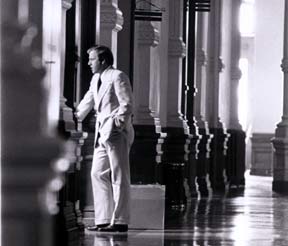
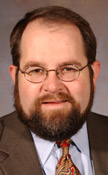
He believed in religious liberty and the separation of church and state. He also believed in the responsibility of Christians to live under the authority of God’s Spirit and God’s Scripture. He believed that Baptists ought to have a full voice in advocating in the halls of state regarding issues that affected public morality, children, the poor and those who had no one to speak up for them.

Phil was shaped by a deep sense of the grace of Jesus Christ and of the call of Christ to follow him.

And so, like Jesus, Phil knew the prophets and their call to righteousness and justice. And like Jesus, he knew that to save your life you must lose it.

In one of the respected Austin news services, Capitol Inside, Mike Hailey writes that Phil Strickland was “a powerful force at the Texas capitol for more than a quarter-century as the public policy director for the Christian Life Commission of the Baptist General Convention of Texas … . (He) gained a reputation as a bridge-builder who forged coalitions that were dedicated to helping needy children, to promoting high ethical standards in government and to fighting the expansion of gambling in Texas.”

One of my heart’s desires for Texas Baptists is that we inspire servant leadership among our people.

Phil Strickland is one of the great examples of what it means to be a servant leader. His life and the faith exhibited in his dying will continue to inspire us all to aspire to the kind of courageous servant leadership that helps everyone around us grow in Christ and attain all that God dreams for us to become.

We are loved.

Charles Wade is executive director of the Baptist General Convention of Texas.

News of religion, faith, missions, Bible study and Christian ministry among Texas Baptist churches, in the BGCT, the Southern Baptist Convention ( SBC ) and around the world.


TEXAS TIDBITS

Posted: 2/17/06

Texas Tidbits

Baylor’s endowment ranks high. Baylor University, with a $750 million endowment, ranks 77th among U.S. colleges and universities with the largest endowments, according to a survey released by the National Association of College and Uni-versity Business Officers. Baylor’s endowment increased more than 11 percent in 2005, up from $672 million in 2004. Baylor’s investment return rate of 14.2 percent on its endowment for fiscal year 2005 ranked the university in the top 6 percent of all U.S. colleges and universities—44th out of nearly 750 institutions.

Baylor’s Success Center receives $3 million gift. Paul Foster, president and chief executive officer of Western Refining in El Paso, has given $3 million to Baylor University for its Success Center. The center will house six departments—academic advisement, academic support services, career counseling, career services, student-athlete services and the office of access and learning accommodation—to allow students convenient access to services. Foster received his bachelor’s degree in business administration from Baylor in 1979.

Hispanic Evangelism Conference scheduled. “Proclaiming … Reaching … Teaching … the Good News” is the theme of the Baptist General Convention of Texas Hispanic Evangelism Conference, Feb. 24-25 at First Baptist Church in Arlington. The event features Mario Gonzales, pastor of Primera Iglesia Bautista in El Paso; Javier Elizondo, Baptist University of the Americas vice president of academic affairs; and Victor Rodriguez, pastor of South San Filadelfia Baptist Church in San Antonio. The conference starts Feb. 24 at 1 p.m. and ends Feb. 25 at 1. p.m. The conference also includes a concert by Hombres de Valor from Orlando, Fla., Feb. 24. A track for students begins Feb. 24 at 6:30 p.m. with a pizza party in the youth building of First Baptist Church. The student track continues Feb. 25. For more information, contact Frank Palos at (214) 828-5266 or Frank.Palos@bgct.org.

Hardin-Simmons names university chaplain. Hardin-Simmons University has named Kelly Pigott as its first university chaplain—a newly created position intended to manage the school’s chapel program and provide pastoral care for its students, faculty and staff. Pigott graduated from Samford University and Southwestern Baptist Theological Seminary. His wife, Susan, is professor of Old Testament and Hebrew at Hardin-Simmons’ Logsdon School of Theology. They have two children—Nathaniel David and Eliana Marie.

Social justice center at HPU nears completion. Howard Payne University is completing restoration of its historic Coggin Academy Building, new home of the Bettie and Robert Girling Center for Social Justice. The center will house an undergraduate multidisciplinary program involving the departments of social work, sociology, criminal justice and legal studies. It will include a simulated courtroom featuring 19th century fixtures from the Brown County Courthouse.

Historical society meeting set. At the spring meeting of the Texas Baptist Historical Society, Andrew Hogue of Baylor University will present a paper exploring the political and religious impact since 1988 of Richard Land of the Southern Baptist Ethics & Religious Liberty Commission. Michael Parrish of Baylor University will respond to the presentation. The meeting will be held in conjunction with the Texas State Historical Association at 2:30 p.m., March 2, in the Trinity A Room of the Renaissance Hotel, 9721 Arboretum Blvd. in Austin. For more information, contact Alan Lefever at (972)331-2235 or alan.lefever@bgct.org.

News of religion, faith, missions, Bible study and Christian ministry among Texas Baptist churches, in the BGCT, the Southern Baptist Convention ( SBC ) and around the world.


Texas Baptist Men move to Dixon building

Posted: 2/17/06

Texas Baptist Men move to Dixon building

By John Hall

Texas Baptist Communications

DALLAS—Texas Baptist Men has relocated most of its offices from the Baptist General Convention of Texas offices in Dallas to the Dixon Missions Equipping Center in east Dallas, where much of its disaster relief equipment is housed.

The Dixon building has the office space and infrastructure to host Texas Baptist Men, said Leo Smith, TBM executive director.

The move puts staff members closer to the organization’s equipment and resources.

Last year, TBM leaders coordinated the group’s hurricane response from the Dixon building. Smith emphasized the move does not indicate any change in the relationship between the BGCT and Texas Baptist Men and is not related to recent BGCT organizational restructuring.

“The move to the Dixon building allows us to better coordinate our efforts across the state,” Smith said. “Our staff will be located at the same place as our equipment, meeting rooms and volunteer offices so we will be able to more quickly react to the needs of Texas Baptists and the world.

“We continue to work with the Baptist General Convention of Texas, which has generously helped support us throughout our history. We look forward to the great things God has in store for both of us.”

Smith and Administrative Assistant Jeanette Nichols still have offices at the Dallas BGCT offices, and the men’s organization continues to follow BGCT human resources guidelines. Smith remains on the BGCT operations team, comprised of most BGCT staff leaders.

Texas Baptist Men can be reached at (214) 381-2800 or (214) 828-5350. Staff e-mail addresses remain the same.

News of religion, faith, missions, Bible study and Christian ministry among Texas Baptist churches, in the BGCT, the Southern Baptist Convention ( SBC ) and around the world.


Strickland provided voice for poor, powerless

Posted: 2/17/06

Strickland provided voice for poor, powerless

By Ken Camp

Managing Editor

Phil Strickland believed his mission was to provide a voice for the powerless in the halls of government and speak prophetically to Texas Baptists on moral and ethical issues.

After a long battle with cancer, resultant pneumonia silenced that prophetic voice Feb. 11 at age 64.

Phil Strickland

Strickland served 38 years with the Baptist General Convention of Texas’ Christian Life Commission, including nearly a quarter-century as director of the public policy and moral concerns agency.

“Phil Strickland helped Texas Baptists to remember and be faithful to their heritage, and he consistently declared the high ethical calling of the Christian life,” said BGCT Executive Director Charles Wade.

But while Strickland possessed a well-earned public reputation as a knowledgeable political insider, an outspoken advocate for children and a staunch defender of individual religious freedom and other historic mainstream Baptist principles, people with whom he came into contact individually learned he also was “a man of deep personal faith and prayer,” Wade noted.

“Everybody who ever spent any time around him grew in their Christian walk, their faith and their response to the gospel,” Wade said.

Strickland was a member of Wilshire Baptist Church in Dallas, where he had served as a deacon, Sunday school teacher and chairman of various committees. Pastor George Mason noted his church lost “a faithful servant,” Baptists lost a strong and prophetic voice, and “the kingdom of God has lost a skillful and passionate moral advocate for the weak and vulnerable of our world.”

Strickland possessed a rare combination of keen intellect and consistent activism, Mason observed.

For nearly four decades, Phil Strickland worked the halls of the Texas Capitol, lobbying for the BGCT Christian Life Commission on behalf of the poor and vulnerable.

“He was always eager to learn the next thing, to read the next book, to measure his position on matters against those who could teach him something new. That curiosity bred creativity. His work for justice in the church and in the world was formed by the gospel and informed by the living Christ within him,” he said.

Strickland’s “never-ending quest” to make life better for children and to improve the lives of the overlooked and under-served energized his life, Mason added.

“The gospel was Phil’s preoccupation, and he occupied his life making sure it penetrated not only human hearts but human systems as well,” he said. “The spiritual and the social were always for him interconnected spheres of life. Since Jesus is Lord of all, Phil believed that society could better reflect the lordship of Christ if Christians would put the gospel into practice.”

Former Texas Speaker of the House Pete Laney called Strickland “an unwavering advocate” for Texans in need.

“His voice in the policy discussions at the State Capitol has made a significant impact on the lives of the state’s most vulnerable citizens—its children,” Laney said. “He has provided strong ethical leadership and is a reminder to us all that government exists to serve the people. His influence will never fully be recognized, and his presence will be deeply missed in Austin.”

Strickland often recalled that he took a leave of absence from a Fort Worth law firm in December 1967 to help Texas Baptists defeat gambling. And since gambling proved to be a perennial problem, he never returned to fulltime private legal practice.

Instead, he became the first—and for many years the only—registered lobbyist in Austin serving a religious denominational body.

Drawing on contacts made and lessons learned as a law school student when he worked as legislative assistant to Texas Lt. Gov. Preston Smith, Strickland lobbied lawmakers to oppose the spread of gambling, resist attempts to chip away at the wall of separation between church and state, and remember the needs of children—particularly the poor, abused or neglected.

To advance those causes, he built coalitions that spanned the political and religious spectrum.

Strickland became founding chairman of Texans Care for Children, the state’s first multi-issue child advocacy group, which brought together more than 50 organizations that address the needs of children.

Gov. Mark White appointed him first chairman of the Texas Council on Child Abuse and Neglect Prevention, a council created to oversee and coordinate distribution of the Children’s Trust Fund. He also served on a variety of other governmental advisory committees.

Weston Ware, who worked alongside Strickland at the CLC during nine regular sessions of the Texas Legislature and numerous called special sessions, praised his abilities as a coalition-builder.

“Phil not only was a political strategist par excellence, but he also was able to win the hearts and minds of diverse groups, often bringing together the most conservative and most liberal advocates to resolve difficult issues, as he did with the Religious Freedom Restoration Act,” Ware recalled, pointing to legislation aimed at preventing substantial burdens on the free exercise of religion.

“Few could say ‘no’ when representatives of the religious right and the American Civil Liberties Union or the Texas Freedom Network all came together on the same issues.”

Strickland earned a reputation for integrity, trustworthiness and professionalism among legislators in Austin, and that established credibility for anyone representing the CLC, Ware noted.

“It meant when I went to talk to a legislator, or to give testimony before a legislative committee, that Phil’s good reputation, gained over all the years since 1967, had gone before me,” he said. “It meant that a legislator could trust me, could value what I had to say, could believe that I had done my homework on the issue at hand because I worked for Phil Strickland, and Phil had never let him or her down.”

Nationally, Strickland served on the Inter-religious Task Force on U.S. Food Policy, the Bread for the World board of directors, the Americans United for Separation of Church and State board of trustees and the National Child Abuse Coalition.

He was a past president of the United Way of Texas.

Even though he held some prominent positions, Strickland worked mostly behind the scenes, said James Dunn, his immediate predecessor as director of the Christian Life Commission.

“Texas Baptists as a whole have no idea about the significant contributions Phil Strickland made to Texas Baptist life, to the state of Texas, to children and to a decent and just society,” he said. “His contributions remind me of an iceberg, in which perhaps only 1 percent of the massive movement is seen and 99 percent is hidden beneath the surface. That is the way Phil led the fight for truth and righteousness in Texas.”

Dunn, who left the Texas Christian Life Commission to become executive director of the Baptist Joint Committee on Public Affairs, also noted Strickland’s steadfast commitment to religious liberty and distinctive Baptist beliefs such as the soul competency of every individual.

“In a day when many Baptists seem to have amnesia about our heritage, Phil remained a rock-solid champion of religious freedom and the separation of church and state,” said Dunn, who teaches at Wake Forest Divinity School.

BGCT Executive Director Emeritus Bill Pinson praised Strickland for “his brilliance coupled with his dedication to Christ and his genuine concern for all persons (that) made him extraordinarily successful in Christian ministry.”

Strickland’s influence reached beyond Baptist circles and beyond Texas as he worked with various denominations for causes of social justice, Pinson noted.

“His application of the gospel of Christ to life includes practically every aspect of Christian ethics—family life, race relations, hunger, poverty, neglected children, alcohol abuse, gambling, economics, social justice, religious freedom, separation of church and state,” he said. “His positive impact across a wide spectrum of our world has been enormous. He surely will hear our Lord say, ‘Well done, good and faithful servant.’’”

An Abilene native, Strickland studied at Baylor University before transferring to the University of Texas in Austin where he earned both his undergraduate and law degrees.

He also pursued graduate studies at Southwestern Baptist Theological Semi-nary.

He is survived by his wife, Carolyn; daughter Delaine Mueller of Tucson, Ariz., her husband, Daniel, and their two children; daughter Shannon Holman of Lonoke, Ark., her husband, Merritt, and their two children; and his mother, Sybil Strickland of Abilene.

News of religion, faith, missions, Bible study and Christian ministry among Texas Baptist churches, in the BGCT, the Southern Baptist Convention ( SBC ) and around the world.


Proposal could allow casino-style slot machines

Posted: 2/17/06

Proposal could allow casino-style slot machines

By John Hall

Texas Baptist Communications

AUSTIN—A proposal meant to give the Texas Lottery Commission more flexibility in developing new games and taking advantage of new technology could put casino-style slot machines across the state, said Suzii Paynter, director of citizenship and public policy for the Texas Baptist Christian Life Commission.

The changes would allow the Lottery Commission to make some of their games electronic, enabling instantaneous financial gains and losses via a computer network.

“When you get an instant game on a computerized network, you basically have casino-style gambling,” Paynter said.

To compound the issue, the proposed changes eliminate a requirement for the Lottery Commission to notify the public of any upcoming gaming changes or provide any “justified response” to concerns about commission actions.

The combination of the rules changes could create a situation where the Lottery Commission has the power to legally expand gambling across the state without accountability to the public, Paynter said.

This initiative marks the latest effort by gambling proponents to expand gaming throughout the state, she said. They largely have been denied in the past, but lawmakers can be tempted by the prospect of another revenue stream for a state facing a budget crunch. The Texas government could tax casinos and gaming activities.

“They tried in the last legislative session to get electronic slots through the bingo system,” Paynter said. “Now the Lottery Commission is using the Iowa model to get slot machine games by introducing rules that would allow for a lottery slot machine. In Iowa they just call it a ‘monitoring vending machine.’

“The Lottery Commission says that this is not their intent, but they do not deny the potential development under these rules. As an executive agency, Gov. Perry can stop the Lottery Commission from taking this pathway of folly.”

Iowa lawmakers recently passed similar changes to allow computerized lottery games only to see these “monitor vending machines”—casino-style slots —pop up in restaurants, stores and bars across the state. More than 4,600 terminals are operating in Iowa in 2,500 locations, and more than 5,000 additional units are on their way.

The rapid expansion of such monitor vending machines pushed Iowa Gov. Tom Vilsack to call for a moratorium on more terminals until the matter is investigated.

The Texas Baptist Christian Life Commission long has been a leading voice against gambling throughout the state, arguing that it hurts the economically disadvantaged most.

Paynter believes money spent gambling could be better invested into neighborhoods.

“It’s so sad when you see that because you think this is what these people are defining as hope,” Paynter said. “Just think if they would have left that money in their community. If they would have spent that money on consumer goods, their communities would be so much better off.”

News of religion, faith, missions, Bible study and Christian ministry among Texas Baptist churches, in the BGCT, the Southern Baptist Convention ( SBC ) and around the world.


Segregated churches hinder evangelism

Posted: 2/17/06

Segregated churches hinder evangelism

By Marv Knox

Editor

WACO—Christians undermine their ability to reach society with the gospel because they segregate their churches by race, sociologist/author George Yancey told participants in a workshop aimed at racial reconciliation.

George Yancey

Yancey, assistant professor of sociology at the University of North Texas and author of several books, including Beyond Racial Gridlock: Embracing Mutual Responsibility, presented two keynote speeches at “Becoming a Racially Reconciled Church & Community.” Mission Waco, an inner-city ministry in Waco, sponsored the event.

About 150 participants, including pastors, college and seminary students, professors, lay church leaders and recipients of Mission Waco’s ministry, attended the conference. They included African-Americans, An-glos, Asian-Americans and Hispanics.

Unfortunately, only 8 percent of American churches are multiracial, Yancey lamented. He defined a “multiracial church” as one in which no single racial group comprises more than 80 percent of the participants.

This contrasts with society as a whole, which is remarkably integrated, he said.

Catholic churches are most likely to be multiracial, with 12 percent of congregations meeting that standard, Yancey reported. Evangelical Protestants are next, with 5 percent of churches qualifying as multiracial, followed by 2.5 percent of mainline Protestant churches.

Churches face several challenges in becoming multiracial, he noted.

First is differing racial ideas, he said. While whites tend to see racism as “something that is overt and only done from one individual to another individual,” people of color tend to see racism as “structural as well as individual, and social institutions perpetuate racism even when individuals do not tend to be racist.”

Views of education illustrate the differences, Yancey said: Whites tend to see educational failure as an individual problem, whereas people of color see the structural problems inherent in the fact “predominantly black or Hispanic schools, as a rule, do not prepare students for college as well as predominantly white schools.”

Tragically, the views of whites and nonwhites in churches are even further apart on this issue than their counterparts in society at-large, he said.

A second challenge to multiracial churches is “our different cultural ideas,” Yancey added.

People tend to think cultural ideas that differ from their own are wrong when, in fact, they simply are different, he noted. In church, differing cultural ideas range from communication styles to customs to time-orientation. Those differences aren’t right or wrong, just matters of taste and expectation, he said.

To illustrate how cultural ideas can divide church people, Yancey pointed to politics.

“Some white Christians wonder, ‘Can you be a Democrat and Christian at the same time?’ (but) some blacks wonder, ‘Can you be a Republican and a Christian?’” he observed. “I’m distressed by the political polarization in our society. We have to learn to quit judging people based on their political ideas. We’re just different.”

The third multiracial challenge churches face is the reality that some people will resist a mixed-race congregation, he said.

“Even when change is good, some people will resist it because they’re comfortable where they are,” he said. “Not everyone will support a multiracial church.”

Some of this resistance comes from within the church-growth movement, he said, citing church-growth advocates who say homogenous churches grow fastest.

But that contrasts with the reality of society, he countered. “In the U.S. today, we are very much a multicultural society. And churches are not homogenous; they vary by age, income and gender. … Since churches rarely are organized by a single culture other than by race, why can’t we have multiracial churches?”

Other resistance comes from the “cultural-pluralist argument,” which maintains racial minorities must be protected from the corrupting influence of the majority.

This idea does not square with the facts, he said, noting surveys show whites in multiracial churches change their attitudes and habits more than racial minorities.

The fourth and final challenge to multiracial churches is prejudice, Yancey said, stressing this problem originates from both sides of the racial divide.

“Whites are most likely to leave a church that is becoming racially diverse when they have children of dating age,” he reported, acknowledging this denotes racism. But from the other perspective, “many people of color look at church as a place of refuge so that they can escape from whites,” he added, labeling this also as prejudice.

Despite the challenges, multiracial churches are more than worth the effort, Yancey contended. He cited five reasons why Christians need multiracial churches:

• Multiracial churches are effective in presenting the gospel in multiracial communities.

Such communities are composed of groups that naturally embrace racial diversity, he said. These include “integrated subcultures,” such as artists, athletes and the homeless. They also include college students, who are more racially diverse than the population at-large. And they include interracial families and multiracial individuals, who do not feel comfortable in single-race churches.

• Racial reconciliation requires the kind of Christian model presented by multiracial churches.

“Christians have been the followers, not leaders” in racial reconciliation, Yancey maintained. “We have failed to look at race as a moral issue, (but) multiracial churches will be an important part of solving racism.”

This will be true because multiracial chur-ches provide Christians with the context to engage in interracial communication, learn to adjust to other cultures and “confront our own racial fears,” he explained.

• Multiracial congregations can repair “our damaged Christian witness.”

Paraphrasing Martin Luther King Jr., Yancey stressed: “Sunday morning still is the most segregated time of the week. We are damaging our Christian witness. If we can offer real solutions to racism, we can witness to others.”

Instead, churches lag behind secular society, he said.

“If schools can integrate, why can’t churches?” he asked. “If we can’t integrate our churches, we show that society is stronger than (anything) our faith can produce. If Christians can’t deal with racism, … we present a small God to our nonbelieving world.”

• Multiracial churches reflect obedience to God.

Yancey cited multiple examples of Jesus and the early church reaching across racial lines to show love and acceptance. “God is trying to reach people of different groups, but we get in the way,” he said.

“Do you think God would want only 8 percent of all churches to be multiracial in a multiracial society like the United States? Not all churches should be multiracial, but 8 percent is too small.”

News of religion, faith, missions, Bible study and Christian ministry among Texas Baptist churches, in the BGCT, the Southern Baptist Convention ( SBC ) and around the world.


Notre Dame model for Baylor generates debate

Posted: 2/17/06

Notre Dame model for Baylor generates debate

By Ken Camp

Managing Editor

WACO—Baylor University supporters agree the school is “Texas Baptists’ crown jewel,” but should it aspire to become the “Protestant Notre Dame”? And in a larger sense, what can Roman Catholics teach Baptists?

Doug Henry

Since former university President Robert Sloan led the school to adopt its Baylor 2012 long-range plan and open its Institute for Faith & Learning, supporters have pointed to Notre Dame as an example of a religiously affiliated school that successfully integrates faith and learning.

They maintain Notre Dame generally has accomplished what Baylor wants to achieve—recognized status as a top-tier university without surrendering to secularism.

“Notre Dame is both academically highly successful and confessionally Christian. It’s evident from the language university leaders use that they are serious about its Catholic character and its high academic aspirations,” said Michael Beaty, chairman of the Baylor philosophy department.

Baylor could come become the kind of national university that the best and brightest Protestant students will dream of attending, said Doug Henry, director of Baylor’s Institute for Faith & Learning.

“Baylor can have the same sort of image for Protestants that Notre Dame has for Catholics—a place to come to if you’re looking for moral, spiritual and ethical maturity—a place where students set their sights and set their hearts on going,” Henry said. “It can become the most intellectually interesting place to be, and a place where serious, smart Protestant and Baptist students will want to come.”

Holding up Notre Dame as an example does not mean Baylor should seek to copy the Roman Catholic university in every way, added Beaty, who earned his doctorate at Notre Dame.

“It isn’t a recipe or a formula to follow. But it offers an example of what can be learned—positive and negative,” he said. “I’d say we’re about 30 years behind Notre Dame in terms of endowment, facilities, faculty and national prestige.”

Catholic connection criticized

Critics, on the other hand, have maintained the Roman Catholic model for higher education does not fit a Baptist university. And they have viewed with suspicion links between some faculty in Baylor’s philosophy department and Catholic schools.

Beaty serves on the board of advisers for the Notre Dame Center for Ethics & Culture, and he and several other Baylor faculty have participated in a fall conference sponsored by the center for the last few years.

Beaty, Henry and their colleague Scott Moore, director of the Great Texts Program in the Baylor Honors College, also presented papers at a conference at Vatican City last year. The conference marked the 40th anniversary of Gaudium et Spes, a document on social ethics issued by the Second Vatican Council.

Their presentations at the conference—particularly as reflected in an abstract of Henry’s paper that became widely disseminated—sparked heated debate for several months on Internet message boards devoted to Baylor and religious topics. Some writers accused Henry and his colleagues of being “pseudo-Catholics” or “quasi-fundamentalists”—labels the three professors consider unfair and unwarranted.

In fact, all three attend churches in Waco affiliated with the Cooperative Baptist Fellowship and the Baptist General Convention of Texas. Beaty and Moore are members of Dayspring Baptist Church, and Henry is a member of Calvary Baptist Church.

“I joined my colleagues in Rome in offering an invited Protestant response to a key document of progressive Catholic social thought,” Henry said. “However deserving of our attention and respect we consider Catholicism to be, we remain unapologetically Baptist and Protestant in conviction.”

Controversial conclusions

Most of the criticism focused on the conclusion of Henry’s abstract—presented in expanded form in a full collaborative manuscript that he, Beaty and Moore submitted for publication and scholarly peer review after the conference.

At the Vatican conference itself, the three professors presented individual papers verbally and provided a brief précis of each presentation, which later was posted on the Internet.

The widely circulated abbreviated version of Henry’s paper stated: “The time for remedy is now, for Free Church Protestants stand at grave risk of bondage to the spirit of the modern age. Christians of the sort described herein, and Baptists such as I am, seem to face a limited range of options. Amidst the changing cultural conditions precipitated by modernity and now postmodernity, we may: (a) allow our practice of faith—untethered to a rich tradition and without the resources of a functional magisterium—to die the death of continued accommodation to culture; (b) convert to Roman Catholicism; or (c) begin a journey toward Rome that, without giving rise to full communion, nonetheless involves a critical engagement with Roman Catholicism as a touchstone of vital tradition and teaching authority about Christian faith and practice.”

The full manuscript explains the authors do not advocate whole-hearted endorsement of Roman Catholicism but call on Baptists and other Free Church Protestants to recognize its “longer and richer tradition” and learn from it, the three Baylor professors insisted. They pledged to find a middle way—declining to convert to Roman Catholicism while also refusing to accommodate faith to culture.

Lack of magisterium

Still, some Baptists have taken issue with the idea that Free Church Protestants are disadvantaged by their lack of a “magisterium”—a recognized source of teaching authority. In particular, they pointed to historic abuses of the Roman Catholic Magisterium.

“The course Henry advocates would subscribe to a tradition that opposed new theological insights and nearly all scientific advances,” said Raymond Bailey, pastor of Seventh & James Baptist Church in Waco, in a column published in his church newsletter.

Although he responded initially only to the Henry abstract, he later read the full collaborative paper and was “firmer in my position than ever,” he said in an interview.

Bailey, who taught five years in a Catholic college in addition to time at Hardin-Simmons University and 16 years at Southern Baptist Theological Seminary in Louisville, Ky., expressed appreciation for Catholic traditions. But he also pointed to the Roman Catholic Church’s historic suppression of scientific inquiry and control over theological expression.

“A small oligarchy of thought-police control academic and intellectual endeavors; those who disagree with the magisterium are censored or declared heretical,” Bailey wrote.

For all its weaknesses, the Free Church Baptist tradition comes closest to the New Testament model, he insisted.

“Let those of us who believe that God continues to work among the people, and that theology and the kingdom of God are unfinished business, remain committed to autonomy of the local church and the responsibilities of private interpretation and personal accountability. Most of the great movements of history, Christian or otherwise, were led by those who heard the voice of God and refused to submit to hierarchal authority. Thank God for those who dare to be nonconformist.”

Call for careful examination

But Beaty, Henry and Moore insisted they were acting in the nonconformist Baptist tradition by speaking at the Vatican as they did and holding their own theological tradition up to careful examination.

“The unexamined Baptist life is not worth living; the unexamined Catholic life is not worth living,” Beaty said.

Henry agreed, saying he wanted to call Baptists to a critical engagement with Catholicism, not to an uncritical endorsement of it. Roman Catholicism offers a touchstone of vital tradition, but not the final word, he said. And, he added, it “bears promise for helping us Baptists share the challenges of faithful life in a post-Christian age.”

Baptists can learn from other Christian traditions without surrendering distinctively Baptist “non-negotiable” beliefs, Henry insisted.

“To talk with other Christians—including Catholics—to seek to understand better the longer and larger Catholic tradition out of which our Baptist heritage grows as a dissenting expression of Christianity, and to try to learn how to think intelligently as a Christian by looking for help from Catholics—in none of these efforts is one required to abandon one’s Baptist identity and convictions,” he said.

“Such non-negotiable expressions of faithful discipleship as believers’ baptism, commitment to the supremacy of Scripture as Christians’ guide to faith and practice, the priesthood of all believers—along with the grave responsibilities to one another that such priesthood signals … ground my commitment to the Baptist way.”

Community or individual?

Furthermore, Henry sees his position as consistent with the trend toward reclaiming ancient Christian traditions, such as Advent and Lent, and an emphasis on interpreting Scripture in the context of community.

“The position I occupy really expresses a movement within Baptist life to retrieve much in the Christian tradition of which we for a season lost sight. Indeed, this movement is itself merely a Baptist expression of a transdenominational, ecumenically broad effort to pay better attention to the historic roots and practices of Christian faith. Part of that movement involves listening to and learning from those who have remained more connected than we have to longstanding Christian traditions of faith, thought and practice,” he said.

“To pay attention to the breadth of Christian history, reflection and practice hardly makes us less Baptist, but rather …promises to help us realize the fullness of our Baptist identity.”

Baylor University Regent Phil Lineberger, pastor of Williams Trace Baptist Church in Sugar Land, questioned if Baptists and other Free Church Protestants really benefit much by looking to Catholicism—which he characterized as a religious system that historically squelched freedom—and he questioned whether any magisterium can be workable in the Free Church tradition.

Henry’s paper attacked as weaknesses three principles many Baptists see as strengths—the priesthood of the believer, the soul competency of the individual and local church autonomy, he asserted.

Lineberger also took issue with Henry’s perceived preference for the community over an individual guided by the Holy Spirit’s leadership.

“If it weren’t for a radical individualist like the Apostle Paul, we wouldn’t have much of the New Testament,” he said.

“Look at the book of Acts. Matthias was chosen as an apostle by a magisterium—by a council—and we never hear of him again. The Apostle Paul wasn’t chosen by a council; he was called by God.”

Challenges of modernity

Both the Henry précis and the collaborative full manuscript include another statement that caused some critics to respond with alarm.

The document said: “Committed to a polity in which the autonomy of local churches is paramount, and in which cooperation with other Baptists and Christians is wholly voluntary, Baptists lack any kind of shared magisterium—apart from a common commitment to the inviolable authority of Scripture—that might provide them clear and consistent direction in the face of modernity’s many challenges.

“Baptists’ go-it-alone proclivity, combined with the foregoing, simply compounds their openness to cultural co-optation, for any hope of faithfully resisting the cultural hegemony of modernity necessitates the binding solidarity of the body of Christ, mutually accountable one to another.”

Russell Dilday, former president of Southwestern Baptist Theological Seminary, took issue with that view.

“Any supposed dangers that might accompany the right of individual believers to read and interpret the word of God in light of the illumination of the Holy Spirit, and in the light of insights gained from other believers, are fewer and less damaging than the real dangers of an authoritarian magisterium,” wrote Dilday, now chancellor of the B.H. Carroll Theological Institute.

“Baptists and other Free Church adherents have not drawn their convictions about individual freedom from modernity but from biblical teachings about the individual’s singular accountability to God.”

Response to critics

Henry insists when he used the term “magisterium,” he was referring not to the Roman Catholic church’s established teaching authority but was using the word “in the more elastic sense” to refer to “a doctrinal center of gravity” that unites a body of Christians.

As Baptists, “Scripture constitutes our unmistakable magisterium—even if unlike other Christians we have not used a Latin word to describe our confidence in the teaching authority we vest in the Bible,” Henry said. “And for this very reason, Baptists appeal like no other people to the Bible when they want to clarify doctrine and to discern faithful responses to life’s problems.

“We have not ultimately embraced any other magisterium besides Scripture to which to turn. Moreover, since we vest in Scripture rather than in any human person or worldly institution the functions of a teaching authority, the Bible—our magisterium—may only be ‘enforced’ through the human power of persuasion and the divine power of spiritual conviction.”

Dilday particularly found troubling Henry’s critique of Baptist theologian E.Y. Mullins’ writing about the Baptist contributions to religious liberty and Mullins’ defense of soul competency. Henry’s abstract cites Mullins as “a good example of the historical myopia besetting Baptist regard for Christian freedom” and as one who was “given habitually to overwrought claims about freedom” as Baptists’ distinctive contribution to religious thought.

“Christian liberty is not a Baptist invention, but instead is rooted within centuries of prior theological reflection,” Henry wrote. “Disconnecting their devotion to freedom from two millennia of Christian theorizing about freedom, Baptists at best turn this important virtue into a mere byword, and at worst render it liability to faithful thought and practice. For, uprooted from its theological home and in thrall to modernity, liberty quickly degenerates into the hyper-individualistic form of autonomy emblematic of modernity.”

Dilday acknowledged some Baptists claim more credit than they are due, but he disagreed that Mullins’ evaluation of Baptist contributions to religious freedom fit into that category. “Granted, sometimes Baptists—particularly we Texas Baptists—are known for ‘overwrought claims’ about our work and strengths,” Dilday wrote. “But serious scholars like Mullins are not guilty of overstating the consistent record of Baptist advocacy and sacrifice for freedom, nor can they be faulted for identifying freedom as a primary defining characteristic.

“This is particularly true when those scholars point out how Baptists have historically championed religious liberty, freedom of conscience, and separation of church and state. It would be fair to say, there are few if any other denominational groups with that long historical record.”

Lessons from history

When it comes to looking at the historical record, Baptists and Free Church Protestants have much to learn from the Christian tradition that predated the Reformation, Henry said.

Baptists are “inescapably marked by 1,500 years of Catholic doctrine, history and practice and yet unwilling to embrace Catholic ways uncritically,” he asserted.

Many central Baptist beliefs—such as the full deity and humanity of Christ and the doctrine of the Trinity—grow out of “the root stock of Catholicism,” he said.

As dissenters and nonconformists, Baptists need to understand from what they are dissenting and what they wish to reform, he added.

“To be a Baptist is to follow Christ faithfully in dissent from certain features of Roman Catholicism, while at the same time yearning always for the completion of reformation, so that all of Christ’s followers may serve and worship together,” Henry said.

Roman Catholic model

Furthermore, Baptists in general—and Baylor in particular—have much to learn from the Roman Catholic model of higher education, Henry insisted.

“Baptist intellectual life is a relatively late development in the Christian history; it is preceded by centuries of thoughtful Catholic reflection on the relation between the life of the mind and the life of faith,” he said.

“If Baptists want to think sensitively about the grace-filled beauty of creative and artistic expression, or the possibilities and limits of faithful citizenship, or the relation between faith and reason or nature and grace, or the ways in which human language is and is not capable of describing God, or the basis for human confidence in science as a means of understanding the world—all of these and so many other issues have a long history of thoughtful and articulate treatment within the Catholic tradition.”

So, the question comes full circle. Should Baylor University model itself after Notre Dame? Not entirely and certainly not uncritically, said Baylor President John Lilley.

“I certainly respect the great reputation of Notre Dame, but I think Baylor should be allowed to grow in its own environment, with its own sense of identity,” Lilley said.

“I’m sure there are lessons at Notre Dame that we should learn and could use, but I think great institutions can develop their own benchmarks. It’s an overstatement to say we we’re trying to become the Notre Dame of the Southwest or the Notre Dame of Baptist life. We will go our own way and follow our own lights.”

News of religion, faith, missions, Bible study and Christian ministry among Texas Baptist churches, in the BGCT, the Southern Baptist Convention ( SBC ) and around the world.


Rx for marital success: Worship together

Posted: 2/17/06

Rx for marital success: Worship together

By Catherine O’Donnell

Religion News Service

ANN ARBOR, Mich. (RNS)—Husbands and wives who attend religious services together are less likely to divorce, new research from the University of Michigan shows.

The study, conducted by researchers connected to the Institute for Social Research, examined how religion affected the risk of divorce for both black and white couples in the first seven years of marriage. Data came from 373 couples initially interviewed in 1986, their first year of marriage, as part of the Early Years of Marriage project at the university.

“The findings suggest that the most effective intervention strategies for dealing with marital instability and divorce are those that consider gender and race,” said Edna Brown, the paper’s lead author.

Black couples are at higher risk of divorce than whites, the study found. But it also found education a protective factor against divorce for wives, and income a protective factor for husbands.

Regardless of race, however, couples who attended religious services together were less likely to divorce.

Other aspects of faith, such as frequency of attendance or importance of faith, didn’t influence the risk of divorce.

“Faithfulness and integrity have been on the agenda of many faith communities, and that’s value added to marriage,” said George Lambrides, an American Baptist chaplain at the University of Michigan Hospitals. Exposure to faith communities is a form of continuing education, Lambrides added.

News of religion, faith, missions, Bible study and Christian ministry among Texas Baptist churches, in the BGCT, the Southern Baptist Convention ( SBC ) and around the world.


Leader suggests five ways Baptists can impact Hispanics

Posted: 2/17/06

Leader suggests five ways Baptists can impact Hispanics

By Marv Knox

Editor

WACO—Since Hispanics “represent the future of Texas,” Baptists must reach them spiritually and help them physically if they intend to make a difference in their state, the leader of Hispanic Texas Baptists insisted.

Alcides Guajardo

Alcides Guajardo, president of the Hispanic Baptist Convention of Texas, described the status of His-panics in Texas and prescribed how to minister to them during the “Be-coming a Racially Reconciled Church & Community” conference sponsored by Mission Waco.

“Hispanics have been here” in Texas for generations, Guajardo told the mixed-race audience. “We were here even before the Anglos and people of color were.”

Building the case for Texas’ Hispanic legacy, he cited the names of many of the state’s rivers and its oldest communities—all Spanish.

And, although Anglos eclipsed Hispanics as Texas’ majority population group for many years, Hispanics again are in the majority, Guajardo said. He acknowledged that, officially speaking, Texas does not have a majority population group. Census data show slightly less than 50 percent of the population is Anglo, with Hispanics running a strong—and growing—second. Census Bureau trends show Hispanics will comprise more than 50 percent of the population by 2014, he said.

Still, in unofficial-but-real terms, Hispanics already are the majority, he stressed, noting a vast number of Texas residents are unofficial—undocumented workers who are in the United States illegally. These people don’t want to be reported for fear of being deported, he explained. But counted or not, they’re living in Texas.

From a political standpoint, “the Texas Legislature is going Hispanic very rapidly,” he observed. “This fact needs to get our attention” because the changing demographics of the Legislature will change the state’s political dynamics, he added.

Educationally, Hispanics “lag very, very far behind” the rest of the state, he said. “We are the least-educated of all groups in Texas.”

For example, only one in 11 Hispanic adults in Texas has a college degree, he said. This compares to one in two Asians, one in three Anglos and one in five African-Americans. Among the challenges are high dropout rates among Hispanic students and resistance among Hispanic families to allow their children who graduate from high school to leave the family and go off to college, he added.

Since education relates closely with economics, Hispanics’ educational gap represents enormous significance for the entire state, Guajardo said.

“We have a long way to go. And if we do not do something about this, our financial future—our socio-economic future—is very bleak,” he predicted. That’s true, at least in part, because if Texas’ largest segment of the workforce, Hispanics, is under-educated, the state will be unable to attract business and industry, and Texas workers will face unemployment or under-employment in low-wage jobs.

“A lot can be done by individual Christians, churches, associations and other Texas Baptist entities to help alleviate this tragic situation,” Guajardo charged. “Hispanic churches should take the lead.”

The Baptist General Convention of Texas has created the Hispanic Youth Education Task Force, which will begin focusing on this issue in February, he said.

That’s significant, because the futures of the BGCT and Hispanics in Texas are intertwined, he noted.

Already, nearly 1,300 of the 5,700 churches affiliated with the BGCT are Hispanic, he said.

“We are an integral part of the BGCT,” Guajardo reported, noting the BGCT and the Hispanic Baptist Convention of Texas have been unified as one overall convention more than 40 years.

“Hispanics represent the future of the BGCT,” he stressed. “Hispanic churches are the fastest-growing group of churches in the BGCT. … The vast majority of new churches started by the BGCT are Hispanic.”

And in some areas, Hispanic churches numerically are dominant, he said, citing Rio Grande Baptist Association, whose churches are 85 percent Hispanic and 15 percent Anglo and/or English-speaking. Soon, Hispanics will comprise 50 percent of the Baptist churches in San Antonio and Houston, he added.

Texas Baptists must continue to multiply their efforts to impact the Texas Hispanic community, Guajardo insisted.

But he acknowledged no single method will work, since “Hispanics in Texas are different” from each other. Several factors account for those differences, but the two most prominent are country of origin and the degree to which they have assimilated into Texas society.

For example, while the majority of Texas Hispanics originated in Mexico, they also have come from throughout Latin America, South America and the Caribbean. Also, many are newly arrived immigrants, but other Hispanic families have lived in Texas three and four or more generations.

Despite the differences, Guajardo offered five suggestions for ways Texas Baptists can impact Hispanics:

• Identification.

“Identify the group. Ask, ‘What kind of Hispanics do we have here?’” he said, noting the national origin of the group will determine cultural approaches that work best.

The BGCT Executive Board can provide demographic data to help with the identification process, he said.

• Understanding.

“Get help on how to relate to (your) particular group,” he advised, noting BGCT regional strategy coordinators—who are being assigned to nine geographic zones across the state—will have specific information for assisting in this understanding process.

• Assistance.

“If you are working with recently arrived immigrants, impact them by helping them with the basics for subsistence, including assistance to legalize their status here,” Guajardo said. He cited a study conducted by State Demographer Steve Murdock, which indicates 74 percent of Hispanics believe churches should help immigrants.

“They’re going to be here,” Guajardo said of Hispanic immigrants. “How can they be better residents, more productive? We might as well say, ‘Welcome’ and help them be productive here.”

• Evangelism.

Christians can share the gospel with Texas Hispanics out of natural relationships that flow through helping them, Guajardo said. For example, evangelism can happen effectively with new immigrants when churches help them with their elemental survival needs. Similar evangelism opportunities will flow through other relationships with Hispanics at every level of assimilation into the state.

“I don’t know where we got the idea we can evangelize people cold-turkey,” he declared. “Hispanics are a relational people. Relate to them. Get to know them. Help them. And they will ask you to share (Christ) with them.”

• Education.

The BGCT Hispanic Youth Education Task Force will offer Texas Baptists options for educating Hispanics, helping them to alleviate their “tragic condition,” Guajardo said.

“We can do something,” he said. “We can encourage youth to stay in school. We can help the parents help their children stay in school. If they don’t, they will suffer. This will hurt the children, and it will hurt the state when they have low-wage jobs. … We’re all affected.

“I’m hoping we will do something and participate in both state and church programs to educate Hispanic young people. If we don’t, we all will suffer.”

News of religion, faith, missions, Bible study and Christian ministry among Texas Baptist churches, in the BGCT, the Southern Baptist Convention ( SBC ) and around the world.


Varied views on integration of faith & learning persist

Posted: 2/17/06
See related story

Varied views on integration of faith & learning persist

By Ken Camp

Managing Editor

WACO—Calls for the integration of faith and learning that once polarized Baylor University’s constituencies now appear to unite them. But while they rally around the “faith and learning” banner, varied groups seem to use the term in different ways and for a variety of reasons.

Bill Underwood

“Everyone I know on the Baylor campus embraces the concept of integrating faith and learning, but there are very different perspectives on what that means,” observed Bill Un-derwood, former interim president at Baylor and president-elect at Mercer University.

Nobody wants to be seen as being against either faith or learning at a school like Baylor, but those umbrella terms can cover drastically different visions of what constitutes a Christian university, some faculty noted.

“When you’re using words like ‘faith’ and ‘learning,’ it’s hard to argue against it. But there’s a lot of disagreement about what it means,” said Scott Moore, director of the Great Texts Program in Baylor University’s Honors College.

Mike Beaty

How those words are interpreted shape how Baylor fulfills its vision of being “a Christian university in the historic Baptist tradition,” some observers have noted, drawing a distinction between two models for Christian universities—one focused on creating a Christian atmosphere and the other devoted to the intentional integration of faith into learning.

The atmospheric approach views a Christian university primarily in terms of high moral expectations for students and a religious culture evidenced in campus life—the so-called “Baylor bubble.” The integration approach, on the other hand, emphasizes that the Christian faith—and a way of viewing the world shaped by it—should permeate classroom instruction and discussion.

During Chancellor Robert Sloan’s tenure as Baylor’s president, he promoted the integration model and created the school’s Institute for Faith & Learning. Pointing to the historic example of once-religiously affiliated universities such as Harvard, Yale and Brown, some proponents of the integration of faith and learning presented their approach as the only way to keep Baylor from slipping into secularism in its quest to become a top-tier university.

Scott Moore

“To put the matter plainly, history shows that following the atmospheric model at the university level leads, without exception, to a secular university,” Provost Emeritus Don Schmeltekopf said in a paper presented at a 2003 colloquy on “the Baptist and Christian character of Baylor.”

Joe Armes, a Baylor regent and layman at Park Cities Baptist Church in Dallas, underscored that theme at a meeting of the Baylor Business Network last month. A campus atmosphere of good will and high moral expectations is important, but a Christian university should do what a state school cannot—view subject matter from a Christian worldview, he said.

“We don’t want to lose the atmosphere, but that’s not enough. We have to go further and say there is something distinctive about our Christian ethos,” he explained in an interview later. The intentional integration of faith and learning “offers a lens through which you see the academic disciplines.

We all have our presuppositions and worldviews, and the secular viewpoint is not equivalent to being neutral,” he said.

Integrating faith into the learning environment also makes good business sense, he added. A clearly branded Christian university is a marketable consumer product.

“It’s not only the right thing to do. Also, ‘distinctively Christian’ is the right marketing niche for Baylor,” he said.

While he affirmed traditional Baptist doctrines about soul competency and religious liberty, Armes emphasized he did not feel the intentional integration of faith into the learning environment threatened them. Rather, it addresses what he sees as a larger threat—secularism.

“The dominant culture fully embraces personal autonomy. A more eminent threat to our children today is seen in the forces of secularism, relativism, consumerism and hedonism,” he said. “These are the snares that are so prevalent in our society.”

History demonstrates an inevitable drift toward secularism in higher education unless universities make a concerted effort to integrate faith into the school’s intellectual life, asserted Doug Henry, director of Baylor’s Institute for Faith & Learning.

“Every single serious scholarly treatment of the subject acknowledges that secularism takes place,” he said.

Michael Beaty, chairman of Baylor’s philosophy department, agreed.

“In the atmospheric model, the conditions for secularism are there,” he said, but he insisted more important reasons exist for advancing the integration of faith and learning.

“The atmospheric model is a defective model,” he insisted. “We are to ‘take every thought captive’ to Christ. The integration of faith and learning model offers a richer, thicker notion of what it means to be a Christian university than the atmospheric model affords.”

On the contrary, emphasis on the intentional integration of faith and learning demonstrates a “lack of any depth of understanding about how faith is communicated—particularly to young people,” said Kent Gilbreath, professor of economics and layman at Seventh & James Baptist Church in Waco.

The expectation that faith and learning must be integrated into every academic discipline carries with it the notion that it must be observable and measurable, and that conflicts with the real experience of generations of Baylor students, Gilbreath said.

Lectures about faith tacked onto classroom lessons have little impact on students, but the day-to-day influence of Christian professors who model professionalism can shape lives in tremendous ways, he asserted.

“I contend influence can be incredibly subtle but that it can be much more powerful than if it is obvious and overt,” he said.

Gilbreath characterized as “absolutely ridiculous” the assertion Baylor was in danger of drifting toward secularism before the “integration of faith and learning” model came into vogue during the Sloan administration. The atmospheric model served Baylor University well for 150 years, he insisted.

Baylor President John Lilley emphasizes the need for a balance between the two approaches—atmosphere and integration.

“Atmosphere matters. It matters a lot,” he said. “It matters how we treat people.”

At the same time, Lilley has called on faculty and staff to be intentional about the integration of faith and learning.

“I have not heard anyone say that both heart and mind are not important,” he said.

“I endorse the integration of faith and learning, both in class and outside the classroom.”

Lilley has instructed all departments by March 1 to present their own ideas about how they best can carry out Baylor’s commitment to being a Christian university.

“It’s not about uniformity within departments. It’s about having students think about what it means to be a person of faith,” he said.

“We have academic freedom here. There are a lot of models, and people are going to be allowed to do what they feel most comfortable doing. But that doesn’t mean anything goes, either. There’s balance.”

Henry ap-plauded Lilley’s initiative in calling for departmental self-assessment.

“If the departments follow through, it could be one of the most intentional commitments to the integration of faith and learning at a Christian university anywhere in the world. It’s visionary, in some respects,” he said.

Underwood—who ended his time as Baylor’s interim president and launched his time at Mercer with speeches about freedom of thought—sees definite value in the overt integration of faith and learning.

But he offers a word of caution about potential abuse.

“I agree one of the strengths of a Christian university is that we have the freedom and the incentive to examine issues from an overtly Christian perspective. I just don’t believe it’s the only way for the integration of faith and learning to manifest itself,” echoing Lilley’s observation that “atmosphere matters.”

For Underwood, a distinctively Christian university—particularly a Baptist one—should create an atmosphere that embraces all truth as God’s truth.

“A university has to make decisions about how free people are going to be—how tolerant the university will be of faculty and students when they come to conclusions that challenge the existing orthodoxy. It’s a question of exploring truth wherever the path leads,” he said.

“Artificial restrictions on truth-seeking interfere with a Christian university being what it can be. Baptist universities ought to be the greatest of all Christian universities. Our heritage of freedom should make us most sympathetic to the vibrant truth-seeking process.

“I really believe Baptist universities have the best chance to get Christian higher education right.”

News of religion, faith, missions, Bible study and Christian ministry among Texas Baptist churches, in the BGCT, the Southern Baptist Convention ( SBC ) and around the world.