RIGHT OR WRONG? Christians and politics

Posted: 2/17/06

RIGHT OR WRONG? Christians and politics

Question: How can I convey to my congregation the necessary, but appropriate, ways to interface and engage as Christians in the political context?

Answer: I’ve been told that if you want to make friends and influence people, you should never talk about religion or politics. If talking about religion and politics is not a good idea, imagine trying to find appropriate ways to relate the two. However, let me propose my Top 10 Ways for Christians to Engage Political Issues:

10. Remember that Christians are citizens of two kingdoms. Jesus recognized this with his response to a question about paying taxes: “Render to Caesar the things that are Caesar’s, and to God the things that are God’s” (Luke 20:25). Jesus came preaching the reality of God’s kingdom to people expected to declare allegiance to the Roman emperor.

9. Uphold Christ’s ideals. Though living in two worlds, Jesus never lowered his standards to gain a following. Christians ought to maintain a tension between what is and what ought to be.

8. Find common ground within these ideals. Dialogue among believers and nonbelievers will reveal areas of agreement. Major themes of justice for all, compassion for the poor, the sacredness of human life and God’s concern for his creation should form the agenda for our involvement.

7. Maintain dialogue when consensus cannot be reached. Listen to both sides of controversial issues. Good people may disagree. Work with those with whom you differ. Continued discussion may generate new and better Christian responses.

6. Sort out what is true from what is not. Christians are bombarded from different directions with conflicting information. What you are hearing from others may not be the truth, the whole truth and nothing but the truth.

5. Get the facts and know the rules. The issues we face are complex and complicated. Be informed. Research the issues. Determine appropriate and legal ways to address issues. For example, God and prayer have not been taken out of public schools. There are restrictions, but there also is a means for proper access. Start with the Baptist Joint Committee on Religious Liberty’s website for issues of church and individual involvement in school and government: www.bjcpa.org/resources/publications.htm. The Baptist General Convention of Texas Christian Life Commis-sion’s website also provides many helps: www.bgct.org/ TexasBaptists/Page.aspx?&pid= 2391&srcid=178.

4. Acknowledge our limitations. We are hampered in what we can accomplish because we live in a diverse society as well as in a world where sin flourishes. We are restrained by our own limited time and resources. But remember that you change the world if you only change one person.

3. Address a broad range of ethical issues. Trends suggest the issues that concern most Christians are abortion, homosexuality, and religious activity and displays in public places. Expand your concern. People are hungry and without shelter through no fault of their own, racism persists, and we have yet to realize “peace on earth.”

2. Get involved. From the political side, Christians are free to join the public conversation. From the Christian side, Christians are obligated to engage. Share information with others in your church. Visit with school administrators. Keep in contact with local, state and federal government officials. Join or form coalitions that address issues and seek change. Vote.

1. Pray. Our sovereign God cares about the world and all that dwells therein. Pray for God’s intervention. Pray for God to guide you as you get involved.

David Morgan, pastor

Trinity Baptist Church

Harker Heights

News of religion, faith, missions, Bible study and Christian ministry among Texas Baptist churches, in the BGCT, the Southern Baptist Convention ( SBC ) and around the world.


AROUND THE STATE

Posted: 2/17/06

AROUND THE STATE

• Youth With a Mission will host Take Action, a free youth event, March 4. Take Action will show participants the world of missions through video, drama, music and multimedia presentations. It also will feature workshops, exhibits, speakers and contemporary worship music. The event is free and includes a sack lunch, but a $5 donation is requested to offset costs. It will be held at Twin Oaks Ranch, six miles west of Lindale from 9:30 a.m. until 4:30 p.m. For more information, call (903) 882-5591.

Sarah Mercer and Daniel Dill were just two of the Dallas Baptist University students author and speaker Henry Blackaby visited with following his recent speech on the campus. Blackaby stressed to students the importance of committing their lives to the plans God had for them. Later, at a luncheon for faculty and staff, he encouraged them not to grow weary in their efforts to make a difference in the lives of students. Photo by Blake Killingsworth/DBU

• Eight vocalists from the University of Mary Hardin-Baylor will join more than 250 college singers from across the southwestern United States in performing at the American Choir Director’s Convention in St. Louis, Mo., March 10. Making the trip will be Austin Daniel, Amanda Cantu, Megan Bender, Jonathan Owens, Christa Wright, Reagan Cush-man, James Venable and John Cawthon.

• A Senior Saints Summit will be held May 15-18 at the University of Mary Hardin-Baylor. This year’s theme, “Being the Presence of Christ” will be led by Russell Dilday, preaching; Larry Putman, music; Bill Muske, morning devotionals; and Charlie Robinson, Bible study. Cost is $125 per person or $240 per couple before March 27. Costs increase $10 after that date. Add $20 for single occupancy. Fees include all sessions and nine meals. To register or for information, call (254) 295-4606.

• Dallas Baptist University was the host of the annual Christian Association of Stu-dent Leaders conference. Spon-sored by Texas Baptist universities and the Baptist General Convention of Texas, the conference seeks to encourage fellow student leaders to make a difference on their campuses through workshops, roundtable discussions and general meeting sessions.
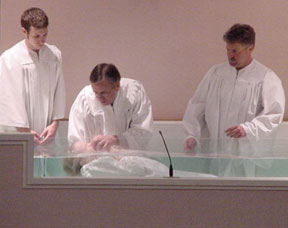
Pastor Jerry Raines of Hampton Road Church in DeSoto baptized 100-year-old Zula Campagna Feb. 5. Assisting Raines were Joe Bob and Chris Kindred, Campagna’s grandson and great-grandson.

• Gale Pollock, William McKinney, Priscilla Owen and Gary Keller have been honored with the Distinguished Alumni Award by the Baylor Alumni Association. A 1986 graduate, Pollock is chief of the Army Nurse Corps. McKinney, a 1959 graduate, is a professor of psychiatry and director of the Asher Center for the Study and Treatment of Depressive Disorders at Northwestern University. Owen is a judge on the U.S. Court of Appeals for the Fifth Circuit and a 1976 graduate. Keller is co-founder and chairman of the board of a real estate company he began four years after his 1979 graduation.

• East Texas Baptist University has won three national marketing awards. The awards, presented by Admissions Marketing Report, included a gold award for the school’s “Tiger Eyes” T-shirt. A 30-second commercial and a billboard also were commended.

• The Houston Baptist University mock trial team competed in a national invitataional tournament and finished 13th in a field of 34. Derrick Owens was named an “outstanding attorney” at the tournament for his performance.


Anniversaries

• Sandy Grisham, 25th, as child development director at Pioneer Drive Church in Abilene, Jan. 1.

• Second Church in La Grange, 20th, Jan. 15. Ellis McKinzie is pastor.

• Chet Haney, 10th, as pastor of Parkside Church in Denison, Feb. 1.

• Roy Marshall, 30th, as pastor of First Church in Hewitt, Feb. 12.

• Kenneth Wells, 25th, as pastor of Northview Church in Lewisville, Feb. 15.

• Lowell Addy, 10th, as business administrator at First Church in Wichita Falls, Feb. 25.

• Allen Reed, 25th, as pastor of First Church in Nacogdoches, March 1.

• The Heights Church in Richardson, 50th, March 5. Former pastors Charles Vander-slice, Earl Craig and Phil Lineberger will attend the 9:30 a.m. service, as will Sue Lewis, widow of former pastor Ron Lewis. A fellowship time will follow in the Atrium at 11 a.m. Gary Singleton is pastor.


Retiring

• Butch Gott, as pastor of Harvest Acres Church in Mineola, Dec. 31, after more than six years. He was in the ministry 30 years, including tenures as pastor of Cate Street Church in Bridgeport and as youth minister at First Church in Paradise. He will continue to live in Mineola and is available for pulpit supply and evangelist work.

• Pat Riley, as pastor of First Church in Cisco, Jan. 8. He served the church two years and had been in the ministry 27 years, including 13 years at Calvary Church in Brownfield.

• Dick Sawyer, as pastor of Nesbitt Church in Marshall, Jan. 28. He had been the church’s pastor since 1995, but Nesbitt also was his first congregation to pastor in 1963. He also was pastor of De Berry Church in De Berry, Athey Church in Harleton and Clearview Church in Marshall.

• Joan Feeler, as children’s minister at First Church in Flower Mound, Sept 30. She served the church four years.


Deaths

• Paul Chambliss, 86, Jan. 21 in Lubbock. A retired pastor, he had served churches in Texas, New Mexico, Arizona, California, Oregon, Colorado and Nevada. The Texas churches he served were Bethel Church in Plainview and First Church in Nolanville. While living in Vernon following his retirement, he also was a supply preacher for the area. He was preceded in death by his wife of 45 years, Gladys, a granddaughter, two brothers and two sisters. He is survived by his wife of 20 years, Barbara; sons, Paul and Louis; step-daughters, Debora DeLuna and Brenda Trevino; step-sons, Dwayne, Gilbert and Brian Oakley; three grandchildren; 11 step-grandchildren; six great-grandchildren; four step-great-grandchildren; and a great-great-grandchild.

• D.C. Mangum Jr., 65, in Baytown. He was a pastor 37 years, serving congregations that included First Church in Aubrey, Broadway Church in Galveston (now University Church), First Church in Hooks and First Church in Linden. Following retirement, he was a member of Cedar Bayou Church in Baytown, but later accepted the call to be pastor of Coady Church in Baytown. He is survived by his wife of 42 years, Joan; daughter, Robin DeMent; son, Delbert; sister, Sharon Dyer; brothers, David and Kenneth; and two grandsons.


Events

• First Church in Midland will host Team Impact Feb. 22-26. A team of world-class athletes, Team Impact will perform feats of strength as they share the gospel. They also will perform in 40 schools in the Midland area as they teach about making wise choices. The events at the church will begin at 7 p.m. Admission is free. For more information, call (432) 683-0608. Gary Dyer is pastor.

• Cowboy Church of Ellis County will begin holding Sunday evening singing beginning March 5. The church does not have Sunday evening services, but will begin holding the music services on the first Sunday of each month. Music will include bluegrass, Christian country, Southern gospel and cowboy gospel. Also, the chongregation moved into its new building recently with 2,310 in attendance for the opening. Gary Morgan is pastor.


Ordained

• Jeremy Johnston to the ministry at Colonial Hills Church in Cedar Hill.

• Glenn Killam to the ministry at White Creek Church in George West.

• Paul Davis to the ministry at Richland Hills Church in Fort Worth.

• Doug Bilyeu, Wayne Mulkey and Lynn Smith as deacons at First Church in Wichita Falls.

• Don Gatewood as a deacon at Richland Hills Church in Fort Worth.

• David Bownds, Milton Tyson and Dan Jenkins as deacons at First Church in Amarillo.


Revivals

• First Church, Refugio; Feb. 19-22; evangelist, Walter Knight; music, The Newberrys; pastor, David Parks.

• First Church, Kountze; Feb. 26-March 1; evangelist, Steve Brumbelow; pastor, Tony Thornton.

News of religion, faith, missions, Bible study and Christian ministry among Texas Baptist churches, in the BGCT, the Southern Baptist Convention ( SBC ) and around the world.


Buckner adoption

Posted: 2/17/06

Buckner adoption

Adopting a child of another race brings joy along with “a fair share of challenges, acknowledges Adela Jones, clinical director for Buckner Adoption and Maternity Services. “While your love for your child is unconditional, the world we live in demands that you deal with sometimes-difficult issues.”

In response to interest from families who have adopted across color lines, Buckner has launched Shades of Love, a family-oriented support group that will include quarterly group sharing sessions, topical seminars, fun family outings and playtime for the children.

Two founding families will lead Shades of Love, and members will determine the group’s evolution, Jones said. Shades of Love is open to everyone who has adopted a child of color, whether or not the adoption was through Buckner.

Jones asked for input from interested families, “a few families willing to share the responsibility of shepherding the group” and ongoing participation.

For more information on Shades of Love, contact Buckner Adoption and Maternity services at (214) 319-3426 or visit the website, www.buckneradoption.org for Shades of Love announcements and meeting times.

News of religion, faith, missions, Bible study and Christian ministry among Texas Baptist churches, in the BGCT, the Southern Baptist Convention ( SBC ) and around the world.


Adoptive families find God’s love across racial lines

Posted: 2/17/06

Adoptive families find God’s love across racial lines

By Felicia Fuller

Buckner Benevolences

AUBREY—With her pigtails, purple separates and painted fingernails, 5-year-old Quincy is the quintessential girly girl. She even slurps fruit juice with gentility—pinkie extended, lips lightly pursed around the straw.

Melanie Avent of Waxahachie embraces her two adopted children, Gracen and Ross. Photos by Russ Dilday/Buckner Benevolences

She is her mother made-over—apart from one feature. Quincy is black. Her mom, Heather Walden, is white—a bond made possible through adoption.

“You’ve heard the argument, is personality nurture or nature? Well, I say it’s a little bit of both,” said her father, Chris Walden. “I love that Quincy likes pink, frilly dresses and tea parties. And our son Jeremiah, well, he’s all boy—rough and tumble.”

Gender identity aside, the children also have a healthy sense of their birth-cultures, thanks to the couple’s savvy efforts to promote diversity in their home and community. Walden and his wife of 13 years adopted the African-American twins at birth through Buckner Adoption and Maternity Services after a four-year struggle with infertility.

Chris Walden plays with his adopted twin children, Quincy and Jeremiah.

“A couple of years before we decided to adopt, Heather was listening to KCBI (radio), and they were talking about children who were hard to place,” Walden recalled. “At that point, they had about three or four African-American children that needed to be adopted. They said for anyone who was interested to contact Buckner.”

Walden, pastor of Rock Hill Baptist Church in rural Aubrey, said they made the decision to adopt across racial lines carefully and prayerfully. Among their considerations: Does a white family have what it takes to teach black children about their history, instill ethnic pride and equip them to stand strong against racism?

If the timbre in the Walden home today is any indication, the answer is “yes.” Beyond strategic placement of black art and regular visits from black friends, the Waldens are deliberate in educating Quincy and Jeremiah about history, race, racism and their identity in Christ. Heavy topics for young minds, but the Waldens are resolute. Alongside Thomas the Train and Barbie memorabilia are richly illustrated children’s books about slavery, segregation, integration and the legacy of Martin Luther King Jr.

Then there’s Quincy’s personal favorite, Horace, about a spotted leopard adopted by stripped tigers who goes in search of his roots only to discover that home is where the heart is, and your family doesn’t have to look like you to love you.

Mrs. Walden, a stay-at-home mother, launched a personal crusade to get more children’s books like Horace depicting diverse characters in her local library. And it worked.

Adela Jones, clinical director for Buckner Adoption and Maternity Services, applauds the family’s efforts.

“Adoptive parents who are flexible, open-minded and have diversity in their relationships are ideally suited for trans-racial placements,” she said. “The wise ones know that color-blind love isn’t always enough, because the world we live in still sees black and white.”

Once vilified by the National Association of Black Social Workers for robbing children of their cultural identity, trans-racial adoption is increasingly more common and accounts for 20 percent of domestic placements at Buckner.

“It is a viable solution for children languishing in foster care,” Jones contended. “But its success largely depends on honesty and open communication among families. Children placed trans-racially must learn their history, receive affirmation for who and what they are, and be surrounded by other people who look like them.”

Despite such strategies, families report that even their trips to the supermarket can be met with insensitivity and resistance.

“If we’re out as a family, I feel very comfortable. It’s when it’s me with them by myself that I get ‘disapproving’ looks,” Mrs. Walden said, recalling an incident at her local grocer when a cashier took one look at the children and asked if she would be paying with food stamps.

“People stare, children taunt and strangers ask rude questions. To be constantly asked, ‘Are you the baby-sitter?’ or ‘Is your husband black?’ can be trying. Some days I want to tell them, ‘My life is none of your business,’” said Melanie Avent, adoptive mother of Gracen, 6, and Ross, 4—both biracial.

Being part of a multiracial family invariably heightens awareness of racism and often inspires parents to action, Jones continued.

That’s why dialogues about difference are common in the Avent household in Waxahachie.

As she flips through pages of The Underground Railroad coloring book chronicling black slaves’ efforts to escape captivity, Mrs. Avent said: “I know that I’m not ever going to experience the amount of racism that an African-American would and that my children will, but in some ways I’m glad (the stares and negative comments) are happening so I can have some sort of personal experience to draw on when they need my help with that kind of thing.”

Most distributing, she said, is some people’s assumption that she adopted children of color as an act of charity.

“What they don’t understand is I needed them even more than they needed me. We went through in vitro two times, and it didn’t work for us. But we knew that adoption would work. When it came time to go to Buckner, and we were asked to make a choice of what race of child we would accept, we didn’t have to think about it. Maybe that sounds a little naïve. We just knew that God would bring our children to us, and he would work it all out.”

Both the Avent and Walden families recently joined the Shades of Love support group Buckner founded to encourage families who have adopted across color lines.

The kickoff meeting held Jan. 21 drew more than 10 families who discussed topics ranging from ethnic hair care to teaching children how to counter unkind comments.

“I wanted my children to see that we’re not a strange family,” Mrs. Avent said.

“This is our normal, and it’s normal for other people, too. They can make friends that are just like them, and I can make friends that have some of the same experiences that I have.”

Her husband, John, expressed his thoughts about the couple’s adoption journey.

“As time passes, you think of them less as adopted kids or black kids. They are just our kids,” he said. “We show them God’s love and teach them it’s not what’s on the outside that matters. It’s what’s on the inside.”

And the couple has gotten nods from the children’s birthmothers. Mrs. Avent was present in the delivery room when Ross was born and maintains close ties with Gracen’s birthmother and birthfather.

“I met the Avents at the Buckner domestic adoption picnic, and we hit it off immediately,” said Gracen’s birthmother, Laura Clowers, who is white.

“I’d been struggling financially and saw adoption as the best option for Gracen. I talked to several agencies, but I felt best about Buckner. The Avents are committed to each other and committed to providing a home filled with love and one that teaches their children to be proud of who they are. They are wise and loving and give me confidence that I made the right decision.”

The affirmation brings a smile to Mrs. Avent’s face.

As she glanced across the room at Gracen and Ross playing contently, she paused then said: “God created them, and he wanted them to be who they are. He wanted them to have brown skin and dark, curly hair and brown eyes. And he wanted their mom to have white skin and straight hair and blue eyes. They are what children between me and John look like. And I think they’re beautiful.”

News of religion, faith, missions, Bible study and Christian ministry among Texas Baptist churches, in the BGCT, the Southern Baptist Convention ( SBC ) and around the world.


BAPTIST BRIEFS

Posted: 2/17/06

BAPTIST BRIEFS

Florida church considers Dallas pastor. Mac Brunson, pastor of First Baptist Church in Dallas, was slated to preach in view of a call to First Baptist Church of Jacksonville, Fla., Feb. 19. Jerry Vines has been pastor of the Jacksonville church 23 years. Brunson, 48, has been pastor of First Baptist Church in Dallas since 1999, and also serves as chancellor of Criswell College. He made announcements about the call of the Jacksonville church in each of his church’s three morning worship services Feb. 12. Brunson served previously in churches in Virginia, North Carolina and South Carolina. He was president of the Southern Baptist Pastors’ Conference in 2003. Brunson and his wife, Debbie, have three children. He is a graduate of Furman University and Southwestern Baptist Theological Seminary.

Ministers tax guide available. Ministers can find help in preparing their 2005 federal income tax returns from an annual tax guide published by GuideStone Financial Resources of the Southern Baptist Convention. The free guide details recent changes to tax laws and their effect on ministers written by Richard Hammar, a CPA, attorney and widely published author who specializes in legal and tax issues for ministers. GuideStone’s legal and compliance staff edits the guide to address tax issues that affect the greatest number of Southern Baptist pastors. The tax guide can be obtained in an electronic format by visiting the GuideStone website at www.GuideStone.org. Copies can also be obtained by calling customer service at (888) 98-GUIDE (984-8433) between 7 a.m. and 6 p.m. weekdays.

N.M. Baptists elect executive director. After a 17-month-long search, the Baptist Convention of New Mexico has unanimously elected Joseph Bunce as executive director. The assignment became effective immediately. A New Mexico native, Bunce served as pastor of churches in New Mexico and Missouri while getting his education. He earned a bachelors degree from Eastern New Mexico University, a master of divinity degree from Midwestern Baptist Theological Seminary and a doctor of ministry degree from Golden Gate Baptist Theological Seminary in California. He now serves as a member of the Golden Gate Seminary board. Bunce replaces Claude Cone, who announced his plans for retirement in July 2004. Cone will continue to serve as the convention’s executive director emeritus and pastor of Monterey Baptist Church in Albuquerque.

National Campers on Mission rally set. Campers on Mission will hold its national rally June 7-9 at the Dixie Classic Fairgrounds in Winston-Salem, N.C. The event is timed so participants can join in activities related to Crossover Triad, an outreach effort designed to coincide with the Southern Baptist Convention annual meeting in nearby Greensboro, June 13-14. Scheduled speakers at the rally include James Atkins, pastor of West Asheville Baptist Church in Asheville, N.C., and Ken Hemphill, former president of Southwestern Baptist Theological Seminary and current strategist for the SBC’s Empowering Kingdom Growth emphasis. Registration forms and further information are available at www.comnatrally2006.org, from state COM presidents or by e-mailing comnatrally2006@yahoo.com. Rally coordinator Joyce Camp can be reached at (336) 407-3250.

Ouachita seeks new education dean. Ouachita Baptist University has formed a search committee to find a new dean for the Michael D. Huckabee School of Education. Stan Poole, vice president for academic affairs at Ouachita, will chair the committee. Current Dean Jeanna Westmoreland will leave Ouachita in June when her husband, Andrew Westmoreland, becomes president of Samford University in Birmingham, Ala.

SBC registration opens. Churches that plan to send messengers to the 2006 Southern Baptist Convention annual meeting in Greensboro, N.C., can register online. Registration also is open for families who plan to enroll children in the preschool child care or the children’s conference, scheduled in conjunction with the SBC annual meeting. For registration information, visit www.sbc.net and click on “2006 SBC Annual Meeting.”

News of religion, faith, missions, Bible study and Christian ministry among Texas Baptist churches, in the BGCT, the Southern Baptist Convention ( SBC ) and around the world.


BOOK REVIEW: Baptists shape church leaders of third millennium, author says

Posted: 2/17/06

BOOK REVIEW: Baptists shape church
leaders of third millennium, author says

By Ken Camp

Managing Editor

FORT WORTH—As Christianity’s center of gravity shifts to the Southern Hemisphere, Baptists and likeminded evangelicals stand on the threshold of tremendous opportunity, said retired missions professor Justice Anderson.

Although Catholics have enjoyed established status in Latin America and Pentecostals groups have experienced explosive growth there, Baptists occupy “the golden mean between Roman Catho-licism and Pentecostal extremes,” said Anderson, who served as a missionary-professor 16 years at the International Baptist Seminary in Buenos Aires, Argentina, and 26 years as professor of missiology at South-western Baptist Theo-logical Seminary.

Latin American Baptists—and other evangelicals who share baptistic be-liefs—can expect to assume increasing influence on global Christianity, since Third World Christians account for 60 percent of the total Christian population and evangelicalism is the dominant force in global Christianity, he noted.

“Without doubt, the leadership of Christianity, in the third millennium of its history, will be found in the South,” Anderson concluded.

That means Christians in the Northern Hemisphere must learn to “take a servant’s role” alongside—and often under the direction—of Christians in the South, he insisted.

Baptists’ role in shaping these Christian leaders for the third millennium reaches beyond those who call themselves “Baptist,” Anderson asserted.

Baptists’ emphasis on the Bible also has helped both Roman Catholicism and the Pentecostal and charismatic groups in Latin America “come to a strong evangelical center,” he said.

“There’s a greater Catholic interest in individual Bible study, and the Catholic Church is seeing the impact of Bible study being done by all the people and not just the priests,” he said. “Baptists have helped Pentecostals come to a more wholesome understanding of the doctrine of the Holy Spirit that is based not just on experience but grounded in Scripture.”

But any discussion of Baptists and their impact on Latin America has to include the larger evangelical community, Anderson discovered as he set out to write a history of Baptists in Latin America.

“It is impossible to extract Latin American Baptists from the evangelical context from which they sprang,” he wrote in An Evangelical Saga: Baptists and their Precursors in Latin America.

Early Protestant missionaries to Latin America came largely from the Free Church tradition—including Moravians and Anabaptists. And even Anglicans, Lutherans and Reformed Christians discovered they essentially had to operate as free churches in countries where Roman Catholicism was the established church, he noted.

“This hodge-podge of Protestant pioneers gradually jelled into what I call ‘an evangelical community’—a Protestant movement—from which structured denominations gradually evolved. … However, these new denominations refused to isolate themselves from their larger ‘evangelical community’ in which they developed,” he wrote.

Baptists grew in Latin America because of both “providential” and “intentional” precursors—evangelical missionaries from varied denominational backgrounds, Anderson concluded.

“Many of these had no desire to be Baptists, and certainly did not intentionally promote the growth of a Baptist denomination,” he wrote. “But being faithful to the propagation and defense of … evangelical principles …, they prepared the soil for an emerging Baptist denomination.”

In addition to highlighting groups and individuals who paved the way for Baptist work in Latin America, Anderson’s 637-page history published by Xulon Press includes country-by-country histories of Baptists throughout the region.

Much of the book is an English translation and updating of volumes he originally wrote in Spanish.

Anderson committed himself to the extensive task of reworking and expanding his manuscript partly because he felt Latin American Baptists received inadequate attention in most English church history books, and partly because he wanted Hispanic Baptists in the United States to understand their heritage.

“Hispanic Baptists should not see themselves as an appendage to our (Anglo) heritage,” he stressed. “They have a history and heritage of their own. And it’s an exciting story.”

News of religion, faith, missions, Bible study and Christian ministry among Texas Baptist churches, in the BGCT, the Southern Baptist Convention ( SBC ) and around the world.


Church fire investigations ongoing

Posted: 2/17/06

Church fire investigations ongoing

By Hannah Elliott

Associated Baptist Press

CENTREVILLE, Ala. (ABP)—Federal officials continue their investigation as 10 Baptist churches in rural Alabama burned in two weeks. Authorities speculated the rash of fires could be the work of two arsonists who may be “bosom buddies.”

The most recent blaze claimed the Beaverton Freewill Baptist Church, located near the Mississippi border in the northwestern part of the state. Inspectors said the fire was the work of an arsonist, and they noted witness reports about two white males in a dark-colored SUV at the scene of several of the crimes.

“They’re not youths or teens,” said Eric Kehn, a spokesman for the Alcohol, Tobacco, Firearms and Explosives agency. “It’s probably someone in their 20s or 30s. We believe they’re pretty much inseparable. They’re something like bosom buddies.”

Possible clues as to the identities of the suspects include a fingerprint from the side of a front door and a footprint found outside the back of Dancy First Baptist Church near Aliceville, The Christian Post reported. Officials also have determined that in several of the fires, the perpetrators followed the same routine—kicking in the front door of each church, setting the fire near the pulpit and escaping through the back.

Investigators said the arsonists could have set the fires in response to outside stress involving “family, relationships, work, (or) the economy.” They invited the suspects to begin a “dialogue” with them in order to reach a resolution.

To that end, locals have advertised a special phone line, post office box and e-mail address created for potential contact from the perpetrators. State and federal rewards top $10,000 for evidence leading to an arrest.

Out of the 10 fires, the latest blaze was the only one set during daylight. Possible motives for the fires seem to exclude racial hatred, since half of the churches had mostly African-American congregations, and the other half had mostly white congregations. All were Baptist, although at least three separate Baptist denominations are among the victims.

Beaverton, which has around 200 residents, lies about 85 miles northwest of Birmingham.

Rick Lance, the executive director of the Alabama Baptist Convention’s board, responded to the latest fire with a statement released through the group’s website. In it, he told the perpetrators that, despite their acts, they faced strongly committed congregations “seeking to be certain that good comes out of evil.”

Lance said while the buildings have burned, the real church consists of the people.

“Churches, like families, can go through trying times—such as what was experienced in the wave of hurricanes that battered the Gulf Coast last fall,” Lance said. “Yet there is a resilience of faith which characterizes the congregations. They personify the kind of courage and compassion I believe the Lord blesses. That is a testimony of undefeatable determination and dedication.”

The series of fires began with five small Baptist churches in rural Bibb County, Ala., about 50 miles southwest of Birmingham, the night of Feb. 2-3. The fires completely destroyed Ashby Baptist Church in Brierfield, Rehobeth Baptist Church in Randolph and Pleasant Sabine Baptist Church near Centreville. The other two churches, Old Union Baptist in Brierfield and Antioch Baptist in Antioch, sustained damage but escaped complete destruction.

Fire damaged four more rural Baptist churches in Alabama the morning of Feb. 7. The second batch of fires occurred near the Alabama-Mississippi boarder, in sparsely populated Greene, Pickens and Sumter counties, roughly 60 miles from the fires in Bibb County.

Fire completely destroyed Morning Star Missionary Baptist Church, near Boligee, and Dancy Baptist Church, near Aliceville. Galilee Baptist Church in Panola and Church Spring Valley Baptist Church near Emelle suffered some damage.

Local congregations have rallied to provide support to their sister churches. The Alabama Baptist Convention arranged a fund for donations and deployed mobile chapels so congregations can continue meeting.

Workers at Alabama Baptist Children’s Homes and Family Ministries also have offered free counseling for members of affected churches at no cost, according to The Alabama Baptist.

News of religion, faith, missions, Bible study and Christian ministry among Texas Baptist churches, in the BGCT, the Southern Baptist Convention ( SBC ) and around the world.


IMB backs away from trustee removal

Posted: 2/17/06

IMB backs away from trustee removal

By Robert Marus

Associated Baptist Press

RICHMOND, Va. (ABP)—Leaders of the Southern Baptist Convention’s International Mission Board will ask the agency’s trustees to rescind an action that asked for the removal of a trustee.

But the trustee in question, Wade Burleson of Oklahoma, said the controversy that has erupted over the board’s action isn’t over.

IMB Chairman Tom Hatley confirmed the board’s executive committee will recommend the reversal at a March 20-21 meeting in Florida. Hatley is pastor of Immanuel Baptist Church in Rogers, Ark.

In January, the board voted to recommend removal of Burleson, pastor of Emmanuel Baptist Church in Enid, Okla.

In a press release following the action, IMB officials charged Burleson with “broken trust and resistance to accountability” because of an Internet weblog, or blog, he has maintained.

On his blog, Burleson has criticized previous board actions placing theological restrictions on missionary appointees that he—and other Southern Baptists—have said far eclipse SBC doctrinal consensus.

The board’s press release said trustees did not take the action because of Burleson’s opposition to the new policies, but because of the way he conducted his dissent. Because trustees of Southern Baptist agencies are elected by SBC messengers, they can only be removed by action of the full convention. It meets in June in Greensboro, N.C.

In a statement following the January meeting, Hatley said: “This difficult measure was not taken without due deliberation and exploration of other ways to handle an impasse. … The trustees consider this a rare and grievous action but one that was absolutely necessary for the board to move forward in its duties as prescribed by the SBC.”

Asked to explain IMB leaders’ change of heart, Hatley said, “It’s mainly (that) we discovered more options for handling trustee relationships than we thought we had.”

A Feb. 14 story released through Baptist Press, the SBC’s official public relations agency, reported the IMB executive committee’s decision to reverse was made Feb. 10.

In his Feb. 16 blog, Burleson said that while he felt IMB trustees overreacted, he had been prepared to take his case to messengers to the SBC annual meeting.

“I, and others on the board, did not want this issue to go before the convention in the first place,” he wrote. “We felt the motion to remove was unsubstantiated, without precedent, and occurred without any attempts at mediation. The first time I ever heard of the motion was the day it was presented. Nobody had come to me privately to tell me what they were going to do.

“However, once the recommendation for my removal for ‘gossip and slander’ had been read into the public record, I was fully prepared to provide my defense. … Since the board chose to make this issue public, if there is to be ‘discipline’ it would need to be of a public nature.”

Now, even though IMB leaders have backtracked, the issue may not die down quietly.

The trustees’ original attempt to oust Burleson has set off controversy among Southern Baptist bloggers and chatrooms. Some have cast the conflict in generational terms, with the old guard of conservatives who led the SBC’s rightward shift during the 1980s butting heads with a cadre of younger leaders who, while also conservative, want more power.

Bloggers also have speculated the conflict involved disagreements among powerful SBC officials over the leadership of IMB President Jerry Rankin.

News of religion, faith, missions, Bible study and Christian ministry among Texas Baptist churches, in the BGCT, the Southern Baptist Convention ( SBC ) and around the world.


Evangelical chaplains spark controversy

Posted: 2/17/06

Evangelical chaplains spark controversy

By Deborah Potter

Religion & Ethics Newsweekly

WASHINGTON (RNS)—The U.S. Armed Forces always have had chaplains, but as the number of chaplains from evangelical groups with a strong commitment to bringing nonbelievers to their faith has grown, so has a controversy about how the chaplaincy should carry out its ministry.

Historically, chaplains have served side-by-side with the troops in both peace and war, offering public prayers and private counseling—to all comers, of all faiths, believers and nonbelievers alike.

Chaplains’ “first obligation would be to (personnel of) their own denomination, but the next obligation is to anyone who comes to them for spiritual or pastoral counsel,” said Archbishop Edwin O’Brien, who oversees the military’s Catholic chaplains.

The number of Catholic and mainline Protestant chaplains has dwindled over the past decades as evangelical Christians have flocked to the chaplaincy. Some historians say the trend dates back to the Vietnam era, when Catholic and mainline Protestant churches were active in the peace movement while many evangelical churches supported the war.

Some evangelical chaplains now are telling service men and women that the only way to salvation is through Jesus Christ—an action O’Brien finds troubling.

“That is not accommodating the needs of others,” he said. “Some people don’t believe that, and it’s not my position as a chaplain to require that of them.

“I must respect who they are and what they are. Some evangelicals have stepped over the line.”

Others, however, note that bringing people to a personal encounter with Jesus is what evangelicalism is all about.

“I think a lot of evangelical conservative Christians see that as the basic work that they are to do,” said Kristen Leslie of the Yale Divinity School. “And that becomes a problem in a pluralistic environment where, because these are now employees of the government, you can’t do that.”

The issue publicly came to a head last year at the Air Force Academy, where complaints by Jewish cadets and others of proselytizing by evangelical officers and cadets led to a Pentagon investigation.

In response, the Air Force issued new interim guidelines telling chaplains to be “sensitive to those who do not welcome offerings of faith.”

In public settings where attendance is mandatory, chaplains were told to offer brief “nonsectarian” prayers.

That did not sit well with some evangelical chaplains and their supporters on Capitol Hill.

“Our men and women in uniform are in Iraq and Afghanistan to defend freedom,” said Rep. Walter Jones, R-N.C. “And yet we’re having our chaplains being denied their freedom to pray in the name of their faith.”

Jones and 70 other members of Congress have been pressuring the White House to issue an executive order allowing chaplains to pray according to their faith.

A spokesman for Jones said the congressman recently discussed the guidelines with President Bush’s domestic policy adviser and now feels the White House “seems to be taking the issue seriously” and progress is being made.

Navy Chaplain Gordon Klingenschmitt, a priest in the Evangelical Episcopal Church, says he was disciplined for some of his shipboard sermons. He has been working with Jones to overturn the interim guidelines. In December, he went on an 18-day hunger strike outside the White House to protest what he said were restrictions on how he could pray and preach.

“When the government says to me that, well, you can practice your faith in private but don’t say the “J-word” in public, because the Jesus word is insensitive, well, they’re characterizing “Jesus Christ” as an offensive word. And they’re turning my Lord into a slur,” he said. “Well, that is inherently offensive to me, and that is inherently discriminatory to people of my faith tradition.”

But Barry Lynn, executive director of Americans United for Separation of Church and State, disagrees.

“When you’re hired as a chaplain, when you become an officer in the United States military, as every person in the military does, you give up certain First Amend-ment rights,” Lynn said. “But this is not fundamentally an issue of free speech. This is an idea of how the taxpayers are supporting religion in the military and legitimate restraints on what those chaplains can do.”

Klingenschmitt said the issue is his ability to practice his faith.

“When I evangelize and I invite sailors to come and hear my sermons and they disagree, that’s fine,” he said. “They are never punished for disagreeing with me.

“But when I refused to practice the faith of liberal senior chaplains, I was punished with the full weight of the United States government. So, who is proselytizing whom?”

News of religion, faith, missions, Bible study and Christian ministry among Texas Baptist churches, in the BGCT, the Southern Baptist Convention ( SBC ) and around the world.


Bush challenges students to lives of service

Posted: 2/17/06

Bush challenges students to lives of service

By Ken Camp

Managing Editor

BELTON—Former President George Bush stressed the importance of service, integrity and ties to family and friends during a lecture at the University of Mary Hardin-Baylor.

Former President George Bush delivers the McLane Lecture at the University of Mary Hardin-Baylor. Photo courtesy of the University of Mary Hardin Baylor

“There is no definition of a successful life that doesn’t include service to others,” Bush told a capacity crowd at the university’s Mayborn Campus Center, Feb. 10.

The UMHB College of Business sponsored the McLane Lecture, made possible by Baptist layman and Houston Astros owner Drayton McLane.

The nation needs “caring citizens who will make their community better than how they found it,” Bush said, challenging students to become “points of light”—a call to volunteer service that marked his presidency.

A person does not have to become president of the United States to make a significant difference in the lives of other people, he insisted.

“All you have to do is care. Roll up your sleeves, get off the sidelines and get into the game,” he urged.

Whether in business or public service, nothing substitutes for integrity, he added.

“I’ve always believed character matters,” he said. “Friendship, family and faith—you can build a life on these three things.”

During a question-and-answer session with business students, Bush responded to a query about his partnership with former President Bill Clinton in leading fund-raising efforts for disaster relief. The two former presidents helped raised more than $150 million for tsunami relief and about $100 million for Gulf Coast hurricane relief.

“It’s important to reach out and help. It’s important for people with different philosophies and from different political parties to demonstrate there are some things more important than partisan politics,” he said.

Prior to delivering his lecture, Bush received an honorary doctor of humanities degree from UMHB President Jerry Bawcom.

News of religion, faith, missions, Bible study and Christian ministry among Texas Baptist churches, in the BGCT, the Southern Baptist Convention ( SBC ) and around the world.


John Lilley seeks balance as he leads Baylor University

Posted: 2/17/06

John Lilley seeks balance as he leads Baylor University

By Ken Camp

Managing Editor

WACO—Baylor University bills itself as “a Christian university in the historic Baptist tradition.” And when President John Lilley uses the phrase, he emphasizes every key word.

John Lilley

“It’s not in just any tradition and not even just any Baptist tradition. It’s the historic Baptist tradition,” he said, stressing the university’s leaders hold a distinctively Baptist understanding of religious liberty and noncreedal, biblical faith.

“In a Christian university, it re-quires balance” he said, touching on a favorite theme. “A Christian university is not a place where you park your brain at the door. We want to help students fully develop their potential—great hearts and great minds.”

Less than two months into his presidency, Lilley sees balance as a key governing principle—particularly in dealing with polarized constituencies within “the Baylor family.”

“Serious talk” and vibrant debate about important ideas should flourish on a Baptist university campus, Lilley said. He wants to create a climate of mutual respect and trust, where those conversations can occur.

“If we raise our spirits and lower our volume, that’s when we’ll really hear each other,” he said. “How we treat each other is important.

“Atmosphere matters. … If we treat each other badly in God’s name, shame on us.”

Lilley recognizes debate about how to achieve the integration of faith and learning led to misunderstandings and mistrust over the last several years.

“In some disciplines, the integration of faith and learning will be intensive. In some, it will be less intensive. But we’re going to be intentional about it,” he said.

Consequently, Lilley has instructed all academic departments to submit by March 1 a self-assessment of how they plan to advance Baylor’s commitment to being a Christian university.

As the school strives to integrate Christian faith into both classroom instruction and campus life, Lilley believes that goal can be achieved best with “a lighter touch” and a clear understanding that the administration is not seeking uniformity.

“We don’t sit over here at Pat Neff (administration building) and issue edicts,” he said.

Intentionality and a “lighter touch” also will guide faculty hiring practices—another hot topic at Baylor in recent years, Lilley said.

“Our intention is to communicate that Christianity matters as we talk to candidates. We want to help them see how they can fit in with the mission of Baylor University. We can do that through conversation—getting to know one another and learning about their faith journey,” he said, adding Interim Provost Randall O’Brien will conduct the interviews.

“It’s an intentional approach but not inquisitorial or confrontational. We’ll find out all we need to know. And through the process, even if candidates are not chosen, we hope we will have made friends for Baylor.”

Lilley emphasizes he sees the Baylor presidency as “a sacred trust” and “a calling,” and he expressed appreciation for the ongoing support Texas Baptists offer the university.

“Baylor is a special place, and it’s special to Texas Baptists,” he said.

In his first weeks on the job, he has met with numerous Texas Baptist groups—as well as faculty, staff, retired faculty and alumni. O’Brien sees Lilley leading by example as he seeks to unite Baylor’s varied constituencies.

“It’s therapeutic the way Dr. Lilley has come in here listening and come in caring,” O’Brien said. “He’s met with every group who wanted to meet with him, …. (and) they’ve found him warm and welcoming. He’s modeling what he’s calling for.”

News of religion, faith, missions, Bible study and Christian ministry among Texas Baptist churches, in the BGCT, the Southern Baptist Convention ( SBC ) and around the world.


Intelligent design discussion moves to university campuses

Posted: 2/17/06

Intelligent design discussion moves to university campuses

By Sarah Price Brown

Religion News Service

SAN DIEGO, Calif. (RNS)—When Hannah Maxson started an intelligent design club at Cornell University last fall, a handful of science majors showed up for the first meeting. Today, the high-profile club boasts more than 80 members.

Casey Luskin, founder of the Intelligent Design and Evolution Awareness (IDEA) Center, a small nonprofit organization based in San Diego, speaks at an intelligent design club meeting at the University of California at San Diego. Photo by Brit Colanter/RNS

Until recently, the nationwide debate over whether intelligent design should be taught alongside evolution was centered primarily in public elementary and high school science classes.
Now the discussion is spilling over onto university campuses. At nearly 30 public and private universities across the country, students have started clubs aimed at promoting intelligent design. The clubs, sponsored by the Intel-ligent Design and Evolution Awareness Center—IDEA—a small, nonprofit organization based in San Diego, have been gaining members and visibility.
Proponents of intelligent design insist the theory, which says the universe is so complex that it must have been created by a higher being, is scientific. Opponents—including most of the nation’s scientific establishment—put their weight behind Charles Darwin’s theory of evolution, and dismiss intelligent design as a religious idea based on the biblical creation story in Genesis.
When Cornell’s interim president, Hunter R. Rawlings III, denounced intelligent design as “a religious belief masquerading as a secular idea” in a speech last October, Maxson, a 21-year-old junior and president of the Ithaca, N.Y., school’s IDEA club, responded with a press release. Rawlings’ comments were a “gross misstatement,” she said, and “an insult to people of faith throughout America.”
Suddenly, Maxson, a self-described “bookish” chemistry and math major, found herself and her club in the spotlight.
“Before, we were just basically a science club,” she said. “Now, we have to defend our ideas everywhere.”
During one recent week, she was scheduled to speak about intelligent design at a campus discussion, make a presentation to a biology class and give an interview on local radio.
Intelligent design clubs at other universities also have been gaining momentum and attention. The first IDEA club meeting at George Mason University, a public school in Fairfax, Va., drew 20 people.
At a recent meeting, where a scientist guest speaker offered his criticisms of intelligent de-sign, 90 people attended.
Josh Norton, a 22-year-old math major who is president of the University of California at San Diego’s club, said his group was meeting every week in order to plan an all-day conference on intelligent design for the spring.
Casey Luskin, 27, founded the first IDEA club in 1999, at the University of California at San Diego. Luskin, then a college junior, had become interested in intelligent design after taking a biology seminar that taught about the theory. When Luskin graduated with a master’s degree in earth sciences in 2001, he founded the IDEA Center to help other students start their own clubs.
If a high school or university student contacts the IDEA Center about starting an intelligent design club, the center will provide a curriculum with suggested discussion topics, books, videos and a bibliography of sources.
Recently the center helped start clubs at the University of California at Berkeley and Stanford University in Palo Alto, Calif. A few high schools, including one as far away as Kenya, also have started IDEA chapters.
The organization is “very grassroots,” Luskin said. Its seven staff members volunteer part-time. They operate on a budget of a few thousand dollars, which comes from individual donations, he said.
The group’s advisory board includes Michael Behe and William Dembski, fellows at the Discovery Institute in Seattle, a think tank that is the driving force behind the intelligent design movement.
Dembski became the Carl F.H. Henry Professor of Theology and Science at Southern Baptist Theological Seminary last June.
Luskin recently started working at the Discovery Institute as a program officer concerned with public policy and legal affairs. Still, he stressed that the IDEA Center remains independent and receives no funding from the institute.
But Victor Hutchison, professor emeritus of zoology at the University of Oklahoma, who attended some IDEA club meetings on his campus, said he could not separate the clubs from the broader intelligent design movement, spearheaded by the Discovery Institute.
“I find that they are espousing exactly the talking points of the creationist Discovery Institute,” said Hutchison, who described himself both as “an evolutionist” and “a person of faith.”
The way Hutchison sees it, the clubs fit into what he calls Discovery’s larger plan to attack evolution and replace it with the religious viewpoint of biblical creationism and eventually “establish a theocracy.”
The IDEA Center says intelligent design is a scientific concept, not a religious one. But students came to the meetings with their Bibles, Hutchison said. The IDEA Center also requires its club presidents to be Christian.
Luskin explained that as a Christian group, “we wanted to be totally open about who we thought the designer was.” But, he added, “this belief about the identity of the designer is our religious belief; it’s not a part of ID theory.”
Hutchison nevertheless sees the requirement as a contradiction. “It just proves they are lying when they say it’s not religious-based,” he said.

News of religion, faith, missions, Bible study and Christian ministry among Texas Baptist churches, in the BGCT, the Southern Baptist Convention ( SBC ) and around the world.