Western heritage churches strive for cultural relevancy

Posted: 6/09/06

When Pastor Jim Strickland talks about horsepower he may mean the chopper he rides or the equine variety. Strickland has served as pastor of the Mills County Cowboy Church six months. (Photo by George Henson)

Western heritage churches
strive for cultural relevancy

By George Henson

Staff Writer

GOLDTHWAITE—Quicker than a bull can take two steps out of a chute, spin to his right, kick his heels to the sky and put his nose—and maybe a cowboy—in the dirt, Western heritage churches are springing up across the state.

In six years, the Baptist General Convention of Texas has helped start 54 Western heritage churches. In four months, from May through August, 31 more will be up and running. Ron Nolen, Western heritage congregational strategist for the BGCT, said while that is great, it’s only the beginning.

“There’s another 200 coming over the next hill with no end in sight,” he said.

One of the more recent starts—the six-month-old Mills County Cowboy Church—began when a group of men began to meet at the local livestock sale lot. The group grew in a month to about 15, and they moved into an abandoned feed store building.
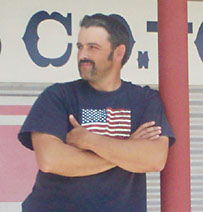
Jim Strickland

The group had grown to about 40 when Jim Strickland blew into town from Florida.

Strickland grew up around horses and cattle and had always had a desire to minister in that culture, but found himself as the pastor of a conventional, multi-staff, growing church of about 650.

“I had dismissed doing anything in this culture until I got on the Internet and heard about these crazy Texans that had found a way to make it work,” he recalled.

He arrived in Texas the same week as Hurricane Rita without any real plan, but a friend helped set up a meeting with Nolen. As Strickland sat in his hotel room the night before the meeting, he passed the time reading in Hill Country Magazine about a town called Goldthwaite he had never heard of before.

During their meeting the next morning, Nolen told Strickland Goldthwaite needed a pastor for a Western heritage church.

Strickland came to town to meet with the men who were interested in getting the church off the ground. They met in the abandoned feed store with no air conditioning, no ceiling, chairs from hunting blinds and roll-up doors that were raised to provide at least a little breeze.

“Sitting there in that broken-up feed store, I really thought I had missed God. I couldn’t wait to get out of there. I thought, ‘I’ll just shake some hands, kiss some babies and get back to Florida,’” he recalled.

But in an instant, that all changed.

“I was introduced to the men, took about three steps and turned around to make my short little speech before I left. But when I turned around and saw their faces, I knew this was the place that God had brought me to,” he said.

The building has since been fixed up a bit. The metal roll-up doors have been replaced with more conventional entrances, and fans and an air conditioner cool the building. The church also secured new folding chairs and added a ceiling.

Unadorned concrete floors and feed store signs on the outside help maintain the rural feel. A small stage for the worship band and a horse trough for baptisms don’t do anything to detract from that.

Some people didn’t understand Strickland’s decision to move to Texas to pastor a church in a feed store.

“Some people thought we were crazy—not knowing if we would have an income or anything, but we thought it was what God would have us do and it’s all worked out,” he said. He has a salary—a good one by Mills County standard’s, he said. And he runs a saddle shop where he does leather work of all kinds.

The saddle shop really is more a ministry opportunity than a financial bonanza, he said. It gives him one more opportunity to meet people in a place they can feel comfortable.

Strickland admits he had to make some adjustments as well. He had no problem with the boots and jeans, but he admits after so many years of giving an invitation at the end of the sermon, he launched into one or two before he caught himself. Cowboy churches generally give people a chance to respond to God’s direction by filling out a slip after church and leaving it to be followed up on later.

The system works in Mills County. The church has grown to about 130 people, and decisions have been recorded every week but two since Strickland arrived.

Another difference between the cowboy church and the conventional church he once served is the number of adults who make professions of faith in Christ, he noted. Of the dozens he has baptized so far, only two have been children.

“A lot of people will come up and say, ‘Preacher, I haven’t been in a church in 30 years.’ That makes you reevaluate what’s essential, because you have to grow them,” he explained.

First Baptist Church in Goldthwaite sponsors the Cowboy Church, and Pastor Doug Holtzclaw said the church has fulfilled a vision that was in place when the church was started.

“It’s done exactly what we were hoping it would do—reach people who weren’t going to church anywhere at all,” he said.

Not everyone the church has drawn has been from the cowboy culture, he has noticed.

“Not everyone there is a cowboy type, but they feel a freedom and acceptance there,” Holtzclaw said. “Now, I feel they would find that same acceptance here in our church, but the big, brick building is a barrier to some. They put their own expectations on themselves and think they have to dress a certain way to come here. There they feel more comfortable just coming as they are.”

Strickland also feels a freedom.

“This whole thing couldn’t be more liberating for me. All they expect me to do is preach the word and love the people, and that’s a pretty freeing expectation,” Strickland said. Freedom is one of the main things that attracts people to a cowboy church, he observed.

“The greatest thing about the cowboy church is that all the barriers of expectation are removed,” Strickland said.

The church recently completed paperwork to purchase 22 acres of land. Eventually, the church will move there, but the first priority is to build an arena. Right now, the church uses the county arena, but many other groups use it as well. An arena that belongs to the church will free it up for much more ministry, he said.

“The arena is the priority—we have a place to meet,” Strickland explained. “Some compare the arena for a cowboy church to the family life center of a conventional church, but I think it’s really much more important than that.”

From the first cowboy church in Ellis County to the church in Mills County to those who will soon be starting, all are founded on the same principles, Nolen said.

“First, it has to be done from the pure motivation of bringing lost people to a saving knowledge of Jesus Christ,” he said.

“Second, we need to be very conscious that often we do church too much for those in the church world and not enough for those outside the church. We have to make those outside the church the priority.”

The third priority is an approach found in George Hunter’s book Search for the Unchurched, he said. To reach people outside the church, there must be a thorough understanding of the culture, believers must be empowered and there needs to be pastoral care through small groups.

“So, the keys are to have a culturally relevant start-up pastor, a culturally relevant meeting place and a culturally relevant core group ready to do church radically—scripturally but ready to be a 21st century first century church,” he said.

The next training session of the Texas Fellowship of Cowboy Churches will be held Aug. 26-27 at Baylor University’s Truett Theological Seminary. “We have found a great ally in Truett Seminary and Paul Powell,” Nolen said. To register, call (888) 611-2651.


News of religion, faith, missions, Bible study and Christian ministry among Texas Baptist churches, in the BGCT, the Southern Baptist Convention ( SBC ) and around the world.


DOWN HOME: Love means letting those chickees fly

Posted: 6/09/06

DOWN HOME:
Love means letting those chickees fly

So, this is why I lay awake all those nights.

Four years ago this summer, I endured Lord-knows-how-many sleepless nights. Our oldest child, Lindsay, had just graduated from high school and was preparing to head off to college.

Seems like every time I woke up in the night that summer, I thought about Lindsay. She still was where Joanna and I reveled in her being: Home. Upstairs. Asleep. Under our roof. Right where she belonged.

All summer, when I thought about Lindsay leaving, I ached. The feeling was palpable, searing. And unwarranted.

That fall, Lindsay enrolled in Hardin-Simmons University. It’s where Jo and I met and fell in love, where caring faculty and staff nurtured us into young adults.

Jo and I soon discovered HSU remained the same caring place we loved. As we drove home, just hours after we cried and hugged and kissed goodbye, Jo called to check on Lindsay. She heard laughter in the background and noticed unmistakable delight in our beloved daughter’s voice.

Well, with Lindsay happy at HSU, we were happy, too. She excelled in the classroom and matured as a Christian young adult. She met, fell in love with and married Aaron. They graduated with honors a few weekends ago. We were so proud.

Our kids have been home—our home, in Lewisville—quite a bit lately. The month after graduation is wedding season. Lindsay and Aaron have participated in four weddings in four weeks. Three of them brought them back for visits with Jo, Molly and me. We loved every minute.

But now, that’s all over.

But now, they’re grownups.

But now, they’re moving away—all the way to Orlando, Fla., where Aaron will enroll in seminary soon.

So, this is what I dreaded all those nights four years ago—hugging our baby girl, kissing her sweet face and waving goodbye. Goodbye for months. Goodbye to a city half a continent away.

Of course, Jo and I have precious room to gripe. Twenty-seven summers ago, we packed up in Abilene and moved to Atlanta, Ga., far away from our families in Texas.

And you know what? It was the best thing we could’ve done. Not because we needed to move away from the people we love. But because it was God’s will for us.

What a grand adventure. With nobody else to lean on, we leaned on each other. We learned we only thought we loved each other the day we married. Together and far from home, our love blossomed. God showed us places and introduced us to people we couldn’t have imagined on our own. We cried when we left home, but moving blessed us beyond measure.

Now, as I miss those kids and long to hug Lindsay again, I pray God will bless them as he blessed Jo and me. And I believe that will be so—because they’re pursuing God’s plan for their lives.

And if that is so, I’m sure God will heal this aching daddy’s heart.

Marv Knox

News of religion, faith, missions, Bible study and Christian ministry among Texas Baptist churches, in the BGCT, the Southern Baptist Convention ( SBC ) and around the world.


EDITORIAL: Do Good Samaritans climb Everest?

Posted: 6/09/06

EDITORIAL:
Do Good Samaritans climb Everest?

David Sharp, a 34-year-old British engineer, collapsed and died on Mount Everest last month.

The Associated Press described Sharp’s death as “shocking, an apparent display of preening callousness.” Sir Edmund Hillary, the first climber to conquer Everest in 1953, insisted Sharp’s death was “horrifying.”

Sharp reached the summit, climbing alone. But as he descended through the “death zone”—almost 28,000 feet above sea level—his lungs failed to filter enough oxygen out of the thin, frigid air, and his systems began to shut down.

knox_new

The most shocking factor in Sharp’s death is that 40 climbers apparently hiked past him as he sat dying in a small snow cave. At least one group stopped to give him oxygen. But climbers decided he was so near death they couldn’t help him. So, they pressed on.

Veterans of the world’s premier peaks say mountain-climbing ethics have changed. Years ago, only elite, experienced climbers would venture there, and an injured or ill climber would be abandoned only if rescue would unreasonably imperil other lives. Today, mountain trails teem with inexperienced wealthy adventurers who pay small fortunes to be guided to the peak. Consequently, some climbers are ill-equipped to take on the ascent, and most others don’t have the skills to rescue them if they get in trouble. Also, the guides, who possess skills, sense greater urgency to lead paying clients to the summit than to help a climber who probably brought the calamity on himself anyway.

“If you’re going to go to Everest, … you have to accept the responsibility that you may end up doing something that’s not very ethically nice,” Lydia Bradley, the first woman to scale Everest without supplemental oxygen, told the Associated Press. “You’re in a different world.”

A different world, indeed. Flatlanders can hardly conceive a world where healthy people hike past a dying person and fail to stop and save a life.

But although the exotic conditions surrounding Sharp’s death command our attention, they’re neither new nor exceptional. In fact, they’re ancient and universal. Jesus described a hapless traveler, mugged on a rural road and left for dead. Supposedly good folks—the kind you’d expect to stop and render aid—avoided the suffering man and moved along as quickly as possible. Finally, a Samaritan—the kind of person you’d think would hate the poor guy—stopped to help him, carried him to safety and paid the bill for his recuperation. The only difference between Jesus’ parable and David Sharp’s story is that Samaritans apparently don’t climb the world’s highest peaks.

When we hear a story about such “preening callousness,” we’re tempted to shake our heads in disgust and wonder what the world’s coming to. But I wonder how many times supposedly fine Christians walk right past spiritually struggling climbers who gasp for life-giving grace, only to continue our ascent toward an intensely personal mountain-top experience with Jesus.

Unlike Everest, the spiritual trek through life is not optional, nor is it only for the elite. Everybody climbs. But like Everest, this journey is difficult and at times dangerous. Look around you, and you’ll see all kinds of people struggling to carry on, deprived of soul vitality and defeated by the altitude of their problems and the steep terrain of their circumstances. They need help.

Sharp’s death on Everest raises a couple of issues that correlate to Christian duty in the face of spiritual struggle:

• Many climbers who walked past Sharp didn’t help him because they weren’t skilled enough. Most of them weren’t trained and experienced enough to be there themselves, much less lead an at-risk fellow traveler back to safety. How many Baptists know so little about their faith and the basic tenets of Christianity that they can’t provide spiritual aid and comfort to a struggling soul?

• Successful climbers stick together and help each other. They monitor each other, encourage each other, share their experience, food, oxygen and supplies. When one of them gets in trouble, they care enough to put themselves at risk in order to help the one who struggles. This reminds me of church at its best: We travel this journey of life together, because we know we won’t make it alone.

How many David Sharps shiver spiritually as we travel to church? How many could we save if we were compassionate enough to (a) train to be stronger than we need to be for ourselves so we can be strong enough for them and (b) sacrifice our personal goals for their eternal good?

News of religion, faith, missions, Bible study and Christian ministry among Texas Baptist churches, in the BGCT, the Southern Baptist Convention ( SBC ) and around the world.


Executive Committee drops 10 percent test

Posted: 6/09/06

Executive Committee drops 10 percent test

By Hannah Elliott

Associated Baptist Press

NASHVILLE, Tenn. (ABP)—The Southern Baptist Convention Executive Committee has amended a recommendation that the convention encourage the election of SBC officers “whose churches give at least 10 percent of their undesignated receipts to the Cooperative Program.”

The move came amid scrutiny of announced SBC presidential candidates.

The Executive Committee officers released a statement saying they had changed their minds because the “recommendations never were intended to create controversy.”

“Messengers will have a number of decisions to make about a host of issues,” the statement continued. “We hope the revised recommendations will make it possible for messengers to wholeheartedly embrace our initiative to increase support for the Cooperative Program.”

Executive Committee President Morris Chapman said the officers changed their suggestion about giving because they didn’t want it to be viewed as a “litmus test” for candidates, according to a report in Baptist Press, communications arm of the Executive Committee.

“The members of both the executive committee and the (ad hoc Cooperative Program) committee strongly believe in the autonomy of the local church and fully understand that only a local church can decide what portion of their tithes and offerings will be given through the Cooperative Program,” Chapman said. “The language of the recommendations keyed on the word, ‘encourage.’ Nevertheless, if we can dispel misunderstandings about the report, we are obligated for the sake of God’s kingdom and the convention to do so.”

The initial special report came from an ad hoc Cooperative Program Committee, chaired by Anthony Jordan, executive director of the Baptist General Convention of Oklahoma.

Along with rescinding the suggestion of a specified amount for Cooperative Program giving, Executive Committee officers also encouraged churches to methodically increase their giving to the program, although they stopped short of mandating a growth rate. Neither did they mention a target percentage to which churches should aspire.

News of religion, faith, missions, Bible study and Christian ministry among Texas Baptist churches, in the BGCT, the Southern Baptist Convention ( SBC ) and around the world.


Waxahachie couple fosters love in a multitude of children

Posted: 6/09/06

Waxahachie couple fosters
love in a multitude of children

By George Henson

Staff Writer

WAXAHACHIE—A sidewalk marks the path to the door of Don and Rhodie Rawls’ home—where 65 foster children have entered a refuge of love. And as clearly as concrete marks the pathway to their home, the Rawlses believe God directed them to their ministry of love and caring for children.

The journey began more than 20 years ago when the Rawlses attended a church in Garland. The church had a ministry to children under the care of Buckner Benevolences.

Families in the church served as surrogate families to the Buckner children. The Rawlses and their two children were paired with a girl who stayed with them every-other weekend and even went on vacation with them.

Rhodie Rawls and her husband, Don, model love for children in need of an example.

The girl aged out of the program, and the Rawlses moved to Waxahachie. But it was their first exposure to children whose family lives were not ideal, and it left a deep impression.

Mrs. Rawls said foster parenting lingered in her mind, but she didn’t do anything about it. God, however, kept putting people in her path who kept the idea before her—first a woman she didn’t know but kept running into at a local discount store, and later a couple in Sunday school at First Baptist Church in Waxahachie.

Finally, the Rawlses decided to take the plunge. After the training and checks, the first baby came to live with them. Very soon after, a second baby needed a home, and Mrs. Rawls decided she could handle a second infant.

“That was the last time we only had two,” she said. “We consider it our ministry. We certainly believe God leads us to serve him, and what better way to serve him than to serve his children that need us?”

The rewards of caring for children in need of love and reassurance are many, they said.

“It’s such an amazing thing to be a part of the healing process—to see them when they are scared to death and know you have what it takes to make it better,” Mrs. Rawls said.

Rawls said his wife has been gifted with the ability to touch the hearts of children.

“Rhodie has the knack of bonding with kids almost immediately and to make them feel comfortable,” he said as he played cars with their youngest charge at present, a 3-year-old boy they met at Children’s Hospital in Dallas, where he lay with serious injuries due to long-term abuse.

The boy’s siblings, ages 8 and 9, also live with the Rawlses, along with their children, Joseph, 10, and Mikie, 8, whom they adopted. The Rawlses also have two adult children—Michael, 29, and Sarah, 25.

Together, the Rawlses try to give the children a different outlook on family life.

“I think there is no greater testimony than to have the opportunity to show these kids what normal is,” Rawls said.

“When we get these kids, you have to realize that they have a different perspective on what normal is,” his wife agreed. “Sometimes, that means they’re used to sleeping on the floor, and it takes awhile to get them sleeping in a bed. Or for some, bedtime is whenever they collapse—they are not used to having any boundaries or adult supervision.”

“We get to teach them what a family is supposed to look like,” Rawls added.

While it is their ministry, the Rawlses said they are aware it is not for everyone—even all Chris-tians.

“It’s ludicrous to say that it is something everyone can do. You have to be flexible and be able to just go with the flow. It’s a roller coaster ride—you just hold on tight and know you’re in for the ride of your life,” Mrs. Rawls said.

Even so, she believes many more Christians are capable of being foster parents than choose to do so.

Many people have told Mrs. Rawls they couldn’t be foster parents because of the pain of separation at the end of their time in foster care. She acknowledges that sometimes there is pain in the end, but that doesn’t change the need for foster parents as families seek either to mend or find some other means of securing what is best for the children.

“It’s what God has called us to do, and God’s calling is not always pleasing and pleasant. But I could never not do this because there might be some pain at the end,” she said.

Other people have told the Rawlses they feared they would want to adopt every child who came to their home. That’s not a realistic expectation, Mrs. Rawls said.

“Every child who has come into our home has received every ounce of love we could give them. We have loved every single one of them with our whole hearts. But fostering is a lot like dating—you don’t want to marry everyone you date, and you don’t want to adopt every child you foster. We have had more than 60 children live in our homes, and we have loved every single one of them. But in the end, there have been only two that we were ready to make a life-long commitment to through adoption,” she said.

“We do this to fill a spot for a time in these kids’ lives,” Rawls said.

“We didn’t get into this to adopt. When we started this, I was 46, I wasn’t looking to start a new family. We are here to help them move on, either back home or wherever life takes them,” he said.

An important fact to remember is that “the No. 1 goal is always, always, always family reunification—sometimes things happen, but that is always the goal, and you have to go into it knowing that is the goal,” Mrs. Rawls pointed out.

Even though foster parenting is not for everyone, many more Christians are in a position to serve children through a lesser-known role as a child advocate, she said. Court Appointed Special Advocates—CASA volunteers—go through a 30-hour training program to be the representative in court for an abused or neglected child.

CASA volunteers are “the voice for that child in the court system,” Mrs. Rawls explained. “They don’t represent Child Protective Services, they don’t speak for the parents or the foster parents—their only concern is to look out for the welfare of the child.

“There are a lot of people who can’t be foster parents who would make ideal CASA volunteers.”

No special educational or vocational background is needed. Training is given in the areas of expertise needed. Wanting the best possible life for a child is the most important qualification.

Mrs. Rawls recruits volunteers for the program. “Churches are the places I love to go to find volunteers. They know what it is to be a servant and love God’s children,” she said.

While the CASA program is not employed in every county in Texas, it is more widespread than many people know. In 2005, 4,636 volunteers advocated for the best interests of 18,949 children in 194 counties. More information on volunteering or starting a program can be found at www.texascasa.org.

“It’s another adult in their life to show them what a normal adult life looks like and someone who has their best interests at heart,” Rawls said. “It’s another way for Christians to show the love of Jesus.”


News of religion, faith, missions, Bible study and Christian ministry among Texas Baptist churches, in the BGCT, the Southern Baptist Convention ( SBC ) and around the world.


Retired pastor discovers ‘Blessings’ among African orphans

Posted: 6/09/06

Dearing Garner, director of Children’s Emergency Relief International-Africa and Angela Namatovu, the 27-year-old director of Mercy Home for Children in the Kampala, Uganda, visited some of the 1.5 million Ugandas displaced by the long-running war between the Lord's Resistance Army and the government. (Photo by Trent Stiles)

Retired pastor discovers
‘Blessings’ among African orphans

By Craig Bird

Baptist Child & Family Services

Dearing Garner found Blessings in Africa—and he expects to find ongoing blessings from assisting orphans in several African nations.

Garner, who retired recently after 27 years as pastor of First Baptist Church in Kingwood, leads Children’s Emergency Relief International’s expanding ministry to Africa. CERI, the international arm of Baptist Child & Family Services, already has ongoing work in Eastern Europe, Southeast Asia and Latin America.

On a recent survey trip, Garner said: “I met a charming baby girl in Johannesburg who was named Blessing—and was HIV-positive. Then in Otutulu, Nigeria, there was another beautiful orphan with the same name—and a large cyst on her head. When we arrived in Uganda, I would not have been surprised to find yet another girl with that name in the refugee camps along the Nile River.”

These Nigerian children are among 237 cared for by Daniel Edeh at the Ministry of Mercy. The orphanage is one of three new partnership being launched by Children’s Emergency Relief International, the global arm of Baptist Child & Family Services.
(Photo by Dearing Garner)

What he found—by any name—were African-led ministries that matched the Texas Baptist agency’s mission.

“First and foremost, we wanted to provide viable ministry to orphans—or as they are now called ‘OVCs’ (orphaned and vulnerable children)—who need someone to believe in them through longterm relationships,” he said.

“Second, we wanted to partner with national leaders who have God’s heart for children. And third, we looked for ministries not already at the end of a Western mission agency’s or nongovernment agency’s pipeline.

“We are not looking for places we can go one time, take photos and leave. We want to repeat CERI’s pattern in other countries of establishing and maintaining long-lasting, on-going relationships.”

Though he found a match in all three countries, it was unexpected in South Africa.

“I went to Johannesburg to meet with (Texas missionaries) Scott and Ana Houser, but I really thought there would be nothing there that we were looking for,” he acknowledged. “But the needs are just more hidden. You can find horrific slums six blocks from $2 million homes.”

When the Housers introduced him to Hannah Kitele, “I knew when I looked at her that she had the mind of God for the HIV-positive babies she has taken into her own home.”

Kitele, a former Muslim who trained with Mother Teresa, had some minimal support that allowed her to hire two part-time helpers, but that funding ended in April. By the time Garner and his traveling companion, Houston businessman Trent Stiles, headed for Nigeria, they had promised to secure the $200 to $300 a month the St. James de Chantal Home needed temporarily until permanent financing could be arranged.

In rural southeastern Nigeria, Garner connected emotionally and spiritually when he met Daniel Edeh, head of Ministry of Mercy since 1992.

Children at Ministry of Mercy orphanage in Nigeria sleep on the floor, huddled together.  Children’s Emergency Relief International is organizing volunteers to provide medical and evangelistic care for them this summer.
(Photo by Dearing Garner)

“God gave him, at last count, 237 orphans—many of them handicapped—who call him Papa,” Garner said.

Their biggest need is medical care and a balanced diet, he noted.

“There are cripples and children with TB; polio; ring-, hook- and roundworms; yellow fever; and malaria,” he added. “In the last eight months, six children have died.”

In Uganda, the Mercy Home for Children in the capital city of Kampala, founded and operated by 27-year-old Angela Namatovu, has nice buildings provided by an Italian ministry.

“But they are on their back financially and struggling to put food on the table,” Garner noted. “She cares for almost 130 children—mostly AIDS orphans. But at least one child came down with malaria every day we were there.”

Money pressures have not dimmed Namatovu’s vision.

“She feels the Lord leading her to work with the masses of children in northern Uganda who have been caught in the long-running civil war by the Lord’s Resistance Army against the government,” Garner explained. “An estimated 1.5 million people have been displaced, and the LRA captures children and turns them into soldiers. They are made to watch their parents slaughtered—and often forced to participate in the killings. And Western aid agencies have documented the terrible sexual and physical abuse they undergo. Even if they escape, they face tremendous emotional problems as well as the mere struggle to survive.”

A group of Ugandan orphans who escaped from the Lord's Resistance Army that terrorized the country north of the Nile River are on the hearts of Angela Namatovu and Dearing Garner. (Photo by Trent Stiles)

CERI cannot cover the whole African continent, Garner admitted.

“But we can make a difference in the lives of the children we saw,” he said. “If we can give them a childhood and a concept of a God who loves them, imagine what they can do for Africa. When a kid prays, it is powerful. When they pray, they can raise up a nation—and Africa will change itself.”

He is organizing volunteer teams for both Nigeria and Uganda this summer. Plans for South Africa still are being developed. For more information, e-mail dgarner@cerikids.org, call (210) 787-0535 or visit www.CERIKIDS.org.

News of religion, faith, missions, Bible study and Christian ministry among Texas Baptist churches, in the BGCT, the Southern Baptist Convention ( SBC ) and around the world.


Live Oak Church’s family tree grows new branches

Posted: 6/09/06

Baptisms by Ruben Rios (left) will help fill the new sanctuary of Iglesia Hispana in Gatesville.

Live Oak Church’s family
tree grows new branches

By Elizabeth Staples

Communications Intern

GATESVILLE—Live Oak Baptist Church focuses on family. And in recent years, the family has expanded.

About three years ago, a group of Hispanics in the area joined several people at Live Oak Baptist Church and proposed to start a new Hispanic church. After meeting on their own for a few months, they were led to a 71-year-old retired pastor, Ruben Rios. He quickly joined in their vision and became the pastor of the new Hispanic congregation, now called Iglesia Hispana.

Rios led Bible studies nearly every night, teaching and praying with the group. The group grew so large during the next year, the church moved into the old sanctuary of Live Oak Baptist Church.

Live Oak Baptist Church joined with Iglesia Hispana to start more Bible studies, English-as-a-Second-Language classes and a night of worship, games and preaching for youth and children on Friday nights.

“To me as a pastor, it’s not about programs and plans but about being available to the community and to the Lord,” said David Diggs, pastor of Live Oak Baptist Church.

Live Oak Baptist Church gave $50,000 to Iglesia Hispana to buy three acres of land, and Habitat for Humanity helped build a parsonage for Rios and his wife.

“Our church doesn’t have a mind set at all of (Iglesia Hispana) being a mission,” Diggs said. “We look at it as just another church, and we’re just helping our brothers and sisters get started.”

After three years of raising money, Iglesia Hispana has raised almost enough money to finish its own facilities. The generosity of members from Live Oak Baptist Church and Iglesia Hispana has provided enough money to begin the construction of the new church.

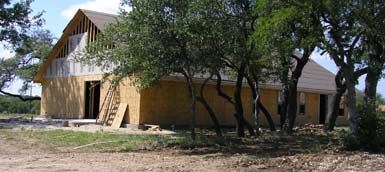
Three weeks ago, Iglesia Hispana held its first Bible study in the frame of the church’s new building.

“They were so excited to finally have their own building they just couldn’t wait to meet in it,” Diggs said.

Iglesia Hispana currently has about 25 members, including three families who recently joined, and church leaders expect the congregation to grow rapidly.

“We are missionaries who have united our dream with the dream of Live Oak Baptist Church to become one dream, and a church came out of that,” Rios said.

Primera Iglesia Bautista in Alice will send a group of their youth July 17-22 to work alongside the youth at Live Oak Baptist Church and offer Vacation Bible School for the children of Iglesia Hispana.

“It’s amazing how God works in ways we never dreamed,” said Diggs. “We’re here to reach Gatesville and everyone in our community and then reach out to the rest of the world. Our motto is: ‘Live Oak Baptist Church—The Family You’ve Been Waiting for.’”

News of religion, faith, missions, Bible study and Christian ministry among Texas Baptist churches, in the BGCT, the Southern Baptist Convention ( SBC ) and around the world.


Born Again Grillers serve heaping helping of hospitality

Posted: 6/09/06

Gatesville’s Born Again Grillers, a community ministry in Gatesville, seeks to share Christ’s love through cooking,

Born Again Grillers serve
heaping helping of hospitality

By George Henson

Staff Writer

GATESVILLE—Some people say, “The way to a man’s heart is through his stomach.” David Braziel believes that adage holds true not just in romance, but also in spiritual matters.

Braziel and a team of 15 other volunteers from Coryell Community Church in Gatesville stand ready to feed all they can. Born Again Grillers cook at civic events such as a recent American Heart Associa-tion walk, golf tournaments, birthday parties and anniversaries.

Cooking primarily for outdoor events, the grillers prepare hamburgers, hot dogs, chicken, steaks, fajitas, fish, brisket, ribs and sausage. They encourage people to “challenge us with your menu.”

Each time, Braziel gives the people who hold the event an accounting of costs the group has incurred and asks them to recover the costs and then pay whatever they feel the service the group provided was worth. That process has worked well so far, he said.

All the money raised goes directly back into the ministry to either buy food or build equipment, Braziel said.

One of the grills the group uses is circular with a spinning grate. That enables the cooks to prepare up to 200 hamburgers without walking around the circumference of the grill, since it brings the burgers to the cook.

Braziel, who used to cook in competitive events, said the focus of the ministry is to serve others so they might see the love of Christ lived out. The food is the tool the team uses to attract others to give them the opportunity to be a living witness.

That means that the ministry extends far beyond the head grillers—Braziel and Juliana Hankins. The team includes other grillers, workers who prepare the vegetables and other fixings and people who help with administrative details—and every one is crucial to the team’s success, Braziel said.

Hankins’ testimony on the team’s website, www.bornagaingrillers.com, sums up the attitude of the participants: “I love God, I love people and I love to cook. This is the perfect place for me.”

Pastor Walter Davidson said the feeding ministry is just one of the ways the congregation is seeking to let the community know that it is a group of caring people.

“It’s often someone’s initial introduction to our ministry,” he said.

A few weeks ago, the church contracted with a local barbecue restaurant to prepare food for the more than 2,000 employees of the prison system in Gatesville.

The six-day ministry was a little more than what grillers can cook for right now, but that did not stop the team from staffing the serving line with other members of the church.

Coryell Community Church also sponsors Celebrate Recovery groups that meet at the church every Tuesday evening.

“We are healers and heart-menders, helping people put their lives back together,” Davidson said.

The congregation’s ministries all stem directly from the hearts of its members, he added.

“We’re a little different from some churches in that we’re a gift-based church,” Davidson said. “We don’t just put someone in a position but wait until we find someone who is gifted and passionate about an area of ministry. That sometimes means we have to wait a little longer to do some things, but they get done on God’s timetable.”

Davidson and his wife, Pat, began the church five years ago with 19 people. Now 400 people are a part of the congregation.

The church is building a 23,000-square-foot facility without incurring debt.

“It has been amazing the miracles God has performed,” he said. “This is a miracle church. We see the miracles of transformed lives and also the miracles of God as he works to help us with this building.”

And seeing God at work in and through the lives of people is enough to whet an appetite.

News of religion, faith, missions, Bible study and Christian ministry among Texas Baptist churches, in the BGCT, the Southern Baptist Convention ( SBC ) and around the world.


Hispanic director committee created

Posted: 6/09/06

Hispanic director committee created

DALLAS—The Baptist General Convention of Texas is forming a committee to help select a director of Hispanic ministries.

The committee will help Chief Operating Officer/ Associate Executive Director Ron Gunter choose a permanent director of Hispanic ministries. Frank Palos serves as interim director.

The committee will consist of the three current officers of the Hispanic Baptist Convention of Texas—President Alcides Guajardo, First Vice President Javier Elizondo and Second Vice President Roberto Rodriguez—plus the three officers who will be elected Hispanic Baptist Convention officers this month.

The committee also includes Isaac Rodriguez, pastor of Iglesia Bautista Segunda in Corpus Christi, and Antonio Gamiochipi, director of missions of the Latin American Baptist Association.

An agreement between the Hispanic Baptist Convention and the BGCT calls for Convencion officers to recommend people to serve as director of BGCT Hispanic ministries. This committee enables further involvement of Hispanic Texas Baptists and gives them the opportunity to have a stronger influence in the process, Gunter said.

“This hiring process is critical to the future of the BGCT,” he said. “We will work together to find the best person to serve the diverse and growing Hispanic population in Texas.”

News of religion, faith, missions, Bible study and Christian ministry among Texas Baptist churches, in the BGCT, the Southern Baptist Convention ( SBC ) and around the world.


Three vie for Hispanic Baptist Convention president’s post

Posted: 6/09/06

Three vie for Hispanic
Baptist Convention president’s post

By Ken Camp

Managing Editor

A theology professor and two pastors will vie for the president’s post at this year’s Hispanic Baptist Convention of Texas, June 25-27 in Arlington.

Expected nominees include Javier Elizondo, vice president for academic affairs and professor of biblical and theological studies at Baptist University of the Americas in San Antonio; Baldemar Borrego, pastor of Iglesia Bautista Nueva Esperanza in Wichita Falls; and Mario Alberto Gonzalez, pastor of Primera Iglesia Bautista Mexicana in El Paso.

Julio Guarneri, pastor of Iglesia Bautista Getsemani in Fort Worth, who will nominate Elizondo, praised him for his “pastor’s heart,” “scholarly mind” and “passion for touching the world in and through Texas.”

“At a very critical time for Hispanic work in Texas, Dr. Elizondo is God’s man for the office of Convencion president,” Guarneri said.

Elizondo is current first vice president of the Hispanic Baptist Convention of Texas. He serves on the board of directors for the Baptist Spanish Publishing House Foundation in El Paso.

Before assuming the vice presidency at Baptist University of the Americas in 2002, Elizondo was the school’s dean of student services.

He served as a church-planting missionary with the Southern Baptist North American Mission Board and design editor with LifeWay Christian Resources. He was pastor of First Mexican Baptist Church in San Antonio, Iglesia Bautista del Salvador in Waco and Mision Bautista Hispana in Decatur.

Elizondo graduated from Texas Tech University, Southwestern Baptist Theologi-cal Seminary and Baylor University.

Saying he wants to “be a part of contributing to the future of Texas Baptist work in whatever place of service the Lord opens for me,” Elizondo hopes to lead Hispanic Texas Baptists to emphasize church planting, promote theological education and work alongside other ethnic groups in the Baptist General Convention of Texas.

He outlined a four-part vision for the Hispanic Baptist Convention of Texas:

• Give priority to education. “If we want to have trained leadership for tomorrow among our Hispanic people, we need to make sure our young people finish high school and go to college,” he said.

• Unite around missions and evangelism. “I am particularly interested in increasing the number of Hispanic churches doing missions among hard-to-reach people groups,” he said. “We already have Hispanic churches and leaders with a passion for reaching these people groups. We would like to encourage these to continue this good work and encourage others to join in this great task.”

• Address the needs of all Hispanics. “I want to help represent first- through third-generation Hispanics—English-speaking and Spanish-speaking,” he said.

• Protect human rights. “I want to speak to the need we have to treat all people—documented and undocumented—in a way that will honor the Lord,” he said. “All of us have been created in the image of God, and we have the rights given by our Creator—rights that no human being should take away.”

Alex Camacho, pastor of Iglesia Bautista Cristiana in McKinney and director of the nonprofit Immigration Services agency, will nominate Baldemar Borrego, pastor of Iglesia Bautista Nueva Esperanza in Wichita Falls, for president.

Borrega has demonstrated consistent commitment to strengthening families, leading family conferences in about 200 churches throughout the United States and Latin America, Camacho noted. And he has demonstrated courage in addressing immigration issues—a “hot potato” many Hispanic church leaders have been afraid to tackle, he said.

Borrego, a former first vice president of the Hispanic Baptist Convention of Texas, member of the Convencion’s strategic planning committee and president of the Hispanic Ministers Conference, has been in the ministry 30 years.

He has been the host of a radio program, “Jesus is the Answer,” and is a member of the American Association of Christian Counselors.

Borrego hopes to use the president’s position to promote unity, encourage pastors, strengthen families and enhance ministry to immigrants.

“If I’m elected, I would try to go to every corner of the state to speak with leaders, and I would make them feel a part of this great convention,” he said.

The upcoming convention could be of historic importance, Borrego stressed. “My desire is to bring all leaders together and to maintain the dignity and respect that we should have among ourselves and overall—to maintain our own identity as a convention that reflects all Hispanics in the state and those we need to serve, particularly if immigration reform becomes a reality for millions of people,” he said.

“We have in front of us a great challenge to reach out to all those people who will need assistance when they start the process to become legal in this country. A lot of ministries can be done among these people.”

Martin Ortega, pastor of Iglesia Bautista Emanuel in Midland, will nominate Mario Alberto Gonzalez, pastor of Primera Iglesia Bautista Mexicana, for president.

Ortega characterized Gon-zalez as “a good pastor, a good leader and a good servant” with a proven record of leadership and no personal agenda.

“A large group of pastors went looking for him; he didn’t come looking for us,” Ortega said. Gonzalez’s previous pastorates include Iglesia Bautista El Buen Pastor in Las Cruces, N.M., and Iglesia Bautista Jeezreel in Chihuahua, Mexico.

He is a past president of the Hispanic Baptist Convention in New Mexico and the Hispanic Companerismo of El Paso.

He has served as church-planting strategist with El Paso Baptist Association.

Gonzalez, a graduate of the Universidad Autonoma de Chihuahua, earned a diploma in theology from Golden Gate Baptist Theological Seminary and holds a master’s degree in religious education from Luther Rice Seminary.

“I can see a great Convencion where all the Hispanics—first-, second- and other generations—are working together to reach people for the Lord,” Gonzalez said.

The Convencion can help connect Hispanic Baptist churches to missionary opportunities throughout Texas and around the world, and it can encourage small churches that need support, he said.

Gonzalez envisions the Hispanic Baptist Convention of Texas as “not a political entity aligned with human interests but a real missionary family which is capable to use all its resources for the kingdom.”

News of religion, faith, missions, Bible study and Christian ministry among Texas Baptist churches, in the BGCT, the Southern Baptist Convention ( SBC ) and around the world.


Churches impact world through ESL

Posted: 6/09/06

Churches impact world through ESL

By John Hall

Texas Baptist Communications

English-as-a-Second-Language classes enable Texas Baptist churches to reach the world.

Short- and long-term immigrants from nations such as Ecuador, Peru, Mexico, China, Iran, Nigeria and Japan are coming to Texas to improve their English skills and learn more about American culture, and some Texas Baptist churches are seizing the opportunity for ministry.

The ESL program at West University Baptist Church in Houston teaches mostly graduate students and individuals studying at a nearby medical center. While many participants in the ESL program can explain quantum physics, they want to practice their English and better understand American practices.

Often the students in West University Baptist Church’s ESL classes are the brightest from a nation, said Kathleen Yarborough, who leads the ministry. They will take what they learn back to their home nation and influence others.

This allows the Houston church to have a large impact on the world. If students become Christians through an ESL class, they will share their faith in their home country.

“We do it because we’re called to do it,” Yarborough said. “Christ calls us to share him with other people. He calls us to share him with Judea, Samaria and the ends of the earth.”

News of religion, faith, missions, Bible study and Christian ministry among Texas Baptist churches, in the BGCT, the Southern Baptist Convention ( SBC ) and around the world.


Immigration reform may boost ESL demand

Posted: 6/09/06

Immigration reform may boost ESL demand

By John Hall

Texas Baptist Communications

Immigration reform that requires undocumented residents to learn English in order to become citizens could send a wave of people into church-sponsored English-as-a-Second- Language programs.

An immigration bill passed by the U.S. Senate May 25 would provide many undocumented residents a way to become citizens if they met several stipulations, including learning English.

The bill calls for an English test to be instituted by Jan. 1, 2008, for all people seeking citizenship. The legislation also establishes grants for organizations offering citizenship and ESL classes.

"Churches are going to have to be real careful. It’s going to look real good, but it’s going to kill ministries."

–Bill Moon, director of literacy ministries, First Baptist Church in Belton

Dean Eastwood, who leads the ESL ministry at Lamar Baptist Church in Wichita Falls, said reform of this sort could encourage more people to enroll in church-sponsored English classes, just like the immigration reform in 1986 did.

The possibility of becoming a citizen encouraged people to learn English, he said. This latest reform effort could have the same effect.

“There they had real incentive, so they stuck with it,” he said.

It’s difficult to know exactly how large an influx immigration reform could create, but there are about 12 million undocumented residents in the United States. The current bill would not allow all undocumented aliens to become citizens, but many would have that option open to them.

The Mary Hill Davis Offering for Texas Missions supports literacy and ESL programs in Texas Baptist churches around the state.

Bill Moon, director of literacy ministries at First Baptist Church in Belton, believes immigration reform could double the size of his church’s ministry, which already serves about 150 people, including children.

In addition to an increased demand for English classes, more people could enroll in church-sponsored civics classes in order to attain citizenship, Moon and Eastwood agreed.

While the classes are an opportunity for undocumented immigrants, they also provide a chance for churches to serve more people and spread Christianity. Many of the people who attend ESL classes are not involved in a congregation’s day-to-day activities and may not be Christians.

Many church ESL programs focus on teaching, but they also include a devotional time—as well as fellowship where relationships between Christians and non-Christians can be formed.

“They’ll come to church to take English classes when they wouldn’t come to church for anything else,” Moon said.

“We’ve seen some people come to the Lord,” Eastwood said. “Some of them come to our church. We’ve actually got a Hispanic mission started.”

Evangelistic impulses may make this opportunity for ministry to immigrants a treacherous one. Part of the Senate bill proposes grants for organizations that provide English and civics classes.

Accepting these grants could limit the spiritual content of the classes, thereby affecting the intended purpose of the classes, Moon said.

The government cannot fund classes that promote religion, but churches cannot afford to minimize the faith. Churches are going to have to choose wisely, he said.

“This is going to be very tempting for a church. There’s money for textbooks or something. But there goes the ministry,” he said.

“Churches are going to have to be real careful. It’s going to look real good, but it’s going to kill ministries.”

News of religion, faith, missions, Bible study and Christian ministry among Texas Baptist churches, in the BGCT, the Southern Baptist Convention ( SBC ) and around the world.