Hearts of Hope helps abuse victims

Posted: 6/09/06

Hearts of Hope helps abuse victims

By Laura Frase

Communications Intern

WHITNEY—Stranded in small towns throughout Hill County with the closest help 30 miles away in Waco, abuse victims struggled with nowhere to turn—until Carol Raulston offered a heart full of hope.

Raulston started Hearts of Hope of Hill County, a ministry designed to rescue victims of domestic violence and sexual abuse, after a good friend lost two children due to family violence. Hearts of Hope has an office at Fort Graham Baptist Church in Whitney, where Raulston is minister of crisis care and counseling.

“We’re getting the word out that there is somebody right here to help,” Raulston said.

Hearts of Hope links victims to community programs that aid them with housing, utilities, food, clothing and medications.

“We help them set their lives back up,” Raulston said.

The ministry also counsels victims and their families and offers emergency relocation.

Not all victims start anew after counseling with the ministry. Many victims return to the abusive situation when the abuser apologizes, professes love for the victim and makes promises that won’t be kept, Raulston said.

Statistics indicate it takes about seven times for a victim to leave their abusers for good, she said.

“Fear has been instilled in them,” she explained.

For victims who haven’t left the dangerous situation, the ministry gives them emergency cell phones that can only dial 911. Hearts of Hope works closely with local law enforcement to help stop domestic violence and sexual abuse.

Often in abusive situations, the abuser keeps the woman isolated, with no car, no job and no control of money, Raulston said. Many lack the skills to apply for a job.

Unlike other programs that seek to move people from being victims to becoming survivors, Hearts of Hope goes one step more and helps them become victors, Raulston said. As survivors, they still can be vulnerable, but becoming victors means they have overcome the situation, and accepting Christ is a major part of this step, she explained.

During the healing process, victims must learn to make it on their own, but most women coming out of domestic violence don’t have jobs or high self-esteem. Christian Women’s Job Corps has teamed up with Hearts of Hope to fill this need by offering Bible studies and teaching job skills and life skills in a Christian context.

Hearts of Hope has helped many families since its creation in 1999, and the ministry already has helped 56 families—about 150 people—in just the first half of this year.

“We bring hope, healing and restoration,” Raulston said.

News of religion, faith, missions, Bible study and Christian ministry among Texas Baptist churches, in the BGCT, the Southern Baptist Convention ( SBC ) and around the world.


Adoptive parents fill empty nest, meet child’s needs

Posted: 5/26/06

Adoptive parents fill
empty nest, meet child’s needs

By Marv Knox

Editor

ABILENE—New parents Anna and Mike Chancellor’s love shines brighter than all their birthday candles. And their compassion trumps conventional expectations for couples their age.

Ordinarily, 55-year-olds don’t adopt an 11-year-old son.

Fifty-five is an age when most couples enjoy their “empty nest.” With children grown, educated and independent, couples that old typically focus on the free time, discretionary income and leisure they set aside to raise a family.

Anna Chancellor and her adopted son, James, enjoy a meal at their home in Abilene.

But the Chancellors are focusing on homework, tae kwan do lessons, and tending to the special needs of a son who bounced from abusive birth parents, through two foster homes and past two failed adoptions before landing on their Abilene doorstep.

With sons Tim and Joseph grown and on their own, the Chancellors adopted James last year. That changed all their lives forever.

“Anna and I never saw this coming,” Mike Chancellor acknowledged, although they did talk about adoption—about 30 years ago.

They met after Mike graduated from Howard Payne University while Anna was attending East Texas Baptist University. They got married in 1974 while both were students at Southwestern Baptist Theological Seminary.

“We were one of those couples who thought we might have trouble having children,” he reported. After two years without children, they discussed adoption but also started fertility testing.

But not long afterward, she became pregnant with Tim, who was born in 1977. Joseph followed in 1979. Although they talked about adopting another child during those early years, the busy-ness of raising two active boys soon put that out of mind.

Thirteen years ago, they moved to Abilene when he became pastor of Crescent Heights Baptist Church. She soon started working at Hardin-Simmons University. An institutional grant paid for both boys’ undergraduate degrees at the Baptist school, and both parents also earned graduate degrees in counseling.

“The guys hung around through college,” Chancellor said.

“We had the perfect ‘empty nest’—they moved from home, to the dorm, to apartments. But they lived here in town, and they both would swing by.”

Tim and Joseph both graduated from Hardin-Simmons in 2000. A year later, they each moved “more than halfway around the world,” as their dad describes it. They served as missionaries—Joseph in Thailand and Tim elsewhere in East Asia.

“When they left, they really left,” their mom observed.

Tim returned home in 2003 and soon married and started a family. He now is a patrolman in Rockwall and lives in Greenville. Joseph came back to the United States in 2004. He is on the staff of Purpose Driven Ministries of Saddleback Com-munity Church in southern California.

After their sons left for the mission field, the Chancellors enjoyed their new station in life. They had more time to devote to causes they hold dear, including her private counseling practice and their joint ministry to hurting ministers and their families, as well as to their own aging parents.

Part of her private practice, Big Country Family Therapy Associates, involved working alongside a child-placement agency that coordinates both foster care and adoptions. Eventually, her primary task was to design mental health treatment for foster children.

And that’s how she met James. The boy was 7 when Child Protective Services removed him from his biological family.

“I was there the day he was placed,” she remembered. “And I did counseling with him through the years.”

By the fall of 2004, Child Protective Services caseworkers focused on getting James—by then 10 and already living with his second foster family—adopted.

A couple of attempts failed. The second time around, James already had started visits with his adoptive family. But the prospective family was not prepared for a little boy with a speech impediment who had been bruised physically, spiritually and emotionally by shameful treatment compounded by instability.

James’ caseworker, foster mother and Anna Chancellor realized they could not send him into an adoptive family that didn’t understand his special needs.

“His caseworker called the adoption off, and I had to tell him,” she recalled. “I was devastated. Usually, I try to keep my objectivity. But James just had to be adopted. As he would get older, adoption would become increasingly problematic.”

So, she went home and talked to her husband.

“Mike said, ‘We’re not too old to adopt,’” she said. “It had been in the back of my mind. But when he said the A-word, that was confirmation.”

Chancellor received separate confirmation, he added.

“We were doing an intercessory prayer study at church, using material by Andrew Murray, whose analogy is that God is like a loving father who finds great delight in his children,” he explained. “What I realized was that a lot of the great joy of my life was being a dad.

“Through the years, God had sent not only my sons, but also a lot of guys into my path whose dads were absent or distant. I became their surrogate dad, and this still was part of my life.”

As he thought about the possibility of middle-aged adoption, Chancellor weighed the human inclination toward a life of ease against the opportunity to deeply impact another child’s life.

“What an incredibly selfish thing—to feel that, by raising your own children, you absolve yourself from responsibility for anyone else,” he explained.

“Here this kid pops up. All he ever wanted was a mom and dad, to be safe and loved. How better could I spend the next 10 years than walking with a kid who never had what my boys had—unconditional love and safety?”

The Chancellors completed 30 hours of training and officially served as James’ foster parents for six months before his adoption was completed last December.

“This changed our lives completely,” she said. Not only did they re-enter the world of raising a young child, but this child carried the weight of burdens too heavy for his slender shoulders.

So, the Chancellors lifted those challenges—special education, emotional immaturity, delayed intellectual development, speech problems and hyper-needy desire for attachment.

Slowly, steadily, James has progressed, she observed. “This has been a whole lot harder than I thought it would be. … (But) the joy of having James is to begin to see him achieve. He has a lot of strikes against him. But he’s getting better. We see the little victories.”

For his part, James has embraced both faith and family. He has accepted Jesus as his Savior, and he takes pride in being a son as well as a younger brother to Tim and Joseph. “I’m part of it,” he says of the Chancellor family.

They express grateful support for the help they have received from others.

“What has made this more manageable” has been the encouragement and tangible help provided by their family and by members of Crescent Heights Baptist Church, he said. “This whole thing would have been much harder without our church family,” she added.

The Chancellors downplay the special nature of their commitment to James

“It’s not going to be perfect here. We’re not perfect,” Chancellor said. “But he’s safe, in a stable environment, in a network of folks who love him. … I can’t imagine what his future would be if he stayed in (the foster-care system) until he ages out. And many kids do.”

In fact, he thinks many more Texas Baptists ought to do something about that.

“I’m concerned about what the state of Texas did to this child,” he stressed. “James’ condition was made worse by a system that pushed him on a family who didn’t want him.”

Unfortunately, the system reflects not only a shortage of funds, but also an acute shortage of people willing to adopt Texas children.

“Over 1,100 Texas kids are in foster care, waiting for adoption,” he said. “Many Texas Baptists could take one child and do our best.

“What if 1,100 middle-aged Texas Baptist couples—couples who are in reasonably good health, whose families have been good to us—what if we step up and each take one challenging child who has been through so much? We could give them the best our lives and experiences have to offer.

“Out of 5,700 churches, I can’t believe there’s not 1,100 middle-aged couples who could do this.”

The Chancellors hope and pray other Texas Baptists will share their dream for James with all the other Jameses out there.

“How much can he recover? I pray he will be a mighty man of God, a man of faith,” she said as tears welled in both their eyes. “He’s made his first step. He understands Jesus loves him.”

News of religion, faith, missions, Bible study and Christian ministry among Texas Baptist churches, in the BGCT, the Southern Baptist Convention ( SBC ) and around the world.


African-Americans note progress, but goal still distant

Posted: 6/09/06

African-Americans note
progress, but goal still distant

By Ken Camp

Managing Editor

Texas Baptists elected an African-American pastor as president of the Baptist General Convention of Texas, an African-American served as immediate past chair of the BGCT Executive Board and two African-Americans fill leadership posts on the reorganized convention staff’s operational team.

But African American Fellowship of Texas President Ronald Edwards insists it’s too early to break out the confetti.

“We’ve made progress and taken steps in the right direction, but I’m hesitant to celebrate because we haven’t made it yet to where we need to be,” said Edwards, pastor of Minnehulla Baptist Church in Goliad.

Michael Bell, pastor of Greater St. Stephen First Baptist Church in Fort Worth, serves as president of the Baptist General Convention of Texas.

To help ensure greater African-American involvement on BGCT boards and committees, the fellowship has provided enhanced training about the BGCT to prospective nominees, he noted.

“We’ve been seeking to train more people to serve on committees so when members are ready to be selected, we’re prepared to offer a larger pool from which to choose,” Edwards said.

Expanded representation in Texas Baptist life reflects the reality of the state convention’s composition, said Michael Evans, director of BGCT Afri-can-American ministries.

“The Baptist General Convention of Texas is one of the most diverse state conventions in the entire nation,” he said.

Currently, 912 African-American congregations are affiliated with the BGCT, and the state convention has added more than 250 predominantly black churches in the last five years.

Evans views the election of Michael Bell as BGCT president and the selection of other African-Americans to key posts as positive signs.

“The voice of the African American Fellowship is now respected and sought after,” he said.

Helping the BGCT implement its commitment to enhance diversity in decision-making and service—and holding the BGCT accountable in that area—remain key components of the African American Fellowship’s strategic plan, Edwards added.

“We want to increase the level of involvement,” he said.

Increased involvement not only means “giving input” to decision-making bodies, but also greater hands-on participation in missions and ministry, as well as increased giving to cooperative missions, he stressed.

Baptist students from Texas Southern University who led a beach outreach ministry at Galveston Island, churches that ministered to New Orleans residents displaced by Hurricane Katrina and individuals who have volunteered for missions projects in Mexico, India and West Africa all demonstrate accelerated African-American missions involvement, he noted.

“We’ve had inner-city churches that have moved from being recipients of assistance to becoming providers of assistance to others,” he said.

African-American church giving to missions through the BGCT Cooperative Program has continued to rise in recent years, Evans added.

In 2001—the first year of the stewardship emphasis—giving increased 20 percent. This year, cooperative missions giving is up 34 percent, he said.

Leadership training marks another key emphasis in the fellowship. In five years, the BGCT African American Ministries office has facilitated regional equippers’ conferences that have drawn more than 10,000 participants, Evans said.

Training opportunities also have become a pivotal part of the annual African American Fellowship Conference, Edwards added.

This year’s conference, July 11-14 in Lubbock, includes specialty seminars in church health and growth.

Topics include church-planting, music ministry, missions, single’s ministry, Christian education, community ministries, single adult ministry, ushers’ ministry and church administration, as well as tracks for pastors and for ministers’ wives.

The family-oriented event also includes a “Passion for Purity” youth day-camp for teenagers and a “FROG—Fully Rely on God” children’s day-camp for grades one to six.

Denny David, pastor of St. John Baptist Church in Grand Prairie, will be the keynote speaker in evening worship services.

Other featured speakers include Claude Black, pastor emeritus of Second Baptist Church in San Antonio and Bell, BGCT president and pastor of Greater St. Stephen First Baptist Church in Fort Worth.

News of religion, faith, missions, Bible study and Christian ministry among Texas Baptist churches, in the BGCT, the Southern Baptist Convention ( SBC ) and around the world.


Around the State

Posted: 6/09/06

Around the State

• East Texas Baptist University will hold its 17th annual senior adult conference June 28-30. The theme of the conference, which attracts more than 1,000 people each year, is “Making a Difference.” Bailey Stone is the conference speaker. Bob Utley will lead the Bible study times. Bill and Catherine Cox will lead the music. A special track for senior adult leaders and professional staff has been added to this year’s program. The annual Reunion Celebration Concert June 30 will feature Sue Dodge, winner of four consecutive Dove awards. Bob and Jeannie Johnson also will perform. A senior adult matinee performance will be held at 3 p.m. and a concert open to the public will be held at 7 p.m. Tickets are $10 each. The conference fee for participants staying on campus is $100 per person or $180 per couple, including lodging, meals and the concert. Commuters pay $5 per day, plus meals and concert ticket. For more information, call (903) 923-2070.

East Texas Baptist University President Bob Riley was all smiles prior to the groundbreaking ceremony fo the Louise H. and Joseph Z. Ornelas Unversity Center. The center will have a 900-seat banquet hall, as well as dining services and recreation area for students. It also will seat 1,400 for a conference-style meeting. The three-story, 92,000-square-foot facility will be built west of the Ornelas Spiritual Life Center at an estimated cost of $13 million.

• Baylor University will host the Willow Creek Leadership Summit live via satellite Aug. 10-12. The training will feature leadership and communications experts Bill Hybels of Willow Creek Community Church, author Jim Collins and James Meeks of Salem Baptist Church. While the national rate for the event is $255, a special discounted rate of $65 is available prior to July 14. For more information, call (254) 710-6274, or go to www.baylor.edu/summit2006.

• Special awards were presented to faculty and staff members at Howard Payne University’s faculty/staff recognition luncheon. Pam Bryant, assistant professor of chemistry and chair of the department of physical sciences, was named outstanding faculty member. Judy Kelley, payroll coordinator, was honored as the outstanding staff member of the year. Recognized upon their retirement were Paul Butler, professor of education; Virginia Butler, instructor of developmental studies; and Cathy Sneed, assistant professor of social work and chair of the department of criminal justice, social work and sociology. Excellence in teaching certificates were presented to Carla Hawkins, assistant professor of modern languages; Justin Murphy, professor of history; Evelyn Romig, professor of English; and Julie Welker, associate professor of communication. Staff members honored for excellence in service were Randy Weehunt, director of administrative computing, and Jeanette Copeland, secretary for the School of Christian Studies. Promotions announced included Pam Bryant and Monte Garrett to associate professor, and Kim Bryant and Diane Owens to assistant professor.

• Promotions have been announced for 10 University of Mary Hardin-Baylor faculty. They include Matt Crosby, assistant professor of music; Lisa Clement, associate professor of music; Cliffa Foster, professor of exercise and sport science; George Hogan, assistant professor of music; Amy Johnson, assistant professor of exercise and sport science; Mickey Kerr, associate professor of exercise and sport science; Janene Lewis, associate professor of English; Marty McMahone, associate professor of business; Dorothy Planas, associate professor in the library reference department; and Bill Tanner, professor of computer science.

• East Texas Baptist Univer-sity conferred degrees on 140 graduates during spring commencement ceremonies with David Mohn, retiring vice president for enrollment management and marketing, delivering the charge.

• Several Houston Baptist University faculty members have received promotions. They include Alice Rowlands, professor in mass media; Doni Wilson, associate professor in English; Kellye Brooks, assistant professor in business; Pat Thornton, associate professor in business; Allen Yan, associate professor in business; Bobby Towery, associate professor in chemistry; and Rachel Hopp, associate professor in biology.

Jon and Juanita Brawley
Justin and Catherine Kirkwood

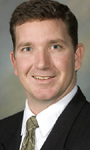
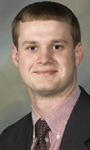
• Two couples with Texas ties were among 95 people to receive appointments from the International Mission Board of the Southern Baptist Conven-tion May 23. Jon and Juanita Brawley will serve as church starters in Middle America and the Caribbean. Both are Howard Payne University graduates, and he was children’s minister at Iglesia Nueva Vida in Brownwood and youth pastor at Bluff Dale Church in Bluff Dale. They consider First Church in Benbrook their home church. Justin and Catherine Kirkwood will serve in central and eastern Europe as strategy coordinators. Both are graduates of East Texas Baptist University. He is youth/college minister at Bel Air Church in Marshall.

• Thirty-two students who claim Texas as their home state graduated from Southwestern Theological Seminary this spring. They were among 264 students who earned degrees, presented at Travis Avenue Church in Fort Worth.

• Dallas Baptist University has announced a dual enrollment program for Frisco Independent School District high school students. The program allows high school students to enroll in university courses, earn university credit, and study with university professors at DBU-North, a regional academic center in Frisco.

• Hispanic Baptists of the Panhandle held their annual Escuela de Profetas at Wayland Baptist University, May 13. Johnny Musquiz, Baldemar Borrego, and Jessie and Brenda Rincones spoke to the 100 people who registered for the event. Officers elected for the coming year were Pablo Garcia, president; Jose Luis Moncayo, vice president; and Glen Godsey, treasurer.

• Albert Reyes, president of Baptist University of the Americas, has been named to the National Hispanic Christian Leadership Conference board of directors.

• Four students from Texas were among the 186 spring graduates of New Orleans Theological Seminary. They were Karen Parker, Scott Kay, Carla Clements and Tendai Nyatsunga.

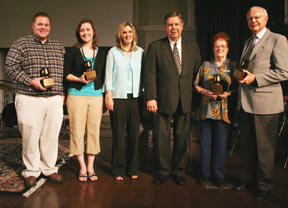
Howard Payne University recently presented the Nat Tracy Servant Leader Award to four individuals. Christy Meinecke, a 1998 Tracy Servant Leader award recipient, was the speaker for the awards ceremony. Pictured are student award recipients Richard Mayberry and Katherine Ellwood; Meinecke; HPU President Lanny Hall; award recipient Carol Spurlock, a university dining hall cashier; and award recipient Frankie Rainey, professor of Christian studies.

Anniversaries

• Gary Morgan, fifth, as pastor of Cowboy Church of Ellis County, June 1.

• Stanley Adams, fifth, as pastor of New Deliverance Church in Waco, June 11.

• First Church in Falfurrias, 100th, July 23. A time of celebration will begin at 10 a.m. followed by a complimentary catered luncheon. The afternoon will be a time of music and remembrance. For more information, call (361) 325-2616. Jerry Barker is pastor.

• Wayne Kirk, fifth, as pastor of Marlow Church in Cameron.

Death

• Marah Dillard, 75, May 28 in Dallas. Dillard led a cooking class 22 years for First Church in Richardson’s internationals’ ministry. Her husband, Doug, was cartoonist for the Baptist Standard many years. She is survived by her husband of 53 years; daughters, Debbie Manns and Donna Pool; son, David; brother, Lewis Martin; sisters, Sarah Scanlon and Becky Martin; six grandchildren; and mother-in-law, Aleene Dillard.

Retiring

• Walter Knight, as pastor of First Church in Rockport, May 14. He served the church as pastor almost nine years. He was in the ministry 21 years. He also served Crescent Heights Church in Abilene and First Church in Kingsland as pastor.

Event

• A gospel music concert will be held at First Church in Devers June 24 at 6 p.m. Featured performers will be The Original McDaniels, The New McDaniels and The Rileys. For more information, call (936) 549-7653. Harry McDaniel is pastor.

Licensed

• Mark Berry, Brad Stewart and Sarah Stewart to the ministry at First Church in Rosebud.

Ordained

• Randy Rinehart to the ministry at Central Church in Wichita Falls.

• Justin Dunn to the ministry at Lytle South Church in Abilene.

• Wes Keyes to the ministry at First Church in Farmers Branch.

• Elizabeth Fortenberry to the ministry at Calvary Church in Waco.

• Kathleen McKown to the ministry at Calvary Church in Waco.

• Casey Lewis to the ministry at Richland Hills Church in Fort Worth.

• Ronald Green and Jimmy Lyle as deacons at Second Church in Lampasas.

Revivals

• New Life Church, Greenville; June 18-21; evangelist, Herman Cramer; music, Paul and Christy Newberry.

• New Hope Church, Lone Oak; June 18-22; evangelist, Paul Cherry; music, The Cherrys.

• Prairie Valley Church, Campbell; June 25-30; evangelist, Paul Cherry; music, The Cherrys; pastor, Tommy Witt.


News of religion, faith, missions, Bible study and Christian ministry among Texas Baptist churches, in the BGCT, the Southern Baptist Convention ( SBC ) and around the world.


Church’s Art Car a rolling testimony to cooperation

Posted: 6/09/06

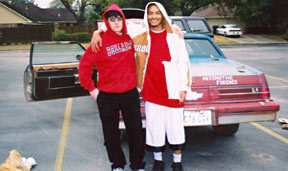
Everyone’s Art Car Parade in Houston featured a join effort by Willow Meadows Baptist Church youth and Katrina evacuees.

Church’s Art Car a rolling
testimony to cooperation

By Karen Campbell

Union Baptist Association

HOUSTON—Take a late 1980s mud-racing Buick, add the exuberance of youth and the perspective of Hurricane Katrina evacuees, plus a little paint and creativity with a touch of faith-based hope, and an Art Car is born.

This year’s recent Everyone’s Art Car Parade featured the usual array of low-riders, classic cars, and what can only be termed “rolling contraptions” among more than 250 entries in an annual event that attracts more than 200,000 spectators.

The lineup also included a combined project of Willow Meadows Baptist youth and Katrina evacuees, illustrating vividly that “expressions of faith” can take many forms.

Susan Brock, who has worked with the church youth art team the last three years and served as co-director for the Katrina shelter/relief efforts at Willow Meadows, first saw a potential link between the previously plan-ned parade entry and the need to address a growing negative public reaction to Katrina evacuees.

Katrina evacuee Autumn Luers-Pereira and Joma Kennedy from Willow Meadows Baptist Church work on an ArtCar. Matt Peters is in the distant background.

“I know that once the crisis mode finished, there was a lot of unrest in me, and it helped to talk to other people about it, and I know that it’s provided a piece of that for the kids. If they can get a grip on what they just came through and get some positive message about it … that’s what we hope the car can do,” Brock explained.

During the months the youth from New Orleans and Houston have worked on their own testament to unity, they were peppered with reports of Katrina evacuees tied to various acts of violence and school disturbances.

The Houston Chronicle reported a study by Rice University sociologist Stephen Klineberg that revealed Houston residents have grown “increasingly weary and wary of the 150,000 Louisiana evacuees” who settled in Harris County.

Three-fourths of the Houston-area residents surveyed said the influx of Katrina evacuees has put a considerable strain on the Houston community, and two-thirds said evacuees bear responsibility for a major increase in violent crime. Many said Houston will be “worse off” rather than “better off” if most evacuees remain here permanently.

Willow Meadows members believe there is another, relatively untold story, and the Art Car makes for a vivid illustration in the unfolding tale.

“The only requirement we had was that it be completed on time, that it deal with Katrina, and it had to have a Christian message,” Brock said.

Kristen Johnson from Willow Meadows Baptist Church in Houston puts some creativity into the project.

The youth determined Mardi Gras colors would be a key element to the car, as well as a depiction of rising waters and an interactive element that has allowed the creators to offer up life lessons on the chalkboard-like sides.

“We wanted to engage people with not just art they look at but art that involves them on a deeper level,” Brock said of the invitation to respond offered to the crowd during the parade’s weekend festivities.

With New Orleans youth concentrating on one side of the car and Willow Meadows youth addressing the other, the roof is where the two communities came together in what is intended to be a message of hope.

“The experience of the car, working on it, interacting with it, is kind of a therapy and more important than the artistic expression. The experience is the goal—not the final project,” Brock concluded.

Willow Mea-dows has no plans to keep the car, and Brock hints it may return to mud racing and continue to tell the Katrina story.

Ross Childs and Victor Sanchez from Willow Meadows Baptist Church in Houston take a break from decorating their Art Car.

“One of the lessons that has already been written on the car is that it’s the people you know, not the stuff, that matters,” she said.

“So, by not keeping the car, we’re not holding on to it. We’re letting go.”


News of religion, faith, missions, Bible study and Christian ministry among Texas Baptist churches, in the BGCT, the Southern Baptist Convention ( SBC ) and around the world.



Book Reviews

Posted: 6/09/06

Book Reviews

Spiritual Disciplines Handbook: Practices That Transform Us by Adele Ahlberg Calhoun (Intervarsity Press)

Many of us have negative thoughts about discipline of any kind. Yet Adele Ahlberg Calhoun, in Spiritual Disciplines Handbook, positively encourages Christians of various denominational backgrounds to tread the deeper waters of spiritual formation.

Calhoun’s book serves Texas Baptists well in two ways.

What are you reading that other Texas Baptists would find helpful? Send suggestions and reviews to books@baptiststandard.com.

First, the book is approachable. Calhoun structures the book using an acrostic for the word “worship,” corresponding spiritual disciplines with each letter.

For instance, concerning the letter “O,” Calhoun offers a chapter titled, “Open Myself to God.” Further, each chapter contains helpful guidelines for readers to live out suggested practices with endurance. Consequently, this handbook is not a one-time read, but a guide that readers may continuously engage.

Second, Calhoun’s book is timely. Churches seeking to empower members’ faith journeys would do well to offer Spiritual Disciplines Handbook. Calhoun does not reinvent the wheel of spiritual formation, nor is that her goal. She puts forth wonderfully engaging material, useful for cultivating Christian obedience. I would highly recommend this handbook as a guide for small-group leaders, pastors or church members desiring to stretch their faith in a myriad of ways.

James Hassell, associate

pastor

First Baptist Church

Bedford


When Life Hands You Lemons, Make Lemon Meringue Pie by JoAnna M. Lund (Perigree)

I always love to read real-life stories of real-life people who personally confirm this powerful testimony of the Apostle Paul: “Praise be to the God and Father of our Lord Jesus Christ, the Father of compassion and the God of all comfort, who comforts us in all our troubles, so that we can comfort those in any trouble with the comfort we ourselves have received from God” (2 Corinthians 1:3-4).

JoAnna Lund has written a remarkable book chronicling her battle with a particularly aggressive form of breast cancer. Through the lessons she has learned and the comfort she has received, Lund passes on practical insights offering comfort, hope and peace for all those struggling with cancer.

Lund is best known as the creator of The Healthy Exchanges cookbooks.

In When Life Hands You Lemons, Make Lemon Meringue Pie, Lund offers her best “recipe” yet, because it is the recipe for pressing on even in the midst of life’s greatest challenges. The book’s chapters relate God’s “recipes” for healing, support, comfort, faith, joy, peace and hope. Truly these are the ingredients for turning life’s “lemons” into “lemon meringue pie.” It’s happening to Lund, and it can happen to anyone who approaches the battle with the right attitude and resources.

The book offers amazing comfort, and it’s a comfort we can pass on to others.

I would highly recommend this book as an excellent gift for someone recently diagnosed with cancer. It’s positive, personal and practical.

Lund even offers a concluding section containing some of the very best available diagnostic and support resources for people dealing with Stage IV inflammatory breast cancer.

Jim Lemons, pastor

River Oaks Baptist Church

Fort Worth


American Idols: The Worship of the American Dream by Bob Hostetler (Broadman & Holman)


Reading Bob Hostetler’s American Idols: The Worship of the American Dream reminded me of going to the doctor for an annual checkup or taking a hard look in the mirror after a hard night.

I found the book to be insightful, convicting and practical in many ways for spiritual growth and renewal.

Hostetler identifies 14 “American idols” that can subtly slip into the life of practically any believer.

These idols include “The eBay Attitude of Consumerism,” “The Lexus Nexus of Success,” “The Eros Ethos of Sexuality” and “The Microwave Mentality of Instant Gratification.”

Hostetler uses a variety of biblical stories and characters to probe deep into the secret places of your heart to expose the “American idols” as sin, plain and simple.

I would recommend this book as good reading for your quiet time or for an accountability group.

It will be a reality check for those of us who have dozed off in our Christian walk and conformed a little too much to the lure of the “American Dream.”

David Lowrie, pastor

First Baptist Church

Canyon

News of religion, faith, missions, Bible study and Christian ministry among Texas Baptist churches, in the BGCT, the Southern Baptist Convention ( SBC ) and around the world.


Baptist Briefs

Posted: 6/09/06

Baptist Briefs

Craddock to speak at Truett luncheon. Fred Craddock—selected by Newsweek as one of the 12 most-effective preachers in the English-speaking world—will address Baylor University’s Truett Theological Seminary Luncheon. The luncheon will be at 11:45 a.m. June 22 in the Omni Hotel at CNN Center, Atlanta, Ga., during the Cooperative Baptist Fellowship General Assembly. Cost is $35, and reservations are requested. Craddock is the Bandy Distinguished Professor of Preaching and New Testament Emeritus in the Candler School of Theology and director of the Craddock Center, a program serving Southern Appalachia. For more information, contact Kyle Reese at (904) 396-7745, kyle@habchurch.com or write to Truett Alumni Association, Attn.: Kyle Reese, c/o Hendrix Avenue Baptist Church, 4001 Hendrix Avenue, Jacksonville, FL 32207.


GuideStone cancels Wellness Walk. A Wellness Walk/Run scheduled in conjunction with the Southern Baptist Convention’s annual meeting in Greensboro, N.C., has been cancelled due to the distance between most convention hotels from the Greensboro Coliseum Complex. GuideStone Financial Service has sponsored the activity at SBC meetings the past three years and plans to resume it at the 2007 SBC in San Antonio, President O.S. Hawkins said.


Mercer Press to publish children’s Sunday school material. The publishing arm of Mercer University will begin offering children’s Sunday school literature this fall—the first in a new line of Bible study and devotional materials for children and adults called CrossWalk that the publishing house hopes will find a home in Baptist churches. Mercer’s move to provide children’s curriculum comes a few months after another moderate Baptist publishing house, Smyth and Helwys, discontinued its children’s Sunday school curriculum.


NC Baptists strengthen policy on churches with gay members. Leaders of the North Carolina Baptist State Convention have beefed up a policy designed to oust local churches that “knowingly act to affirm, approve, endorse, promote, support or bless homosexual behavior.” They also approved a set of guidelines for interpreting whether a church’s actions fall under the policy, including ordination of practicing homosexuals, allowing a minister to officiate at a same-sex wedding ceremony, affiliating with or supporting an organization that affirms homosexuality, or accepting as members people who have refused to repent of homosexual behavior. The convention’s executive committee and board of directors voted to approve the new policies. Because the policies require amendments to the convention’s articles of incorporation, they have to be approved by a two-thirds majority of messengers at the convention’s next annual meeting. If approved, the policies would likely exclude more than 20 North Carolina churches affiliated with the Alliance of Baptists, regardless of their individual policies on homosexuality. The Alliance is officially “welcoming and affirming”of gays in all levels of church involvement, but it does not dictate member congregations’ local policies on homosexuality.


Pastors’ Conference presidential nominee announced. Hayes Wicker, pastor of First Baptist Church in Naples, Fla., will be nominated for president of the Southern Baptist Convention Pastors’ Conference. In announcing his intention to nominate Wicker, James Merritt, pastor of Cross Point Church in Duluth, Ga., characterized him as “one of Southern Baptists’ most consistently long-term evangelistic pastors.” Wicker, former pastor of First Baptist Church in Lubbock, also served churches in Arizona, New Mexico and Oklahoma.


SBC President announces retirement plans. Southern Baptist Convention President Bobby Welch has announced plans to retire Aug. 27 as pastor of First Baptist Church in Daytona Beach, Fla. Welch, whose second one-year term as SBC president ends this month, has been pastor of the church 32 years. David Cox was named co-pastor in 2003 and will assume the full pastorate upon Welch’s retirement.

News of religion, faith, missions, Bible study and Christian ministry among Texas Baptist churches, in the BGCT, the Southern Baptist Convention ( SBC ) and around the world.


BRINGING HOPE: Mentoring at-risk children

Posted: 6/09/06

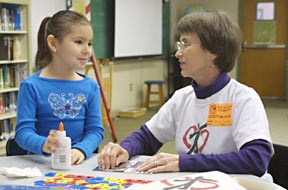
Park Cities Baptist Church member Laura Hefner mentors fourth-grade student Azul at Dan D. Rogers Elementary School in Dallas.

BRINGING HOPE:
Mentoring at-risk children

By Jenny Pope

Buckner Baptist Benevolences

DALLAS—Every Thursday morning during the school year, Lana Stanley of University Baptist Church in Arlington made the same trip down the brightly colored hallways of South Davis Elementary School.

She carried a canvas tote bag stuffed with children’s books, pens and crayons, a board game and a special treat.

She arrived at a first-grade classroom and opened the door, greeted by a sea of innocent faces that looked up and stared. But only one face stood out to her—a little Bulgarian girl named Krista.

Without fail, Krista ran across the room for a hug, and then Stanley helped her gather her things and led her away, hand-in-hand, to their special spot in the school library.

Every school day throughout the country, scenes like this occur as part of the Kids Hope USA mentoring program, a church-based initiative where churches train and recruit mentors within their congregation to form one-to-one relationships with at-risk children in neighborhood schools.

“When I first met Krista, she was very quiet—she wouldn’t say a word,” Stanley recalled, remembering when the 6-year-old girl barely knew English.

“Now, I can’t get her to stop talking! We make jokes at each other, and we understand each other. Her reading has improved tremendously, and she is a math whiz. I look forward to seeing her for the first time each week, seeing that big smile, knowing that she’s excited to see me, too.”

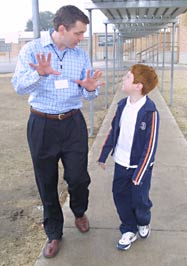
Brad Schwall, Kids Hope USA and HomeWorks director at Park Cities Baptist Church, walks with Kai, a third-grade student at Dan D. Rogers Elementary School, where Schwall coordinates mentors. (Photo by Russ Dilday)

Buckner Children & Family Services has collaborated with Kids Hope USA to identify and connect churches and schools that could benefit from this relationship. In one year, Buckner enlisted 10 Texas churches. More than 330 schools and churches have partnered nationwide since Kids Hope USA’s inception 10 years ago.

“With Kids Hope USA, we’ve come up with an intervention to complete our mission, to be proactive and protect children before there is a problem,” said Scott Waller, Buckner’s liaison with Kids Hope USA. “If we can empower the local church to be the one to do that, we’re going to go a lot further to impact children and families than if Buckner was just going different places to set up shop.”

Virgil Gulker, executive director and founder of Kids Hope USA, began the program as a research project in 1995. He met with a variety of people who provide support services for children and asked them the same two questions: What are the greatest needs of our children? Is there a role the neighborhood church could play in meeting those needs?

“The answer broke my heart,” Gulker said. “I found that as a country, we’re not doing very well. A high percentage of our children live in poverty, up to 41 percent live in single-parent homes and a whopping 31 percent do not have a significant father figure.”

When he asked them what the church could do to help, “the answer was really in one voice—if the church would mobilize and train its members to form ongoing one-on-one relationships with the youngest children, it would make a profound difference in their lives. And that really became the vision of Kids Hope USA, finding a way to equip the church not just to give stuff to kids, but to form these meaningful relationships.”

Peggy Mitchell, member of University Baptist Church, mentors Celia, an elementary school student.

Kids Hope USA has four distinctive characteristics: It is fully owned and operated by participating churches; it works with the youngest children; it’s based on exclusive one-to-one relationships; and it respects the laws regarding separation of church and state.

Shared values, a corporate commitment and a “family of support” encourage church members to maintain a long-term relationship with each child. And logistically, a church can recruit more members and keep them longer for less money than any community organization, Gulker said.

Each church assigns a part-time paid director to administer the program, screen, recruit and train mentors, and coordinate mentor sessions with the school. Each church also must have at least 10 committed mentors to begin.

A recent survey by Kids Hope USA revealed more than 78 percent of mentors have been involved more than two years, and more than 90 percent of churches that have started the program still are participating. That demonstrates Kids Hope USA truly fosters a long-term commitment between mentors and children, leaders noted.

“The more cavalier a mentoring program is, the more damaging it can be to a child,” Waller said. “If there’s no long-term commitment or sustainability to the program, vulnerable children who already feel abandoned end up being more hurt.”

Kids Hope USA focuses on the youngest children and seeks to encourage and support them during formative years. Many states predict the number of prison cells that will be needed in 10 to 12 years by looking at the reading scores of third-grade students today.

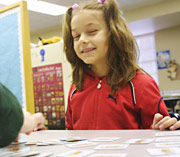
First grade-student Krista studies English and plays Memory with her mentor, Lana Stanley from University Baptist Church in Arlington.

“A sane society would do whatever is necessary to make sure these kids can read,” Gulker said. “So, we decided that the primary role of Kids Hope USA would be academic tutoring, but principals have told us that the greatest need in almost every incident is the emotional and social. Brain research says that the way to get through to a child’s mind is always through the heart.”

Erma Nichols, principal of South Davis Elementary in Arlington, wanted mentors to work with first-grade students due to behavior problems and academic struggles caused by absent parental support, she said.

“It’s been awesome for my students, who sometimes get a lot of negativity, to have this one person who’s not going to judge them for their behavior or lack of ability in the classroom.”

Gulker said educators have recognized the growing need for children in their schools to experience love and encouragement through a personal, one-to-one relationship with an adult.

“Kids Hope USA has made a huge difference in my students,” said Amanda Fink Russell, fourth-grade teacher at a Kids Hope USA school partnered with Park Cities Baptist Church in Dallas. “It’s given them somebody to have a relationship with, a strong role model, and it’s built self esteem. Because they’re so consistent, they look forward to seeing the mentor each week, and they know they will always be here.”

Each Kids Hope USA mentor is trained to abide by church/state separation laws and respect the rules of the host organization, which means they cannot pray or evangelize within the school. However, each relationship is supported by a behind-the-scenes prayer partner, which Gulker said is critical to the Kids Hope USA program. Mentors are allowed to invite the child to participate in church events or activities if parents grant permission.

Many churches see Kids Hope USA as yet another form of community outreach, he said, and they really strive to form relationships not only with the children, but with the families, too.

First Baptist Church of Richardson began mentoring students at Northrich Elemen-tary School by targeting sibling groups identified as being at-risk. With 19 mentors and prayer partners, Director Carrie Tracy feels they’re halfway there to meeting the needs of families in the school.

“By reaching out to sibling groups, we’re essentially reaching out to the whole family,” she said. “We want to be proactive, and we feel that our work would make an even bigger impact if we targeted an entire family at one time.”

Park Cities Baptist Church connected Kids Hope USA with an already-existing program in their church called HomeWorks, which supplies parents with tools and resources to raise strong children and parent effectively. Through HomeWorks and Kids Hope USA, Park Cities members have permeated Dan D. Rogers Elementary with their presence: They host a monthly workshop and dinner for the families, send out newsletters with tips and advice on parenting and offer “Cool Kid” resources for children to learn how to deal with their feelings and make good choices.

“HomeWorks is the next step to reaching the families of the kids who are being mentored through Kids Hope,” said Brad Schwall, HomeWorks and Kids Hope USA director for Park Cities—and mentor of third-grader Kai.

“It’s our goal, always, to build relationships and meet the needs—perhaps the spiritual needs—of children and families. It’s a chance for us to reach the whole school and maintain an ongoing presence with the families and the schools. That way our ministry isn’t based on just one chance, it’s an ongoing relationship that continues to build.”

Park Cities has reached the point where many churches strive to be—forming close relationships not only with the child, but also with the family. Schwall admits that while resources are important, they are insignificant compared to the close, caring relationships Kids Hope USA encourages. It doesn’t take a mega-church to make Kids Hope USA successful, he said.

“Because it is one church, one school, one child—we don’t have a fear of being overwhelmed by a bigger church or group coming in,” said Greg Deering, Kids Hope USA mentor and pastor of University Baptist, a church with an average attendance around 90 people.

“It’s really just a matter of seeing the potential, and for us, it’s a way for us to move our church members outside of the walls of the church and carry out our ministry into the community.”

Kids Hope USA strives to engage 5,000 churches and reach 100,000 children in the next 15 years. And with the help of Buckner, they hope to engage 250 churches and reach 4,500 children in Texas in the next five years.

“With numbers like this, you’re ultimately talking about a church-based collaboration that could begin to save and influence a generation of children,” Gulker said.

For more information about Kids Hope USA, contact Scott Waller at swaller@buckner.org or (214) 758-8026.


News of religion, faith, missions, Bible study and Christian ministry among Texas Baptist churches, in the BGCT, the Southern Baptist Convention ( SBC ) and around the world.


Burleson calls for SBC probe of IMB

Posted: 6/09/06

Burleson calls for SBC probe of IMB

By Greg Warner

Associated Baptist Press

ENID, Okla. (ABP)—Wade Burleson is calling for the Southern Baptist Convention to investigate “manipulation” and “coercion” by his fellow trustees of the International Mission Board.

Burleson, pastor of Emmanuel Baptist Church in Enid, is a first-year trustee of the International Mission Board, the SBC’s flagship agency, which selects and directs Southern Baptists’ 5,000 global missionaries—the largest missionary force of its kind in the world.

Earlier this year, IMB trustees accused Burleson of using his blog to violate trustee confidentiality, prompting them to try to have him removed from the board. He complained he never was given the chance to hear the specific allegations or respond to them. After an outcry from the SBC’s rank and file, the trustees let Burleson stay on the board, but they passed a policy forbidding dissent.

In a June 1 posting on his blog, Burleson said a motion will be introduced at the June 13-14 annual Southern Baptist Convention calling for appointment of a seven-member ad hoc committee to investigate “five concerns”:

• “Manipulation of the nominating process” by which the Southern Baptist Convention elects IMB trustees.

• Attempts “by one or more” chief executives of SBC agencies “to influence and/or coerce the IMB trustees, staff, and administration”—an apparent reference to Paige Patterson, president of Southwestern Baptist Theological Seminary.

• The appropriateness of closed-door meetings—“forums and executive sessions”—by IMB trustees, “as compared to conducting business in full view of the Southern Baptist Convention,” and the exclusion of “any individual trustee” from meetings of the full board without SBC approval.

• Imposing “new doctrinal requisites” on IMB employees and missionaries that go “beyond the 2000 Baptist Faith and Message,” the SBC’s conservative doctrinal statement required of all missionaries—a reference to the IMB’s much-criticized policies against private prayer languages and defining an appropriate baptism.

• “Suppression of dissent” among trustees, such as the IMB’s new policy that prohibits any trustee or employee from publicly criticizing board decisions.

Dozens of motions are introduced each year at the SBC annual meeting. Most are rejected, ruled out of order or referred to the affected agency. Burleson’s motion, however, invokes SBC Bylaw 26B, which will require messengers to vote on the motion during their two-day meeting rather than refer it to another body. Invoking Bylaw 26B reportedly would require approval by two thirds of the messengers voting, however.

It is unclear who would appoint the investigation committee, but it could be the SBC’s newly elected president. The motion requires the committee to bring a progress report to the SBC Executive Committee and its final report to the next Southern Baptist Convention meeting in June 2007.

Burleson insisted an SBC investigation would be the fairest way to address his allegations against his colleagues. In the meantime, however, he said he will continue to serve on the board and to blog about his experiences.

“Blogging has been my attempt to energize and mobilize grassroots Southern Baptists in their understanding of, and participation with, the International Mission Board’s ministries through a greater comprehension and appreciation of the IMB’s work,” he wrote.

News of religion, faith, missions, Bible study and Christian ministry among Texas Baptist churches, in the BGCT, the Southern Baptist Convention ( SBC ) and around the world.


Cable choice splits Christian allies

Posted: 6/09/06

Bishop T.D. Jakes of Dallas preaches on the Trinity Broadcasting Network. At left are TBN founders Jan and Paul Crouch. Some Christian activists fear consumers may opt out of TBN programming if they are also given the chance to opt out of racier programming on MTV or Comedy Central. (RNS photo courtesy of Trinity Broadcasting Network)

Cable choice splits Christian allies

By Piet Levy

Religion News Service

WASHINGTON (RNS)—Evangelical Christians are on the front lines in the battle over indecency on cable television, calling for a pick-and-choose pricing plan that would allow viewers to keep certain channels out of their homes.

But on the opposite end of the battlefield is an opponent familiar to and even respected by evangelicals—Christian cable stations.

The fear among Christian broadcasters is that a proposal to allow consumers to reject MTV or Comedy Central also would allow them to unsubscribe from the Trinity Broad-casting Network or Pat Robertson’s Christian Broadcasting Network. Cutting off that access—not to mention a potential profit plunge—could hurt religious broadcasters as well.

“We do not believe that a la carte is the cure for the disease,” said Colby May, attorney for the Faith and Family Broadcasters Coalition, which represents Trinity and CBN, in addition to other stations.

“In fact, it is a cure that may very well kill the patient.”

Evangelical and family groups support the concept of “a la carte” cable legislation, which would allow cable users to subscribe solely to the networks of their choice.

The plan, endorsed in an unofficial Federal Communications Commission report and likely to be proposed by Sen. John McCain, R-Ariz., is billed as a way to avoid paying for stations like FX, Comedy Central and MTV, which rack up high ratings with risque shows like The Shield, South Park and The Real World.

May argues an a la carte cable package will drive up the cost of individual stations per subscriber to compensate for their lower subscription numbers. The viewer’s cable bill could rise even if the number of stations went down.

In other words, there will be less bang for more buck.

But the Christian networks’ main concern is that the only ones willing to subscribe will be Christians, and people in need of inspiration won’t stumble upon religious programming if it isn’t available on their TV. If a la carte were already in existence, May argues, conversion experiences for alcoholics and people contemplating suicide, or suffering from a crumbling marriage, never would have happened. “If you obligate viewers to pre-select religious service, you are essentially going to find yourself witnessing to the choir,” May said. “In combination, all of these networks have literally thousands and thousands of anecdotal stories of people who were channel surfing that came across one of their services, and it changed their life for the better.”

But Christian groups like Concerned Women for America say lives will be better with the a la carte plan.

“Unfortunately the number of inappropriate programs far outweighs the number of good,” said Lanier Swann, the group’s director of government relations. “Our issue is to protect families.”

Dan Isett, director of corporate and government affairs for the conservative Parents Television Coun-cil, argues religious broadcasters on localized cable services will not be affected by a pick-and-choose cable choice plan. He said the policy may even grant more opportunities for fledgling networks not owned by the six major multimedia corporations.

“If consumers have a choice, it opens up a new range of diversified programming that doesn’t exist today,” Isett said. “If I were (Trinity Broad-casting Network), I would look at this as an unparalleled opportunity to reach people.”

In an effort to appease critics, the two main cable providers, Time Warner and Comcast, announced “family tier” packages late last year that carry only what they construe to be family-appropriate stations, such as the Disney Channel, Discovery Kids, the Food Network and CNN Headline News. But the critics still are upset.

“The ‘family tier’ system is a straw man designed to fail,” Swann said. “This is a scenario where they assume the calls for choice will be squelched. … I don’t think we need the same individuals who promote, produce and air the type of programming we’re trying to avoid to be allowed to define what is ‘family-friendly.’”

News of religion, faith, missions, Bible study and Christian ministry among Texas Baptist churches, in the BGCT, the Southern Baptist Convention ( SBC ) and around the world.


Cartoon

Posted: 6/09/06

News of religion, faith, missions, Bible study and Christian ministry among Texas Baptist churches, in the BGCT, the Southern Baptist Convention ( SBC ) and around the world.


2nd Opinion: ‘When God is in it, the glory is his’

Posted: 6/09/06

2nd Opinion:
‘When God is in it, the glory is his’

By Michael Bell

Prior to my election as president of our Baptist General Convention of Texas last fall, the Holy Spirit repeatedly drew me to a speech given by a Pharisee named Gamaliel.

Gamaliel’s talk, found in Acts 5, was occasioned by the annoying behavior of Peter and his cohorts, who continued to do what they had been doing since the day of Pentecost; they were actualizing Jesus’ mandate to witness. Jesus told them to witness. So they witnessed. At every opportunity, without thought to their own personal comfort or safety, they noisily testified about what Jesus did—everywhere, all the time.

The Jewish religious leaders did not like this, because the common folk were eagerly embracing this new teaching. Consequently, they pulled out all stops to disrupt and squelch the apostles’ ministry. They had the apostles locked up a couple of times to no avail. Each time these untutored preachers were released from jail, they went back to telling folk about Jesus. So, as the gospelist Luke reports, once again, Peter and the other “sent ones” were rounded up and brought before the Sanhedrin to be threatened and bullied into silence.

With the disciples standing before him in open court, the high priest complained: “We gave you strict orders not to teach in this name. We have been more than gracious and tolerant. In fact, we’ve been extremely lenient in dealing with your continued insistence on broadcasting this heresy. Yet you have filled Jerusalem with your teaching and are bent on making us look bad.” The chief priest and the other religious leaders were vexed by the disciples’ unrelenting stand for Jesus, so much so that they wanted to put them to death.

In the midst of this tumult, Gamaliel suggested to the council that they not act in haste and risk making martyrs of this band of ragamuffins. He suggested a pragmatic yardstick: “Are these men caught up in anything redemptive, or is this movement barely a blip on the radar screen? If God is not in it, it will collapse under its own weight. But if God is in it, let’s not be found opposing God himself.”

Gamaliel’s statement delineates two competing categories: If God is in it, and if God is not in it. As I have traveled throughout this great state of ours, visiting one-on-one with Texas Baptists, preaching in the pulpits of our constituent churches, sitting in the board rooms of our affiliated institutions and listening to the presidents and leaders talk about where the Lord is directing them, I am still convinced that, to date, God is in what we are about as a convention.

I have found out that when God is in it, the glory is his. We are not in the “to the glory of the Baptist General Convention of Texas” business. Together, we are doing more “to the glory of God.” Our calling and commission are to magnify God’s worth, to exalt his excellence and to portray his perfections. And we glorify God most clearly and critically through the gospel.

If God is in it, people will be benefited and bettered. Even a cursory glance at Acts 5 lets us know that people were being healed and helped. For more than six months now, I have advocated a four-fold emphasis designed to better and benefit people.

• One priority is identity clarification. It is no secret that there are ongoing efforts to deliberately mislead the public about who we are as Texas Baptists, and these misrepresentations provide us with outstanding opportunities to do a better job of letting folk know who we are.

• Improved cooperation is another goal. Immediately after the last gavel of the November 2005 Austin convention, I asked Albert Reyes to chair the President’s Council, the Cooperative Program initiative he started during his tenure as BGCT president. In May, he chaired a wonderfully productive meeting of the President’s Council.

• Clarify. Cooperate. Connect. We are in the process of mining the potential of a covenant we have with Buckner Benevolences and Kids Hope USA. It features a mentoring program, which will involve our churches in ministering to at-risk students in nearby schools. We must not drop the ball, plan too timidly or miss the moment on this initiative. This effort easily aligns with Charles Wade’s goal for us to affirm the children.

Additionally, our affinity groups’ directors have been asked to help with identifying and contacting pastors who will form prayer klatches, which will meet at least monthly, to provide pastors with a forum to pray and dialogue with each other across racial/ethnic lines.

• Finally, we must communicate relentlessly. Effective communication is critical to the actualization and realization of our convention’s vision for growth. We must do a better job of telling our story in ways that demonstrate God is in it. Our 2006 convention, which will be held in Dallas, will focus on what we are doing together to the glory of God and for the good of people.


Michael Bell is president of the Baptist General Convention of Texas and pastor of Greater St. Stephen First Baptist Church in Fort Worth.

News of religion, faith, missions, Bible study and Christian ministry among Texas Baptist churches, in the BGCT, the Southern Baptist Convention ( SBC ) and around the world.