Cartoon
Posted: 7/21/06
| “I’m thinking of having my feathers colored.” |
Posted: 7/21/06
| “I’m thinking of having my feathers colored.” |
Posted: 7/21/06
| A member of an evangelical Christian church near San Cristobal, Chiapas, worshipped during a service last November, when a team from Norvi Mayfield Ministries visited. (Photos by Craig Bird) |
By Craig Bird
Special to the Baptist Standard
SAN ANTONIO—A half-dozen Texas Baptist churches heard the voice of the persecuted church recently when Moises Guillen Solis Dominguez challenged them not to forget Christian brothers and sisters in Chiapas, Mexico.
Dominguez spoke at First Baptist Church in Gonzales, First Baptist Church in Lumberton, First Baptist Church in Silsbee, First Baptist Church in Kountze, South San Filadelfia Baptist Church in San Antonio and Nueva Jerusalem Baptist Church in Houston. He was sponsored by Norvi Mayfield Ministries, which has been working in Chiapas for years.
“It was amazing to meet … a man whose fear of God enables him to fear no man,” said Lori Moody, women’s ministry coordinator at First Baptist Church in Silsbee. “I was overcome with emotion as we surrounded him, laid hands on him and prayed. I believe God is doing a great work through him in Chiapas.”
 |
| Members of South San Filadelfia Baptist Church in San Antonio surround Chiapas Mexico pastor Moises Gillen with prayer after hearing his report on the persecution of evangelical Christians in the southern Mexico state. The church also took up a collection to purchase Bibles (for $8 each) in the Mayan dialect spoken in the area. |
The southern Mexican state has the highest percentage of evangelical Chris-tians—and the fastest growth rate—in Mexico. Evangelicals there also face the most intense persecution from leaders of the traditional sun-worship religion.
The last assassination of a pastor occurred in 2003, but evangelicals still are evicted from their home villages, their children denied places in school and they even are barred from buying or selling at the local market and cut off from public electric and water supplies.
Dominguez, who became a Christian at age 8 by reading gospel tracts others in his village discarded, began starting churches among the Choles tribe of the Mayan Indians in 1966 as a 15-year-old preacher. In 10 years, he organized 40 congregations that still are alive and growing, he said. He then moved on to other ministries, primarily in Guadalajara, where he and his family worked with street children and people addicted to drugs and alcohol.
But he felt God calling him back to Chiapas, and he returned to the area in 2002 without any church committed to supporting him.
When Pastor Mario Mendez was killed in 2003, Dominguez and his wife journeyed to the mountain village where he had served to provide comfort and support—even raising funds to buy a small cinder block building for the congregation to replace the wooden structure a mob had torched.
“The people begged me not to leave them. They felt other Christians had forgotten them and didn’t care what was happening,” Dominguez said. “So, even though the assassins were—and still are—at large, we agreed to take over Pastor Mendez’s ministry of eight churches.
“Today, we hold monthly training sessions for pastors and other church leaders. Despite the hardship and danger, people are turning to the Lord. Some estimates are that 50 percent of all the Mayans in Chiapas are now evangelical Christians—which is why the resistance is so strong and brutal.”
Norvi Mayfield Ministries is partnering in the training effort.
Mayfield, a Mayan Indian from Honduras who is a member of First Baptist Church in Gonzales, shares Dominguez’s urgency to “reach people and train them.”
“We have children as young as 12 coming and saying, ‘Teach me what the Bible says and what to do, and I will go tell my village the truth of the gospel,’” she said.
Mayan Christians are not afraid to suffer for their faith, she pointed out, but they do fear two things. One is that there will not be solid training available for their children.
“They say, ‘We will be honored to die for Jesus, but we yearn to know that if we fall, there will be others to raise our children in the faith, to give them solid doctrine so they’ll know what to die for, too,’” she explained.
Second, they hunger to know they are prayed for fervently and consistently by Christians in what they call “the free church.”
“When I am returning to Texas, they always beg me: ‘Don’t forget us when you leave. Tell the Christians in America that we can feel the strength of their prayers. And we can feel when they forget to pray.’”
For more information about Dominguez’s work with Norvi Mayfield Ministries, visit www.norvimayfieldministries.org.
Posted: 7/21/06
By John Hall
Texas Baptist Communications
DALLAS—As more Baptists serve in “closed” countries, more of them could find themselves in the same situation as the mission team from First Baptist Church of Forney, which was trapped in Lebanon.
| See Related Article: • In crisis, churches unprepared for dealing with media |
But Christians appear to understand the risk and continue seeking these mission opportunities.
In recent years, increasing numbers of missions organizations have begun to help a growing number of Baptists connect with service opportunities where open evangelism is illegal or political upheaval is commonplace. Each episode increases the odds that groups may get caught in harm’s way.
| U.S. Marines assist in the evacuation of U.S. citizens by helicopters at the U.S. embassy in Awkar, north of Beirut. (Photo courtesy of REUTERS/Mohamed Azakir—Lebanon) |
A heightened focus on people groups that have not been reached by the gospel—many of whom live in volatile regions—is leading Christians into politically unstable nations. Many churches are connecting directly with missionaries who work in these areas.
The Southern Baptist Convention’s International Mission Board is targeting unreached people groups. The board sends volunteer groups to work alongside vocational missionaries who minister among the unreached peoples.
The notion of sharing the gospel with people who never have heard it is irresistible to many Christians, observed Stan Parks, international liaison for WorldconneX, a missions network created by the Baptist General Convention of Texas.
Nearly 40 percent of the world’s people groups do not have a viable church, he said. About 28 percent of all people groups have no access to the gospel.
This month, Texas Christians refocused on the issue of working in closed countries as a group from First Baptist Church in Forney remained trapped in Lebanon while missiles flew overhead.
Baptist World Alliance General Secretary Denton Lotz acknowledged the possible dangers associated with ministering in these situations.
But violence can happen anywhere in the world, as it did with the train bombings in Madrid and London and the Sept. 11, 2001, terrorist attacks upon New York City and the Pentagon, he acknowledged.
“I think the whole world is a hot spot,” he said. “We never know what’s going to pop up next.”
Christians seem to understand this concept of universal uncertainty, reported Karen Gilbert, the Cooperative Baptist Fellowship’s Global Missions associate coordinator for volunteers and partnerships.
| Forney team escapes bombing As of July 20, a mission team from First Baptist Church in Forney—which was trapped in Lebanon when Hezbollah-Israeli fighting started—was waiting out the bombing of Beirut in mountains east of the city. Watch for updates on our main page. |
Uncertainty spurs some Christians to service, Gilbert said. They pray about a trip and follow what they feel is God’s calling.
“We are talking to people and say, ‘Lebanon,’ and they say, ‘Sure,’” Gilbert said. “We say, ‘North Africa,’ and they say, ‘We can be there tomorrow.’”
These trip-takers and organizations are trusting God to protect them, but many also are taking precautions. Personnel from the International Mission Board, CBF Global Missions, the Baptist General Convention of Texas’ partnership ministries and WorldconneX help groups form contingency plans in case something goes wrong.
Staff members continuously review these contingency plans to keep them updated and effective. They also monitor the cultural climate in areas where volunteers will work.
They do not encourage Christian believers to take a trip into an area with imminent danger, such in the middle of a war.
These plans outline steps as simple as what to do if a group misses a flight, explained Steve Seaberry director of BGCT partnership missions. But they can be as serious as what to do if someone is taken hostage or the group is trapped.
“Our volunteer-team training includes basic security precautions for any area of the world,” Seaberry said. … We count heavily on local Baptist leaders to help the volunteer team assess any uncertain situation and deal with it appropriately,” he added.
The International Mission Board relies on its field personnel to form contingency plans for themselves and mission groups, spokesperson Wendy Norvelle said.
The probability that mission teams will encounter problems while serving in closed countries has become more acute, since many churches travel in conjunction with direct contacts, Parks said.
“I think most churches don’t realize all the things the agency used to do for them,” he said. “They don’t realize it until they hit a crisis. By then, it’s too late.”
Planning helps make difficult situations the exception in mission work, Gilbert said. Although incidents such as the Forney church’s entrapment in Lebanon gain media exposure, many other groups serve faithfully around the world without any trouble.
“It is the team in Lebanon we will hear about,” Gilbert said. “But how many other teams have been throughout Lebanon this summer and nothing has happened? … You just know good work has happened all summer.”
Posted: 7/21/06
By Ross Shelton
I consider myself both a moderate Baptist and an evangelical Christian. Some people might be surprised to hear these two groups identified together. So, allow me to generalize:
Some Baptists consider themselves moderates, but they look with disdain upon the title “evangelical Christian” because of the controversy that took place in the Southern Baptist Convention during the past 27 years. Evangelical Christians often are thought of primarily in relationship to the Southern Baptist Convention and its leaders. Others would consider themselves evangelical Christians, yet they are uncomfortable with the title “moderate Baptist” because they assume moderates are halfway down the “slippery slope” of liberalism.
I have become increasingly uncomfortable as I have heard these groups speak poorly of each other. Having attended a northern evangelical seminary (Gordon-Conwell Theological Seminary) for one year before transferring and graduating from a moderate Baptist seminary (Baylor University’s Truett Theological Seminary), I have connected and become close with each group.
What each of these groups values needs to be valued by the other side. While self-ascribing members of each party rarely agree on everything, some fundamental tenants do exist. Evangelical Christians hold fast to the beliefs that the Bible is divinely inspired and authoritative for our life and practice; that the orthodox/historical understanding of God the Father, Son and Holy Spirit is correct; that people are lost and need to be born again through Jesus Christ by the power of the Holy Spirit; that those who reject Jesus will experience eternity apart from God; and, finally, that we are to live and speak the gospel locally and globally. Moderate Baptists traditionally have valued soul competency in our relationship with God; the autonomous local church functioning democratically; pastoral leadership arising from the work of God in the midst of the congregation; encouragement to read the Bible for ourselves; and, finally, the imperative of religious liberty functioning as the separation of church and state.
A simple reading of these values would make one wonder why such suspicion exists between these two groups. For whatever reason, though, as these values are lived out among different Christians, a suspicious eye is cast over the other.
Imagine, instead, what it would be like for these two value systems and their strengths to be incorporated together.
For example, many moderate Baptists are uncomfortable with evangelism that focuses solely on repentance, the need to be born again through Christ alone, and the truth that hell awaits the person who rejects Christ. Drawing strength from our evangelical side, we nevertheless do as the Bible teaches and call people to repentance and faith in Jesus Christ. On the other hand, the call to evangelism by some evangelical Christians might create in them the desire to use the mechanisms and finances of government to increase the work of evangelism. Here we find strength in the moderate Baptist value system and their continual and consistent focus on the full expression of the First Amendment and why using government for evangelism actually hurts the cause of evangelism. This is just one of many examples.
What can be so helpful in merging these value systems is they can provide needed accountability to each other. I proudly consider myself an evangelical Christian and moderate Baptist. My prayer is that these two groups move beyond generalizations and caricatures.
This would mean moderate Baptists understand that not all evangelical Christians should be connected with the Southern Baptist Convention and their type of theology and methodology. Evangelicals are not monolithic and do not all align themselves with fundamentalism. Evangelical Christians also would stop viewing the moderate Baptist/Southern Baptist Convention struggle in Texas and the South through the lenses of what took place in the mainline denominations’ evangelical/liberal wars. Moderate Baptists are not liberals who lost control. They are Bible-believing Christians who could not adopt the changes in the Southern Baptist Convention.
Therefore, my hope is that there might be unification between moderate Baptists and evangelical Christians, thereby strengthening our churches and increasing the kingdom of God.
Ross Shelton is pastor of First Baptist Church in Castroville.
Posted: 7/21/06
Do you think the summer of 1906 was as hot as the summer of 2006? Unless you’re a climatologist studying global warming, you probably don’t care.
But I’ve been thinking about 1906. One of the great events of my life happened that summer. Well, not exactly my life. But something happened that summer that made my life both possible and blessed.
That summer, Leonard Moore popped into this world on a northwestern Oklahoma homestead. He would have celebrated his 100th birthday Aug. 2. He was my mother’s father. We called him Popo.
How do you evaluate the stature of someone 100 years after his birth? Popo never ran a company or accumulated wealth or made the news. But he farmed through the Dust Bowl and survived the Great Depression. He helped rebuild his little town after a devastating tornado. He collected an array of friends. He knew Jesus as his Savior. His family adored him. He lived a successful life.
By the time most of my cousins, siblings and I came along, Popo had the perfect granddad job. He operated the Reading Room in Waynoka, Okla.—sort of a Santa Fe-owned hotel for railroaders, who slept over between trains. Popo and Grammar, our grandmother, lived in an apartment in the Reading Room and worked next door. So, when we were in town, I spent all day every day tagging along with Popo.
Laughter dominates the soundtrack of my memories of Popo. He didn’t tell jokes so much as he saw the humor in the world around him: The way we drank orange soda-pop from small cups and slammed them down on the counter, “cowboy style.” The way fish ate the bait off our hooks. The way his beloved Yankees pummeled the Red Sox. The way a dog chased a cat. And the way the cat chased the dog. Popo appreciated the beauty (a word he never would have chosen) of simple, small-town life.
Popo guided me through some of the best days. Like when he’d get Grammar to mind the Reading Room so he and I could go fishing in the stock tanks outside town. Or after supper, while the light was still good, and we’d play catch. Or in twilight, when we’d go for a ride in the country with the windows rolled down.
I loved Popo with a fervor a little boy—and later a teenager and a young man—could not describe. Mostly, I loved him because I sensed how much he loved me.
When I was grown, I’d call Popo and ask about the fishing. Usually, he didn’t know, because he hadn’t been fishing lately.
Several years after he died, I mentioned this to Grammar—how Popo and I had so much fun fishing, but later he never seemed all that interested. “Well, Honey, he didn’t love fishing,” she explained. “He loved you. Fishing was just an excuse to spend the afternoon with you.”
Now, I’m within two months of the age Popo was when I was born. We haven’t spoken in almost 20 years, since right before he got so sick. What I wouldn’t give to spend another afternoon with Popo.
—Marv Knox
Posted: 7/21/06
Most Texans, as well as football fans everywhere, remember with fondness the formative years of the Dallas Cowboys, when they developed their persona as America’s Team. (OK, not “football fans everywhere.” Redskins and Eagles fans remember this with fear and trembling.) In those days, Tom Landry and Tex Schramm presided over the Cowboys. One simple principle prompted their gridiron greatness: Draft the best athlete available.
 |
They might have had four terrific offensive linemen, but if the best player on the board was an offensive lineman, they drafted an offensive lineman. They needed a good defensive back, so they drafted the best athlete available—a basketball player who became an All-Pro defensive back. Their team’s victories validated their theory.
The Cowboys’ “best athlete available” principle often comes to mind. No, I’m not bucking for a front-office job with an NFL franchise. But I read papers, watch the news, and listen to people all over Texas and beyond. And whether it’s sports franchises, businesses, civic organizations or churches, the fine line between success and failure consistently parallels this principle. When the successful enterprises add new people, especially leaders, they select the best person available. To the contrary, those that are unsuccessful seem either (a) bound and determined to fill a particular slot a particular way or (b) distracted by superficial qualities that ultimately do not contribute to success.
We could discuss the infinite number of qualities that might define the “best person available” until Jesus comes back. But let me nominate one—character.
Just the other day, a friend and I discussed his business. He’s the kind of guy you value as a friend. He’s caring, outgoing, generous, loyal and funny. He’s got the kind of business you wish you had invested in years ago. Most of all, he’s the kind of Christian you want to be like. He’s faithful to Christ, and he understands that what his pastor preaches in worship and what he and his friends discuss in Bible study matter every day of the week. His faith informs how he treats his employees and customers, and it shapes the decisions he and his partners make as they think about strategies and opportunities for their company, clients and families.
My friend isn’t afraid to search his soul. As we talked about his employees, he acknowledged he had made some mistakes. Business boomed, and they hired rapidly. But “we lost focus,” he said. In their haste, they looked at the business backgrounds of some of their new employees, but they failed to look at the kind of people they were. So, when the talented newcomers began to make decisions and deals that didn’t reflect the values of the partners, painful changes had to be made. I asked my friend what he learned, which I knew he already knew. “Character counts,” he replied without hesitation. “It’s essential. You can’t get away from it.”
Character counts. We know this, but how easily we forget. Enron and WorldComm seem like clichés for appalling hubris and moral failure. Still, we can be certain that, somewhere out there, talented-but-greedy business people are making decisions based solely on dollars and not on decency.
Unfortunately, integrity meltdowns extend beyond business. A recent Washington Post article described how Ralph Reed, former head of the Christian Coalition, lost a commanding lead in the Republican primary for lieutenant governor of Georgia because his association with convicted lobbyist Jack Abramoff cast a dark shadow across his campaign. Of course, political scandal is a bipartisan affair. That same article described how Republicans and Democrats alike stand to lose key seats in Congress because their current occupants have failed the character test.
Don’t you wish dishonor were confined only to business tycoons and politicians? Sadly, that’s not the case. The reputations of the church and—worse yet—our Lord Jesus have been stained by dishonorable Christians whose misdeeds undermined their pious words. Conversely, rock-solid integrity has earned many a Christian’s right to speak words of faith and hope to a previously disbelieving audience.
One of the Bible’s greatest stories illustrates the honor of Joseph. His master’s wife tried to seduce him, and they might have gotten away with adultery. Instead, Joseph resisted and unfairly was convicted of rape and thrown in prison. Short-term, things looked bad. Long-term, prisoner Joseph interpreted the dream of Pharaoh, became second-in-command of the nation and saved both Egypt and the Children of Israel from famine. Character counts. God used a person of integrity to perpetuate the family line that eventually birthed Jesus, the Messiah. God rewarded Joseph for his honor, but through that reward, God came to bless the whole world.
When the time comes to choose—or become—the “best person available,” think about one quality. Character.
Marv Knox is editor of the Baptist Standard.
Posted: 7/21/06
Completeness of 1
I was saddened while reading “Single ministers face multiple hurdles” (July 10).
It reminds me of how dangerous exclusion is within religious groups. Eventually, no one is able to stand the test. What amazes and confuses me is that “we say” we follow and love “a Single Man” and also forget the writer of most of the New Testament was “a single man” and yet will not even allow one to minister to God’s people.
| Letters are welcomed. Send them to marvknox@baptiststandard.com; 250 words maximum. |
 “To say that men and women should not inject their ‘personal morality’ into public-policy debates is a practical absurdity. If we progressives shed some of these biases, we might recognize some overlapping values that religious and secular people share.” Barak Obama
U.S. Senator (D., Ill.), addressing a conference of about 600 Christian anti-poverty activists (ABP) “I didn't fancy the thought of being handed over to the Inquisition like Galileo.” Stephen Hawking
The astrophysicist, who said Pope John Paul II discouraged him from attempting to figure out how the universe began (RNS) “I cannot imagine any development in human history, after the Fall, that has had a greater impact on human beings than the pill. … Prior to it, every time a couple had sex, there was a good chance of pregnancy. Once that is removed, the entire horizon of the sexual act changes. I think there could be no question that the pill gave incredible license to everything from adultery and affairs to premarital sex and within marriage to a separation of the sex act and procreation.” Al Mohler
President of Southern Baptist Theological Seminary (New York Times Magazine/BP)
|
What are we afraid of? Hmm. … What does that say about us?
One is a whole number too!
Robert Whitfield
Dallas
Comfort with the Spirit
“Prior to my election as president of our Baptist General Convention of Texas last fall, the Holy Spirit repeatedly drew me to a speech given by a Pharisee named Gamaliel,” BGCT President Michael Bell wrote in a 2nd Opinion column (June 12).
Why is this refreshing?
Because leaders and members of most denominations are reluctant to refer to the Holy Spirit in such a factual manner, especially to indicate a personal relationship with him that shows dependence and trust in making decisions and taking action.
The statement about the Holy Spirit is made comfortably and indicates a simple, factual acceptance of him as a person who is involved with us in our daily living and Christian activities.
It has been my feeling for some time, as I have read Baptists and listened to Baptists for over 50 years, that we do not seem to have a mature knowledge and experience of the Holy Spirit, nor a comfortable relationship with him.
An unbalanced view of the Holy Spirit is an unbalanced view of the Trinity. An unbalanced view of the Trinity is an unbalanced view of God. The average congregation of most denominations has a lot to learn and experience of the Holy Spirit.
Frank Dearing
Belton
Too many compliments
Bubba Stahl’s letter, “Complement, not compete” (June 26), was not quite clear and needs further explanation. If fighting or arguing among the brethren was the entire gist of the letter, then I agree. We are to love one another and do unto others as we would have them do unto us, whether or not we are wrongfully treated. However, the addition of two words, “another denomination,” confused me as to what he was talking about.
If publicly debating or exposing doctrinal error in other denominations or churches of like faith is the point, I have to disagree. Are they competition? In some ways, they most certainly are. I would never compliment or condone another denomination that I don’t completely agree with. This is one of the greatest problems with the Baptist faith today, and too much complimenting of error has gone on, and the truth, even in our own ranks, has been compromised.
When one condones or compliments other denominations, it sends mixed messages to the hearers. Right is right and wrong is wrong, and when a denomination preaches and teaches the wrong, in light of Scripture, it needs to be addressed.
The Bible teaches us not to have part with erring brethren, even though they may be a child of God.
Cordial, yes, complimentary, no!
Davy R. Hobson
Grapeland
What do you think? Send letters to Editor Marv Knox by mail: P.O. Box 660267, Dallas 75266-0267; or by e-mail: marvknox@baptiststandard.com.
Posted: 7/21/06
• Rusty Arrington to Calvary Church in Pilot Point as youth minister.
• Roberto Arrubla has resigned as pastor of Iglesia Nuevo Amanecer in Cleburne.
• Roger Ashley to Parkview Church in Littlefield as pastor from Rocky Ford Church in Amherst.
• Gene BoBo to New Colony Church in Linden as minister of music.
• Dick Carroll has resigned as pastor of Pond Springs Church in Austin to become a teacher in Korea with Global Vision Christian School.
• Craig Curry to First Church in Cisco as pastor.
• J.L. Edwards to First Shiloh Church in Thrall as interim pastor.
• Steven Edwards to Fourth Ward Church in Ennis as pastor.
• Josh Fuentes to Live Oak First Church in San Antonio as minister of youth.
• Corey Grays to Galilee Church in San Angelo as pastor.
• Jack Hall to Faith Community at Jonah in Georgetown as pastor.
• George Harris to First Church in Kerrville as pastor.
• Jim Haskell to Brookwood Church in Birmingham, Ala., as pastor from First Church in Georgetown.
• Lyndale Holloway has resigned as minister to students at First Church in Round Rock.
• Billy Irions to Central Church in Wichita Falls as pastor.
• David Johnson to First Church in Midland as associate pastor for pastoral care from First Church in Taylor, where he was pastor.
• Pat Kelly to New River Fellowship in Hudson Oaks as teaching pastor from Weatherford College, where he was Baptist Student Ministries director.
• Carl Lane to Plainview Church in Krum as pastor.
• Joe Lopez to First Church in Lolita as youth minister.
• Jennifer Madding to First Church in Paris as director of family life activities.
• Randy Moore has resigned as pastor of First Church in Weir.
• Jimmie Neel to Nolan River Road Church in Cleburne as minister of youth from Marshall Road Church in Jackson, Ark., where he was pastoral intern.
• Andy Pittman to First Church in Lufkin as pastor from First Church in Woodway, where he was associate pastor/minister to college students.
• Byron Potter to First Church in Olton as youth minister.
• John Scoggins to Levita Church in Gatesville as pastor.
• Paul Smith to Shenandoah Church in Cedar Park as interim music minister.
• Richard Worden to First Church in Granger as pastor.
• Craig Yates to First Church in Wimberley as student pastor from Greenwood Church in Midland, where he was minister of youth/education.
• Janice Young to College Avenue Church in McGregor as minister of music, where she had been interim.
Posted: 7/21/06
By Laura Frase
Communications Intern
LADSON, S.C.—Chaplain Bill Herrmann found his calling about 13 years ago while watching televised news reports of bombed Marine barracks in Beirut. A Marine looked into the camera and asked, “Can someone please send us some support?”
His plea inspired Herrmann to launch Operation: Eagle, a program designed to assist soldiers in any way needed.
“Since that day, I have sought to try to lift soldiers’ morale and spirits and demonstrate that they are loved and not forgotten,” Herrmann said.
His group has sent more than 450 tons of support correspondence overseas, he said.
Herrmann’s most recent program inside Operation: Eagle is Eagles’ Warmth—a drive to collect sweatsuits and socks that will be sent to wounded soldiers in Iraq and Afghanistan for their trip back to the United States.
While visiting Walter Reed Army Medical Center in Washington, D.C., Herrmann talked to troops who mentioned how cold and uncomfortable the flight out of Iraq had been, with some just under sheets and blankets and wearing only hospital gowns.
“The visit at Walter Reed profoundly touched my spiritual life as I witnessed the remarkable courage, determination and resolve to overcome their circumstances … . I was moved to want to do something for them, and all the wounded soldiers in Iraq and Afghanistan,” he said.
Eagles’ Warmth has gathered more than 1,000 pairs of sweats and socks, boxed and ready to be shipped to Iraq and Afghanistan.
Herrmann planned to ship the boxes through the Denton Program, which is a U.S. State Department and Agency for International Development humanitarian program, where humanitarian donations are shipped on U.S. military transport on a “space available” basis. Total donation weight must be at least 2,000 pounds.
At the final weigh-in, Herrmann’s initial plan came to a halt with a 1,340-pound total. Eagles’ Warmth was disqualified from the Denton Program, which left Herrmann with 38 boxes ready to be shipped out, but with not enough money to do it.
“Each day, more are wounded in Iraq, and many have died since I organized and implemented Eagles Warmth,” he said. “I just desire to reach out and try to help these wounded soldiers.”
Herrmann decided to address the problem two ways.
The original intention of Eagles’ Warmth was to gather 4,500 pairs of sweats and socks, which would provide a pair of sweats and socks to every wounded soldier who passed through the theater field hospital for an entire year, he said. Instead, Eagles’ Warmth collected about 1,000 pairs. While the current total is nowhere near the original objective, Eagles’ Warmth is only 660 pounds shy of the Denton Program’s minimum weight, and it would bring the program closer to its original goal.
“To receive the remaining 3,400 pairs would certainly be an incredible demonstration of God’s providence,” Herrmann said.
Herrmann’s other approach to send the sweats before Veteran’s Day, Nov. 11, is a new program called Adopt-a-Box. Rather than asking for a lump sum of money for postage, Herrmann asks people to adopt a box to send to Iraq or Afghanistan. People may purchase a mailing postage label for $38, and they can print out the label to send to Eagles’ Warmth. Herrmann encourages people to enclose a personal letter expressing support for the troops and those hospitalized that will be sent with the box they have adopted.
The program is languishing, because there is little support to send the boxes, Herrmann said.
“I have been praying and praying for months now,” he said. “Because throughout the last two decades of this lay ministry volunteerism, the Lord Jesus has always without exception blessed and opened the doors and provided a way to get materials and items collected for the troops overseas to get to them. Now it’s totally in the Lord’s hands. Completely.”
Visit operationeagle.org for more information.
Posted: 7/21/06
Pilgrim provides record gift to DBU. Dallas Baptist University took a major step toward building its first chapel in 108 years, thanks to an $8 million contribution from Bo Pilgrim, chairman of the Pilgrim’s Pride poultry company. The gift represents half of the university’s $16 million chapel campaign. The 1,400-seat Patty and Bo Pilgrim Chapel will be located in the heart of the campus in southwest Dallas. “We are grateful beyond words for the generosity of Mr. Pilgrim,” DBU President Gary Cook said. “With this gift, we will be able to fulfill a dream for a chapel, which has been on the heart of members of the DBU family ever since we moved to Dallas in 1965.” The chapel will accommodate student chapel services and host major campus events. Additional space will be allocated for the Alumni Association office, intercessory prayer ministry and Cook Graduate School of Leadership. DBU has held chapel services in the Burg Center, a multi-use facility that doubles as the school’s gym. For information on the chapel campaign, contact Adam Wright by phone at (214) 333-5597 or by e-mail at adam@dbu.edu.
Baylor Medical named among top hospitals. For the 14th consecutive year, U.S. News & World Report has designated Baylor University Medical Center at Dallas among the nation’s top 50 hospitals in seven specialties in its 2006 “America’s Best Hospitals” guide. Baylor Dallas made the list in each of seven specialties—digestive disorders (No. 20), endocrinology (No. 17), gynecology (No. 37), heart/heart surgery (No. 44), kidney disease (No. 34), neurology and neurosurgery (No. 42) and orthopedics (No. 22). Baylor Institute for Rehabilitation also ranked 20th among the nation’s top rehabilitation facilities.
BGCT ministries’ volunteers lauded. Two Baptist General Convention of Texas ministries have received Volunteer of the Year awards from the United Way of San Antonio and Bexar County. Texas Baptist Men and Baptist Child & Family Services received recognition for their ministry to evacuees from hurricanes Katrina and Rita last fall. TBM volunteers put in about 30,240 hours and cooked up to 650,000 meals for evacuees at the Kelly USA business park and prepared meals for thousands more evacuees and support staff at 22 other San Antonio shelters. BCFS cared for more than 1,750 special-needs evacuees and their families in a dozen shelters.
Anonymous donor boosts Baylor success. Baylor University’s highest capital priority—the Paul L. Foster Success Center—has received a $2.5 million gift from an anonymous donor. “One of the major goals of Baylor 2012 (the university’s long-range plan) is nurturing an environment where learning can flourish, and this gift will further encourage our students to use their God-given strengths to reach their goals and serve a global society,” Baylor President John Lilley said. The contribution will be coupled with a $3 million lead gift from Paul L. Foster, president of Western Refining in El Paso. The Success Center will “unite in one location all departments devoted to developing Baylor students to their full potential” by locating them in the Sid Richardson Building, which will be renovated.
UMHB nursing program receives grant. The University of Mary Hardin-Baylor received a $87,100 grant from the Sid Richardson Foundation of Fort Worth to help expand programs in the university’s Scott & White College of Nursing. The foundation began working with UMHB in 2001 to increase the number of students enrolled in and graduating from the program each year. From 2001 to 2005, UMHB doubled the number of nursing graduates produced annually, and the number of students entering the program has increased 75 percent.
Scholarships established at Hardin-Simmons. Benson Bentley recently established the Ben and Anne Bentley Endowed Scholarship in Ministerial Studies at Hardin-Simmons University in memory of his wife, Mary Anne Bagwell Bentley. She was a mathematics professor at Hardin-Simmons 22 years. Elisabeth Prude Longbotham established the Jack H. Longbotham Endowed Scholarship in Music at Hardin-Simmons in honor of her husband of 51 years. He served 26 years on the Hardin-Simmons faculty. Both Bentley and Longbotham have been longtime members of Pioneer Drive Baptist Church in Abilene.
Baylor names Oliver VP for student life. Dub Oliver has been named vice president for student life at Baylor University. Oliver had been interim vice president. He joined Baylor as director of student activities in 1992 and became dean for student development in 2001. Last summer, Oliver was named assistant vice president for student life and soon became interim vice president. In addition to student life, Oliver serves as a visiting professor in the Hankamer School of Business, where he teaches organizational leadership and change. He also is interim pastor of Canaan Baptist Church in Crawford. He and his wife, Susie, have one daughter—Callie, 13.
Rogers appointed Baylor interim dean. Douglas Rogers, associate professor of curriculum and instruction and associate dean for student and information services at Baylor University, has been appointed interim dean of Baylor’s School of Education for the 2006-2007 academic year. Rogers is a member of DaySpring Baptist Church in Waco.
Posted: 7/21/06
Children and teenagers get a lot of attention from churches during the summer, and we are hearing great reports of decisions made and lives touched. This is happening through Baptist camps, Super Summer, Vacation Bible Schools, the Texas Baptist All-State Choir and Band, Youth Evangelism Conference, church mission trips and other activities.
Of course, children and youth ministries are not just for the summer. Every Sunday of the year, young people study God’s word in Sunday school, learn to relate to one another and discover the church and its leaders truly care for them.
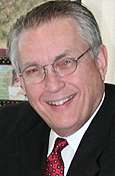 |
| Executive Director BGCT Executive Board |
Jesus said, “Let the children come to me.” Jesus-kind-of-churches reach out to children and young people. They pray for them and give them opportunities to know the Bible and to respond to the Holy Spirit’s invitation to follow Christ. These churches, like Jesus, know how to enjoy life, how to have a party with their kids. They are not stodgy, grim or afraid of life. They believe God loves every kid in town and are looking to reach out to every one of them.
If a church quits caring for children and youth, making a real place for them in the life of the church, soon a whole generation of kids comes and goes without the gospel making a difference in their lives. It can happen before you know it. A church can get preoccupied with other things, can go through division and hurt, and can disappoint through the moral failure of leaders.
Years ago while in college, I was the pastor of a small church in an Oklahoma village. We had a revival meeting at the end of the summer, and 22 teenagers gave their hearts to Christ. It was a great time in that community and in our church, but I was keenly aware that for a few years before then, there had been no revival, no youth activities, not much attention given to the young people in that town.
In our church in Arlington, I remember a time when we were going through a drought in our youth activities. Leaders had gotten distracted and had forgotten how to relate to young people. One evening at church, I realized it had to change. An unwillingness to do what needed to be done to care for young people was costing a whole generation of youth the opportunity to really know the gospel and find God’s direction in their lives. We changed.
Working with children and youth is serious as well as joyful business. It requires our best efforts, our prayers and our willingness to be involved with a caring and generous heart.
A mother wrote in appreciation for the Texas Baptist All-State Youth Choir experience for her daughter: “I know this is a lot of work for you and the other adults, but it is sooo appreciated. The adults are all so talented, on fire for the Lord and genuinely love to spread his word through music. My daughter will never forget this experience. She has not stopped talking about her week yet!”
When I think of all the people in our Texas churches who help work with children and young people, I think of a quote I heard the other day from Melinda Gates of Microsoft fame: “If you want to go fast, go alone. If you want to go far, go with others.”
Texas Baptists believe in going together.
We are loved.
Charles Wade is executive director of the Baptist General Convention of Texas.
Posted: 7/21/06
By Daniel Burke
Religion News Service
WASHINGTON (RNS)—The number of Americans who believe the federal government should promote “moral values” has dropped significantly in the last 10 years, a recent Gallup poll revealed.
In 1996, 60 percent of Americans thought the government should promote moral values, but that number fell to 48 percent in 2006.
“Moral values” are not defined in the poll. So-called “values voters” emerged after the 2004 elections when exit polls found that “moral values” ranked highest among voters’ concerns.
In September 2005, half of Americans said the government should promote “traditional values,” and 47 percent said it should not favor any values. Prior to that, there had been roughly a 10-point margin in favor of promoting “traditional values,” according to Gallup.
More than 60 percent of conservatives and people who attend church weekly believe politicians should legislate morality or promote ideology. Sixty-six percent of liberals disagreed.
A separate Gallup poll found a strong majority of Americans continue to support “right-to-die” laws for terminally ill patients. More than six in 10 support the idea of euthanasia or doctor-assisted suicide, according to the poll.
Seventy-one percent of Catholics said they support a doctor ending a patient’s life by painless means, and 62 percent said they support doctor-assisted suicide. Fewer Protestants support the practices—61 and 50 percent, respectively.
Though support for euthanasia bumped up to 75 percent following the death of Terri Schiavo in 2005, approval has now settled down to 69 percent. That number has remained fairly constant since 1990, according to Gallup.
In addition, support for doctor-assisted suicide climbed to 64 percent in 2006 from 58 percent in 2005.
A third Gallup poll found that al-most three-quarters of Americans say they’ve maintained the same religious preference during their entire lifetime. Of those who did change preferences, 40 percent said they did so because they disagreed with the teachings on their original religion.
Each of the three polls was conducted by telephone interviews of a national sample of 1,002 adults. The maximum sampling error is plus or minus 3 percentage points.