Cartoon
Posted: 3/16/07
Posted: 3/16/07
Posted: 3/16/07
By John Hall
Texas Baptist Communications
AUSTIN—A plan to fund college scholarships with as many as 12 casinos throughout Texas is another in a series of promises that won’t pan out, said Suzii Paynter, director of the Texas Baptist Christian Life Commission.
Sen. John Carona, R-Dallas, and Sen. Rodney Ellis, D-Houston, are sponsoring legislation that would put casinos in as many as 12 locations across the state. The senators’ effort also would legalize video slot machines at horse and dog tracks.
A portion of gambled Texas funds would be used to support eligible Texans to attend a community college or public university.
The move would require a constitutional amendment, which would need to be put before voters.
Paynter noted the proposed plan isn’t as efficient as a state lottery that also hasn’t produced the revenue that originally was projected. The state would get two cents of every dollar put into a slot machine. By contrast, the state receives 28 cents per dollar played in the lottery.
“It’s a bad plan for Texas,” Paynter said. “It’s just another in a series of broken promises.”
On top of an income shortfall, Texans also would pay for care for an increased number of gambling addicts, she insisted. A large percentage of casino gamblers come from within 50 miles of the business.
“Question is how much money has to go into the machines and how much bankruptcy and crime are going to come out,” Paynter said.
Posted: 3/16/07
The kingdom of God on earth changed March 5, when one of Baptists’ strongest hearts stopped beating. John Baugh died.
The business world knew him as the founder and longtime chairman of the Sysco Corporation. If you ever went out to eat, practically anywhere, Mr. Baugh provided all or most of your meal.
Universities and children’s homes and churches and countless other ministries knew him as a generous benefactor.
Baptists far and wide—whether they agreed with him or not—knew him as a tenacious champion of soul freedom, the priesthood of the believer and religious liberty.
Fortunately, I joined the ranks of countless folks who knew him in all those roles but also knew him as a friend.
At first, Mr. Baugh intimidated the fire out of me.
He lived larger-than-life in Houston, world-renowned as an entrepreneurial businessman, and I grew up in a pastor’s home in a small town in the Texas Panhandle. He was enormously wealthy, almost beyond the comprehension of a preacher’s kid who grew up in a small town in the Texas Panhandle. He was tall, and I’m normal-to-short. He had a commanding presence and a formal, elegant manner, and I tilt toward casual and informal.
So, the first time I was around Mr. Baugh, he made me nervous. I stumbled and stammered and felt awkward. Until he won me over—with kindness.
Here was this world-famous businessman/philanthropist sitting with a young Baptist newspaper editor. And he wanted to talk about personal things. Not intrusive things, but important personal things. Like my wife and daughters, and our church, and his family and church, and mutual friends, and things we both cared deeply about.
This wasn’t just small talk, either. Mr. Baugh paid attention and remembered. When we talked later, he asked follow-up questions. And we became friends.
In time, I realized he was so friendly (you don’t expect a big-shot like him to be that genuinely friendly) because he cared deeply about people. And at root, he cared about people so much because he saw them all as created in God’s image. He loved God with a passion, so he loved the people God created.
Mr. Baugh gained his fame among Baptists for championing religious liberty and for supporting so-called moderates in their battle against fundamentalism. Some would say he was a fire-breathing fundamentalism fighter.
As we talked through the years, I came to realize his public image among Baptists was only half right. He did indeed hate fundamentalism. But it wasn’t because he was an ideologue. It was because he loved people so much, and he hated anything that denigrated the divine image imprinted on every person. That’s why he was such a great Baptist. He believed God created people to be free, so they can reciprocate God’s love. And it’s a sin to enslave those whom Christ has set free.
—Marv Knox
Posted: 3/16/07
If the Baptist General Convention of Texas hopes to survive in a postdenominational world, it must conclude the process of reinventing itself. And sooner rather than later.
Down through the years, the BGCT—as with most other denominational organizations—has bought into a false notion that seduces precisely because it sounds so true: The convention exists for the churches.
 |
Who can argue with logic like that? We are proud of saying the churches, not the convention, are king of the Baptist hill. So, it stands to reason, the BGCT should orient itself to meet all the churches’ needs. The churches are the clients, and the convention is the full-service provider.
Theologians have a term for a notion like that: Baloney.
Blame the Baby Boomers, who think they’re the center of the universe and everything revolves around them. Now that most of our pastors and key lay leaders are Boomers, our churches mirror Boomer culture. They say: “It’s all about us. What have you done for us lately? Why should I stick with you if I can get what I want somewhere else.”
This fallacy turns things upside down. In truth, conventions exist on behalf of churches. The BGCT exists to help churches do what they can’t do by themselves. Great things. Huge things. Missions-and-education things.
Of course, the convention serves the churches—so they can serve their communities and world. Not so they can consume more denominational stuff. If the BGCT is to be relevant and vital, it must resist the temptation to see churches as consumers and the convention as a service provider. It must orient everything toward calling and enabling churches to do more together than they can do alone.
What does this mean? A full answer is far too complex for an editorial, but here are some ideas to consider:
• Keep going with a great thing.
In a brilliant move, the recent BGCT Executive Board staff reorganization located congregational strategists all across the state. These experienced church leaders are well-equipped to help churches. They should be able to sharpen their focus on providing diagnostic help, not providing resources. Problem is, nine regional strategists and a handful of affinity strategists aren’t enough. Their caseloads are too huge. We should double their number, at the very least.
• Re-think resourcing.
Strategists reportedly are frustrated, because they can diagnose their churches’ needs, but the BGCT doesn’t have all the resources to help them. We must drop the idea that the Executive Board has to provide those resources and broaden our notion of how to get resources to churches. Three ideas: First, establish peer-to-peer training, where expert volunteers from our churches train staff and members of other churches. Think it’ll never work? Think Internet and e-mail. Second, provide incentives for our institutions to equip churches. Programming and training are their forte. Give them incentives to equip churches as well as they equip their own staffs or students. Third, generate bulk-purchasing power to lower the costs of resources provided by others, so even small churches can afford them.
• De-balkanize missions.
Missions provides one illustration of how the convention has run to fragmentation instead of effectiveness. We had two leading missions programs, River Ministry and Texas Partnerships, and several institutions were doing missions. Instead of combining forces, we created another missions network, WorldconneX, with an as-yet-unclear assignment. Why not streamline and consolidate our missions ventures, bringing Border/ Mexico Missions, Texas Partnerships and WorldconneX into one unit and correlate closely with the institutions, all for the purpose of enabling the churches to do missions? (Pray this will be a result of the Missions Exchange summit at Truett Seminary in April.)
• Feed strength.
Our institutions are the envy of the Baptist world. We ought to provide extra support for their programs that are geared to team with local-church ministries and missions.
• Fill niches.
Some programs, like missions support and Bible study curriculum, represent needs far beyond Texas. We must think how our resources can jump beyond the state, but also generate revenue for our ministries.
• Pony up.
Present these opportunities compellingly and allocate the Cooperative Program and offerings to support them.
Marv Knox is editor of the Baptist Standard.
Posted: 3/16/07
Beliefnet recognizes movies Oscar neglected. The Beliefnet Film Awards are in, and the winners didn’t necessarily coincide with the Oscar list. The Beliefnet awards select the best spiritual film, performance and documentary of 2006. Each category had two winners, one named by a panel of judges and the other chosen by visitors to Beliefnet.com. The judges chose Children of Men—the story of a young woman in an infertile world—as the year’s best spiritual film, although the movie didn’t even get an Academy Award nomination for best motion picture Beliefnet.com visitors chose The Pursuit of Happyness, the story of a homeless man and his son trying to get off the streets of San Francisco, as their favorite spiritual film and selected the film’s star, Will Smith, as the year’s best spiritual performance. But the judges sided with the Academy in the best-performance category, naming Jennifer Hudson, of Dreamgirls. Hudson won a supporting actress Oscar for her role as Effie White. The panel’s choice for best spiritual documentary, An Inconvenient Truth, also coincided with the Academy’s selection. The documentary featuring former Vice President Al Gore is a cautionary tale about the burgeoning problem of global warming. But the People’s Award for documentary went to Shakespeare Behind Bars, about the unique gifts and talents of prisoners in a Kentucky correctional facility.
Biblical translator Metzger dies. Bruce Metzger, a revered biblical scholar who was both respected and sometimes criticized for championing the use of modern language in translating the Bible, died Feb. 13. Metzger, 93, was a long-time professor at Princeton Theological Seminary and a towering figure for students who used to joke that he had actually written the Bible himself. Metzger is likely to be best remembered as the editor of the New Revised Standard Version of the Bible, a work introduced in 1989 that eliminated many, though not all, of the Bible’s masculine pronouns. It became the standard text used in many colleges, seminaries and divinity schools. That work was an extension of the Revised Standard Version, which was released in its full version almost 40 years earlier and eschewed much of the archaic language of the King James Bible. Metzger served on the translation team for the Revised Standard Version, which was the first to use material from the Dead Sea Scrolls.
Catholics, Assemblies report rapid growth. The Roman Catholic Church grew to 69.1 million members in 2005, making it the fastest-growing church in the country, followed closely by the Assemblies of God and the Mormons. Catholics grew 1.94 percent in 2005, Assemblies of God grew 1.86 percent and the Church of Jesus Christ of Latter-day Saints grew 1.63 percent, according to the 2007 Yearbook of American and Canadian Churches, produced by the National Council of Churches. It is widely considered the most authoritative source on church membership statistics. The 2007 Yearbook contains data from 2005 that were reported in 2006. Rankings of the top 10 largest U.S. churches did not change from last year. Catholics remain the largest group, followed by the Southern Baptist Convention, the United Methodist Church, Mormons and the Church of God in Christ.
Facing the Giants big on video. In its first two weeks on the market, the Christian movie Facing the Giants was among the 20 best-selling videos and DVDs, according to the trade publication Video Business. The movie, created by Baptist pastors in Georgia for $100,000, is about a high school football team and coach who overcome numerous challenges—their giants—with divine assistance. It was released in theaters Sept. 29 and reportedly is among the top 10 all-time highest-grossing evangelical movies, earning $10 million at the box office.
Posted: 3/16/07
By Melissa Stee
Religion News Service
BEVERLY HILLS, Calif. (RNS)—The Nativity Story was honored with two awards at the 15th annual Movieguide Faith and Values Awards gala.
The movie, which re-tells the accounts of Joseph and Mary and the birth of Jesus, won the John Templeton Foundation $50,000 Epiphany Prize for Film, which goes to a movie that creates a “deeper spiritual awareness in mankind and increases man’s understanding of God.”
Actor Oscar Issac, who portrayed Joseph, received the Grace Award for Film, an honor for actors who exemplify “God’s grace towards human beings.”
The foundation’s $50,000 Epiphany Prize for Most Inspirational Television program went to The Ten Commandments, a mini-series depicting Moses and the Exodus to free the Hebrews from slavery.
Actress Shirley Jones won the Grace Award for Television for her role in Hidden Places, a television program, which also was awarded the Libertas Award for Television.
The Libertas Awards for Film was awarded to Will Smith’s movie, The Pursuit of Happyness, which is given to a film or television program that promotes positive American values.
The Queen received Top Film for Mature Audiences, and Charlotte’s Web was named Top Family Film of the Year. Both films were honored for their portrayal of moral and spiritual principles.
The annual Movieguide event honors films and television programs of the previous year considered “family friendly” and “spiritually uplifiting.”
Posted: 3/16/07
God & Allah
Allah may be the same as Charles Kimball’s God (March 5), but not mine.
My God is God the Father, God the Son and God the Holy Spirit.
| Letters are welcomed. Send them to marvknox@baptiststandard.com; 250 words maximum. |
 “One of the great doctrines of the Christian faith is unity. Therefore, I would pray with you and plead with you to work for the unity of Baptists. Jesus prayed that we might be one, and this was an evangelistic prayer. Why should we be one? That the world might believe! Our lack of unity means that the world cannot believe.” Denton Lotz Baptist World Alliance general secretary (ABP) “To those in the church who still sit in judgment on the AIDS emergency, let me climb into the pulpit for just one moment, because whatever thoughts we have about God, who he is or even if God exists, most will agree that God has a special place for the poor.” “This latest case is a real breakthrough. It’s not Christian medical professionals refusing to provide treatment they don’t approve of. It’s Christian medical professionals refusing to provide treatment to people they don’t approve of.” |
Only because of the redeeming grace of Jesus can I approach God the Father.
Melba Wilkerson
Henderson
I am increasingly concerned about statements by some of our Baptist leaders that the Christian God and Muslim god are one and the same.
I agree Muslims, like Christians and Jews, trace at least part of their spiritual roots back to Abraham. I also understand Muslims believe they call on the God of Abraham when they call on Allah, But Allah and Yahweh are not the same. Yahweh is the one, eternal, true and indivisible God, who exists in three personalities—Father, Son and Holy Spirit. Allah, according to Islam, is not Father, Son and Holy Spirit. Therefore, Allah must be something other than Yahweh.
This is much more than simply a different way of understanding God. It is a fundamentally different understanding about the essential nature of God.
To give a simple analogy: I own a car. It is a car because it has, among other things, a body, engine, wheels and seats. All of those items are an integral part of what a car is. If you take out the engine and remove the wheels, it might still look a lot like a car, but it becomes something that is fundamentally different from a car.
In a similar way, our God is Father, Son and Holy Spirit. Take out the Son and the Holy Spirit, what is left might look a lot like God, but it is not God. And like a car without wheels or engine, Allah will not take you where you want to go!
Tim Ahlen
Dallas
Support WMU
Thank you for the recent story about Woman’s Missionary Union and funding missions education (Feb. 5). As chair of the WMU Foundation board of trustees, I understand the financial challenges WMU is facing.
But I also understand the value of missions education and the importance of looking to the future to ensure its growth. The Bible warns us that where there is no vision, the people perish (Proverbs 29:18). The Great Commission assures us there is a future, and we must have the vision to prepare for it by making disciples of all nations.
That can be done two ways.
First, through prayer. This is what the WMU faithful are known for as they pray for missionaries to make disciples.
The second way to renew our commitment to missions is giving. No missions endeavor can get off the ground without financial support. One of the best ways we can support the work of missions—and of WMU—is by making a gift to the Joy Fund, which is managed by the WMU Foundation.
The purpose of the Joy Fund is to help WMU prepare for the future by meeting its operational needs. By supporting WMU’s operations, we support its mission and ministries. If you would like to support WMU and the future of missions education, gifts to the Joy Fund may be sent to the WMU Foundation, Joy Fund, 100 Missionary Ridge, Birmingham, Ala. 35242.
J. Howard Cobble
Carrollton, Ga.
Church-starting scandal
“The few will succeed in serving the Lord.”
I have started as a mission pastor. I am grieved by the church-planting misuse of money in the Rio Grande Valley. I believe in a good stewardship. I am saddened to hear this scandal continuously for several months in the paper.
We needed to solve this problem within ourselves because it has happened among ourselves in Christ. It is time to move forward, since we have learned a costly lesson and there is no future without a vision.
The five remaining churches will pave the way for the future.
Our mission pastors will never forget our mother-like Baptist General Convention of Texas, and we will never make you disappointed.
Yoo J. Yoon
Dallas
In response to E.B. Brooks (Feb. 19): Isn’t it amazing that whenever someone has no defense or no remorse for their actions, they always come up with the “race” or “ethnic” issue.
I suppose they think their critics will be too afraid to pursue an appropriate response when that issue is brought up.
Mick Tahaney
Port Arthur
I have some issues with E.B. Brooks’ version of the church-starting scandal in the Rio Grande Valley.
I completely reject and denounce the idea this investigation was racially motivated. Its purpose is to find out where $1.3 million, part of which I gave through the Cooperative Program, was spent and on what.
Brooks said: “Since many of the house-church pastors were undocumented, they feared losing their jobs, their homes and the ability of their children to attend public school in the United States. These are real fears and greatly affected the ability of sponsor churches to continue their mission activities and protect their people.”
It is not the job of the Baptist General Convention to subvert U.S. immigration laws. If they are here illegally, we have a moral responsibility to render basic humanitarian aid and to turn them over to the authorities.
I support Charles Wade and the Executive Board in their most recent handling of the investigation. I, like many other hard-working Baptists, want all our Cooperative Program money spent wisely and properly accounted for.
Texas Baptists deserve to know the truth.
Michael Simons
Cleburne
Parliamentary procedure
Concerning the Baptist General Convention of Texas Executive Board’s ruling on the past convention’s parliamentary ruling, all I can say is “what a slap on the face” to all messengers.
They knew exactly what they were doing at the moment the motion was made, or even before, since they had everything scripted out.
And to top it off, they pass a motion of support and commendation for the presiding president. He is as much guilty as all the others on staff of BGCT for allowing this to take place.
I believe, then, “un-Christian” is OK as long as I do it to others, but don’t do it to me.
Jonathan Hernandez Sr.
Arlington
Christian nation
America, regardless of what we have been, is certainly not a Christian nation in 2007.
We have Hindus, Muslims, Buddhists, Jews and all kinds of each of these, plus a whole host of off-brands.
When it comes to religion and faith, we are a very pluralistic society. We are not all of the same covey, swarm, herd or flock.
In The Audacity of Hope, Barack Obama writes: “Let’s assume that we only had Christians within our borders. Whose Christianity would we teach in the schools? James Dobson’s or Al Sharpton’s?
Which passages of Scripture should guide our public policy? Should we go with Leviticus, which suggests that slavery is all right and eating shellfish is an abomination? How about Deuteron-omy, which suggests stoning your child if he strays from the faith? Or should we just stick to the Sermon on the Mount—a passage so radical that it’s doubtful that our Defense Department would survive its application?”
Britt Towery
San Angelo
‘Pro-life’ donation
As the 2008 election campaign heats up, we are hearing some presidential candidates trying to be “more pro-life than thou.”
Most folks are programmed to think of abortion when we hear “pro-life.”
Is there more to the term?
What about lives that are shortened or terminated by unnecessary slaughter on the highways, war, pollution, lack of food, too much food, smoking, use of drugs and alcohol, or pollution?
What about lives that could be saved if there were enough organ donors or blood donors? We hear that less than 5 percent of Americans who are qualified to be blood donors actually give.
Donating blood really makes a difference and costs the donor very little. It’s too inconvenient? What if you or a loved one were waiting for an emergency operation but couldn’t get it done because of a lack of blood?
This is a case where it is really better to give than receive. Young people who are 17 can participate, and there is no upper age limit. Some teenagers have celebrated their 17th birthday by visiting the blood bank. What a difference from those who want to spend thousands of dollars for their “coming out” celebration!
Be pro-life. Give blood. and do it regularly.
Carl L. Hess
Ozark, Ala.
What do you think? The Baptist Standard values letters to the editor, for they reflect Baptists’ traditional affirmation of the priesthood of believers. Send letters to Editor Marv Knox by mail: P.O. Box 660267, Dallas 75266-0267; or by e-mail: marvknox@baptiststandard.com. Due to space availability, letters are limited to 250 words. And only one letter per writer per quarter will be published.
Posted: 3/16/07
• Keith Beck to First Church in Blanco as youth pastor.
• Charlie Bruner to First Church in Lake Dallas as youth minister.
• Allen Cearley has completed an interim pastorate at Parkdale Church in Corpus Christi and is available for interim or supply work at (210) 256-9544.
• Ron Etheridge to Ricardo Church in Kingsville as pastor.
• Bill Fabriguze to Trinity River Association as director of missions from First Church in Sour Lake, where he was pastor.
• Michael Godfrey has completed an interim pastorate at Meadowbrook Church in Robinson.
• Mike Green to Northside Church in Corsicana as minister of education/administration.
• Ihab Griess to First Church in Evant as minister of missions.
• Trent Henderson to Heritage Park Church in Webster as pastor from Highland Church in Waco, where he was discipleship pastor.
• David Humphrey to Gateway Community Church in Granbury as pastor of worship and ministries.
• Brad Kenney to Wichita Creek Church in Flower Mound as pastor, where he was interim.
• Cary Killough to Meadowbrook Church in Robinson as pastor.
• Kevin McCallon to First Church in Kingwood as pastor from First Church in Paducah, Ky.
• Mark Mohler has resigned as pastor of First Church in Slidell.
• Jorge Muñoz to Primera Iglesia in Luling as pastor.
• Lindsey Nimmons Jr. to Apple Springs Church in Apple Springs as interim pastor.
• James Sain to First Church in Paducah as interim pastor.
• Brian Smith to Hampton Road Church in DeSoto as minister to students.
• Sonny Steed to Shadycrest Church in Pearland as administrator from Istrouma Church in Baton Rouge, La.
• Paul Stripling to West Robinson Church in Waco as interim pastor.
• Domingo Villarreal has resigned as pastor of Miori Lane Church in Victoria.
• Carl Willis to Parkdale Church in Corpus Christi as pastor from Christian House Chapel in Aliquippa, Pa.
Posted: 3/16/07
By Barbara Bedrick
Texas Baptist Communications
Urging ministers to retool their thinking about reaching others for Christ so they may retool the lives of church members and nonbelievers more effectively, Baptist pastor Charles Booth delivered the keynote speech at the African American Leadership Workshop March 9-10 at the George W. Truett Theological Seminary.
Quoting scripture, poetry and a scientist, Booth urged ministers at the 3rd annual conference sponsored by Baptist General Convention of Texas, to propagate by changing themselves.
| Charles Booth |
| Watch a video clip of Booth’s address to the conference. |
With nearly 600 ministers and church leaders listening, Booth urged the Baptist leaders to “dip the bucket into an old well and prayerfully bring up fresh water,” to make Jesus the difference in their lives, the lives of church members and non-believers.
Booth, who is professor of preaching at Trinity Lutheran Seminary and pastor of Mt. Olivet Baptist Church in Columbus, Ohio, also encouraged ministers to pursue substance over style.
“The pulpit is no place for personal opinion,” said Booth. “The pulpit is the place for propagation of the gospel.”
Echoing the same theme in an interview following his speech, Booth noted too many churches are beginning to look like the culture we live in, instead of personifying Christian values.
“I think there are so many things now that have occurred in what I call the “secularization of the sacred” that necessitate our return to the roots of our biblical heritage and the claims that Christ made,” Booth stressed.
Booth says African American leaders need to return to a serious study of biblical heritage, make the Word of God practical and be wedded to the great concerns that are impacting the people they want to reach.
At Truett, Booth used the illustration of Paul in the New Testament to drive home a point about preaching. Saying Paul was short, had a humpback, bald head and a pointed nose, Booth told ministers not to worry about their external packaging or attire when they retool, but more importantly focus on what comes from within.
To examine a growing dilemma in the church and its membership, Booth quoted Shelley as saying, “I could accept Jesus Christ, if he didn’t bring along that bride, the church.”
Nearly 600 ministers and church leaders attended the African American Leadership Workshop sponsored by the BGCT
The church is not as powerful as it used to be, Booth said. At one time, the preacher spoke and everyone listened.
To underscore the need for transformation, Booth stressed that ministers, leaders and church members may be unable to reach nonbelievers unless they change.
He used Freud’s teachings to illustrate how the various church groups are battling the “super ego” and the “id” in the conflicts of their best versus their worst. Steer clear of church life that is “like a fraternity or a sorority,” Booth said.
“You are not a member of the church,” Booth said. “You are a disciple of the kingdom.”
The reason behind the chaos and conflict in the lives of church members is that “we [churches] have more members than disciples.”
The reason we have more members than disciples is that too many people are not willing to be retooled, Booth said.
If beliefs are based on what people watch on TV and what music sons and daughters listen to, “we are a people with a proclivity for profanity and vulgarity.”
To retool, Booth emphasized that ministers and church members need to be reeducated, be born again and go through rehabilitation. Turn the other cheek. Walk the second mile. Suffer from withdrawal symptoms.
The problem is, Booth adds, is that “some of us never have been rehabbed.” Referring to a scene in the movie about Ray Charles titled Ray, the professor described how Charles withdrew to a rehab center to get over a heroin addiction.
The emotion in the scene, Booth said, still shakes him from center to circumference. Withdrawal from what has always been your life is not always easy to do, he noted.
To accentuate his point, Booth used Saul’s journey from Damascus following three days of blindness into the Arabian Desert for three years.
“Sometimes it’s a struggle to become what the Lord wants you to become,” Booth said.
“But God gives you a period of detox, a period of rehab called grace.” With God’s grace always in your Christian toolbox, Booth said ministers and church members can be better positioned to lead others to Christ.
Posted: 3/16/07
By Carla Wynn
Cooperative Baptist Fellowship
MCALLEN—In rural communities along the U.S.-Mexico border, many Hispanic families live in extreme poverty, in houses with dirt floors, no indoor plumbing and no electricity. But some are finding hope for a better life through a partnership between Together for Hope, the Cooperative Baptist Fellowship’s rural poverty initiative, and Buckner Border Ministries.
In the colonias—unincorporated communities along the border—many residents came to the United States from Mexico in pursuit of a better, more prosperous life.
“They’re not here to stay poor,” said Jorge Zapata, Buckner’s Border Ministries director. “They’re here to prosper. You help them, and they’re off.”
Most are unable to secure a loan and take many years to build a house. They save money and buy construction materials as they can. Often, families will live in a small shelter on the back of their property while they construct their new home closer to the road. These communities are transitional. Most families will succeed, but it may take several years, Zapata said.
Through the KidsHeart partnership between CBF and Buckner, volunteers come for biannual mission blitzes during spring break and summer—either helping with children’s activities, community block parties or construction projects.
With help from these volunteers, the ministry reached more than 54,000 people last year in 20 colonias in three counties along the Rio Grande. With more than 1,500 of these communities in the Rio Grande Valley, the need is overwhelming.
“We start with one family,” Zapata said. “We (don’t have resources) to help everyone.”
In areas where volunteer construction teams serve, local residents often work alongside the teams to finish a house.
“Volunteers help speed up the (building) process two or three years,” said Cheyenne Solis, one of Buckner’s mission group coordinators.
Another aspect of the ministry is Rio Grande Children’s Home, a Buckner-operated facility that provides care to 38 children. With help from local residents, the facility’s little-used chapel was converted to a warehouse, now storing resources as they are donated by churches and individuals.
“Through (the warehouse), we are ministering to thousands,” Zapata said. “We’re preaching the gospel not behind a pulpit but through clothing and furniture.”
“And it is effective preaching, as Jorge can tell stories of professions of faith, churches started and churches transformed,” said Tom Prevost, national coordinator of Together for Hope.
Volunteers distribute clothing, food, furniture, construction supplies, toys, backpacks and tennis shoes for children and—most significantly to many residents—Bibles.
“They take them like a treasure,” Zapata said. “They’ve never seen a Bible before in their lives.”
Most distribution goes through local community centers and churches—several of which have been constructed by volunteers. These denominationally diverse churches do the crucial follow-up with families who are helped by volunteer teams.
“These families are open to the gospel,” Solis said. “We’re all working together to try to share the gospel.”
Started in 2001, Together for Hope is a 20-year initiative of the Cooperative Baptist Fellowship to come alongside, work with and learn from the relationships formed in rural communities in 20 counties across the nation in a long-term effort to address domestic poverty.
Posted: 3/16/07
By Robert Marus & Greg Warner
Associated Baptist Press
FORT WORTH (ABP)—Board leaders at Southwestern Baptist Theological Seminary and an embattled trustee have agreed to meet and discuss their differences—with a threat to remove Texas pastor Dwight McKissic from the board taken off the table.
McKissic, pastor of Cornerstone Baptist Church in Arlington, and trustee officers issued a joint statement announcing a private meeting to be held immediately prior to Southwestern trustees’ spring meeting.
| Dwight McKissic |
McKissic, who compared his treatment by the seminary to a “lynching,” previously had rejected the meeting because of preconditions he called unreasonable.
“Rev. McKissic and the officers of the board of trustees at Southwestern Baptist Theological Seminary have agreed to meet privately and confidentially,” the statement said. “The officers have also agreed to table any recommended action against Rev. McKissic. Both the officers and Rev. McKissic plan to make no further statements at this time.”
The statement did not describe the details of the planned meeting.
McKissic and board Chairman Van McClain previously disagreed publicly on terms for the meeting, which McClain had requested.
McClain told McKissic failure to reconcile prior to the April meeting could lead trustees to recommend that messengers attending the Southern Baptist Convention’s annual meeting in June remove McKissic from the board.
Only voting constituents at SBC annual meetings—known as “messengers”—have the power to forcibly remove a trustee from an SBC board. Although messengers never have taken such an action in the denomination’s 162-year history, trustees at a sister SBC agency recently made an abortive attempt to do the same thing.
Last year, trustees of the International Mission Board tried to remove Oklahoma pastor Wade Burleson from their ranks, but later backed down.
In both cases, the trustee controversies emerged around the issue of “private prayer languages,” a controversial devotional practice related to speaking in tongues.
And in both cases, the trustees were accused of breach of confidentiality with fellow board members.
McKissic preached a sermon at Southwestern Seminary last August in which he acknowledged he has practiced a private prayer language since his days as a student at South-western. He said he disagreed with the IMB’s November 2005 decision to amend its list of missionary qualifications to exclude candidates who use a “prayer language” in private.
Two months after McKissic’s sermon, Southwestern trustees adopted a policy stating the Southern Baptist seminary would not “endorse in any way, advertise or commend the conclusions of the contemporary charismatic movement including ‘private prayer language.’” McKissic was the lone trustee to vote against the measure.
McClain then requested the meeting with McKissic, saying the trustee had inappropriately used confidential material sent to him in advance of the board’s fall meeting. McClain also said he is concerned about the way McKissic has expressed his disagreement with board actions and seminary policies.
McClain said trustee leaders tried to meet privately with McKissic to discuss their concerns about his behavior. But McKissic insisted on bringing outside witnesses and tape-recording the meeting, McClain said, adding that would make a private meeting impossible.
McKissic said he simply was asking for those measures to protect himself and to ensure an accurate account of the meeting, should details be leaked to the media.
McKissic described the threat to remove him, as well as McClain’s refusal to present him with evidence of his wrongdoing prior to the meeting, as “nothing but a 21st-century lynching of an independent-thinking black man who has demonstrated strong support for the Southern Baptist Convention.”
“Because I will not join the ‘good old boys club,’ I’m subjected to removal as a trustee,” he said.
McKissic later apologized to McClain for the tone of his comments.
Southwestern trustees will meet April 2 in Fort Worth.
Posted: 3/16/07
Two events just ahead need your prayers and support.
First, please pray for the Missions Exchange gathering at Truett Seminary in April. About 100 invitations have gone out to representatives of the churches, institutions, associations, mission organizations and staff who relate to the BGCT. We want to encourage greater collaboration on the part of all our partners in this convention as we engage our Texas resources—people and money, passion and experience, organizational strength and creative energy—to touch Texas and the world. The results of this conversation will be publicized and will be used to shape the program and activities of the annual meeting in Amarillo this fall so that all Texas Baptists can be involved in this mission synergy.
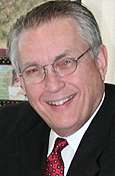 |
| Executive Director BGCT Executive Board |
Please pray God will be present at this Missions Exchange and the participants will be truly attentive.
Second, a call has gone out to Baptists across North America to gather in Atlanta Jan. 30-Feb. 1, 2008, for the celebration of the New Baptist Covenant. Baptists will be challenged to hear and follow Jesus’ agenda: “The Spirit of the Lord is on me, because he has anointed me to preach good news to the poor. He has sent me to proclaim freedom for the prisoners and recovery of sight for the blind, to release the oppressed, to proclaim the year of the Lord’s favor” (Luke 4:18-19).
We Baptists are nothing if we are not Jesus people. We want to be about his work.
The other thing that excites me is that this will be the first time the rich heritage of American Baptist life in both its African-American and Anglo expressions will be celebrated in one place at one time. Anglo Baptists separated in 1845, largely because of differing views regarding slavery. The African-American Baptist experience moved along in a separate manner and flourished in a most remarkable way.
Baptists don’t agree on everything. But we do agree that we ought to be about what Jesus was about. On that we can speak with a strong and united voice. And can’t you just imagine how glorious the times of worship will be!
The two criticisms I have heard about this call to Atlanta revolve around the fear that it will be a partisan political event. I have been assured that strong Baptists who are both Republican and Democrat will be heard in prominent fashion at this meeting. The topics on which all will speak will be in regard to the issues related to the Jesus agenda and not partisan politics.
The other criticism has revolved around concerns regarding President Clinton’s involvement and his widely publicized misconduct during his time as president. I recall viewing a pastors’ conference at the Willow Creek Church in Chicago where Clinton repented and expressed sorrow for the harm he had brought to his family and the country. He asked for their prayers.
We Baptists believe in repentance, sorrow for sin, forgiveness, grace and the opportunity to serve Christ again. My mother was from Arkansas, and no one hoped more for Clinton’s presidency nor was more disappointed by his behavior. We can identify with her pain. Can we also pray that God will redeem brokenness and bring usefulness to all our lives?
Let’s keep our eyes on Jesus and see if we can’t help people across America see that he is the One who has called us to follow him, and his invitation extends to everyone.
We are loved.
Charles Wade is executive director of the Baptist General Convention of Texas Executive Board.