McKissic and Southwestern trustees reach peace agreement

Posted: 4/13/07

McKissic and Southwestern
trustees reach peace agreement

By Hannah Elliott

Associated Baptist Press

FORT WORTH (ABP)—Arlington pastor Dwight McKissic and his fellow trustees at Southwestern Baptist Theological Seminary decided to make peace, despite their previous public disagreements.

In a statement issued several days prior to the seminary trustees’ spring meeting, Chairman Van McClain said board leaders and McKissic had “jointly agreed to put past issues behind us.”

“We look forward to working together for many years to impact SWBTS and the world for Christ,” the brief statement said.

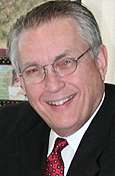
Dwight McKissic

The announcement came two weeks after trustee leaders at the Southern Baptist Convention school and McKissic issued a joint statement saying they had agreed to discuss their differences privately and would decline any further news comment on the subject. They also said a threat of removing McKissic from the board had been taken off the table.

McKissic is pastor of Cornerstone Baptist Church in Arlington and a graduate of the Fort Worth-based school.

He had feuded for months—sometimes quite publicly—with his fellow trustees over board openness and school policies on “private prayer language,” a form of speaking in tongues. The controversy began in August, after McKissic delivered a sermon in Southwestern’s chapel service in which he mentioned his own practice of private prayer language.

In the homily, McKissic also said he disagreed with the SBC International Mission Board’s 2005 decision to exclude missionary candidates who espouse the practice. Two months later, Southwestern trustees said the seminary would not endorse, advertise or commend “the conclusions of the contemporary charismatic movement including ‘private prayer language.’“ McKissic was the lone Southwestern trustee to vote against the measure.

Later, trustee leaders threatened to ask the Southern Baptist Convention to remove McKissic from the board. The entire saga became the focus of attention throughout the Southern Baptist blogosphere, with many younger SBC bloggers criticizing Southwestern trustees and administrators for their treatment of McKissic.

McKissic, who is African-American, at one point compared his treatment to a “lynching.” He later apologized for that rhetorical choice, saying he did not suspect board chairman McClain or his fellow trustees of racism.

McClain accused McKissic of inappropriately using confidential material sent to him in advance of the board’s meeting last October.


News of religion, faith, missions, Bible study and Christian ministry among Baptist churches, in Texas, the BGCT, the nation and around the world.



Missional leaders needed for churches

Posted: 4/13/07

Missional leaders needed for churches

By Barbara Bedrick

Texas Baptist Communications

DALLAS—Vitality of churches in the 21st century depends largely on pioneering and missional leaders, according to Reggie Thomas, director of the Baptist General Convention of Texas congregational leadership team.

Reggie Thomas, director of the BGCT congregational leadership team, points out the seven characteristics of creative church leaders in a recent workshop with ministers and church leaders.

Drawing from Reggie McNeal’s book, A Work of Heart, Thomas encourages pastors and other church leaders to take seriously and personally the great commission as marching orders for the church. Thomas also stresses leaders be kingdom-conscious, seek to discover where God is at work and join him there.

Effective leaders, Thomas adds, are not competitive, but collegial, and more community focused than they are on a church culture agenda. They are team players and entrepreneurial.

“Leaders need to create a network around them for support, counsel, accountability and implementation of vision,” Thomas says. “Don’t rely on previous ministry models, but seek to try different things to attract people to Christ.”

Be a “people developer” who empowers others to lead and do ministry, he recommends. Equip people with skills and resources needed for effective ministry and missional living.

Thomas encourages church leaders to build up others for ministry and “don’t use people to make your own ministries successful.”

Creative leaders are “visionary,” able to communicate and lead others toward the future. To be effective, Thomas adds, church leaders must be driven by their love for Jesus, not love for their ministries.

But church leaders who seek to be effective may fail if they don’t consider the most important social reality in the church—culture, Thomas insists.

He advocates church leaders “engage” their culture and look at the sum of attitudes, customs and beliefs that distinguish one group of people from another.  Considering the church no longer holds the community standing it did in the 1960s and 1970s, Thomas implores leaders to get creative in the way they engage their communities.

A missional church always looks outward, Thomas adds. It always is changing but always faithful to the Scriptures. It changes with the culture in order to engage the culture.

But shifting the culture of the church cannot merely be a “cosmetic” change; it must go beneath the surface to have long-lasting impact in a church’s ministry efforts. Thomas suggests a move to the “incarnational” approach that is very much rooted in the Bible when God sent his Son to earth in the form of a human. He embodied the culture, which is what Christians must do today to reach others with Jesus’ love, Thomas believes.

To become an effective leader and 21st century church, Thomas offers suggestions gleaned from Culture Shift: Transforming Your Church From The Inside Out, by Robert Lewis and Wayne Cordeiro:

• Identify and believe God’s promises about your church’s potential. Believe the best days are ahead and model kingdom culture personally, Thomas said.

• Enlist allies to champion the church’s culture shift to help implement leadership decisions. Thomas encourages church ministers and leaders to focus on what the church is becoming and not on how long the transformation is taking.

• Compare the vision of the future to present reality, Thomas suggests. One of the issues that causes people to resist change is they don’t understand the future. Church members need to see how a church leader’s proposal is going to be better than the present plan.

• Outline a specific, achievable pathway. The vision may be big, but pursue it incrementally. Leaders who share the outline with the church can learn from feedback, Thomas adds.

“Members need to be informed,” Thomas said. “Some of them will become allies and have good ideas.”


News of religion, faith, missions, Bible study and Christian ministry among Baptist churches, in Texas, the BGCT, the nation and around the world.


On the Move

Posted: 4/13/07

On the Move

Jim Addison has resigned as pastor of Hillcrest Church in Kemp.

Paul Beard to Temple Church in New Boston as pastor from Old Union Church in Simms.

Bruce Boling to Fairview Church in Granbury as youth minister.

Charles Carter to New Hope Church in Lone Oak as pastor.

Bradley Dietz to Fellowship Church in Coleman as interim pastor.

Clint Dobson to Purmela Church in Purmela as pastor.

Gabe Duron to First Church in Grapeland as minister of worship.

Steven Gaither to River Hills Church in Corpus Christi as youth minister from First Church in George West.

Aaron Green to First Church in Matador as youth minister.

Tim Hardaway to First Church in Wake Village as minister of music from Hampton Road Church in DeSoto.

Eddie Hayworth to First Church in Meridian as music minister.

J.V. Helms to First Church in Goliad as interim pastor.

Allen Hightower to Tallowood Church in Houston as interim minister of music and worship.

Jason Horne to First Church in Iredell as pastor from College Avenue Church in Fort Worth.

J.D. Humber to First Church in Madisonville as youth minister.

Matt Jeffreys to First Church in Lewisville as young adult minister.

Larry Johnson has resigned as pastor of Bethel Church in Ingleside and is available for supply or interim ministry at (361) 230-0647.

Cary Killough to Meadowbrook Church in Robinson as pastor.

Doug Knight to First Church in Maud as pastor.

Bill Lindley to Calvary Church in Aransas Pass as interim pastor.

Paul Lively to Bellaire Church in Lubbock as pastor from First Church in Morton.

Chris Lovejoy to First Church in Collinsville as music and education minister.

Ben Macklin to First Church in Vernon as pastor.

Paul Magyar to Stonebriar Community Church in Frisco as minister of music and worship from Tallowood Church in Houston.

Stan Martin to Second Church in Lampasas as interim pastor.

Don McCollum to Providence Church in Hamilton as pastor.

Michael Menasco to Indiana Avenue Church in Lubbock as minister of education, where he was media director.

Rick Oliver to Grace Unlimited Church in Lubbock as pastor.

Jeff Peavy to First Church in Hooks as youth minister from Malta Church in Malta.

Troy Robbins to Second Church in Ranger as music minister.

Juan Ruiz to Iglesia Memorial in Waelder as pastor.

Brian Sadler to First Church in Wortham as minister to youth.

Darren Shaddix to Calvary Church in Simms as pastor.

Greg Sipe to First Church in Garland as minister to students from Southside Church in Palestine.

Forrest Smith to First Church in Ingleside as interim pastor.

Zach Souter to Taylor Memorial Church in Hobbs, N.M., as associate pastor to youth and college students from First Church in Merkel, where he was youth and education minister.

Tony Stang to Ecclesia Community Church in Waco as pastor.

Mark Stephenson to First Church in Grapeland as minister to students.

Paul Stripling to West Robinson Church in Robinson as interim pastor.

David Tatum to Lakeside Church in Granbury as worship leader.

Wade Traylor to First Church in Kopperl as music/youth minister.

Amber von Ende to College Heights Church in Cleburne as minister of music.

Linda Wallace to Trinity Church in Gatesville as music minister.

Joel Watson has resigned as pastor of Colony Park Church in The Colony.

Michael Welch to Heart of Worship Church in Lubbock as pastor from Trinity Church in Woodrow, where he was music minister.

Damon West to First Church in Wolfforth as associate pastor/youth from First Church in Abernathy, where he was youth minister.

Drew Wilson has resigned as pastor of Park Lake Drive Church in Waco.

Darren York to First Church in Red Springs as pastor from Ferron Road Church in Red Lick.

Aaron Young has resigned as pastor of First Church in Mart.


News of religion, faith, missions, Bible study and Christian ministry among Baptist churches, in Texas, the BGCT, the nation and around the world.


The church in parenthesis

Posted: 4/13/07

The church in parenthesis

By Ken Camp

Managing Editor

When pastors leave congregations, their former churches often face what could be termed a punctuation crisis.

Some mark the departure with a period, as the end of a sentence—either for the minister or the congregation. Others approach it with a question mark, asking: “Where do we go from here?” But others see it as a parenthesis in their church’s history—an in-between time when the church can regroup, refocus and retool for its future.

David Odom, founding president of the Center for Congregational Health in Winston-Salem, N.C., believes the parenthesis created by a change in church leadership can be a helpful time when churches clarify their identity and work through other critical issues.

More than 25 years ago, Loren Mead of the Alban Institute initiated work that led to creation of the Interim Ministry Network, and Odom’s organization partnered with the network to develop training for intentional interim ministry.

Churches use time between pastors to regroup, refocus

While new issues—such as changes in worship style—have developed to put stress on congregations during transitional times, the basic principles and presuppositions underpinning the intentional interim process remain valid, Odom said.

“Identify clarification is a good thing for congregations, and that’s as true today as it was before,” he said.

Intentional interim ministers help guide churches through five key developmental tasks:

• Coming to terms with their history. If the previous pastor left on good terms, it may mean “letting go” of a beloved leader. If conflict surrounded a pastor’s last days at a church, it can mean coming to terms with pain and allowing wounds to heal.

• Examining leadership and organizational needs. Odom pointed to key questions a church should ask: “What is the role of the pastor? How much responsibility and authority does the staff have? Who in the church has the responsibility for making decisions?”

• Rethinking denominational linkage. “There’s a lot of emotion tied up in denominational identity for some people. If a congregation is strictly pragmatic, it may be simply a question of what kind of mission and ministry opportunities does it want to be involved in,” he said. And search committees face another crucial question: “Where do we go to find a minister that we can trust?”

• Developing new identity and vision. Intentional interim ministers help congregations rediscover what sets them apart from other churches and gives them meaning. “Identity and values often are picked up in the stories of a church,” Odom noted.

• Making a commitment to new leadership. Intentional interim ministers generally work with transition teams to help churches prepare to receive a new leader.

When churches fail to approach the interim period with intentionality, tensions often develop. Leadership issues rank as the No. 1 challenge churches face when the congregation is without a pastor, said Karl Fickling, intentional interim specialist with the Baptist General Convention of Texas.

In some cases, conflict stems from deacons who always have functioned as an administrative body that supervises the pastor rather than as servant-leaders in the congregation, he noted.

In others instances, pastors have caused church splits by imposing on them a governance model that takes away the congregation’s right to self-governance, he noted.

“One thing we see frequently is what I would consider an epidemic of pastors reacting after they visit a Willow Creek or Saddleback (church growth) conference and then come back to their churches, do away with the deacons altogether, cancel the church business meetings and put into place a small group of elders who make all the decisions with the pastor,” Fickling said.

“Often, that attempt is seen positively by some young members who have come into the church without any Baptist background, but it is resisted by older members who believe the whole church should be involved in decision-making. So, it results in a church split.”

Next to leadership issues, the second-most-common challenge churches face is the question of how to relate to pastors who retire or resign but who don’t leave a congregation, Fickling noted.

The problem becomes particularly acute when the pastor has served the congregation a long time—or, even more so, when he founded the church, he noted.

“Any time a pastor is in a particular church for a long tenure, the church tends to grow to have the personality of that pastor,” Fickling noted.

Over time, congregations tend to grant the pastor greater decision-making authority, he added.


News of religion, faith, missions, Bible study and Christian ministry among Baptist churches, in Texas, the BGCT, the nation and around the world.


San Angelo bus ministry takes gospel to travelers

Posted: 4/13/07

San Angelo bus ministry
takes gospel to travelers

SAN ANGELO—At First Baptist Church in San Angelo, bus ministry doesn’t mean transporting people to church. It means taking a message of God’s love to people who may never pass their way again.

Volunteers from the church minister at the San Angelo Bus Center, board buses to deliver brown paper sacks filled with bottled water, snack crackers, a can of Vienna sausages, a small plastic container of chocolate pudding and tracts in English and Spanish.

Paul Mansfield boards a bus in San Angelo to offer a gift on behalf of Jesus Christ to each passenger.  (Photo/Jennifer Wright)

A “love note” is stapled to each bag. One side says: “This is our simple way of saying that God loves you. Let us know if we can be of more assistance.” The other side of the card contains contact information for First Baptist Church.

The bus center ministry began one year ago. Ten buses pass through San Angelo’s bus station every 24 hours—some in the middle of the night.

Due to a limited number of volunteers, the church focuses its ministry on Sunday afternoon and holidays—times when the traffic is heaviest and their impact greatest.

On a recent Sunday, volunteer Bob Hays boarded a bus to distribute gift bags. He greeted each passenger with the words, “We bring this in the name of Jesus Christ.”

If a traveler didn’t accept the gift, he repeated in Spanish, “En el nombre de Jesucristo.”

When some appeared hesitant, he added another welcome word—“Gratis” (free)—that typically elicited a grin and warm reception.

Hays and his wife, Lee, went through the same routine again about 20 minutes later, when a southbound bus arrived in San Angelo on its way to Del Rio and Eagle Pass. In less than an hour, the couple touched the lives of 50 travelers and two drivers—as well as clerks inside the station.

Ronnie Laughlin, associate pastor at First Baptist Church, works closely with the ministry. In addition to the Hays family, Ken Phipps and Frances Neal, Mike and Debbie Bitner and Paul and Sue Mansfield volunteer with the bus center ministry on a four-week rotation.

Fellow church members Cecil and Gwynn Tucker purchase supplies. Volunteer Noemi Jimenez regularly helps fill the paper sacks, and members of the church’s college and career Sunday school class also helped fill 200 bags one week.

Last year, the church’s Vacation Bible School designated part of its offering to the bus center ministry. In its first 10 months, the ministry distributed gift bags to more than 1,100 travelers.

“We tell our people that their prayers and gifts have made a difference to many of God’s children and will continue with their help,” Mansfield said.


News of religion, faith, missions, Bible study and Christian ministry among Baptist churches, in Texas, the BGCT, the nation and around the world.


Churches seeking pastors put plenty of hooks in the water

Posted: 4/13/07

Churches seeking pastors put
plenty of hooks in the water

By Robert Dilday

Virginia Religious Herald

RICHMOND, Va.—What’s in a name?

For churches seeking a new minister, the bottom line is collecting names of candidates—and lots of them. That’s not always an easy task, and search committees typically discover it takes a variety of approaches to create a critical mass of potential pastors.

“You have to look at multiple ways in today’s world,” said Jim Vaught, church minister matching specialist for the Virginia Baptist Mission Board. “We never know how God is at work. God works in multiple avenues and channels. And the goal is always to find the right fit between a church and a minister.”

Jim Vaught

Finding the “right fit” between a church and the tools it uses in its search process is critical as well, say veterans of congregational search committees. Factors such as church size, geographical location and ability to spend money all play a role—as does a church’s perception of a method’s compatibility with its spiritual undertaking.

“The trick is to find the tool that works best for the church,” said Mike Lipford, who chairs the pastoral search committee at First Baptist Church in Richmond, Va. “God is the ultimate recruiter, but he’s given us talents and abilities to discern the person that’s right for the church.”

Most churches seem to be employing a combination of the five approaches:

The Network. Word of mouth has always been an effective disseminator of potential ministerial candidates and still may be the most widely used approach. “I tell churches to talk to pastors who they like and trust in their areas and ask for recommendations,” Vaught said.

While abuses by the “good ol’ boy network” have tarnished its effectiveness, networking is a familiar procedure for laypeople who generally fill church search committees. It smooths the wheels of most business operations, and it is compatible with Baptists’ decentralized polity.

Madison Avenue. Religious newspapers and magazines across the nation report increased advertising revenue from churches seeking to fill ministerial posts. “We took out ads in a number of publications that had wide circulation and consequently had resumes come in from all parts of the country and even outside,” Lipford said.

Advertising for a pastor hasn’t always been widely accepted. Twenty years ago, the Religious Herald, newsjournal for the Baptist General Association of Virginia, routinely declined any ads to fill ministerial positions.

“I think advertising carried with it a whiff of the secular market,” said Jim White, the Herald’s editor. Today such ads represent a significant percentage of its overall advertising.

Though little research has been done to track the extent to which ads generate names, the increased volume suggests satisfaction and success.

Headhunters. Consulting firms have long been a pillar of the secular job market but are only beginning to make inroads in Baptist churches—possibly because, like earlier attitudes toward advertising, “headhunters” still retain a hint of the secular.

“We discussed that possibility (of a consulting firm) and decided not to unless we had to” to generate names, Lipford said. “And so far we haven’t had to.”

Consulting firms are, of course, profit-making ventures—and that may at times conflict with a church’s perceived mission.

“Someone from (a consulting firm specializing in locating church ministers) cold-called one of our staff members at our church,” a Texas pastor said. “This staff member was shocked and even asked if I had given them his name thinking that something might possibly be wrong. After assuring our staff member that I had not given them his name, I called (the firm) and spoke with its president. He said that cold-calling church staff was an acceptable practice and that he did not believe it to be unethical. I asked him and his staff to refrain from calling our staff as a courtesy, but he would not give me a guarantee.”

Click on this. Soliciting resumes on church websites to fill staff positions is an inexpensive and, potentially, wide-reaching way of gathering names. Old Powhatan Baptist Church in Powhatan, Va., includes a “Prospective Pastor” link on its website that offers a demographic profile of the 236-year-old congregation.

“We would like to share a little information about our church and community in order to give you the opportunity to begin prayerfully considering Old Powhatan Baptist Church for your next ministry position,” the church’s search committee notes in a “Dear Prospective Pastor” letter, which includes information a profile of the community and its schools and cultural offerings.

The matching game. Increasingly sophisticated computer data bases link ministers and churches with detailed information that more effectively match the two. One of those is a collaborative effort by the Baptist General Association of Virginia, the Baptist General Convention of Texas, the Cooperative Baptist Fellowship and Baptist Theological Seminary at Richmond. Launched in February, the Leader Connect database can be accessed from the websites of each of the collaborators.

“I think a smaller church will find the matching service and its database of names is a good place to start,” Lipford said.

“We contacted lots of friends, and they used many sources—some of which likely were matching services.”

And what happens if a committee winds up with too many names?

“When you cast a wide net and generate a lot of resumes, you’ll have a number of candidates’ names to wade through that are not necessarily the person you’re looking for,” Lipford said. “But on the other hand, you can generate a lot of interesting names as well.”


News of religion, faith, missions, Bible study and Christian ministry among Baptist churches, in Texas, the BGCT, the nation and around the world.


Texas Tidbits

Posted: 4/13/07

Texas Tidbits

Buckner honors contributors.

Buckner International honored top contributors at its annual Founder’s Day event April 13. R.C. Buckner Founder’s Award recipients include Ruth and Don Buchholz of Dallas as philanthropists of the year and North Park Baptist Church in Abilene for dedicated church service. A donation by the Buchholz family, members of Park Cities Baptist Church in Dallas, made possible construction of the Buckner Center for Humanitarian Aid. The center, in east Dallas, will serve as the international receiving, processing and sending point for shoes collected through the Shoes for Orphan Souls drive, medicines, food, clothing and other humanitarian aid to orphans and at-risk children and families. North Park Baptist Church was recognized for its collaboration with Buckner to benefit the Buckner Children’s Home in Lubbock and the Bruce Ford Community Center in Amarillo. Pastor Louis Johnson also also traveled with church members to Guatemalan and Peruvian orphanages, ministering to orphan children through Buckner. Chevron Phillips Chemical Company also was honored for support of Buckner Children and Family Services of Southeast Texas.  


HBU applies to rejoin NCAA.

Houston Baptist University has made application to rejoin the National Collegiate Athletic Association as a Division I member. As a result of HBU’s application to the NCAA, the Huskies will leave the National Association of Intercollegiate Athletics at the end of this school year. HBU was a member of the NCAA from 1967 until 1990 and competed as a Division I member from 1973 until 1989. HBU left the NCAA for the NAIA in fall 1990. The Huskies currently compete in seven sports—basketball, baseball and soccer for men, and basketball, softball, volleyball and soccer for women.


Wayland trustees OK capital campaign.

Wayland Baptist University’s board of trustees approved administrators moving forward with a major capital gifts campaign in conjunction with the university’s centennial celebration in 2008. Specifically, the board approved continuing an arrangement with Cargill Associates of Fort Worth to supervise and guide a capital campaign aimed at improvements on the Plainview campus and in San Antonio. Two simultaneous campaigns would be held to support additional building ventures at the South Texas campus, as well as needed improvements, facilities and scholarships on the main campus in Plainview. The board also approved a rise in tuition for most students and a $45 million budget, up about 11 percent over the current budget.


Orlando Magic VP speaks at Hardin-Simmons.

Motivational speaker and author Pat Williams, senior vice president and cofounder of the Orlando Magic National Basketball Association team, will address Hardin-Simmons University at 7 p.m., April 19, as keynote of the school’s McIntyre Distinguished Speaker Series. Drawing from his 40-plus years of experience in professional baseball and basketball, Williams will discuss “finding the will to win.” Williams, who has spoken at two Billy Graham crusades, is the father of 19 children—14 of them adopted from four countries.


News of religion, faith, missions, Bible study and Christian ministry among Baptist churches, in Texas, the BGCT, the nation and around the world.


TOGETHER: Moving forward in a time of transition

Posted: 4/13/07

TOGETHER:
Moving forward in a time of transition

April 11, I announced to the Executive Board and to our staff that it is my intention to retire at the end of January 2008. There are several things I will continue to work on as we bring our eight years in this role to a close.

First, I will work to imbed in our organizational culture the gains we have made in serving churches and connecting them to a kingdom-sized vision.

wademug
Executive Director
BGCT Executive Board

Second, I will work with our Baptist institutions and Baptist Student Ministries that are dealing with particular challenges.

Third, I will work to encourage a productive Missions Exchange meeting later this month to help Texas Baptists craft a strategic and collaborative approach to missions.

Fourth, I will help Texas Baptists be involved in the Celebration of a New Baptist Covenant Jan. 30-Feb. 1, 2008, in Atlanta.

I have preached in Spearman and Harlingen, El Paso and Texarkana, and everywhere in-between. It has been my privilege to help communicate to world Baptists that Texas Baptists want to be part of their lives in mission outreach and ministry.

I want to express my deep appreciation to :

• Myla McClinton and Sandra Sewell for their direct help in managing our office.

• Chris Liebrum, my executive coordinator, for helping me move forward the important work of our convention.

• Don Sewell, my missions liaison, for representing us faithfully in building relationships with Baptist bodies worldwide.

• David Nabors, treasurer, and Ron Gunter, associate executive director, for serving remarkably during so much transition.

• Bob Fowler, Jim Nelson and John Petty for giving extraordinary leadership to our new Executive Board.

• BGCT officers Steve Vernon, Joy Fenner and Roberto Rodriguez for being helpful as we approached this announcement.

And I say a special “thank you” to my wife, Rosemary; our children; and their families. With their support, prayers, encouragement and presence, I have been able to do what I never could have done without them. They are part of what prepared me for this task, and they are part of the reason I am now ready to move forward in the journey God has called me to walk.

Texas Baptists are a great people, and God will use us beyond our ability now to even imagine. I have observed that Texas Baptists believe there is nothing that cannot be done if God is in it and if someone will lead the way.

I need and appreciate your prayers for our work as we move though this wonderful time of transition. The search committee will need all of us praying faithfully for them as they seek to be open to the Spirit of God in his leadership through all of this.

“I thank my God every time I remember you. In all my prayers for all of you, I always pray with joy because of your partnership in the gospel from the first day until now, being confident of this, that he who began a good work in you will carry it on to completion until the day of Christ Jesus” (Philippians 1:3-6).

We are loved.

Charles Wade is executive director of the Baptist General Convention of Texas Executive Board.


News of religion, faith, missions, Bible study and Christian ministry among Baptist churches, in Texas, the BGCT, the nation and around the world.


Cybercolumn by Berry D. Simpson: Transcendence

Posted: 4/13/07

CYBER COLUMN:
Transcendence

By Berry D. Simpson

I was reading an article in a recent issue of Runner’s World about the ultimate long-distance running race—the Sri Chinmoy Self-Transcendence 3,100 Mile Race.

It lasts 51 days during the summer heat. The course consists of a 0.5488-mile concrete loop that circles Thomas Edison High School in Queens, New York. Last summer, there were 15 athletes from 10 countries who took part in this race, each competitor running between 60 and 70 miles every day. And what’s more—in case you think something so unbelievable could never be repeated—2006 was the 10th annual running of this race.

Berry D. Simpson

I have learned to be careful with magazine articles like this, because when Cyndi, my loving wife, sees me reading them, or worse, hears me quoting my favorite parts to her, she gets worried that I might want to enter the race. And, in fact, a part of me is drawn to ultra-endurance events like this—where athletic skill is trumped by strength of will and patience and stubbornness. The actual part of me that is drawn to long distances is my brain, surprisingly enough; unfortunately, my body has consistently found ways to stay injured so that I haven’t sent in my entry. So if you see Cyndi, tell her its OK. I’m not going after a 3,100 mile race.

The question a race such as this presents is simple: Why? Why would someone enter a race so long? Apparently, they do it for spiritual reasons more than for physical reasons. Runners apparently see themselves as pilgrims on a spiritual retreat rather than mere ultra-marathoners. The race director was quoted as saying: “It’s all about self-transcendence, about looking inside, determining what you’re capable of, and going significantly beyond that. It’s about finding a peace and using that to accomplish amazing things.”

Well, maybe so. At a peaceful 10 minutes-per-mile pace, the competitors would have at least 517 hours of reflection time. That’s pretty transcendent in itself.

I’m reminded there’s a peace that passes all understanding, that guards our hearts and minds, but it doesn’t come from running 3,100 miles or from self-transcendence or even from going significantly beyond our capabilities. It comes from God.

However, in spite of the spiritual nature of the Sri Chinmoy Race, it is still a race, not a retreat. They keep track of laps and split times, and there is a winner. Wolfgang Schwerk from Germany won last year’s race. He completed the 3,100 miles in 41 days, 8 hours, 16 minutes, and 29 seconds—an average of 75.1 miles every day. And what’s more, after briefly responding to his victory celebration, he went back onto the course for another 13 laps to reach an even 5,000 kilometers. I guess he felt better, enlightenment-wise, in round metric numbers.

The thing is, I can understand how someone might try something like this race, hoping for transcendence, whether searching for the god within or the God of the universe. Some of my own best communion times with God have come while I’m running or walking or hiking. Could it be the reason this race seems so over-the-top is because I’m simply not hungry enough? If the disciples of Sri Chinmoy are willing to do that to find themselves, why won’t I do that to find God?

Well, for one thing, if I’m going to cover 3,100 miles on foot in search of God, I’d rather do in on the Appalachian Trail or Pacific Crest Trail. I’m not sure my knees could take almost 6,000 half-mile laps on concrete. And I think occasional changes in scenery help when looking for God.

As it turns out, God is easier to find than all that. In fact, he wants us to find him. According to the Bible story of the Wayward Son and Loving Father, God watches for us to turn in his direction and comes running toward us when we do. He makes himself available, findable. But close communion with God requires time and focus and intent on our part, and the 15 athletes in the Sri Chinmoy Self-Transcendence 3,100 Mile Race have challenged me to pursue God with a bit more diligence.

Berry Simpson, a Sunday school teacher at First Baptist Church in Midland, is a petroleum engineer, writer, runner and member of the city council in Midland. You can contact him through e-mail at berry@stonefoot.org.


News of religion, faith, missions, Bible study and Christian ministry among Baptist churches, in Texas, the BGCT, the nation and around the world.


BaptistWay Bible Series for April 22: Every Christian is called to missions

Posted: 4/13/07

BaptistWay Bible Series for April 22

Every Christian is called to missions

• Acts 11:19-26

By Leroy Fenton

Baptist Standard, Dallas

God always stands above our human theology for correction and reproof. The limited understanding of the infinite mind of God is illustrated well in Acts 11:1-18.

Reason, at its best, falters at the doors of deity where faith, at least the size of a tiny mustard seed, is required to enter. Theology, too easily, accommodates itself to the culture in which it thrives. We make God into our own image like a chameleon adapts to its environment.

Some theology passes muster, resists change and is passed on, but some has to be rewritten because of heightened understanding of God or the need to find new ways to communicate the living God in the changing culture. The theological supposition affirms God is the final authority. Otherwise, human prejudice and spiritual ignorance will prevail, throwing the gospel train off its destined track.

The Apostle Peter returned to Jerusalem, following the conversion of Cornelius, to face the criticism of his friends, the circumcised believers. His testimony of the uncircumcised Gentiles receiving the Holy Spirit was part of his argument for their acceptance into the church.

Peter’s final point clearly defines the issue of authority when he says, “… who was I to think that I could oppose God?” (v. 17). Seeing God at work convinced Peter everything he had been taught about racial and spiritual exclusiveness was wrong.

Down through the years, the church has had to face up to its inadequate, erroneous, impractical and contrived theology because of the powerful movement of God. The Reformation forced a new look at the doctrine of salvation taught by the Catholic church. Our Baptist forebearers were forced by laws of government and improving social values to change its theological position on the race issue.

Behind great movements of change are leaders who beat upon the closed doors of traditional thought until the door comes down and the shackles fall off. God’s impartiality prescribes that neither human prejudice nor common tradition should decide who would receive the Holy Spirit or who would be acceptable to the Father.

I find it an extraordinary compliment that Peter and the new church, so steeped in Jewish teaching, could change so quickly their mindset on who could be saved (v. 18). God’s grace works wonders to transform the heart and mind, creating new attitudes of openness and acceptance.

Pentecost was like an explosion. We tend to read Acts as though these early stories occurred in chronological sequence. Rather, it seems to have been different things happening in different directions at the same time, more like a starburst than a highway.

The church broke free of its bindings of theology and practice and became a force to convert the world, touching anyone who would listen, receive the message, confess sin and believe in the crucified, resurrected Savior. The Samaritan revival, the conversion of the African eunuch, Saul, the Pharisee, Cornelius and the Roman centurion may have occurred at similar times and in different directions like a starburst centered in Jerusalem.

For example, Acts 8:4 is similar to Acts 11:19, both speaking of the scattering of the Christians because of persecution. The next major movement of expansion of the Christian faith shifted to Antioch where the movement was highly successful and a great new Gentile church was established.


Evangelism explosion (11:19-21)

Ideally, the explosion of the gospel would come naturally out of the empowerment of these new converts to Christ who were bold, aggressive, courageous and faithful. Some, no doubt, were.

However, the word “scattered” is significant as we acknowledge history’s accounting of the spiritual benefits of extenuating circumstances. The scattering seemed caused by persecution more than by the Holy Spirit.

Luke is either stating historical fact or acknowledging the influence of strong antagonism by the traditionalists—the scribes, priests, Pharisees, and Sanhedrin—who vented their fury with the same murderous intent of Saul. These new Christians left Jerusalem in a hurry to avoid being killed or imprisoned. The hostility, no doubt, was a primary motivation for the Christian message to move beyond the ancient walls of Jerusalem, at least so quickly.

Let’s raise the question of whether the contemporary church, under similar circumstances, might be pushed beyond its walls to extend its witness or might choose rather to deny its existence and disappear in retreat.

The “scattering” had very positive results. The Spirit of God used these circumstances with explosive evangelistic results. The hostility intended to crush and destroy became the catalyst for its immediate extension and expansion. Persecution, causing the dispersion of believers, actually turned the smoldering blaze into a roaring fire, like pouring gasoline on burning embers.

The gospel burst quickly beyond the borders of Galilee. Phoenicia was a Syrian territory within the Roman Empire located on the shores of the Mediterranean, west and north of Galilee with major cities being Tyre and Sidon. Cyprus, further northwest of Phoenicia, is one of the larger islands of the Mediterranean Sea and lay to the west and south of Syrian Antioch. In both these areas, the gospel was preached to Jews only.

Antioch was an extremely significant city, the third-largest in the area with 800,000 population and a center for trade with a seaport on the Orontes River, one of the principle harbors of the eastern Mediterranean. Founded in 300 B.C., some 20 miles from the seashore, Antioch was a Syrian city with Greek culture and had a large contingency of Jews.

Exposed to Judaism and the mystery cults, the population of Antioch had an intellectual openness and interest in religion. Known as a very wicked city, it held tremendous opportunity for sharing the gospel. Luke does us a great favor by reminding us some witnesses were timid and directed their preaching to Jews only, while others from Cyprus and Cyrene, more bold and daring, defied the traditional theology and broke down the Jewish barriers, bringing the gospel to the Greeks at Syrian Antioch (v. 20). The evangelism was done by individuals who were unnamed men, probably Greek Jews, providential associates in the powerful plan of God. Luke generalizes that “great numbers of people believed and turned to the Lord” (v. 21).

Faithful, but unidentified, these witnesses courageously entered into the swarming crowds of this sinful city. Often in the Christian experience, unidentified persons have staggering influence on the spread of the gospel.

Every Christian should be this kind of missionary. Every person given the gospel has the responsibility of sharing it. The only credential needed is a living faith in the Lord Jesus and the presence of the Holy Spirit to give boldness.

Their initial work gave opportunity for the missional focus of God to relocate in Antioch from Jerusalem and become the base camp to missionize Europe, and later, America.

One can assume that in heaven we can identify these individuals who so humbly blessed the world. The gospel for the world could not be denied its place in the hearts of all people. The prophecy of Christ at the ascension was being fulfilled (Acts 1:8).


Evangelical examination (11:22-24)

Travelers from Antioch carried the news of the success of Christianity back to Jerusalem (v. 22). Again, for examination, help and encouragement, the Jerusalem congregation sent their beloved Barnabas to study the situation and lend his wise and powerful guidance.

This same Barnabas, meaning son of encouragement, a Levite from Cyprus, sold a piece of land and brought the revenue from the sale and laid it at the apostles’ feet (4:36-37) to support the new community of believers. When the Jerusalem church was afraid of Saul, after his dramatic conversion, and was reluctant to include him, Barnabas testified in his behalf, providing Saul with friendship and affirmation (9:26-30).

Perhaps coincidentally, Barnabas was from Cyprus and may have had some association with these Cyprian preachers to Antioch (v. 20). Barnabas could be trusted not only to help, but also to bring back critical information that could authenticate the evangelical relationship of the Antioch revival.

Luke summarized Barnabas’ discovery in what he saw, what he sensed and what he said. What he saw (v. 23) was clear and authentic evidence that God had produced the believers in Antioch. They were for real. There was no question in his mind that God had come to Antioch, and salvation had come to those who believed in the resurrected Lord.

We are not told specifically what evidence he saw, but it was totally convincing. What he sensed (v. 23) was emotional, a gladness of heart. Unlike Jonah, who was angry and depressed when Nineveh repented, (Assyria had been one of the cruel opponents of Israel) Barnabas was filled with joy to see this Syrian city turn to God. His joy must have been threefold: joy in the nature of God to love everyone, joy in the response of Gentiles to the gospel and joy in the faithful, spontaneous obedience of these new believers to share their witness.

Barnabas’ adventure of faith deepened his understanding of the love of God who showed no partiality. His vision of missions widened far beyond the periphery of a covenant nation into a perspective of a spiritual kingdom of the heart.

Jesus approached Jerusalem for the Passover, facing his own rejection and crucifixion, and wept over the city (Luke 19:41). In contrast, Barnabas exults in gladness over the people of Antioch receiving the good news of the death and resurrection of Christ.

What he said were words of encouragement (v. 23). Imagine this sweet spirited pastoral figure standing before these babes in Christ and giving them a verbal pat on the back with the exhortation to “remain true to the Lord with all their hearts” (v. 23).

Luke, who knows Barnabas well, describes him as “a good man, full of the Holy Spirit and faith” (v. 24). Luke seems to be conveying that Barnabas’ presence and encouragement contributed to the further growth of this extraordinary revival with an additional “great number brought to the Lord (v. 24). He was emotionally sensitive and wise in his guidance.


Extensive education (11:25-26)

Barnabas found a place of ministry in Antioch and did not directly report to Jerusalem of his Antioch reconnaissance. He saw the potential in this city and sought out the brilliant, educated, skilled and passionate Saul in Tarsus. Barnabas knew where Paul went when he was whisked off to Tarsus, his hometown, for safety from the Grecian Jews in Jerusalem (Acts 9:30).

Antioch had a more favorable climate for growth and expansion than did the tumultuous Jerusalem counterpart. The word “look” (v. 25) conveys the idea of a strenuous and thorough search. Saul of Tarsus is now prepared and ready for his calling to minister to the Gentiles (Acts 9:15) and Barnabas would do whatever he had to in order to locate Saul.

The insightful Barnabas, aware of Saul’s testimony of God’s calling, pushes Saul to center stage. Now Saul was to prove himself again as he and Barnabas “met with the church and taught great numbers of people” for a whole year.

This school of theology led by the professor of pastoral care, Barnabas, and the doctor of theology, Saul, created such a strong constituency of followers who were educated in their faith, they were given the name Christian—little Christs, or the Christ people. No more an infant, but a formidable, mature cadre of people with a well- thought-out statement of faith.

The evangelistic fervor that flamed at Pentecost is undergirded with a legitimate, understandable and credible body of knowledge amassed by the most brilliant and learned of teachers. If Jerusalem was the cradle, Antioch was the bassinet of the formation of the Christian movement, where the teachings of Christ, the crucified and resurrected Messiah, emerge into a force of love and truth. Saul, the teacher, can now assume his role as Saul, the missionary, the greatest interpreter of Christ and push the Christian good news of salvation toward its world destiny.


Application

Every Christian is called to missions. Every witness by unidentified people has the potential of creating a new congregation and a new missionary enterprise far beyond the local church campus. Making the gospel inclusive of everyone not only is a theological truth, but, also a missional necessity.

The church should not offer platitudes toward missions without participating in the task, or the shouts of hypocrisy will be much more intense than the sermons spoken. Words may be only a vacuum that sucks the breath out of the mission sails.

Is there partiality and racial apathy in the church? It is rampant and fatal. There is all the difference in the world of being a missionary and taking up a mission offering on Sunday morning for the saints who do the hard work of preaching Christ to everyone.

How quickly do we change when we discover new truths from Scripture? Should change, first, be submitted to the constitution committee of your church for study and a recommendation? Why do you suppose other races and socio-economic groups to not frequent your services? What is your church doing to reach the other racial groups in your community and including them into your fellowship?


Discussion question

• If the name “Christian” were no being used today, what would people in your church be called?

News of religion, faith, missions, Bible study and Christian ministry among Baptist churches, in Texas, the BGCT, the nation and around the world.


Bible Studies for Life Series for April 22: Loving like Christ bears fruit

Posted: 4/13/07

Bible Studies for Life Series for April 22

Loving like Christ bears fruit

• John 13:31-15:17

By David Harp

First Baptist Church, Stanton

Ken was my Sunday school teacher at Belmont Baptist Church in Pueblo, Colo. I was a junior high school student, and I don’t think I remember a single lesson Ken taught. I can remember the room—it was upstairs. I can remember Ken sitting in his chair, and the rest of us were seated in a circle around our teacher. Ken taught God’s word.

Sometimes Ken would read the verses, and sometimes Ken would have one of us read the verses. Ken was a plumber, a school teacher, a husband and a father.

Many years passed, and I had not heard from Ken in at least 10 years. The night before my graduation from seminary, my telephone rang. Imagine my surprise when I learned it was Ken.

Ken was calling from Conroe, where he was living, to ask what time graduation ceremonies started. Ken asked, “David, would you mind if I come to your seminary graduation?” I know I repeated Ken’s words to my wife three or four times. I was shocked. How did he find me? Where did he get my number? How long has it been since I have seen Ken? All I had were questions.

The next day was a blur. Family and friends and gatherings and then finally the graduation ceremony took place.

Afterwards, on the front lawn of Travis Avenue Baptist Church in Fort Worth, my junior high Sunday school teacher and I had a reunion. Ken simply said to me and my many questions, “Love finds a way.”

When we begin to love like Jesus loves, we will obey his commands, and he will produce fruit in us that will last.


Love one another (John 13:34-35)

Jesus set a new standard for love among believers. “A “new” commandment I give to you,” he said. Why was this new? It was new because until now, loving God was the command to be kept. It was new because up until now, love for God’s law was a focus of their lives. But Jesus says this is an altogether new dynamic in that you are commanded to “love one another.” Jesus sets forth for us what many have called an “observable” behavior.

“Love” here is the highest form for love—agape love. Agape is a love of acceptance that seeks the highest good on the part of another. More than affection. More than romance. This love has staying power and will maintain its discernment. Mostly, this high form of love will have an impact on the world—“Love one another as I have loved you …” (John 13:34).

God never will command us to do something that he will not empower us to do.


Keep God’s commands (John 14:15, 21-24)

Jesus taught love for him and obedience to him accompany each other—one cannot separate love for Jesus apart from obedience to him. Jesus taught in John 14:21, 23-24 the powerful impact of obedience and love. Jesus does not say or imply that we earn his love. Rather, Jesus says emphatically, “whoever has my commands and keeps them is the one who loves me” (v. 21).

Jesus repeats his teaching by saying, “Anyone who loves me will obey my teaching” (v. 23). Jesus now states the truth again in a negative way by saying, “Anyone who does not love me will not obey my teaching” (v. 24).

I have seen obedience at work. I have mentioned before that many years ago my mother lost her eyesight and is blind. She received a wonderful gift a few years later—a seeing eye dog, a beautiful black Labrador retriever, named Jackie. Both my mother and Jackie were trained at an obedience school. Both human and animal were trained together. Much time needed to be spent together.

A love developed and has grown. Jackie is obedient and trained to be the eyes for a blind person. Each learned to walk together and Jackie had to learn to listen for and obey the voice of her new master.


Produce fruit that lasts (John 15:9-16)

Jesus wrapped up his teaching on loving obedience by reminding the disciples that he chose them for the purpose of producing lasting fruit. Jesus gives us the reminder that we cannot bear any fruit that lasts apart from remaining in him. Jesus also reassures us that real joy comes only from him. Jesus also sets before us the fact that love is demonstrated by the sacrifice it makes and the action it takes.

Jesus speaks about the fruitful life of the believer. Our results for God will always be a failed crop unless God controls the field, the showers, the sunshine and the servants. A life yielding fruit that lasts will be pointing people to Jesus, bringing people to Jesus and helping people to come to Jesus. Love will always find a way.


Discussion questions

• In what ways is it possible to show our love for Jesus?

• How is it possible to for us to bring glory to God?

• What are some ways we can find real joy in serving Jesus?


News of religion, faith, missions, Bible study and Christian ministry among Baptist churches, in Texas, the BGCT, the nation and around the world.


Explore the Bible Series for April 22: Christians should exude Christ when squeezed

Posted: 4/13/07

Explore the Bible Series for April 22

Christians should exude Christ when squeezed

• 1 Peter 4:7-19

By Kathryn Aragon

First Baptist Church, Duncanville

The world places a lot of stock in our intelligence quotient (IQ), but as Christians, we must place more value in our attitudes, especially our attitude toward difficulties. Take a short quiz and see how your suffering quotient (SQ) rates.

The questions are purely hypothetical. Try to imagine what you would do if you were in such a situation. Remember, you must choose the answer that reveals how you would react in a similar situation, not how you ought to act. There may be more than one answer.

1. Your best friend publicly insults you … loudly. You immediately

a. Write off the relationship and vow never to speak to him again.

b. Take offence and respond rudely … and loudly.

c. Try to communicate that he is being rude by your facial expressions and tone of voice, but otherwise let it slide.

d. Quietly take him aside and address the issue.


2. Someone at work or church continually talks about you behind your back. You

a. Pray that God will bless them.

b. Try to find out what they are saying about you so you can defend yourself.

c. Blackmail them.

d. Confront them and tell them you don’t like what they are doing.


3. Your family borrows money from you and never pays it back. You

a. Demand they repay it and then disown them.

b. Plan on buying them smaller Christmas gifts this year.

c. Decide to make it a gift and pray they’ll make good use of it.

d. Pray for God to bless you for your generosity.


4. The promotion you deserve was given to the coworker who rarely pulls his own weight. He is rewarded for work you did to make up for his laziness. You

a. Tell everyone the truth, that your coworker was lazy and the promotion should be yours.

b. Forgive him.

c. Decide to work harder for the next promotion.

d. Sabotage his next project by refusing to do your share of the work.


5. Your supervisor gives you a bad review because you refuse to help cover one of his mistakes. You

a. Speak to his supervisor to appeal your review.

b. Expose him.

c. Work half-heartedly while looking for another job.

d. Pray for him and keep silent.


As we discussed last week, we too often react to life’s circumstances rather than respond to them. As we grow in maturity in our faith, we must learn to see life through Jesus’ eyes and respond as he would.

The Apostle Peter is the perfect person to teach us this lesson. He, too, tended to react to life. It wasn’t until his rashness caused him to reject Jesus that Peter began to learn his lesson. Now he wants us to learn from his mistakes and shares with us his method in verses 7 and 8: “Therefore, be clear minded and self-controlled so that you can pray. Above all, love each other deeply, because love covers over a multitude of sins.”


Learning to respond instead of react

Every Christian principle we learn must be applied to our lives, because unless it changes the way we do things, we haven’t really learned it. Trouble is, the process is never easy. First, we must recognize the need to change. Then, we must begin to examine our past behavior and how it differs from God’s ways. And finally, we must go through the grueling process of changing our behavior.

That’s the part where most of us stall out. If we ever are going to reach maturity in our faith, we must make the hard decisions that lead to change.

In this case, we must grasp the difference between reacting and responding during stressful situations. When we are under attack, we must be able to step back and look at the situation through Jesus’ eyes, weigh all the options and choose the one Jesus would choose. All this in the blink of an eye.

Knowing God’s principles well enough to discuss them during a Sunday school class isn’t enough, because in the heat of the moment, we’re likely to forget our religion and react emotionally to difficulties. No, when the heat of the moment arrives, we must have already chosen our preferred behavior.

Of course, you would think making the decision would be enough, but it never is. Though Peter reminds us not to be surprised at the trials we suffer, we always are. And in that moment of surprise, we’ll all too often revert back to old behaviors.


Accepting the truth about suffering

Somehow we still carry with us the idea that life should be fair. To accept the truth would mean giving up this expectation of fairness, something we tend to resist. But Jesus never promised an easy life. Although he tells us his “yoke is easy” and his “burden is light” (Matthew 11:30), he also teaches he “did not come to bring peace, but a sword” (Matthew 10:34).

The fact is, life is hard. It is full of hard decisions and bad consequences for right choices. It isn’t fair, and it isn’t supposed to be. We forget Adam and Eve sinned in the garden, something we pay the price for today. If God were really fair, we would have no hope for heaven. But because God is merciful, we know we will be rewarded someday for making the hard decisions we face every day.


Commit and continue

We can’t simply talk about right and wrong. We have to make a decision. Somewhere deep inside ourselves, we have to commit to God that we’ll do things his way whether it hurts or not, no matter how hard it may be. And then, having made that commitment, we must stand by it. That’s what Peter is telling us in verse 19: “So, then, those who suffer according to God’s will should commit themselves to their faithful Creator and continue to do good.”

We couldn’t ask for a better teacher than Peter. If we lack self-control, he had less. If we behave rashly, he did more. If he can learn this lesson, so can we. But hopefully we can learn from his mistakes.

The secret to responding rather than reacting to life, he tells us, is in our minds. We must be clear minded and self-controlled. Rather than cluttering our mind with the things of this world, we must fill it with the Way, the Truth and the Life.

Notice Peter tells us to develop self-control so we can pray. Prayer isn’t the reaction that comes naturally when difficulties arise. We must gain control over our wild nature so we will remember to call on our Strength in times of trouble. It’s a discipline that must be learned and practiced.

So what’s your SQ? The quiz may give you an idea. But the true test is how you react to real situations in your own life. If you choose to do right when everyone else is doing wrong, if you respond with compassion and kindness to cruelty, if you forgive the unforgivable, your SQ is high. But if you’re still reacting to life, you need to stop talking about how to act and make the hard decision to control your actions.


Discussion questions

• On a scale of 1 to 10, what would you say your SQ is?

• Do you identify more with Peter before or after he learned his lesson about self-control?

• Are you willing to respond as Christ would no matter what the cost?


News of religion, faith, missions, Bible study and Christian ministry among Baptist churches, in Texas, the BGCT, the nation and around the world.