Baptists support separation of church and state, but what does it mean?

WASHINGTON (ABP)—Baptists have, since their earliest days, been advocates of religious liberty and its corollary, the separation of church and state. But different groups of modern-day Baptists in the United States interpret church-state separation—and the Constitution’s provisions for it—in different ways.

Brent Walker, executive director of the Washington-based Baptist Joint Committee for Religious Liberty, explains in an interview the differences between Baptist groups on this issue.

Q: What are the main schools of thought on church-state separation in the United States, and how do different Baptist groups fall on those lines?

Brent Walker is executive director of the Washington-based Baptist Joint Committee for Religious Liberty.

A: Seventy years ago, the original partners in the Baptist Joint Committee—Southern Baptists, Northern (now American) Baptists and National (historically African-American) Baptists—adopted “The American Baptist Bill of Rights.” In it, they outlined four different conceptions of the relationship between church and state:

• Church above the state—a theocracy in which religion controls the government.

• State above the church—a secular government that is hostile to religion.

• Church alongside of the state—where one particular religion is privileged, with toleration for others.

• Church separate from the state—(which the document said has been) “championed by Baptists everywhere and held by those governments that have written religious liberty into their fundamental law.”

Clearly, these three Baptists groups—and I would hazard a guess 99 percent of Baptists in the pews—thought that the fourth conception was the right one, the Baptist one and the American one.

This is the understanding of the church-state separation that finds its roots in Roger Williams, expression in the writing and life witness of (early Baptist champions of religious freedom) John Leland and Isaac Backus, fruition in (Texas Baptist pastor) George W. Truett’s Capitol Hill speech in 1920, and life today in the work of the Baptist Joint Committee.

This view sees the separation of church and state as an insurance policy protecting our God-given religious freedom. It is not an end in itself. This view of separation, on the constitutional level, takes seriously both protections in the First Amendment for religious liberty: no establishment and free exercise. That is, the government should not try to help religion (no establishment) and it should not try to hurt religion (free exercise), but should be neutral towards religion. Just leave it alone.

Today, there is less agreement on church-state separation among Baptists than there was in 1939. Some Baptists embrace the third model expressed in the American Baptist Bill of Rights. They are all for government staying out of the churches’ business and protecting individual’s free-exercise rights, but are quite willing to accept government’s help in the form of posting the Ten Commandments or funding religious ministries.

Not many Baptists, however, would embrace the other theories. I see very few who really would like to have a theocracy—even a Christian theocracy—and I know of very few who would want a highly secular government in which religion would be completely banished from public life.

Q: While many conservative, historically white Baptist groups have gotten involved in secular politics in the last couple of decades, African-American Baptists have long been politically active. Does this stem from a historical difference in the way white Baptists have viewed church-state separation?

A: For most Baptists, the separation of church and state has never meant the divorce of religion from politics or the stripping of the public square from religious discourse. The antipathy to political engagement historically has been more the hallmark of our Anabaptist cousins than our Baptist forebears. Baptists, from the very beginning, have been willing to be engaged in public life. This has been reflected over the past half century or more in African-American Baptist life. Fundamentalists’ aversion to engaging in the political arena before the 1970s was more an exception to the historical practice of Baptists than an expression of it.

Q: Do you envision increasing immigration—and increasing numbers of foreign-born Baptists in our ranks—to further change the way Baptists in the United States interpret their heritage of church-state separation and the First Amendment?

A: Baptists from around the world have varying opinions on church-state separation. Many who emigrate from countries fleeing persecution, either at the hands of a theocracy or anti-religious totalitarian government, are much more willing to embrace the traditional Baptist understanding of the need for church-state separation. They know existentially what it’s like for a religious minority to suffer under the tyranny of the majority—something many Baptists in this country have forgotten.

Baptists from other parts of the world—such as the British Commonwealth, where Christianity has been privileged by government—will bring that understanding in, as well, and are more open to accepting government support for religious activities even if they remain adamant that government should not interfere with the free exercise of religion.

In sum, Baptists continue to be nearly unanimous in their insistence that government not interfere with the autonomy of Baptist churches or burden the free exercise of religion. They tend to disagree when it comes to how much, if at all, government should support religion in general or their religion in particular.

The challenge of the Baptist Joint Committee is to make sure all Baptists understand that the First Amendment goes both ways. Just as our grandparents understood in 1939—and before—religious liberty is much threatened when government tries to give religion a helping hand as when it tries to hurt religion.

As soon as government meddles in religion—for or against—or takes sides in religious disputes—favoring one over another—someone’s religious liberty is denied, and everyone’s is threatened. We Baptist should be as concerned about the religious liberty of others as we are for our own.


Megachurches attract many under 45, relatively few previously unchurched

WASHINGTON (RNS)—Megachurches are most attractive to younger adults, and almost all who arrive at their sanctuaries have darkened a church’s door before, a new survey shows.

The study by Leadership Network and Hartford Institute for Religion Research found almost two-thirds (62 percent) of adults who attend Protestant megachurches are younger than 45, compared to 35 percent of U.S. Protestant congregations overall.

Researchers found just 6 percent of those attending a megachurch—defined as a congregation attended by 2,000 or more each week—had never attended a worship service before arriving at their current church.

Almost half (44 percent) had come from another local church, 28 percent had transplanted from a distant congregation and 18 percent had not attended church for a while.

“It appears that megachurches draw persons who want a new experience of worship—contemporary, large-scale, professional, high-tech,” said Scott Thumma, co-author of Not Who You Think They Are: The Real Story of People Who Attend America’s Megachurches.

“For the nearly 30 percent coming from a distant church previously … they want a place to plug in immediately to a community, missions and small groups.”

People who attend megachurches frequently invite others to worship with them; just 13 percent said they had not invited anyone in the past year.

In comparison, a different survey by the Hartford Institute for Religion Research found 45 percent of attenders of mostly mainline Protestant churches had not invited anyone in that same time frame.

The new study was based on responses to questionnaires by 24,900 attenders at 12 megachurches. Drawn from a possible total of 47,516, it had a 58 percent response rate, and was supplemented by researcher visits, interviews and staff surveys.


Human rights offering helps plant house churches in Middle East

FREMONT, Calif. (ABP)—She gets up early, traveling all day to teach Bible studies and lead worship services. She must remain unknown to keep the churches she works with safe. She does her work quietly, fearing persecution—or worse—if government officials learn what she is doing.

She is a woman who heard a message of hope through Jesus and decided to become a Christian. She is an indigenous church planter who now shares the same message she heard where she lives—a predominantly Muslim country in the Middle East.

Female church planters are sharing the gospel in the Middle East despite fear of persecution. (CBF PHOTO/Courtesy of Annette Ellard)

She has no assurance when she begins her day that she will not be killed by the end of it for the work she is doing. For her, letting others know about the hope in Jesus that she has found is worth the risk she takes in doing so.

This year, a portion of the Cooperative Baptist Fellowship’s Jimmy and Rosalynn Carter Offering for Religious Liberty and Human Rights will support this woman and dozens more who work through an international organization that trains new believers to build house churches. The offering will be collected during this year’s CBF general assembly, July 2-3 in Houston.

“We are so excited (that this project) is included in the Carter Offering,” said Lita Sample, one of CBF’s field personnel. Sample and her husband, Rick, are based in Fremont, Calif., where they work with internationals in the Bay Area and partner with various groups to support work in the Middle East.

“There is no religious liberty outside of Islam in this country,” Sample said. “However, people are hungry for Christ and so very open to the gospel. But the laws and the punishments for converting are getting more strict.”

Veiled Egyptian women walk past the pyramids in Giza. (REUTERS/Tarek Mostafa)

Currently 135 women have been trained as church planters through the group. The Carter Offering will provide financial support for some of these women. A salary of $400 a month would provide for one woman’s basic needs and would be just above the poverty level.

“These women need support so they can continue to do what they do,” Sample said. “It is a great need for a great work. What we do here in the U.S. with prayer and financial support helps indigenous women to share the gospel. We share in reaching this part of the world.”

Each qualifying recipient of the funds already has planted at least three churches and is actively leading them, as well as actively witnessing and tithing. Each woman also has demonstrated that her priority is to do the work of her ministry; has completed foundational classes in Christianity, baptism and kingdom living; and has completed three basic leadership classes. The church planters all are associated with an international organization to which they are accountable through monthly reports and supervision.

Many Muslims find their way to these churches through indigenous-language Christian broadcasts, but an increasing number also come through word of mouth as believers multiply and share Christ throughout the Middle East.

“There are those that come to know Christ through this ministry,” Sample said. “When they come to know Christ, a local believer disciples and encourages them. After a time, they are introduced to a local church, or if there is none, a new church is planted.”


On church-state issues, Obama brings new perspective, slow policy change

WASHINGTON (ABP)—Americans who expected President Obama to make swift and dramatic changes from his predecessor on church-state relations may be disappointed.

In his first few months in office, Obama has indicated only a handful of alterations to President Bush’s most controversial church-state initiative—a push to expand government funding for social services delivered through churches and other religious charities.

But the most significant changes in the way religion and the government relate may come gradually as Obama—whose agenda currently is dominated by significant economic and foreign-policy woes—deals on a case-by-case basis with laws, programs and court cases.

President Barack Obama speaks at the National Prayer Breakfast in Washington, announcing his intention to revamp the Office of Faith-Based Initiatives. (PHOTO/REUTERS/Larry Downing )

And his most lasting legacy in the area church-state relations may come long after he has left office—as his appointees to the federal courts begin ruling on cases dealing with religious liberty.

“This is not a religious office or a religious administration,” Obama adviser Joshua DuBois, who heads the White House Office of Faith-Based and Neighborhood Partnerships, told USA Today shortly after he was named to the retooled position.

“We are going to try to find ways to work with faith-based and community organizations that are secular in nature, and don’t cross the boundaries between church and state. We understand it is a fine line. But it’s a line we’re comfortable walking.”

Obama reorganized Bush’s White House Office of Faith-Based and Community Initiatives with a broader focus. The office—created by Bush in 2001 to advance what was then the centerpiece of his domestic-policy agenda—came under significant criticism from advocates of strong church-state separation. They accused Bush of using it as a political tool, even rewarding organizations run by his conservative religious supporters with grants.

The office also was controversial because it pushed into public discussion previously obscure constitutional questions about the First Amendment perils posed by giving taxpayer dollars directly to churches and other deeply religious organizations.

Faith-based-initiatives controversy

As a candidate, Obama announced a clear position on one of the most contentious aspects of the faith-based-initiatives controversy—whether churches, in receiving government grants for ostensibly secular social-service programs they sponsor, retain the right to discriminate on the basis of religion in hiring people to run those programs.

“As someone who used to teach constitutional law, I believe deeply in the separation of church and state, but I don’t believe this partnership will endanger that idea—so long as we follow a few basic principles,” he said, in a campaign speech in Zanesville, Ohio.

“First, if you get a federal grant, you can’t use that grant money to proselytize … the people you help and you can’t discriminate against them—or against the people you hire—on the basis of their religion. Second, federal dollars that go directly to churches, temples and mosques can only be used on secular programs.”

But Obama and his staffers have become much more cautious about such pronouncements since taking office. In a June 11 Washington discussion with journalists hosted by the Pew Forum on Religion and Public Life, DuBois reiterated previous White House statements that he would address the hiring issue on a “case-by-case basis.”

“What the president has decided to do, and what we believe the best approach to this is, is to fully understand this issue as issues arise out in the agencies” that administer the affected grant programs, he continued.

Role for responsible partnerships

“There is a role for responsible partnerships between the government and these organizations, but that word ‘responsible’ is key.”

Administration attorneys are reviewing programs that provide grants to religious institutions across the executive-branch agencies in an effort to “strengthen the legal footing of this office,”DuBois said.

One difference from Bush is that Obama repeatedly has expressed his support for preventing government funding of programs that are devotional or otherwise pervasively religious in nature. The federal courts have interpreted such funding as a violation of the First Amendment, which prohibits direct government aid for religion.

While Bush-administration officials said they understood the constitutional law on such cases, Bush rarely mentioned the subject in his remarks about the faith-based initiative. Instead, he devoted much of his rhetoric to extolling the virtues of religious programs to produce positive results in areas like job training, prisoner rehabilitation and drug-addiction counseling.

But Obama, in remarks at the National Prayer Breakfast announcing his decision to re-organize Bush’s faith-based office, said: “The goal of this office will not be to favor one religious group over another, or even religious groups over secular groups. It will simply be to work on behalf of those organizations that want to work on behalf of our communities, and to do so without blurring the line that our founders wisely drew between church and state.”

One area in which Obama’s effect on church-state relations may be the most immediate is his decision to nominate federal appeals-court judge Sonia Sotomayor to replace the retiring Justice David Souter on the Supreme Court.

Souter is one of the court’s most reliable votes in favor of both a strong interpretation of the First Amendment’s ban on government support for religion and a strong interpretation of the amendment’s other religion clause, which bars government infringement of “the free exercise” of religion.

Sotomayor in the mainstream

As a federal judge, Sotomayor has ruled in only a handful of cases related to religious liberty— most having to do with prisoners’ rights to the free exercise of religion. First Amendment experts generally have said her record on church-state issues lies within the judicial mainstream.

Charles Haynes, a First Amendment expert with the Freedom Forum, noted her ruling in a 2006 decision that came before the 2nd U.S. Circuit Court of Appeals, Hankins v. Lyght. In the ruling, Sotomayor disagreed with the other two members of a three-judge panel and said a United Methodist minister’s age-discrimination dispute with his bishop did not belong in the courts.

“Federal court entanglement in matters as fundamental as a religious institution’s selection or dismissal of its spiritual leaders,” she wrote, “risks an unconstitutional ‘trespass on the most spiritually intimate grounds of a religious community’s existence.’”

That kind of ruling would not leave her open to significant criticism from either side of the battles over church-state separation, Haynes said.

“If this is separation, it strikes me as the kind of separation that most religious conservatives and liberals alike can support,” he wrote. “What we don’t know is how Sotomayor views government funding of social programs run by religious groups, government displays of religious symbols, or the role of religion in public schools—all hot-button establishment-clause issues that will come before the Supreme Court in the future as they have in the past.”


What to do with excess embryos? One doctor has an idea

WASHINGTON (RNS)— The woman across the table told Dr. Jeanne Loring she was on the horns of a dilemma—feed and clothe her existing family or continue to pay to keep frozen her embryos from an earlier fertility treatment.

The woman, a hairdresser who was married to a mechanic, had had one child and then triplets—all born after successful in vitro fertilization treatments.

“I can’t afford to keep the remaining embryos frozen,” the woman told Loring over lunch. “I can’t afford to feed the family I have.”

Human embryonic stem cells are kept frozen in liquid nitrogen in Dr. Jeanne Loring’s lab at The Scripps Research Institute in La Jolla, Calif. Loring has proposed an embryo bank that could store frozen embryos for families that can no longer afford the storage fees. (RNS PHOTO/Michael Paul Franklin)

The question of what to do with excess—or unused—embryos can be vexing for parents who have completed their families. Those frozen embryos—currently estimated at about half a million in the U.S.—typically are discarded, given to researchers for stem cell research or “adopted” by other couples.

But for some families, none of those options is attractive. Some, like the woman Loring encountered, simply can’t afford the $300-$600 annual fee to keep the embryos stored at -320 degrees Fahrenheit. Others have moral qualms about handing over potential human life to science or entrusting their genetic offspring to total strangers.

Loring, director of human embryonic stem cell research at the Scripps Research Institute in La Jolla, Calif., didn’t need more embryos for her research, and ethics rules precluded her from encouraging a donation to science. She felt badly about destroying the embryos by discarding them. All Loring could recommend was donating the embryos for possible implantation in another woman’s womb.

Surely, she thought, there must be a better way.

Although she doesn’t know what the woman ultimately decided, the incident stayed with Loring. She’s already established a storage bank for people wishing to donate embryos for scientific research, and now, Loring would like to help establish a different kind of bank for frozen embryos.

That bank might retain the embryos indefinitely or perhaps have an adoption component, though she wonders how effective that option really is. “There are not enough uteruses to accommodate even the embryos that are frozen,” she said.

The main purpose of her embryo bank would be to relieve the responsibility—financial, moral and otherwise—from parents who feel they face no good options. And if religious groups feel so strongly about the fate of unused embryos, she said, perhaps they can help foot the bill.

“There needs to be a group that says we’re going to do something about this,” she said. “The issue they are not facing is (these groups) are against using embryos for research, but … they are not offering another solution.”

Supporting or providing adoption opportunities “is the role of religion,” said Loring, who said she is not personally particularly religious. “I don’t think it is the role of a scientist.”

The fate of unused embryos has taken on new resonance after President Obama lifted an eight-year ban on federal funding of embryonic stem cell research. Obama has said embryos cannot be created solely for research, but most experts expect researchers to secure embryos from leftover IVF treatments.

In a typical IVF treatment, hormones help a woman stimulate her production of eggs, which are then fertilized with sperm to create an embryo. Doctors select the healthiest embryos for implantation. The rest typically are kept on ice.

Numbers vary, but some couples are left with as many as 12 to 14 remaining embryos. Many observers, including the Roman Catholic Church and some evangelical groups, believe the fertility industry is too profit-driven and should not be creating so many extra embryos in the first place.

Without so many excess embryos, the thinking goes, the question of what to do with them would answer itself.

A 2002 study of 430 fertility clinics by the RAND Corporation, a nonprofit research organization, found nearly 400,000 embryos had been frozen and stored since the late 1970s, when the first successful “test tube baby” was conceived. Today, that number is estimated at 500,000 and growing.

RAND found the majority of frozen embryos—more than 88 percent—are kept for family building; 2.8 percent are donated for research, leaving nearly equal portions to be donated to others (2.3 percent) or discarded (2.2 percent).

Some groups, like Colorado-based Focus on the Family, consider embryonic stem cell research tantamount to taking nascent human life and advocate instead for embryo adoption.

Carrie Gordon Earll, a bioethics analyst with Focus on the Family, said many couples who had completed their families through IVF had not fully “connected the dots” that the procedure could leave them with both leftover embryos and a moral dilemma.

“It dawned on us that what you have with frozen embryos is the opportunity for early adoption,” Earll said. “We are rescuing an adoptable child.”

This form of “adoption,” though, has its critics. Abortion-rights groups generally object to the term “adoption” since they believe that a fertilized egg is not a human being. And the Catholic Church—while both pro-adoption and anti-abortion—says IVF violates the principle that all life must be considered fully human from the moment of conception.

Tad Pacholczyk, director of education at the National Catholic Bioethics Center in Philadelphia, said Christian ethicists have been predicting disaster for years as they watched the growth of the “multibillion-dollar” fertility industry. He describes the 500,000 stored embryos—the equivalent of the population of Tucson, Ariz.—as “caught in a frozen orphanage.”

Pacholczyk said the question should not be what to do with the existing leftover embryos, but rather, “How can we stop the production of more frozen embryos” to begin with. Germany and Italy, he noted, prohibit the creation of more than three embryos during IVF, and all must be implanted.

Pacholczyk pointed to the Vatican’s December 2008 document on bioethics, “Dignitas Personae,” that urged caution on the idea of “prenatal adoption” of frozen embryos. While adopting embryos seems “praiseworthy with regard to the intention of respecting and defending human life,” the document said the matter presents medical, psychological and legal problems.

Like the Catholic Church, Focus on the Family also objects to the creation of excess embryos, calling it an irresponsible use of technology. Still, as long as there are surplus embryos, the group will advocate for their donation and adoption rather than research or destruction.

Earll, for one, was skeptical about Loring’s proposed embryo bank because she believes embryos ought to remain the responsibility of the families who created them.

“Parents need to be engaged in deciding about the welfare of their children,” she said, “whether they’re born or pre-born.”

Pacholczyk agreed that maintaining the frozen embryos is the “minimal duty” for a biological parent. He recommended keeping the excess embryos on ice until they were no longer viable, followed by a “decent burial.”

Yet ultimately, he said, “there isn’t any simple solution.”


Young evangelicals tend to shun ‘conservative’ label, embrace ‘justice’

DULUTH, Ga. (ABP)—Younger evangelical pastors are less likely to self-identify as conservatives than older generations and more apt to view social justice as a gospel imperative, LifeWay Research director Ed Stetzer told a group of evangelical environmental activists.

Citing research including yet-unreleased findings by the research arm of the Southern Baptist Convention publisher LifeWay Christian Resources, Stetzer said solid evidence shows younger evangelicals are growing more socially conscious.

“I think ultimately that we are at a season right now where the issues of social justice are growing, and a desire to integrate compassion and commission are clearly evident among younger evangelicals and evangelicals as a whole,” Stetzer said during a session of the Flourish conference at Cross Pointe Church in Duluth, Ga.

The trend of evangelical interest in social justice—evidenced in major ministries like Rick Warren’s global PEACE plan and the Evangelical Climate Initiative—has both advocates and detractors, Stetzer said. And both sides define the term “social justice” in different ways.

“In general, it refers to activist programs that benefit individuals and objectives—which might not have a voice without some kind of cooperative advocacy—in order to bring about a more just world,” Stetzer said.

Social justice has roots both in historical Catholic and Protestant traditions, but it lost credibility among evangelicals during the “Social Gospel” movement of the 20th century, he explained.

That movement, championed chiefly by mainline Protestant theoogians, linked social ministry to liberal theology that questioned biblical authority.

Conservative detractors believe “the social-justice movement is simply the Social Gospel for a new century,” Stetzer said.

“They suggest that adjusting the nomenclature—‘gospel’ instead is replaced with the word ‘justice’—is a naive attempt to avoid the same results of the Social Gospel while using the same theological basis that led to the Social Gospel movement, which most evangelicals would consider having gone on a wrong track,” he said.

The Social Gospel was based on a “post-millennial” theology that believed it possible to establish God’s kingdom on Earth, Stetzer said.

A main reason it lost influence, he asserted, was introduction of philosophies and theologies that moved some mainline churches away from positions that conservatives viewed as orthodox Christianity.

Today’s younger evangelicals reject teaching that undermines fundamental tenets of Christianity and instead “believe they are placing an emphasis on fulfilling all of the commands in Scripture and ministering to others rather than an eschatological imperative.”

“Younger evangelicals are being engaged in acts of social justice through creation care, addressing poverty and disease and other major forms of engagement as a way to do what they see as fulfilling all the commands of the New Testament,” Stetzer said.

“The evangelical groups engaged in social-justice ministry often are explicitly evangelical and make points of such in their statements of faith.”

At the heart of contemporary justice concern is “involvement with and on behalf of people and causes that might otherwise be neglected,” he said. It involves “activism and advocacy to create a more just world.”

Stetzer said some critics of the movement think it is overblown and largely a creation of the media.

“With names like Cameron Strang, son of a prominent conservative Pentecostal, and Jonathan Merritt, son of a prominent conservative Southern Baptist, often sought for quotes, some complain that the media seek them out just because they agree with positions more widely identified as (politically) Democratic,” he said. “Others have objected to those characterizations.”

Supporters see the movement as “not a liberalization of evangelicals” but rather “a rounding out of the gospel message,” Stetzer said.

Young evangelicals are less apt than their elders to identify themselves as conservative or very conservative on social issues, but it isn’t clear whether that is a permanent shift or if evangelicals in their 20s and 30s will become more conservative as they grow older, he noted.

“We cannot say that this is a result of a shift in worldview that will track itself as people age, but we can say there is a statistically significant difference in the identification of ‘very conservative’ among younger evangelical pastors,” he said.

“We do see a shift, particularly with those who identify as the most conservative.”


Faith Digest: Christianity Today cuts back

Christianity Today cuts back. Christianity Today International, citing hard times in the publishing industry, is shutting down four publications and laying off 31 workers. Two magazines will fold later this year—Today’s Christian Woman and the Campus Life College Guide, which targets Christian undergrads. CTI will also cease to publish Glimpses, a worship bulletin insert with stories from Christian history, and Church Office Today, a bimonthly newsletter read by church administrators. CTI will continue publishing nine print magazines and newsletters, including its flagship Christianity Today and Leadership Journal.

Liberty won’t recognize Democratic group. Liberty University no longer will recognize a Democratic Party student club as an official campus organization. Jerry Falwell Jr., the president of the university and son of its late founder, said the club has not been disbanded and can continue to meet on campus but no longer will be officially recognized. In a statement on the university’s website, Falwell said, “Liberty University will not lend its name or financial support to any student group that advances causes contrary to its mission.” Virginia Gov. Tim Kaine, who also is chairman of the Democratic National Committee, issued a statement urging the school to grant student Democrats the same rights on campus it grants student Republicans. Barry Lynn, executive director of Americans United for Separation of Church and State, sent a letter to the IRS seeking a review of the school’s tax-exempt status in light of the decision not to recognize the Democratic club.

Scots OKs gay minister. The Church of Scotland has approved a two-year moratorium on issues related to openly gay clergy, but only after approving a gay man to serve as pastor of Queen’s Cross Church in Aberdeen. The church’s General Assembly voted 326-267 to approve the appointment of Stuart Rennie, who was elected minister of Queen’s Cross last year with the support of 86 percent of the congregation. But delegates also approved a two-year moratorium on same-sex questions. The moratorium was proposed to give breathing room to a nine-member commission scheduled to study the issue and report back in 2011.

Wikipedia to Scientologist editors: Keep your distance. Wikipedia, the user-edited Internet encyclopedia, has banned the Church of Scientology from editing entries about the controversial religion. Internet addresses known to be “owned or operated by the Church of Scientology and its associates, broadly interpreted, are to be blocked,” according to the decision by Wikipedia’s arbitration committee. The decision comes amid an ongoing battle between admirers and critics of Scientology over more than 400 articles on the topic. While Wikipedia aims to be a site for “neutral” information, Scientology entries have been slanted to fit particular views, and partisans on both sides have “resorted to battlefield editing tactics,” according to the arbitrators. The Internet-based encyclopedia has policed similar efforts by corporations, government offices and colleges.


German ‘Confessing Church’ movement marks 75th anniversary

ATLANTA (ABP) — A document written three-quarters of a century ago to protest rising nationalism in Nazi Germany's Protestant churches provides instruction for American Christians navigating through today's culture wars, say a Baptist ethicist and Methodist filmmaker working together against torture.

Sunday, May 31, marks the 75th anniversary of publication of a statement that came to be known as the Barmen Declaration. Drafted by Swiss Reformed theologian Karl Barth, the six-point declaration challenged the popular "German Christian" movement, which at the time was lending theological support to Hitler's National Socialist (Nazi) party.

Many modern Christians assume that theologians who opposed Hitler, like Dietrich Bonhoeffer and Martin Niemoller, were the norm in Germany's Protestant church. But in reality a majority of Germany's Christian leaders viewed Hitler as a gift from God and the best hope for restoring national pride dashed in the aftermath of World War I.

Filmmaker Steven Martin explored complicity between church leaders and Adolf Hitler in a documentary film "Theologians Under Hitler."

"The story that has been prevalent since World War II is the common idea that the church was persecuted, that everybody could see clearly what was going on, but they had to no real power to do anything," said Steven Martin, a Methodist minster turned documentary filmmaker. "There could be nothing further from the truth."

Meeting May 29-31, 1934, in Barmen-Wuppertal in northern Germany, 139 clergymen from Lutheran, Reformed and United churches publicly disagreed with the leadership of the German church and its willingness to follow the orders of the Third Reich. It marked the beginning of what became known as the "Confessing Church," which declared the Bible, not the state, would be the church's supreme authority.

While emerging from a particular time in history, the Barmen Declaration laid the theological groundwork for Christian activism on later issues like apartheid, economics and the environment.

"The Barmen Declaration stands the test of time as a ringing affirmation of Christian integrity in a time and place in which that integrity was under unprecedented challenge," said David Gushee, distinguished university professor of Christian ethics at Mercer University.

"In Nazi Germany, German Christians had to decide whether they were [Nazi] German or genuinely Christian," Gushee said. "These leaders, on the basis of scriptural authority and a careful reading of Christian tradition, made the right choice."

Gushee, an expert on the Holocaust and Christian resistance to the Nazis, said by modern standards, the Barmen Declaration didn't say everything it could have said. For example, it didn't directly address the persecution of Jews then unfolding across Germany. But it did say a lot, Gushee said — as witnesses the fact that other Christian resistance movements have cited the declaration in the years since. 

Hitler church

Bishop Ludwig Muller, leader of the Reich Church in Germany, is seen greeting Adolf Hitler during World War II. Although Christians in the Confessing Church opposed the Nazis, most German Christian leaders initially viewed Hitler as a gift from God and the best hope for restoring their nation in the aftermath of World War I. (RNS PHOTO/Courtesy of Journey Films)

In 2008 Gushee published The Future of Faith in American Politics, a book arguing that there is an "emerging evangelical center" distinguished from the Religious Right. Gushee defined one mark of that center as a "Barmen ethic" of political independence from governments and political parties as the church seeks to follow Christ.

"American Christians need to decide whether we are Christians or Americans first," Gushee, who writes an Associated Baptist Press column, said. "We need clarity about the discontinuities between these two identities and the dangers of confusing the one with the other."

Martin, who currently works with Gushee as executive vice president of Evangelicals for Human Rights, in 2005 produced "Theologians Under Hitler," a documentary screened at the Cooperative Baptist Fellowship General Assembly in 2006. It explored support for Hitler by leading German theologians including Gerhard Kittel. Kittel was founding editor of the Theological Dictionary of the New Testament, a multi-volume resource still widely used in seminaries today.

Last fall Martin released Elisabeth of Berlin. The documentary marked the 70th anniversary of Kristallnacht, the "Night of Broken Glass," which many mark as the beginning of the Holocaust.

After witnessing vicious, state-sanctioned violence against Germany's Jewish community on Nov. 9-10, 1938, Martin says in the film, there were only about two or three of Berlin's pastors preached on it the following Sunday.

"The fact of the matter is, the Confessing Church was a very small minority," Martin said. Even many within the Confessing-Church movement thought Bonhoeffer, who eventually was executed for taking part in a plot to assassinate Hitler, was too radical.

"There are a handful of people who got it," he said.

Gushee said like those at Barmen, Christians today need "the sturdy resources of Scripture and Christian tradition to resist the siren songs of nationhood and peoplehood and, yes, national security."


–Bob Allen is senior writer for Associated Baptist Press.


What fad would Jesus follow?

HOLLAND, Mich. (ABP)—Looking for a way to help members of her youth group use moral discernment when making life choices, a Lutheran youth minister in Holland, Mich., re-read a copy of Charles Sheldon’s In His Steps, a classic story from the 1890s in which the central character frames right and wrong with the question, “What would Jesus do?”

The What Would Jesus Do? bracelet.

Friendship bracelets were becoming popular in 1989. So, Janie Tinklenberg asked a friend who worked for a local company about producing some woven wristbands with the acronym WWJD—because there wasn’t enough room to spell it out—both to remind young people of their commitment to Christ and as a tool to witness to friends.

The rest, of course, is history. Tinklenberg, now on staff at Peace Lutheran Church in Gahanna, Ohio, belatedly obtained trademark for the phrase, but since it was considered public domain, she did not receive any royalties.

That didn’t stop others from cashing in, however. By 1997, Lesco Corporation, the company that produced the first bracelets, had sold about 300,000. Then Paul Harvey mentioned them on his syndicated radio show, and dozens of corporations rushed in to capitalize on a market craze spilling over into WWJD shirts, hats, key chains and coffee mugs.

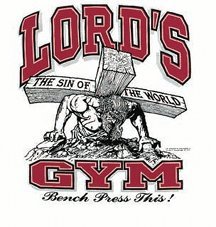
Borrowed from Gold's Gym logo.

Now WWJD is remembered as the quintessential Christian fad. A fad, according to the dictionary, is a practice or interest followed for a time with exaggerated zeal, and then abandoned when something else comes along to take its place.

Sociologists classify fads as a form of “collective preoccupations,” where many people over a relatively broad social spectrum engage in a similar behavior and interpret it in similar ways in order to identify their place in society.

As such, they have a role to play in building group identity. They appeal particularly to youth, because they provide both a way to win peer approval and distance young people from their parents

In religion, where group identity becomes a lens for evaluating every aspect of life, fads can be especially potent.

In a 2006 book, Flavor of the Month: Why Smart People Fall for Fads, University of Delaware professor Joel Best says the appeal of fads is understood in context of American values of improvement and progress. Eager to remedy problems, Americans quickly invent new solutions to address a perceived shortcoming.

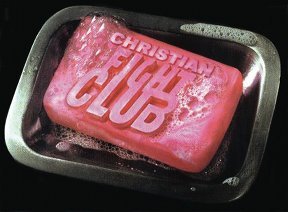
Spin-off from the movie Fight Club.

Many fads are harmless, Best asserts, but when they become institutionalized as conventional wisdom in a discipline or field and then fall short of expectations, they can be counterproductive.

Some conservative Christians see elements of that in widely popular movements like Rick Warren’s “The Purpose Driven Life” and the Emergent Church.

Todd Wilken, a Lutheran minister and host of a Christian radio program, wrote an article describing the “Fad-Driven Church.”

“There is a new book, a new program or a new emphasis every year or so,” he said. “It’s all anyone can talk about; it’s all the preacher preaches about—for awhile. Then, as quickly as it came, it’s gone. As eagerly as it was received, it’s abandoned and forgotten.”

That may not sound like a problem, but it is the only kind of Christianity that many churches know, Wilken said. Many fads are harmless, he says, but most contain theological error.

Following a progression from Promise Keepers to Weigh Down Workshop to The Prayer of Jabez to Left Behind, Wilken complained, “In the fad-driven church, ‘exaggerated zeal’ has replaced ‘the faith once for all delivered to the saints.’”

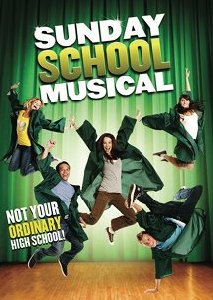
Take-off on High School Musical movie.

Fascination with Christian fads indicates lack of discernment and desperation about becoming relevant, Wilken asserted.

Os Guinness, author of Prophetic Untimeliness: A Challenge to the Idol of Relevance, argues that in their uncritical pursuit of relevance, Christians have actually become less relevant.

Guinness embraces the concept of “resistance thinking.” In a 1945 essay, C.S. Lewis argued that if Christians adapt the gospel to what fits their times, they will have a comfortable and convenient faith, but it will be irrelevant to the next generation.

Lewis instead called for looking in the gospel for what is difficult or obscure as a way to be true to the whole gospel and stay relevant to any generation.

Outsiders often perceive fads as frivolous or silly, but they can be serious and start with the best of intention. What distinguishes them from social movements is whether they last.

When either introduced or popularized by Charles Finney during the Second Great Awakening, many criticized the “altar call,” urging penitent sinners to come forward and pray at the close of a service, as a heretical fad. Today, it is standard fare in most Baptist churches.

Some find parallels in hip young ministers like Rob Bell, pastor of Mars Hill Bible Church in Grandville, Mich., and a leader in the Emergent Church movement.

“He’s figured out how to convey basic Christian doctrine in a highly skeptical culture,” Quentin Schultze, a professor of communication at Calvin College, said in a 2006 story profiling Bell in the New York Times.

The Cross mp3 player.

Schultze, author of books including High Tech Worship? Using Presentation Technology Wisely, says the key to discerning if an innovation glorifies God or is a distraction is whether it adds quality to the worship experience or is simply added because it seems cool.

Others insist the problem is not the fad itself but the effect. If it appeals only to Christians, they say, it tends to separate the church from culture instead of engage it.

Five years ago, church groups filled theaters in an outreach program calling Mel Gibson’s The Passion of the Christ movie “perhaps the best outreach opportunity in 2,000 years.” After the hubbub was over, the film earned $611 million, and worship attendance remained unchanged.

Tinklenberg says she always knew the WWJD fad would fade, because only a spiritually mature Christian would seriously ask that question. She didn’t mind people making money off her idea, but she regretted seeing it cheapened with products like a WWJD board game, with 400 questions asking what Jesus would do in different situations and the first player getting W, W, J and D wins.

“WWJD isn’t about pat answers,” Tinklenberg told Salon. “It’s about struggling with faith, trying to figure it out. The meaning is in the struggle.”


Tweeting churches discover the gospel according to Twitter

ORLANDO, Fla. (RNS)—Tweeting during church? Isn’t it rude?

David Loveless doesn’t think so. Loveless is lead pastor of Discovery Church , a nondenominational congregation that draws about 4,000 on Sundays to three locations in Orlando.

The congregation always has thrived on the cutting edge, becoming among the first to embrace contemporary music and remove its steeple from its building.

Now the congregation is tweeting—using 21st-century technology to discuss the gospel in 140-character cell-phone text updates sent via Twitter.

David Loveless, pastor of Discovery Church in Orlando, Fla., asks parishioners to send him text messages, or tweets, via Twitter during his sermons to help spark an interactive conversation during worship services.

The technology emerged naturally here, as something parishioners brought with them to Sunday worship services from the rest of their week. Loveless recognized it as a new way to communicate, and he began posing questions during his sermons and asking parishioners to “tweet” back by texting their responses. Those responses then were woven into his sermons, creating an instantaneous dialogue between pulpit and pew.

“In John 1, when Jesus was referred to as ‘the Word that became flesh,’ God knew exactly what was the most relevant form of communication for the first century,” Loveless said. “It made people feel like, ‘My gosh, he talks my language.’ That would be people’s responses these days, in going, ‘My gosh, my pastor tweets.’”

It is the newest technology arriving in contemporary church services. In fact, it’s so new, and growing so fast, there’s no data to say just how many churches have embraced it.

No longer is the cell phone such a pariah—only ringing cell phones are. Instead, church leaders are inviting worshippers to tweet and text their way through services as a way to share their prayers and reflections with neighbors in the pews, or their family, friends and “followers” on Twitter.

“It’s a hot-bed issue right now, and people are on two sides of the fence about it,” said Matt Carlisle, a Nashville, Tenn.-based technology and new media consultant for faith-based nonprofits.

“As Christians, we are to witness, we are to make disciples for Jesus Christ. And if we can embrace new technology to do that, I don’t see any reason why we shouldn’t embrace Twitter, why we shouldn’t embrace Facebook.”

Many church leaders embraced new media such as Twitter and Facebook long ago as a way to create an online gathering place and promote upcoming events. Now, some are taking it further, encouraging tweeting and texting during services as a way to create dialogue and strengthen a sense of community.

Michael Campbell, pastor of the 230-member Montrose Seventh-day Adven-tist Church in Montrose, Colo., poses questions during his sermons and asks worshippers to text their responses, which are displayed on a screen. Campbell then discusses the responses.

In other congregations, Twitter has emerged quietly and organically, with parishioners tweeting their reflections during services in the same way they tweet their thoughts or activities throughout the week. The dialogue also allows real-time discussion and gives those who couldn’t make it a chance to monitor services from afar.

“I’m a younger pastor,” Campbell said. “You’re just building that sense of community, and people are interested in that because now they are part of the sermon.”

But isn’t it distracting? Doesn’t it detract from the contemplative and meditative nature of spirituality? Carlisle points out worshippers long have taken notes during services, and that hasn’t been distracting to others.

“I don’t think the etiquette has been established yet,” he said. “Literally, within a year’s time, this thing has been happening at a handful of congregations.”

At Mars Hill Church in Seattle, leaders never decided to add Twitter to services. It just happened, said Ian Sanderson, a church spokesman.

The nondenominational congregation draws some 8,000 worshippers at nine locations, including a new one in Albuquerque, N.M. Seattle is a tech-savvy place, and the average member at Mars Hill is in his or her 20s. Tweeting and texting encourages dialogue across the congregation’s multiple locations, and it helps church staff keep up with what parishioners are thinking and feeling, Sanderson said.

“I would say probably 80 or 90 percent of the church staff is on Twitter,” he said. “If the old rules aren’t helping anyone in their walk and their relationship with Jesus, if you can pull out your iPhone and Twitter something about the sermon and that helps your whole group of friends, we’re not going to frown on that at all.”


Poll shows mixed feeling about same-sex marriage, gay rights

WASHINGTON (RNS)—A large survey on American attitudes toward homosexuality reveals mixed feelings about gay rights, with Americans saying states should not be forced to recognize same-sex unions, but also saying gay couples should have access to federal spousal benefits like Social Security.

The poll of more than 2,000 registered voters by Quinnipiac University found Americans torn over the 1996 Defense of Marriage Act, which defines marriage between one man and one woman at the federal level and allows states not to recognize gay unions performed in other states.

Americans slightly support—50 percent to 44 percent—the provision that allows states to not recognize gay unions. But a slim majority—54 percent to 39 percent—supports federal spousal benefits.

In addition, nearly two-thirds—64 percent—of Americans support the repeal of the ban on gays in the military, while half of Americans don’t see the battle for gay rights as an extension of the battle for civil rights for African-Americans.

The poll found that people’s views of homosexuality as a choice or inborn trait are a stark predictor of their views.

Two-thirds of those who think people are born gay support same-sex marriage, for example, compared to just 15 percent of those who think homosexuality is a choice.

The poll was clear in showing that gay causes are attracting increased support from Jews and Catholics and some Protestants, but evangelicals remain the most opposed to questions of gay marriage, adoption or benefits.

Three-fourths of evangelicals oppose laws to allow gay marriage; two-thirds oppose civil unions; and 62 percent oppose federal spousal benefits.

More than half of evangelicals see gay marriage as a “threat to traditional marriage,” while two-thirds of Catholics, and nearly 90 percent of Jews, disagree.

The Quinnipiac poll had a margin of error of plus or minus 2.2 percentage points.


How do you spell lust? Try M-I-S-S-I-S-S-I-P-P-I

WASHINGTON (RNS)—Las Vegas may be known as “Sin City,” but when it comes to transgressions per capita, parts of the Bible Belt may burn much hotter, suggests a new study by Kansas State University geographers.

The project, conducted by four graduate students in the university’s department of geography, maps out “hot spots” for Christianity’s seven deadly sins—lust, gluttony, greed, sloth, wrath, envy and pride.

The hot-spot data is based on federal statistics such as sexually transmitted disease rates for lust, theft rates for envy and violent crime rates for wrath.

Researcher Ryan Bergstrom emphasizes the project was intended as a secular mapping exercise, but faith leaders gradually have been discovering it through word of mouth. Many express surprise and disbelief at findings that show America’s deep South as suffering from more overall sinfulness than southern Nevada.

Joel Hunter, pastor of Northland Church in Longwood, Fla., speculated the results could mean that regional stereotypes about morality have been exaggerated greatly.

“Perhaps Las Vegas is known for its tourist industry, but the residents are in reality more sedate and conservative,” he said. “And perhaps Florida is known for its retirees, but our residents are more ‘out there’ with our appetites.”

Craig Gross of XXXChurch, a national anti-pornography mission, said the project’s findings were consistent with his own experiences, both as a Las Vegas resident and a pastor frequently asked to speak at evangelical churches in the southeastern United States.

“Every city is Sin City nowadays, with the availability of everything online and the world we live in,” he said. “It’s on display more here in Las Vegas, but the temptations are everywhere. It doesn’t surprise me that in the Bible Belt, where you’re keeping it more from other people, that it’s going on more than people think.”

But most experts, including the researchers themselves, advise people not to take the study seriously as a reliable measure of saintliness to wickedness, given the difficulty of findings ways to quantify each of the sins accurately.

Sloth, the sin of not realizing one’s potential and perhaps therefore the hardest of the seven to quantify, was mapped as the total expenditures on arts, entertainment and recreational activities compared to employment per capita. That’s a particularly dubious method, said Mark Biddle, a professor at Baptist Theological Seminary in Richmond, Va., and author of Missing the Mark: Sin and Its Consequences in Biblical Theology.

“You certainly wouldn’t measure (sloth) by trips to the theater; it has more to do with, let’s say, someone who had a musical talent or a bright kid who just didn’t work in school,” he said. “I would have measured it more by high school dropout rates or college completion rates, but even that would have been incomplete.”

The concept of the deadly sins is less prevalent in Jewish tradition, but the definitions—and critiques of the study’s weaknesses—are basically the same, said Solomon Schimmel, professor of Jewish education and psychology at Hebrew College in Massachusetts and author of The Seven Deadly Sins: Jewish, Christian, and Classical Reflections on Human Nature.

He agrees with Biddle that the study’s “wrath” manifestation—incidents of violent crime—comes closest to the source, but falls short by overlooking all the uncontrollable anger that doesn’t culminate in bloodshed, such as road rage.

“Someone can lose his temper without hitting anyone,” Schimmel said, adding that measuring lust as a reflection of sexually transmitted disease cases also overlooks a large segment of sinners.

“This could also reflect a lack of sexual education, or someone who is a devout Catholic and still has sexual impulses but doesn’t believe in using a condom,” he said, adding that the calculation also ignores all the sinners who keep their lustful impulses to themselves or turn to the Internet and other disease-free outlets.

Ultimately, no map could accurately pinpoint America’s modern-day equivalents of Sodom and Gomorrah, Biddle said, unless researchers someday develop mind-reading capabilities. After all, Jesus taught that sins of the heart that never result in observable transgressions still are sins.