Former Klansman reflects on how God’s grace redeemed a life of hate

Posted: 1/18/08

Former Klansman reflects on how
God’s grace redeemed a life of hate

By Roy Hoffman

Religion News Service

SPRINGFIELD, Va. (RNS)—Softspoken Tommy Tarrants leans back in his office chair, surrounded by books on religion and philosophy, and looks down at a newspaper headline from Nov. 28, 1968. It reads: “Tarrants Found Guilty, Sentenced to 30 Years.” The 60-year old sees a mugshot of himself at age 21 next to the story.

“A self-styled guerrilla waging a holy crusade’ against a ‘Communist-Jewish conspiracy’ was convicted Wednesday night of the attempted bombing of the home of a Jewish businessman,” the article said.

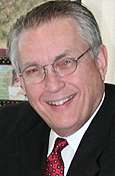
Former white supremacist and KKK member Tommy Tarrants now leads the C.S. Lewis Institute outside Washington, D. C., mentoring young scholars who want to delve deeper into the Christian faith. (RNS photos/John David Mercer & Louise Krafft/The Press-Register of Mobile, Ala.)

See related article:
Redeemed Klansman reunites with long-ago victim

“I feel shame and disgust,” he said. “You can see what a head case I was.”

Today, he is president of the C.S. Lewis Institute, a nondenominational organization with the motto “discipleship of heart and mind.” His life is a stark contrast to the violent bigotry of his youth.

His work includes mentoring C.S. Lewis Fellows—men and women who come to the institute to deepen their understanding of spiritual matters. He tells them of his own trials as “an example of the life-changing power of God’s grace.” He talks about his boyhood in Mobile, Ala., the sin of hatred that consumed him, and his salvation in a jail cell.

His listeners find it hard to envision him as a young man raising his hand to grab the throat of a Jewish classmate or a gun to blast into homes of black families.

“I was filled with rage,” Tarrants said. In his 1979 memoir, The Conversion of a Klansman: The Story of a Former Ku Klux Klan Terrorist, Tarrants sketched out his slide toward vehement hatred of Jews and blacks.

While he was aware of Jewish people in town—he describes a grammar-school crush on a Jewish girl and notes his grandmother worked at a Jewish-owned jewelry store—he knew nothing of Jews personally, nor the tenets of their religion.

As a teen, he became a loner, alienated from his family.

Press clippings document the life of former white supremacist and KKK member Tommy Tarrants.

“I hated my father,” he said. He stored a handgun, a sawed-off shotgun and a machine gun in his bedroom, all bought with money from after-school jobs.

He glimpses something of his own youth when he sees stories of alienated teens who explode, such as the massacres at Columbine and Virginia Tech.

“I was a problem waiting to happen,” he said.

The anti-Red fervor of the 1950s and ’60s, along with a conviction that the Jews were behind an international Communist conspiracy, focused Tarrants’ rage. He devoured propaganda literature about an alleged Jewish plot to control the world. He linked up with members of the Klan, a secret paramilitary troop known as the Minutemen and the National States Rights Party. He would drive through black neighborhoods, shooting into people’s homes. He prayed for the coming race war.

“I thought I was a Christian fighting against the Communist-Jewish conspiracy,” he said. “I was doing it for God and country.”

In the fall of 1963, the integration of his high school proved to Tarrants that his world was being turned upside down. He angrily called the office of Gov. George Wallace and left a message asking for intervention. A response came from the FBI, which called his home looking for him. He was suspended from school 10 days. Surely “the Jews were behind it,” he thought.

Tarrants headed to Mississippi, met with the Imperial Wizard Sam Bowers of the White Knights of the Ku Klux Klan and joined their ranks.

An application for the White Knights stated, in part: “We do not accept Jews, because they reject Christ, and, through the machinations of their International Banking Cartel, are at the root center of what we call Communism today. We do not accept Papists, because they bow to a Roman dictator. … We do not accept Turks, Mongols, Tartars, Orientals, Negroes nor any other person whose native background or culture is foreign to the Anglo-Saxon system of government by responsible, free individual citizens.”

He had been grievously misdirected, he says now.

He felt certain that he would go to heaven.

“I went about feeling like I had had my ticket punched,” he said. “I had made a profession of faith. But I had no change of heart, of life.”

He was unbowed in that arrogance, even after being convicted in 1968 of the attempted bombing of the home of Meyer Davidson, a Jewish man in Meridian, Miss.

Placed in solitary confinement at a Mississippi prison following a brief escape, Tarrants began to plumb his soul.

In a 6-by-9-foot jail cell—“reading was the only thing that kept me from going crazy … crazier”—he began to reflect on the meaning of his life.

He embraced Matthew 16:26: “For what is a man profited, if he shall gain the whole world, and lose his own soul?”

He recalled, “I fell on my knees and prayed and felt a thousand-pound weight lifted from me.”

That began what he describes as “a startling transformation.”

Others came to believe Tarrants was a changed man and spoke on his behalf, including Al Binder, a Mississippi lawyer who was Jewish and influential in political circles.

In December 1976, Tarrants left prison on a work-release program that enabled him to enroll at the University of Mississippi. Three years later, he published his memoir.

Knowing the Klan would call him a traitor and possibly try to harm him, Tarrants moved to Washington, D.C. He completed a master’s degree in divinity and a doctorate in ministry, and became a minister and spiritual counselor.

When he looks back over his life, he realizes he had close calls along the way.

When he dropped a homemade dynamite bomb, it didn’t go off. He was wounded in a police ambush where his accomplice was killed. In a prison escape, one of the two inmates who fled with him was killed by FBI gunfire.

“In every one of these situations, I deserved more than the other person to be the one who died,” he said. “But I was spared.”

He dedicated his life to helping people reconcile their differences—race, religion, differences of the heart.

“By God’s grace I was protected, despite my vile behavior,” he wrote in his memoir.

“It was a miracle. … Truly, the living Christ was active to redeem me and work out his plan for my life.”


Roy Hoffman writes for The Press-Register in Mobile, Ala.
News of religion, faith, missions, Bible study and Christian ministry among Baptist churches, in Texas, the BGCT, the nation and around the world.


Texas Tidbits

Posted: 1/18/08

Texas Tidbits

Ruane named Standard development director. Tom Ruane, who served 36 years with the Baptist General Convention of Texas Executive Board staff, has been named director of development for the Baptist Standard. He will work alongside Leroy Fenton. Ruane served as a campus minister and Bible teacher at Tarleton State University, Howard Payne University and the University of Texas at Arlington. He worked in the student ministry division at the Baptist Building from 1979 to 2000. Since then, he has been associate coordinator of institutional ministries and director of church relations consultants. He has been interim pastor of 26 churches and the pastor of two cowboy churches, in Ennis and in Kaufman County, where he continues to serve.


Weslaco church returns funds to BGCT. First Baptist Church in Weslaco returned $26,550 in Baptist General Convention of Texas church-starting funds that were used in a questionable manner. The funds were allocated to First Baptist Church to start a congregation that would originate as a third worship service at First Baptist Church. Most of the membership of First Baptist Church reportedly never understood it was starting another congregation, and former Pastor Jonathan Becker claimed the BGCT funds as a salary supplement for leading the new church. Last fall, Becker returned the funds to First Baptist Church in Weslaco, and the church agreed to return the funds to the BGCT. The BGCT has agreed not to seek any additional funds from the congregation. The total returned matches the amount BGCT records show went to First Baptist Church in Weslaco for the church-start in question. Additional funds were used to support First Baptist Church’s work in starting two other churches that continue operation. BGCT funds appear to have been used according to the guidelines in those instances, administrators report.


DBU meets challenge, receives $1 million grant. Dallas Baptist University received a $1 million challenge grant from the Mabee Foundation of Tulsa, Okla., after raising $15 million toward the construction of the Patty and Bo Pilgrim Chapel. Pilgrim Chapel will be a 77,000-square-foot facility with a 1,500-seat sanctuary, as well as classroom space, faculty and staff offices, reception hall and prayer ministry offices.


Cepeda named bivocational/small church director. Robert Cepeda has been named Baptist General Convention of Texas bivocational/smaller membership church ministries director. Cepeda assumed the role Jan. 1 after serving as a BGCT church starter in the Rio Grande Valley since 2007. Prior to joining the BGCT Executive Board staff, Cepeda was pastor of First Baptist Church in Los Fresnos. He also served as associate pastor and later as pastor at Primera Iglesia Bautista in San Benito. He was on staff at Baptist Temple Church in San Benito and First Baptist Church in Overton. Of his 17-year ministry experience in churches, more than half was in bivocational service. He is first vice president of the Texas Bivocational/Smaller Membership Church Ministers and Spouses Association. For three years, he served as second vice president of the group. He was a member of the BGCT Executive Board two years, including service as chairman of the Missions & Ministry Committee.


News of religion, faith, missions, Bible study and Christian ministry among Baptist churches, in Texas, the BGCT, the nation and around the world.


TOGETHER: Texas Baptists ‘Engage’ evangelism

Posted: 1/18/08

TOGETHER:
Texas Baptists ‘Engage’ evangelism

“Brothers, my heart’s desire and prayer to God for the Israelites is that they may be saved” (Romans 10:1).

The Apostle Paul loved people. He yearned for them to know God as he had come to know him. It is much too easy to get preoccupied with good things and neglect the main thing, the matters that have eternal consequences.

wademug
Executive Director
BGCT Executive Board

The Engage evangelism conference stirred my heart for those who need to know Jesus and his power to change and save their lives. There is eternal value in listening to evangelists preach the gospel and share their stories. We all need times of reminding that people are all around us whom we are not seeing, and they are hungry for a relationship with God. A Christian loves to share with people that they do matter to God, and Jesus is the proof.

We heard challenging preaching and authentic testimonies. I am grateful that in my last month as your executive director, I had the privilege of being a part of the rebirth of the evangelism conference. I call on all Texas Baptists to pray for Jon Randles, our new evangelism director, and his wife, Kelly, as they offer themselves to God and to our churches for renewing in our hearts a passion for souls.

Let me encourage you to attend one of the five regional Engage XP conferences in your area in February—El Paso, First Baptist Church, Feb. 10; Belton, First Baptist Church, Feb. 11; Kingwood, Woodridge Baptist Church, Feb. 12; San Antonio, First Baptist Church of Universal City, Feb. 13; and Midland, First Baptist Church, Feb. 14.

You can order tapes from the conference, and they will bless and encourage you. But do make a point to be in one of these one-day conferences, and let the messages, the worship, the times of prayer and the fellowship reignite your zeal for reaching people for Christ.

I will be a better preacher Sunday because of what I heard and felt at Engage. And I will be more alert to every person I meet, too.

I heard three stories from bivocational pastors who, within the last two years, had gone to churches that were almost dead, and now those churches are thriving. I met a pastor who found new zeal in ministry as he helped start a new cowboy church. I shared the stories of three of our new church starts that baptized over 100 people this past year—a multi-ethnic church in Abilene, a traditional/contemporary church in Boerne and a cowboy church in East Texas.

I visited with several pastors at Engage who shared with me that the conference had called them to a new hope that they could help their people be effective in sharing their faith and drawing people to Christ.

You don’t have to baptize 100 people to be successful in the eyes of God or of your fellow pastors. But we all have to be alert to people all around us and to be intentional in helping people find their way to God if we are to be faithful to our calling.

We are loved.

Charles Wade is executive director of the Baptist General Convention of Texas Executive Board.

News of religion, faith, missions, Bible study and Christian ministry among Baptist churches, in Texas, the BGCT, the nation and around the world.


Satanists arrested on suspicion of arson in Ala. church burnings

Posted: 1/18/08

Satanists arrested on suspicion
of arson in Ala. church burnings

By Grace Thornton

Alabama Baptist

PHENIX CITY, Ala. (ABP)—Two professed Satanists have been charged with a recent series of arsons at Baptist and Methodist churches in rural eastern Alabama.

The men—both age 21—allegedly set fires at Woodland Baptist Church in Phenix City, Greater Peace and Goodwill African Methodist Episcopal Church in Crawford and Greater Bethelpore Baptist Church in Smiths Station.

Authorities have not arrested the person they say set fire Jan. 12 to Providence Baptist Church in Alabama’s rural Chilton County. The blaze destroyed the church’s fellowship hall, education space and office.

“The officials say they have gotten some really good fingerprints, footprints and tire prints,” said Allen Foster, the pastor of Providence Baptist. The church’s sanctuary— located just feet from the charred remains of neighboring buildings—suffered some vandalism but remains standing.

Providence Baptist is the second church in Chilton Baptist Association to burn in recent weeks. Its sister congregation, Maple Springs Baptist Church in Clanton, burned Dec. 29.

The pastor of Maple Springs, Roland Davis, said Jan. 11 that his church is still awaiting word from the state fire marshal on the fire’s cause. But after the Providence Baptist fire, the Birmingham News reported that a fire marshal spokesperson called the cause “unknown, but suspicious.” Both church fires happened after 3 a.m.

“We’re just thankful no one was hurt and that we have a place to go home to,” Foster said, speaking of the church’s relatively undamaged sanctuary. He added, “We hope if we can get the burned part cleaned up and get the water fixed up to the sanctuary we can meet in our own facilities next week.”

The Providence congregation, emotional but in good spirits, met for services Jan. 13 a couple of miles down the road in a facility lent to them by Dawson Memorial Baptist Church in Birmingham.

The Alabama Baptist State Board of Missions provided both churches—as well as the Phenix City congregation—checks from a disaster-relief fund.

For now, Maple Springs Baptist’s congregation is meeting in the old sanctuary of nearby Samaria Baptist Church. A building committee has already been chosen so the church can rebuild, Davis said.

Providence Baptist plans to do the same soon, Foster said.

“We’ve got lots of decisions to make, but we’re going to make them as a family,” he told the congregation Jan. 13. “We’re going to get through this thing. It’s bigger than you and I but not bigger than the God we serve. It felt like a death, didn’t it? But it wasn’t. The church is still alive.”

The fires happened nearly two years after three young men made national news by burning nine Baptist churches in western Alabama.


News of religion, faith, missions, Bible study and Christian ministry among Baptist churches, in Texas, the BGCT, the nation and around the world.


Attempt at dialogue with Muslims sparks criticism of NAE

Posted: 1/18/08

Attempt at dialogue with
Muslims sparks criticism of NAE

By Robert Marus

Associated Baptist Press

WASHINGTON (ABP)—The National Association of Evangelicals is under attack from some prominent Christian conservatives for its involvement in an attempt at Muslim-Christian dialogue.

Southern Baptist Theological Seminary President Al Mohler, former presidential candidate Gary Bauer and other right-wing evangelical leaders are among those who criticized the move in a recent article on CitizenLink.com, part of evangelical broadcaster James Dobson’s Focus on the Family empire.

The critics said NAE president Leith Anderson and Rich Cizik, NAE’s government-affairs director, should not have added their names to a letter titled “Loving God and Neighbor Together: A Christian Response to ‘A Common Word Between Us and You.’”

Mohler, according to the website, said the letter “sends the wrong signal,” seems to “marginalize” the uniqueness and divinity of Christ, and that Anderson and Cizik’s participation represented “naiveté that borders on dishonesty.”

Bauer said the NAE officials’ participation in the letter makes him fear the evangelical group is “going down the same road that the National Council of Churches is going,” referring to the ecumenical Protestant group that many evangelicals view as too liberal.

The letter, published in a New York Times advertisement and spearheaded by four prominent Christian scholars at Yale Divinity School, was signed by a broad array of more than 300 evangelical, mainline Protestant, Catholic and Orthodox Christian leaders in the United States and abroad.

It was a response to an earlier letter, signed by more than 100 Muslim leaders from around the world, calling for Muslims, Christians and Jews to find commonality for the sake of preventing further religious suspicion and conflict. The Muslim scholars’ missive said the groups could agree that loving God and loving neighbors are “the two greatest commandments” and that they are “an area of common ground and a link between the Qur’an, the Torah and the New Testament.”

The Yale response, meanwhile, said the signatories “were deeply encouraged” by the Muslims’ letter. They said they received the effort “as a Muslim hand of conviviality and cooperation extended to Christians worldwide” and that they wanted to respond by extending “our own Christian hand in return, so that together with all other human beings we may live in peace and justice as we seek to love God and our neighbors.”

The letter also apologized for times in the past when professed Christians have not responded with grace to Muslims, specifically singling out the Crusades. “Before we ‘shake your hand’ in responding to your letter, we ask forgiveness of the All-Merciful One and of the Muslim community around the world,” the Christian leaders said, using a phrase for God common in the Muslim and Arab world.

Mohler specifically criticized the apology for the Crusades. “I just have to wonder how intellectually honest this is,” he said. “Are these people suggesting that they wish the military conflict with Islam had ended differently—that Islam had conquered Europe?”

Anderson, in a statement posted on the NAE website, said he signed the letter even though he had a few reservations about it.

“I requested some changes that were made although there were others I might have preferred,” he said. “Yes, I know that it is nearly impossible to keep going back to more than a hundred busy theologians and Christian leaders with the addition and subtraction and rewriting of words and paragraphs. Sometimes we all sign onto things that are not all that we would like them to be.”

But Anderson said he had sought the counsel of other evangelical leaders whom he respected, including those ministering among Muslims, who encouraged him to support the letter.

“They told me that signing the statement would be especially helpful to Christians who live and minister in Muslim-majority countries and cultures. In fact, some suggested that not signing could be damaging to these Christian brothers and sisters who live among Muslims,” he said.

Among the signatories was Martin Accad, dean of the Arab Baptist Theological Seminary in Lebanon.

Anderson also noted that he signed the statement as an individual rather than as an official NAE representative.

Similar groups of conservative evangelicals in the past two years have criticized NAE, Cizik and Anderson for their involvement in other ecumenical causes and issues. In March, the organization’s board declined to discipline Cizik for his public involvement in calling on Christians to combat global warming, despite a letter from Dobson and other prominent evangelical conservatives urging them to do so.


News of religion, faith, missions, Bible study and Christian ministry among Baptist churches, in Texas, the BGCT, the nation and around the world.


RIGHT or WRONG? ‘Baptist’ in name

Posted: 1/18/08

RIGHT or WRONG?
'Baptist' in name

Our church is talking seriously about sponsoring a new congregation in our area. But we seem headed for a meltdown. Several folks insist “Baptist” must be kept out of the name of the new church. Surely there are moral grounds for requiring a Baptist church to include “Baptist” in its name.


This is not a theoretical question. When the church I now serve, Second Baptist Church of Lubbock, moved to a new location in 2001, the church had a long conversation about whether to change its name and eliminate the word “Baptist.” (Some folks also didn’t like being “Second.”) I know of no moral ground for requiring a Baptist church to include “Baptist” in its name. Some might argue a church is not providing “truth in advertising” if it does not include its denominational identity in its name. Perhaps there was a time when this was true, but in today’s world, that is no longer the case. A community church with an innocuous name can belong to a particular denomination or be nondenominational.

However, there are some ethical issues connected with a church’s name and its denominational identity. First, it is unethical to have “Baptist” in your name and not really be a Baptist church. Of course, there are many issues about which Baptists disagree. However, there are some issues that are non-negotiable. You cannot claim to be a Baptist and not believe in and practice these fundamental Baptist tenets. For example, if a church does not allow all members to participate in decision-making, then it cannot be a Baptist church—regardless of its name.

Second, a church may not have its denominational identity in its name, but it should make clear what its denominational identity is. Some churches are members of the Southern Baptist Convention or the Cooperative Baptist Fellowship or the American Baptist Churches USA, but seem to want to hide the fact. Of course, one can understand a church wanting to distance itself from a denomination that has acted in ways that are embarrassing or incongruent with the church’s belief or practice. Nevertheless, it seems less than honest to support a particular denomination while trying to hide that fact from the general public and unsuspecting church members.

Third, it is embarrassing and sad that many Baptists now feel the name “Baptist” has been soiled. There are many kinds of Baptists, and no church can agree with every stripe of Baptist. Nevertheless, “Baptist” is an honorable name, and I am happy and proud the church I serve kept “Baptist” in its name. I believe true Baptists should live in ways that will help redeem the name.

Fourth, I do think there is a moral requirement that churches endeavor to live up to the name “Church.” That, I believe, is the greater necessity in our world.

Philip Wise, pastor

Second Baptist Church, Lubbock


Right or Wrong? is sponsored by the T.B. Maston Chair of Christian Ethics at Hardin-Simmons University's Logsdon School of Theology. Send your questions about how to apply your faith to btillman@hsutx.edu.

News of religion, faith, missions, Bible study and Christian ministry among Baptist churches, in Texas, the BGCT, the nation and around the world.


Buckner assumes Kenya children’s home ministry

Posted: 1/04/08

Buckner assumes Kenya
children’s home ministry

By Scott Collins

Buckner International

KITALE, Kenya—Buckner International assumed responsibility for the Seed of Hope Children’s Home in Kitale, Kenya effective Jan. 1. The home, located in western Kenya, houses 69 orphan children, three house families, a school, a clinic, a church, and numerous community services.

The addition of Seed of Hope brings the number of children and families served by Buckner in Kenya to nearly 300, including foster care programs in the capital of Nairobi as well as Busia and Kitale. In addition, Buckner works closely with Kenya Baptists in the operation of the Baptist Children’s Center in Nairobi. Other Buckner partnerships in Kenya include work with children in Nairobi slums.

Olumayowa Famakinwa, a Baylor University student who works in Waxahachie, cares for children in a Vacation Bible School in Busia, Kenya, as part of a mission trip sponsored by Buckner International. In addition to ongoing work in Busia and Nairobi, Buckner recently assumed responsibility for the Seed of Hope Children’s Home in Kitale, Kenya. (PHOTO/Buckner)

The announcement about Buckner expanding its ministry in Kenya came at the same time the agency announced it was postponing two mission trips there in light on ongoing political unrest and escalating violence.

“Our excitement about assuming this ministry is tempered by the events going on in Kenya. Still, we know God sees the big picture and months from now, we will see great things God does in this work,” Buckner President Ken Hall said.

In announcing the addition of Seed of Hope, Buckner Vice President of Global Initiatives Randy Daniels also said Esther Wanjiku Ngure has been named manager of the home. Ngure is from Kitale and brings more than seven years of experience working in social care. Buckner Kenya Director Dickson Masindano oversees the organization’s ministry in the country.

“Seed of Hope is having a profound impact on the lives of so many boys and girls in Kitale,” Daniels said. “It is critical to these children that Buckner sustain this wonderful ministry and add to its growth for the future.”

Seed of Hope was started as a ministry of German evangelical Christians. Carsten and Silke Werner were instrumental in starting the orphanage and the other ministries associated with Seed of Hope in Kitale. Daniels said when the time came for the Werners to return to Germany, they contacted Buckner about assuming the children’s home.

“We were in the process of beginning foster care in Kitale at the time, and this just seemed to be an answer to prayer,” Daniels said.

Short-term mission teams from Buckner work in Kenya on a regular basis, providing Vacation Bible Schools for the children in Buckner’s care, teaching sports camps, providing medical clinics, and helping build community development centers that serve children and families in local communities.

Carsten Werner said the experience Buckner has working in developing countries “gives us hope that what we started will continue. This cooperative work is a blessing for our children’s home because now a strong partner will share the responsibility with us.”

He added that while he and his family are returning to Germany, they remain committed to helping Buckner raise financial support for Seed of Hope.

News of religion, faith, missions, Bible study and Christian ministry among Baptist churches, in Texas, the BGCT, the nation and around the world.


Ministries continue in Kenya as violence subsides somewhat, but tension remains

Posted: 1/17/08

Ministries continue in Kenya as violence
subsides somewhat, but tension remains

By Ken Camp

Managing Editor

Classes began as scheduled at Wayland Baptist University’s Limuru campus, in spite of a wave of violence that swept through Kenya.

Meanwhile, Buckner International’s staff confirmed the safety of children housed at Nairobi’s Baptist Children’s Center and in foster homes, and several Baptist groups provided emergency care for displaced people as Kenya continued to recover from widespread rioting and political turmoil.

A man wipes his face in front of a church where about 50 people were burned alive in Eldoret, Kenya. President Mwai Kibaki’s government accused political rival Raila Odinga of responsibility for an explosion of tribal violence triggered by a disputed presidential election. (Photo/Reuters)

Violence erupted after a disputed presidential election and allegations of voting fraud. A mob set fire to an Assembly of God church building in Eldoret with 50 people inside. Nationwide, at least 600 people were killed and more than a quarter of a million displaced, according to official reports. Unofficial sources cited even larger numbers.

The campus in Limuru where Wayland offers classes in partnership with Kenya Baptist Theological College became a temporary shelter for about 200 refugees.

Richard Shaw, dean of the Kenya campus and director of the Wayland Mission Center, arrived in Kenya Jan. 13, and classes resumed the next day.

“At this point, most of our students have arrived on the campus and are diligently studying,” Shaw wrote in a Jan. 15 e-mail. “During tea times and meals, the students sit glued to the TV set in the dining hall, alert to any news of conflict.”

In another e-mail, Shaw characterized students as “clearly preoccupied, anxious about families and friends they have left behind, some in distant and dangerous places.”

The greatest need students face is fuel, and their greatest challenge is transportation, he noted.

“Three of our students have not been able to attend because no fuel whatsoever can be found in their districts,” Shaw reported. “One of our students had to walk here, about 100 kilometers” or about 62 miles.

In his online blog, Buckner International President Ken Hall posted periodic updates from his agency’s staff in Kenya during the last few weeks.

In a Jan. 11 posting, he quoted an e-mail received from one employee: “The situation in Kenya seems to be returning back to normal, but there is so much tension around … so keep praying.”

Buckner created a Kenya relief fund “to answer the needs of food, clothing, supplies, health care and housing repairs and construction for both the children in our care and the neighborhoods where we provide ministry,” Hall wrote.

Baptist World Aid, the relief and development arm of the Baptist World Alliance, sent $10,000 to the All Africa Fellowship for relief work in Kenya and $5,000 to Uganda to provide for Kenyan refugees who had fled their homeland.

Baptist Global Response—a Southern Baptist international relief and development organization—provided $25,000 to relief in Kenya from the Southern Baptist World Hunger Fund. The Southern Baptist International Mission Board coordinated efforts to help distribute food to 2,500 families in seven cities.


News of religion, faith, missions, Bible study and Christian ministry among Baptist churches, in Texas, the BGCT, the nation and around the world.


GLIMPSES OF THE WORLD Lottie Moon Offering_122203

Posted: 12/19/03

GLIMPSES OF THE WORLD:
Lottie Moon Offering

By Emily Crutcher & Manda Roten

SBC International Mission Board

As Southern Baptists engage the challenge of this year's Lottie Moon Offering for international missions, workers with the International Mission Board report numerous signs of God's work around the world.

The Southern Baptist Convention offering has a goal of $133 million, with a challenge goal of $150 million.

Here are samples of current reports from the field:

bluebull Five Tibetan girls chatted after class. Three were in their mid-teens, and two were in their early 20s. All knew their new English teacher was a Christian.

The three teenagers recently had become believers, but fear prevented them from telling others. The two older Tibetans threatened to beat their younger classmates if they heard even one of them was considering becoming a Christian. The smallest girl stepped forward and quietly said, “I am a Christian.”

As her friends watched in horrified silence, the two older girls began to beat her. The older girls then turned to them and said, “If we hear you have become Christians, we will do worse to you.”

When the older girls left, the two turned to help their friend. They begged her forgiveness for being so afraid to speak or to help.

She said she understood–because she too was afraid. For many Tibetan believers, fear does not go away. It is a way of life.

bluebull Each time the doorbell rang, Tony and Jamie–Southern Baptists living in Paris–knew another guest was arriving. Soon their high-rise apartment was crowded with Parisians and Paris immigrants, munching appetizers and getting to know each other through their common language, French.

Nine nations were represented in their home–including people from Africa, Asia, the Middle East and Europe, and even Laura, a volunteer from Tennessee.

They talked and laughed around the dinner table. Then Tony and Jamie led the group in a time of challenge and reflection. They read from the Bible, sang a French chorus and prayed. For many–including some Muslims and a Buddhist–it was the first time they had heard the Bible or sung a Christian song. As they left, each of them chose to take a French New Testament.

After the other guests left, Richard, a French teacher, told the Baptists: “Your passion and openness about your faith is shocking to us as French people. But don't lose it! Keep doing what you are doing. We need to be challenged.”

A short time later, Richard professed faith in Jesus Christ. “The light of God has entered my life,” he said. He has since been transferred to another city and is planning to start a house church among his family's new friends.

bluebull The 12-year-old daughter of IMB missionaries in Lima, Peru, is leading her own Bible study. Each Sunday, while her parents lead a house church in their home, her friends study the Bible with her.

She has decorated a room for the Bible study, prepares lessons to teach each week and plans creative crafts for them to make. She uses handmade gifts to encourage the other girls to attend each week and memorize Bible verses.

When parents pick up their daughters from Bible study for the first time, the Southern Baptist family has a chance to invite the whole family to the house church.

Now their home is filled with people many Sundays–parents worshipping in the house church and children studying the Bible together, under the faithful leadership of a “missionary kid.”

bluebull In early 1999, God led a team of Southern Baptists to a remote village in Tanzania. There they believe God gave them a vision to begin work among the Zaramo people group–98 percent of whom are Muslim. Half never have heard Jesus' name.

Within a few months, the team saw its first new believer–an outcast blind man. Soon afterward, an elderly man believed. After a year, a few new believers were meeting for discipleship and worship.

When one family of the team moved into the village, the work began to produce more fruit. One by one, the Zaramo were coming to faith in Christ.

In May 2003, 20 new believers followed Christ in baptism. Two fledgling churches with 30 believers meet regularly for worship and Bible study, and dozens of children faithfully gather to hear Bible stories. People from nearby villages want to hear Bible stories and learn about Jesus.

“What is being witnessed now is only the very beginning of a movement,” explained a Southern Baptist worker among the Zaramo. “Pray that this would be a sweeping movement of the Holy Spirit in the lives of men, women and children as he builds his church among the Zaramo people of Tanzania.”

bluebull A couple told a Christian worker in India that 20 people had gathered at their home to hear the gospel. The man followed the two to their home, where Hindus crowded around him and asked, “Who are you preaching about?”

He told them he was preaching about Jesus Christ. Then they asked: “Can you prove Jesus Christ? Show us your God.”

He told them he would show them that Friday. All the way home and during the following days, he prayed. On Friday, he returned to the people. “Do you want to see my God?” he asked.

“Yes!” they all answered.

He explained: “If you go see the Prime Minister, you need a letter of introduction. There is a procedure. It's the same if you want to see God. There is a procedure–it is the gospel.”

One man stayed to hear more. After sharing with the Hindu man, the Christian worker led him in prayer, and the man's life was miraculously changed. The worker asked him, “What happened?”

The man answered: “I saw Jesus! He came into my heart.”

For more information about the Lottie Moon Offering or the IMB, visit www.imb.org.

News of religion, faith, missions, Bible study and Christian ministry among Texas Baptist churches, in the BGCT, the Southern Baptist Convention ( SBC ) and around the world.


Bible Studies for Life Series for January 27: Breakthrough in confidence

Posted: 1/16/08

Bible Studies for Life Series for January 27

Breakthrough in confidence

• Psalm 23:1-6

By Steve Dominy

First Baptist Church, Gatesville

Sometimes we can analyze a passage to the point that it loses the meaning it was intended to have. The intent of that analysis was good. We want to know to the fullest extent the meaning and application of the passage, and that certainly is a laudable goal.

Some will argue this is a psalm of confidence or trust, while others will argue that this is a psalm of thanksgiving. It is both a psalm of trust and confidence and a psalm of thanksgiving. If we are honest, it is both of those and more.

I know that through at least one time of difficulty it has been a prayer for God to be that Shepherd; to make the pictures of the psalm real. So maybe there is more than one approach to reading this psalm. I think it is a good thing when we can read and apply this psalm on more than one level. It deepens our understanding of God and with that our trust in him.

The Psalms were not written in isolation, they were written from, and for, real life. This certainly is true of the 23rd Psalm. We can see the reality of life from which it is written when we read it in light of the 22nd Psalm. David begins the 22nd Psalm: “My God, My God, why have you forsaken me? Why are you so far from the words of my groaning?”

While we don’t know the circumstances surrounding David’s cry in this psalm, it is abundantly clear that life has crashed around him. But the same man who wrote the 22nd Psalm wrote the 23rd. He had experienced God’s faithfulness in the midst of life’s storms and had been brought safely through by God’s provision.

David is able to write of a God who is personal. David is not writing an article about an abstract God, he is writing a song of praise, thanksgiving and prayer to the God he knows. The very first line gives us insight into this personal nature of God, “The Lord is my shepherd.” David speaks from personal experience in this, he has experienced God’s provision and care, God’s work as a shepherd in his own life.

That God is a personal God is evidenced throughout both the Old and New Testaments. God is present with Adam and Eve in the Garden; at the burning bush God reveals his name to Moses; God establishes a covenant with his people; a way that they will relate to one another; the Temple is dwelling place of God among his people.

The most important component of God’s personal nature is God’s incarnation in Jesus. John affirms, “In the beginning was the Word and the Word was with God and the Word was God.” He continues in the same chapter, “… and the Word became flesh and dwelt among us.” That God would come to us and desires to have relationship with us shows we do not deal with an impersonal god but the God who is with us no matter the circumstances of life.

David also writes of the God who provides. Because God is the shepherd who provides, David can write, “I shall not be in want.” Another way to read that phrase is, “I shall lack for nothing.” There is an absolute confidence in God’s provision evidenced in this Psalm. Because the Lord is my shepherd I shall lack for nothing; God will provide all my needs.

When reading this passage, the focus often is shifted to the shortcomings of the sheep, their lack of eyesight, inability to swim well, and so on. But when we read the passage, all of the focus is on God’s care—God leads, guides, restores and protects. None of the focus in the first four verses is on the sheep, it is all on God.

The last two verses have the same focus, but they look forward where the first four verses focus on the present. One of the phrases that I have picked up, and I do not remember to whom to attribute is, “God will do as well in the future as he has done in the past.” In short, God is faithful. Not only is God present and does God provide for us now, this always will be the case. David has written of God’s presence and God’s provision and now turns to God’s faithfulness.

When we look at the passage we can see the joy in David’s life because of God’s faithfulness. Though there are those around him who would like to see the worst befall him, God gives him the very best. Not only does God give him the best, he gives so much of it that David no longer has any room to store it. All the frustrations of life pale in comparison to God’s faithfulness.

The 23rd Psalm is not one to be overanalyzed, it is one to be lived, celebrated, prayed and enjoyed. There is a story about a scholar and a pastor who spoke at a conference. Both men spoke on the 23rd Psalm. At the conclusion, the scholar got up and told the congregation, “I can tell you about the Psalm, he can tell you about the shepherd.”

The Psalm means little unless we are willing to let the Good Shepherd lead us in the manner he led David.

News of religion, faith, missions, Bible study and Christian ministry among Baptist churches, in Texas, the BGCT, the nation and around the world.


Explore the Bible Series for January 27: Do you trust the Lord’s promises?

Posted:1/14/08

Explore the Bible Series for January 27

Do you trust the Lord’s promises?

• Genesis 15:1-6; 16:1-3; 17:1-2, 17-19

By Donald Raney

First Baptist Church, Petersburg

The Bible is full of God’s promises to those who honestly seek to live in line with his design for their lives. God promises never to leave or forsake his children. God promises to be an ever-present help and guide. God promises always to hear and answer whenever we call on him.

Yet often in life it may appear God does not always keep those promises. We pray regarding a particular situation or issue, and God does not seem to answer or does not answer in the way or with the timing we want or expect. At times, doubt and disappointment can creep in, and we can begin to question whether God really cares or is even there.

At these times, the crucial question is whether we will trust our own perceptions or God’s promises. As we read the Bible, we find many stories of people who faced these times. Few stories illustrate the dilemma more clearly than the story of Abraham. God promised to make Abraham the father of a great nation through which God would bless the world. As Abraham awaited the fulfillment of those promises, he demonstrated for us the need to choose continually to believe and trust in God’s word despite the circumstances.


Trust the Lord’s word (Genesis 15:1-6)

In Genesis 12, God called Abraham to leave his father’s house and follow God to an unknown land which God would give to his descendents. Although he was 75 years old and did not have any children, Abraham followed God to Canaan. While it is unclear how much time passes between chapters 12 and 15, the intervening chapters suggest it was perhaps several years.

During that time, Abraham likely began to question when God’s promises would be fulfilled. He even may have wondered whether he had heard God correctly. He had followed God to this land but after several years he was still childless and owned at most the small plot of land where he and Sarah lived.

Thus when God again speaks to him and promises once again to greatly bless him, Abraham expressed questions about how God would bless him since all he owned would be inherited by one of his servants. Once again, without explaining how or when, God reassured Abraham that the original promises would be fulfilled and applied to a biological descendant.

Genesis 15:6 then records one of the most significant verses in the Old Testament. This verse is repeated three times in the New Testament as an example of true faith (Romans 4:3, Galatians 3:6, James 2:23). In spite of what he was experiencing at the moment, Abraham believed God. How often do we hear God’s call and respond, “I could never do that,” or “That is just not how it is normally or should be done.” Abraham teaches us that, while it may be difficult to understand how, if God says something will happen, we can trust his word it will happen.


Trust the Lord’s timing (Genesis 16:1-3)

Many times the stories in the Bible refer to customs that seem immoral to us and that often causes us to miss the point of the story. While Abraham taking Sarah’s servant Hagar as a second wife may shock us, in the culture of the time, it was perfectly acceptable and is somewhat secondary within the story. Abraham and Sarah had been living in Canaan 10 years and still did not have any children.

From their perspective, the possibility of giving birth to a nation became more remote with each passing day as both were well beyond the age for bearing children. They trusted God’s promise but questioned God’s method and timing. Sarah therefore devised a way for the promise to be fulfilled before it was too late.

Many times today, believers may find that God appears to be slow in responding. We pray and no answer comes. The temptation can be great to move ahead on our own. Perhaps the situation is similar to a previous experience. We know how God moved then and assume the same action this time. Perhaps we know what appears to be the most selfless and godly thing to do, and move in that direction. We may find some success when we act in our own timing, but it will never compare to the wealth of blessing we find when we commit to wait until God answers trusting in His timing.


Trust the Lord’s wisdom (Genesis 17:1-2, 17-19)

Fourteen more years passed, and Sarah still had not had a child. Abraham now was 99 years old and was convinced it was too late to father a child. So when God once again spoke to him promising to confirm a covenant with his descendent if he would continue to walk in faith before God, Abraham responded the way most people likely would, he laughed.

It was not out of disrespect toward God—he simply could not fathom how such would be possible under the circumstances. He reminded God he had a son, Ishmael, who now was a young teenager. Why could he not be the recipient of the promises?

Many believers today have heard God calling them to be involved in some particular ministry that may require making some change or moving and have asked, “Why can’t I serve you in this place or in the same way I am used to?” Often we simply cannot see the reason or wisdom behind God’s call. Our way of serving God makes much more sense to us.

Yet as Isaiah 55:9 reminds us, God’s thoughts are higher than ours. God has an infinitely better view of the big picture and God wants us to trust His wisdom even when it does not make sense to us. Fulfilling God’s call in God’s timing and according to God’s wisdom and plan leads us to experience measures of God’s blessings beyond all we can imagine.

News of religion, faith, missions, Bible study and Christian ministry among Baptist churches, in Texas, the BGCT, the nation and around the world.


‘Befriend Muslims,’ missionary urges_41805

Posted: 4/15/05

'Befriend Muslims,' missionary urges

By Sarah Farris

Special to the Baptist Standard

WACO–Line up every person in the world, and every fifth one would be Muslim, Sam Mansur told a group of Central Texas Christians.

The growing prevalence of Islam prompted Mission Waco to sponsor a Muslim awareness seminar recently led by Mansur, a Muslim-turned-Christian who now is a missionary to Muslims. (His name has been changed for security reasons).

Mansur asked participants to consider presuppositions Christians have about Muslims, and vice-versa.

See Related Stories:
Faith and the City: Relationship-building crucial to urban evangelism

Hip-hop churches bring redemptive message to urban youth

Frog Theatre gets jump on ministry to college students

Church aims to bring hope to city's west side

'Befriend Muslims,' missionary urges

Group members said Muslims think of Christians as “poorly disciplined, immoral, having a low view of God, and saturated by the media and materialism.” Christians describe Muslims with terms varying from “terrorists” and “oppressive toward women” to “moral and family-oriented,” they noted.

“Both cultures have centuries of stereotypes about each other,” Mansur said. Christians should realize Muslims are human, hospitable and loving people, he stressed.

Forty percent of Muslims worldwide live as minorities, and 7 percent of the Muslim population live in the United States.

“If we don't go to them, God will bring them to us,” he said.

Followers of Islam trace their faith to Muhammad, who claimed to have his first prophetic vision in 610 A.D. The Qur'an, Islam's holy book, is said to be a transcript of those visions, Mansur explained.

One reason it is difficult for a Muslim to convert to Christianity is the structure of Islamic society, he explained. In the community-oriented Muslim culture, the community controls the family, and the family controls individuals.

Mansur explained he was cast out of his family when he became a Christian.

A new strategy among many missionaries working in Muslim areas is to encourage new Christians to keep their faith secret so they can be a Christian influence within their families, he added.

Christians should share their faith by making friends with Muslims, Mansur said. When befriending Muslims, it is important to make them feel comfortable, invite them to dinner and show hospitality, he said. Because of social etiquette in Islamic societies and the emphasis on hospitality, a Muslim rarely would decline an invitation.

Christians should educate themselves when attempting to befriend Muslims, Mansur stressed. They should learn about the region the person is from and the branch of Islam they are a part of, because different geographic regions and sects of Islam vary greatly. He suggested using the Internet as an easy research tool.

“Be open and talk about something besides religion,” Mansur said. “And be genuine.”

It is not offensive to ask about a person's culture, but it is a turnoff to Muslims when Christians act like they know everything, he said.

“Build a friendship with a Muslim and learn from each other. Conflicts can be brought up later,” Mansur said, repeatedly warning seminar participants against “microwaving relationships” with Muslims–looking for a quick fix.

“There is a good potential that you could win a debate with a Muslim,” Mansur said. “But you will probably lose that friend, so there is really no point. It would actually be a loss.”

News of religion, faith, missions, Bible study and Christian ministry among Texas Baptist churches, in the BGCT, the Southern Baptist Convention ( SBC ) and around the world.