Churches breaking sacred silence in a hookup culture

CLEVELAND (RNS)—Some of Antonio James’ classmates laugh when they learn the 15-year-old has pledged not to have sex until he marries.

It’s not just male bravado that puts pressure on the 6-foot-1, 219-pound football player to be sexually active.

“There’s so much temptation around here with girls,” he said.

Antonio James and his grandmother, Mary James, participate in a True Love Waits ceremony at Glenville New Life Community Church in Cleveland. The teenager said he plans to remain a virgin until he gets married. (RNS photo/Courtesy of Antonio James)

One place where he and other teens can find support for their decision is at church. In the last two years, Antonio’s church and four other urban congregations have begun holding ceremonies at which parents, guardians and church members pledge to support youths choosing a chaste lifestyle.

The rituals are part of a new openness about sexual issues in the sanctuary.

Breaking a sacred silence in a hookup culture, church leaders are talking about sex with young people as part of a larger effort that includes providing information about health and job programs to combat poverty and hopelessness.

And youths are responding to the no-sex-in-the-city message.

At two Cleveland churches recently, 225 young people—almost double the number from a year earlier—made purity pledges at True Love Waits sexual purity rallies, said Gail Reese, director of the Ministry of Reconciliation.

Her ministry also has begun a program to train youths to lead discussion and support groups in churches and community centers.

“There’s no way in the world we can avoid talking about sex, because we see the devastation it does in our community,” said Rick Gillespie-Mobley, co-pastor of Antonio’s church, Glenville New Life Community Church.

Academic studies on the effectiveness of abstinence programs in the general population have found mixed results. But the effort seems to pay off for religious youths. Scholars at the University of Texas at Austin found religion and chastity pledges have “robust protective effects” on the incidences of premarital sex.

Nearly 40 percent of 15- to 25-year-old virgins surveyed said their primary motivation for abstinence was that it was against their religion or morals.

What prompts more churches to go beyond an implied “Just say no” message and open up conversations with youths about sex is a growing understanding of the impact popular culture has on young people, pastors and youth ministers note.

“It almost seems daunting to me at times,” Theresa Zickert, youth minister at St. Helen Catholic Church in Cleveland’s suburban Newbury Township, said of the task of fighting popular culture. But she also says kids are “looking for deeper meaning for their sexuality.”

St. Helen youths who went through an eight-week “Theology of the Body” series last year wanted to have the program repeated this year, she said. “We have to keep revisiting” the subject, Zickert said. “They need to be reaffirmed in their commitment.”
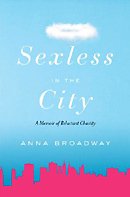
Evangelicals have been slower than Catholics to talk about sex, said Anna Broadway, who is generating buzz among conservative Christians with plain talk in her new book, Sexless in the City: A Memoir of Reluctant Chastity.

“There’s a lot of hypocrisy about how we deal with our humanity. That creates a lot of hiding of sin,” she said. “It keeps people from being more honest and wrestling with things in a healthy way.”

Peter Kerlin, youth and young adult director at the evangelical Church on the Rise in Westlake, will soon lead lessons in the “Livepure” series on sex and said churches “have to have the guts and respect for young people” to talk about sex.

But nowhere has this issue taken on more urgency than in inner-city churches, where national and local leaders say sexual issues must be addressed early to break the downward cycle of teen pregnancy, high school dropout rates, single-parent families, and alcohol and drug abuse.

Congregations no longer can ignore the coarseness of cultural acceptance of casual sex in movies, music and television, on the Internet and through other influences on youths, said Reese, a leader of the chastity movement in city churches.

“It was something we knew of, that it was there, but we didn’t address it,” Reese said. “When you look around, it’s more in your face than it was before.”

Young people say it is tough out there.

Lyndaisha Orr, 16, who attended a recent training session with Reese at a Cleveland-area YMCA, said support groups help her “to know I’m not the only one going through these battles.”

Faith has become her path to abstinence, she said.

“I’m doing this because God says, ‘Do it,’” Lyndaisha said. “I don’t want to be used by somebody. I hate being used by somebody.”

At New Life Church, Antonio said he also is able to resist the peer pressure to have sex.

“I’m going to be something,” he tells himself when others mock his decision to postpone sex. “And you all are going to end up doing something that will mess you up.”


David Briggs writes for The Plain Dealer in Cleveland.



Faith Digest: Presbyterians move toward allowing gay ministers

Presbyterians move toward allowing gay ministers. The nation’s largest Presbyterian denomination has cracked open the door to ordaining noncelibate gay clergy. Delegates at the Presbyterian Church (USA) general assembly voted 54 percent to 46 percent to remove a clause in their constitution that requires clergy to be either married and faithful or single and chaste. But the action still needs approval by a majority of the denomination’s 173 regional presbyteries, and similar moves in recent years have twice failed to win ratification on the local level.


ACLU seeks end to noontime prayer at academy. The American Civil Liberties Union has asked the U.S. Naval Academy to halt its practice of expecting midshipmen to stand for a prayer at their noon meals, saying it makes some of them uncomfortable. ACLU officials tied their request to a 2003 federal appeals court ruling that organized prayers before mandatory meals at the Virginia Military Institute in Lexington, Va., were unconstitutional. The academy, in a statement, said it is developing a response to the ACLU but seemed reluctant to change a tradition that’s been a part of academy life since it was founded in 1845.


One congregation in 100 each year closes. An average of 1 percent of religious congregations shut their doors each year, a lower closure rate than other organizations, a new study reveals. Researchers from Duke University and the University of Arizona found disbanded congregations tended to have fewer adult participants than active congregations, with a median size of 50 compared to 269 in active ones. They also learned that congregations where conflict prompted some people to leave in the previous two years were much more likely to disband than active congregations. Religious congregations have a lower annual mortality rate than other organizations studied over the last two decades, such as volunteer social service groups (2.3 percent), California wineries (5 percent) and peace movement organizations (9 percent).


Seminary names ethicist as president. One of the nation’s largest evangelical seminaries has tapped a prominent ethicist and administrator to become as its next president. Dennis Hollinger will take the helm Aug. 1 as president of Gordon-Conwell Theological Seminary. Hollinger currently serves as president and professor of Christian ethics at Evangelical Theological Seminary in Myerstown, Pa. Hollinger, a Brethren in Christ pastor, has been a local-church minister, as well as provost of Messiah College in Grantham, Pa.


Presbyterians elect San Francisco pastor as moderator. The Presbyterian Church (USA) elected a young pastor from San Francisco as moderator of its general assembly. Bruce Reyes-Chow, 39, who is active in the “emergent church” movement, will lead the Presbyterian Church (USA) and serve as a key denominational ambassador for a two-year term. Reyes-Chow, the grandson of Chinese and Filipino immigrants, is pastor of Mission Bay Community Church in San Francisco.


Shyamalan movie mixes fear, faith and fright

NEW YORK (RNS)—As a moviemaker, M. Night Shyamalan likes to ask the big questions. His new film, The Happening, is just his latest to take on questions of science and faith, and the “gaps”—as he puts it—where the two uncomfortably meet.

“Where are we headed? Are we going in the right direction? Is it too late to change course?” the writer/director asked during a recent interview in Manhattan. Then he added, self-deprecatingly: “I never thought I was all that serious a person, but when I sit down to write, I guess more adult things come out.”

Mark Wahlberg, one of the stars of The Happening, is "a self-identified born-again Christian."

The Happening, which stars Mark Wahlberg, Zooey Deschanel and John Leguizamo, purports first and foremost to be a scary B-movie about a mysterious airborne virus that wipes out the population in most of the Northeastern United States.

“One of the things I said to everybody, the cast and crew, I said, ‘Let’s get ourselves straight here. We’re making a B-movie. We’re going to have a lot of fun. It’s a paranoia movie. We just need to pound away; that’s our job,’“ said Shyamalan.

But the filmmaker admits there’s more to the movie than that, as often happens with his projects, from The Sixth Sense to The Village to Signs.

“You know, they’re all a little bit like therapy, all these movies, about something that’s bothering me or family things,” he said.

“It’s interesting with this slew of end-of-the-world movies today. I think everybody in our generation is starting to worry about these types of things right now. There’s an anxiety in the air.”

One reason Shyamalan cast Wahlberg as a high school teacher was the biography about Albert Einstein the director was reading at the time.

“He rejected religion and was kind of atheistic and did all these wondrous things in his 20s and got really into it,” Shyamalan said regarding Einstein. “And then in the gaps in science he started seeing a hand, in his point of view the hand of God. His life struggle was finding a kind of overall formula that could define the design of things.”

Shyamalan cast Wahlberg because the actor is a man of faith—a self-identified born-again Christian.

“It will convert you, baby. You’ll be touched by the hand of God, trust me,” Wahlberg told Leguizamo, who plays a math teacher in the film.

“I’ll be touched by something,” Leguizamo replied, laughing. “What I loved about the screenplay, it had that message that’s missing in so many big Hollywood flicks that don’t have a point of view. I loved that it wasn’t afraid of that.”

“The first thing I wanted to do, literally it was an agenda, and I know it sounds silly, but it was to pick the most likable cast I could possibly put at the center of the movie,” Shyamalan said.

“They don’t know it, they don’t know why they do it, but that’s their gift,” he said of his actors. “They come from a place of light, all three of them.”

As dark as The Happening may be, at its center is a disquieting calm as the source of the virus turns out to be something we’re accustomed to seeing as benign. This is a nod to the faiths rooted in the natural world.

“The Native American culture, that’s all it’s about. My middle name, Night, is actually an American Indian name,” Shymalan said.

The movie opens with a scene in which Wahlberg’s character is talking to his students about why honey bees are dying off in such large numbers today, in what is being called colony collapse disorder.

“When I was writing it, the bees thing came up and I was like, ‘Oh, this is perfect. We can open the movie with the bees,’” Shymalan said. “Then I was like, ‘What if they figure it out before the movie comes out? Then the whole point will be lost and it’ll turn out that it was a Verizon cell phone tower.’ But they still haven’t figured it out; it’s still a mystery. We’ll never figure it out. Again, it’s in the gaps.”

Shyamalan acknowledges that The Happening may be a heavy film, but he finds that appropriate, perhaps sadly so. And that’s why he ultimately decided to give the movie a happy ending.

“Nothing has changed except for fear, and the fear builds on itself until your fear has been realized. You’re all alone. But art, I believe, has the ability to convey that we’re not alone.”

Todd Hill is the film critic for The Staten Island Advance.


‘Prince Caspian’ more violent, less virtuous than original, scholars say

WACO (ABP)—“You may find Narnia a more savage place than you remember,” a dwarf says in the movie The Chronicles of Narnia: Prince Caspian.

The dwarf is undeniably right. The second movie in C. S. Lewis’ Chronicles of Narnia series is more violent and less virtuous than its predecessor, The Lion, the Witch and the Wardrobe, say two scholars who study the renowned Christian writer.

So is this the same Narnia that millions fell in love with in Walden Media’s first film? And what does Hollywood hold for the rest of The Chronicles of Narnia novels?

Ben Barnes plays Prince Caspian in The Chronicles of Narnia: Prince Caspian. (RNS photo courtesy Murray Close/Disney Enterprises and Walden Media)

In Prince Caspian, the Pevensie children—Peter, Susan, Edmund and Lucy—find the land they remember quite changed. They are summoned back in Narnia, where 1,000 years have passed since they left. The siblings are called back into combat with the creatures of Narnia to fight against the tyrant who has stopped the rightful heir, Prince Caspian, from ruling the land.

More violent 

What ensues is a storyline that is noticeably more violent than The Lion, the Witch and the Wardrobe.

Ralph Wood, professor of Lewis and Tolkien literature at Baylor University in Waco, Texas, noticed the difference between the two movies. He felt the film lacked the magical quality that distinguished The Lion, the Witch and the Wardrobe.

“I thought it was well done considering their basic intention was to create an action flick with a lot of excitement and a lot of battle scenes,” said Wood, whose many books include The Gospel According to Tolkien: Visions of the Kingdom in Middle-earth.

“The first battle was entirely invented,” pointed out Wood. “It’s clear the filmmaker knew the teenage audience.”

Wood explained that the book had only one battle, and it lasted a minute. He mentioned that Lewis never went into the gory details of the battle.

“Lewis wants to avoid cheap violence,” said Wood. “He didn’t want to distract from his main point.”

In the novel Prince Caspian, Lewis attempts to convey a vision of pride that can corrupt even the best of intentions. Pride can weave its way slowly into our lives unnoticed until it rears its ugly head when we least expect it. Even the hero, Peter, can have a fatal flaw of pride.

Wood also pointed out the emerging character and strength of Edmund was portrayed well in the film. In the first movie, Edmund starts off under the influence of evil but eventually becomes a hero. Wood said that is Lewis’ way of showing a need for divine grace that can redeem evildoers.

“Overall, I’m grateful for the creation of a new generation of Lewis readers,” Wood said. “But those who haven’t read the book, I fear, will draw the conclusion that the movie is saying, ‘If we Christians go to battle we can wipe them all out.’ With a culture so obsessed with violence one could go to the movie and walk away with the endorsement of violence.”

Another scholar gave his thoughts about the adventure film Prince Caspian.

Better than the first 

“I think the film, in some ways, was better than the first,” said Michael Ward, a writer, speaker, Anglican clergyman and Cambridge, England, native. He has recently released a book titled Planet Narnia in which he discusses Lewis’ use of the seven medieval heavens.

Ward suggested Lewis alludes to the heavenly realm of Mars, the god of war, in Prince Caspian. This explains the frequency of battles in the novel.

“The film got this part well, a little too well,” he said. “There was a great deal of violence and extra battle scenes than the book. And they also downplayed the trees’ role.”

In Narnia the trees are alive and move when Aslan the lion bids them to. Aslan symbolizes Jesus Christ—a divine character who creates, sustains and redeems the world of Narnia. As he works to right wrongs, he triumphs over the tyranny of the wicked king, Miraz.

According to Ward, Mars was also known as a deity of the forest —Mars Silvanus. The month of March, when the trees come back to life after winter, is named for Mars. Ward pointed out all the events of Prince Caspian took place in the Narnian month of “Greenroof,” the only month ever named in the Lewis novels.

“In the book, these two strands (war and trees) are carefully balanced,” he said, “though in the film 90 percent of it was battle scenes and 10 percent were the trees. The film gave a different feel than the book.”

Less obvious gospel ties 

Ward described another difference between the two novels. In The Lion, The Witch and The Wardrobe, there is a more distinct connection with the gospel. But in Prince Caspian there are less obvious ties.

“My suspicion is that most Christian viewers see the Christian messages and that some non-Christians do. And those who don’t see these messages (both the Christians and the non-Christians) nonetheless may imbibe them at an imaginative level,” Ward said.

With the grand success of the first film—$65.6 million in ticket sales—it’s surprising that Prince Caspian only brought in $56.6 million. The next movie in line, The Voyage of the Dawn Treader, is set to be released in May 2010.

“I have to admit, the first movie was better than the second,” said Wood, “I hope this isn’t the mark of a downward trend.”

He likened it to a similar slump in The Lord of the Rings movies. In Wood’s opinion the first was better than the second and third movies.

“There is less room for inserting battles in this third [Narnia] story which seem to have dominated the first two adaptations so unduly,” Ward said, “Of course, that doesn’t mean they won’t try! But The Dawn Treader has such a mystical atmosphere that I feel that even the most tone-deaf adapter can’t fail to sense it.”

However, Ward mentioned that there will be a different director for this third film—not Andrew Adamson this time but Michael Apted.

“Michael Apted is a more mature filmmaker than Adamson and has done good work with Amazing Grace. … His brother is an Anglican clergyman. Of course, none of this means that Apted will necessarily understand The Dawn Treader intimately, but it does perhaps bode well.”

In the third movie, Edmund, Lucy and their cousin Eustace go across the seas with King Caspian on his ship, The Dawn Treader. They encounter mermaids, dwarves, and even dragons. Audiences may find the movie more venturesome than the second.

If the screenwriters remain faithful to the book, audiences will have a lot to look forward to, Ward suggested.

Of the final three chapters, Ward said simply: “Heart-breakingly beautiful. A taste of heaven.”


Most evangelicals, Baptists tolerant, even universalist, survey suggests

WASHINGTON (ABP) — A massive survey of Americans’ religious views shows that Baptists, like the overall population, generally are socially tolerant of other faiths.

It also suggests that most Americans and most Baptists are, effectively, universalists.

The latest results are the second set of findings released from the United States Religious Landscape Survey, released June 23 by the Washington-based Pew Forum on Religion and Public Life. The survey showed large majorities of Americans favor the statement “Many religions can lead to eternal life.” Fewer agreed that: “My religion is the one, true faith leading to eternal life.”

Tolerance reigned across all major faith categories, including large majorities of Catholics, mainline Protestants, evangelicals, Southern Baptists, African-American Baptists, and members of congregations affiliated with the American Baptist Churches USA.

More than one way

Smaller majorities of Americans and Baptists favored the assertion, “There is more than one true way to interpret the teachings of my religion.”

“Although many Americans are highly religious, we found they are not particularly dogmatic about their approach to faith,” said John Green, the Pew Forum’s senior fellow in religion and politics. “We believe that this non-dogmatic approach to faith is consistent with the great diversity of American religion, which this report describes in great detail.”

On the “one true faith” question, 70 percent of all Americans affiliated with religious traditions said there were multiple routes to eternal life. Among all Protestants, the figure was only slightly lower — at 66 percent.

Those who identified as members of evangelical churches were slightly more evenly divided on the question – with 57 percent affirming multiple faiths’ access to heaven and 36 percent insisting that their faith was the only true one.

33 percent said their faith was the only way

But respondents who identified themselves as Southern Baptists were more reflective of the general population’s views on the subject: 61 percent said many religions could lead to a positive hereafter, while 33 percent said their faith was the only route to salvation.

American Baptists were slightly more universalist, with 73 percent affirming the multiple-routes-to-heaven assertion and 22 percent favoring a more exclusivist view.

But some religion reporters quibbled with the survey’s framing of the universalism question — which didn’t define what the questioners meant by “faith” or “eternal life.”

“I am being a bit picky here, but I suspect that if you asked a lot of people that Pew Forum question today, they would think of the great world religions. But many Christians would think more narrowly than that,” wrote veteran religion reporter Terry Mattingly in a June 24 posting on GetReligion.org, a blog that analyzes the secular media’s coverage of religion. “’What is your religion?’ ‘I’m a Baptist, a Nazarene, an Episcopalian, a Catholic.’ ‘Can people outside of your religion be saved?’ ‘Of course.’”

“This is not the same thing, for many, as saying that they believe that salvation is found outside faith in Jesus Christ.”

The survey results were the second set of data from a groundbreaking survey, conducted last year. It interviewed more than 35,000 Americans about their religious affiliations and views on religious and social questions. The first set was released earlier this year.

Read more

Pew Forum U.S. Religious Landscape Survey interactive website
http://religions.pewforum.org/


Before you get married: Loving your in-laws

This is the fifth in a five-part series by retired pastor and director of missions Wade Paris to assist pastors in helping couples begin Christian marriages. They might also help couples who marry without the benefit of premarital counseling.

When couples marry, they create a new household, a new family, and that family should take priority over all others. This being the case, people sometimes say, “I am not marrying his/her family.” This is true, but they are marrying “into” a family, and their life will be intricately entwined with that family for as long as they all live.

Relationships with one’s in-laws can be a big problem, but it can also be a tremendous blessing. Here are some observations and suggestions for making these relationships a blessing.

• As much as you possibly can, love and accept your spouse’s family as your own.

Before You Get Married

This may be difficult, especially for those who come from close, loving families. But with a little effort, it can be done. This advice is key: “To the degree that you can love and accept your spouse’s family, to that degree you will enrich your own marriage.”

Many parents feel that no husband or wife is good enough for their child. It is easy to resent that and respond negatively. It is best for a person to accept this as a common parental shortcoming and be the very best husband or wife possible.

• Always be on your best behavior around your in-laws.

Never embarrass your spouse in the presence of his/her family. Embarrassing a spouse in front of his/her family seriously strains a marriage and is demeaning to all.

• Do not make your mate choose between you and his/her family.

Even if he/she chooses the spouse, barriers will be built that are hard to remove.

• Sometimes, the problems with in-laws are really in-laws “once removed.”

For example, a wife may get along very well with her husband’s brother, but his brother’s wife could be a problem. A wise person will understand this difference and make allowances for it.

• Keep communication open and discuss your in-law concerns privately with your husband or wife.

The following true accounts illustrate the best and worst of in-law relationships:

Husband One had a poor relationship with his own parents. He quickly became jealous of his wife’s relationship with her parents. At first he simply made fun of her and her family. Then he tried to keep her from having any contact with them. Finally, he demanded that she not see them ever again.

It is an extreme story. Obviously, the husband needed help. At the request of his wife, the couple talked with their pastor, but the husband totally refused the pastor’s counsel. Several years and two children later, they divorced.

Husband Two was something of a loner. Following the wedding, he refused to visit or communicate with his wife’s family. After several years of this stubbornness, the wife retaliated by refusing to have anything to do with his family. Each would visit and talk with his/her own family, but not the spouse’s family. They remained married, but there was a big hole in their marriage. An opportunity for blessings was missed.

Husband Three came from a loving family, as did his wife. He quickly learned to love and accept his in-laws, even calling them Mom and Pap. Many years later the husband’s parents had both passed away, and his wife’s parents became his only parents. The relationship they had forged was a blessing to all — parents, children and grandchildren.

In conclusion, a couple would do well to recall the advice near the beginning of this article: “To the degree that you can love and accept your spouse’s family, to that degree you will enrich your own marriage.”

A former pastor and director of missions, Wade Paris writes a weekly syndicated column, “The Shepherd’s Call.”


Before you get married: Marriage and sex

This is the fourth in a five-part series by retired pastor and director of missions Wade Paris to assist pastors in helping couples begin Christian marriages. They might also help couples who marry without the benefit of premarital counseling.

“For this reason (marriage) a man shall leave his father and mother and be joined to his wife, and the two shall become one flesh” (Matthew 19:5).

• Sexual integrity. Sex is one of God’s good creations. Practiced within God’s parameters, sex brings great joy. Mankind often uses sex with selfish abandon. This abuse brings righteous condemnation from the Christian community. Such condemnation sometimes causes people to feel all sex is a sin. Not so.

Before You Get Married

The ideal Christian standard for sexual conduct is for one man and one woman to marry as sexual virgins and never have sex with anyone else as long as they both live. In reality, not all couples come to the marriage altar with such innocence. Nevertheless, for Christians, the marriage vows regarding faithfulness are sacred. A husband and wife should only have sex with each other.

• Sexual intimacy. Part of God’s sacred plan for sex is intimacy. In sexual intercourse, loving, married couples declare, “I give you all of myself. I withhold nothing.” The biblical word for sexual intercourse means “to know.” In marriage, couples assert, “No one knows me like I let you know me.” Sexual intimacy blesses the couple and their family today and for generations to come.

• The twofold purpose of sex—pleasure and procreation. Part of God’s plan for sex is procreation. This is how a species continues. However, for humans, it appears God gave sex more for pleasure than for procreation. There are several anatomical observations that support such a position.

For the lower members of the animal kingdom, sex is totally for procreation. In the lesser animals, there is no sex except during the female ovulation cycle when she will become pregnant. For humans, the woman may become pregnant only on a few days of her cycle, but sex is possible and desirable anytime.

Among humans, sex is possible and desirable long after a woman’s child-bearing years. Among other creatures, there is no sex when the female can no longer bear young.

Of all God’s creatures, only humans have sex face to face. This means that for mankind sex is an intimate act of love, a face-to-face encounter, not just an act of procreation. Since God created us, i.e., formed us, anatomically, these observations seem to confirm sex for humans is more for love and pleasure than for procreation.

• Talking about sex in marriage. Communication is essential to good relationships. Couples often have difficulty speaking of their deepest needs. This is especially true in the marriage bed.

Newlyweds must learn to talk with each other. Unfortunately, many couples talk only when they are fed up. It’s called “gunnysacking.” They put their troubles in a sack until they can’t take it anymore, then they explode.

It is easy to get so involved in good things like work, children, finances, etc., that no time is left for talking. Couples need an atmosphere where they can say what is on their hearts without fear of reprisal. Couples who learn to talk may sometimes have “thunder and lightning,” but the end result will be worth the effort. Here are some helpful rules for talking:

1. Stay on the subject.

2. Never fight to kill. Do not make wounds that will not heal.

3. Do your best to solve your problems before bedtime. Settle your disagreements as quickly as possible. “Let not the sun go down on your wrath” (Ephesians 4:26).

4. Always speak the truth with loving kindness (Ephesians 4:15).

5. Never use sex as a weapon.

These words regarding communication are spoken in the context of sex and marriage. They are intensely applicable here. However, communication principles are important to all of the marriage relationship.

Learn to talk!

A former pastor and director of missions, Wade Paris writes a weekly syndicated column, “The Shepherd’s Call.”


Before you get married: Marriage and money

This is the third in a five-part series by retired pastor and director of missions Wade Paris to assist pastors in helping couples begin Christian marriages. The series might also help couples who marry without the benefit of premarital counseling.

In their marriage vows, brides and grooms often commit themselves to one another “for richer or poorer.” Yet even couples hopelessly in love must face the cost of living. The pastor/counselor should do his best to prepare them for it.

• The Wedding Cost. A television newscast reported that the average American wedding costs $50,000. The commentators noted that it is common for a bride and her family to want a larger, more expensive (at least in appearance) wedding than her friends.

Before You Get Married

The pastor/counselor can point out that the size and cost of a wedding does not ensure marital bliss. Furthermore, weddings do not have to be large or expensive to be beautiful. Even when couples have large families and many friends, the cost can be contained without harming the beauty of the event. To spend more money than one can easily afford or to go far into debt for a wedding is simply poor stewardship.

• The Honeymoon. Honeymoons are important, but they need not be exotic or expensive. What is important is that the couple has a few post-wedding days away from family and friends in a place they both can enjoy. It may sound impressive to say, “We had the largest wedding ever and honeymooned in Hawaii.” But if those items put the couple or their families in a financial bind for years to come, that is not a wise use of resources.

• The Debt Trap. For many people, debt is a way of life. It is easy for couples who need and want many things to create an indebtedness that will take years to undo. Such a beginning often leads to an indebted way of life that some never escape. Newlyweds commonly receive multiple credit card offers. Beware, it is easier to say, “We will pay them off each month,” than it is to actually do so.

• Less Can Be More. Learning to do without and struggling together can build great marital bonds. Couples celebrating many happy years together often recite their hardships. They relate these with solemn joy, for those are the times that built their relationship and bonded them together.

• Money – His/Hers/Ours. In today’s society, both husband and wife often work. If possible, they should learn to live on one salary and save the other. Prior to marriage, each person has been handling his/her own finances. When they marry, they need to decide whether to continue that arrangement or consolidate their finances.

Prenuptial agreements are in vogue today. Young couples in first marriages will not likely need such agreements. For couples previously married with children, such agreements may be wise. These couples should consult a Christian attorney for advice.

It may take newlyweds some time to develop a financial system that works for them, but here are some good rules:

1. Make a realistic budget and stick with it.

If a couple cannot make ends meet on paper, they will not be able to make ends meet in reality. The rule a couple cannot break is, “You cannot spend more than you bring home.”

2. As much as possible, avoid debt.

That may mean doing without or delaying a purchase. Often when couples marry they each have debt — car notes, credit cards, school debts, etc. They must work out a plan to pay those off as quickly as possible, beginning with the one requiring the most interest.

3. Attend a financial management seminar.

Many books describe how to manage finances and stay out of debt.

4. If you own a computer, purchase a good financial management program and use it. Do not go in debt to buy a computer.

Poor financial management wreaks havoc on the home. Couples seem to fight over money more than anything else. It is important to handle money well to avoid fighting over it.

The old cliché says, “If your outgo exceeds your income, your upkeep will be your downfall.”

A former pastor and director of missions, Wade Paris writes a weekly syndicated column, “The Shepherd’s Call.”


Before you get married: Four myths of marriage

This is the second in a five-part series by retired pastor and director of missions Wade Paris to assist pastors in helping couples begin Christian marriages. The series might also help couples who marry without the benefit of premarital counseling.

By Wade Paris

There are many marital myths. One cannot know or deal with them all, but here are a few that seem universal. The pastor/counselor will want to go over these with the couple and perhaps add others.

Myth One: Marriage is 50/50.

This myth implies that each will get his or her way at least half of the time. It suggests that each partner is expected to meet the other only halfway.

If the 50/50 rule is correct, then what should wives or husbands do if they think their spouse is not holding up his/ her half? Should they leave? Is this grounds for separation? Who is the judge in these situations, i.e., who is to say when one is doing more than the other?

Before you get Married

The truth is, marriage is 100/100. A person should enter into marriage thinking, “I will give everything I can as often as is needed to make sure my marriage is good.”

Human nature being what it is, there are times when a partner will stumble and be unable to carry his/her end of the load. In good marriages, sometimes the husband is the supportive one because the wife has need. At other times, the wife will be the supportive one, and the husband will need extra support.

Unfortunately, the arrangement of one strong spouse and one weak spouse is sometimes a permanent arrangement. If that is the case, then a 50/50 deal will not be adequate to sustain one’s marriage vows. Again, couples should enter marriage saying, “I will give all I possibly can, not just to make this marriage work, but to make it good. If I must be the strong one always, then I will do it.”

Myth Two: Passion is love, and love is passion.

Either way you say it, it is still a myth. Passionate young couples with hormones raging can be absolutely sure they are in love. But passion passes quickly, while marriage hopefully goes on and on. In his book “A Road Less Traveled,” Scott Peck defines love as “the will to extend one’s self for the purpose of nurturing…another’s spiritual growth” (p.81).

Translated, that means couples that love one another do all they can to help their spouses grow into the people God created them to be. That definition fits the 100/100 concept.

Myth Three: Love is a cure-all.

The problem with this myth is it is half true. The Bible is correct when it says, “Love never fails” (1 Corinth?ians 13:8). True love never fails. But true love must be reciprocal in marriage. However, passion or even genuine love does not pay the bills.

Couples should decide be?fore they are married how they will earn a living. To say, “We are in love; we will find a way,” but have no plan is irresponsible. It may very well mean someone else will need to support them. This will be discussed more completely in a section called “Marriage and Money.”

A young lady married a mean, selfish man. She as?sumed their love, i.e., their passion, would take care of it all. When her mean, selfish hus?band was mean to their children, she finally sought help.

Myth Four: I can change him/her after we are married.

The truth is that sweethearts and/or fiancées can do more to change one another than husbands or wives. A wise old pastor put it bluntly when he said, “Once you are married, you lose all of your bargaining power.”

Furthermore, experience teaches us that when one spouse “remakes” the other, they each tend to lose respect for the other.

A man or woman must be sure he/she wants to marry the person “as is.” The chances of remaking that partner after a couple is married are slim.

A former pastor and director of missions, Wade Paris writes a weekly syndicated column, “The Shepherd’s Call.”


Before you get married: Questions that need answers

This is the first in a five-part series by retired pastor and director of missions Wade Paris to assist pastors in helping couples begin Christian marriages. They might also help couples who marry without the benefit of premarital counseling.

Healthy premarital counseling begins with basic questions asked with the potential bride and groom both present to hear each other’s responses.

Such questions will stimulate conversation and help present the case for a Christian marriage. Some are delicate and must be approached with tact. The order of the questions may be adjusted:

1. Are you living together? Are you pregnant?

Before you get Married

It may seem blunt to begin with these questions, but the pastor/counselor needs to know. If the answer is yes to either question, it alters the counseling. If two people are marrying only because the woman is pregnant, the pastor may suggest their situation is not the best motivation for marriage and discuss other options.

Some pastors will not marry couples who are living together. Some churches will not allow such persons to be married in their facilities. To refuse marriage for this reason makes a statement for righteousness.

However, some pastors and churches allow such marriages, believing, “Couples who live together should marry. This is an opportunity to minister and help a couple begin a good marriage.” In such instances, the pastor/church can affirm, “We do not approve of your lifestyle, but neither do we condemn you.”

2. Are you Christians? Have you given your life to Jesus? Is he Lord of your life?

Christian marriage is more than just marriage. In a Christian marriage the couple desires to know and do God’s will in all things.

3. Do you believe God brought you together? Do you believe you have his blessings to marry?

Couples can marry without God’s permission, but marriages ordained in heaven are more likely to succeed than marriages just made on earth.

4. Are you committed to this marriage until death?

If either party enters marriage thinking, “If this doesn’t work, I can always get out of it,” then the chances of success are reduced. If both enter marriage believing, “God has brought us together, and with His help we can overcome any problems,” success is much more likely.

5. Are you active in church?

Faithfulness to church and worship will help keep the couple closer to God. The closer both are to God, who is love, the closer they will be to one another and the more able they will be to love one another.

Marriage is like a triangle with the husband and wife at the bottom points of the triangle and God at the top. As both move up the triangle towards God, they will be closer to one another.

In church, couples are more likely to make friends who have a common interest in their marital success. They can cultivate friends who will help their marriage, not harm it. Church may not be the only place to do this, but it beats most other places.

6. Have you been married before? If so, is that over? Is your divorce final? Have you discussed this together? If that marriage did not work, what makes you think this marriage will be okay? What are you doing to make sure you will not repeat the same mistakes?

7. Have you ever been sexually active with others?

When couples have been sexually active prior to their marriage, they owe it to each other to have a medical exam to discover any health concerns. If a couple truly loves one another, they should want to do this. If one’s fiancée is reluctant to do so, the other should want to know why.

There will be other questions that are peculiar to specific couples. However, these basic questions will help the pastor/counselor begin premarital counseling. The order of the questions may be ar?ranged to suit the counselees.

A former pastor and director of missions, Wade Paris writes a weekly syndicated column, “The Shepherd’s Call.”


No easy answers dealing with religious, civil dimensions of marriage

WASHINGTON (ABP)—In all of America’s brouhaha over whether legalizing same-sex marriage will sully the institution’s sanctity, very few Christians are asking one important question:

When—and why—did the government get into the sanctification business?

When the preacher, at the end of a marriage ceremony, says, “By the power vested in me by the state of (fill-in-the-blank), I pronounce you husband and wife,” is he or she acting as a minister of the gospel or a magistrate of the government—or both?

When it comes to pronouncing a couple “husband and wife," how did the government get into the sanctification business? And if the government has a legitimate right to define and regulate marriage, should it also offer incentives to promote healthy marriages?

How does that happen in a society with a First Amendment designed to guarantee functional separation between religion and government?

Ultimately, one’s view of how closely the religious institution of marriage and its civil counterpart are—or should be—related may well influence one’s views about whether government has a good reason to limit legal recognition of marriage to heterosexual unions.

“Every five years, if I want to do weddings in Virginia … I have to (re-apply for a license and) swear or affirm that I will be an officer of the court, not as a lawyer—which is OK—but as a minister, so the Commonwealth of Virginia will recognize the ceremonies,” said Barry Lynn, who is an attorney, an ordained minister in the United Church of Christ and executive director of the Washington-based Americans United for Separation of Church and State.

Affirming that role makes him cringe, Lynn said, because he believes doing so is evidence of an excessive entanglement between church and state that isn’t paralleled anywhere else in American law.

“I do think many ministers resent becoming agents—official agents—of the state to perform marriages,” he said. “And so this coupling of the sacred and the civil occurred early in the United States and is widely the case today.”

Maggie Gallagher is a leading scholarly opponent of same-sex marriage. She said the government regulates such religious authorities’ ability to perform marriages because the state didn’t create marriage and doesn’t create marriages. Rather, legal authorities merely recognize and regulate an institution that already exists and is rooted deeply in the society’s history and traditions.

Same-sex couples difficult to include in definition 

That’s why she believes it’s not easy to revise its definition to include, for instance, same-sex couples.

“It is a problem when the government appropriates to itself the power to unilaterally redefine marriage in a way that is not consistent with the will or the traditions of the people—because the government alone cannot create a marriage tradition powerful enough to preserve and protect the government’s main interest in marriage: bringing together men and women to make and raise the next generation together,” Gallagher, president of the Virginia-based Institute for Marriage and Public Policy, said in an e-mail interview.

“Civil government has always been viewed as having a role in marriage, because the common good is so heavily at stake in its protection and preservation.”

Government is in the marriage business because encouraging the best environment for raising and protecting children is a benefit to society at large, Gallagher noted. That’s why the institution has special legal privileges and responsibilities attached to it that aren’t given to other intimate adult relationships.

“There’s a reason the government has always been involved in marriage but not in baptism or my priest’s vow of celibacy,” Gallagher, who describes herself as an “orthodox Catholic,” said. “Marriage is not a sacrament that has only religious implications, like baptism.”

Marriage: Sacred or Secular?

But, in a society with a Constitution that provides religious freedom for all, what is the secular justification for limiting marriage to heterosexual couples? Gallagher and her allies have argued that separating marriage completely from the idea that it encourages the best environment for natural procreation inevitably will have negative effects on the very reason government encourages marriage—children’s welfare.

Gallagher pointed to a 2006 statement, signed by a broad group of legal scholars, called “Marriage and the Law: A Statement of Principles.” In discussing the tendency of same-sex marriage advocates to argue for marriage equality as a human right, the document warned such a legal framework could have negative consequences for the future.

“To frame the same-gender-marriage issue as exclusively about gay and lesbian civil rights fails to take seriously the issues at stake. Many of us believe that same-sex marriage may offer important potential (social) goods, from increasing stability for children raised by parents in same-sex partnerships, to greater social attention toward the legitimate needs of gay and lesbian people,” it said.

“But we recognize that the question of whether and how altering the legal meaning of marriage from the union of male and female to a unisex union of any two persons will change the meaning of marriage itself is a critical question, which serious people must take seriously, and about which Americans of good will may and do disagree.”

But such disagreement—exacerbated by conflicting religious definitions of marriage—might be circumvented.

Europe separates religious and civil ceremonies 

“I think we would eliminate some, but not all, of the cantankerous debate on same-sex marriage if we did what many of the nations in Europe do, which is to separate the civil aspects of marriage and the religious aspects,” Lynn said.

“I’ve talked to, over the years, some conservatives who … do think that is a respectable way to distinguish the sacred from the secular.”

In many European countries, any wedding must involve a civil ceremony before a judge or registrar—separate from any religious ceremony to solemnize or sanctify the civil act.

But Gallagher said the way that works, in practice, would infringe on Americans’ religious freedom.

“France and many others who follow that tradition have appropriated to government the sole power to create marriages. This is not our legal tradition at all. I’m not especially in favor of it,” she said.

“A real alternative would be for government to recognize and enforce religiously distinctive marriage contracts so long as they serve the government’s interest—say, permanent ones for Catholics,” she continued. “But what people who talk about ‘separating marriage and state’ really propose to do is simply to refuse to recognize religious marriage contracts at all. This is not neutrality; it is a powerful intervention by the government into the lives of religious people.”

Argument "bizarre"

Lynn said he found that argument “bizarre,” from a church-state perspective.

“Everybody recognizes that you don’t have to have a religious marriage. State legislatures write out the rules of marriage, the rights and responsibilities of this civil institution,” he said.

“If people have to sign documents or register before an official, it in no way impugns the integrity of the religious promises that are made during a sectarian or religious ceremony. … The state, of course, has some right to set the rules for the responsibilities and rights of marriage. If that were done for some couples, in no way does it impinge on the rights of a church to explain marriage in its own way.”

But Gallagher said separating the two—say, offering “civil unions” to gay and straight couples alike and then allowing churches to solemnize them if they so choose—wouldn’t end debate.

“It doesn’t solve any of the really hard questions: Why is the government involved in intimate unions—why can it separate out and define at all what private and personal adult relationships are worthy of special respect?” she said.

“If marriage—even renamed civil unions—has any legal shape or consequences at all, the government still has to define the same question: Why only two people? Why can’t they be brother and sister? Is sexual fidelity implied? If so why? Why connect sex, residency, caretaking (and) financial responsibility in a package? Why not let people pick and choose?

“We don’t get out of that debate by saying, ‘This isn’t marriage; it’s something else.”


Legal scholar looks at prohibition on polygamy

ATLANTA, Ga. (RNS)—When authorities raided a Fundamentalist Church of Jesus Christ of Latter-day Saints compound in April and placed more than 400 children in state care, it brought the long-simmering issues of polygamous communities to a boil.

Following calls from Sen. Harry Reid, D-Utah, for Southwestern states to crack down on what he called “the epidemic of lawlessness in polygamous communities,” a federal prosecutor has been appointed to work on the issue with Utah, Arizona and Nevada, where other communities practice polygamy.

John Witte

Utah Attorney General Mark Shurtleff has said prosecuting consenting adults for polygamy may lead to a legal precedent supporting the practice. His focus, instead, has been other “crimes within polygamous communities” such as underage marriage, domestic abuse or fraud.

John Witte, a scholar of marriage law and director of the Center for the Study of Law and Religion at Emory Law School in Atlanta, responded to questions about why prosecuting adults for polygamy is so difficult and whether the practice may one day be legalized in the U.S.

Q: Do any of the legal issues in the Texas case concern polygamy?

A: I doubt it. The main questions are going be whether there’s child abuse, coerced underage marriage, and statutory rape. Texas and every other state has had polygamy laws on the books since the time of their founding and those laws are largely dead letters.

Q: So anti-polygamy laws are on the books but they’re not used?

A: There’s long been ample documentation of some 30,000 polygamous Mormon families scattered throughout the Western states, and there is recent anecdotal evidence of several thousand polygamous Muslim families, especially on the Eastern seaboard.

But straight application of polygamy laws against those groups is relatively rare. Partly, states are trying to avoid the questions of constitutional freedom that inevitably will be raised if those parties are prosecuted for violation for polygamy laws.

Q: Why is polygamy illegal in the U.S.?

A: That’s a harder question to answer than it used to be. The answer used to be that it was prohibited by the Bible and by tradition.

Scripture as traditionally interpreted required that marriage be formed by a union of two—not three or four—into one flesh. Because of those Christian foundations, marriage had a particular form that couldn’t be renegotiated. The common law absorbed those teachings, and they were perpetuated in American federal and early state law.

It’s harder to press that case today. Some of the arguments against polygamy are about equal protection—Why should a man be able to have multiple wives but a woman not be able to have multiple husbands?—or the transmission of sexual diseases or the difficulty of administering marriage law when there are multiple spouses.

But the argument that really sticks today is the argument for moral repugnancy, that it’s just plain wrong for parties to be engaged in a polygamist union.

wedding bands

Marriage: Sacred or Secular?

Q: The popular HBO series, Big Love, portrays a suburban polygamous family, and real-life polygamous families have recently stepped forward through websites and talk shows to argue for social acceptance. Do these developments cloud the moral repugnance argument?

A: The moral repugnance argument may well erode through all these alternative domestic relationships and the increasing acceptance of “Big Love”-type arrangements. Whether those will be sufficient to change the constitutional laws is an open question, but they certainly will be the grounds on which legislation can change.

The experiment we’re engaging in today with respect to same-sex marriage, or alternative civil unions, or domestic partnership unions—all of which are currently available under certain state laws—is going be the beachhead on which the legalization of polygamy will have to make its case.

Q: The Bible includes stories of polygamous patriarchs, such as Abraham and David. At what point in the Judeo-Christian tradition did monogamy become the norm?

A: In the Judeo-Christian tradition, monogamy came with the giving of the law on Mount Sinai—613 commandments that comprised the Torah. The Torah has a whole series of laws making it clear that marriage is defined as the union of a man and a woman.

There are a lot of examples of polygamy in the Bible, and there are many examples of polygamous practice in the Jewish and Christian traditions from the first century forward. Inter-mittently in the history of the West, anti-polygamy campaigns were mounted, with polygamists condemned as heretics and singled out for persecution. But there’s a small but persistent practice of polygamy in Western religious traditions.