




Posted: 8/04/06
Churches’ failure to target men causes gender gap
By Kristen Campbell
Religion News Service
WASHINGTON (RNS)—Men don’t need pirates in the pews. Then again, the presence of swordfighting swashbucklers might not be the worst thing to happen Sunday morning.
So goes the thinking of David Murrow, author of Why Men Hate Going to Church.
“We don’t have to have hand-to-hand combat during the worship service to get men there,” Murrow said. “We just have to start speaking (their language), use the metaphors they understand and create an environment that feels masculine to them.”
Today’s churches, Murrow argued, just aren’t cutting it.
| David Murrow, author of Why Men Hate Going to Church, is encouraging churches to be more proactive in attracting men to worship services. (RNS photo courtesy of David Murrow) |
“My background is in marketing and advertising, and one day I was sitting in church and all of a sudden it dawned on me that the target audience of almost everything about church culture was a 50- to 55-year-old woman,” said Murrow, a Presbyterian elder who’s now a member of a nondenominational congregation in Anchorage, Alaska.
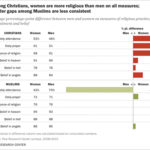
The gender gap isn’t a distinctly American one, but it is a Christian one, according to Murrow. The theology and practices of Judaism, Buddhism and Islam offer “uniquely masculine” experiences for men, he said.
“Every Muslim man knows that he is locked in a great battle between good and evil, and although that was a prevalent teaching in Christianity until about 100 years ago, today it’s primarily about having a relationship with a man who loves you unconditionally,” Murrow said.
“And if that’s the punch line of the gospel, then you’re going to have a lot more women than men taking you up on your offer because women are interested in a personal relationship with a man who loves you unconditionally. Men, generally, are not.”
Concern about the perceived feminization of Christianity—and the subsequent backlash—is nothing new.
In the mid-19th century, two-thirds of church members in New England were women, said Bret Carroll, history professor at California State University, Stanislaus. Portrayals of Jesus around that time depicted a doe-eyed Savior with long, flowing hair and white robes.
Then, around the 1870s and 1880s, came a growing emphasis on making religion attractive to men. The movement known as “muscular Christianity” extolled manliness, and it had its heyday from 1880 to 1920, according to Clifford Putney in Muscular Christianity.
Around the same time, fraternal orders grew exponentially among the urban middle classes, according to an online article by Mark Carnes, author of Secret Ritual and Manhood in Victorian America. Not only did the groups provide men with opportunities to cultivate business connections, Carnes writes, but they appealed to some who “found satisfaction in the exotic rituals, which provided a religious experience antithetical to liberal Protestantism and a masculine ‘family’ vastly different from the one in which most members had been raised.”
Fast forward to the late 20th century, when Promise Keepers experienced enormous—if somewhat fleeting—popularity. Determining the lasting influence of this or any other movement in men’s spiritual lives proves difficult.
But Chip Hale, pastor of Spanish Fort United Methodist Church in Spanish Fort, Ala., said he believes “real strides” have been made with Promise Keepers and other men’s movements. Mission trips and hurricane relief work have also helped to make faith become real for some.
“These guys have really come out because it’s something they can do,” Hale said. “They feel like they’ve made a contribution. … I think men like to do things that they feel comfortable doing.”
But come Sunday morning, “we’re going to sing love songs to Jesus and there’s going to be fresh flowers on the altar and quilted banners on the walls,” Murrow said.
Men aren’t the only ones alienated by such an environment. Murrow insists young people aren’t that keen on it either. Both groups are challenge-oriented and appreciate risk, adventure, variety, pleasure and reward—values some churches “ignore or vilify,” Murrow writes.
“It would look like the Rapture” if women didn’t come to the typical church one Sunday, he said.
“The whole thing would grind to a halt,” said Murrow, who noted he wrote the book for laywomen in particular. “They’re the ones who are suffering most from this gender gap. A lot of women feel overworked and underappreciated in our churches today because they are carrying the load.”
Statistics indicate they might not do so much longer. According to Barna Research, Murrow notes, women’s church attendance declined 20 percent from 1991 to 2000, and their volunteerism in local churches dropped 21 percent during that period.
Churches have to help men and women use their gifts, not just fit them into old religious molds, Murrow said.
“There has to be some stretching and risk or you’re not going to get men, and I think you’re not going to get the upcoming generation of women either,” he said.
“We’re ripping women off by making the church so much about nurturing and caring and relationships, and they’re missing that component that they need.”
Kristen Campbell writes for The Mobile Register in Mobile, Ala.










We seek to connect God’s story and God’s people around the world. To learn more about God’s story, click here.
Send comments and feedback to Eric Black, our editor. For comments to be published, please specify “letter to the editor.” Maximum length for publication is 300 words.