Cartoon_53005
Posted: 5/27/05
| “… and do you take this tinman as your awfully welded husband?” |
Posted: 5/27/05
| “… and do you take this tinman as your awfully welded husband?” |
Posted: 5/27/05
By Ken Camp
Managing Editor
Institutions and ministries partnering with the Cooperative Baptist Fellowship potentially could receive more funding than recently proposed, and the number of theological schools eligible for the maximum financial support could be greater than previously announced, judging by the final report of the CBF Coordinating Council's partnership study committee.
The council will discuss and vote on the committee's report at its June 29-30 meeting in Grapevine, prior to the annual CBF General Assembly. If the report is approved by the council, CBF Moderator Bob Setzer of First Baptist Church in Macon, Ga., then plans to ask the General Assembly to affirm the action.
| Bob Setzer |
A key recommendation in the final report includes placing a funding cap for partners at 25 percent of an organization's previous year's receipts, up from the proposed 20 percent cap.
The committee adjusted the threshold from 20 percent to 25 percent to “minimize disruption to existing partners,” Setzer said.
Current partners–excluding educational institutions–include Associated Baptist Press, the Baptist Center for Ethics, the Baptist Joint Committee for Religious Liberty, Baptists Today news journal and the Baptist World Alliance.
Only one partner–Associated Baptist Press–would be impacted by the funding cap, but not as significantly as it would have been if the proposed 20 percent ceiling had been recommended.
The Baptist Joint Committee and Baptist Center for Ethics both would have lost funding with a 20 percent cap, but neither necessarily will be impacted negatively by the 25 percent threshold.
None of the theological schools funded by CBF is close to the planned 25 percent cap.
The partnership study committee presented the first draft of its report to the CBF Coordinating Council in February and received comments on its proposals through April 15.
The revised report also sets a limit of up to six theological schools classified as identity partners–a designation reserved for schools that explicitly identify themselves with CBF and are thereby eligible for greater funding. The earlier draft proposal limited the number of identity partners to three to five schools.
In addition to increasing the limit to six, the revised report adds that the limit is necessary “due to present financial constraints and a core commitment to preparing ministerial leaders for CBF partnering congregations.”
The study committee does not designate which schools will qualify as identity partners.
In another change, the revised report commits CBF to promote the work of the partners.
“It is appropriate for CBF to expect those with whom it partners to acknowledge CBF's role and to promote the greater work of CBF,” both drafts say.
“It is also appropriate and expected that CBF will acknowledge and promote the work of the partner within the context of CBF life,” the revised report adds.
The committee report notes the “unique and significant” relationship between the CBF and its “historic partners.”
“They have needed us, and we have needed them,” the report states. “As in any healthy relationship, partnerships need to be reviewed and goals need to be revisited to determine if a given partnership remains in the best interest of both partners. Through a process of regular review and evaluation of its partnerships, CBF enhances its ability to provide important resources to individuals and churches that are part of the CBF movement.”
The report acknowledges many donors see CBF as the channel through which they can make a single contribution that is then divided among multiple ministries and institutions.
Without mentioning it by name, the document appears to refer to the Southern Baptist Convention's Cooperative Program model of unified budget giving, with which most moderate Baptists have been familiar.
“The reason behind the 25 percent cap comes from the philosophy by which CBF has operated from its beginning,” the report states, citing the Fellowship's desire “not to own or control institutions.” However, the report states the 25 percent threshold “should be seen as a level not to exceed. It should not be seen as an automatic level of funding nor as a goal to be sought.”
The proposed plan allows for some exceptions to the 25 percent funding cap, such as new partners that might need greater start-up funding. However, the committee report recommends that funding for any partner beyond the 25 percent cap be reduced to that level over three years.
CBF partners with four free-standing seminaries–Baptist Semi-nary of Kentucky, Baptist Theological Seminary at Richmond, Central Baptist Theological Seminary in Kansas City, Kan., and International Baptist Seminary in Prague, the Czech Republic–and six schools of theology or divinity schools associated with Baptist universities–Campbell University Divinity School, Logsdon School of Theology at Hardin-Simmons University, McAfee School of Theology at Mercer University, Truett Theological Seminary at Baylor University, Wake Forest Divinity School and White School of Divinity at Gardner-Webb University.
The Fellowship also partners with three Baptist studies programs at non-Baptist schools–Texas Christian University's Brite Divinity School, Emory University's Candler School of Theology and Duke Divinity School–and one theological university–Baptist University of the Americas in San Antonio.
The study committee submitted its proposed guidelines and recommendations to the Coordinating Council officers. Setzer commended the committee for providing “clear, consistent guidelines for administering the partnerships.”
“The intent is to revitalize old partnerships and empower new ones,” he said. “I believe that will happen, and CBF–and our partners–will be the stronger for it.”
Posted: 5/27/05
By Sarah Satterwhite
Cooperative Baptist Fellowship
DENVER–Baptist Chaplain Ed Waldrop, who serves with the U.S. Department of Veterans Affairs in Denver, Colo., is providing a way for veterans of all generations to begin healing from the spiritual wounds of combat-related trauma.
Through Wounded in Action, Waldrop gives veterans an opportunity to tell their stories.
In relating those sacred stories, Waldrop said, the teller finds deeper healing of combat-related spiritual wounds, and the listener better understands the complexities of war.
| Ed Waldrop |
“I don't want to take away the necessary wrestling or any healthy regret.
“I want to help them put what they did, in service to their country and humankind, in a proper perspective,” said Waldrop, who has both a personal and a family history of military service.
Waldrop initiated Wounded in Action because he recognized that war creates physical wounds physicians can treat, and it also inflicts psychological and physiological problems mental health professionals must treat.
“A spiritual wound also is inflicted upon the combatant who must kill,” Waldrop said.
The experience of killing may bring intense reflection that the combatant and the enemy are human beings created by God, he added.
Waldrop plans to publish a collection of survivors' stories, addressing each from a spiritual perspective. Even though the stories will represent only a small percentage of veterans, Waldrop hopes the collection can help other veterans and their families who still struggle to understand and heal the spiritual wounds of combat.
Through his work in VA nursing homes, Waldrop has seen many veterans haunted by those spiritual wounds even as they approach death.
“No one should have to die with unaddressed spiritual trauma still buried inside them,” Waldrop said. “The earlier we address the trauma–and not all veterans will have a problem–the better the chance of real quality of life for veterans and their families and friends.”
Healing and quality of life are priorities in Waldrop's interactions with veterans–both those who finished their service decades ago and those who recently returned from Iraq or Afghanistan.
Many of the recent veterans are re-establishing a life with their families and are not yet ready to talk about wartime trauma.
When and if they become ready, Waldrop hopes Wounded in Action will be a helpful resource in healing those spiritual wounds.
Waldrop offered the following suggestions for helping veterans begin to heal:
 Provide unconditional love and a willingness to listen to difficult stories.
 Refrain from judgment.
Know the symptoms of post-traumatic stress disorder.
For more information, visit www.woundedinaction.org.
Posted: 5/27/05
 |
|
| Whether adding a new coat of paint or removing worn-out tile, community volunteers such as Andreas Salinoa Torres (top) from a local Catholic church and Leisa Cooksey (below) from First Baptist Church in Sulphur Springs have seen their work on Chrysalis House as a labor of love. (Photos by George Henson) | |
By George Henson
Staff Writer
SULPHUR SPRINGS–Tammy Pearson used to think she had derailed her calling as a missionary with bad decisions. Now she believes God is using her struggles to help other women transform their lives, while he puts her dream back on track.
As a 10-year-old, Pearson remembers, she sensed a calling to missions. “I felt even younger than that that God had something special for me to do, but then later I felt I had made so many mistakes that God couldn't use me.”
Pearson dropped out of high school after becoming pregnant and married soon after.
 |
| Tammy Pearson |
The marriage ended seven years later, followed by seven years as a single mom.
Nine years ago, she married Chris Pearson, and together they raise their six children.
But memories of struggles paying her bills with the tips she received waiting tables give her an insight into what other single mothers face.
“The Lord has just totally redeemed my life and given me a passion to serve him, but none of that could happen until I knew who I was in Christ, until I could see myself as he sees me,” Pearson explained.
As she began looking for God's place of ministry for her, she noticed a recurring theme. “The Lord kept putting single moms before me, and I began to see that this might be the Lord's purpose for me,” she said.
She started to look for land where she could build a large facility where women could live with their children. She soon realized the financial resources were not there.
“After about a year of trying really hard to get rich and that not happening, I decided I needed to do something,” to start trying to help single mothers, she said.
About two years ago, Pearson started WOWS, Women Offering Women Support. The first meeting was publicized on television, radio, newspapers and flyers across Northeast Texas. Pearson was expecting a number of women to attend that first meeting.
That number, however, was one.
Pearson acknowledged being disappointed, but recalled she recently had seen the movie The Miracle Worker that chronicles Anne Sullivan's impact on Helen Keller.
“Anne Sullivan had a huge impact on Helen Keller, who then impacted so many more people. I decided I was going to pour myself into this woman and be her Anne Sullivan,” Pearson recalled.
That woman, a young single mother named Jenny, offers her testimony on the WOWS website, www.wowsupport.org: “The more time I spent with Tammy, the more I was able to see the truth, God's truth. I gained so much godly insight and wisdom from her. The Lord really used her to reach my heart and still does.
“I haven't been the same since the day I met her. She had been through and felt the same things I had. It wasn't just by chance that she came into my life. God's hand was definitely in us meeting.
“She has made a tremendous impact in my life. Only after knowing her was I really able to understand how much the Lord loved me. I was finally able to see what I was truly worth. I realized I was a child of God.”
Jenny was the only woman in the group for almost a year, but many more women began calling Pearson for help. Women from Pittsburg, Winnsboro, Paris, Royse City, Greenville and Mount Vernon, as well as Sulphur Springs, needed housing.
Pearson, through calls and visits, developed a network of apartment complex managers who agreed to help meet the need for housing, but for every family she helped, she knew another still was in need.
“A lot of these women are living from boyfriend to boyfriend, or from friend to friend, or place to place. We need to have a place for them to live while they're getting back on their feet,” she said.
Pearson has helped numerous women who lived in their car, and at least one who was living in a tent.
She knew a more permanent solution was needed. One day, she passed a nursing home that had been vacant for years. She went to the county tax office and learned a company in California owned the building.
She was told other people had asked for the property in the past, but she wrote a letter anyway, laying out her plan to help single mothers and their children. She didn't even tell her husband about making the request.
“I did it out of faith, to say: 'God, I'm just going to do it. I'm going to ask.' But at the same time I was thinking, 'Nothing's going to come out of it,' because I knew other people had asked and been turned down.”
Three weeks later, as Pearson was helping yet another single mother get settled into an apartment, her cell phone rang. A company official was on the line to tell her she had the 27,862-square-foot facility and the 9.4 acres of land it sat on.
She named the new facility Chrysalis House–a safe place of transformation, like the cocoon where a caterpillar becomes a butterfly.
Plans include housing for 40 mothers with up to three children each, a room where women in the community can train the mothers in household and job skills, a retail shop for residents, a community garden and a library.
A sonogram and examining table have been donated, so the facility also will include a teen crisis pregnancy center.
The building's largest problem was that the fire-suppression sprinkler system had leaked throughout the facility and damaged ceilings and walls.
A Dallas company fixed for free what the fire marshal had estimated as a $30,000 expense.
Other problems with the plumbing and electrical wiring have been fixed at no charge by people providing community service through the county probation office. Juvenile offenders have kept the lawn mowed and the trash empty, as well as supplied general manual labor.
One juvenile working at Chrysalis House to fulfill his community service requirement made a profession of faith in Jesus Christ after visiting with an 80-year-old woman who stopped by that day. She also picked him up and took him to church with her the next day.
But most of the work involved in transforming the building has come from volunteers from churches and civic organizations. Sunday school classes, civic groups and families have chosen rooms they are going to decorate and furnish for the families who will live there. Each Saturday is a bustle of activities as people work to make the rooms into someone's home.
The planned opening for the house is by summer's end.
While Chrysalis House began with Pearson talking about what she might do as a service to God, the project has grown far beyond that.
“This is not just my project or the church's project. This is a community project,” she said. The school district is remodeling one wing to use as a facility for a Head Start program site.
“Everything with God is free, I'm beginning to learn. All you have to do is ask with the right motives,” she said.
The house is supported through the donations of churches and individuals and to date has not had a bill paid late. One time, it appeared that streak might be broken.
An $85 bill needed to be paid the next day, and only $36.03 was in the bank. Pearson said she prayed and then went to the mailbox fully expecting to find God's provision there. But no checks came that day.
She decided she would stay at the site all day waiting for the person God was sending with the money.
She prayed and prayed, thanking God for his provision on numerous occasions and praising him that he was going to provide again.
At the day's end, after no money arrived, she went to a ballpark to watch her son play, feeling a little down.
Sitting in the bleachers, she prayed, thanking God for his many times of provision and acknowledging that he would be able to handle the late charges, too. Soon, a woman walked up to her and handed her a check for $320.
“I was crying at the ball field and couldn't quit telling her how she had blessed us,” Pearson recalled.
It's just another story for Pearson to tell the women of Chrysalis House–about a faithful God who is in the business of transforming caterpillars into butterflies.
Posted: 5/27/05
By J.M. Givens Jr.
God did it again. Twice now, he’s used the death of one of his servants to teach us a lesson.
In 1997, Mother Teresa died a week after the tragic car crash of Princess Diana. Was God showing us our own vanity, the way we obsessed over the glamour and misfortunes of Diana’s life, hanging on every element of her death and funeral, rather than recognize the tremendous dignity and service of the frail nun of Calcutta? In her life, Teresa showed us how to live completely for God and share his love with the least lovely. How unfortunate that so many of us at that time focused on the vanity of this short, temporal life rather than ponder the global, eternal significance of one who could convert a Muslim cleric simply by washing the wounds of the dying destitute.
Recently, John Paul II died within a few days of the melodrama surrounding the last days of Terri Schiavo. National debate erupted over a court’s decision to remove Schiavo’s feeding tube after a decade of court battles stemming from a tragic health crisis. This debate grew as she lingered without food or water for 14 days, seeming to hang on to the life that was being denied her in her “best interest.”
At the same time, the late pope suffered with his own health issues, the culmination of years of declining health. Not only did John Paul condemn the Schiavo decision, but he determined that he would end his own days on this earth living out the very message he had preached for so long—that life is a gift from God and must be cherished by all. Breaking with the tradition of hiding papal illness, John Paul allowed us to see his sufferings in a very public way in order to teach us this lesson one last time, a heroic counterpoint to the discord of the Schiavo case. In the end, he entrusted himself to God, as evidenced by his decision not to return to the hospital and the rapid death which came soon after this decision.
The death of Mother Teresa taught us that quality in life derives from service to others rather than self-indulgence in riches and desires. John Paul’s death demonstrated that dignity of life exists even in the midst of suffering, not in a denial of life simply on the grounds that it isn’t the kind of life we may have desired.
It would seem both individuals learned these lessons from the Great Teacher himself—Jesus, who was the Suffering Servant of God.
J. M. Givens Jr. is assistant professor of religion at Wayland Baptist University, Lubbock Campus
News of religion, faith, missions, Bible study and Christian ministry among Texas Baptist churches, in the BGCT, the Southern Baptist Convention ( SBC ) and around the world.
Posted: 5/27/05
By John Duncan
I’m sitting here under the old oak tree, thinking of my life as a pastor. In The Church Porch, George Herbert writes, “… dress and undress thy soul … ,” and earlier in the poem remarks, “Join hands with God to make a man live.” Such is the life of a pastor—soul work and helping people join hands with God.
| John Duncan |
I recently preached on the wisdom of God. I shared with our church that (a) we should live under the sun, but seek wisdom above it; (b) all the rivers run into the sea, but only One River, Jesus, satisfies; and (c) we should plant spiritual seeds, develop roots and live a life of purpose under God’s care. Life, like the sea, never fills up or fully satisfies apart from Christ. I mentioned life as repetitious sameness, ceaseless change and a variety of people in places with Christ at the center.
I even quoted Sue Monk Kidd in The Secret Life of Bees: “There is nothing perfect. There is only life.” I added: “There is nothing perfect. There is only Eternal life.” I spoke to graduating high school seniors, of which my daughter, Jenifer, was one. After the service, what do you think stuck like peanut butter to their brains of my hearers? My comment that we live in the “flip-flop generation,” one where girls will get married wearing $500 dresses and $2.99 flip-flops from Wal-Mart. I preached soul work and wound up with a flip-flop sermon. I invited the church to join hands with God.
The next day, God welcomed in his gentle hands Tom, a church member and a prominent member in our community. Tom loved his motorcycle, and God called him home in a terrible accident. The Psalmist says: “You number my wanderings; Put my tears into your bottle.” Gerard Manley Hopkins dramatically pictures grief, “My cries heave, herds-long; huddle in a main, a chief-woe, world-sorrow; on an age-old anvil wince and sing—Then lull, then leave off.” I grieved with the family and prayed while sitting at the table holding hands in a circle while their fluffy black cat rubbed his fur in my face. The sea may never fill up, but the tears of the soul fill many a bottle. God’s hand holds it. Soul work sprinkles raindrops.
The drama of this pastor’s life flows like a river—a church member waiting for a liver transplant; another with appendicitis; back surgeries; gall bladder operations; cancer; chemotherapy; a baby near death from respiratory failure; and the calling of a new minister to students. All these things dip into the same river—the River of Life, Jesus, and soul work, and won’t you join hands with God to make a life?
Tomorrow comes, and I will stand at a gravesite and eulogize the fishing guide, Jim. I will read from the 23rd Psalm and talk about, in his wife’s sweet words, how he lifted his hands toward heaven and prayed and spoke words. Simple words, “I’ve had a great life, loved fishing, my family and kids.” The sea tides roll.
The next dayk I will stand and fill up a bottle with tears as I grieve the loss of Tom at the memorial service. I will remember his strong will, bright smile and riding in his race car at 90 miles an hour and him stopping the car and walking me over a piece of property overlooking the lake and his tall frame looking into my eyes and saying, “Preacher, tell me why I need to be baptized.” I did, and later we baptized Tom, and I think of the race car and the motorcycle and life’s great race and the finish line and a bottle of tears. All rivers run into the sea. The soul flows.
So here I am under the old oak tree, thinking about my life as a pastor not too far from the church porch—four weddings in nine days, funerals, sermons, high school graduation, life, the laundry, mowing the yard, the check book, changing the diapers, holding a baby ready to breathe its last breath, and bottles. Eugene Peterson says it best, “Pastoral work takes place between Sundays, between the first and the eighth day, between the boundaries of creation and resurrection, between Genesis 1 and Revelation 21.” Soul work happens between Sundays.
I love my life as a pastor—the drama, the dressing of souls, souls joining hands with God to make their lives like 8-year-old Joseph did last Sunday, the joy, the laughter and filling up bottles.
This week, I will fill up bottles, but in the midst of it all, nothing will compare to the tears of joy that will flow from the river of my heart when Jenifer walks across the stage and graduates from high school. Congratulations, Jenifer. Live. Celebrate. Dress your soul. Swim in the River. There is nothing perfect, only abundant Life. Join hands with God and make a life! Welcome to the flip-flop generation.
John Duncan is pastor of Lakeside Baptist Church in Granbury, Texas, and the writer of numerous articles in various journals and magazines.
News of religion, faith, missions, Bible study and Christian ministry among Texas Baptist churches, in the BGCT, the Southern Baptist Convention ( SBC ) and around the world.
Posted: 5/27/05
By Ken Camp
Managing Editor
Warm welcomes for returning American troops have become familiar sights in some airports. But departing troops need more spiritual care, said some Texas Baptists who are trying to meet that need.
“On the welcome side, the USO, the families and the general public are all there for the celebration,” said Bobby Martin, church program ministries director for Dallas Baptist Association. “But on the departure side, it's a sad time. It's all business, and it's sometimes three, four or even five hours spent waiting.”
Dallas-Fort Worth International Airport is a major departure and arrival point for troops deployed overseas–one in-bound flight and one outbound flight every day. Early on, airport chaplains decided to focus their energy and resources on the departing military personnel, but they still found the task overwhelming, said Martin, who serves on the board of directors for DFW Airport Interfaith Chaplaincy.
“They asked me to help with volunteers out there, and we've used the Victim Relief Ministries chaplains to augment the work of the chaplains at the airport,” he said.
The trained volunteers have found many of the troops receptive to their presence at the airport departure gate, said Gene Grounds, founding director of Victim Relief Ministries, an interdenominational program birthed by Texas Baptist Men.
“For the inbound troops, it's all joy and happiness. But for the outbound troops, there's a lot of apprehension,” said Grounds, a layman at Prestonwood Baptist Church in Plano.
The volunteer chaplains spend time among the departing troops, offering en-couragement and assurance that people will pray for them.
They particularly look for personnel who are sitting alone –either obviously showing emotion or visibly withdrawn, Grounds noted.
“Some just say 'thanks,' and we move on. Others are eager to tell you their story,” he said. “Some will ask for prayer for a wife or mom.”
To a significant degree, the volunteer chaplains provide a “ministry of presence,” said V.A. Trussell, retired pastor of Emmanuel Baptist Church in Weatherford and a Victim Relief Ministries volunteer.
“We're there to represent the Lord.”
As the troops board their flight, they receive a packet containing a New Testament, a small wooden cross, several booklets with encouraging spiritual messages and a card on which they can write prayer requests.
“They're on a long flight with nothing but the airlines magazine in the seat in front of them and the packet we give them,” Gene Grounds of Victim Relief Ministries said. “We feel confident most of them at least open the packets to see what is in them, and many read what we give them.”
Once the military personnel are seated on the airplane, a volunteer chaplain walks the aisles collecting the completed prayer cards and offering last-minute words of comfort.
Finally, a chaplain takes a microphone. Heads are bowed as the chaplain prays for God's blessing and protection for the troops.
“Then they close the doors, and 19 hours later, they are in Iraq,” explains Bobby Martin of Dallas Baptist Association. “But the last words they hear in America before they leave are a prayer of blessing and words of assurance: 'We'll be praying for you. Godspeed.'”
Posted: 5/27/05
What they don't tell new parents in the hospital nursery is how this little “bundle of joy” will blossom before their very eyes.
Young parents couldn't comprehend the amazing act of raising a child, much less the speed with which it all happens.
This has been fresh on my mind lately, because we've been doing a litany of last things with our high school senior, Molly. (Who, by the time most of you read this, will be a high schooler no more.)
Thank God for wonderful snapshot memories of children growing up. I've been viewing Molly's 18 1/2 years in that projector in my mind. I've seen Molly:
The moment she was born, tiny and slippery and helpless. And breathtakingly beautiful.
The first time we took her to the beach, running buck-naked up the boardwalk, after her mama, Joanna, and I gave up trying to rinse the sand out of her diapers and held her bare bottom up to the shower.
Sitting in the bathtub with her big sister, Lindsay, giggling and playing and begging me to tell them one more story about when I was a boy growing up.
As a toddler, contorting to make her “scary face,” which made Lindsay, Jo and me double over in laughter, which made her do it again and again.
Standing in the doorway of her kindergarten room, embarking on an educational journey that will take her far beyond where I have traveled.
Wading with me into the baptistry, where she proclaimed, “Jesus Christ is Lord.”
Playing kick-ball and our made-up version of “soccer” on summer nights in our back yard in Kentucky.
Riding in the car with Lindsay and me when they were in elementary school–headed home after church on Wednesday nights or after piano practice on weekday afternoons. Amazing how some of the most routine, random actions hold such great memories.
Sitting at the dinner table, her plate almost full while the rest of us have finished eating, describing in great detail the events of the day, and her big sister pleading, “Summarize, Molly, summarize!”
Over and over, snuggled down in her bed, with the covers pulled up over the back of her head and tucked tightly under her chin, the picture of utter tranquility.
Sprawled across her bed, or our bed, or the couch, reading yet another book. And later, sitting up late, talking books.
Taking me by the hand and leading me into our little office, where she can play a new song she's downloaded from iTunes. She has introduced me to far more artists than I have introduced to her.
Thanking her mama and me for something. New clothes, a CD, her car, a good meal. She's the most naturally grateful child I've ever known.
Cuddling on the couch to watch the latest episode of Gilmore Girls or Everwood.
Sharing her faith at Teen Community Bible Study last fall, and telling the other students how she has realized her Savior, Jesus, is sufficient for her deepest needs.
Thank you, God, for a beautiful baby who grew up to be strong Christian woman.
–Marv Knox
Posted: 5/27/05
| A young Bob Dylan, as seen in his book Chronicles. |
By David Anderson
Religion & Ethics NewsWeekly
WASHINGTON (RNS)–How many personas does Bob Dylan have? How many pages are there in a book? Or days in a year? Or, perhaps most important, how many songs in a story?
"A folk song," Dylan writes in his recent book, Chronicles: Volume One (Simon & Schuster), "has over a thousand faces, and you must meet them all if you want to play this stuff."
 |
Chronicles was cited as one of The New York Times' 10 most notable books of the past year. It is, perhaps, a fitting tribute to a writer and performer who over the course of his nearly 45-year career has become one of the world's most important cultural figures. By the sheer magnitude of his talent and duration, Dylan now is an entertainment icon and elder statesman whose Delphic riddling rhymes and gnomic puns no longer are part of the countercultural margins but are sought out by such paragons of mainstream culture as 60 Minutes and Newsweek magazine.
At age 64, some speculate that Dylan is tamed and enjoying a new kind of fame–that of the establishment. Yet such acceptance–an honorary doctorate from Princeton, a set of Grammys, a Kennedy Center Honors award, among many others–has made Dylan no easier to understand, no easier to parse and no less compelling a writer, one who both shapes and is shaped by the best and worst of America.
Pick your badge of honor or outrage. He sang in Mississippi during the civil rights movement, denounced the war in Vietnam, embraced Protestant fundamentalism, condemned corporate greed, remained silent on Central America, celebrated Zionist nationalism, failed to credit members of the band on one of his major albums and appeared in a Victoria's Secret lingerie commercial.
As attention again focuses on him, the critical debates also rage about who he is, what his work means, what of his vast body of work matters.
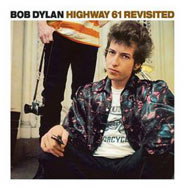
He is hailed as a superb songwriter and musician and lauded as one of the best poets of the second half of the 20th century. He is the subject of dozens of books and hundreds of academic articles and numerous college courses. Most recently, suggesting the range of treatment Dylan elicits from scholars, literary critic Christopher Rick has published Dylan's Vision of Sin (Ecco) and New Testament scholar Michael J. Gilmour has written Tangled Up in the Bible: Bob Dylan and Scripture (Continuum).
 |
 |
| Michael Gilmour's book explores the biblical references in Bob Dylan's work, such as his landmark Highway 61 Revisited recording (left). | |
Over the years, Dylan has refused to be confined to the boxes into which his fans seek to put him, whether they are political, religious or even musical. He seems almost a caricature of the American Adam, constantly reinventing his public and musical self. We all should have learned by now that “he not busy being born is busy dying.”
Still, he has consistencies and repeated themes in his many selves and their reinventions. From his first recordings, when he was still apprenticing himself to the folk and blues traditions, religious concerns and moral motifs have permeated his work as they do those musical traditions. Religious and biblical language has been a consistent but always complex and sometimes contradictory element in his work. As he said in a 1963 interview, “There's mystery, magic, truth and the Bible in great folk music. I can't hope to touch that. But I'm going to try.”
Thus it is important to note that at root, as English critic Michael Gray has pointed out, Dylan is a moralist rather than the prophet many of his fans, both secular and religious, have longed for. His songs are about the struggle for a moral code, and it is, ultimately, the music that provides his religious framework.
Dylan's use of religious motifs and biblical imagery has sparked a host of commentaries and critical analyses, many by evangelical Christians. As fans and critics in the 1960s sought to make Dylan a spokesman for a generation involved in the civil rights and antiwar movements (a role he ultimately rejected, as he writes movingly but not always convincingly in Chronicles), so too many evangelicals welcomed his celebrated conversion to fundamentalist Chris-tianity and sought to define the minstrel as minister.
For a brief period after his 1978 conversion, Dylan appeared willing to play that role, sometimes preaching from the stage, just as he had, for an equally brief time, embraced the persona of himself as the reincarnation of Woody Guthrie, social critic.
For some evangelical Christian critics who were drawn to the music but not the civil rights and peace politics of the 1960s and who dismissed Dylan's “contemptuous insult-songs” such as Masters of War and With God on Our Side, the conversion to fundamentalist Protes-tantism was a vindication of their politics, an affirmation of their religion and their notion of the “prophetic.”
But the fundamentalist phase didn't last long, either. Dylan soon was back to playing his old songs and writing new material less strident in its religious expression. But he has not re-nounced or re-canted the songs of his fundamentalist period any more than the songs of the political pro-test period. The best of both are part of his repertoire.
While certainty of conviction can be a virtue in religious belief systems, it can work against creativity, which requires the artist to go beyond the last poem, the last canvas, to a new configuration. For a songwriter and performer like Dylan, there always is a new story to tell, a new way of telling the old story, and unlike dogmatic formulas, such new tellings change the meanings of the old versions.
In a famous interview with Newsweek magazine, Dylan put it this way: “I don't know who I am most of the time. It doesn't even matter to me. … I find the religiosity and the philosophy in the music. I don't find it anywhere else. … I believe the songs.”
Ultimately, Chronicles is a kind of musical memoir rather than autobiography. It is the past remembered and refracted through time and the imagination. There is very little of politics or religion or any of the other controversies that marked Dylan's career. For all the sense of intimacy, there is little for those seeking clues to Dylan's "real" life–the private life–beyond the songs. Those looking for details of the 1966 motorcycle accident or the role of drugs or the Bible study at the Vineyard church won't find much in the book.
What is there is a warm and generous and at times exuberant reflection by Dylan on musical points of his pilgrimage–the first days in Greenwich Village; the making of the 1989 Oh Mercy album; his incubator time in Minneapolis where he was exposed to much of the folk traditions growing in popularity.
Reading Chronicles is a little bit like listening to a Dylan album.
There are always stunning moments, puzzling moments and some clinkers. But what shines is Dylan's warm and generous assessment of other musicians, both those he learned from, those he admired, and even, like Joan Baez, those with whom he has broken. Which is to say that Chronicles, like the person–and for good or ill–is mostly about the music and his own highs and lows in relationship to it.
“A song is like a dream,” writes Dylan, and it seems true of his long career as well, “and you try and make it come true.”
Posted: 5/27/05
If the theory known as the Butterfly Effect is anywhere near true, Texas Baptists changed history last week.
The Butterfly Effect seeks to explain the apparent randomness of relationships between objects and events–connections that seem nonexistent or insignificant, but which may be profoundly important. The theory gets its name from a paper presented by meteorologist Edward Lorenz: “Predictability: Does the Flap of a Butterfly's Wings in Brazil Set Off a Tornado in Texas?”
Let's leave debates over the Butterfly Effect to philosophers, scientists and weather forecasters. But people with common sense know many events are interrelated. And sometimes, even small actions deliver huge consequences.
 |
That's why a quick discussion and no-dissent vote during the Baptist General Conven-tion of Texas Executive Board meeting last week could be far-and-away the most significant thing Texas Baptists do all year–and we're talking about a year in which we're reinventing the convention itself.
The Executive Board voted to ask BGCT President Albert Reyes and Hispanic Baptist Convention of Texas President Alcides Guajardo to create a task force to “encourage and better equip Hispanic youth toward the pursuit of higher education.” Sounds bureaucratic? Hardly.
Because of both demographic trends and the importance of an educated workforce, Hispanic education is the No. 1 issue for the future of Texas.
As of last year, Texas no longer has an ethnic majority. Anglos dropped below 50 percent of the population. Soon, Hispanics will outnumber Anglos. Not long after that, Hispanics will comprise a majority of the population.
This trend has the power to lower Texas' average educational attainment. For example, a recent survey showed:
52 percent of the state's 3.4 million Hispanics age 25 and older do not have a high school diploma.
31 percent of Hispanic adults in Texas have less than a ninth-grade education.
Only 9 percent of Hispanic adults in the state have earned a college degree.
Besides a personal relationship with Jesus Christ, education has the greatest impact on a person's–and that person's family's–life. Education directly affects standard of living. Exceptions are so rare they are statistically insignificant. So, inability to earn at last a high school diploma will consign millions of Texans to a lifetime of poverty.
This has a compounding effect.The percentage of Texans who are Hispanic is growing; that trend will not change for many decades. If the percentage of Hispanic Texans who do not graduate from high school and college does not increase, then not only will the numbers of under-educated Hispanics increase, but the total percentage of under-educated Texans will rise. Then, we will face an ever-increasing poor population. And because the state's population base is under-educated, Texas will have an even more difficult time attracting industries–which will be increasingly technologically sophisticated–to locate here. So, not only will the poor find themselves unable to improve their lot, but the welfare of the state will decline: A growing poor population will require more state services at the same time the state's economy shrinks due to a declining industrial/commercial/technological base.
This sounds like an economics lesson, but it's really not. It's thinking out loud about the consequences of failure to educate the young people of our state, the largest group of whom will be Hispanic. Failure means poverty. And Jesus spoke more about care for the poor than any other subject.
Several factors impact Hispanic education. The most prominent is students' inability to speak English. Another is parents' inability to speak English and unfamiliarity with the educational system. And even many Hispanics who complete high school stay away from college due to expense and the tight Hispanic family bond, which mitigates against leaving home to continue education.
The BGCT's Hispanic education task force will examine all these issues. It will seek to “develop a comprehensive strategy that involves BGCT-related educational institutions, associations and churches in intentional efforts” to educate Hispanic young people and help them not only get through high school, but also earn college degrees.
This endeavor possesses the power to impact countless lives, both physically and–as Christian people work one-on-one with students and their parents–spiritually.
The butterfly has flapped its wings. May healing breezes of education blow across Texas.
Posted: 5/27/05
By Ken Camp
Managing Editor
DALLAS–The Baptist General Convention of Texas Executive Board has approved revised bylaws that would reduce the board's size by more than half.
Messengers to the BGCT annual meeting Nov. 7-8 in Austin will vote on the amended bylaws–part of an overall reorganization process in the convention.
The Executive Board approved without opposition the proposed bylaws, drafted by a 21-member committee created to deal with governance issues regarding the convention.
| Sector map presented by Governance Committee |
| A governance committee plan approved by the BGCT Executive Board would–if approved by messengers to the convention's annual meeting in November–divide the state into these 30 sectors and entitle each sector to three members on the Executive Board. The new approach would create sectors based on a per-county formula of resident membership, 50 percent; number of churches, 25 percent; and Texas Baptist Cooperative Program giving, 25 percent.
|
| Click here to compare the new map with the map from the original proposal (pdf file). |
Some board members had criticized an earlier proposal by the governance committee, saying it was unfair to rural Texas Baptists–particularly churches in sparsely populated parts of West Texas.
But after holding two-dozen listening sessions and receiving input from around the state, the committee produced a revised document that the board approved with no dissenting votes.
Currently, each of the BGCT's 114 regional associations of churches has at least one member on the 234-member Executive Board. The new system divides the state into 30 sectors, with each sector having three board members.
An earlier proposal would have created sectors based solely on resident church membership in counties, with the convention's total resident church membership divided among the 30 sectors.
The new approach would create sectors based on a per-county formula of resident membership, 50 percent; number of churches, 25 percent; and Texas Baptist Cooperative Program giving, 25 percent.
“We believe that this formula helps to resolve some of the concerns that were raised because it calculates smaller and rural churches into the formula and rewards giving to the BGCT budget,” said Wesley Shotwell of Azle, chairman for the governance committee.
The new approach “encourages the things we want to encourage”–increased church membership, church starting and cooperative giving, Shotwell noted.
The document approved by the Executive Board also differed from an earlier draft in that it removed distinctions between the terms “affiliated,” “supportive” and “cooperating.” The earlier version attempted to define a difference between churches peripherally related to the BGCT and those that are fully supportive.
“The original thinking was that this would help us be sure that those who serve on committees and boards would be from churches that have a real stake in our work and would be supportive of the BGCT,” Shotwell explained.
However, the committee discovered the difficulty in drawing “an objective line of demarcation between churches,” he added.
“Furthermore, there are many faithful, traditional and supportive individuals in less-supportive churches. Some of these individuals may be enthusiastic supporters of our work but find themselves in a church that has recently become less supportive for one reason or another.”
Using the terms “affiliated,” “supportive” and “cooperating” interchangeably in the constitution and bylaws helps avoid “the perception that we have a system of first- and second-class churches,” Shotwell said.
The revised bylaws recommendation also includes a transition process for moving from 234 to 90 members on the board. The plan allows vacated seats on the board to be eliminated unless a sector has fewer than three directors on the board.
The board approved one amendment to the document presented by the governance committee. Larry Blackmon of Hearne recommended the minimum percentage of directors who can call a special meeting of the board be increased from 10 percent to 20 percent.
Since as few as nine members could call a board meeting, Blackmon pointed out, a local issue involving only three sectors could prompt a special meeting. Shotwell noted the 10 percent requirement was a vestige from the old bylaws, and he had no objection to the amendment.
Some board members who previously had opposed the governance committee's initial draft voiced support for the revised document.
If convention messengers approve governance changes–including the streamlined Executive Board–it would represent the most sweeping reorganization of the BGCT in more than four decades.
In 1959, the BGCT governance structure established after the Booz-Allen-Hamilton management study consisted of an Executive Board, three commissions and one committee. The governance system has grown to include the Executive Board, eight Executive Board committees, two coordinating boards, two commissions, four boards–not including institutional boards–five nominating committees, five convention committees and a missions network board.
“These boards, commissions and committees have faithfully served Texas Baptists and helped us accomplish great things through the years,” Shotwell said. “However, the present governance system is so complex and disconnected that there is little, if any, coordination between the decision-making committees, commissions and boards, and there is often little or no accountability or coordination with the Executive Board.”
In other business, the Executive Board:
Approved a joint recommendation from the Christian Education Coordinating Board and the Administrative Committee that the presidents of the BGCT and the Hispanic Baptist Convention of Texas be asked to enlist an 18- to 24-member task force regarding the education of Hispanic youth.
The task force will seek to develop a comprehensive strategy that involves BGCT-related schools, associations and churches in efforts to encourage and equip Hispanic youth for the pursuit of higher education.
In 2000, 52 percent of the 3.4 million Hispanics in Texas age 25 or older lacked a high school diploma, and 31 percent had less than a ninth grade education, noted Keith Bruce, coordinator of BGCT institutional ministries. The task force will seek to develop a “high-level strategic plan” to address that problem, he explained.
“This is an opportunity for Texas Baptists to be a transformational force in our state,” he said.
Received the 2004 BGCT financial audit by the Grant Thornton accounting firm. Auditors issued an unqualified or clean opinion, noting no significant deficiencies in the convention's financial reporting system.
Approved charter changes for the Baptist Foundation of Texas and Baptist University of the Americas.
Filled three vacancies on institutional boards, naming Emily Simons of Alamo Heights Baptist Church in San Antonio and Ann Morrison of Macedonia Missionary Baptist Church in San Antonio to the Baptist Healthcare Foundation of San Antonio and John Owens of First Baptist Church in Lubbock to the Baptist Foundation of Texas.
Posted: 5/27/05
By Robert Nowell
Religion News Service
LONDON (RNS)–Can religious faith affect the perception of pain?
That is one of the questions to be investigated by a new research project at Oxford University.
The project is funded by an initial two-year grant of $2 million from the Templeton Foundation, the same organization that funds the annual Templeton Prize for Progress in Religion, which began in 1972.
The Oxford Centre for Science of the Mind said the study will bring together six university departments–anatomy, pharmacology, philosophy, physiology, theology and the Uehiro Centre for Practical Ethics, which concentrates on medical ethics.
The project hopes to develop a better understanding of how the brain works, when people are thinking and when they are not.
“Very little is known about pain and how the brain copes with it,” said the project's deputy director, Toby Collins.
Collins said there will be carefully controlled and monitored experiments to find out how subjects react to painful stimuli, either by applying a chili-based gel to the skin or by applying a heat pad that also produces a burning sensation. Among other things, researchers will show volunteers religious symbols while subjecting them to the painful stimuli to see how they respond.
Collins told the Associated Press that subjects will be asked to access a belief system, whether secular or religious, with results compared.
“Everyone, when they suffer pain, has a strategy for coping, and often they will turn to religious beliefs,” Collins said.