LifeWay Family Bible Series for June 12: Association with Christ absolves all guilt_53005

Posted: 6/01/05

LifeWay Family Bible Series for June 12

Association with Christ absolves all guilt

• Romans 3:19-26; 4:1-3; 5:1-2

By Mitch Randall

First Baptist Church, Bedford

The story is told of a young boy who learned the importance of revealing truth in the face of frightening consequences.

The young boy always had a sweet tooth, especially when his father took him to Crazy Carl’s Candy Emporium. On one occasion, the boy was having a difficult time choosing between two pieces of candy he desperately wanted. One piece of candy was chocolate-covered pecans and the other a hard-shell candy with chewing gum in the center. A difficult choice indeed!

The boy finally decided on the chocolate pecans. As his father was paying for his treat, the boy was tremendously tempted by the mouthwatering candy with the gum in the center. The temptation was too much. He gently removed it from its display and slid it into his pocket.

Later that day, his father noticed him licking a hard-shell piece of candy out in the front yard. He asked his son where he had acquired the candy. Immediately upon asking the question, the father knew his answer, but he could tell his young boy faced a difficult dilemma. The boy knew he would be punished for stealing, but he also knew telling a lie was bad too.

The father quickly decided to help his son make the responsible decision without jeopardizing his son’s independence. He said: “Son, you know the consequences when you make bad choices. Yet you also know I love you very much. Before you reveal you answer to me, I want you to think very hard about what you are about to do. Telling the truth is more important than anything!”

Romans 3:19-26

The law established by Old Testament figures gave credence to the way the people of God should live their lives. The law brought to light the sinfulness of the people. It pointed out shortcomings and laid out rigorous rituals that were thought to lead people toward purity before God. In other words, following the strict letter of the law brought justification before God. The way people lived directly affected the way God chose to relate to them.

However, the failure of such a system was evident. How can flawed people with sin in their lives commune with a holy and just God? Could there ever really be such an act initiated by humanity that would cleanse people before God? How can a fallen race justify itself before its creator?

The answer: There is no way a human-initiated act brought from a state of sinfulness could justify a race before God. As Paul more eloquently wrote, “all have sinned and fallen short of God’s glory.”

As somber as this revelation seems to be, there is good news to be heard. Justification before God is real. It came through the person of Jesus Christ. His death upon the cross leading to resurrection gave the gift of eternal forgiveness. However, is this justification something humanity must acquire? Is it something achieved through attending church, uttering prayers or memorizing Scripture?

No. The gift of justification came through the sacrificial act of Jesus Christ. Believing in him brings salvation from sin and eternal communion with the Father. Only by believing that Christ died for a sinful humanity can a person inherit the kingdom of God. There is nothing we can do but be the recipients of this great and merciful act. The first step in believing is recognition of our fallen state. The second step is the trust we place in Christ, knowing the consequences deserved for our sinful behavior. The third step is the relinquishing of ourselves to evolve into the likeness of Christ.

Romans 5:1-11

The process we engage ourselves in is called faith. Faith in the person of Jesus Christ justifies humanity before God. While there is nothing humanity could ever do to justify itself before its creator, Jesus Christ came to the earth as a sacrifice for our behalf. Faith in him brings freedom and salvation.

In Romans 5, the Apostle Paul gives a clear definition of what he believes faith to be. Beginning with suffering, leading to endurance and character, hope is produced. Faith seems to be the human ability to trust in Christ to bring about a spectacular future. In other words, an eternal hope is created for those who believe in Jesus. With the truth of wrongfulness revealed, the possibility of a hopeful eternity projects itself for the believer.

The young boy had a decision to make. He knew what he had done was wrong and lying to his dad would make it worse. He knew his father loved him more than anything, though. He finally decided to place his trust in his father’s words, as he told him what he had done. With the truth revealed, his father threw his arms around his son and with tears in his eyes said, “Well done, well done!” The truth really does set you free.

Discussion questions

• How did the sacrificial system of the Old Testament help or hinder faith?

• Why did Jesus descend upon the earth to bring salvation for humanity?

• Define “belief” in Christ

• Define “faith” in Christ.

• What are the characteristics of a person who places faith in Christ?

News of religion, faith, missions, Bible study and Christian ministry among Texas Baptist churches, in the BGCT, the Southern Baptist Convention ( SBC ) and around the world.


LifeWay Explore the Bible Series for June 12: Live by the Lord’s values in all circumstances_

Posted: 6/01/05

LifeWay Explore the Bible Series for June 12

Live by the Lord’s values in all circumstances

• Ezekiel 7:1-27

By Dennis Tucker

Truett Seminary, Waco

Chapter 7 is a strong and disturbing announcement of Judah’s coming judgment. Thus far in the book, the visions of Ezekiel make it abundantly clear that Judah is to blame for her coming calamity. But this claim is articulated most forcefully in chapter 7.

The tension in judgment

The strong language of judgment must be considered in light of the language found in verse 1. Ezekiel is charged to speak a word of judgment against “the land of Israel.”

Typically when the “land of Israel” is mentioned, the Hebrew word ‘eres is used for land. But in verse 1 a different word for land, ’adama, is used. In many contexts, the term ’adama suggests something like “dirt” or “soil.” The same word is used in Genesis 2 when we are told that Adam (’adam) was created from the dust of the earth (’adama). Whereas ‘eres typically invokes images of land as a geopolitical reality, ’adama may invoke more “earthy” images of the land as the source of life.

Thus from the beginning of chapter 7, the tragedy of this entire event is made evident. The very God who has given this land, this ’adama, to ensure the well-being of his people is the same God who must now destroy it because of that very same people.

The phrase the “land (’adama) of Israel” appears 17 times in the book of Ezekiel—and nowhere else in the Old Testament. Perhaps the writer of Ezekiel simply chose a different word at random, or more likely, the writer has chosen a different word in an effort to generate a certain pathos concerning the “soil of Israel.”

The statement in verse 4 that God will not “look on you with pity” may lead some to conclude that God is stoic in his decisions and aloof from the consequences of such decisions. But verse 1 reminds the reader such is not the case. The announcement of a coming end in verse 2 is spoken to “the soil of Israel” (verse 1). That which God has tilled, that which God has breathed life into, will now be decimated.

The rationale for judgment

Chapter 7 is connected with the previous chapter through the repetition of one phrase. After the announcement of judgment in each chapter, a rationale is given for the punitive activity of God—“then they will know that I am the Lord.” This summation statement appears 6 times in chapters 6 and 7 (6:10; 6:13; 6:18; 7: 4; 7:9; 7:27). The implications for such a statement, and especially for its frequent repetition, are considerable.

Throughout chapters 6 and 7, the people of Judah appear to no longer know this God. Mingled with their worship of the Lord is their defiling behavior at the high places in the land of Israel. Although these places may have been dedicated to God at some point, their worship became syncretistic, particularly associated with Canaanite rituals. Thus in chapter 6, Ezekiel speaks about the corpses of God’s people that will lie before the idols, altars and incense associated with these high places.

In chapter 7, the same theme is sounded. In the day of disaster, God announces “their silver and gold will not be able to save them” (7:19). But this is more than merely a condemnation of wealth, though it is that in part. The text suggests their wealth has in fact contributed to the manifestation of their own sin: “They were proud of their beautiful jewelry and used it to make detestable idols and vile images” (7:20). The law strictly forbade the making of idols (Exodus 20:4), yet the people did just that, suggesting they did not know God.

Apparently, the idolatrous practices of Israel had become commonplace, so commonplace among the people that they were no longer considered offensive. In an effort to remind the people of the offensive nature of these idols, the LORD announces twice in chapter 7 that they are “unclean” (7:19, 20). The word for “unclean” in Hebrew (nidda) is literally the word for “menstrual blood,” and represents more figuratively, something that is an extreme pollutant. Given the concern for taboos associated with blood and bodily secretions in the ancient world, there is little doubt that the Israelites remained fearful of the contaminating and defiling effects of blood—yet they had grown lax in their concern for items that would contaminate and defile them spiritually. The intent of the text is clear: idols are unclean—they are nidda, extreme pollutants. Ironically, then, by handling an idol an individual is not demonstrating his or her religiosity, but to the contrary, is making oneself incapable of religious activity at all.

The activity in chapter 8 further suggests the Israelites did not know God. In Jerusalem, there were women weeping for Tammuz and men bowing to the sun in the east. All of this was taking place in the court of the Temple—but little of what was taking place gave evidence they knew the God speaking to Ezekiel.

The judgment that will come is meant to rectify this situation. The judgment is not the act of a capricious God—nor is it the act of a God that relishes in exacting punishment. Rather, the judgment that is to come is the result of a strained covenantal relationship in which one side (Israel) no longer even acknowledges the other (God). From such slumber and such apathy, the people of God must be awakened. They must know that he is the Lord.

The movement of God

A brief word must be said about chapter 10. Following the litany of religious and cultic abuses mentioned in chapters 6-9, we are told of Ezekiel’s vision in chapter 10. Similar to chapter 1, Ezekiel uses highly imagistic language to speak of the cherubim that will become the throne of God. Most shocking in Ezekiel’s vision, however, is verse 18: “Then the glory of the LORD departed.”

The unimaginable occurred in this vision. The God who had made his home in the Temple of Jerusalem had abandoned the city. The God who demanded utter loyalty could no longer remain among such a defiled people. The sin of the people ultimately led to the movement of God—but this time it was a movement from, and not toward, his people.

Discussion questions

• Often we dismiss the Old Testament notions of being unclean or defiled. How might the terms “unclean” or “defiled” challenge us to reflect on our own disobedience in new ways?

• It is easy to read texts such as Ezekiel 6-7 and frown upon the behavior of “those people,” but are there things in our own lives that might suggest we are more like them than we would care to admit?

News of religion, faith, missions, Bible study and Christian ministry among Texas Baptist churches, in the BGCT, the Southern Baptist Convention ( SBC ) and around the world.


Global Day of Prayer focuses on ‘praying against global giants’_53005

Posted: 5/27/05

Prestonwood Baptist Church Pastor Jack Graham (left) and his wife, Deb, and Pastor T.D. Jakes of the Potter's House and his wife, Serita, welcome 12,000 worshippers to Reunion Arena in Dallas. (Photo by Brad Newton/Prestonwood Baptist Church)

Global Day of Prayer focuses on
'praying against global giants'

By Ken Camp

Managing Editor

DALLAS–If Christians mobilize to confront the five “global giants” of spiritual emptiness, egocentric leadership, poverty, disease and lack of education, it could spark a second Reformation, author Rick Warren told a multiracial gathering of 12,000 Baptists, charismatics, nondenominational evangelicals, Messianic Jews and others at Dallas' Reunion Arena for a Global Day of Prayer rally.

“The first Reformation was about belief; this one's going to be about behavior,” said Warren, pastor of Saddleback Church in Southern California and author of the best-selling The Purpose-Driven Life. “The first one was about creeds; this one's going to be about our deeds. The first one divided the church; this time it will unify the church.”

Christians gather in 'prayer huddles' during the event. (Photo by Chris Norris/Prestonwood Baptist Church)

Warren led the assembly in “praying against the global giants” that lead to fear, loss of direction and lack of purpose, noting spiritual emptiness is the greatest giant.

“Billions of people live without Jesus Christ. Billions of people don't know God has a purpose for their life,” he said.

The second-greatest spiritual giant in the world is egocentric leadership and lack of servant leaders, he continued.

“Most of the problems in our world would be solved right now–disease, poverty, all these other things–if we had leaders who thought more about others than about themselves,” Warren said. “The problem is a severe shortage of servant leaders–leaders who lead like Jesus.”

The prevalence of poverty, where half the world lives on less than $2 a day and billions subsist on the edge of starvation, is “unconscionable” and de-mands response from God's people, he insisted.

Likewise, diseases such as leprosy, malaria, yellow fever, polio and others eradicated in industrial nations still claim lives in the Third World.

“Billions of people are still dying of diseases we figured out the cure for back in the 19th and 20th centuries, and we're in the 21st century,” Warren said.

Other diseases that cannot be cured can be prevented, he said, pointing particularly to the AIDS epidemic in Af-rica, where 15 million children have been or-phaned.

“If the church does not speak up about the AIDS issue, take away the stigma, take away the shame and care about people, then 100 years from today, we will look back on the church of this century and say, 'What were they thinking?'–the same way we look back at a church that for 300 years allowed slavery,” Warren said.

“This is a moral issue. Jesus spent one-third of his ministry dealing with the health issues of people.”

Finally, Warren challenged Christians to confront the problems of illiteracy and lack of education locally and globally by offering tutoring programs to neighborhood students and by adopting public schools and overseas villages.

He urged churches to participate in Saddleback's PEACE plan–an acronym that stands for plant churches, equip servant leaders, assist the poor, care for the sick and educate the next generation.

Organizers of the Global Day of Prayer, launched four years ago in Africa, expected the Pentecost Sunday event to involve up to 200 million Christians in 152 countries. This year's event began with a worship service near the international dateline in Fiji and culminated with the Dallas event, telecast to 170 cities throughout North America, said Bob Bakke, director of the National Prayer Advance.

Rick Warren, pastor of Saddleback Church in Southern California, urges Christians to pray against "global giants" of spiritual emptiness, lack of servant leaders, poverty, disease and illiteracy. (Photo by Lawrence Jenkins/Prestonwood Baptist Church)

Ten days of individual and small-group prayer preceded the rallies, and 90 days of service through Habitat for Humanity, pris-on ministries and other community outreach initiatives follow the Global Day of Prayer.

Jack Graham, pastor of the predominantly Anglo Prestonwood Bap-tist Church in Plano, and T.D. Jakes, pastor of the mostly African-American Potter's House in southwest Dallas, served as co-chairs for the North American event.

“A lot of the time, our churches look like our communities. Tonight, we look a lot like heaven in this place,” Graham told the multiracial gathering.

Jim Denison, pastor of Park Cities Baptist Church in Dallas, participated in the Reunion Arena prayer meeting and then attended the Dallas Mavericks and Phoenix Suns basketball playoff game at the nearby American Airlines Center.

The next morning, he reflected on the two arenas in his daily devotional column, widely distributed by e-mail.

“Both crowds were passionate. … Both crowds were committed. … Two arenas in one day. But only one was eternal,” he wrote.

“I saw Mark Aguirre, probably the Mavs' best player in the '80s, and pointed him out to my family. They had no idea who he was. But every word of praise, every commitment in prayer made at the Reunion Arena service is recorded in eternity. Every soul touched, every life brought closer to Jesus will bear eternal significance.”

News of religion, faith, missions, Bible study and Christian ministry among Texas Baptist churches, in the BGCT, the Southern Baptist Convention ( SBC ) and around the world.


Migration of varied kinds impacts missions, strategist says_53005

Posted: 5/27/05

A soldier in the African Union Force stands in front of Sudanese children at the in El Fasher camp in Darfur. (Photo by Beatrice Mategwa/REUTERS)

Migration of varied kinds
impacts missions, strategist says

By Marv Knox

Editor

DALLAS–Christians must minister in a world where escalating change is speeded up by the “migration” of everything from people to technology, missions strategist Bill O'Brien insisted.

“We live in a world where accelerating change is the norm,” O'Brien told participants at a briefing sponsored by Greater Good Global Support Services at the WorldconneX offices in Dallas.

“That kind of change brings all kinds of radical discontinuities,” he said. “We're in the age of the science of chaos. … Is there a way to get our heads, our hearts, our hands around this kind of world? Is there any way to bring some integratedness?”

Bill O'Brien, global missions strategist. (Photo courtesy of Samford University)

O'Brien, a former missionary to Indonesia, was executive vice president of the Southern Baptist Foreign Mission Board and founding director of the Global Center at Samford University's Beeson Divinity School. He and his wife, Dellanna, retired executive director of the Baptist Woman's Missionary Union, now operate Bellmitra Associates, a strategy-consulting firm in Frisco.

He presented a view of the world “as seen through the lens of various kinds of migration.” The migrations include:

bluebull People

The United Nations High Commissioner on Refugees estimates 23 million refugees have fled their own countries, he said. In addition, about 27 million others are displaced within their native lands.

Political unrest is the prime mover of refugees, he acknowledged. Floods, earthquakes and volcanoes create environmental refugees. Global economics also contributes to the problem.

But refugees account for only about half the world's people migration, he added.

“At any point, over 100 million people are in migration–half of them internationally for business and education. We're seeing whole families picking up. And it's affecting everything as never before.”

bluebull Information

“The speed (of information) is unbelievable,” he said. “A single optic fiber can move about 3 billion bits per second. At that rate, you can download the entire Library of Congress in 48 seconds. … IBM can compress 25 million printed pages on an area the size of a postage stamp.”

Control of information creates power, and that power is multiplied by the speed of information migration, he said.

“All of this is affecting the global economic situation. It's affecting everything,” he said.

For example, the migration of information is linked closely to the migration of money, since information is the key to exchanging currency electronically.

“Every 24 hours, one and one-half trillion dollars changes hands, and that is only through the three major stock markets,” he said. “The sun never sets on the stock market.”

And the migration of information/money fuels the migration of people, he added, noting 1 million Filipinos live in Saudi Arabia. In one year, Hispanics living in the United States sent $30 billion back to their families in Latin America.

bluebull Disease

O'Brien pointed to an array of diseases circling the globe.

For example, tuberculosis broke out in Russian prisons. Families took food to the prisoners, contracted the airborne disease and spread it throughout Eastern Europe. But an ocean isn't wide enough to protect the United States, where the disease arrives on airplanes, as well as cruise and transport ships.

So, 300 million new cases of multi-drug-resistant tuberculosis were reported in just one year. The disease takes the life of one child every 30 seconds and kills 1 million people a year.

Similarly, hepatitis C is on the rise, due to contaminated blood transfusions and dirty drug needles, he said. Five percent of the population of Africa is infected, and 3 percent to 4 percent of Asia is infected. Combined, that's 101 million people.

Globally, 40 million people are infected with HIV/AIDS. That includes 5.1 million cases in India and 5 million new cases in South Africa.

“I can't underscore enough the seriousness of this,” O'Brien said. “It is not just affecting individuals, families and communities. It now becomes a major topic in the war rooms of the Pentagon and the State Department. Why? Every category of work is being affected–police, security forces, teachers.” In some countries, all those workers are “dying off,” he said.

The West Nile Virus, introduced to the United States six years ago, has now spread to every state but Washington and Oregon, he reported.

“With 100 million people in migration, is it any wonder diseases are in migration?”

bluebull Technology

“Heavens, it's migrating like crazy,” O'Brien said.

Nanotechnology is “the marriage of chemistry and engineering,” he said. “We're learning how to manipulate atoms and molecules–take them apart and stack them like building blocks. … A nanorobot will be able to work in your arteries and clean out your cholesterol.

“It's the greatest revolution that's come to us. It will make the Industrial Revolution look like Tiddlywinks. It will totally dislocate laborers, because labor is going to be so different by the time you have 500 trillion robots, which can develop self-replicating robots.

“It's going to create mechanisms and things very cheaply, just like the copier reproduces information. When it hits full-force–if we're worried about unemployment now, just think what kind of radical discontinuity and unrest will be created by all of that.”

Biotechnology and the Human Genome Project offer the hope of wiping out diseases and rehabilitating damaged genes, he said.

“We'll have the ability to do away with cancer, with Parkinson's. That's good,” he said. “But there are a lot of ethical issues that come along with that.”

For example, some companies want to patent genes, which would give them absolute control over some medical functions. One company has patented a high-productivity seed that self-destructs after one year. “Farmers in the developing world are dependent upon (leftover) seeds,” he said, noting the cost of buying seed every year would hurt the incomes of farmers the world over.

Other ethical issues spin around continual health monitoring of individuals by doctors, hospitals and insurance companies, who can install electronic devices in the body, he noted.

bluebull Victimization and the feminization of poverty

The World Bank defines “absolute poverty” as living on less than $1 per day. That encompasses 1.3 billion people, or about 22 percent of the world's population, O'Brien reported.

“Upwards of 60 percent of the poor are women and children,” he said. “The most-affected people in refugee camps are children, unattended minors, child soldiers, widows, the handicapped, the mentally retarded and elderly people living alone.”

bluebull Child soldiers

“There are 300,000 child soldiers–anybody younger than 15, and many 9 and 10 and as young as 6–and 200,000 of them live in Africa,” he said, describing how children are held practically as slaves and taught to kill.

The Liberian foreign minister estimates his country is home to 20,000 child soldiers, O'Brien said. The minister asked for help from the United Nations and the U.S. State Department, “and he didn't get a dime from either.”

“In the last decade, 4 million to 5 million children were killed in combat,” he recounted. “Twelve million children were left homeless by war, and 10 million suffer from psychological trauma.”

bluebull Arms sales

“Who's the victim?” O'Brien asked.

“In 2000, the United States sold $18.6 billion worth of arms, including $12 billion to developing countries. Since 1990, the United States has exported $152 billion worth of weapons to states around the world, many of them repressive or unstable governments. In 2001, U.S. sales accounted for 46 percent of all registered weapons sales in all the world.”

The five member nations of the U.N. Security Council sold 80 percent of the world's weapons in 2003, he said, pointing out the widespread distribution of arms has fostered tribalism and empowered ethnic warfare around the planet.

“At any given moment, there are about 30 wars raging,” he said, noting very few of them cross geo-political boundaries.

bluebull Terrorism

The spread of global terrorism is associated closely with arms sales, O'Brien said. “Some of the people we were arming and training in the late '80s are the very people who are now aiming those arms back at us.”

And religious fundamentalism–among Buddhists, Christians, Jews and Hindus as well as Muslims–has fanned the flames of terrorism, he observed.

bluebull Persecution

“We read a lot about Christian persecution, and there's ample to write about, in places like Indonesia,” he said. “And Sudan has the most egregious forms of human rights abuse, both Muslim and Christian. Anybody who looks like a threat to the government is persecuted.”

All the migrations present concerned Christians with a “reality check,” O'Brien said.

“What we're seeing with this global migration is the transmigration of contexts,” he said, explaining that the situation virtually any place on the planet is more pluralistic and ever-changing than people could have imagined just a few years ago.

“And what is the role of culture and religion?” he asked. “This generation is probably one of the most spiritual generations we've had in a long time. The twentysomethings are searching for meaning and purpose. They may turn to any number of sources to get it. …

“How can we integrate all of this (migration) in a way that can lead us through this maze? That is the question I put in your hands.”

WorldconneX is the Baptist General Convention of Texas' new missions network.

Greater Good Global Support Services is a nonprofit organization created to provide logistical, troubleshooting and communications support to people “living or traveling in cultures other than their own” and to help people who “invest their lives in overseas humanitarian and other greater good work.”

News of religion, faith, missions, Bible study and Christian ministry among Texas Baptist churches, in the BGCT, the Southern Baptist Convention ( SBC ) and around the world.


Child care ministry expands ‘past the edge’_53005

Posted: 5/27/05

Because the focus of PTE/CERI mission work is on unreached/hard-to-reach people groups in Mexico, participants often find themselves crossing rivers via canoe (and hiking mountain trails) alongside local believers as they share the gospel. (Photo by Rob Rolison)

Child care ministry expands 'past the edge'

By Craig Bird

Baptist Child & Family Services

Baptist Child & Family Services has expanded its work with a plan to go “Past the Edge” into some of the most physically isolated and biblically untouched people groups in Mexico.

Past the Edge Ministries, founded last year by Texas Baptist church planter Rob Rolison, recently became a program of the child care agency's overseas arm, Children's Emergency Relief International.

As a part of Children's Emergency Relief International, Past the Edge will continue its work in Mexico's mountain villages, but it also will promote targeted evangelism in other parts of Mexico.

Rob Rolison says he "always seems to meet at least one new child that steals my heart" in every village he visits as director of Past the Edge/Children's Emergency Relief International work. (Photo by Gloria Rolison)

Additionally, a mission trip to Bolivia to dig water wells is scheduled for late summer.

Rolison, who began leading mission trips to Mexico in 1999 in cooperation with the Texas Partnerships Resource Center at the Baptist General Convention of Texas, said the move “takes advantage of the complementary strengths of the two organizations so that the benefit of working together is much greater than what we can do separately. When I saw how effective and efficient Baptist Child & Family Services was in their programs in Moldova and Sri Lanka, I knew Past the Edge had found a home.”

Baptist Child & Family Services will provide administrative planning, oversight and program promotion. Rolison and his wife, Gloria, will continue to provide most of the hands-on leadership, including leading church teams into the interior.

The child care agency's other programs in Mexico, including mission trips led by Saul Camacho and work with the orphanages in Matamoros and Piedras Nigras, will continue to expand.

“Working with the local Christians is an incredible experience,” Rolison said. “There is a joy and a commitment that awes those of us who come to help. We wind up taking away many more blessings than we bring. It is not unusual for churches in the mountains to meet for worship two or three days a week. And the singing is incredible–not to mention the food.”

Rolison has been involved in missions more than 20 years, including the last five as facilitator for the San Antonio Baptist Association multihousing ministries. He also is pastor of Coffee at the Cross, an emergent-style church in San Antonio.

Mission trips coordinated by Children's Emergency Relief International and Past the Edge are tailored to the time and budget constraints of churches and individuals. The most popular is the Weekend Warrior, which normally leaves San Antonio or a border city at noon on a Thursday and returns late the following Sunday evening. But other outreaches last two weeks or longer.

PTE/CERI mission efforts always include spiritual and physical components which means not only this girl will learn that Jesus loves her, but also that a local church will be assisted in building and provided Bibles and training materials and medical care, and food distribution will be provided where needed. (Photo by Rob Rolison)

Not all mission-trip options require a passport. Last month, Rolison took his first group to Shiprock, N.M., to begin work among the Navajos.

Within the next six months, Children's Emergency Relief International and Past the Edge will launch a new effort called Initial Mountain Top Mysteries. These one-week trips into the mountains around Durango and Nayarit in western Mexico will connect Texas Baptists with the Kora and Huichol Indians.

“These villages have had little or no contact with the gospel, and many are accessible only by airplane or backpacking,” Rolison said.

“Our goal is to establish new indigenous churches by meeting the physical and spiritual needs of the people.”

Components will in-clude showing the Jesus film, translation of Scripture portions into audio in the native tribal dialect, distributing Bibles and food, conducting age-specific evangelism outreach and offering medical treatment.

The first trip to Guanajato was scheduled May 27-30 to build bunkbeds for a mission training center.

Other upcoming trips include Chupaderos June 2-5 to finish texturing outside walls of a church building; Morcillo, Dur-ango, June 11-17 on a cultivative trip for a Vacation Bible School, evening revival services and showing The Passion of the Christ and possibly offering medical clinics; and Mexico City July 8-15, where the goal is to help Mexican Christians start at least 20 apartment churches.

Exact dates for a Bolivia trip will be set later.

“Everyone involved in this marriage of ministries thinks it is another instance of God calling us to do things together because that is how the church is designed to work,” said Kevin Dinnin, president of Baptist Child & Family Services.

“This gives Texas Baptists–individually and as churches–some great opportunities to link hearts and our hands with Baptist Child & Family Services and Children's Emergency Relief International/Past the Edge to work with Christians in parts of the world we would not reach separately.”

For additional information, call (210) 283-5189, e-mail rrolison@bcfs.net or visit www.bcfs.net.

News of religion, faith, missions, Bible study and Christian ministry among Texas Baptist churches, in the BGCT, the Southern Baptist Convention ( SBC ) and around the world.


WMU meeting features missions celebration_53005

Posted: 5/27/05

WMU meeting features missions celebration

By Julie Walters

Woman's Missionary Union

BIRMINGHAM, Ala. (BP)–The Missions Celebration of national Woman's Missionary Union June 19-20 at First Baptist Church in Nashville, Tenn., precedes the Southern Baptist Convention's June 21-22 annual meeting.

“As we gather in a worshipful church setting, this year's celebration promises to encourage, equip and motivate us all as we continue to explore the key attributes of a true follower of Christ,” said WMU Executive Director Wanda Lee.

“Together, we will discover how God is working–in our hearts, in the inner cities of our nation and around the world–through committed Christians who have a passion for God and a desire to serve others in his name. That's the heart of missions and the heart of WMU.”

During five plenary sessions, leaders of the WMU event will address a passion for God, the city, the nation, the world and service. In addition, breakout sessions will include opportunities to visit Nashville-area ministries, as well as meet international and North American missionaries.

Fisher Humphreys, professor at Samford University's Beeson Divinity School in Birmingham, Ala., and author of the WMU emphasis book for 2005, I Have Called You Friends: New Testament Images That Challenge Us to Live as Christ Followers, will lead in Bible study.

Other program personalities include Pastor Frank Lewis and Minister of Music Mark Edwards from First Baptist in Nashville, North American Baptist Women's Union President Judith Chambers, WMU President Janet Hoffman and 2005 Acteens panelists.

Featured personnel from the International Mission Board will include Gordon Fort, vice president for overseas operations, and Rebekah Naylor, who serves in India at the Bangalore Baptist Hospital, where she has been a surgeon more than 30 years.

North American Mission Board representatives include Debbie Cannada, who serves with her husband, Norman, as church planters in Charleston, W.Va., and Diana Lewis, group coordinator of the Church to Community Ministries for the Arkansas Baptist State Convention.

News of religion, faith, missions, Bible study and Christian ministry among Texas Baptist churches, in the BGCT, the Southern Baptist Convention ( SBC ) and around the world.


SBC meeting focuses on evangelism_53005

Posted: 5/27/05

SBC meeting focuses on evangelism

NASHVILLE, Tenn. (BP)–“Everyone Can”, an evangelistic emphasis focused on leading 1 million people in one year to become baptized believers in Christ, will be the focus the annual meeting of the Southern Baptist Convention, June 21-22 in Nashville, Tenn.

“The purpose is to create a unity of purpose in the convention and to do so around evangelism,” said SBC President Bobby Welch, pastor of First Baptist Church in Daytona Beach, Fla.

“It is my view that the convention has lost an overwhelming amount of its ability to create unity of purpose, and consequently, we have lost the ability to capitalize on one of our most valuable assets, and that is our diversity and our size.”

Welch went on a bus tour last year and visited Southern Baptist churches in all 50 states and Canada to underscore the importance of evangelism. Video vignettes from that trip, featuring the testimonies of Southern Baptists, will be shown at the annual meeting.

In keeping with the emphasis, a Crossover evangelistic campaign is scheduled June 17-19.

Coordinators report more than 12,000 volunteers have pledged to participate either in event ministries or in a one-day, door-to-door ministry event June 18, which officially launches the “Everyone Can” challenge.

Crossover concludes with a celebration service at the Gaylord Entertainment Center featuring recording artists Clay Crosse, Ricky Skaggs and The Whites, as well as a 1,000-voice mass choir. Welch, LifeWay Christian Resources President Jimmy Draper and Bill Fay, author of Share Jesus Without Fear, are among the scheduled speakers.

Highlights of the SBC annual meeting itself, which also will take place at Gaylord, include a tribute to evangelist Billy Graham, a performance by recording group Casting Crowns, a convention sermon by Ken Whitten, pastor of Idlewild Baptist Church in Tampa, Fla., and a series of “Everyone Can” challenges.

For the first time, each session of the annual meeting will feature a baptism. A person will be baptized into a local church, with members of each church present.

In business sessions, messengers will be asked to adopt the sole membership corporate model for New Orleans Baptist Theological Seminary, clarifying that the convention owns all of its entities.

If that action is approved, then messengers also will be asked to adopt sole membership for the Executive Committee.

The other five SBC seminaries–Golden Gate, Mid-western, Southeastern, Southern and Southwes-tern–previously adopted sole membership, as have the North American Mission Board, International Mission Board, LifeWay Christian Re-sources, the Ethics & Religious Liberty Commission and Guide-stone Financial Resources.

New Orleans Seminary officials are expected to express their reservations about sole membership to SBC messengers. Seminary officials say they are committed to the Southern Baptist Convention but have concerns about the corporate model and want to seek other ways to clarify that the convention owns the school.

News of religion, faith, missions, Bible study and Christian ministry among Texas Baptist churches, in the BGCT, the Southern Baptist Convention ( SBC ) and around the world.


Around the State_53005

Posted: 5/27/05

Members of First Church in Georgetown served alongside missionaries Daniel and Teresa Allen and Bill and Cheryl Arbo on a recent mission trip. The group spent their time with people in the German-Brazilian community studying the Bible, praying, and prayerwalking and riding, Above, First Baptist members Katharine Taylor and Carmen von Merz search the Scriptures of a Portuguese Bible with a new believer, Telmo, in a Brazilian house church.

Around the State

bluebull The Little George Havens' Cowboy Camp Meeting will be held June 17-26 in Santa Anna. The Hispanic Camp will be held June 29-July 3. The family-oriented camp in the Western tradition features chuck wagon suppers, prayer meetings, Bible study and gospel singing. Daily activities also include horseback riding, games and wagon rides. For more information, call (325) 348-3686.

bluebull The annual reunion of former residents and staff of the Baptist Children's Home in San Antonio will be held July 2 from 9 a.m. to 5 p.m. Last year, more than 100 people attended. For more information, call (210) 633-9283.

bluebull The Former Faculty, Staff, and Administration Fellowship at Hardin-Simmons University has chosen Nor-man Weaver as former faculty member of the year and Mary Brown as former staff member of the year. Weaver retired from HSU in 1992, after joining the faculty in 1960. He taught religious education, economics, church business administration and Bible during his 32 years with the school. Brown retired in 2003 after 28 years of service as a staffer and assistant controller.

Daniel Vestal (right), national coordinator of Cooperative Baptist Fellowship, spoke at Baptist University of the Americas' Founders Day celebration. He encouraged students to practice gratitude and generosity. Afterward, he spoke with Domingo Nicolas (left), a student from Guatemala. Nicolas will work in North Carolina this summer as part of a CBF church-planting effort. (Photo by Craig Bird)

bluebull Howard Payne University honored head football Coach Vance Gibson with a commemorative helmet at a farewell luncheon. After 13 years, Gibson left to become head football coach and athletic director at Frisco High School. He holds the record, with 89 wins, as HPU's most successful football coach. Mike Redwine is the new HPU football coach. He has been coach at MidAmerica Naza-rene University in Kansas.

bluebull The University of Mary Hardin-Baylor's The Bells, the campus newspaper, came away as a big winner at the Texas Intercollegiate Press Association. The paper won best overall, the sweepstakes award, 10 first-place individual awards and 20 other individual awards. Editor-in-Chief Natalie Kaspar also was the winner of the largest TIPA scholarship, for $1,000. Indi-vidual first place winners included Kaspar, news feature story and picture story; Erin Glenn-Everett, general column; Chase Williams, sports feature story and sports page design; Alicia Whaley, picture story and feature photo; Leslie Helms, sports action photo; Nicole Nachreiner, opinion page design; and Travis Mitch-ell, editorial cartoon. Taking second-place awards were Williams, Tara Jones, Kaspar, Judith Peralta and Cassidy Darnell. Kaspar, Christi Snow, Glenn-Everett, Williams and Peralta also garnered third- place awards.

bluebull The Fred Hale School of Business at East Texas Baptist University honored nine students during a year-end ceremony. William Garrett won the award for highest grade point average among business majors; Robin Cook, outstanding business student; John Patterson, outstanding computer science student; Luke Corley and Shannon Ohman, excellence in economics; Toni Jones, outstanding business student in a particular branch of study; Adam Crawford, outstanding Christ-ian character; Rachel Norman, outstanding accounting student; and Ryan Fason, most likely to succeed.

bluebull Dick and Jan Graves were presented the Milton T. Gregory Distinguished Service Award by Baylor University during a meeting of the school's development council. The award is presented annually to a development volunteer “whose enthusiasm for Baylor is contagious and ever present.” The couple met in the university's library in 1957. They are members of First Church in Woodway.

bluebull Kevin Mitchell, pastor of First Church in Wolfe City, received a doctor of ministry degree from Midwestern Seminary in Kansas City, Mo. Also graduating from the seminary was Gordon Sidwell of Abilene, with a master of arts degree in Christian education.

bluebull Michael Robbins, a graduating senior at McKinney High School, was one of four Christian youth from around the nation featured on the ConGRADulations! Class of 2005 CD designed as an encouraging gift for seniors. The music of many contemporary Christian artists was featured on the CD. In addition to the music, it features music videos and greetings from the artists, as well as the testimonies of the young people. Robbins is a member of First Church in McKinney.

Retiring

bluebull Jim Carter, as vice president of the finance and business services division of LifeWay Christian Resources, June 30. Carter is chief financial officer and treasurer, and directs the finance and business services division. A Hardin-Simmons University graduate, he is a former president of the Texas chapter of Campers on Mission.

Anniversaries

bluebull Lee McClure, fifth, as minister of students at First Church in Shallowater, May 7.

bluebull Scott Edmondson, 15th, as pastor of Bellaire Church in Lubbock, May 20.

bluebull Jimell Badry, 50th in the ministry. Badry spent 27 years of his ministry in the Dallas area, serving as minister of music at MacArthur Boulevard Church in Irving, Ridgecrest Church in Dallas and Northlake Church in Dallas. He is celebrating his 10th year as worship leader/administrator at First Church in Black Forest in Colorado Springs, Co., this summer.

Deaths

bluebull Thom Meigs, 65, April 16 in New Orleans. Meigs had served with the Baptist General Convention of Texas as coordinator of minister transitional losses and was pastoral care and counseling minister at Park Cities Church in Dallas. He was certified in intensive laughter therapy and as a Stephen Ministry leader. He was a minister and staff chaplain at Memorial Medical Center-Baptist Campus in New Orleans at the time of his death. He is survived by his wife, Barbara; daughter, Angela Godfrey; son, James; sisters, Jane Schaaf and Mary Wise; brother, Joseph; and one grandchild.

bluebull Frank Ing, 88, April 17 in Dallas. He was part of the original music faculty at the University of Corpus Christi and joined the Spanish faculty of Dallas Baptist College the first year it moved from Decatur. Ing led music for many revivals and was minister of music for numerous churches, including Lancaster Park, East Dallas and North Dallas churches in Dallas. He was preceded in death by his son, Stephen, and one granddaughter. He is survived by his wife of 68 years, Mary Nell; sons, David and Daniel; daughters, Rebecca Cothren, Mary Kay and Martha Scallorn; 10 grandchildren; and 11 great-grandchildren.

bluebull Mary Brown, 70, May 2 in Abilene. She recently was named former staff member of the year by the Hardin-Simmons University Former Faculty, Staff and Administra-tion Fellowship. She retired two years ago after 28 years of service at the school as assistant controller. She is survived by her husband, Claudie; sons, Cecil and Claudie Jr.; daughter, Brenda Traylor; sisters, Dorothy Faye Conway, Marjorie Higgins, Lucille Ralston and Bernice Grant; five grandchildren; and one great-grandchild.

bluebull Hazel Gregston, 93, May 8 in Magnolia. Gregston was a resident hall director at Hardin-Simmons University 21 years, first at Nix Hall for men from 1962 until 1972 and then Hunter Hall for women from 1972 until 1983, when she retired. She was a member of First Church in Abilene from 1962 until 1999, when she moved to be near family. She was preceeded in death by her husband, Clyde, and son, Keith. She is survived by four grandchildren and two great-grandchildren.

bluebull Strauss Atkinson, 88, May 10 in Amarillo. He was ordained as a minister in 1950 by First Church in Littlefield. He was pastor of churches in Moran, Kermit and Canyon, and was interim pastor of many churches in the area. He was director of missions for the Caprock-Plains Area from 1970 until 1983 and was honored with the Outstanding Mission-ary Leader Award by the Associational Missions Division of the Home Mission Board of the Southern Baptist Conven-tion. He served on numerous committees and boards of the SBC and was a field representative of Baylor University. He presided at baccalaureate services at both Wayland and Hardin-Simmons universities. He was preceded in death by his first wife, Trudy; daughter, Mayloa Ward; and one granddaughter. He is survived by his wife, Bobbie; daughter, Lynn Cain; sisters, Sybil Faught, Mary Pearl Roberts, Elizabeth Sawyer, Billie Fern Goertz and Jacquita White; two grandchildren; and four great-grandchildren.

bluebull Noe Vella, 69, May 11 in Corpus Christi. Vella was an active laymen and member of Primera Iglesia in Corpus Christi. He was chairman of deacons, director of the Bro-therhood, area representative for Mexican Baptist Men and Royal Ambassador director, as well as a member of numerous other groups dedicated to sharing the gospel. He is a former president of Varones Bautistas de Tejas. He was involved with numerous Texas Baptist Men and disaster relief teams to several areas in Texas and Puerto Rico, Mexico, Brazil, Paraguay, and Kosovo. He served his church until the time of his death as associate pastor and minister of missions. He is survived by his wife of 48 years, Esperanza; sons, Noel and Norman; daughters, Norina Ramos and Noelia Mata; sisters, Norma Torres and Noelia Ybarra; brothers, Norberto and Nefi; and eight grandchildren.

bluebull Adrian Vaughan, 80, May 11 in Waco. A 1945 Baylor University graduate, he later returned to the school as a professor of journalism and public relations until his retirement in 1993. He was the first recipient of the Public Relations Society of America's Adrian Vaughan Lifetime Achievement Award. He is survived by his sons, Steven and Adrian; and four grandchildren.

bluebull Esther Kim, 65, May 17 in Dallas. Born in Korea, she came to the United States more than 30 years ago. Her husband, Benjamin, is pastor of Korean Church in Dallas. She is survived by her husband; daughters, Ruth Kim and Revekah Kim; son, Paul; sisters, Eun Sook Chang and Myung Sook Cheng; and brothers, Nam Ju Chang and Kwang Jus Chang.

Ordained

bluebull Jason Biggs to the ministry at Elmwood Church in Abilene.

bluebull Mark Vreeland as a deacon at First Church in Rockdale.

Events

bluebull Dorso Maciel will celebrate 46 years of ministry May 30. He is pastor of Primera Iglesia in Laredo.

bluebull Team Impact will perform acts of strength at The Heights Church in Richardson June 12 at 6:30 p.m. No admission charge. For more information, call (972) 238-7243.

bluebull Old Palestine Church in Alto will hold homecoming activities June 12. The Jim Bob Griffin Family will lead worship in the morning service. A lunch and afternoon song service will be held. Revival services begin June 10.

Estelle Slater of Wilshire Church in Dallas was honored at Dallas Baptist University's 17th annual Norvell Slater Senior Adult Hymn Sing, named for her brother. She has served as a minister of education and youth, Baptist Student Union director, dean of women for the University of Mary Hardin-Baylor and producer and host of the Sunday morning radio program Hymns We Love. In 1998, DBU presented her with the Ruth Award, which honors women who are committed in their dedication to God, family, others and to Christian education at DBU. Nearly 1,000 senior adults attended this year's gathering.

News of religion, faith, missions, Bible study and Christian ministry among Texas Baptist churches, in the BGCT, the Southern Baptist Convention ( SBC ) and around the world.


Physicians split on ethics of assisted suicide_53005

Posted: 5/27/05

Physicians split on ethics of assisted suicide

By Holly Lebowitz Rossi

Religion News Service

WASHINGTON (RNS)–Most physicians believe physician-assisted suicide is ethical, and a plurality believe it should be legal, but far fewer say they would actually assist a patient in committing suicide, a national survey revealed.

Fifty-seven percent of the 1,000 physicians surveyed by the Louis Finkelstein Institute for Social and Religious Research and HCD Research said they support assisting a patient who has made the decision to die based on unbearable suffering.

The survey, which had a margin of error of plus or minus 3 percent, also reported 41 percent endorse the legalization of physician-assisted suicide.

However, close to that same number–46 percent–said they personally would not participate in ending a patient's life for any reason.

Thirty-four percent said that they would assist a patient in some cases, while only 20 percent said they would participate in a variety of situations.

Religious affiliations were predictors of physicians' responses, the researchers said. A majority of Catholic, Protestant and Orthodox Jewish doctors said that assisted suicide is unethical, while Conservative, Reform and secular Jews supported the ethics of the practice.

Also, “differences between political conservatives and liberals are significant throughout the survey,” said Alan Mittleman, director of the Finkelstein Institute. Seventy-two percent of doctors who identified themselves as “conservative” said physician-assisted suicide is unethical, while 81 percent of self-described “liberal” physicians said it is ethical.

The survey was conducted in response to the Supreme Court's decision to hear a case challenging Oregon's Death with Dignity Act, which in 1997 became the nation's only law allowing physician-assisted suicide.

News of religion, faith, missions, Bible study and Christian ministry among Texas Baptist churches, in the BGCT, the Southern Baptist Convention ( SBC ) and around the world.


Books bought for deployed troops still stuck stateside_53005

Posted: 5/27/05

Books bought for deployed
troops still stuck stateside

By George Henson

Staff Writer

KYLE–Transport issues stand between Sherry Olivas and her desire to make a difference spiritually in the lives of soldiers in Iraq.

Olivas learned in her Bible study class that Robert Baker, a military chaplain in Iraq, was requesting 3,500 copies of the book A Table in the Presence to distribute. Chaplain Carey Cash wrote the book about his experiences with troops in Iraq.

“He said it was such a moving story for the soldiers,” Olivas recalled from the e-mail she read. The book reminds soldiers “that even through it all, God's presence is with them,” she said.

The book includes the Christian plan of salvation, and the last chapter relates a conversation between Cash and a weeping Marine who accepted Jesus Christ as Savior on the lawn of Saddam's palace.

The book is subtitled “The Dramatic Account of How a U.S. Marine Battalion Experienced God's Presence amidst the Chaos of the War in Iraq.”

From the first time she heard of Baker's request, Olivas wanted to do something to help, and the thought stayed in her mind.

When her pastor, Marty Mosher of The Fellowship at Plum Creek in Kyle, preached on the Parable of the Talents early this year, she had trouble focusing on the sermon, she admitted.

“All through the sermon, I was thinking about the soldiers in Iraq, the chaplain and the books. I kept telling myself to listen to the pastor, but I just couldn't stop thinking about them,” she recalled.

At the end of the sermon, Mosher offered $100 bills to those who would use the money to help someone and would bring a report on Easter Sunday.

“Before I knew it, my hand was in the air,” Olivas recalled. “I didn't even think about it.”

She took the money to several bookstores and discovered the book only came in hardback editions that cost $20 each. Olivas contacted the publisher and found the book was to be reprinted in a paperback edition in March. It retailed for $13.99, but Thomas Nelson Publishers agreed to sell Olivas the books for $4 each if she bought them in bulk.

She withdrew $14,000 from her savings and sent a check to the publisher. Later, she sent the publisher another $400 to ship them to a point in the United States from which they could be shipped to Iraq.

To date, however, no means of transport has been discovered. She has spoken to several armed forces branches to see if the books could travel on a flight or ship to the region, but so far that has not been accomplished. She even contacted her congressional representative, but that effort has been unfruitful, as well.

Some have questioned Olivas about why she would invest so much of her savings to ship books to soldiers.

“They say, 'I can't believe you took $14,000 out of your savings account to do this.' But it's God's money. It's been a very special experience for me that God could use me to get these books to these soldiers,” she said.

Olivas has received $3,000 in unsolicited contributions to help pay for the books, but she wants the money to be used to buy additional books, or for whatever other ministry project her pastor suggests. She is not interested in recouping her cost, she said.

“I'm not looking for my money back. I just want to find someone who can help me find a way to get them to Iraq,” she said.

Olivas can be contacted at solivas@austin.rr.com.

News of religion, faith, missions, Bible study and Christian ministry among Texas Baptist churches, in the BGCT, the Southern Baptist Convention ( SBC ) and around the world.


Book Reviews_53005

Posted: 5/27/05

Book Reviews

Joy at Work: A Revolutionary Approach to Fun on the Job by Dennis W. Bakke (PVG Publishers)

How many people would like to have a boss whose passion is to make work exciting, rewarding, stimulating and fun, and to see that every employee has the freedom to use his or her God-given talents and skills?

That is the passion of Dennis Bakke, who was cofounder and later president and CEO of the international energy company AES. Bakke, a strong Christian deeply committed to missions who is explicit about his faith in this book, deals with the tough issues that have to be faced in the world of business.

The book is endorsed by numerous Christian leaders, but it also is heartily endorsed by business leaders and business school professors.

What are you reading that other Texas Baptists would find helpful? Send suggestions and reviews to books@baptiststandard.com.

Joy at Work is excellent for Christians in business, for anyone who supervises employees, for pastors and other Christian leaders looking for insight into the world of business and for a thoughtful presentation of principle-centered leadership, and for employees who would like to put this in the hands of their bosses.

The book includes information on resources for further study, including a Bible study for church groups.

Bill Blackburn, president

Partners in Ministry

Kerrville

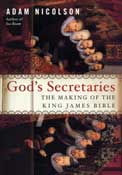
God's Secretaries: The Making of the King James Bible by Adam Nicolson (HarperCollins)

This interesting book discusses the broad context surrounding the translation of the King James Version of the Bible. Adam Nicolson explores the politics of the day, English history, the religious landscape and the personalities involved in the translation. These personalities include King James, some of the more prominent translators and the diverse church officials, from both the Church of England and the opposition. This got a little tedious, at times.

The portion of the book dealing with the final translation review and the printing was less tedious. Twelve people reviewed the work of the six groups who did the hard work of translating. These 12 would listen to the translation, stopping the readers for points of discussion concerning language or style. This translation was meant to be heard, as opposed to being a study Bible. It included no notes or addendums, such as found in the Geneva Bible.

God's Secretaries is written by a self-acknowledged nonchurchgoer, but not an atheist. He did a good job of explaining the complexities surrounding the translation. It is a worthwhile read for anyone interested in the most popular Bible ever printed.

Chaplain Thomas C. Condry

1st Signal Brigade

Youngsan, South Korea

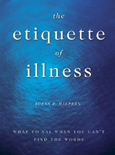
The Etiquette of Illness by Susan P. Halpren (Bloomsbury USA)

I stumbled onto this book while perusing the Editor's Picks on Amazon.com. By profession, Susan Halpren is a psychotherapist with a background of caring for the chronically ill in support groups. The author had a wealth of knowledge in what people said they wanted or needed when they were ill. In 1995, she was diagnosed with lymphoma. Now she would have the personal experience of learning what is helpful and, sadly, stressful and unhelpful.

Here are a few of examples: “When should I just do it instead of asking?” For instance, “Can I bring you something to eat?” The patient not wanting to be a burden will always respond in the negative. However, if you arrive at the doorstep with a dinner, how nice to simply receive a gift of compassion.

She discusses practical matters, such as, “Do I know this person well enough to clean out the refrigerator or scrub the bathroom?” When should we make a short visit, long visit, talking visit or just a quiet presence? Halpren coaches caregivers in leaving your anxieties at the door in order to make a helpful visit.

While the book is not written from an exclusively Christian perspective, I have found Halpren to be very insightful in answering the practical questions of those who want to help the hurting in ways that are not hurtful.

Stacy Conner, pastor

First Baptist Church

Muleshoe

Jesus in Beijing: How Christianity is Transforming China and Changing the Global Balance of Power by David Aikman (Regnery Publishing)

David Aikman grew interested in the spread of Christianity in China as a young correspondent for Time magazine in the 1970s, eventually becoming bureau chief in Beijing. He writes of China's large network of Christians in “house churches”–sometimes referred to outside China as “underground”–as a revival.

Although it is impossible to know how many professing Christians now live in China, Aikman estimates between 25 million and 80 million, perhaps 8 percent of the country's 1.2 billion population. That number is growing and spreading among intellectuals, businessmen, musicians, artists, academics and even some Communist Party members, acknowledged only privately.

Within the next 30 years, one-third of China's population could become Christian. Clearly awed by the spread of Christianity in China, Aikman's picture at times is rosy. In fact, Christian persecution remains a problem in China (See www.chinasoul.org; www.persecution.com/sisterjiang; www.worldserveusa.org/ministry/china.)

Nevertheless, with its revealing interviews, testimonies and firsthand observations, this inspiring book provides hope that the courage of Christians in China may eventually change the face of the world's largest communist nation and therefore the world.

J. Randall O'Brien, professor and chair

Department of Religion

Baylor University

Waco

News of religion, faith, missions, Bible study and Christian ministry among Texas Baptist churches, in the BGCT, the Southern Baptist Convention ( SBC ) and around the world.


Baptist Briefs_53005

Posted: 5/27/05

Baptists give up to $15 million for tsunami relief. Baptist groups from around the world affiliated with the Baptist World Alliance have contributed as much as $15 million so far in relief for victims of the Dec. 26 South Asian tsunamis. The director of Baptist World Aid, the BWA's relief and development arm, estimated that Baptist denominations around the globe have given between $12 million and $15 million in aid since the disaster. Baptist World Aid Director Paul Montacute reported the figure at a recent roundtable in Bangkok with more than 40 Baptist tsunami relief workers representing 12 nations. Montacute said about $2 million of the relief funds had been disbursed directly through BWAid, and more money is needed. Future recovery projects discussed by roundtable participants total nearly $5 million.

CBF General Assembly offers workshops. Participants at the Cooperative Baptist Fellowship's 2005 General Assembly June 30-July 1 in Grapevine will be able to choose from among more than 80 workshops on topics ranging from spiritual formation to the missional church. Four sessions of about 20 workshops each are scheduled during the meeting at the Gaylord Texan Resort and Convention Center. Jim Denison, pastor at Park Cities Baptist Church in Dallas, will lead a Bible study on "Dr. Phil, Oprah and Jesus: How the Sermon on the Mount Feeds My Soul." Buckner Baptist Benevolences President Ken Hall and National CBF Coordinator Daniel Vestal will lead a workshop on ministry partnership helping children in Africa. Diana Garland, dean of the Baylor University School of Social Work, will talk about families on mission. For more information, visit www.thefellowship.info.

SBTC favored in SBC board nominations. No Texans in churches uniquely aligned with the Baptist General Convention of Texas are among the new nominees for Southern Baptist Convention boards, and nominees include two Southern Baptists of Texas Convention staff members. Nominees presented by the 2005 SBC Committee on Nominations will serve if elected by the messengers to the annual meeting of the Southern Baptist Convention, June 21-22 in Nashville, Tenn. Mike Lewis, pastor of Great Hills Baptist Church in Austin, dually aligned with the BGCT and the SBTC, has been nominated for the SBC Executive Committee, replacing Gary Smith of Arlington. Mike Gonzales, director of SBTC Hispanic initiatives and member of First Baptist Church in Colleyville, has been nominated for the International Mission Board, replacing Hal Kinkeade of Springtown. Paul Redmon from First Baptist Church in Katy, a dually aligned church, has been nominated to serve on the Southwestern Baptist Theological Seminary board, replacing Michael Dean of Fort Worth. Gibbie McMillian, SBTC missions service associate and member of Memorial Baptist Church in Grapevine, has been nominated for the New Orleans Baptist Theological Seminary board, replacing Gregg Simmons, pastor of Memorial Baptist Church in Grapevine, and Michael Sullivan from Second Baptist Church in Houston, a dually aligned congregation, has been nominated to replace Lenny Shores of Corpus Christi. Texans nominated to second terms include Director of Missions Mike Smith of Jacksonville for the International Mission Board; Earl Sutton of Kingwood and Jeff Shirley of Rockwall for the North American Mission Board; and Mark Caton of Allen for the Southwestern Seminary board.

SBC president appoints Texans to committees. Southern Baptist Convention President Bobby Welch has appointed Mike Lewis, pastor of Great Hills Baptist Church in Austin, and Kateria McMillian of Memorial Baptist Church in Euless to the SBC Committee on Committees. Welch named Pastor Randall Easter and Minister of Music Dave Stetson, both of First Baptist Church Briar, near Azle, to the Credentials Committee, and he named Matthew Surber, minister of students and young singles at Prestonwood Baptist Church in Plano, to the Tellers Committee.

News of religion, faith, missions, Bible study and Christian ministry among Texas Baptist churches, in the BGCT, the Southern Baptist Convention ( SBC ) and around the world.