TOGETHER: Summertime means missions, ministry_62705

Posted: 6/24/05

TOGETHER:
Summertime means missions, ministry

Summer has become one of the busiest times of the year for churches. I remember when it was common for the pastor of a large church to take the entire month of August off for rest and renewal. Most things at the church would go into idle gear until after Labor Day.

No longer is that true. Churches go right on providing ministries and outreach efforts throughout the year. And the BGCT is helping them in those efforts.

wademug
Executive Director
BGCT Executive Board

More than 400 of our Baptist Student Ministry students are involved in hands-on mission activities in Texas and around the world this summer. Scores and scores of churches are involved in River Ministry and other mission efforts in Mexico, as well.

The BGCT recently has entered formal missions partnerships with the Baptists of Nigeria and Ukraine. We have many more partnerships (including some in the United States), and we help churches minister anywhere in the world where they feel God leading.

Would you and/or your church like to be involved in the rich adventure of serving God in a part of the world you have only heard about?

Get in touch with Texas Partnerships at (214) 828-5183 or don.sewell@bgct.org. Don Sewell and his staff will get information to you and help connect you with a specific place for you to be involved.

What kinds of things do they need us to work with them in doing? Here is a partial list: assist in church building projects; sports evangelism; children's ministry, including camps; micro-business teachers for short seminars; stewardship testimonies and Cooperative Program promotion for their work together; music ministry for younger people, including technical and instrumental instruction; medical missions; agricultural initiatives; disaster relief training and practical and theological training for ministers.

Of course, there are good projects they have the will and expertise to do, but lack necessary funds. A few hundred dollars placed strategically in the right places can make a huge difference in what can be achieved.

Through our Baptist World Alliance involvement, we are making contacts with Baptist leaders around the world, and we are discovering passionate people who want to see their populations come to know Jesus Christ and grow in Him.

But what of Texas? Our Church Multipli-cation Center works faithfully and passionately to identify places where new churches are needed, find partners who want to help start a new church, and equip church planters for making a vibrant beginning in planting a new congregation. Abe Zabaneh and his great staff are tireless in their efforts to help churches start churches. You can reach them at (214) 828-5270 or abe.zabaneh@bgct.org.

But there is still more. Do you want to start a ministry in a prison? How about a Bible study fellowship in a multihousing complex? Who is caring for community needs and advocating for redevelopment in neighborhoods? Would your church like to help? Call Jim Young's office at (214) 828-5383 or jim.young@bgct.org.

Maybe you have some church members who are on their way to the other side of the world to work for their company. WorldconneX can work with you to connect your people to mission opportunities and networks. WorldconneX is developing a database that can connect you and your skills, passion and calling to just the right place. Contact WorldconneX at (214) 421-7999 or www.worldconnex.org.

The convention and its Executive Board staff exist to help there be great churches. We are at your service.

We are loved.

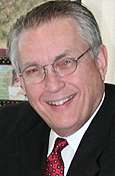
Charles Wade is executive director of the Baptist General Convention of Texas.

News of religion, faith, missions, Bible study and Christian ministry among Texas Baptist churches, in the BGCT, the Southern Baptist Convention ( SBC ) and around the world.


Storylist for 6/13/05 issue

Storylist for week of 6/13/05

GO TO SECTIONS:
Around Texas       • Baptists      
Faith In Action

      • Departments      • Opinion       • Bible Study      


Hands of God: Students share God's love with Guatemalan orphans

Gunter recommended as BGCT chief operating officer


Gunter recommended as BGCT chief operating officer

Doctors donate services to Russian orphan

Dotson pleads guilty to murder

Forgotten Baptist leader gains new respect

Habitat presents award to Dallas-area network of Baptist churches

Pinson named Texas Baptist Elder Statesman

On the Move

Around the State

Texas Tidbits

Hispanic Baptist Convention Annual Meeting
Time for Hispanic Baptists to change the world, president says

Be agents for change, pastor urges

Guajardo narrowly re-elected Convencion president

Hispanic Convencion united, leaders insist

Previously Posted
Baylor announces three leadership appointments

Texas Legislature
Parental consent required for Texas abortions

Budget should lighten CPS caseworker load

Lawmakers fail to agree on school finance remedy


Missouri Convention free to continue lawsuits

Baptist Briefs

Previously Posted
CBF General Assembly will have Hispanic flavor

Texan named to CBF Global Missions committee


Disabled student's missionary dream finally comes true

Previously Posted
Texas couple promotes HIV awareness

Wayland coach gets second chance with Athletes in Action tour

House parents 'mom' and 'pop' to cottage kids for 25 years


Abortion rate has not increased under Bush, but declined more slowly, new data suggest

Children's Ministry
Practice pays off at Bible drill

Effective children's ministries involve, equip parents

Parents ask, 'When is my child old enough to follow Christ?'

Churches face choices in VBS curriculum


Previously Posted
God gives honky-tonk crooner new voice, reason to sing

Holy superheroes! Baylor prof explores spirituality of comics


• Reviewed in this issue:
Out of the Question … Into the Mystery: Getting Lost in the Godlife Relationship by Leonard Sweet
Theodicy in the World of the Bible by Antti Laato and Johannes C. de Moor, editors
God is Closer than You Think by John Ortberg
Good to Great by Jim Collins
It Only Hurts On Monday by Gary L. McIntosh and Robert L. Edmondson
Hurt: Inside the World of Today's Teenagers by Chap Clark


Classified Ads

Texas Baptist Forum

Around the State

On the Move

Cartoon


EDITORIAL: Invest in the eternal welfare of children

DOWN HOME: You can't swat flies over the telephone

TOGETHER: Pinson legacy: Vision and accountability

2nd Opinion: Weeping Jesus door teaches lesson

Cybercolumn by Jeanie Miley: What to do about 'going to church?'


Cybercolumn by Berry D. Simpson: Relationships


BaptistWay Bible Series for June 12: Christ examines the seven churches

LifeWay Family Bible Series for June 12: Association with Christ absolves all guilt

LifeWay Explore the Bible Series for June 12: Live by the Lord s values in all circumstances

BaptistWay Bible Series for June 19: Christ was the key to God s redemptive plan

LifeWay Family Bible Series for June 19: Strive daily to become more like Christ

LifeWay Explore the Bible Series for June 19: God steps into the breach that rends lives

See articles from previous issue 5/30/05 here.


BaptistWay Bible Series for July 3: Beware the damage complacency can do_62705

Posted: 6/20/05

BaptistWay Bible Series for July 3

Beware the damage complacency can do

• Revelation 7

By Wayne Smith

First Baptist Church, Lamesa

Last week, we studied the breaking of six of the seven seals which secured God’s scroll—a complete history of his plan of judgment for the world. As each of the first four seals was broken, a horseman appeared and pictured the death and destruction of society that would occur following the war to come. The fifth seal called for justice for the martyred saints who were dying even as John received the Revelation. The breaking of the sixth seal presented an unmistakable sign of the end—a great earthquake with destruction and disruption of the natural order of the universe.

This lesson will examine the first interlude—a pause in the narration of judgment following the chaos pictured by the opening of the sixth seal and preceding the opening of the seventh seal.

The first interlude interrupts the prophecy of God’s final judgment to bring a message of reassurance to the suffering Christians. Even though the Romans were persecuting Christians unmercifully, they were to remain confident. They had the promise of heaven awaiting them, and they could renew their strength because their future was secure. They would not be spared further agony on earth, but they are assured ultimate victory.


The command to withhold judgment (Revelation 7:1-8)

After viewing the chaotic scene that followed the opening of the sixth seal, John saw four angels poised to destroy the earth. Another angel, carrying the seal of God, called out not to harm the earth until 144,000 “servants of our God” (12,000 from each of the 12 tribes of Israel) are sealed for salvation. The 144,000 symbolically represent all Christians, both Jew and Gentile. All those who have followed Christ now are sealed as belonging to God and are assured their place among the great multitude depicted in the next passage.


The great multitude in heaven (Revelation 7:9-12)

After the sealing, John sees a great multitude of people, representing people of every nation standing before the throne and in front of the Lamb. All were wearing white robes and were holding palm branches—emblems of purity and victory. They cried out that salvation belongs to God and to the Lamb. All the angels standing around the throne and around the elders and the four living creatures fell down on their faces before the throne and worshipped God.


The identity of the multitude in white robes (Revelation 7:13-17)

One of the elders asked John who the multitude was and where they had come from. He answered his own question when John replied to him: “Sir, you know.” The elder identified the multitude as those who came out of the great tribulation. They had been saved through the atoning death of Jesus. They had been delivered to heaven where they served and praised God continually. Never again will they suffer pain. The Lamb, presented symbolically as a shepherd, has led them through his atoning death into the presence of God.

The vivid imagery of the Revelation to John sometimes over-powers the message of assurance and hope contained in it. The awesome judgment directed against the world is reserved for those who have opposed God, rejected Christ and persecuted Christians. The joys of heaven are reserved for those who have received Christ. No amount of human suffering can take away that promise.

The image of an eternal omnipotent God in total control of the world and of history was desperately needed by the suffering first-century Christians. They needed the assurance that God was aware of their condition. Not only would he strengthen them to withstand and endure, he already had provided for their future. The testimony of their lives had secured their future. By following Christ, their part in carrying out God’s plan had been realized.


Application

We in America do not fear physical harm for being identified as Christian. This freedom from persecution may give us a complacent attitude. We may think the absence of organized resistance such as the Romans enforced means there is no opposition to Christians and Christianity.

First-century Christians were not complacent. They knew that spreading the gospel was urgent, and they worked at it regardless of the opposition. They certainly did not welcome the abuse they received, but they persevered in spite of it. The need to spread the gospel outweighed the fear of persecution.

The opposition we face in America is much more subtle than that employed by the Romans. The opposition we face is apathy—the attitude that simply refuses to recognize the urgent need for Christian witness. There is no overt physical danger to be feared from apathy. Apathy gives a false sense of security. If one simply refuses to accept responsibility, there is no accountability.

Our challenge is to develop the same sense of purpose in our lives that the early Christians had. They existed as Christians in the midst of the turmoil of persecution not by withdrawing and hiding but by openly confessing Christ and living out their testimonies.


Discussion question

• How can I develop a sense of urgency about my Christian witness?


News of religion, faith, missions, Bible study and Christian ministry among Texas Baptist churches, in the BGCT, the Southern Baptist Convention ( SBC ) and around the world.


LifeWay Family Bible Series for July 3: Help others to know the truth of the gospel_62705

Posted: 6/20/05

LifeWay Family Bible Series for July 3

Help others to know the truth of the gospel

• 1 Corinthians 8:9-13; 9:19-27

By Mitch Randall

First Baptist Church, Bedford

Freedom with responsibility is the hallmark of the Baptist faith. For centuries upon centuries, noble Baptist have heralded the call for believers to live free from the legalistic attributes of religion, while at the same time embracing a sense of Christian responsibility. Faith should never be a weight carried around one’s neck, yet it should not be an invisible cloak worn only when the time is convenient either. Faith in Christ is freedom with responsibility.


1 Corinthians 8:9-13

In First Corinthians, the end of chapter 8, the Apostle Paul brings to light this incredible premise writing within the context of consuming idol foods. The Corinthian Christians, it appears, were eating foods sacrificed to idols. While their new-found faith in Christ Jesus had set them free from sin and religious legalism, their faith was not a license to engage in any behavior they saw fit.

Eating particular foods sacrificed to idols does not sound like a grievous act to the 21st-century ear, but to the first-century person, there was an understood problem. What a person ate, it was thought in the first century, actually became part of the person—especially any meat from an animal.

Now, we know this to be true physically, on a molecular level, but when deciphering the same thesis on a spiritual level, we raise an eyebrow or two. However, this belief is not unique to ancient Palestine. The Native Americans of this country thought animals eaten for nourishment became part of the person physically, mentally and spiritually.

Thinking of this problem in this light sheds a great deal more importance on a public diet. With the Christian emphasis on the Lord’s Supper being prevalent in the liturgy of the church, any foods sacrificed to idols ran contradictory to the consumption of the body of Christ. The apostle Paul strongly encourages his fellow believers in Corinth to be aware of such reckless behavior and its harm to the Gospel. The way of Christ was not meant to be seen as some sectarian cult, but as the true fulfillment of God’s promise to all humanity.

As Christ followers, we are free from the constraints of the law, yet we would be wise to embrace the responsibility we have as Christ’s representatives to the world. While there are many things that might be permissible, not all things are proper. We should live out our faith as though several sets of eyes were upon us, so that we make the best impression we can upon those we’re trying to reach for the sake of gospel. Let it never be said we were a stumbling block for those the Spirit of God is trying to call.


1 Corinthians 9:19-27

Paul builds upon this idea later in his letter. He makes it clear that even though he lives as a free man, he has chosen to be a slave to all for the sake of the gospel. Now, there is a temptation to read this as though Paul was creating a false façade for the sake of winning people to Christ. Yet, after a careful examination of the text, this is not so. Paul was not creating false facades for the sake of the gospel but embracing people at their points of interest.

Paul had a keen ability to reach out to a multitude of people. He could speak with Jewish scholars about the fine details of Torah. He could talk for hours about the pagan rituals of Hellenism. Paul was well versed in many aspects of life, and because of that, he was able to engage people and steer the conversation toward the presentation of the gospel. His ability and success allowed him to, in his own words, “share in (the gospel’s) message.”

For the contemporary Christian, we would be wise to engage people in their interests. If Paul were writing to us here in Texas, he might say, “To the football fan, I was football; to the NASCAR fan, I was NASCAR, to the cattleman, I was a cattleman; and to the Hispanic, I was Hispanic.” Let us be all things to all people, so that as many as we can reach hear the gospel and claim it as their own.


Discussion questions

• What does it mean that we are free in Christ?

• Are there certain things Christians should not do, even though they might be acceptable? What are they?

• What should we do to help others come to know Christ?


News of religion, faith, missions, Bible study and Christian ministry among Texas Baptist churches, in the BGCT, the Southern Baptist Convention ( SBC ) and around the world.


LifeWay Explore the Bible Series for July 36: Things are not always as they appear_62705

Posted: 6/20/05

LifeWay Explore the Bible Series for July 3

Things are not always as they appear

• Ezekiel 25-32

By Dennis Tucker

Truett Seminary, Waco

The book of Ezekiel, like most prophetic books, contains prophetic statements against foreign nations. In Ezekiel, the oracles against the nations occur in chapters 25-32 and play a pivotal role in the development of the theology of the book.

Like the oracles against the nations uttered by other prophets, the oracles in Ezekiel never were actually spoken directly to these nations—they only were presented to a group of Israelites. In the case of Ezekiel, these oracles against the nations would have been presented to those in exile with the prophet.

The primary question for the contemporary reader then is “What is the purpose of these chapters?” Although the teaching materials suggest reading this text with missions in mind, I would like to offer a slightly different reading of the text—one that has equal applicability to our faith.


Appearances are not everything

If one reads through chapters 25-32, she or he will note the frequency of the number seven in Ezekiel’s oracles—remember Ezekiel also was a priest! There are seven countries or city-states addressed in the oracles: Ammon, Moab, Edom, Philistia, Tyre, Sidon and Egypt. Of the seven, Tyre and Egypt are singled out with lengthy diatribes against the rulers. Further use of the number seven appears when Ezekiel issues seven lengthy denunciations each against Tyre (chapters 26-28) and Egypt (chapters 29-32)—while the others receive only scant treatment. The attention paid to both Tyre and Egypt warrants our investigation—and may provide helpful resources for theological reflection.

Ezekiel (and Jeremiah, among other prophets) interpreted the coming of Babylon as God’s instrument of judgment against his people. In 587 B.C., not only was Judah rebelling against Babylon (despite the prophetic word of Jeremiah), but so were Egypt and Tyre. When Nebuchadnezzar and the Babylonian army marched through Palestine, leaving a wake of devastation in their path, the prophets understood this as punishment for rebelling against Babylon (and the “word from the Lord”). Jerusalem fell in 587 B.C.—as announced by the prophets. What proved disturbing, however, was that the Babylonians could not defeat Tyre nor Egypt. Could it be that the gods of Tyre and Egypt were able to overcome the plans of Israel’s God? Was Israel’s God unable to control the fate of foreign lands?

In responding to these questions, the oracles of the nations actually perform a “pastoral” function. In essence, Ezekiel’s words against the nations are meant to suggest things are not as they always seem. The king of Tyre and the Pharaoh of Egypt had delivered their people from the Babylonians. No doubt these acts of deliverance had led to a certain sense of arrogance and pride on the part of the king and Pharaoh (see 28:2 and 30:6). Yet Ezekiel wants to affirm that while the king of Tyre and the Pharaoh of Egypt may have averted a disaster with the Babylonians, they will not avert an encounter with the living God of Israel.

The point for them, and for us, is quite clear. There will be times when it appears God has not acted justly—calling some into account, while seemingly allowing others to continue in reckless disobedience. Things are not always as they seem. Ezekiel maintains our faith must remain firmly focused on a God who stands above the political, social and religious upheaval that dominates peoples and nations for a time.

We must be cautious, however, in how we interpret such material. Often Christians in the United States make a faulty move in reading these oracles. We tend to associate ourselves with Ezekiel and the people of Judah—and we look for the other “nations” to whom such an address would seem relevant. But things are not always as they seem.

Perhaps in an age of growing global awareness, we should first confess that the God we serve stands above political, social and religious upheaval that dominates our nations and times—and that our commitment is to such a “global” God. The God we serve in our churches here is the same God that meets with young Christians meeting underground in the house churches of China or in the tattered remains of churches in Iraq. We can no longer adopt an “us” against “them” mentality when reading Scripture because the God of the “them” is also the God of “us.” We must seek to find a way to make this God known to the rest of the world—without assuming the kind of arrogance that led to the condemnation of both the King of Tyre and the Pharaoh of Egypt.


The move to restoration

These oracles also appear at a critical juncture in the book—and for this reason offer fodder for theological reflection. Chapter 1-24 announced the judgment of Judah. After the oracles of the nations, chapters 33-48 announce the restoration of God’s people. After the judgment, but before the restoration, there are the oracles to the nations. What might its location have to say to us?

The message of the oracles to the nations is central in our movement from judgment to restoration. I would submit that until we confess that the God we serve is universal in reach and commitment, we will never move from judgment to restoration. Until we confess that things are not always as they seem, we will fail to see the work of God both near and far—and restoration will be delayed.

When we come to realize (anew) these things, we will then understand something of Ezekiel’s proclamation: “Then they shall know that I am the Lord” (25:11).


Discussion questions

• How does confessing that the God we serve is universal in reach and commitment change the way we “know that he is the Lord?”

• How does confessing that the God we serve is universal in reach and commitment change the way we see the rest of the world?


News of religion, faith, missions, Bible study and Christian ministry among Texas Baptist churches, in the BGCT, the Southern Baptist Convention ( SBC ) and around the world.


Senate resolution offers apology for failing to stop a century of lynchings_61305

Posted: 6/17/05

Senate resolution offers apology for
failing to stop a century of lynchings

By Robert Marus

ABP Washington Bureau

WASHINGTON (ABP)—The United States Senate has offered a belated apology for something it repeatedly failed to do—stop a century of lynchings that killed thousands of African-Americans and other minorities.

During the 19th and 20th centuries, white mobs would hang or otherwise murder minorities or immigrants accused of real or imagined offenses, almost always without being prosecuted and predominantly in the South.

In an acknowledgement of that history, the Senate’s chief sponsors of the anti-lynching resolution, passed June 13, were two white Southerners—Sens. Mary Landrieu (D-La.) and George Allen (R-Va.)—who were joined by 78 co-sponsors.

“Without question, there have been other grave injustices committed in the noble exercise of establishing this great democracy,” Landrieu said, introducing the bill on the Senate floor. “However, there may be no other injustice in American history for which the Senate so uniquely bears responsibility. In refusing to take up legislation passed by the House of Representatives on three separate occasions and requested by seven presidents from William Henry Harrison to Harry Truman, the Senate engaged in a different kind of culpability.”

The voice vote means no objection to the bill was recorded. However, while most Southern senators signed on as co-sponsors, six did not. They were Republicans Richard Shelby of Alabama, Thad Cochran and Trent Lott of Mississippi, Lamar Alexander of Tennessee, and John Cornyn and Kay Bailey Hutchison of Texas.

The bill itself cites 4,742 reports of lynchings in the United States between 1882 and 1968. The practice was particularly pronounced around the turn of the 20th century. Opinion polls by the 1930s showed large majorities of the public—even in the South—supported making lynching a federal offense. But on all three occasions, Southern senators blocked the House bills from floor votes. They claimed making lynching a federal offense would infringe on states’ rights.

Allen, speaking in favor of his bill, noted that the lynch mobs were often not only tolerated by local authorities but led by them. Indeed, historians note that many lynchings were civic events that drew large crowds. Besides hanging or burning their victims to death, the mobs would sometimes torture the victims or mutilate their corpses after they died.

Newspapers sometimes ran photos of the events, some with the mob leaders posing next to the bodies. Mob participants or supporters even made postcards of such photos to mail as souvenirs.

Several senators cited a recently published collection of such photographs for moving them to action. Called Without Sanctuary: Lynching Photography in America, the book “helped bring greater awareness and proper recognition of the victims of lynching,” according to the resolution.

Senators received copies of the book that had been mailed to them by a group of activists calling themselves the Committee for a Formal Apology.

Members of the committee, including several relatives and descendants of lynching victims, had spent the hours prior to the resolution’s passage visiting senators. Many of them watched from the Senate visitors’ galleries during the apology’s debate and passage.

The resolution also noted the practice was not limited to the South, or to African-American victims. According to a survey by the Tuskegee Institute, there were documented lynchings in all but four states. In addition, the victims included not only African-Americans but also Jews, Italian immigrants, Latinos, Asians and American Indians.

The anti-lynching resolution comes amid renewed attention to the race-related crimes of the civil-rights era. Earlier this year, federal officials announced they would reopen the investigation into the 1955 lynching of Emmett Till, a 14-year-old African-American from Chicago who was visiting relatives in Mississippi when he was accused of whistling at a white female store clerk.

On the day the Senate passed the resolution, the trial opened for a reputed Mississippi Ku Klux Klan member who allegedly was involved in the famous murder of three civil-rights workers near Philadelphia, Miss., in 1964.

News of religion, faith, missions, Bible study and Christian ministry among Texas Baptist churches, in the BGCT, the Southern Baptist Convention ( SBC ) and around the world.


Fields will speak at ABP dinner_61305

Posted: 6/17/05

Fields will speak at ABP dinner

GRAPEVINE, Texas (ABP)—Wilmer C. Fields, a pioneer in the field of Christian journalism, will be the featured speaker at the annual Associated Baptist Press dinner at the CBF General Assembly.

The dinner will be held Thursday, June 30, from 5:15 p.m. to 6:30 p.m., at the Dallas/Fort Worth Airport Marriott, three miles from the headquarters hotel for the CBF meeting. Cost to attend is $25 and transportation is provided.

Fields served from 1959 to 1987 as vice president for public relations of the Executive Committee of the Southern Baptist Convention and editor of Baptist Press, the SBC's news service. He was responsible for building a network of Baptist journalism professionals that was highly respected in secular and religious circles.

As part of the "Dateline: Tomorrow" development campaign, ABP is raising money to endow a staff editorship in Field's name to honor his legacy.

In retirement, Fields has been active on numerous committees and commissions in Baptist life, particularly in the Baptist World Alliance and with Associated Baptist Press, and he has been active in Woodmont Baptist Church in Nashville.

The June 30 banquet, built around a Western theme, will feature a barbecue buffet and line-dancing, as well as an update on ABP's ministry and the Dateline: Tomorrow campaign.

Space for the dinner is limited and reservations are recommended. To register, contact the Jacksonville offices of Associated Baptist Press at (800) 340-6626 or visit www.ABPNews.com. Payment can be made by check or charge card. Mail payment to Associated Baptist Press, P.O. Box 23769, Jacksonville, FL, 32241-3769 or call the toll-free line to register in person.

News of religion, faith, missions, Bible study and Christian ministry among Texas Baptist churches, in the BGCT, the Southern Baptist Convention ( SBC ) and around the world.


SBC president calling for 1 million baptisms_61305

Posted: 6/17/05

SBC president calling for 1 million baptisms

By Greg Warner

Associated Baptist Press

NASHVILLE, Tenn. (ABP)—Sixteen months from now, Southern Baptists should know if they have been able to reverse their evangelistic decline—or if there is a deeper problem that will require a more drastic remedy, said Bobby Welch as he concluded a year as Southern Baptist Convention president that has focused almost full-time on the SBC’s flagging evangelism.

At Welch’s urging, the SBC will soon launch a 12-month, all-out effort to evangelize and baptize 1 million new Christians, called “Everyone Can.” It will address the most critical need Welch sees among the nation’s 16 million Southern Baptists—a five-year slump in baptisms that belies the denomination’s legendary evangelistic image.

It’s been a quarter-century since fundamentalists, alarmed that perceived liberal views of the Bible were dulling the SBC’s fervor for evangelism, wrested control of the SBC from moderates. But evangelism statistics have declined while conservatives have been in charge—hardly a badge of honor for the SBC messengers who gather June 21-22 for their annual meeting.

Welch’s ambition is to see the SBC baptize 1 million people between October 2005 and September 2006—a statistical year for the SBC. That total would be almost three times the annual average. After a year promoting the need, and months of preparation, Welch said Southern Baptists now must prove they believe what they say about the urgency of salvation.

“After that year has past, it will be as clear as the handwriting on the wall,” Welch said.

If Southern Baptists can’t turn around the baptism decline after more than a year of “extraordinary effort,” he said, “we are going to have to face some reality out here in the convention.”

“When we get to the end of that year, if something significant hasn’t happened in baptisms, we’ll have to look ourselves in the face and say, ‘Something is wrong.’ If it does show improvement, it will demonstrate that, if the convention goes to the people with a message that’s near and dear to their hearts, then you can expect the people to respond.”

Either way, he said, “There will be a tale told.”

Welch and convention leaders hope to set the tone for the two-day convention— and the year ahead—with a successful weekend of door-to-door witnessing in Nashville, an annual pre-convention project called Crossover.

The urgency of evangelism is expected to be the centerpiece when the annual meeting returns—for the first time since 1914—to Nashville, home base for the SBC and several of its agencies. But, as with each annual SBC meeting, unexpected issues may steal the spotlight from what Welch might hope would be a single-minded convention.

Some messengers want the SBC to denounce public schools. One proposed resolution would decry the secularization of public schools and urge Southern Baptists to start Christian schools or home-school their children. Another resolution goes further, urging churches to investigate their local school districts to determine if they promote homosexuality and calling for a wholesale withdrawal from such schools. A similar resolution failed last year. The SBC resolutions committee will decide which statement, if any, to propose for adoption.

Welch said he doesn’t agree with the proposal to withdraw from public schools, a popular premise among ultraconservative Christians but impractical and unaffordable for many Southern Baptists, he said. Ultimately, the SBC must trust parents to make those decisions, he said, since they have the biblical responsibility.

Besides, he says, “The schools are North America’s greatest mission field,” given Southern Baptists’ historic success with childhood converts. “We don’t need to be withdrawing from the mission field.”

Other “culture war” issues could come up during the June 21-22 meeting, perhaps during a live video message from President George W. Bush scheduled for Tuesday.

And the SBC may vote to end its eight-year boycott of the Disney Co., which was prompted by alleged pro-gay policies and immoral entertainment content. Anti-Disney activist Donald Wildmon of the American Family Association said recently Disney is now “one of the less egregious perpetrators of the homosexual agenda.” And SBC ethics leader Richard Land said the SBC, as the largest boycott supporter, may vote to “declare victory in this matter and move on.”

The least contentious event of the two-day meeting could be the scheduled tribute to Billy Graham, who is ending a long and storied career in evangelism. The special recognition of Graham—which will be accepted by his grandson—makes perfect sense, Welch said, since the North Carolina native is a Southern Baptist, is the best-known Christian leader in the world, and has devoted his life to “what Southern Baptists say they love most”—evangelism.

Welch is expected to be re-elected to the customary second term as SBC president without opposition. While moderates quit fielding candidates in the early 1990s, fundamentalists have continued to rally around a consensus candidate rather than risk splitting the vote.

But some convention leaders—including SBC chief executive Morris Chapman and LifeWay president Jimmy Draper—worry the close-to-the-vest pattern of SBC politics is no longer necessary and discouraging to younger and lesser-known Baptists ready to lead.

At the 2004 SBC, Chapman said conservatives have not made good on their pledge to bring a broader range of Southern Baptists into leadership positions. “We cannot let this convention be driven by politics,” he told messengers.

There is a hint Chapman’s warning is being heard. With Welch’s re-election assured, the convention powerbrokers apparently have stepped aside this year and let nominees for other offices surface on their own.

Two nominees have emerged for first vice president—Dan Spencer, pastor of First Baptist Church in Thomasville, Ga., and Mike Boyd, pastor of Wallace Memorial Baptist Church in Knoxville, Tenn. Each is a conservative who will be nominated by a conservative, but neither candidacy bears the marks of a political effort.

Meanwhile, widely loved evangelism professor Roy Fish of Southwestern Baptist Theological Seminary will be nominated for second vice president.

“There appears to be less emphasis upon enlisting nominees to be nominated for the various SBC offices—and rightly so,” Chapman observed.

“For 25 years, interest in who would be nominated to these offices was intense because the convention was in transition and the election of these officers was critical to assuring that the convention would return to the biblical roots of our forefathers. There is a lessening of that intensity, and that fact alone likely will give rise to number of highly qualified and strongly conservative nominees being nominated for the same office in the near future.”

Welch said many conservatives agree with Chapman’s and Draper’s desire to bring new blood into leadership positions. “I would like to think we’re all after the same thing,” he said. “It’s just hard to know how to get at it.”

Although Welch said he is reluctant to assume he’ll be re-elected, he is already mulling plans for a second term, While he has been the busiest president in memory—essentially taking a leave from his Florida pastorate to work full-time for the SBC—he has a plan he says will make future presidents even more effective. Make the presidency an automatic two-year post, he advises, so future presidents can plan longer and think more strategically.

Welch is asking the Executive Committee to study the change. Committee president Chapman said he has not had much time to weigh Welch’s suggestion, but he added: “I did promise to try to determine if the idea would have any traction with the Executive Committee between now and (the committee’s meeting in) September. On the surface, I can see certain advantages for the president, but also certain disadvantages for the convention. It’s an idea that may ultimately fall under the category, ‘If it ain’t broke, don’t fix it.’ I personally appreciate Dr. Welch’s desire to improve the use of the tenure given a president and his belief that a two-year term could possibly enhance the president’s leadership.”

Welch’s role as “a full-time president” is “a rarity that may never occur again in the convention,” Chapman said. “We owe him and his church family our profound thanks.”

Welch’s actions as president reflect the urgency he feels about the SBC’s future—which is tied to recovering its urgency for evangelism. The stakes are high for the nation’s largest Protestant denomination, which in his view lives or dies by its evangelistic zeal. He said his year of meeting Baptists nationwide has convinced him of this: “We’ve got good people doing good things. But we haven’t got enough people doing the main thing.”

To drive his point home, Welch drove—or rode at least—through all 50 states, mostly by bus, meeting rank-and-file Baptists and touting the need to recover the evangelistic edge. He logged more than 20,000 miles and spoke more than 200 times in his 365-day term. “The SBC is all about the people, an eclectic people that love the Lord,” he said. “Everyone is important and everyone’s contribution is critical.”

Welch even moved to Nashville for three months this spring to lay the groundwork and stir enthusiasm for the Crossover effort—an expected 12,000 volunteers pitching in for what convention leaders predict will be the largest door-to-door witnessing event ever.

Does Nashville, buckle of the Bible Belt, really need more evangelizing? “That (familiarity and complacency) is one the things we’ve been fighting,” Welch said. In fact, the “lostness” in Nashville is “striking,” he said. “They have a whole county full of lost people.”

“We’ve got enough lost people in the Bible Belt to have one of the greatest revivals of all time,” he added.

For the first time in five years, Southern Baptists saw a slight upturn in their baptism count last year—from 377,357 in 2003 to 387,947 in 2004. That’s not enough to signal a turnaround, but Welch and Draper say it could be a good harbinger.

Winning a million conversions isn’t a good enough goal, Welch says. Baptism is a better measurement of evangelism because it requires churches and converts to follow through on those decisions.

Always serious about modeling desired behaviors, Welch has given the ordinance of baptism a high place in the upcoming SBC meeting. A new convert will be baptized during each session of the convention—actually baptized by a local church, which the convention-goers as observers, since only a church can baptize, in strict Baptist doctrine.

Why is it important to demonstrate baptism? “You have to realize, 10,000 (of the SBC’s 43,000) churches haven’t seen a baptism in a year,” Welch said.

He is encouraged by the response he’s received to his call to recommitment, although most of the indicators are preliminary or anecdotal—churches and state conventions raising their evangelism goals, pastors urging him on, more speaking invitations than he can accept, even working full time.

“No doubt about it, we’ve got a heightening of awareness for evangelism, of what we haven’t done, what we should be doing. … But the key, as you know, is getting that interest to the local level and putting some feet to it.”

One early measurable indicator will be participation in Crossover and the SBC meeting, he said. But the real work still lies in the months that follow, he said.

Welch’s only regrets during year No. 1 were a cancelled trip to Iraq and turning down so many speaking invitations. “Everything else was beyond expectation.”

He has steeled himself for the almost-certain second term, trying to decide how to follow up his 50-state barnstorming tour and ambitious million-baptism challenge. He wants to travel to the mission field, which he hasn’t had time to do, and there’s probably another bus tour in the offing—though he doesn’t know where it will go.

“I’m not looking for an encore,” he adds. But neither is he willing to let any grass grow under his feet.

News of religion, faith, missions, Bible study and Christian ministry among Texas Baptist churches, in the BGCT, the Southern Baptist Convention ( SBC ) and around the world.


New Jersey court rules against same-sex marriages_61305

Posted: 6/17/05

New Jersey court rules against same-sex marriages

By Robert Marus

ABP Washington Bureau

TRENTON, N.J. (ABP)—A divided New Jersey appellate court ruled against same-sex marriage, but gay-rights activists who filed the suit have promised to appeal.

A three-judge panel of the New Jersey Superior Court Appellate Division ruled 2-1 against seven gay couples who had sued state officials after being denied marriage licenses. The couples claimed the action violates the New Jersey Constitution's equal-protection and privacy clauses. Among the plaintiffs are a couple who are both Episcopal priests, a chaplain for the Secaucus fire and police departments and another ordained minister.

Appellate Judge Stephen Skillman, authoring the majority opinion, said, "There is no basis for construing the New Jersey Constitution to compel the state to authorize marriages between members of the same sex."

Skillman said the plaintiffs' contention that their right to marry the partner of their choosing was protected by the state's charter "has no foundation in its text, this nation's history and traditions, or contemporary standards of liberty and justice."

He also cited other state court opinions that said encouraging procreation and child-rearing are sufficient reasons for limiting marriage to heterosexual couples.

Skillman also noted that, during the course of the case, the state legislature had passed a domestic-partnership law. Since the law "extends many of the economic benefits and regulatory protections of marriage to persons of the same sex who enter into domestic partnerships, plaintiffs may now avoid many of the adverse consequences of being denied the opportunity to marry," such as denial of the right to make health-care decisions for an incapacitated partner.

Skillman also said the state's current marriage policies don't violate the New Jersey Constitution's equal-protection provisions because the state offers marriage to residents on equal terms, regardless of their sexuality. In other words, Skillman said, homosexual New Jerseyites have just as much right to marry as their heterosexual neighbors — so long as they marry a person of the opposite sex. The fact that they choose not to, he said, is not the state's concern.

But Appellate Judge Donald Collester, in a dissenting opinion, said marriage as the state administers it is a fundamental right. "The right to marry is effectively meaningless unless it includes the freedom to marry a person of one's choice," he wrote.

Attorneys for the plaintiffs said they would appeal the ruling. The case is Lewis vs. Harris, No. A-2244-03T5.

News of religion, faith, missions, Bible study and Christian ministry among Texas Baptist churches, in the BGCT, the Southern Baptist Convention ( SBC ) and around the world.


Cyber Column by Brett Younger: The Birds and the Bees (& How They Fly)_61305

Posted: 6/17/05

Brett Younger delivers the "Why Airplanes Fly" speech to his son Caleb, just like his father did for him.

CYBER COLUMN:
The Birds and the Bees (& How They Fly)

By Brett Younger

I was 10 years old, lying on my bed on a Saturday afternoon reading an Archies comic book. (I’m only a little embarrassed to admit that I liked Veronica more than Betty.) My father came in wearing his sober Ward Cleaver face: “Brett, put your novel away. There’s something I should have talked to you about by now, but I’ve been putting it off, because I wasn’t sure you were old enough to understand. We’re going to have a serious conversation that I hope you’ll remember. I want you to listen carefully. Let’s go to the den to talk.”

As I followed him out of my room, I thought exactly what you’re probably thinking. My father had just offered Robert Young’s introduction to the birds-and-the-bees talk. What I wanted to say, however, was: “Dad, you gave this speech a week ago. It was disconcerting. I’m not sure I want to hear it again. You said that if I had any questions I should check back. I will never do that, but I appreciated the offer.” How could my father forget that we’d already had this discussion? (“Discussion” in this context means he talked and I listened.) And yet, inexplicably, he had forgotten. It was going to be at least five tortuous minutes before I got to read who Archie is taking to the big dance at Riverdale High.

I fully expected to hear, “Brett, when a man and a woman love each other very much … .” but instead, Dad opened with, “Brett, it’s time to talk about how an airplane flies.” Only then did I notice that several model airplanes—visual aids—were waiting for us in the den.

My father gave a speech that lasted a lot longer than the expected five minutes. “An airplane flies because its wings create lift, the upward force on the plane, as they interact with the flow of air around them. The wings alter the direction of the flow of air as it passes.” About when I thought he would be getting to, “a woman is different from a man … ,” he was saying: “The exact shape of the surface of a wing is critical to its ability to generate lift. The speed of the airflow and the angle at which the wing meets the oncoming air stream contribute to the amount of lift generated.” We didn’t get to first dates or anything remotely interesting, but dad completely covered drag, acceleration and aeronautical theory.

Thirty-four years later, I more often recall Dad’s “how planes fly” sermon than his “where babies come from” speech. I appreciate the “everything you always wanted to know about aviation” address, because it was my father at his best.

He worked hard to pass down his love for model airplanes (we both tried, but I never got it), the Dallas Cowboys (my teenage rebellion was rooting against America’s Team), westerns (I like The Searchers), Frank Sinatra (it took awhile, but I’m right with him now) and Mexican food (we completely agree that enchiladas are nature’s perfect good).

Good fathers share what they love. Father’s Day is a reminder to be thankful for every gift that our fathers tried to give us—even the flying lessons that never got off the ground.


Brett Younger is pastor of Broadway Baptist Church in Fort Worth and the author of Who Moved My Pulpit? A Hilarious Look at Ministerial Life, available from Smyth & Helwys (800) 747-3016.

News of religion, faith, missions, Bible study and Christian ministry among Texas Baptist churches, in the BGCT, the Southern Baptist Convention ( SBC ) and around the world.


BaptistWay Bible Series for June 26: God ultimately will judge and punish evil_61305

Posted: 6/14/05

BaptistWay Bible Series for June 26

God ultimately will judge and punish evil

• Revelation 6

By Wayne Smith

First Baptist Church, Lamesa

When the Romans exiled the Apostle John to the island of Patmos, they sought to quiet a voice that had been spreading the gospel of Christ 70 years. They did not succeed. God used John in exile to receive the revelation.

An event ordered to shame and mock John was transformed into a message of hope not only for struggling first century Christians but for all mankind to follow. A sovereign God commands all he has created, and he alone ultimately will judge that world and defeat the forces of evil.

Last week’s lesson examined the view of heaven John received. He saw God and Christ enthroned and the entire creation worshipping before the throne. God held a scroll with seven seals containing the completed history of the world. Christ, as the Lamb of God, was deemed worthy of opening the scroll.

This week’s study passage examines events portrayed when six of the seven seals were opened.


Revelation 6:1-8

As the Lamb opened the first seal, one of the four creatures called, “Come.” The first of four horsemen appeared riding a white horse, symbolizing military conquest. The rider carried a bow, a weapon for military activity, and wore a crown, symbolizing victory. Rome would be defeated. The horseman resembled a Parthian warrior, although it was not the Parthians who defeated the Romans.

A fiery red horse appeared at the opening of the second seal, symbolizing the wrath of war. Its rider carried a sword. Peace is taken away by war. Even the “Peace of Rome” would be lost in the upheaval following war.

As the third seal is opened, upon the command of “come,” a black horse appeared with a rider carrying a pair of scales. A voice from among the four creatures explained crops would be destroyed by the war. Famine would follow, and scarcity of food would make food affordable for only one person in a family. Families would starve, and social upheaval would follow. Wheat and barley, which only could be bought by the poor, would be scarce. Oil and wine still would be enjoyed by the wealthy. Military action would upset society and create strife between the poor and the wealthy.

At the fourth command of “come,” a pale horse appeared, ridden by Death, with Hades following close behind. The first three horsemen symbolized the suffering and death of war and the famine that followed. The fourth horseman compounds those calamities with death by pestilence and wild animals. Many would die from widespread disease following the war. Others would be weakened by disease and killed by scavenging wild animals.


Revelation 6:9-11

The scene changes with the opening of the fifth seal. No living creature orders “come.” Instead, an altar appears with the souls of martyrs killed by Roman persecution placed “under the altar,” signifying they are precious to God. When the martyrs cried out for God to avenge their deaths, they were told to “wait a little longer.” The time of persecution was not over, and they must remain faithful. God would give those who persevered a white robe, symbolizing purity and victory.


Revelation 6:12-17

As the sixth seal is opened, the scene changes to the natural chaos preceding final judgment. Natural disasters as indications of God’s judgment are found in the Old Testament (Amos 8:8; Isaiah 13:3; 34:4; Jeremiah 4:24; Ezekiel 38:19). The entire world and the universe itself will be affected by these disasters. The predictable order of the universe will be disrupted. The entire population will hide in caves and among rocks and plead for protection from the forces of nature. No one can oppose “… the great day of their wrath” (v. 17). “Their” refers to the wrath of God and the Lamb—“… him who sits on the throne and from the wrath of the Lamb” (v. 16).

Chapter 6 presents a panoramic view of history. All the evil in the world that has created strife and caused suffering will lead to final judgment by God. God ultimately will judge and punish evil, and he will reward those who persevere.

John was given the revelation in order to take a message of hope to the suffering Christian church—God was in total command of his creation. Since God was in command, believers were assured they had nothing to fear. Even in the face of persecution, they would overcome.


Application

We are blessed to live in a nation where we do not suffer outright persecution as Christians. It is difficult for us to relate to the first-century Christians, who feared for their lives. Instead, we live in a society in which our existence as Christians is threatened by our own apathy. Christianity in our country will not be destroyed by outside forces but by the failure of individual Christians to practice the things Christ told us to do.

We should be comforted by the same message the first century Christians received through the revelation—a sovereign God in command of his created universe. At the same time, we should remember to “count our blessings” and continue to seek God’s direction for our lives.


Discussion question

• Early Christians were persecuted when they were identified as Christians. Is there evidence in my life that would identify me as a Christian?


News of religion, faith, missions, Bible study and Christian ministry among Texas Baptist churches, in the BGCT, the Southern Baptist Convention ( SBC ) and around the world.


LifeWay Explore the Bible Series for June 26: A relationship with God isn’t inherited_61305

Posted: 6/14/05

LifeWay Explore the Bible Series for June 26

A relationship with God isn’t inherited

• Ezekiel 18

By Dennis Tucker

Truett Seminary, Waco

Throughout much of the book of Ezekiel, the prophet challenges several key theological tenets of Israel. Chapter 18 represents another critical challenge. In this instance, the prophet levies a challenge against the notion of “transgenerational retribution.”

Transgenerational retribution is the idea that God’s punishment of sinners spans generations. Such a sentiment is embodied in Exodus 20:5: “For I the Lord your God am a jealous God, punishing children for the iniquity of parents to the third and fourth generation of those that reject me.”

Such a view of sin and retribution apparently had led to the proverb mentioned in verse 2: “The fathers eat sour grapes, and the children’s teeth are set on edge.” Ezekiel, like Jeremiah (Jeremiah 31), sought to challenge this proverb, especially in light of Israel’s experience in exile. Apparently during exile, the notion of transgenerational retribution in general, and this proverb in particular, had led to two ideas that were considered theologically untenable by Ezekiel.

The first problem was that of divine injustice. Apparently those who were in exile felt as though they were being punished for the actions of others—and the writer of 2 Kings says as much when he indicates it was the sin of Manasseh that led to the exile of Judah (see 2 Kings 21:10-15). As a result, the people began to complain that God’s ways were “unfair.” They believed that the proverb was true—that their teeth were set on edge because their fathers had eaten sour grapes—and it was this perception that had led them to cry out that God had been unjust in his treatment of the present generation.

There also was a second problem stemming from this proverb. A certain sense of fatalism had apparently paralyzed this exiled community. If they were being punished for the sins of a previous generation, then it really did not matter how they acted in the present. In their eyes, the future already had been determined by the actions of those who had preceded them.

Because of these perceptions, Ezekiel set out to challenge this tradition and to reorient their thinking in radically new ways. Whereas the proverb mentioned in verse 2 led to fatalism and misguided thinking, the call for individual responsibility actually is a proclamation of good news and hope. Those in exile assumed their present circumstances were the result of their parents’ disobedience, and by extension, they assumed their future was destined equally to such misfortune due to the actions of the previous generation.

The call to individual responsibility, however, dismissed such notions and suggested their future rested in their own hands.

The Lord states in verse 4, “The soul (or ‘the person’) who sins is the one who will die.” And then in verse 5, a condition is given: “Suppose there is a righteous man who does what is just and right.” And then a litany of behaviors is provided, all corresponding to the demands of the law. If one does what is just and right, then the Lord will declare, “that man is righteous, he will surely live” (v 9). The outward actions of the individual manifest the inward state of her or his heart—thus while these verses do not suggest salvation is by works, they do affirm that a manifestation of true belief in God is our outward actions grounded in obedience to God’s design for human life.

Throughout chapter 18, the idea of being alive or living is affirmed. The verb “to live” appears 10 times in this chapter alone (and the noun form occurs three times). Thus, the intent of this chapter is to recast a vision of life for God’s people. The booming judgment of God heard in earlier chapters must be held in check with God’s commitment to the ongoing life of his people. The challenge to transgenerational retribution not only provides hope for the exiled community; it also suggests their future may be recast in terms of life and not death if they choose to be God’s people.

The last three verses of chapter 18 provide a key summary for the contents of the entire chapter. The people are called to repent—to turn away from their transgressions. In so doing, they will obtain a “new heart” and a “new spirit.” But such a transformation is predicated in part on the willingness of the people to “turn back” and repent.

God asks in verse 31, “Why will you die, O Israel?” The rhetorical question implies there is no need for such a wasted death—they cannot be punished for the disobedience of their fathers, only for the futility of their own actions. And for that reason, God announces, “I take no pleasure in the death of anyone. … Repent and live” (verse 32). The call for individual responsibility should prove to be a positive force in motivating God’s people toward obedience—the God who demands obedience is the same God who desires life.


Discussion questions

• Is the notion of “transgenerational retribution” still invoked today? How does its use change or alter our own notions of individual responsibility?


• What motivates you toward obedience? Does the thinking of Ezekiel correspond with you own motivations? Why or why not?


News of religion, faith, missions, Bible study and Christian ministry among Texas Baptist churches, in the BGCT, the Southern Baptist Convention ( SBC ) and around the world.