Florida signs for marriage

Posted: 11/18/05

Florida signs for marriage

OCALA, Fla. (ABP)–Seeking to galvanize 1,550 messengers to action, leaders of the Florida Baptist State Convention publicly signed the Florida Marriage Protection Amendment during its annual meeting Nov. 14-15 in Ocala.

Among signers was Hayes Wicker, president of the Florida convention, who was elected unanimously without opposition to a second one-year term during this meeting.

Others to sign the petition that defines marriage as a union between one man and one woman included John Sullivan, state executive director-treasurer; Michael Landry of Sarasota, state convention first vice president; and Ben Bryant of Starke, president of the State Board of Missions, the Florida Baptist Convention's governing body.

The symbolic signing “helped to underscore the importance of the petition,” said Bryant. A total of 611,009 petition signatures are needed by Feb. 1, 2006, to place the measure on the November 2006 Florida ballot. Prior to the convention meeting, only 108,669 signed petitions had been certified by the Florida Division of Elections.

Florida Baptists have been engaged in the petition drive since the 2004 convention meeting, when messengers unanimously adopted a resolution calling for the amendment. A coalition of Christian organizations embraced the cause, writing the amendment's language and campaigning for its passage.

Bryant challenged messengers to become “Defenders of Marriage” by recruiting 10 people to sign petitions and make a commitment to enlist another 10.

News of religion, faith, missions, Bible study and Christian ministry among Texas Baptist churches, in the BGCT, the Southern Baptist Convention ( SBC ) and around the world.


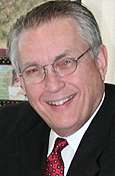

Gender testing raises ethical questions

Posted: 11/18/05

Gender testing raises ethical questions

By Peggy O'Crowley

Religion News Service

NEWARK, N.J. (RNS)–With her husband serving in Afghanistan, Erin Rivera thought it would be fun to let him know the gender of their third child within weeks of her positive pregnancy test. So she purchased a Baby Gender Mentor test kit, which claims to be 99.9 percent accurate in detecting gender through fetal DNA in maternal blood samples.

Three weeks after results indicated she was carrying a boy, Rivera got a call from C.N. Wang, scientific director of Acu-Gen Labs –the Lowell, Mass., company that performs the test. Wang said she should have genetic testing because he detected an elevated level of fetal protein in her blood, which sometimes indicates chromosomal abnormalities.

“I was crying and crying. I never paid him to find that out,” said Rivera, of Tampa, Fla.

As reproductive technology advances, new, unanticipated ethical questions are arising even as critics challenge the very accuracy of tests like the one Rivera took. Taken together, these challenges could derail the emerging niche industry.

“It's important for patients to understand what tests they're having, what potential information might be revealed, and how this information might and might not be used,” said Jeff Ecker, chairman of the committee on ethics for the American College of Obstetrics and Gynecology and a high-risk obstetrician at Massachusetts General Hospital.

Finding inadvertent information “happens all the time in genetic testing,” said Arthur Caplan, chairman of the department of medical ethics at the University of Pennsylvania School of Medicine. “You can find out about paternity or disease. People don't know what they're getting into.”

Wang said his findings required him to contact Rivera, even though he acknowledged the informed consent that accompanies the test does not demand it.

“I struggled with it myself, saying I could just ignore it and walk away,” said the molecular biologist. “But that would haunt me the rest of my life.”

Meanwhile, a small but growing number of women are claiming the gender tests are not as reliable as ultrasound and amniocentesis. Because embryonic DNA is present in maternal blood, the sample is tested for the presence of the Y chromosome, which indicates a male. If there is no Y chromosome, the embryo is female.

It is difficult for experts to assess Acu-Gen's accuracy claims because the company has not published its research data, citing pending patent registration.

Mark Evans, a lead investigator of a National Institutes of Health trial on fetal cells in maternal blood, questioned the test.

“There's no published data as to how well this works. The techniques we used are nowhere near as encouraging as people are being led to believe,” said Evans, a professor at Mount Sinai Medical School who also runs a private prenatal testing clinic in Manhattan. “It is fraught with potential complications.”

There are two reasons the test could be flawed, experts said.

First, it might involve a “vanishing twin,” in which the test picks up the DNA of a twin embryo that does not survive after the test is administered. Or it might detect DNA from an earlier fetus that miscarried.

The Illinois attorney general's office is investigating the gender test following a National Public Radio segment on women complaining about inaccuracies. Pregnancystore.com, which exclusively sells the kits, is based in Illinois. Another gender test maker, Paragon Genetics, is in Canada.

Wang and Sherry Bonelli, the owner of the online outlet, vigorously defend their claims.

Said Bonelli: “Historically, ultrasound has an 80 to 90 percent accuracy rate. So 10 to 20 percent are going to be incorrect (in determining the baby's gender). Acu-Gen is looking at DNA and you can't make up DNA.”

She said she has received 10 to 15 complaints about accuracy from women–a tiny percentage of the 4,000 who have ordered the test.

Like Rivera, Pamela Gold of New York said she decided to find out the gender of her first baby with a kit because it sounded like fun. The test, conducted in the seventh week of pregnancy, said she was having a boy.

But ultrasounds kept indicating a girl. She got a definitive answer when she had amniocentesis to rule out a potential problem with the baby. Gold said the baby is fine, and it is a girl.

Women, Gold said, should “think about the implications” before taking the test. “It's not just, 'Oh great, I found out it's a boy or girl.' It may raise questions.”

Gold sent Wang another blood sample to test. She wants the company to honor its double-your-money-back guarantee if the test proves inaccurate.

The kit costs $25, and the test fee is $250, according to Bonelli's website.

Rivera did not heed Wang's advice to have genetic testing because her obstetrician felt her ultrasounds do not indicate a problem.

Peggy O'Crowley covers family issues for The Star-Ledger of Newark, N.J.

News of religion, faith, missions, Bible study and Christian ministry among Texas Baptist churches, in the BGCT, the Southern Baptist Convention ( SBC ) and around the world.


At long last, Georgians vote to cast out Mercer

Posted: 11/18/05

At long last, Georgians vote to cast out Mercer

By Robert Marus

Associated Baptist Press

COLUMBUS, Ga. (ABP)–Georgia Baptists voted Nov. 15 to begin severing their last ties with Mercer University, one of the nation's oldest and largest Baptist institutions of higher learning.

The move comes in the immediate wake of a controversy over homosexuality at the school, whose main campus is in Macon.

But it also follows years of conflict between leaders of the conservative-dominated convention and the moderate-controlled school.

Georgia Baptist Convention messengers, meeting in Columbus, approved a recommendation from the group's executive committee that the convention begin the process of severing ties with the 7,000-student school. Mercer was founded in 1833 by three men who also played instrumental roles in founding the convention.

The move must be ap-proved a second time, by messengers to next year's annual meeting, before it takes effect. If given final approval, it would cut about $3.5 million in annual donations from the convention to the university. Mercer uses all of the funds–matching them two-for-one–to fund scholarships for students from Georgia Baptist churches.

The motion noted reports –appearing just before the convention meeting in the Macon Telegraph and the convention 's Christian Index newspaper–about the Mercer Triangle Symposium. The group billed itself as Mercer's gay, lesbian, bisexual and transgender rights student organization.

In conjunction with the Human Rights Campaign–the national gay-rights advocacy group–the symposium sponsored a National Coming Out Day event Oct. 11 on the Macon campus.

The group also bought an ad in the campus newspaper naming several famous gay and lesbian “individuals who have contributed to the arts, sciences, politics and sports throughout history,” such as poet Walt Whitman, U.S. Rep. Barney Frank (D-Mass.) and tennis star Martina Navratil-ova.

“We, the undersigned, value equally the (gay, lesbian, bisexual and transgender) students, faculty, and staff members at Mercer who bring their gifts to our campus and add to the richness and diversity of our intellectual community,” the ad read. Several dozen students and faculty, including two professors of Christianity, signed their names to it.

According to the Index, the group was recognized by the student government but not officially endorsed by the school's administration.

Mercer President Kirby Godsey told the paper the administration distances itself from such student groups in order not to squelch the college's academic and intellectual freedom.

“Holding steadfastly to the rich and noble heritage of our Baptist forbearers and the Christian values that have shaped and sustained Mercer for generations, we affirm our historic values, while including within them an unwavering devotion to the open search for truth, to religious and intellectual freedom, and to respect for the diversity of beliefs among the members of the university community,” Godsey told the paper.

But Bob White, the convention's executive director, said inviting students to meetings where gay rights are openly advocated was a step too far for the convention.

“At the very least, on-campus meetings give the impression of approval by the administration,” White told the paper. “I understand that a part of the university experience, whether Baptist or otherwise, is being exposed to a broad variety of thought. At the same time, I believe that Georgia Baptist parents should be able to have the confidence that their young people who attend a Georgia Baptist institution will not receive errant signals.”

Whatever the case, Mercer spokesperson Judy Lunsford said that, as she understood it, the symposium had “held its last meeting” Nov. 14.

David Hudson, an Augusta attorney and longtime Mercer trustee, said the most recent problem cited by Georgia Baptists “has been remedied; the university has already taken steps to deny use of facilities for such a group of students.”

The homosexuality issue was merely a “pretext” for a parting of ways long desired by many conservative Georgia Baptist leaders, he asserted.

“Anybody that's intellectually honest, that is concerned about students being exposed to the gay agenda because Mercer has some students who speak for equal rights for gay people should immediately have their children stop using their computers and take them out of their homes–because there's no greater avenue for deviant sexual information than the computer,” he said. Hudson is a member of First Baptist Church in Augusta.

“Put it this way,” Hudson said. “I think it's more than coincidence that that (article about the symposium) surfaced in the Christian Index the week before the convention.”

The motion convention messengers approved mentions several older complaints conservatives have had against Mercer, including references to Godsey's 1996 book, When We Talk About God … Let's be Hon-est, which some Georgia Bap-tist conservatives considered heretical.

“The convention censured the president and condemned the fact that a president of one of its institutions would publish a book which deviated from biblical theology and doctrine,” the motion noted. “At the same time, the book was endorsed by Mercer's trustees.”

The convention's motion also made an allusion to the school's relationship with several moderate Baptist organizations that emerged out of the Southern Baptist Convention's hard rightward shift in the 1980s and '90s, such as the Cooperative Baptist Fellow-ship.

“Other Georgia Baptists recognize a concern that Mercer has no commitment to the Southern Baptist Conven-tion, the affiliate of the Georgia Baptist Convention,” the motion read.

“Mercer, instead, has chosen to become connected with other, non-Southern Baptist organizations which do not support the (SBC) Cooperative Program, to the detriment of its historic ties to the Cooperative Program and the Southern Baptist Convention. This lack of commitment has led many Georgia Baptists to question continuing Coopera-tive Program funding for Mercer.”

Mercer trustee Jimmy Elder, pastor of First Baptist Church in Columbus, said the decision was worse for the convention than for the university. “They have an institution that faithfully and strongly has been teaching future leaders based on Baptist principles and on Baptist values, and they have basically turned their back on them and walked away–and that's sad.”

He said limiting scholarships for its own students will hurt the convention.

“It's sort of like, you get mad at the institution and you hurt the people who are least able to defend themselves,” Elder said.

News of religion, faith, missions, Bible study and Christian ministry among Texas Baptist churches, in the BGCT, the Southern Baptist Convention ( SBC ) and around the world.


Tiny ceramic shard yields gigantic archaeological find

Posted: 11/18/05

Tiny ceramic shard yields
gigantic archaeological find

By Michele Chabin

Religion News Service

JERUSALEM (RNS)–The inscription on a ceramic shard discovered during an archaeological dig may not refer to the biblical Goliath, but the artifact's age and inscriptions may be consistent with a period referred to in the Old Testament story.

Aren Maeir, chairman of the department of land of Israel studies and archaeology at Bar Ilan University, which carried out the excavations, said in a statement released by the university that the shard comes from a time period “which is depicted in the biblical text.”

Aren Maeir, chairman of the department of land of Israel studies and archaeology at Bar Ilan University, holds a ceramic shard with the inscription "Goliath'' at the site where it was found, Tell es-Safi, Gath. (RNS photo courtesy of Bar Ilan University)

The book of 1 Samuel relates that Goliath, a Philistine giant, fought the much younger and smaller David, but lost the battle when David hit Goliath's head with a stone propelled from a slingshot.

Maeir noted that the shard has been dated scientifically to a period just 50 to 100 years after David and Goliath would have lived, according to biblical historians.

For this reason, he added, “recent attempts” by some scholars “to claim that Goliath can only be understood in the context of the later phases of the Iron Age are unwarranted.”

Although the inscription is written in Proto-Canaanite (Semitic) letters, the names mentioned belong to the linguistic family of ancient Greek and related languages. This lends credence to the long-held belief that Philistines had roots in the Aegean region before migrating to the Holy Land.

Despite the inscription's uncanny similarity to the name Goliath, Maeir told the Jerusalem Post the odds are against directly relating to the Philistine giant.

A Purdue University libraries professor who invented a system to determine whether ancient inscriptions apply to people in the Bible has come to a similar conclusion.

Lawrence Mykytiuk, associate professor of library science at the school in West Lafayette, Ind., said the pottery shard found in Israel probably does not refer to the biblical Goliath but does lend credence to the story surrounding him.

“This is evidence that non-Semitic names that are remarkably similar to Goliath were used within the time frame of this Philistine warrior in his reputed hometown of Gath,” Mykytiuk said. “It provides well-grounded cultural background that supports the biblical narrative.”

News of religion, faith, missions, Bible study and Christian ministry among Texas Baptist churches, in the BGCT, the Southern Baptist Convention ( SBC ) and around the world.


Texas Baptist Forum

Posted: 11/18/05

Texas Baptist Forum

Fertility & theology

“Fertility, not theology, cause of decline” (Oct. 31) introduces a foreign dichotomy. The question to be asked is why “conservative women had more children than mainline women did.” The answer is solidly theological.

Jump to online-only letters below
Letters are welcomed. Send them to marvknox@baptiststandard.com; 250 words maximum.

"There is only one 'true north' in the Christian life. Only one purpose which will direct your life with unerring accuracy, which will guide you home every single time. … You and I will need to remember and live by this purpose, this 'true north' every day for the rest of this year, and especially as we draw nearer to the hectic holidays ahead. Otherwise, we'll die the death of a thousand Chihuahuas, one tiny bite at a time."

Jim Denison
Pastor of Park Cities Baptist Church in Dallas ("The Word Today" e-mail devotional)

"If we present the gospel simply as a life-improvement program, well, boy–there's lots of things that work to improve your life. You could get into yoga, become a vegetarian."

Kirk Cameron
Actor known for his role in the 1980s situation comedy Growing Pains as well as a more recent role in the Left Behind movie series, commenting on findings of a Newsweek/Beliefnet poll. (Agape Press)

"Now that we're prime-time, we don't want to start acting like American idols."

Christianity Today
An editorial in the monthly magazine, on the responsibility of evangelicals in the news media.

The biblical worldview sees children as a blessing. God opens the womb (Genesis 29:31) and blesses with the command, “Be fruitful and multiply” (Genesis 1:28). Children are a “heritage of the Lord” and a “reward,” “arrows” filling one's quiver (Psalm 127), a reason for one to be “happy” as they gather “like olive plants around your table” (Psalm 128:2-3).

All one has to do is read the stories of Rachel, Hannah and Elizabeth, or the desperate acts of Tamar, to get a picture of how women raised in the light of God's instruction viewed children.

The 20th century saw a marked cultural drift from this perspective. It was the century of birth control and abortion, of cultural denigration of the role of full-time motherhood; a century where biology, guided by the individual, not God, determined fertility. Is it so strange that, in churches where the Bible was no longer the center of the worldview, births should decline and attendance should wane?

As a pastor and father of nine, I sometimes quip, “If we can't grow the church one way, we'll grow it another.” And, indeed, our church has seven more people than would have been the case if we'd just had the culturally accepted “two.” But my reasons are unashamedly theological.

Thomas Whitehouse

McAllen

Problem solving

So, let me get this straight: In reference to remarks by Gerald Bastin (Nov. 14), in order to solve our Texas Baptist problems, all Paige Patterson needs to do is apologize to Russell Dilday?

Surely our problems are not so petty. Say it isn't so!

Bob Stanford

Austin

Questions of praise

What do you think about when you hear the word “praise”?

When was the last time you can remember being praised or praising someone else? What is the purpose of praise? Is praise an art form that has been lost in this world of competitive self-sufficiency?

Have we become mesmerized by the pop culture into believing that praise is limited to something we do only when we sing hymns and other religious music? Can we praise the Lord in praising others? Do we not praise others because we sense that we are not worthy of praise, and therefore we are unable to offer something that we do not possess?

Do we believe that only after we depart to be with the Lord will he then, hopefully, say to us, “Well done, thou good and faithful servant”? Is there no praise from the Lord to his servants in this life for their being good and faithful?

Are we so modernized and so secularized that we think life is all about externals–our works–and have lost the discernment between a successful life and a spiritual life?

According to Scripture, the authority that we possess as servants of the gospel of the Lord Jesus Christ is to be used to exhort one another, to encourage one another, to edify one another. Praise received and given in the spirit of the gospel is a good fountain of living water that refreshes and regenerates his faithful servant.

Don Bebee

Liberty Hill

God and evil

In response to James Rudin’s article, “How can a benevolent God allow evil?” (Oct. 31): God’s purpose from eternity was that he be worshipped and obeyed.

In his appearance in the Garden of Eden, Satan showed that he was in rebellion against God from before creation.

The curse God put on Satan now spreads to earth. For the literal serpent to be “cursed more than all cattle, and more than every beast of the field (Genesis 3:14) communicates earth is now under the curse of God also.

If Adam had not sinned, he could have continued on earth in its Edenic state. Adam’s sin removed God’s protective and provisional cover, and now Adam suffers from the curse of the ground from which he had been protected.

Mankind victimizes itself in allowing Satan to control him through the three-fold fleshly appetite (Genesis 3:6). Mankind’s sin is cumulative on earth, adding to the consequences of God’s curse being on earth. Both earth and mankind bring on themselves God’s escalating judgment until Jesus’ appearing.

Satan’s war against God involves all of earth and mankind that produces evil on earth.

Ernest V. May Jr.

Livingston

Have 'like minds' replaced the Bible?

A young show-off would have drowned trying to swim too far, and his brother yelled, “Come back!” With every breath, his garbled cry got farther behind. When the swimmer’s pride turned to fear, he went back. My twin was a poor swimmer but followed me.

The fundamentalist pastor yells from the bank while the servant pastor swims. Jesus washing his disciples’ feet is our pattern.

Fundamentalists ignore 1 Peter 5:3: “Don’t lord it over the people assigned to your care, but lead them by your good example.”

Southwestern Baptist Theological Seminary hasn’t stoned prophets, but its leaders’ practice of control and dominance has split churches and conventions and fired missionaries—all in the name of God.

Its president searched worldwide for “like minds” to replace the “fired” 30 million adherents in the Baptist World Alliance. “Like minds” has replaced the Bible as the doctrinal guideline with Southern Baptist Convention’s 2000 Baptist Faith & Message. If pride had weight, they would need wheelbarrows.

As long as no one takes a stand against pastors being rulers, the International Mission Board acting as Nebuchadnezzar, the SBC drifting toward Catholicism, control and dominance will reign and individual priesthood (born at Calvary) must bow to authority.

Hooray for the BGCT rejecting “like minds” having a booth at their convention.

Rex Ray

Bonham

News of religion, faith, missions, Bible study and Christian ministry among Texas Baptist churches, in the BGCT, the Southern Baptist Convention ( SBC ) and around the world.


Louisiana veers from recent trends

Posted: 11/18/05

Louisiana veers from recent trends

By Lacy Thompson

Louisiana Baptist Message

WEST MONROE, La. (ABP) –Messengers to the Louisiana Baptist Convention surprised observers by rejecting candidates and causes endorsed by the state's conservative political group.

Messengers voted to amend a budget-cutting proposal that would have had a disproportionate impact on the Baptist Message, the convention's newspaper.

They also defeated a proposal to dissolve the paper's independent board of directors and move it under control of the convention's executive board.

And, for the first time, they defeated officer candidates who had been endorsed by a pro-Southern Baptist Convention group calling itself the Louisiana Inerrancy Fellowship.

Messengers voted to restore a proposed $52,500 cut for the Baptist Message.

Leaders explained the conventionwide reduction was needed due to the expected impact of Hurricanes Katrina and Rita.

In the original budget-cutting proposal, all line items but two shared equally in the reduction, maintaining the same allocation percentages as in the 2005 budget.

But the Baptist Message was slated to receive 2 percent of all state Cooperative Program funds in 2006, down from the 2.3 percent this year. In turn, the allocation for state convention programs was set to increase from 43.5 percent to 43.7 percent.

That drew opposition.

Michael Hawley of Ruston spoke against the proposal, offering a motion to move $52,500 from LBC programs to the Baptist Message so all budget line items would maintain their current allocation percentages. As the proposal stood, the paper stood to experience a larger cut to its budget than all other convention entities.

Messengers approved the motion to change the allocation percentage for the newspaper, 687-607.

The Baptist Message also will continue to operate under a separate board of trustees after messengers rejected a proposal to move the newspaper within the state convention structure.

A show-of-ballots vote appeared to be at least two-to-one against the plan. Approval of the move would have required a two-thirds vote.

The matter dates back to earlier this year, when new LBC Executive Director David Hankins proposed a change in the newspaper structure.

Since the 1960s, the Baptist Message has operated under its own board of trustees. However, Hankins proposed moving the newspaper within the convention as part of a new communications team.

The paper's trustees initially rejected the idea, but then revisited it a few months later and approved it as part of a package approach.

Under the plan, John Yeats, at the time edtitor of the Oklahoma Baptist Messenger, would be elected director of the LBC communications team. In turn, Baptist Message trustees would propose making the paper part of the communications team, with Yeats as editor.

Yeats began work for the convention Nov. 1.

Hankins told messengers the convention must maximize resources, noting that only about one-fourth of churches subscribe to the paper, and that circulation has fallen in recent years from a peak of 78,000 to about 30,000.

“We must avail ourselves of the best strategy,” he emphasized. “We have no choice but to do a better job of communicating our vision and challenges to people in the pew.”

Messenger Gil Arthur of Leesville noted one day an issue will arise in which many Louisiana Baptists disagree with their elected leaders. “We may not have … a fair, adequate venue to vent our frustrations and our views,” Arthur said. “We must have a free, fair, balanced reporting system. I believe there is a better answer to the situation … . This is not the best approach.”

For convention president, Bill Robertson, pastor of Temple Baptist Church in Winnsboro, beat Jerry Chad-dick, an evangelist from DeQuincy, 792-540.

The election marked the first time a presidential candidate endorsed by the Louisiana Inerrancy Fellowship had not been elected. The group had endorsed presidential candidates since 1999, proving successful in electing a trio of pastors who served two one-year terms each.

Robert Marus contributed to this story.

News of religion, faith, missions, Bible study and Christian ministry among Texas Baptist churches, in the BGCT, the Southern Baptist Convention ( SBC ) and around the world.


North Carolina Baptists still may give to Fellowship

Posted: 11/18/05

North Carolina Baptists
still may give to Fellowship

By Greg Warner

Associated Baptist Press

WINSTON-SALEM, N.C. (ABP)–Fundamentalists in the Baptist State Convention of North Carolina elected their candidate as president, toughened the convention's stance against gay-friendly churches, replaced the interim executive director and approved new institutional trustees.

But they failed in another key objective–to eliminate a budget arrangement that allows moderate churches in North Carolina to fund non-Southern Baptist causes.

The flurry of actions came during the Nov. 14-16 annual meeting of the convention in Winston-Salem.

A motion to eliminate four spending plans that allow churches to choose what Baptist causes they support outside North Carolina–including the moderate Coop-erative Baptist Fellowship–failed. But money contributed to CBF through the convention's budget will no longer count as state “Cooperative Program” funds.

This was the second year in a row Ted Stone of Durham tried to delete the four budget options and return to the traditional one-budget channel that requires contributions sent outside North Carolina to go only to the Southern Baptist Convention.

Many moderates have remained involved in the North Carolina convention because they could support CBF and not support the SBC.

Stone's motion lost 56 percent to 44 percent.

During debate, Stone said of the four-option budget, “Instead of bringing us together, it has divided us” and “undermined the work” of the SBC and North Carolina convention. Eliminating the CBF would “restore a sense of honesty to the way we do cooperative missions in North Carolina,” he said.

But Dave Stratton of Brunswick Island Baptist Church in Supply argued eliminating the four plans “will have the effect of further splintering this convention” and would actually decrease funding for Baptist causes in the state as moderate churches move funding elsewhere.

Messengers approved a motion instructing the convention's board of directors to expel any church that “knowingly affirms, approves or endorses homosexual behavior.”

North Carolina Baptists already prohibit churches that condone homosexuality from contributing to the convention, which is a condition of membership.

The new policy likely will exclude congregations “that affiliate with any group that the church knows to affirm homosexual behavior.” That would shut out about 25 churches affiliated with the Alliance of Baptists, a national organization open to “welcoming and affirming” homosexuals.

“It is most important that we as a convention uphold the teaching of the inerrant word of our heavenly father,” said Bill Sanderson, pastor of Hephzibah Baptist Church in Wendell. “I believe we must stand up for absolute truth, not relative truth or untruths, as it seems so many others are willing to do these days.”

Speaking against the policy, Rob Helton of Cherry Point Baptist Church in Havelock, said he agrees homosexual behavior is an “abhorrent sin,” but he added, “I struggle also with a policy to exclude members based on that one sin. I believe according to Scripture that all sins are equal in the sight of God.”

Conservative Stan Welch, pastor of Blackwelder Park Baptist Church in Kannapolis, was elected president with 70 percent of the vote.

But the surprise nomination of moderate leader Blythe Taylor, associate minister of St. John's Baptist Church in Charlotte, drew 30 percent of the votes from the 3,276 messengers registered.

The board of directors elected Mike Cummings, director of missions for the Burnt Swamp Baptist Association, as acting executive director.

Cummings replaces George Bullard, current associate executive director. Bullard had been expected to remain until a search committee finds a new executive director. Instead, he will retire in August.

News of religion, faith, missions, Bible study and Christian ministry among Texas Baptist churches, in the BGCT, the Southern Baptist Convention ( SBC ) and around the world.


Thanksgiving observances reflect political agendas

Posted: 11/18/05

Thanksgiving observances
reflect political agendas

By G. Jeffrey MacDonald

Religion News Service

ATLANTA (RNS)–Ever since John Winthrop proclaimed in 1630 a mission to establish “a shining city on a hill” to inspire the world, America has grappled with notions of a national destiny led by the hand of God.

Now questions of a divine national purpose are playing out in a new setting–the Thanksgiving table. Agenda-driven groups are equipping gatherings nationwide with reflections on the holiday's meaning.

America's Table is a 20-page reflection for Thanksgiving prepared by the American Jewish Committee. It tells the stories of eight contemporary immigrants who found refuge and opportunity in America. (RNS photo courtesy of American Jewish Committee)

Like the particular snippets of American history invoked in each, these readings vary according to each sponsoring group's answer to the divine destiny question. They differ as to whether Thanksgiving should conjure thoughts of America as God's chosen instrument, or as an affront to all things sacred or as a mixed bag where glories and shames of the past trace to human rather than divine decisions.

To look closely at these reflections is to see distinct worldviews aiming to define what the holiday–and the nation–is all about. The efforts to define Thanksgiving's deepest meaning, one dining room table at a time, mirror larger–often political–agendas to shape how Americans understand their country as one nation under God.

Thanksgiving “has a series of possibilities that are built into the institution,” said anthropologist Bradd Shore, director of the Center for Myth and Ritual in American Life at Emory University in Atlanta. “It's about America, it has the Pilgrims, it has thanking God, it has turkey.”

Suggested reflections are “an attempt to renegotiate a holiday that was ambiguously religious,” he said, adding that if groups can get enough people to accept their vision of Thanksgiving, “then you've changed the culture.”

That's exactly what Barbara Rainey, an evangelical Christian, says she had in mind when she wrote Thanksgiving: A Time to Remember, a 2002 reflection that takes about 45 minutes to read or hear on a newly released compact disc.

Rainey worried that schoolchildren weren't hearing about the faith that inspired Pilgrims to reach the New World, she said, so she begins the book by characterizing Thanksgiving as “both distinctly Christian and exclusively American, a holiday for celebrating faith, family and freedom.”

She goes on to tell how early European settlers nearly starved on their God-given mission to establish a haven for religious freedom, but “sustained by God's grace,” they survived.

“Children growing up in America don't really understand our Christian heritage,” said Rainey, whose husband, Dennis, is president of Family Life, a $43 million evangelical ministry in Little Rock, Ark. “I just want to see Americans become more grateful for the privileges we have because we may not have them always, and the surest way to lose them is to lose understanding of where (this freedom) came from and why we have it, and to realize that being a free people is a great gift.”

Other evangelicals share a similar goal. Colorado-based Focus on the Family posts five Thanksgiving-related reflections on its website this month.

On the other hand, the American Jewish Committee and 10 other organizations are offering another type of reflection, on the immigrant history of America, emphasizing human rather than divine agency.

This 20-page reflection, downloadable free of charge from the American Jewish Committee's website, tells the stories of eight contemporary immigrants who found refuge and opportunity in America. It contends preservation of this tradition rests squarely on human shoulders.

“We are the stewards of America,” the text says. “In America, each of us is entitled to a place at the table.”

But it notes those rights haven't always been protected.

“Not every journey was easy,” the text reads. “The first arrivals sometimes shunned those who followed. Not every journey was voluntary. The first African slaves landed in Jamestown a year before the Pilgrims settled in Plymouth. Not every journey was righteous. Native Americans were devastated by a new nation's need to conquer, cultivate and build.”

The American Jewish Committee maintains its reflection is ideal for interfaith gatherings and appropriate for a Thanksgiving celebration that is evolving for many Americans.

In its reflection, United American Indians of New England is even more critical of American history. On Thanksgiving Day, Native Americans from as far away as Hawaii will gather with an estimated 1,000 white sympathizers in Plymouth, Mass., for the organization's 36th annual National Day of Mourning.

When coverage of the event arrives via television in living rooms, perhaps between football games, organizers hope to get viewers thinking about America's failure to practice moral righteousness from the beginning.

“What we're protesting is the whole mythology of Pilgrims and this whole fantasy that's presented as history,” said Mahtowin Munro, a leader of the Native American group.

It's a fantasy, Munro said, “that the Europeans came over here and the native people somehow welcomed them with open arms and were treated very fairly by the Pilgrims.”

“It doesn't tell a true history of this country. It certainly doesn't tell a true history what happened to us. It certainly doesn't talk about things like genocide,” which she said resulted from battles between European settlers and natives in the 17th century.

Despite a checkered history, others see a nation inextricably tied to God. Among them is Ken Masugi, a senior fellow at the conservative Claremont Institute in Claremont, Calif. In the most recent of his annual written statements on the meaning of Thanksgiving, he argues presidents George Washington and Abraham Lincoln established the tradition to be “a holy day, a day for prayer and recognition of Almighty God's authority over man.”

A nation that remembers its permanent relationship with God will be happier, healthier and less inclined to seek financial benefits from government, he said.

“Thanksgiving is something everyone understands, but we have lost touch with its highest meaning,” Masugi said. “What we are as a nation relies on a recognition of something transcendent, and that something is religious. … Without an appreciation of our dependence on the divine, I think we're lost as a people. Trying to find satisfaction purely in the material world is a hopeless chase.”

To straighten the nation's course, he recommends doing what he does at Thanksgiving–reading aloud from Lincoln's proclamation of 1863, which offers thanks for “gracious gifts of the Most High God” and ends by offering “humble penitence for our national perverseness and disobedience.”

It's as relevant today, he said, as it was then.

News of religion, faith, missions, Bible study and Christian ministry among Texas Baptist churches, in the BGCT, the Southern Baptist Convention ( SBC ) and around the world.


Texas Tidbits

Posted: 11/18/05

Texas Tidbits

DBU named among top wireless campuses. Intel Corporation recently named Dallas Baptist University among the top 25 campuses in the United States for its on-campus wireless Internet capabilities. The process of installing a wireless network on the DBU campus started in 1999 and was completed this summer.

DOM elected Southwestern alum president. David Kimberly, director of missions for Central Texas Baptist Area, was unanimously elected president of Southwestern Baptist Theological Seminary's Baptist General Convention of Texas alumni association at the group's gathering in Austin, held in conjunction with the BGCT annual meeting. Elwin Collom, incumbent president of the alumni organization and pastor of First Baptist Church in Coahoma, nominated Kimberly.

ETBU presents Christmas concert. The East Texas Baptist University School of Fine Arts will present "Christmas in Marshall: A Concert of the Season" at 7:30 p.m. Dec. 2 in Baker Auditorium of the Rogers Spiritual Life Center. The event, co-sponsored by ETBU and the Marshall Regional Arts Council, features holiday music performed by groups from the ETBU music department conducted by Choral Director James Moore and Band Director Brent Farmer. Admission costs is $5. For more information, call (903) 935-4484.

Meyer family endows Hinson chair at Truett Seminary. The Paul and Jane Meyer Family Foundation gave $1.5 million to Baylor University's Truett Theological Seminary to endow a chair in Christian Scriptures in honor of Bill Hinson–a 1953 Baylor University graduate and longtime pastor who now serves as vice chairman and chief executive officer of the Haggai Institute. Truett Dean Paul Powell appointed David Garland, associate dean for academic affairs, as the first professor to occupy the chair.

UMHB chemistry department receives grant. The Robert A. Welch Foundation awarded a $75,000 grant to the University of Mary Hardin-Baylor chemistry department. The purpose of the grant, which will be provided in $25,000 installments over three years, is to support chemical research by members of the chemistry department faculty–Darrell Watson and Dennis Dillin–and provide an opportunity for students to study chemistry in a less-structured way.

Baylor museum professor honored. Kenneth Hafertepe, professor in museum studies at Baylor University, was one of three winners of the 2005 publication awards at the Southeastern Chapter of the Society of Architectural Historians conference in Fort Worth. Hafertepe was presented the 2005 article award for "The Romantic Rhetoric of the Spanish Governor's Palace, San Antonio" published in Southwestern Historical Quarterly in October 2003.

Wayland breaks ground for activity center. Wayland Baptist University will hold the official groundbreaking for the Pete and Nelda Laney Student Activities Center at 11 a.m. Nov. 21. Speakers include Trustee Chairman Vernon Stokes, President Paul Armes and Laney, former Texas speaker of the house. A reception will follow immediately in the atrium of the Mabee Learning Resources Center. The 50,000-square-foot facility will include a double gymnasium, an indoor elevated running track, a weight room and aerobics area, classrooms, a student lounge and snack bar area, and a climbing wall. Construction is expected to be completed by the beginning of the fall 2006 semester.

News of religion, faith, missions, Bible study and Christian ministry among Texas Baptist churches, in the BGCT, the Southern Baptist Convention ( SBC ) and around the world.


TOGETHER: Texas Baptists have much work to do

Posted: 11/18/05

TOGETHER:
Texas Baptists have much work to do

This year's Baptist General Convention of Texas annual meeting left me with a profound sense of gratitude at being part of this great family of believers. We celebrated what Baptists, as part of the larger body of Christ, “bring to the table.”

Other Christians bring their gifts, their insights and their faithfulness, but this is what Baptists bring–a passion for missions and prayerful, thoughtful faith.

On Monday evening of the annual meeting, I set forth the following seven-point agenda for the BGCT:

wademug
Executive Director
BGCT Executive Board

bluebull Begin new churches. The eternal destiny of millions of people in Texas is at stake. Do we care that there are 4 million more Texans today than there were 10 years ago? That in the next five years we expect another 2 million new Texans? I believe God is calling the BGCT to help start 1,500 churches by the end of 2010.

bluebull Affirm the children. It's time we affirm the priority of ministry to children, just as Jesus did. Children need to know they are loved, that someone believes in them, that God not only created them but knows their name. We will work to help strengthen families, but we must do more. We can work with schools, tutor children, provide clothing, study the issues that plague children and make sure our elected representatives understand the needs of children.

bluebull Pray for God's peace. We pray for God's peace to reign in the souls of people, and we pray for God's peace to reign in families, churches and communities. We are followers of the Prince of Peace, and we must never allow our prayers and hopes for peace to be silenced or discouraged by war. And as we pray for peace, we must work for justice.

bluebull Transform lives and communities. When a church understands itself to be the presence of Christ in its community everything begins to change–sometimes just a little, and sometimes a lot. People need a Jesus kind of church, because a Jesus kind of church is a transformational, reconciling, life-changing, community-changing church. I appeal to every Texas Baptist church. Implement a strategy to reach your community for Christ.

bluebull Inspire courageous servant-leaders. There is just one thing worse than a dictator for a leader; it's a leader who is afraid to lead. The BGCT is focusing resources to help in calling out, equipping, supporting, connecting and encouraging ministers for a lifetime of ministry.

bluebull Share in the giving. If we did not have the Cooperative Program giving plan, we would be trying our best to figure out how to develop one. You will know your church has caught the vision when they begin to see the Cooperative Program not as an expense to be borne, but as an engine for delivering eternal blessing around the world.

bluebull Touch the world. Every church can have at least one ministry in its local community and one ministry somewhere else in the world. And you can double that every two years. What needs to be done? Look around your community and use Jesus' words to help you determine what you need to be doing.

We are a blood-bought people. We dare not act as though this is all about us. Someday, we will gather around the throne of God, and we will sing: “To him who sits on the throne and to the Lamb be praise and honor and glory and power, for ever and ever. Amen” (Revelation 5:13).

We are loved.

Charles Wade is executive director of the Baptist General Convention of Texas.

News of religion, faith, missions, Bible study and Christian ministry among Texas Baptist churches, in the BGCT, the Southern Baptist Convention ( SBC ) and around the world.


Storylist for 11/14/05 issue

Storylist for week of 11/14/05

GO TO SECTIONS:
Around Texas       • Baptists      
Faith In Action

      • Departments      • Opinion       • Bible Study      


Tennessee university to elect own trustees

Articles from our 11/14 issue


Transforming Community


Transforming Community

Donation enables church's enhanced community ministry

BGCT leaders discuss bylaws changes

Baptists respond to new Baylor president

Baylor interim may be Mercer president

Photo exhibit raises awareness about homeless

Hurricane response funds put to use

Musical upbringing provided foundation for ministry

Federal official addresses Hispanic laity

Mystery of God only answer for serious evangelicals

Piper Institute names Brooks executive director

South Texas School president elected

Faith motivates volunteers engaged in community service

Disinterested students discover Christ in university classes

Doubting seeker finds faith at Wayland Baptist University

Texas Tidbits

On the Move

Around the State

Previously Posted
Baylor regents unanimously elect Lilley president


Alabama Baptists deny brouhaha over brewer's water

Brantley Center houses volunteers

Baptist Briefs


San Antonio church seeks to transform its community


Novelist trades vampire tales for early life of Christ

Ancient church ruins discovered near Megiddo, Israel

Even intelligent design advocates see problems

Movie explores dark days of 'Man in Black'

'Painter of light' offers warm and welcoming images

Girls of Grace promotes teen modesty, chastity

Most ministers dissatisfied with their prayer lives

Marriage amendment decisively approved

Eight nations cited for religious liberty violations

Religious Right suffers setbacks at polls

Sex ed ruling reviled


Cartoon

Classified Ads

Texas Baptist Forum

On the Move

Around the State


DOWN HOME: Like father, like son

EDITORIAL: 'Pour out your heart' & fight hunger

TOGETHER: Constitution, bylaws reflect hard work

2nd Opinion: Laws can add 'cheerful' to giving

Right or Wrong? Fair trade coffee

Texas Baptist Forum

Cyber Column by John Duncan: Life of a pastor


BaptistWay Bible Series for Nov. 13: Regardless of leadership, follow God

Family Bible Series for Nov. 13: Look to God for answers to life's hard questions

Explore the Bible Series for Nov. 13: A lack of vigilance will bring sin to the fore

BaptistWay Bible Series for Nov. 20: Wasted potential is a danger all face

Family Bible Series for Nov. 20: Fear of the Lord is the beginning of wisdom

Explore the Bible Series for Nov. 20: When evil closes in, remember God's promises


See articles from previous issue 11/07/05 here.


Right or Wrong? Stem Cells (Again)

Posted: 11/18/05

Right or Wrong?
Stem cell research (again)

This past week, my doctor told me that, in a few years, stem-cell research could lead to a cure for my illness. My brother objects to stem-cell research. How should I think about this medical development?

Stem-cell research is one of the major hot-button topics in American society today. Unfortunately, many people have formed their opinion on the subject without knowing what stem cells are or what the research means. The first step in thinking about the issue is to become informed about it. It is a complex issue, but many resources are available to aid in that education.

Briefly, a stem cell is a type of primitive, unspecialized cell, which has the potential to develop into a cell with a more specialized function, such as a blood cell, brain cell or heart tissue. Stem cells also have the potential to replenish themselves indefinitely through cell division. As a result, stem-cell research provides the possibility of developing these cells into replacements to aid in the treatment of devastating illnesses, such as Parkinson's disease, Alzheimer's, muscular dystrophy, multiple sclerosis, diabetes, Lou Gehrig's disease, heart disease and others.

The major ethical issue concerns how these stem cells are collected. Although stem cells can be collected in limited amounts from adults or even from umbilical cord tissue, the primary source of these cells today is from human embryos. At present, the process of extracting the stem cells destroys the embryo. The primary moral argument centers on this destruction.

For many pro-life supporters, this issue basically is the same as abortion. The foundational belief is that life begins at conception, and thus the embryo is a human being with a soul. The destruction of that embryo to remove stem cells would be murder and unjustifiable for any reason. Groups such as Focus on the Family, the American Family Association and the Roman Catholic Church oppose all embryo stem-cell research based on this belief.

For others, the decision is not quite so black and white. Some struggle with attaching human soul status to the embryo. Others weigh the loss of an unimplanted embryo's potential against the potential to drastically improve the life of a fully developed but diseased human. They see a greater good of relieving pain and suffering balancing out the loss of embryos. To them, a carefully controlled approach to stem-cell research is valid. Groups such as the National Institutes of Health and the American Medical Association support such an approach.

An issue like stem-cell research actually can help a person define his or her methods of decision making. It forces one to confront concepts about whether the most important thing is following strict rules or if the end justifies the means. How significant is the idea of the greatest good, and what or who determines any definition of that good? How does love lead us to act? All of these concerns form the basis for vastly different methods of decision making.

Ultimately, you must define what the important issues are in the situation, consider the principle parties involved, and weigh the costs versus the benefits. A major component in this decision-making process is being able to sort out the myths and irrational fears that surround any type of medical research that appear to be beyond the grasp of those who are not medical professionals. Learning what the facts are and then using those facts to form an educated decision should be the goal of all those interested in such situations.

Van Christian, pastor

First Baptist Church

Comanche

News of religion, faith, missions, Bible study and Christian ministry among Texas Baptist churches, in the BGCT, the Southern Baptist Convention ( SBC ) and around the world.