


Posted: 9/02/05
| For close to 30 years, the World Hunger Relief farm has operated as a learning laboratory for people of all ages. |
Hunger farm aims to raise consciousness
By George Henson
Staff Writer
ELM MOTT–A 42-acre farm seven miles north of Waco seeks to combat hunger around the world–not so much by raising crops as by raising consciousness.
For close to 30 years, the World Hunger Relief farm has operated as a learning laboratory for people of all ages. Preschoolers come to the farm to learn about animals, plants and seeds, food that comes from animals and plants, and even how a composting toilet works.
Older children cover the same topics at a higher level and also learn about world hunger and economic justice.
 |
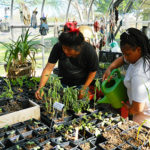
| Kristin Pierson, a former intern, transports a tray of seedlings for transplanting. |
The farm draws up to 1,200 visitors a year in organized groups with reservations, and many more families and small groups just drop in.
“Educating these people is a significant part of what we do,” said Development Director Dale Barron. “Also, it allows us to demonstrate Christian hospitality, to stop what we're doing and show them around. Visitors are quite welcome.”
Some of the visitors who come to farm are from universities across the country. “They come and stay for a week and live in our dorms, and we work them like rented mules,” Barron quipped.
The staff of the nondenominational yet distinctly Christian organization look for opportunities to teach these visitors about more than agriculture and hunger.
“They are very welcome in our devotional times and meal times, where we pray, and over the course of the week, often we have the opportunity to share our faith,” said Executive Director Neil Rowe Miller.
The farm's staff teaches conservation methods and ways that people who live in nations with abundant resources can share with the rest of the world.
One instructional method is the “Living on the Other Side” program. Participants in the overnight program are asked to skip at least one meal before arrival at the farm so they can identify to some degree with what hungry people experience.
While they stay at the farm, they eat and drink only what is produced there. In addition to Bible studies and educational talks on hunger, participants also work in the fields and care for the animals.
Visitors stay in a house similar to dwellings in rural Nicaragua–no electricity or running water and no glass in the windows.
“They are quite quickly put into the lifestyle of what it is like to be hungry and poor and what the Christian response is for that,” Miller said.
The farm offers prospective agricultural missionaries a taste of the life they are considering through a one-year internship that provides intensive hands-on training in sustainable farming and animal husbandry.
Some interns come with their mission assignment already in place, but most receive their assignment during their internship.
Both the Southern Baptist International Mis-sion Board and Cooperative Baptist Fellowship have commissioned graduates of the internship program.
“I think this is a real good thing that they can come here rather than make a huge commitment and find themselves in West Africa and discover, 'This is not what I expected.' I think this is a real service we provide to the mission boards,” Miller said.
The farm seeks to incorporate only the tools the interns can expect to have on an assignment, so hand tools are the order of the day. And since pesticides and commercial fertilizers also probably will not be available, the farm practices completely organic techniques.
The farm produces vegetables, eggs, goat milk, honey, pecans and whole-wheat flour. Beef production is scheduled to begin later this year.
“One of the things that makes us unique is that we are a real working farm, and everything is either used here or sold commercially,” Miller said.








We seek to connect God’s story and God’s people around the world. To learn more about God’s story, click here.
Send comments and feedback to Eric Black, our editor. For comments to be published, please specify “letter to the editor.” Maximum length for publication is 300 words.