Federal judge declares partial-birth abortion ban law unconstitutional_61404

Posted: 6/11/04

Federal judge declares partial-birth
abortion ban law unconstitutional

By Robert Marus

Associated Baptist Press

SAN FRANCISCO (ABP)–A federal judge in California has declared unconstitutional a law that attempts to ban “partial-birth” abortion procedures.

Federal District Judge Phyllis Hamilton of San Francisco ruled the law–passed last year by Congress and signed into law by President Bush–was unconstitutionally vague in its definitions of the acts and procedures it prohibits.

Hamilton accepted virtually all the arguments put forth by the Planned Parenthood Federation of America, which filed suit to block the law.

She also said the Partial-Birth Abortion Ban Act violates previous Supreme Court and appeals-court decisions requiring any law limiting abortion procedures to grant exceptions in cases where a woman's health may be at risk.

In addition, Hamilton determined the law is unconstitutional because it bans procedures physicians could be forced to use due to complications from otherwise legal abortion procedures, which she said would discourage abortion providers from performing all abortions.

Most obstetric and gynecological experts do not use the term “partial-birth abortion,” referring instead to “intact dilation and extraction.”

It occurs when a fetus is partially removed from its mother's womb, and then a medical instrument is inserted into its skull to enable the physician to suction out its contents, thus decompressing the skull and making it easier to remove the fetus from the mother's body.

However, the Partial-Birth Abortion Ban Act does not explicitly ban only intact dilation and extraction procedures, making the law too vague, Hamilton stated in her decision.

"Accordingly, the court concludes that the definition of 'partial-birth abortion' contained in the act encompasses several second-trimester abortion procedures" in addition to intact dilation and extraction, she wrote. Physicians may perform each element contained in the act's definition in the course not only of certain induction abortions, but also in the treatment of spontaneous miscarriages, she noted.

In faulting the law for its chilling effect on all abortion procedures, Hamilton said, “A majority of the physicians who testified noted that because they 'fear prosecution, conviction and imprisonment,' the wide net cast by the act could have and has already had the effect of impacting all pre-viability second trimester abortion services that they provide to their patients.

“Even if this court were to accept the government's argument that the phrase 'partial-birth abortion,' as used by Congress, is commonly associated with the intact D&E procedure, the use of that phrase does not limit the scope of the act to intact D&Es.”

Congress attempted to get around the constitutional restrictions by including a set of “findings of fact” along with the bill. The findings–drawn from the testimony of physicians who oppose the procedure–concluded the procedure was never medically necessary to preserve a woman's health.

However, conclusive studies on the rare procedure do not exist, and many other medical professionals and organizations disagree.

The White House quickly condemned Hamilton's decision.

“Partial-birth abortion is an abhorrent procedure that must be ended once and for all,” Scott McClellan, the White House press secretary, said in a statement released shortly after the ruling became public.

Noting the law passed with large, bipartisan majorities in both the House and Senate, McClellan continued: “The president strongly disagrees with today's California court ruling. … The president is committed to building a culture of life in America, and the administration will take every necessary step to defend this law in the courts.”

Other abortion opponents went further in their criticism of the decision, claiming Hamilton was attempting to thwart democracy.

“The decision … is a sign that courts are not afraid to ignore democratically enacted laws in favor of the abortion-on-demand agenda,” said Tony Perkins, president of the Washington-based Family Research Council. “Her decision is not simply a threat to unborn children but to the democratic process.”

Both Perkins and Christian Coalition President Roberta Combs took special note that Hamilton was an appointee of former President Bill Clinton, an abortion-rights supporter.

Justice Department officials vowed to appeal the decision. Similar lawsuits opposing the law are pending in federal courts in Nebraska and New York, and the case is likely to end up at the U.S. Supreme Court.

Hamilton's ruling applies to about 900 Planned Parenthood clinics around the country, as well as Planned Parenthood physicians performing abortions in other facilities.

Judges already had halted enforcement of the law's penalties on physicians, pending the case's ultimate outcome.

News of religion, faith, missions, Bible study and Christian ministry among Texas Baptist churches, in the BGCT, the Southern Baptist Convention ( SBC ) and around the world.


Postmodernism is about seeing the mortar between the bricks_61404

Posted: 6/11/04

Postmodernism is about seeing
the mortar between the bricks

By Jonathan Petty

Wayland Baptist University

PLAINVIEW–Wayland University's Micheal Summers explains postmodernism by pointing to a brick wall.

"Postmodernism is really looking at the structures that modernity built and saying that the bricks are not what matter. It's the mortar … (that) allows you to place the bricks however you want to place them," says Summers, who offers seminars on postmodernism and its effect on the church.

Postmoderns focus on building relationships and connections–an ideal that directly affects how the church as an organization relates to the church as the body of Christ, he adds.

Michael Summers

Summers, director of church services at Wayland, knows some people view postmodernism as a generational peculiarity or passing fad. But he believes postmodernism is here to stay.

“The reality is that it is here and it is not going away,” he says. “It is a worldview concept some philosophers believe will last 2,000 to 5,000 years, if not longer. The tab in human history is modernity, not postmodernism.”

Summers agrees with pastors, scholars and theologians who predict the 21st century will see a return to the “apostolic” model of the church, in which Christians focus on making disciples instead of converts.

“The church rolls are full of converts that we see in the pew week after week,” Summers says. “To the postmodern mind, that is invalid. If it is something you believe with all your heart, mind, soul and spirit, then you have to demonstrate it through your life.”

It's not enough for a postmodern thinker to read the Bible or listen to a sermon and take what is said or read as absolute. Instead, the postmodern mind will only accept it if it is demonstrated, he explains.

“These younger generations who have been raised with all of this multiple input and diversity see non-Christian world religions such as Buddhism, Hinduism and Islam that are much more committed and demonstrate their faith daily in a visible way,” Summers says. “They look at the Christianity that they grew up with and see nothing but people telling them not to do something, then turning around and doing it.

“There is no huge difference in our divorce rates between those who claim to be churched and those who don't, … in our teenage alcohol rates, … in our teen pregnancy rates. We are not seeing a distinction of the lifestyle of those who profess to be Christians from those who don't. For the postmodern, that has invalidated the authenticity of the gospel.”

Fred Meeks, chairperson of Wayland University's religion and philosophy division, observes this type of thinking also influences the classroom.

“Rather than talking about authorities and standards, people are far more concerned about personality issues,” Meeks says. “They want to know how you feel about things. Sometimes, for students, where authority comes from is the person making these comments. Is he an authentic person? Is he perceived to be an authentic person?”

The key to reaching these students is to open up personally, revealing your own weaknesses and thoughts, Meeks suggests.

“Coming across as a know-it-all with all the answers can cause problems. But if you say: 'Look. This is my position, and here is why I think this way. I respect your right to disagree.' It appears that students are more open to this mindset.”

Many popular church-growth models don't fit postmodern thinking, Summers notes.

“Postmodernism doesn't define church growth by numbers or statistics,” he says. “The church-growth movement is purpose-driven. It says you have a purpose, and it can give you the steps: 1-2-3-4-5. Postmodernism is passion-driven, and there is only one step: Walk with God.”

Postmodern thinkers use experiences, participation and images to build connections. And postmoderns use images as symbols, Summers says. “What postmoderns are looking for is a symbolic image that means something.”

For instance, Summers uses Play-Doh molding clay to illustrate being shaped by God's hands. A postmodern sees the Play-Doh and knows it is always malleable and changeable, just as a postmodern Christian sees his relationship with God as ever-changing.

“They can understand it. They have to be willing for God to remake them and reform them for another task in their life,” Summers says.

When it comes to choosing a church, postmoderns will seek out a form or style of worship that best shapes their relationship with God. But Meeks points out there are pitfalls to certain “cafeteria style–something for everybody” forms of worship.

“The biggest criticism we have of user-friendly churches that do anything to get you to come is that they leave out the key things that Jesus required of all of his disciples–commitment and sacrifice,” Meeks says.

Chris Seay, pastor of the postmodern Ecclesia church in Houston, agrees. He sees danger in offering Bible studies that are “divorced from the church” and offering worship apart from accountability.

“It's really a strange thing to get together with people and study Scripture and read it and not have any sense of structure and accountability,” Seay says. “That scares the heck out of me.”

This approach becomes a “hyper-individualistic pursuit of faith,” he observes.

“People are really saying: 'It is just about getting my needs met.' And that is what much of the church-growth movement is founded on. They are saying faith is an inward journey of having our 'needs' met.”

People need to realize many of their felt needs aren't needs at all, but “wants,” Seay insists. “Our only real needs are to love God and love our neighbor, and these are outward things.”

Meeks says it is a challenge to maintain the integrity of basic theology while accommodating the changing environment.

“How do we find a way in this postmodern world to say to them, 'You want a meaningful relationship'?” Meeks asks. “What better place to offer that than a church built on the model of Koinonia, with genuine fellowship.”

News of religion, faith, missions, Bible study and Christian ministry among Texas Baptist churches, in the BGCT, the Southern Baptist Convention ( SBC ) and around the world.


Austin-based Salvador wants to point listeners to the Savior_61404

Posted: 6/11/04

Lead singer Nic Gonzales (front center) and Salvador–a Latin-influence Christian band based in Austin–insist their main goal is to honor God through their music. Salvador will perform at the Youth Evangelism Conference June 25-26 at Reunion Arena in Dallas. The conference is sponsored by the Baptist General Convention of Texas.

Austin-based Salvador wants
to point listeners to the Savior

By Leann Callaway

Special to the Baptist Standard

AUSTIN–The Latin-flavored, Austin-based worship band Salvador has played the big venues–Billy Graham evangelistic crusades and Promise Keepers rallies.

But lead singer Nic Gonzales insists he and his colleagues stay grounded by focusing on Jesus Christ.

“When people talk to us, they realize that we're very, very normal,” he said. “I eat what everybody else eats. I dress just like everybody else. I think that the sincerity of being normal people has helped us a lot.

“People feel like they can talk to us on an everyday basis. Even though I don't know all the people who come to our shows, I think by the end of the show, people feel like they know us.”

Gonzales said the band's desire is to honor God through their music and to create a worship experience for their audiences.

“We want people to have a night of true worship,” he explained.

“On stage, we're not trying to be cool or be something we're not, because it's not about us. We just want people to honor God every night.”

Before each concert, the band has a devotional and prayer time together.

“After that, we have a little bit of quiet time where we turn everything off in our hotel rooms or on the bus, and we each have our own quiet time with the Lord,” Gonzales explained.

“Because I do the speaking at the concerts, I want to make sure I've read something that day that I can share that will hopefully minister to someone.”

Salvador's original songs are inspired by everyday living, Gonzales said.

“The people that I'm writing with and the situations in their lives have helped inspire some of the songs. Whatever that day brings for the person I'm writing with or maybe for myself, we talk about it, and we just write whatever God lays on our hearts.”

Mixing Latin rhythms with contemporary Christian music, Salvador presents a unique worship experience at their concerts.

“We want people to have a night of worship and maybe hear music that they wouldn't normally hear,” Gonzales said.

“Also, we want them to take a little bit of our heritage, maybe a little knowledge about it, back with them.”

Salvador maintains a busy touring schedule, performing 150 concerts each year.

The band will perform at the Texas Baptist Youth Evangelism Conference June 25-26 at Reunion Arena in Dallas.

“We're always on the road,” Gonzales said. “We've worked hard because we've always been taught that if you're going to do something, do it right.

“Most musicians anticipate that music will take them somewhere, but we really weren't anticipating that at all. We weren't trying to do this for a living; it just kind of happened. We were signed to a record deal when I was 21, and we went from having regular jobs and playing at our church services to performing around the country.

“When you're not looking for something to happen, that's when God will honor you, and I think that's what he did with us.”

News of religion, faith, missions, Bible study and Christian ministry among Texas Baptist churches, in the BGCT, the Southern Baptist Convention ( SBC ) and around the world.


BWA withdrawal, public education may top agenda_61404

Posted: 6/11/04

BWA withdrawal, public education
may top agenda at SBC meeting

By Ken Camp

Managing Editor

Messengers to the Southern Baptist Convention June 15-16 in Indianapolis will vote on a proposal to withdraw money and membership from the Baptist World Alliance–and possibly a call to withdraw children from public schools.

Convention messengers may consider a motion to solidify SBC control over New Orleans Baptist Theological Seminary and will vote on a recommended change in the Annuity Board's name and scope of work.

Jack Graham, pastor of Pres-tonwood Baptist Church in Plano, will preside over the two-day meeting. Graham is completing his second and final term as the convention's chief elected leader.

Bobby Welch, pastor of First Baptist Church in Daytona Beach, Fla., is the only announced nominee to succeed Graham as president.

During business sessions, messengers will vote on a recommendation from the SBC Executive Committee to pull out of the Baptist World Alliance and stop funding the 99-year-old international fellowship, effective Oct. 1.

The SBC currently provides about one-fourth of the income for the BWA, which represents 211 Baptist bodies worldwide with a combined membership of 43 million people.

A study committee, chaired by Executive Committee President Morris Chapman, recommended the withdrawal, charging the BWA with a “leftward drift” and an “anti-American tone.” The committee's recommendation–endorsed by the Executive Committee–includes a proposal that Southern Baptists create a new organization of “conservative evangelical Christians around the world.”

BWA General Secretary Denton Lotz disputed the charges leveled against the BWA, saying his organization has “rejected the theology of liberalism” and has affirmed historic Christian doctrines such as the divinity, atoning death, resurrection and second coming of Christ.

Southern Baptists led in founding the BWA in 1905, and the SBC has been its largest financial contributor, providing up to $425,000 a year. Last year, SBC messengers voted to cut funding to $300,000 and reallocated the $125,000 difference to a Southern Baptist global initiative.

Convention messengers almost certainly will consider some kind of resolution on public education. But they will have to wait until they arrive in Indianapolis to see how the SBC Resolutions Committee reconciles two opposing statements on the subject.

One resolution, submitted by attorney Bruce Shortt from North Oaks Baptist Church in Spring and T.C. Pinckney of Virginia, urges Southern Baptist parents to remove their children from “godless” public schools. The other, proposed by Tennessee pastor Jim West, affirms Christians who serve in public education.

From 1947 to 1978, Southern Baptists passed seven resolutions supporting public education and opposing government funding for private schools.

Since the SBC moved sharply to the right in 1979, SBC messengers have passed nearly twice that many resolutions supporting government funding of private education, endorsing home schooling and criticizing public schools for everything from teaching sex education to promoting secularism.

Texans appointed to the SBC Resolutions Committee are John Mark Caton, pastor of Cottonwood Creek Baptist Church in Allen; Penna Dexter, radio talk show host and Prestonwood member; and Barbara O'Chester from Great Hills Baptist Church in Austin.

Messengers also may consider whether the SBC should be the “sole member” of the New Orleans Baptist Theological Seminary corporation. The seminary is the only convention institution or agency that has not amended its charter to declare the convention as the sole member of its corporation, clarifying SBC ownership.

The SBC Executive Committee urged all convention entities to adopt the sole membership corporate model to ensure that they not leave the convention's control, as some institutions related to state Baptist conventions have done.

But New Orleans Seminary leaders have argued the Executive Committee is violating historic Baptist polity by seeking to centralize authority. They also have asserted sole membership would present special problems under Louisiana law and increase SBC exposure to legal liability.

At their April meeting, seminary trustees voted to present to SBC messengers next year two alternatives about how best to assert convention ownership of the seminary–either the sole membership approach or an as-yet-undetermined alternative legal means.

But with the Executive Committee pressing for the issue to be resolved, messengers might vote on the matter this year.

Messengers will vote on an Executive Committee recommendation to change the Annuity Board's name to GuideStone Financial Resources.

The recommendation also would include allowing the renamed entity to offer financial planning and investment services not only to employees of Southern Baptist churches and institutions, but also to staff members of other evangelical ministry organizations.

Messengers also will:

Elect officers. In addition to considering Welch as president, messengers will vote on a full slate of officers.

Gerald Davidson, pastor of First Baptist Church in Arnold, Mo., will be nominated for first vice president.

Three nominees have been proposed for second vice president–John Hays, pastor of Jersey Baptist Church near Columbus, Ohio; Mark Stephen Hearn, pastor of Northside Baptist Church in Indianapolis; and David Young Hwan Gill, pastor of Concord Korean Baptist Church in Martinez, Calif.

John Yeats, editor of the Oklahoma Baptist Messenger, will be nominated for another term as recording secretary.

bluebull Hear sermons. Preachers include Franklin Graham, president of Samaritan's Purse and the Billy Graham Evangelistic Association; Roy Fish, evangelism professor at Southwestern Baptist Theological Seminary; Steve Gaines, pastor of First Baptist Church in Gardendale, Ala.; David Jeremiah, pastor of Shadow Mountain Community Church in El Cajon, Calif.; and Jay Strack, youth evangelist from Orlando, Fla.

bluebull Choose trustees. New Texas trustees who will be presented for election at the SBC are Jim Caldwell of Prestonwood Baptist for the Annuity Board and Penna Dexter of Prestonwood for the Ethics & Religious Liberty Commission; Bob Graham, retired pastor of Field Street Baptist Church in Cleburne, for the International Mission Board; and Geoffrey Kolander of Paramount Baptist Church in Amarillo and Stacy Taylor of First Baptist Church in Houston for Southwestern Baptist Theological Seminary. Prestonwood, Paramount and First Baptist in Houston are dually aligned with the Southern Baptists of Texas Convention and the Baptist General Convention of Texas. Field Street Baptist in Cleburne is affiliated with the BGCT.
Bruce Coe, pastor of First Castle Hills Baptist Church in San Antonio, will be presented for the SBC Committee on Order of Business. First Castle Hills is uniquely aligned with the SBTC.

News of religion, faith, missions, Bible study and Christian ministry among Texas Baptist churches, in the BGCT, the Southern Baptist Convention ( SBC ) and around the world.


Student sees summer medical program as part of God’s plan for his life_61404

Posted: 6/11/04

Student sees summer medical program
as part of God's plan for his life

By Teresa Young

Wayland Baptist University

PLAINVIEW–When Martin Ortega received word he had been accepted into the Joint Admissions Medical Program for the summer, he viewed it as an answered prayer.

Now he's in Houston at the Baylor College of Medicine, participating in an intense summer program designed to provide him and the 68 other participants with extra academic and practical preparation toward medical school–even though it is three more years away.

Martin Ortega

The Texas Legislature created the Joint Admissions Medical Program in 2002 to provide support for economically disadvantaged students pursuing medical careers.

Summer programs are held after each academic year. Students in the program are guaranteed admission into one of Texas' medical schools and substantial scholarships toward the expensive training.

Ortega, who just completed his freshman year at Wayland Baptist University, saw the program as an affirmation from God.

Ortega came to Wayland from Midland, where his father is pastor of Iglesia Bautista Emmanuel.

Ortega initially enrolled to pursue a career in physical therapy, mostly because he knew the cost of medical school would be prohibitive.

But the dream of being a physician lingered in his mind.

When his academic adviser, Adam Reinhart, learned Wayland would have a chance to nominate students for the Joint Admissions Medical Program, he immediately thought of Ortega.

Private schools in Texas are allowed to submit nominations for the program on a rotation basis, and only 10 percent of the places are reserved for private-school freshmen.

“I think this program is tailor-made for people like Martin,” said Reinhart, assistant professor of biological and earth sciences at Wayland.

“You have to be Pell Grant eligible, so it's really meant for students who may not be able to pay for medical school, even if they got accepted.”

When Ortega learned he'd been chosen for the program, he was amazed.

“I feel very blessed to be chosen, but I don't feel like it's a coincidence,” Ortega said.

“I really felt like (Wayland) was where God wanted me to be, and I can't think of anything more affirming than to be accepted into this program.”

Ortega said the narrow window of opportunity for the honor makes it even more special.

Application for the Joint Admissions Medical Program has to be made during the freshman year, and had he come to Wayland a year later or earlier, it would not have been the school's chosen year to nominate. Ortega saw the timing as providential.

“This program gives me a purpose,” he said.

“I realize that all the honor and glory goes to God for this, and it makes me excited because I can see my purpose laid out before my eyes. I know God wants me to use this experience for his glory.”

Ortega is interested in focusing his medical career toward family and community medicine or pediatrics.

For now, though, Ortega says his goals are making it through the intense nine-hour class days this summer, keeping his grade point average high and staying on track with his academic plans.

News of religion, faith, missions, Bible study and Christian ministry among Texas Baptist churches, in the BGCT, the Southern Baptist Convention ( SBC ) and around the world.


Around the State_61404

Posted: 6/11/04

Around the State

The Association of Woman Students at Houston Baptist University bestowed honors on a number of women as it celebrated its annual Woman's Day. The 37-year-old tradition honors a woman from each class, the faculty and the community as Woman of the Year. Students honored were Jessica Watson, freshman; Katy Bowser, sophomore; Christina Marchesano, junior; and Jenny Chunn, senior. Ruth Ann Williamson, professor of education, was the faculty member honored. Lori Salierno, founder and chief executive officer of Celebrate Life International, was the community member chosen for the honor.

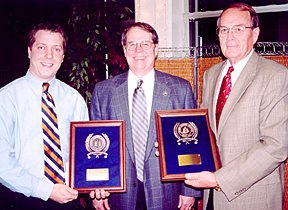
Forrest McMillan (left) and Lawson Hager (right) were presented plaques by Hardin-Simmons University President Craig Turner during the school's annual Faculty and Staff Appreciation dinner. McMillan, the school's newly named dean of students, was announced as the staff member of the year, while Hager, dean of the School of Music, was the faculty member selected for the top honor. In addition to the plaques, the pair also received $500 checks. Hager joined the faculty in 1973, and McMillan joined the staff in 1997 as a residence hall director and was director of recruiting since 2002 prior to taking his new post.

bluebull The University of Mary Hardin-Baylor held a pinning ceremony commemorating the graduation of 23 social work majors. Frances Pinckney of Copperas Cove received the outstanding student in field practicum award, Shaunie Carter of Killeen the Spirit of Social Work award and Misty Rosenberg of Killeen the academic excellence award.

bluebull Roy Vogtsberger is the new head of Hardin-Simmons University's biology department. An assistant professor of biology, he has been a member of the faculty since 2000.

bluebull The East Texas Baptist University Concert Band recently completed a recording of new concert band arrangements. The CD will be sent to junior high and high school band directors in Texas, Arkansas, Louisiana and Oklahoma to market the printed arrangements.

bluebull Dallas Baptist University has announced the addition of four faculty members. John Jaeger will join the university as reference librarian. John McCuin joins the faculty as assistant professor of physics and mathematics. Ross O'Brien has been selected as assistant professor of management. Phil Williams goes to the school as assistant professor of kinesiology.

bluebull Six Texans were among New Orleans Baptist Theological Seminary's recent graduates. Bobby Chandler of Pasadena received the bachelor of arts in Christian ministry degree. Stephanie Frey of Katy earned the master of arts in marriage and family counseling degree. Dudley Lloyd of Abilene received the master of arts in Christian education degree. Stephen O'Neal of Tyler received the master of divinity degree with specialization in biblical languages. Tobey Pitman of Austin received the doctor of ministry degree, as did Rick Webb of Longview.

Anniversaries

bluebull Cliff Feeler, 15th, as associate pastor/minister to senior adults at First Church in Denton.

bluebull Alan Six, 10th, as pastor of Trinity Memorial Church in Marlin.

bluebull Glynn Cummings, 10th, as pastor of Grace Church in Cameron.

bluebull Samuel Buhl, fifth, as pastor of True Love Church in Cameron.

bluebull Southcrest Church in Lubbock, 50th, June 26-27. Tours of the church's former site will be conducted from 2 p.m. to 3:30 p.m., while tours of the current facility will be from 3 p.m. to 4:30 p.m. A meal will be held at 5 p.m. that day. A celebration service featuring former Pastor Charles Broadhurst will follow the meal at 6:15 p.m. Sunday morning will begin with a time of fellowship at 8 a.m. Former Pastor Don Cass will speak in both morning services. For more information, call (806) 797-9000. Brad Jurkovich is pastor.

bluebull First Church in Sunnyvale, 100th, June 27. Charles Wilson is pastor.

bluebull Calvary Church in Beaumont, 100th, July 3-4. A golf tournament will begin at 8 a.m. Saturday, with a women's luncheon set for noon. Hamburgers and hot dogs will be served at 5 p.m., followed by a worship service at 6:30 p.m. Sunday morning services will include all living former pastors–James Thompson, Curtis Mathis, Claude Thomas, Mike Dean and John Powers. Author Ron Ellison will autograph copies of the church's 270-page history. Register at www.calvarybeaumont.com. Nathan Cothen is pastor.

bluebull Robert Lee Church in Robert Lee, 100th, July 17-18. Saturday kicks off at 3 p.m. with a fellowship and church historical and pictorial displays. A meal will be held at 6 p.m. Sunday's service will begin at 10:30 a.m. Mike Poye is pastor.

Retiring

bluebull George Hamontree has retired as camp manager at High Plains Baptist Conference Center in Canyon after 18 years of service.

bluebull B.F. Risinger, as pastor of First Church in Corsicana, effective June 27. He has led the church 25 years. He plans to serve in the intentional interim ministry, and has completed his primary training. He can be contacted at (903) 874-6460 after July 1.

bluebull Larry Embry, as pastor of Calvary Church in Brenham, effective Aug. 1. That date also marks his 35th anniversary of service to the congregation. He plans to be involved in several mission trips abroad and other areas of ministry.

Deaths

bluebull Iva Sibley, 95, May 29 in Corpus Christi. She was the wife of pastor J.M. Sibley, who served churches in Texas and Oklahoma, including Calvary Church in Beaumont from 1944 to 1967. He also served on the board of directors of the Baptist Standard from 1960 to 1966. They also ministered in a Chinese church in Singapore from 1967 to 1969. She was preceded in death by her husband and three brothers, Larkin, William and Leon Crutcher. She is survived by her daughters, Annita Frazier and Betty Hawley; son, Melburn; 11 grandchildren; 25 great-grandchildren; and three great-great-grandchildren.

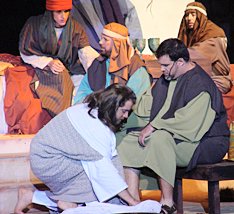
Betty and Russell Morris were honored with a footwashing at a service at First Church in Donna to mark the couple's retirement as Mission Service Corps volunteers. The Morrises were presented a frame print of “The Servant” depicting Jesus washing the feet of his disciples. As Rio Grande Valley Association Associate Director of Missions George Morrison washed the feet of the couple, Director of Missions Mike Gonzales read the related passage of Scripture. Carl and Mary Lou Wilson also were presented MSC emeritus certificates for their service as volunteers.

bluebull Noble Hurley, 88, June 4 in Dallas. A Baptist layman, he served on the Christian Life Commission of the Baptist General Convention of Texas and on the boards of trustees of Baylor University, Baylor University Medical Center and Baylor College of Dentistry. At the time of his death, he sat on the board of trustees of Dallas Baptist University. He also served on the Executive Board of the BGCT and the Executive Committee of the Southern Baptist Convention. Baylor College of Dentistry and DBU both conferred honorary doctoral degrees on him. He was a member of Gaston Oaks Church in Dallas more than 60 years, where he served as a deacon. He was a philanthropist, supporting Baylor Health Care System, DBU, Buckner Baptist Benevolences, Dallas Baptist Association, the BGCT, Baylor University, Truett Seminary, Texas Scottish Rite Hospital, Salvation Army, International Linguistics Center and Children's Medical Center of Dallas. He was particularly pleased with the joint efforts of DBU, Dallas Association and his couples Sunday school class to assist churches and Christian ministries in meeting the needs of homeless and street people in Dallas. He was preceded in death by his wife, Jane, and son, Bill. He is survived by his son, Jack.

bluebull Margarita Morales, 78, June 4 in Dallas. She and her pastor husband, Servando, founded Primera Iglesia in San Juan. She was a pianist, accordionist and Sunday school teacher 58 years. They also served as missionaries in Beaufort, S.C., 12 years and in Mexico. She was preceded in death by her husband. She is survived by her daughter, Teresa Molina; sons, Servando Jr., Abel and Jacob; grandchildren; and great-grandchildren.

bluebull George Hawkes, 87, June 8 in Arlington. Hawkes was the longtime editor and publisher of the Arlington Citizen-Journal. An award-winning journalist, he served on the board of trustees of the Baptist Standard from 1967 until 1975. He was a deacon at First Church in Arlington. He is survived by his wife, Jeanne; daughters, Erin Chaney, Elizabeth Turner and Kay Ellen Goodyear; son, George Jr.; brother, Charles; sister, Ellen Bunkley; 12 grandchildren; and six great-grandchildren.

Ordained

bluebull Carey Gamble to the ministry at Levita Church in Gatesville.

bluebull Joe Barrera to the ministry at Jericho Fellowship in Plainview.

bluebull Mack Dowell, Ronny Fisher and R.C. Hudgens as deacons at Eagle Springs Church in McGregor.

bluebull Chris Doloff, Don Greer, John Holden, J.M. Taylor and George Wilson as deacons at Carlton Church in Carlton.

bluebull John Cunningham and Tommy Elder as deacons at Bethel Church in Quanah.

bluebull Dan Treviño as a deacon at Second Church in Harlingen.

Events

bluebull Longbranch Community Church in Midlothian held a dedication service for its facilities May 23. Bill Pinson, executive director emeritus of the BGCT, was the guest speaker. Herb Pedersen is pastor.

bluebull First Church in Graham held a commissioning service for Mission Service Corps volunteers Danny and Ruth Ann Perkins.

News of religion, faith, missions, Bible study and Christian ministry among Texas Baptist churches, in the BGCT, the Southern Baptist Convention ( SBC ) and around the world.


U.S. News & World Report names Baylor among top graduate schools_61404

Posted: 6/11/04

U.S. News & World Report names
Baylor among top graduate schools

By Mary Crouch

Texas Baptist Communications

U.S. News and World Report magazine has named Baylor University's graduate schools among the nation's best.

Baylor Law ranked 50th overall, and is joined by two other Texas schools, Southern Methodist University and the University of Texas at Austin, in the top 50. Within the law school, Baylor's trial advocacy program placed seventh, moving up one from eighth in 2003.

The medical program ranked 13th for research and 20th in primary care, beating out such prestigious schools as Harvard and Brown, as well as the University of Texas Southwestern Medical Center in Dallas.

Schools were chosen based on academic and professional judgments from alumni, faculty, deans and program directors.

U.S. News then looked at several factors, such as starting salary and length of time to find a job after graduation.

The overall scores are a composite of the previous factors plus performance, acceptance, tuition and comparison with the other schools.

“We're always extremely proud of our institutions that show academic excellence and are grateful for the recognition from U.S. News,” said Keith Bruce, institutional ministries coordinator for the Baptist General Convention of Texas.

This is the fifth year for Baylor to be listed among the top 50 in the U.S. News rankings.

News of religion, faith, missions, Bible study and Christian ministry among Texas Baptist churches, in the BGCT, the Southern Baptist Convention ( SBC ) and around the world.


Baylor tennis team takes title_61404

Posted: 6/11/04

Baylor tennis team takes title

Baylor University's men's tennis team clinched the school's first-ever NCAA title with a 4-0 victory over UCLA at the NCAA Championships in Tulsa, Okla. The second-ranked Bears, making Baylor's first title appearance since the 1948 basketball team lost to Kentucky in the NCAA final, won the match in 1 hour, 58 minutes, surrendering just one point and posting five shutouts in six NCAA tournament matches. Baylor completed the 2003-04 season with a school-record 32-2 mark and the nation's longest winning streak at 24 matches. Pictured are (front row, left to right) Ivor Lovrak, Matias Marin and Reiner Neurohr; (back row) Head Coach Matt Knoll, Benedikt Dorsch, Benjamin Becker, Jon Reckeway, Jason Gould, Matija Zgaga, Joel Morgan, Adrian Szatmary, Barry McLaren, and Assistant Coach Rob Cheyne.

News of religion, faith, missions, Bible study and Christian ministry among Texas Baptist churches, in the BGCT, the Southern Baptist Convention ( SBC ) and around the world.


BGCT names controllerassistant treasurer_61404

Posted: 6/11/04

BGCT names controller/assistant treasurer

DALLAS–Jill Larsen of Tulsa, Okla., has been named controller/assistant treasurer of the Baptist General Convention of Texas Executive Board staff effective July 6.

As controller, Larsen will supervise general accounting and cash management operations for the BGCT.

She will assist David Nabors, chief financial officer/treasurer, in a variety of business and financial matters.

“I am thrilled to have found the right person to fill this critical role in our organization,” Nabors said.

Larsen, a certified public accountant, fills a position left vacant with the October 2003 resignation of Randy Reid.

She will be leaving a position as accounting supervisor for Deloitte Consulting Outsourcing in Tulsa.

Larsen worked six years with the Southern Baptist Annuity Board in Dallas, where she held two department head positions–retirement administration and financial reporting.

Larsen said she sees her new position as a “great opportunity to assist the ministry” of the BGCT and for her to “use my past experience to advance the future there.”

Chris Liebrum, BGCT director of human resources, said: “We are fortunate to have found a person with her experience and skills. Ms. Larsen brings to us specific skills in the areas of financial analysis, budgeting and personnel management.”

As controller, Larsen will supervise all accounting activities of the BGCT Executive Board, including the processing and reporting of $80 million to $85 million annually in mission gifts. She also will provide monthly, quarterly and annual financial reports for the Executive Board staff.

She will develop and implement new accounting systems and procedures required to ensure contributions are properly processed and recorded in accordance with cooperative mission giving guidelines.

The new controller grew up in Grapevine, moved to Colorado and then returned to Texas, graduating from high school in Olney.

She graduated summa cum laude with a degree in accounting from Midwestern State University in Wichita Falls.

Prior to moving to Tulsa, Larsen was a member of The Heights Baptist Church in Richardson. She currently is a member of Southern Hills Baptist Church in Tulsa.

“This involves the complete redesign of all related financial reporting of church contributions.”

News of religion, faith, missions, Bible study and Christian ministry among Texas Baptist churches, in the BGCT, the Southern Baptist Convention ( SBC ) and around the world.


Some want single Bible translation to become universal English standard_61404

Posted: 6/11/04

Some want single Bible translation
to become universal English standard

By Douglas Todd

Religion News Service

VANCOUVER, British Columbia (RNS)–An American academic wants to see a Bible translation put together by scores of conservative scholars become the one Bible everyone uses.

Alan Jacobs, an English professor at Wheaton College near Chicago, said the new English Standard Version Bible, whose translation was overseen by Vancouver's J.I. Packer, is the only one with the potential to become the universal Bible of all English-speaking Christians.

Jacobs laments the end of the era when most English-speaking Protestants read and quoted from the same Bible–the King James Version, first published in England in 1611.

“Everyone who grew up with the (King James Version) feels the loss of a shared language, of particular words and phrases that resonated in the common ear,” Jacobs wrote in First Things magazine.

With more than 100 English-language Bible translations now competing against one another, Jacobs called the English Standard Version “the best available English Bible.”

It was created two years ago by a team of about 100 conservative Protestants led by Packer of Regent College, an evangelical post-graduate school on the University of British Columbia campus.

However, some Bible scholars consider Jacobs' high-profile campaign to champion one common English-language Bible quixotic and misguided at best and imperialistic at worst.

“It sounds like ecclesiastical and scholarly tyranny we shouldn't put up with,” said Professor Lloyd Gaston, a veteran Bible scholar at the Vancouver School of Theology.

“The more Bible translations we have, the better,” Gaston said. It's good for people of faith to realize there are many different ways of interpreting ancient Bible stories, he added.

“It seems to me anyone who suggests using just one Bible is simply making a pitch for their own favorite translation,” said Gaston, whose students come from a variety of Christian backgrounds, including Anglican, United Church of Canada, Presbyterian and Catholic.

“It creates the danger of not truly listening to the Bible in all its complexity, but just listening to one voice. It narrows the range of possibilities, which some Christians might like, but not all,” Gaston said.

Although Jacobs had no role in translating the ESV, he is a friend of Packer and a fellow evangelical.

The literary chairman of the ESV translation team is Jacobs' English faculty colleague at Wheaton College, Leland Ryken, who routinely criticizes modern Bible translations.

In his essay, Jacobs glosses over how Roman Catholics, for instance, have never used the King James Bible, while many have read the Douai-Rheims translation, which reflected similar language.

Today, many Catholics prefer The Jerusalem Bible, while many mainline Protestants read the New Revised Standard Version and many evangelicals use the New International Version.

Even Packer, the translation's general editor, backed away from Jacobs' hope that one Bible translation would dominate the world's English-language Christian community.

There is no such thing as a definitive translation of the Bible, Packer said, and it would be “foolish” of him and his colleagues to suggest theirs is the last word.

As for Jacobs' claim that the ESV is “the best available English Bible,” Packer is flattered, but said: “Our only claim is that for the purposes for which we need the Bible, this ESV is as good as any and better than some. But we would be foolish to say it's the last word.

“People have different cultural backgrounds. They talk and read English at different levels. The different versions choose their English idioms to plug into the literary backgrounds which they think their intended readers have.”

Packer, 77, said the audience for his team's translation is “the kind of people who are bewildered by the pressure to embrace novel understandings of the faith and paraphrased translations of the Bible. We believe there's a large constituency of people who appreciate a more conservative Bible.”

The ESV translation, which Packer prepared with other biblical scholars from throughout North America, is a more literal translation than other translations, he said.

Packer said more “liberal” translations of the Bible rely more heavily on paraphrasing the original Greek, Hebrew or Aramaic, whereas his translation uses, wherever possible, the precise words of the original, or as close to them as differences in language will allow.

Jacobs, however, said one of his main reasons for arguing for the supremacy of the ESV is his concern that other modern Bible translations lack good English style.

The ESV slightly reworks the popular 1952 Revised Standard Version, for instance, dropping “thees” and “thous.” Still, Jacobs favors “deference to existing excellence”–if a King James or Revised Standard Version phrase is accurate and understandable, keep it.

News of religion, faith, missions, Bible study and Christian ministry among Texas Baptist churches, in the BGCT, the Southern Baptist Convention ( SBC ) and around the world.


BOOKS: Debunking DaVinci_61404

Posted: 6/11/04

BOOKS: Debunking DaVinci

By Mark O'Keefe

Religion News Service

WASHINGTON (RNS)–After reading “The Da Vinci Code,” Holly Jespersen wondered if Jesus Christ did in fact wed Mary Magdalene and father her child, as the novel claims.

“It definitely made me question all that I have been brought up to believe,” said Jespersen, a Presbyterian who lives in Chicago.

Alarmed by that kind of reaction, defenders of traditional Christianity have launched a counteroffensive on author Dan Brown's fast-paced thriller, which has been atop The New York Times' fiction best-seller list for the last year, has sold more than 6 million copies, is being translated into more than 40 languages and will be made into a Columbia Pictures film directed by Ron Howard.

Books and articles with titles like “Dismantling the Da Vinci Code” and “The Da Vinci Deception” have been published. Preachers are giving sermons in response to church members who ask why they were never told there was a Mrs. Jesus. Web sites and discussion groups are humming over the book's “heresies.”

A collective Christian outcry is rising, with some of the country's most influential clerics joining in.

When “The Da Vinci Code” was released in March 2003, church leaders paid little attention. Brown was an obscure author; this wasn't the first time a novel had taken shots at Christianity. And it was, after all, fiction.

But as the book became a publishing phenomenon, religious leaders noticed that readers, even in their own congregations, were taking the novel's historical claims as fact. “Jesus, Mary and Da Vinci,” an ABC special last November that seriously explored Brown's themes, made clear that this was a cultural force to be reckoned with.

Yet where some Christian leaders perceive a threat, others see an opportunity.

The book has sparked interest in early Christian history, with the public suddenly fascinated with topics like the Council of Nicea in 325.

“It's only a threat if people read this fictional book naively, don't think critically about it and don't pursue truth,” said Mark Roberts, pastor of Irvine Presbyterian Church in Irvine, Calif. “Now that we have people thinking and talking, we can look at the real evidence of Jesus.”

But on the book's first page, Brown makes an assertion that galls his critics: “All descriptions of artwork, architecture, documents, and secret rituals in this novel are accurate.”

The plot centers on the search for the Holy Grail by a brilliant Harvard symbologist and a beautiful French cryptologist, who follow clues in the work of Leonardo Da Vinci.

The greatest protest has been over the book's negative portrayal of central Christian beliefs, including:

bluebull Jesus' divinity. Brown writes that Constantine collated the Bible, omitting some 80 gospels emphasizing Jesus' human traits in favor of four that made him God. This was supposedly done at the Council of Nicea, “in a relatively close vote.”

But the actual vote was 300-2, said Paul Maier, professor of ancient history at Western Michigan University, and it did not determine Jesus' divinity. That was attested to much earlier “by many New Testament passages, as well as by the earliest Christians and all the church fathers, even if there was some disagreement as to the precise nature of that deity,” Maier said.

The Council of Nicea “did not debate over whether Jesus was only mortal or divine, but whether he was created or eternal.”

bluebull The Bible's inerrancy. Peter Jones, co-author of “Cracking the Da Vinci Code,” says that in trying to establish that the Bible was cooked by Constantine and his cronies, Brown overlooks the fact that four-fifths of what is now called The New Testament was deemed divinely inspired in the first century–two centuries before Constantine and the Council of Nicea.

bluebull Jesus' celibacy. Even feminist scholars, such as Karen King, a Harvard professor who may be the world's leading authority on early non-biblical texts about Mary Magdalene, have said there is no evidence that Jesus was married to her or to anyone else.

Cardinal Francis George and other traditionalists treat the claim as absurd. “All I have to say is, nobody ever told me to keep secret the fact that Jesus was married to Mary Magdalene,” he told The Chicago Sun-Times.

“All those martyrs the first 300 years, they were covering up the fact that Jesus was married to Mary Magdalene? Why in heaven's name would someone go to their death to protect that secret? It's absurd.”

News of religion, faith, missions, Bible study and Christian ministry among Texas Baptist churches, in the BGCT, the Southern Baptist Convention ( SBC ) and around the world.


BOOKS: Shadowmancer Hotter than Potter?_61404

Posted: 6/11/04

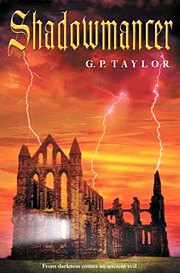
Anglican priest Graham Taylor sold off his beloved Harley Davidson to self-publish his novel "Shadowmancer"–which went on to become an international bestseller. (Photo courtesy G.P. Putnam's Sons.)

BOOKS:
Shadowmancer Hotter than Potter?

By Bob Smietana

Religion News Service

CLOUGHTON, England (RNS)–When he was 21, Graham Taylor woke up in his London flat after a night of heavy partying, looked in a mirror, and said, “Oh, God, there has got to be more to life than this.”

Taylor didn't expect God to answer. But a voice inside told Taylor to make peace with his parents, whom he had hardly seen since running away at 16.

“Go home,” the voice said, “and I'll find you a job and I'll find you a wife.”

“I'll tell you–I didn't want the job in my hometown, and I didn't want the wife,” Taylor said in an interview from his home in Cloughton, where he's now the local vicar. “That was off the agenda.”

But within a few days, Taylor had packed his bags and headed home, where to his surprise he found a job, and a wife, in short order. He also found a calling as an Anglican priest, a career he started after working his way through school for 10 years as a police officer.

And then came the surprise of his life. Last summer, at age 43, Taylor became one of his country's best-selling authors. His novel “Shadowmancer,” about an 18th century evil cleric who tries to take over the world, topped the United Kingdom's best-seller list 15 weeks and sold more than 300,000 copies–despite being released at the same time as the latest Harry Potter book.

“Shadowmancer,” which also has become a best seller in Spain, Argentina, Poland and Greece, debuted in the United States with a 250,000-copy first printing. Taylor arrived in the States in early May for a publicity tour that included an appearance on the “Today” show.

The book was so popular it spawned a new trend dubbed “Shadowmania” by newspapers and is advertised as being “hotter than Potter.”

Taylor says the success of his book–the film rights recently sold for $4 million–is “unreal.”

“I am here by complete accident,” he says. “I am a storyteller. I tell stories in my sermons, and this big accident has been arranged (for the book) to suddenly became an international best seller. And I sit back and chuckle.”

Taylor wrote the novel on a lark. A woman had challenged him to do it after a speech he gave about occult themes in children's books like Harry Potter and the works of Philip Pulman. Pulman–whose “Dark Materials” reworks Milton's “Paradise Lost” so that Satan is a hero–particularly bothered Taylor.

“Pulman says that God is dead, that God is a liar, God is a cheat, God is senile. Well, that really offended me,” Taylor says. He set out to write a fantasy novel that would be exciting and scary and show a God who was active in the world.

Since he didn't think anyone would publish his novel, Taylor sold off his beloved Harley-Davidson motorcycle to pay the 3,000 pounds to have it self-published. One of the original 500 copies made its way to Faber and Faber publishers, who bought the U.K. rights. It's being published by G.P. Putnam's Sons in the United States.

Set in 18th century Yorkshire, the book pits three teenagers–Thomas Barrick, Cate Coglan and an Ethiopian boy named Raphah–against Obadiah Demurral, the vicar of Whitby. Demurral is a shadowmancer–a sorcerer who talks to the dead–who keeps the body of a dead girl in his church and summons her to foretell the future.

Not content with the wealth he's accumulated from oppressing local peasants, Demurral sets his sights on overthrowing God. He steals part of the Ark of the Covenant and uses it to summon the devil, named Pyratheon, to Earth.

Raphah's family has been the keeper of the Ark of the Covenant for centuries, and he tries to retrieve it with the help of Thomas, Cate and a local smuggler named Jacob Crane. Taylor describes their adventures as “Robert Louis Stevenson tinged with J.R.R. Tolkein and with C.S. Lewis.”

He based Demurral, who is completely corrupted, on some of the criminals he met as a police officer.

“I met people who were like that, who were evil,” he said. “Thankfully, they were few and far between–but when you met them, there was this sense of evil. I was always amazed at how many people started off in quite a good place and then through circumstances and will and sin and all those sorts of things, they ended up committing these horrendous crimes.”

“Shadowmancer's” fast-paced plot features a number of fight scenes, also based on some of Taylor's experiences as a police officer in rural Yorkshire. Taylor, who describes himself as a “lumbering Yorkshireman”–about 6 feet tall, and 6 feet wide–said he often “flew by the seat of my pants as a cop, with no backup.”

Most times it went well. One night, things went bad when he arrested a young man for breaking a shop window. The man's friends–30 or so of them–came out of the pub just as Taylor was putting the man in his police car. Fueled on “drug and drink,” they attacked Taylor. As he was getting nearly beaten to death, the man he had arrested kicked out the window of the police car and yelled out, “Where's your God now, Graham?”

“God was there,” says Taylor. “God was there with me. If I had died–if I had been murdered– then I would have gone straight to be with God because I am a Christian. I survived, so I believe that God protected me. Though either way, as a Christian, I win. It's that win-win situation. In our suffering, God is with us.”

That sense of God being with him sustained him through some heart trouble and a case of pneumonia earlier this year. He's decided to give up his parish this fall and work as a locum, or interim minister, while spending more time speaking and writing.

While he hasn't yet replaced his Harley, Taylor's publicity pictures show him in the church graveyard in Cloughton, wearing his leather motorcycle jacket. He says he's just doing what he thinks Jesus would do if he showed up today.

“If Jesus was alive today, he wouldn't walk, he'd ride a Harley,” Taylor says. “There you are in a town, and 12 guys turn up on Harleys. They take off their helmets and they all have got long hair, and then they start healing people–you are going to attract a really big crowd.

News of religion, faith, missions, Bible study and Christian ministry among Texas Baptist churches, in the BGCT, the Southern Baptist Convention ( SBC ) and around the world.