special_needs_62303

Posted: 6/20/03

Teen's 'special need' is to make everyone smile

By Heather Price

Texas Baptist Communications

RICHARDSON–Those who know Nathan Williams, an 18-year-old with cerebral palsy, say he is changing the world one smile at a time.

“The first thing that comes to my mind when I think of Nathan is just that he has this spirit that is always positive and always full of joy. He is never down. God has given him a special gift of lifting everyone else up because of his attitude,” said Randy Johnson, youth pastor at First Baptist Church of Richardson.

When Dan Williams, then pastor of Southland Baptist Church in San Angelo, baptized his son seven years ago, he asked the boy's “family and special friends” to rise. “It was like 'whoosh,' and everyone in the whole congregation stood up,” said Anita Williams, Nathan's mother.

Nathan Williams holds a special memento from his participation with the basketball team of Richard's Pearce High School, where he made a free throw in a junior varsity playoff game.

When asked about his favorite part of church, Nathan replied: “I like worship. I like singing.”

Williams has been singing since he was 3 years old. He is in the a cappella choir at Pearce High School in Richardson and the Living Sacrifice Choir at First Baptist Church.

While on a choir mission trip to a juvenile detention center, Williams shared his testimony of salvation in front of many discouraged and disbelieving youth.

“I told them about Jesus,” he said.

In a short, straightforward address, he captured the attention of every eye in the room.

“Those hardened teenage kids broke out in immediate applause,” Johnson said.

Living Sacrifice Choir is traveling to Saskatchewan, Canada, this month on a mission trip. Williams will sing a solo during a retirement center performance.

While practicing his song, “Shall We Gather at the River,” Nathan glanced over at his mom, who was accompanying him on the piano. He smiled as he sang every note perfectly on pitch.

“He is just the most faithful kid I have ever seen. He is committed to use his voice and his ability for the Lord,” said Don Blackley, minister of music at First Baptist Church.

In addition to singing, Williams also loves to pray. He is the prayer representative for youth at his church. Every three weeks, he gets a stack of requests from people with special needs.

“When he hears that someone has a special need, he calls them and then he calls other people and gets them to pray for that person too,” Mrs. Williams explained.

With every telephone call, Williams believes he helps them feel better, he said.

Mrs. Williams estimates her son has memorized more than 50 telephone numbers.

Williams has a passion for people and “has more personal relationships than anyone in the youth group,” Blackley said. “He is well loved. He's everybody's friend, and it is because he walks up to people and says: 'Hi, my name is Nathan. What's yours?'”

Williams is one of the most adored members of the youth group, according to the youth pastor.

“He is always upbeat and always talking and saying things like, 'You look great today.' He uses his natural ability God has given him within his handicap,” Johnson said.

This past school year, Williams had the chance to shoot a free throw during a junior varsity basketball playoff game. As the team manager, he had wanted a chance to get in the action.

As Williams was subbed in for another player at the free-throw line, the crowd simultaneously broke out cheering, “Go Nate-Dog!”

Moments after making the second shot, he jumped around in celebration. It remains one of his fondest memories.

His father, who directs the Texas Baptist Laity Institute, often reminds his son of the coach's remarks after the game, “When you are old and thinking back, you need to recall events like this one, when someone special gave everything he had and made a contribution to the team.”

Nathan does not allow his physical or mental limitations to slow him down, Johnson noted. “He has done everything most other kids can do.”

After graduation next May, Williams plans to participate in Transition, a program sponsored by his high school and Richland College. The program allows him to get the needed skills for finding a job while being employed by the school.
News of religion, faith, missions, Bible study and Christian ministry among Texas Baptist churches, in the BGCT, the Southern Baptist Convention ( SBC ) and around the world.


tidbits_62303

Posted: 6/20/03

Texas Tidbits

Nominations accepted. The Texas Baptist Missions Foundation is accepting nominations for the 2003 Mission Service Awards through July 31. The foundation's board of advisers will select a winner for the Pioneer Award, which honors a longtime leader in missions or someone who played a key role in starting mission work; the Innovator Award, to a church or individual who provided a model of missions; and Adventurer Award, for outstanding financial support of leadership in ministry. Nominations may be sent to Bill Arnold at the Texas Baptist Missions Foundation, 333 North Washington, Dallas 75246.

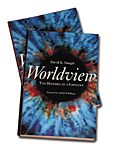
bluebull DBU prof wins writing award. Dallas Baptist University professor of philosophy David Naugle has received a 2003 book award from Christianity Today for his work, "Worldview: The History of a Concept." The awards are chosen by evangelical leaders in numerous disciplines including academia, the church and journalism. Among the 300 titles nominated, only 19 received honors, with Naugle's book chosen over 34 other books in the theology/ethics category. A member of the DBU faculty since 1990, Naugle also serves as chairman of the philosophy department.

bluebull HBTS honors Flores. Fermin Flores, religious education professor for 32 years at Hispanic Baptist Theological School in San Antonio, will retire Jan. 1. Because of his exemplary service to the school, the administration, faculty, staff and students have established the Fermin Flores Scholarship Fund. Dean of Academic Affairs Javier Elizondo is collecting appreciation letters to Flores. Letters may be mailed to Elizondo at 8019 South Pan Am Expressway, San Antonio 78224.

bluebull Pehl named nursing dean. Linda Pehl has been named dean of the Scott & White School of Nursing at the University of Mary Hardin-Baylor. She has worked in the nursing profession nearly 40 years at both Scott & White Hospital in Temple and at the university. Her career started as head nurse at Scott & White in 1964. She received a bachelor of science in nursing degree from Mary Hardin-Baylor College in 1973, the master of science degree in nursing from the University of Texas in Austin in 1975, and a Ph.D. from UT-Austin in 1988.
bluebull Groundbreaking planned. The University of Mary Hardin-Baylor will hold a groundbreaking ceremony for its new Frank and Sue Mayborn Campus Center at 10:30 a.m. June 25. The groundbreaking will take place on University Drive, adjacent to the Red Murff Baseball Field. The new center will provide program space for student health and recreation, the exercise and sport science academic program, collegiate basketball and volleyball games, concerts, convocations and special events for the university and the community. The facility will include a new arena, classrooms and laboratories for the academic programs, a utility/recreation gym, an exercise/fitness room, an aerobics room, dressing rooms, and faculty and coaches' offices.

bluebull Robuck to BGCT. The Baptist General Convention of Texas Church Starting Center recently named Tom Robuck as Central Texas consultant. Robuck will create and facilitate church-starting strategies for the region. A graduate of Baylor University and Southwestern Baptist Theological Seminary, he earned the doctor of ministry in missions degree from Golden Gate Baptist Theological Seminary. He has extensive ministerial experience, including pastorates at Mt. Zion Baptist Church in Athens and the First Baptist churches of Barry, Streetman and Commerce. Recently he served as minister of missions at Green Acres Baptist Church in Tyler. He and his wife, Elizabeth, have a 23-year-old son, Christopher.

bluebull Hospital births scholarship. King's Daughters Hospital of Temple has established a $30,000 endowed scholarship at the University of Mary Hardin-Baylor. The scholarship recognizes the long-standing relationship the hospital has maintained with the university. The scholarship will be granted annually to a nursing major who meets financial need requirements.

bluebull Potter to new role. The Baptist General Convention of Texas Church Health & Growth section recently named Ivan Potter director of the office of capital funds and congregational stewardship. Potter will assist churches in fund-raising campaigns and budget education. He is the former president and chief executive officer of Texas Baptist Financial Services.

bluebull Family conference planned. Authors Les and Leslie Parrott will lead the third annual Blanche Davis Moore–South Texas Children's Home Family Conference July 19 in Corpus Christi's Selena Auditorium. Cost is $10 per person, which includes a copy of the Parrotts' book "Relationships 101." The conference, titled "Get a Love Life," will focus on strengthening marriages and relationships. For more information, call (361) 991-8680 or e-mail familyconference@stch.org.

bluebull Hispanic church conference planned. A Hispanic Church Health and Growth Conference is scheduled for Aug. 9 at Calvary Baptist Church in McAllen. Workshops will be offered in English and Spanish. Mike Gonzales, director of missions for Rio Grande Valley Baptist Association, and Ellis Orozco, pastor of the host church, are featured speakers. A $10 registration fee includes a continental breakfast and lunch at the event, sponsored by the Baptist General Convention of Texas Church Health & Growth Section and Rio Grande Valley Baptist Association. For more information, contact Frank Palos at (800) 231-5096 or palos@bgct.org.

bluebull HSU adds softball. Hardin-Simmons University will add women's softball to its athletic lineup, with play beginning next spring at a complex to be built on vacant university property. The new stadium will be completed in the fall and will include a field house. Rita Jordan, former Hawley head coach and Abilene Christian University assistant coach, has been named coach for the new program.

News of religion, faith, missions, Bible study and Christian ministry among Texas Baptist churches, in the BGCT, the Southern Baptist Convention ( SBC ) and around the world.


together_62303

Posted: 6/20/03

TOGETHER:
Retreat can aid ministers' marriages

Rosemary and I have worked on our marriage. Through the years, it has been more than worth it!

For 42 years, we have experienced both the joys and the difficulties pastoral ministry places on marriage. We still are learning how to communicate with each other and how to improve our understanding of each other. Some days are incredible joys. Other days can be very trying and difficult. Being in ministry is a wonderful privilege, but it can be tough on a marriage. Sometimes the balance is hard to find.

We have to make time to invest in our relationship. One of the ways we plan to do that this year is by attending the Celebrating Marriage in Ministry Retreat in San Antonio, Sept. 11-13, sponsored by the Baptist General Convention of Texas. This event takes an intentional and proactive approach in encouraging healthy marriages. An event like this can help to remind us how to keep our romance alive, how to connect with each other even in conflict and how to pray more effectively together.

CHARLES WADE
Executive Director
BGCT Executive Board

Marriage is a wonderful gift. Our partner can be a cheerleader, confidant, comforter, companion and best friend. But those aspects of our relationships do not come automatically. Relationships take time and the investment of the best and deepest parts of ourselves. Marriage is work, and sometimes it is very hard work.

The storms of life wash over us like waves. Many marriages survive those storms and are stronger because of them. Sometimes the storms come when resources are depleted, and the conflict proves to be too much for empty relationships to survive. What can be done to replenish those resources, to renew and strengthen marriages?

We need to make our marriages a priority. Ministers need to take time away to attend events like this one in San Antonio. Congregations can help in this process and help their ministers' marriages thrive and succeed. One way to make that happen is for your congregation to give this weekend to your minister and spouse as a gift. This could be a wonderful way to show appreciation to your minister for the great investment the pastor (or minister) has made to your congregation. Ministers, put this on your calendar and make it a priority for you and your spouse.

Ministers' marriages are not immune to the temptations and wear and tear from living in a world that sees less and less value in marriage. According to the Barna Research Group, the divorce rate in ministry marriages has risen 65 percent in the last 25 years. That is a startling statistic. For our ministry families, little time off and living under constant scrutiny puts additional pressure and strains on the marriage relationship.

Ministers can be the very ones modeling healthy marriages. When the minister takes time with his or her spouse for a date night, husbands and wives in the congregation find encouragement to invest similar time in their own marriages. Our convention wants to give our ministers the tools they need to replenish their resources and invest their time and energy into their own marriages. I believe that can be one of the best ways we can encourage healthier marriages among all our church families.

For more information on this event, call toll-free (888) 447-5143 or go to www.bgct.org/marriageretreat or e-mail cavin@bgct.org.

We are loved.

News of religion, faith, missions, Bible study and Christian ministry among Texas Baptist churches, in the BGCT, the Southern Baptist Convention ( SBC ) and around the world.


sbc_bwacut_62303

Posted 6/19/03

SBC messengers cut
BWA allocation by $125,000

By Trennis Henderson

Kentucky Western Recorder

PHOENIX–A proposal to reduce the Southern Baptist Convention's allocation to the Baptist World Alliance by more than 30 percent was approved June 17 with almost no discussion.

The funding cut, included in the SBC's 2003-2004 operating budget, initially was adopted without discussion or debate. Moments later, after the convention had moved on to other business, messenger Jim Stroud was recognized by SBC President Jack Graham.

Stroud, a messenger from Tennessee, asked about the possibility of reconsidering and amending the earlier action. When told that would be out of order, Stroud requested “an explanation from the committee as to their reason for decreasing the allocation to the Baptist World Alliance.”

Morris Chapman, president of the SBC Executive Committee and a BWA vice president, said a study committee recommended decreasing the amount contributed to the BWA because “it appeared Southern Baptists were not being … heard adequately” on issues of concern to SBC leaders.

Sherry Reynolds, a messenger from Georgia, asked what the specific issues were that prompted the funding cut.

While press reports focused on SBC's disdain for the Cooperative Baptist Fellowship's pending application for BWA membership, Chapman said SBC leaders primarily were concerned about the membership application process.

The BWA membership committee “exceeded their authority by going to the full general council and relating to them the conditions on which the Cooperative Baptist Fellowship would be accepted” as a member later this year, Chapman charged. He said he and other SBC representatives “took strong issue with the process.”

As a result, the SBC's 2003-2004 operating budget of $7.84 million includes a $300,000 allocation for BWA, a cut of $125,000 from the current $425,000 line item. The remaining $125,000 was earmarked for Kingdom Relationships, a proposal for the SBC to “look toward strengthening relationships with other like-minded Christian bodies” worldwide.

When the proposal initially was approved in February by the SBC Executive Committee, Chapman said the Kingdom Relationships emphasis “won't be a duplication of the BWA.” He said initiatives might include Bible conferences and church-growth seminars that would involve “primarily Southern Baptist entities” around the world.

BWA General Secretary Denton Lotz said BWA leaders are “very sorry that the SBC has partially defunded the Baptist World Alliance.” He noted that the BWA “has been close to the heart of Southern Baptists in working together with Baptists around the world” since the organization's founding in 1905.

The SBC is a charter member of BWA, an umbrella organization of 200 Baptist unions and conventions worldwide that represents 43 million baptized believers in 193,000 churches.

In an interview after the June 17 vote, Lotz said, “We shall continue to work and pray for Southern Baptists and to express appreciation for their encouragement and support over the years.”

Emphasizing that he and BWA President Billy Kim of Korea “want Southern Baptists to know that we shall continue to work with all Southern Baptists and their leadership,” Lotz added: “We belong together because we belong to Jesus Christ. We want to work with all Baptists all over the world.”

In other business, Executive Committee proposals adopted by SBC messengers include:

Approving a 2003-2004 SBC Cooperative Program allocation budget of $182.3 million. Budget allocations include International Mission Board, 50 percent; North American Mission Board, 22.79 percent; SBC seminaries and historical library and archives, 21.64 percent; SBC operating budget and Annuity Board, 4.08 percent; and Ethics & Religious Liberty Commission, 1.49 percent. The first $250,000 of any budget overage will be allocated "to fund the enhancement of Cooperative Program education at the six seminaries."

Revising the IMB's ministry statement. IMB President Jerry Rankin described the changes as "a restatement and updated wording that more accurately reflects the focus and work" of the IMB. The revised document focuses on "nurturing church planting movements" as a strategy to make the gospel accessible to all people. It also highlights "sending" rather than "appointing" missionaries, recognizing a growing emphasis on volunteer workers.

Adopting a resolution of appreciation for the Southern Baptist Council on Family Life. The eight-member council, chaired by former SBC President Tom Elliff, helped plan and produce the SBC's June 16 Kingdom Family Rally. The resolution expressed appreciation for the council's "keen vision, deep passion, unflagging energy and unyielding diligence and perseverance in pursuit of the goal of saving families."

Selecting San Antonio, Texas, as the site for the 2007 SBC annual meeting to be held June 12-13.


sbc_bwareport_62303

Posted 6/19/03

Baptist World Alliance report includes plea for unity

By Tony Martin

Mississippi Baptist Record

PHOENIX, Ariz.–Immediately before Denton Lotz stood to bring the Baptist World Alliance report to the Southern Baptist Convention, messengers voted not to reconsider a partial defunding of the world Baptist body.

“The Lord has a wonderful sense of humor, doesn't he?” quipped Lotz, BWA general secretary, as he began his report June 18.

Despite the cut in funding and related tensions between the SBC and BWA, Lotz's report was positive and upbeat.

“We Baptists in the Baptist World Alliance, 260 conventions, we want to stick together with Southern Baptists, with brothers and sisters in Bangladesh, with Baptists in South Africa and Zimbabwe,” he said. “We stick together because we belong to Jesus Christ.”

Lotz brought greetings from BWA President Billy Kim of Seoul, Korea. Kim thanked Southern Baptists for their support of the BWA since 1905.

Kim also invited Southern Baptists to a “birthday party,” to the centennial celebration of the BWA in Birmingham, England.

Today is a new day in missions, Lotz declared.

“In 1900, 25 percent of the Christians in the world lived in North America and Europe,” he explained. “In 2003, 60 percent of the Christians are now in the southern hemisphere. The Spirit is moving, and perhaps one day Africans will have to come to re-evangelize Europe and North America.”

In Turkmenistan, Baptist pastors are being beaten and their churches closed, Lotz reported. “That's why we need to work together. That's why we need Southern Baptists to work with us. We work together for religious freedom.

“We also work together for reciprocity,” Lotz continued. “Thirty years ago, there was only one mosque in Washington. Today there are 39. So now, we need to tell our brothers and sisters that we need a church in Saudi Arabia and Yemen. We want religious freedom for the whole world. That's why we work for reciprocity and work in the United Nations for religious freedom.”

The need for a unified Baptist witness also is seen in Russia, Lotz said, noting that in 1990 there was only one Baptist church in Moscow. Today there are 52.

“These are the brothers with whom you need to work and whom you need to support,” he said. “The Holy Spirit is moving all over the world, and that's why we need the support of Southern Baptists. We need your support because we know your commitment to evangelism.

“Southern Baptist need to stay in the BWA because of your joy in stewardship,” Lotz continued. “You have supported us over the years, and we want your continued support.

“Your Baptist brothers and sisters around the world say, 'We don't know you, but we love you in Jesus Christ.'”


sbc_grahampress_62303

Posted 6/19/03

Southern Baptist president says
homosexuals can change

By Greg Warner

Associated Baptist Press

PHOENIX, Ariz.–Homosexuals are able to change and leave the gay lifestyle, Jack Graham told reporters soon after his re-election as Southern Baptist Convention president.

Graham, pastor of Prestonwood Baptist Church in suburban Dallas, threw his support behind a new SBC emphasis to convince homosexuals to become heterosexual.

“We do not believe a person is captured by a lifestyle that does not please God,” Graham said during a press conference at the SBC annual meeting in Phoenix.

This year's convention is emphasizing a “biblical view” of the family, which Graham and others said does not include homosexuality. A group of protesters who gathered outside the Phoenix Civic Plaza disagreed and urged Southern Baptists to change their anti-gay stance.

Homosexuality is “obviously a huge cultural issue,” Graham acknowledged. “Perhaps some would assume that Southern Baptists are angry or full of hatred toward this group of people. We have those, of course, who have expressed their views and opinions here on the streets and with pamphlets and so on,” he said, referring to the protesters.

Southern Baptists “oppose the homosexual lifestyle” but want “lovingly” to persuade gays to change, Graham said. “We want every person to know that Jesus loves them and that the message of the gospel is for every person.”

Graham and other speakers held up a traditional view of the family as the answer to multiple social problems.

“I believe (the breakdown of) the family is the greatest social issue of our time,” Graham said. Broken families are a problem not only outside the church but inside as well, he added.

He noted the elevated importance of the family in the recently revised Baptist Faith & Message. While the doctrinal statement takes no position on women working outside the home, he said, “We're clear on the responsibilities of both mom and dad to be good parents and to prioritize their children.”

On other issues, Graham said Southern Baptists will make every effort to remain a part of the Baptist World Alliance, even though the convention voted earlier in the day to reduce SBC funding of the international umbrella group from $425,000 to $300,000.

The SBC has been the largest participant and largest funder among the 200-plus BWA member bodies. But Graham said Southern Baptists and the BWA are “struggling” in their relationship. “There are issues at stake that are very serious issues.”

SBC leaders oppose the BWA's plans to grant membership to the Cooperative Baptist Fellowship, which is composed mainly of former Southern Baptists.

“We were concerned the process was becoming flawed and Southern Baptists were not being heard or properly understood (regarding) our viewpoints on the Cooperative Baptist Fellowship and other issues I'm not prepared to talk about today,” Graham said.

“It's our desire … to work these difficulties out and (be) able to join hands with Baptists across the world,” he said. “Southern Baptists will do everything we can, with integrity to our own denomination and in stewardship of our own funds, to make this work.

“I think we'll know more after this year as to where we stand,” he added.

“We will be working with Baptists around the world in some way,” he said, suggesting the SBC might create or join another international Baptist group. “It's not our desire to be isolated from other Baptists. It's not our desire to be fragmented in any way.”

Graham also said he is not concerned about the rise of five-point Calvinist doctrine among SBC seminary professors and students. “I believe we have a healthy balance among various views,” he said. “I am confident that our Baptist Faith & Message encompasses both streams on that issue.”

But he added he would not want to see Southern Baptists embrace “an elitist doctrine” or to minimize the importance of evangelism, which are common criticisms of five-point Calvinism. Fully developed Calvinism, as embraced by the president and several faculty members at Southern Baptist Theological Seminary, teaches that God has predestined only some people for salvation, thereby also condemning all others to hell from the start.

Graham also said he is not worried about the future of missions in the SBC despite a funding shortfall at the International Mission Board. He said the shortfall was due to the economic downturn and added the mission agency had sufffered only “a small fallout” from its decision to require missionaries to sign the Baptist Faith & Message 2000.

“I have a great deal of confidence in our International Mission Board,” he said.


sbc_hawkins_62303

Posted 6/19/03

Hawkins calls Baptists to exclusive message

By Charlie Warren

Arkansas Baptist

PHOENIX, Ariz.–“God has raised up Southern Baptists to be a certain sound in our culture,” O.S. Hawkins told messengers to the Southern Baptist Convention annual meeting in Phoenix. “There is a war on truth and on the trustworthiness of the word of God. … If Southern Baptists don't make a certain sound in this culture, who will?”

Hawkins, president of the SBC Annuity Board, delivered the convention sermon June 18.

Every epoch of Christian history has faced a different question, he said, and 21st century Christians face the biblical question asked by Jesus in Matthew 16:15, “Who do you say I am?”

First century Christians, Hawkins said, faced the question of John 13:38, “Will you lay down your life?” and many met a martyrs death.

Later Christians, he added, faced the question of Matthew 22:42, “What think ye of the Christ; whose son is he?”

After the church entered the dark period of the Roman popes, he continued, it faced the question of John 11:40, “Did I not say if you believe you would see the glory of God?”

Then the modern missionary movement brought the question of Luke 18:8, “When the Son returns, will he find faith on Earth?”

After that, Hawkins said, the influence of 20th century liberalism, pluralism and inclusivism affected the church and raised the question of Luke 17:23, “Will you go away?”

Many mainstream denominations left the faith of their forefathers, he said, bowing instead to pluralism, inclusivism and political correctness.

“Now we minister in the 21st century,” Hawkins said. “All seminarians about to embark on ministry will face the single most important question of our time, the question of Matthew 16:15, 'Who do you say that I am?'”

He identified two kinds of contemporary leadership–those who lead by public consensus and those who lead by personal conviction.

“Those who lead by public consensus lead people to do what they want to do,” Hawkins said. “Those who lead by personal conviction lead others to do what they ought to do. … Jesus knew the tendency we all would have to leave personal convictions for the convenience of public consensus.”

He said Jesus' question of Matthew 16:13, “Who do men say I am?” is a question of public consensus, but the question of Matthew 16:15 is one of personal conviction.

“Some have pushed the mute button on the exclusivity of Jesus Christ,” Hawkins said. “They say Jesus is not the only way to heaven. … Had Paul not been an exclusivist, he would have told the Philippian jailer he probably was saved already. Instead, he said, 'Believe on the Lord Jesus Christ and you will be saved.'”

Pluralism threatens Christian doctrine, and inclusivism impacts Christian mission, Hawkins declared.

“Does anyone wonder about the need for the conservative resurgence and the need for a revised faith statement?” he asked, referencing the effort to move the SBC in a more conservative direction since 1979 and the Baptist Faith & Message 2000.

Liberalism caused other denominations to lose their passion for evangelism and missions, and leaders of the “conservative resurgence” knew that could happen to Southern Baptists, Hawkins explained. “We have removed those shabby coats of pluralism and inclusiveness. The question of public consensus is not for Southern Baptists.”

Jesus didn't say he would show the way but that he is the way, Hawkins reminded, explaining that Christians cannot pretend there is any other way to God.

“Liberals are screaming that we'll put a gospel tract in those food packages going to Iraq,” he said. “Why didn't they scream about Saddam Hussein cutting off the tongues of those who opposed him?”

It was not a belief in inclusivism that motivated Martha Meyers to meet her martyrs death in Yemen, he said, referencing the medical missionary who was killed by a lone guman Dec. 30.

“Southern Baptists are unapologetically trying to Christianize America,” he said. “Southern Baptists are leading the evangelical world today not by public consensus but by personal conviction … We are busy telling the world that Christ is the only way.

“All other ways are false. … Southern Baptists have been raised up in this time to give our world a certain sound.”


sbc_motions_62303

Posted 6/19/03

Motions touch on chaplaincy,
state conventions, calendar

By Bob Terry

Alabama Baptist

PHOENIX, Ariz.–Should Southern Baptist military chaplains be ordained ministers?

Navy Capt. Al Hill thinks so. During the opening session of the Southern Baptist Convention annual meeting in Phoenix June 17, Hill offered a motion requiring that ordaination to pastoral ministry be required for all people endorsed for military chaplaincy by the convention's North American Mission Board.

Hill's motion was one of 12 presented during the two-day meeting. Nine, including Hill's, were referred to SBC entities, and three were ruled out of order. No miscellaneous business item, including Hill's, was debated by the 7,008 messengers gathered in the Phoenix Civic Plaza.

Hill, a messenger from First Baptist Church of Alexandria, Va., said he was satisfied with the decision to refer. “At least we have the issue back on the agenda,” he said in an interview. “Prior to this meeting, it seemed the door was closed to further consideration.”

Hill and other military chaplains contend the current NAMB policy of not requiring ordination for military chaplaincy service reduces Southern Baptist chaplains to “religious social workers.”

“It is like sending our troops into battle with defective rounds,” said Army Chaplain Capt. Randy Moore, currently stationed at Fort Benning, Ga. “Southern Baptist chaplains need the best equipment possible. That means ordination to me.”

NAMB changed its policy on chaplains in order to avoid endorsing female chaplains who have been ordained. Although the U.S. military requires all chaplains to be ordained in their faith traditions, NAMB officials contend they will find a way for women to continue serving as chaplains without ordination.

SBC conservatives, including those among NAMB's trustees, believe the Bible forbids ordination of women, but they are open to women serving in chaplaincy roles.

A NAMB spokesman said he is confident the concern of military chaplains will be seriously considered by the agency, including additional conversation with senior military chaplains.

A motion instructing the SBC Executive Committee and others SBC entities to accept funds from Baptist individuals, churches, associations, conventions and organizations originally was ruled out of order because it called on messengers to “exercise authority given to the trustees of the various entities.”

However, the order of business committee offered to meet with Brian Kaylor of Union Mound Baptist Church in Elkland, Mo., to reword the motion in a way that would make it acceptable. After the motion was reworded, it was referred to all SBC entities impacted by the proposed action.

The motion appeared aimed at the decision by the SBC Executive Committee not to accept funds from a recently formed state convention in Missouri. The new convention was formed after changes in leadership of the traditional state convention, the Missouri Baptist Convention.

Five motions were referred to the SBC Executive Committee. Two messengers moved that the SBC annual meeting be held in their respective areas. Bob Mackey of Parma Baptist Church in Ohio asked that the annual meeting be held in Cleveland by 2010 or as soon as possible. Ben Brazal of King of Kings Christian Fellowship in Bronx, N.Y., moved that the convention meet in New York City.

Bobby Greene of Beulah Baptist Church in Kents Stone, Va., asked that the convention calendar include an annual emphasis on God's creation being done in six 24-hour days and on the worldwide flood.

The Executive Committee also will consider a motion requesting a special offering to be collected in July for the International Mission Board to help make up shortfalls in the mission agency's budget. The motion was offered by Greg Hyland of River Valley Community Church in Lebanon, N.H.

Messengers also voted to refer to the Executive Committee a request that proposed resolutions be distributed to the messengers at least one session prior to their consideration.

In addition to the motion by Chaplain Hill, NAMB received two motions dealing with efforts to reach internationals in the United States. Jamal Buhara of Phoenix asked for increased “attention and funding” for ministries to Middle Eastern immigrants. Lawson Lau of Illinois asked for cooperation between NAMB and the IMB to reach 2 million international students and scholars studying in the United States.

Two motions by Wiley Drake of First Southern Baptist Church of Buena Park, Calif., were ruled out of order. Drake's first motion sought to amend the annual meeting's order of business to allow a five-minute report from Crusade Radio, a program which he directs, about its support for President Bush. Drake's second motion sought to suspend SBC Bylaw 20 to allow presentation of resolutions from the floor. Bylaw 20 requires advance submission of all proposed resolutions. Earlier, the resolutions committee declined to accept resolutions from Drake because they were not submitted prior to the meeting.

Also ruled out of order was a motion by Roy Davis of North Shreveport Baptist Church in Louisiana asking that the Southern Baptists of Texas Convention be declared host of the SBC annual meeting in Phoenix. In declaring the motion out of order, the order of business committee reminded messengers that state conventions are autonomous bodies and cannot be instructed by the SBC.

A motion to reconsider the reduced budget allocation to the Baptist World Alliance was offered by Jim Stroud of Third Creek Baptist Church in Knoxville, Tenn. After determining that Stroud had voted for the budget the previous day, the motion was introduced and soundly defeated.


patterson_62303

Posted 6/19/03

Patterson to be nominated as
president of Southwestern Seminary

By Mark Wingfield

Managing Editor

FORT WORTH–Paige Patterson will be nominated as president of Southwestern Baptist Theological Seminary in a called meeting of seminary trustees June 24.

A seminary spokesman confirmed to the Fort Worth Star-Telegram and the Dallas Morning News that Southwestern's trustees have been called to a special meeting in Fort Worth June 24.

Paige Patterson

Patterson, president of Southeastern Baptist Theological Seminary in Wake Forest, N.C., confirmed to the Morning News that he is the candidate and will be in Fort Worth for the meeting. The Star-Telegram reported that Patterson previously met with the presidential search committee two weeks ago.

The Star-Telegram article quotes several sources close to Southwestern and Southeastern praising Patterson as the right person for the job and indicating he is the candidate.

Patterson would succeed Ken Hemphill, who is leaving to accept a newly created position in Nashville, Tenn., as national strategist for the Southern Baptist Convention's Empowering Kingdom Growth emphasis.

Hemphill and other seminary leaders have denied previous reports that Hemphill was pressured to leave the seminary presidency. However, numerous sources related to the seminary have told the Baptist Standard, the Star-Telegram and the Morning News that Hemphill was forced to leave by a group of fundamentalist trustees acting in concert with other SBC leadership.

Trustees reportedly have wanted a stronger personality at the helm who will sweep out all faculty deemed not in agreement with the SBC's fundamentalist theology and conservative politics.

Patterson is viewed as an ideal choice for the task, because he was one of two architects of the so-called “conservative resurgence” that has reshaped the SBC since 1979. Along with Paul Pressler of Houston, Patterson sounded an alarm about alleged liberalism in SBC schools and agencies, rallying busloads of messengers to SBC annual meetings to elect a string of ultra-conservative presidents. Those presidents in turn influenced the selection of trustee boards.

Supporters of that conservative movement hail Patterson as a defender of the faith.

“Dr. Patterson is one of the heroes of our denomination,” Southwestern trustee Lolley Cogswell of Sherman told the Star-Telegram.

Bob Pearle, pastor of Birchman Baptist Church in Fort Worth, told the newspaper Patterson would be an excellent choice at Southwestern.

Likewise, former SBC President Tom Elliff of Del City, Okla., commended Patterson as a proactive, visionary leader and told the Star-Telegram: “It would not surprise me if the committee chose him.”

The Morning News quoted former SBC President James Merritt of Atlanta: “I don't think you could find a finer man to lead any educational institution than Dr. Paige Patterson.”

Patterson twice was elected president of the SBC, and he has been credited with pulling Southeastern Seminary out of a near-death spiral. In 11 years there, he not only stopped an exodus of students but grew student enrollment from 700 to 2,400.

If Patterson comes to the Texas post, it would be a homecoming of sorts–and a symbol of how the Baptist landscape has changed.

Patterson is a native Texan. His father, T.A. Patterson, was executive director of the Baptist General Convention of Texas from 1961 to 1973.

After earning an undergraduate degree at Hardin-Simmons University in Abilene, a BGCT-affiliated school, Patterson left Texas to attend New Orleans Baptist Theological Seminary in Louisiana.

He returned to Texas as a pastor and educator, serving as president of the Criswell Center for Biblical Studies, which today is Criswell College. The Bible college was started out of First Baptist Church of Dallas and was considered a more conservative alternative to BGCT-related schools or SBC seminaries, including nearby Southwestern.

From his post at Criswell, Patterson launched the crusade to turn the SBC in a more conservative direction.

Relations between Southwestern and the BGCT, once highly cordial and cooperative, have grown strained in recent years as the SBC has pushed for more doctrinal conformity. One key area of disagreement is the SBC's new faith statement, drafted during Patterson's tenure as convention president. Southwestern and other SBC seminaries require faculty to sign the Baptist Faith & Message 2000, a document the BGCT has refused to endorse.

If Patterson takes the helm at Southwestern, the choice facing Texas Baptist churches will become clearer than ever, predicted David Currie, executive director of Texas Baptists Committed, an organization that has sought to keep the BGCT free of SBC-style fundamentalism.

“There's one good thing I can see, but it's selfish,” Currie admitted. “It probably guarantees the existence of Texas Baptists Committed 15 more years.”

Patterson “obviously will bring a much more hard-line fundamentalism to Southwestern,” he said.

“It just clarifies for Texas Baptists that everybody ultimately is going to have to decide” if they will follow the SBC's current theology or not, said Currie, who praised two BGCT-affiliated seminaries as more palatable alternatives.

The battle for Texas will be fought on the local level as churches choose between pastors and staff members educated at Southwestern or at more BGCT-friendly schools like Baylor University's Truett Seminary and Hardin-Simmons University's Logsdon School of Theology, Currie said.

“Texas Baptists Committed has got to be more aggressive in explaining why fundamentalism is not” the right choice, he said. “This means that Truett and Logsdon need to quadruple their efforts at recruitment so they are supplying more pastors to Texas than Southwestern.”

Currie places the responsibility for educating Texas Baptist churches about this choice squarely on the shoulders of their pastors.

“Every pastor that's not a fundamentalist should be explaining to their church why fundamentalism is wrong and why they don't want to call a fundamentalist as pastor,” he urged. “But that's not happening. It's the biggest problem we have–pastors not educating their churches. … Pastors have got to show courageous leadership and educate their people.”

While Currie said he disagrees with Patterson on theology, he expressed admiration for Patterson's political skills.

“He is a good thinker and he presents their case in a sellable fashion,” Currie said.


sbc_black_62303

Posted 6/18/03

SBC: Black History Project focuses on Black leaders

PHOENIX (BP)–African-American pastors can become leaders among Southern Baptists when they get involved enough to be known and respected, said E.W. McCall, longtime pastor of St. Stephen Baptist Church in La Puente, Calif.

Lott Carey, a freed slave supported by Baptists in Richmond, Va., inaugurated missions work in the African country of Liberia in 1821.
George O. McCalep Jr., president of the African American Fellowship of the Southern Baptist Convention.

McCall offered his advice during the inaugural seminar of the Black History Project June 14 at Bethesda Community Baptist Church in Phoenix. The seminar was hosted by the Black Southern Baptist Denominational Servants Network.

“Get involved on the local level,” McCall said. “Stay involved when you're popular and when you're not.”

He urged African-American pastors to be a friend and be friendly, even when ignored by whites or castigated by blacks.

“Show up at local, associational, state and national events,” he said. “… And bring your people with you. There's something to be said for the theology of presence, what you do, the way you carry yourself.”

He added: “When you're not given opportunities, you can't give up. You can't get discouraged.”

Once elected to leadership positions, African-American leaders must keep those denominational roles a priority, he advised. “You must serve well when elected. You're there to help, not hinder. Listen twice as much as you talk. Be known as a team player. Do your part. Carry your load.”

He also urged being more “Christ-centered” than “Afro-centric.”

Roy Cotton, a church starting strategist with the Baptist General Convention of Texas, was one of five co-chairmen for the seminar. Cotton served this year as president of the Black Southern Baptist Denominational Servants Network.

“For the first time, we come together to focus on the history of African-Americans in the Southern Baptist Convention,” Cotton said in his opening remarks.

The story of Southern Baptists and blacks is a tale of the “good, the bad and the ugly,” said Kevin Smith, another event co-chairman and a doctoral student at Southern Baptist Theological Seminary.

He urged telling the whole story, even the bad parts. In time, he said, “we'll get to the point of God's people working together for the exaltation of Christ.”

Smith called for the denomination to financially support the study of African-Americans' involvement in the Southern Baptist Convention. Until now, he said, it has been perhaps a chapter, paragraph or even footnote in what has been written in Southern Baptist history.

George McCalep Jr., pastor of Greenforest Community Baptist Church in Decatur, Ga., and president of the SBC's African-American Fellowship, recounted the formation of the fellowship, while Cotton spoke on the formation of the Denominational Servant's Network.

Leon May, pastor of Greater Friendship Baptist Church in Anchorage, Alaska, talked about that church's past, present and future. Greater Friendship in 1951 was the first African-American congregation to join the SBC in the 20th century. In an era of separatism, many African-American churches had left the SBC by the 1970s.

Andre Punch, church growth and African-American consultant with the BGCT, moderated a panel discussion on seminary education. Panel participants were Smith; McCalep; McCall; Leroy Gainey, pastor of First Baptist Church of Vacaville, Calif.; and Sadie McCalep, George McCalep's wife and coordinator of career/technology education in the Atlanta school system.

Gainey encouraged black Baptists to “do more writing” to get their story taught in seminary classrooms. “If you don't put it in print, it won't get taught,” he said.

At the seminar, participants received the first issue of the Journal of African American Southern Baptist History produced by the Denominational Servants Network.

At the annual meeting of the servants network, Cotton called on his peers to “risk to win the next generations.”

“New challenges call for new strategies. … Vision and values are not negotiable, but goals and strategies are negotiable and must be adapted to new situations,” he said. “Our message does not change, but our methods do.

Some people are cop-outs, hold-outs and drop-outs, he noted, but denominational servants are “all-outs who set goals, commit to them and pay the price to reach them.”

Currently, about 200 African-Americans are employed by Southern Baptist Convention agencies and state Baptist conventions. The Denominational Servants Network brings them together for fellowship and networking.

Officers elected for 2003-04 are President Rosevelt Morris, director of the South Carolina Baptist Convention's office of prayer and spiritual awakening; Vice President Dennis Mitchell, director of the SBC North American Mission Board's church multiplication team; Secretary Ken Ellis, associate director of institutional chaplaincy for NAMB; Treasurer Maxie Miller, church planting coordinator in the Florida Baptist Convention's African-American ministries division; and Parliamentarian Michael Evans, director of African-American ministries for the BGCT.

The network presented its Emmanuel McCall Denominational Servant Award to Tom Kelly, who was director of the California Southern Baptist Convention's black church relations department from 1982 to 2003.

Hall of Servanthood awards for “outstanding career contributions” were given to Emmanuel McCall, Bill Johnson and Willie Simmons, three men who pioneered Southern Baptist work among African-Americans.

The Faithful Servant Award was given to Sid Smith, director of the Florida Baptist Convention's African-American ministries.


sbc_election_62303

Posted 6/18/03

Jack Graham re-elected
president of SBC without opposition

PHOENIX–Jack Graham, pastor of Prestonwood Baptist Church in Plano, Texas, was re-elected president of the Southern Baptist Convention June 17 without opposition.

Graham won by one vote but it was the only vote that counted. With no other nominees, Registration Secretary James Wells was instructed to cast the vote on behalf of the messengers, giving Graham the traditional second term as leader of the nation's largest non-Catholic denomination. At the time of the election, 6,830 messengers had registered during the first day of the annual meeting.

Bobby Welch, pastor of First Baptist Church of Daytona Beach, Fla., nominated Graham, calling him an “energetic, focused soul-winner.” He said Graham led the SBC “with certainty and conviction” during 12 months “loaded” with controversy.

Earlier in the day, during his president's address, Graham urged Southern Baptists to penetrate a “decaying” culture with the gospel rather than retreat into an ineffective subculture.

Graham, whose church is in suburban Dallas, is the 12th person to serve as SBC president since the so-called “conservative resurgence” began in 1979.


sbc_graham_62303

Posted 6/18/03

Graham calls Southern
Baptists to be salt and light

By Michael Clingenpeel

Virginia Religious Herald

PHOENIX–President Jack Graham urged the Southern Baptist Convention to penetrate a decaying culture and illuminate a dark world rather than retreat into a subculture that makes no difference in the world.

During his address to about 7,000 messengers and guests at the opening session of the SBC annual meeting in Phoenix, Graham asked his audience to make “Kingdom First” a way of life, not just the convention's theme.

“Our priority, our prayer, our purpose, our passion is exalting the King and expanding the kingdom,” said Graham, who delivered his 40-minute address based on Jesus' Sermon on the Mount. Southern Baptists, said the Plano, Texas, pastor, must seize an opportunity to demonstrate God's kingdom, not just define it.

Jack Graham

The world is “a decaying, dark place,” where man is “inventing new ways to demonstrate his sinful depravity,” Graham warned. Recalling truths he learned as a Sunbeam, a missions group popular in Southern Baptist churches almost a half century ago, Graham said Southern Baptists can “engage our culture and maximize our influence” by becoming “salt and sunshine.”

The president lamented that there is so little difference between the way Christians live and the way the world lives, citing a divorce rate among Christians that rivals divorce among non-believers. Southern Baptists cannot “retreat from the battle,” he said.

Playing off Jesus' metaphor for disciples as “the salt of the earth,” Graham invited the crowd to preserve, irritate and stimulate the culture rather than compromising or keeping the gospel to themselves.

“Can you imagine the moral condition of our world without Bible-believing, kingdom-living Christians?” he asked. In a veiled reference to the SBC's revision of the Baptist Faith & Message in 2000, he congratulated the convention for preaching Jesus' “salty truth without compromise.”

Graham, pastor of 21,000-member Prestonwood Baptist Church, also asked messengers to become lights in a dark world by being conspicuous, consistent, compelling and consumed in their witness. Believers walk the fine line between being "audio-visual for Jesus Christ" without "turning the spotlight on us."

“The world doesn't expect perfection in us, but they should expect consistency from us,” said Graham, who cited the International Mission Board's campaign to collect food for Iraqis, the ministry of Southern Baptist military chaplains during Gulf War II and the North American Mission Board's disaster relief teams in New York City following 9/11 as examples of ways “Southern Baptists are glowing for Jesus Christ.”

Graham applauded the efforts of Southern Baptists in opposition of abortion and commended legislation outlawing “partial-birth abortion” President Bush is expected to sign soon. But he said the best way to be light is “not to outshout the darkness, but to outlive the darkness.”

The most important question Southern Baptists face, according to Graham, is whether they will “shine and salt the culture in the extreme darkness and decay of our time” by becoming “companies of salt and light.”

Messengers ended the session by reciting the Lord's Prayer, twice repeating the phrase “Thine is the kingdom.”