lake_pointe_90803

Posted: 9/5/03

Bible-based discipleship fuels Lake Pointe growth

By John Hall

Texas Baptist Communications

ROCKWALL–Adult Bible Fellowship members at Lake Pointe Church are expected to reach three people for Christ a year and participate in ministry locally, nationally and internationally. With almost 3,500 participants, that's a lot of outreach.

The church uses Adult Bible Fellowships as a “catalytic system” of reproducing 30-member classes to bring people into the congregation and encourage them to grow in their faith, said Carter Shotwell, pastor of education.

Each is designed to implement “four W's”–worship, word, work and world–in each member's life.

Every group, called a “church within a church” by Shotwell, is asked to provide interactive Bible study, fellowship, care ministry involvement and accountability. The groups divide when they grow too large.

Each fellowship includes a “growth group,” a voluntary cell group of no more than five couples or six singles, for more intimate discipleship.

The growth groups are “foundational” to the church's discipleship program, said Greg Kerbel, who teaches a young married class. The units are where members make “deep relationships” that help them realize “we're all in life struggles together,” he said.

Additionally, the church offers three-and-a-half-hour discipleship seminars four times a year to encourage continual growth. New members are required to attend a workshop where they are given an overview of the church and leadership help them plan their first year of involvement.

Bible-based discipleship is one of the 11 characteristics of a healthy church adopted by the Baptist General Convention of Texas.

The church surveys the congregation in worship during January and tracks fellowship attendance, service and giving. Leadership continuously encourage outreach.

“You cannot measure the evangelism emphasis, but you must keep it before the people at all times,” Shotwell said. “You can tell how it is going by conversions. Every member is asked to recommit to these things every year.”

According to the measurements, the fellowship approach is working. Two-thirds of members are involved in the small groups, and 40 percent of active members participate in the growth groups. The church creates about two new fellowships every month to keep pace with incoming people.

“As disciples are developed, a natural outgrowth is relational evangelism and servant evangelism,” Shotwell said. “It is hard for a church to be producing disciples and not reaching new people.”

About 85 percent of Adult Bible Fellowships are involved in ministry projects. Some classes provide workers for preschool classes, others feed the homeless and others help build homes with Habitat for Humanity. The groups partner with agencies and adopt causes they support on national and international levels.

News of religion, faith, missions, Bible study and Christian ministry among Texas Baptist churches, in the BGCT, the Southern Baptist Convention ( SBC ) and around the world.


locksoflove_90803

Posted: 9/5/03

Houston girl's donation helps other by a hair

By Reagan O'Hare

Union Baptist Association

HOUSTON–Eleven-year-old Kristen Johnson did not think twice when it came to a chance to serve another child.

Moments after watching an “Oprah” episode about Locks of Love, a program providing hairpieces for ill children, she made plans to become a donor.

Locks of Love began in 1997 and has helped thousands of children receive hair donations, which may otherwise cost up to $3,000 a hairpiece. The organization accepts hair donations of at least 10 inches long, and about 80 percent of the donations are for young children.

Johnson, a member of Willow Meadows Baptist Church, said being a donor was easy. Having had long hair all her life, she welcomed the change.

And the ambitious sixth-grader wasn't shy about giving up her locks. During the latter part of the school year, she dropped into a local salon and chopped off 14 to 15 inches. Her brown hair now rests near her shoulders.

For Johnson, it was just an opportunity to help another person. Like Jesus, who she says, “did a lot of things for people,” to her it just seemed like the right thing to do.

“It made me feel good,” she explained. “It made me feel better that somebody else was getting something they needed.”

Houston's summer weather was reason enough to donate her long locks, Johnson said, noting she may donate her hair again.

Helping someone makes a person “feel better in your heart, and you feel better about yourself,” she said.

For more information on Locks of Love, call (561) 963-1677 or visit www.locksoflove.org on the Internet.

News of religion, faith, missions, Bible study and Christian ministry among Texas Baptist churches, in the BGCT, the Southern Baptist Convention ( SBC ) and around the world.


mhd_hospital_90803

Posted: 9/5/03

Offering puts agent of blessing in hospital

By John Hall

Texas Baptist Communications

BEAUMONT–A hopeful “agent of blessing” walks in the shadow of death, and he comes back for more each day.

People die every day at hospitals, and Memorial Hermann Baptist Hospitals are no different. About 400 people die annually at the Beaumont facilities, where David Cross serves as chaplaincy director. He witnesses the last moments in many of those people's lives and helps the families in any manner he can.

The work is not all about stereotypically bringing divine understanding and hope to the situation, Cross said. Getting a family member to understand God continues to work may be improbable, especially when the loss is unexpected.

“The cliché is that you hope that God is glorified and they find God is sufficient,” he said. “The reality is sometimes people are angry.”

On one occasion, a woman cursed out Cross shortly after a relative died and screamed that she didn't need him or God. Cross nodded, helped her as much as he could and went about his day.

The woman later apologized for her harshness and now visits him every time she comes to the hospital. She requests that he see every friend or relative she knows receiving treatment in the facility.

People need an avenue to express the heavy emotions they deal with immediately after a death, Cross has found. As a chaplain, he provides that sounding board.

“Sometimes the best thing is to be a visible representation of the God they are so mad at, so they can verbalize those feelings,” he explained.

In other situations, friends and family members are relieved when someone dies after a long battle with a painful condition, the chaplain noted.

No matter what the family is feeling, Cross attempts to step inside their shoes to the point that his “emotional presence would be riddled with that same feeling.”

The skill of knowing what a family is feeling and empathizing with them is what Cross tries to instill in his students in Hands-On Ministry classes, a volunteer chaplain training program funded by the Mary Hill Davis Offering for Texas missions.

The offering also funds opportunities for vocational chaplains and pastoral counselors to fellowship, network and obtain continuing education through the Baptist General Convention of Texas chaplaincy relations office.

Cross teaches volunteers to see the subtle changes that indicate how people are feeling, such as slight facial movements or voice inflections. People can sense when chaplains authentically care, and sincere compassion makes all the difference, he said.

Cross works to be an “agent of blessing,” wanting to see God work each time he walks in the room, he said. At the end of each visit, he would like to say his work pleased God and helped others.

“I hope that people would look back and say, 'He really cared,'” Cross explained. “And I hope that looking back on it I would say I pleased God with how I attended to people.

News of religion, faith, missions, Bible study and Christian ministry among Texas Baptist churches, in the BGCT, the Southern Baptist Convention ( SBC ) and around the world.


mission_directors_90803

Posted: 9/5/03

Texas directors of missions meet in first annual session

CEDAR HILL–The Texas Associational Directors of Missions Network held its first meeting Aug. 26-27 at Mount Lebanon Baptist Encampment, with Everett Anthony as guest speaker.

Anthony, former director of missions in Chicago and a former national leader of association work among Southern Baptists, currently serves as a consultant to associations through Urban Church Leadership.

The network is a new organization open to any active director of missions serving a Texas Baptist association.

Anthony contrasted rural and urban associations, as well as the past and future of associations.

“The association of the future must be purpose-driven, must be on a strategic journey and must be needs-based,” he said. “From its unique position, the association is a relationship builder to develop assistance and mutual support among its member churches.

“The association in the future must create a learning environment for its member churches. This future association lives to serve. It will serve its world through the planning and doing of partnership missions.”

Associations also must build networks, he added. “These networks are built to provide whatever it takes for the association to fulfill its purpose.”

Gary Hearon, director of missions for Dallas Baptist Association, was re-elected president of the group. Other officers include Vice Presidents Gene Pepiton of Wichita/Archer/Clay Association, Larry Johnson of Ellis Association and Gary Loudermilk of Denton Association; Secretary-treasurer Rick Ballard of Collin Association; and committee chairmen Jimmie Auten of Greater Fort Hood Association, finance, and Jerry Redkey of Sabine Neches Area, nominating.

Additional information about the network is available at www.txadom.net.

News of religion, faith, missions, Bible study and Christian ministry among Texas Baptist churches, in the BGCT, the Southern Baptist Convention ( SBC ) and around the world.


missions_directors_90803

Posted: 9/5/03

Texas directors of missions meet in first annual session

CEDAR HILL–The Texas Associational Directors of Missions Network held its first meeting Aug. 26-27 at Mount Lebanon Baptist Encampment, with Everett Anthony as guest speaker.

Anthony, former director of missions in Chicago and a former national leader of association work among Southern Baptists, currently serves as a consultant to associations through Urban Church Leadership.

The network is a new organization open to any active director of missions serving a Texas Baptist association.

Anthony contrasted rural and urban associations, as well as the past and future of associations.

“The association of the future must be purpose-driven, must be on a strategic journey and must be needs-based,” he said. “From its unique position, the association is a relationship builder to develop assistance and mutual support among its member churches.

“The association in the future must create a learning environment for its member churches. This future association lives to serve. It will serve its world through the planning and doing of partnership missions.”

Associations also must build networks, he added. “These networks are built to provide whatever it takes for the association to fulfill its purpose.”

Gary Hearon, director of missions for Dallas Baptist Association, was re-elected president of the group. Other officers include Vice Presidents Gene Pepiton of Wichita/Archer/Clay Association, Larry Johnson of Ellis Association and Gary Loudermilk of Denton Association; Secretary-treasurer Rick Ballard of Collin Association; and committee chairmen Jimmie Auten of Greater Fort Hood Association, finance, and Jerry Redkey of Sabine Neches Area, nominating.

Additional information about the network is available at www.txadom.net.

News of religion, faith, missions, Bible study and Christian ministry among Texas Baptist churches, in the BGCT, the Southern Baptist Convention ( SBC ) and around the world.


mississippi_court_90803

Posted: 9/5/03

Mississippi court rules fetus
is a person to be protected

By Robert Marus

ABP Washington Bureau

JACKSON, Miss. (ABP)–Mississippi's highest court has ruled that a fetus is a “person” worthy of some legal protections under state law.

In a ruling one of the court's justices criticized as an attack on abortion rights, the Mississippi Supreme Court ruled Aug. 21 that a Bolivar County, Miss., woman had the right to pursue a wrongful-death lawsuit on behalf of her unborn child. The fetus was 19 weeks old at the time the woman miscarried.

The 6-2 ruling means that, under Mississippi's wrongful-death statutes, fetuses can be included under the definition of “person.”

Tracy Tucker sued a car-repossession company, a credit union and a Cleveland, Miss., doctor and hospital after suffering a miscarriage in 1997. She alleged that emotional distress brought about by the repossession of her automobile and misdiagnosis by medical professionals led to the miscarriage. The ruling allows her to proceed with her lawsuit.

Under Mississippi law, women already had the right to sue for the wrongful death of babies born prematurely or late-term fetuses that otherwise would have been expected to live had they been born. However, the new ruling expands that right to mothers with unborn children that have not reached the so-called stage of “viability,” or ability to live outside the womb.

Justice Chuck McRae, in a dissenting opinion, said the act was an assault on the right to abortion established by the U.S. Supreme Court's 1973 Roe vs. Wade decision.

Sondra Goldschein, an attorney for the American Civil Liberties Union, echoed McRae's concerns. According to the Jackson Clarion-Ledger, she said, “Anytime the fetus is recognizable as a person, it chips away at the foundation of Roe.”

But Justice Jim Smith, writing the majority opinion, said the ruling would not affect the rights of doctors to perform abortions under Mississippi law. “Tucker's interest is to protect and preserve the life of her unborn child, not in the exercise of her right to terminate that life which has been declared constitutional by the U.S. Supreme Court,” he wrote.

News of religion, faith, missions, Bible study and Christian ministry among Texas Baptist churches, in the BGCT, the Southern Baptist Convention ( SBC ) and around the world.


music_business_90803

Posted: 9/5/03

Christian contemporary music: business or ministry?

By John Hall

Texas Baptist Communications

Christian music is big business. The sales numbers show that. But Christian music insiders argue it's a ministry as well.

Although sales figures fell about 10 percent in the first six months of this year, the industry still moved 21 million units, according to the Gospel Music Association. In 2002, retailers sold about 49.66 million albums.

Members of the group Third Day join future homeowner Yvonda Nixon for a groundbreaking ceremony in the Rainwood Community of Nashville. The band's “Come Together Tour” featured a partnership with Habitat for Humanity International.

Artists like Jars of Clay, Michael W. Smith, dc talk and Steven Curtis Chapman each have sold between 5 million and 8 million albums during their respective careers. Kirk Franklin and Sandi Patty each sold 11 million. Amy Grant tops the list of Christian artists at 24 million units sold.

Today, contemporary Christian music is sold nationwide by mainstream retailers as well as in Christian book stores.

Both the companies that produce the music and the artists themselves get more than heavenly rewards for their efforts. The GMA estimates Christian music generates about $900 million in sales annually.

Christian artists typically get between 8 percent and 20 percent of the sales of albums, according to Dan Keen, assistant vice president of the American Society of Composers, Authors and Publishers.

Michael W. Smith's “Worship” album, for example, has sold more than 1.2 million units. The suggested retail price is $17.98, although many retailers sell albums for less. Calculated conservatively, assuming an average sales price of $12 and a low-end royalty of 8 percent, that brings the artist's earnings to more than $1 million.

On top of that, artists earn about 4 cents per song that they write on each album sold, Keen said. If they co-write the song, they divide the royalties with the co-authors. However, if the label writes a control clause into the artist's contract, the royalty would be cut to about 3 cents per song.

Additionally, about 12.5 percent of sales of Christian music song books are divided among the writers of the material, Keen reported. That percentage could be as high as 20 percent.

Each of the royalty figures can be negotiated on an individual basis, Keen said.

But touring is where most artists get a significant amount of their income, Keen noted. They earn money from ticket sales, merchandise and the music bought at the shows.

A tour with Michael W. Smith and Third Day ranked as one of the top 100 tours of all musicians in 2002, according to Pollstar magazine. Celebrate Freedom, a Dallas-area Christian concert that featured 17 acts in 14 hours, drew more than 200,000 people.
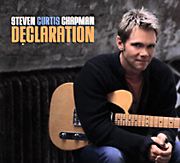
Christian artist Steven Curtis Chapman's “Declaration” album includes a song he wrote about adoption called “When Love Takes You In.” Chapman and his wife, Mary Beth, have become advocates for international adoption. They adopted a girl from China.

“Most artists, if they're realistic, look at the record as a promotional piece to get better live gigs,” Keen said.

With the growing success of the industry has come questions about the nature of the business. Artists consistently maintain they are trying to make a difference in lives with their message, but economics constantly remind fans the genre is a business.

John Styll, president of the Gospel Music Association, argued it is both ministry and a business.

Kirk Franklin

The labels operate to make money by getting the music out to radio stations and retailers, he said. “I can't excuse the fact that these labels are businesses. But ministry can happen as a result.”

Christian music labels and businesses are like any other business run by Christians, Styll noted. “Lots of Christians make lots of money,” he pointed out. There is “nothing inherently wrong” with making money.

Sales figures are so high and in some cases profits so large because today's Christian music is “some of the best that's ever been made,” he added. Contemporary worship music is connecting with people, Styll said, and they want more.

Jenny Simmons of Addison Road, a Dallas-based band working to get signed to a label, compared Christian artists to church staff members: If ministers get paid, shouldn't Christian artists?

“Musicians, even Christian musicians who feel called to ministry, are entitled to make money, to develop a career and to support themselves off their ministry,” she said. “If that means their CD goes big time like Jars of Clay and they make millions of dollars, good for them.

“There are lots of pastors of huge megachurches who are coming home with six-digit paychecks each year, not to mention all the benefits and gifts they receive from members in their congregations. What makes someone in the music industry any different?”

Many times, God rewards generous givers, Styll said. For example, many of the top acts in Christian music fund ministries that help people.

Michael W. Smith is involved in Compassion International, the Billy Graham crusades and Samaritan's Purse. Steven Curtis Chapman is connected with ministering to orphans.

“What is unbiblical is to hoard your money, … to not give freely and abundantly to those in need, to lust after it,” Simmons said. “Whether you're making millions as a Christian in music or as a Christian who is a lawyer, banker … or stockbroker, it is our obligation to give freely back to God's church on Earth and to give to those in need.”

Top 15 albums sold Jan. 1 to June 29, 2003:

1. “Wonder What's Next,” Chevelle

2. “Worship Together: I Could Sing,” Various artists

3. “Offerings II: All I Have To Give,” Third Day

4. “WoW Gospel 2003,” Various artists

5. “All About Love,” Steven Curtis Chapman

6. “WoW Worship (Yellow),” Various artists

7. “Rise and Shine,” Randy Travis

8. “O Brother, Where Art Thou?” Various artists

9. “Worship Again,” Michael W. Smith

10. “Donnie McClurkin … Again,” Donnie McClurkin

11. “I Worship: A Total Worship Experience,” Various artists

12. “WoW Hits 2003,” Various artists

13. “Stacie Orrico,” Stacie Orrico

14. “Almost There,” Mercy Me

15. “Adoration: The Worship Album,” Newsboys

Source: Gospel Music Association

News of religion, faith, missions, Bible study and Christian ministry among Texas Baptist churches, in the BGCT, the Southern Baptist Convention ( SBC ) and around the world.


music_ministers_90803

Posted: 9/5/03

Ministers suspected among
best-known music pirates

By John Hall

Texas Baptist Communications

Freely downloading songs or copying albums without artists' permission is like stealing a Bible, according to Christian music insiders: Good motives don't excuse illegal acts.

Christian music industry leaders largely blame piracy for the current decline in Christian music sales. And they say ministers may be among the best-known pirates.

John Styll, president of the Gospel Music Association, cited anecdotal evidence to support the notion that ministers commonly download material for their programs without permission.

Many ministers try to keep their services and activities up to date with the latest contemporary Christian hits without realizing the example they set for their congregations, according to contemporary Christian artist Shaun Groves, a Tyler native. “It's like saying I have to break the law to do my ministry.”

That sends youth the message that illegal downloading is acceptable, Groves argued. “They're going, 'If my youth minister does it, it must be OK.'”

On another level, downloading music violates ministerial ethics, according to Joe Haag, director of program planning for the Baptist General Convention of Texas Christian Life Commission.

Illegally obtaining music is similar to using someone else's sermons or ideas without permission or accreditation, he argued. “One of the points of ministerial ethics is you don't plagiarize other people's stuff.”

Groves and Styll believe this issue largely is an education problem where ministers, and Christians in general, do not realize downloading songs freely through peer-to-peer Internet sites is illegal unless artists give permission for their material to be shared.

Bill Tillman, ethics professor at Logsdon School of Theology in Abilene, argued the problem is more foundational in American society: People covet what others have.

“In our society, we aren't very well schooled in the notion that someone else's idea is theirs,” he said.

Groves and Todd Agnew, whose initial release from his debut album rose to No. 1 on the Christian pop charts, said they empathize with believers who want to use the music to reach their friends.

“You tell me your story, I'll send you a CD,” Agnew said. “Whatever you need to reach that person.”

But piracy is against a law Christians are called to faithfully uphold, Groves reminded.

News of religion, faith, missions, Bible study and Christian ministry among Texas Baptist churches, in the BGCT, the Southern Baptist Convention ( SBC ) and around the world.


nae_90803

Posted: 9/5/03

New NAE president Ted Haggard
hopes to enhance evangelicals' image

By Steve Rabey

Religion News Service

COLORADO SPRINGS, Colo. (RNS)–Ted Haggard, president of the National Association of Evangelicals, says most evangelical Christians are humble, kind and godly folks, but that's not how they're always perceived.

“For many people, the stereotypical image of an evangelical is a very serious old man with an expensive suit who is against whatever is happening that day,” said Haggard, a relaxed and smiling 47-year-old who could easily pass for 37. He was named NAE president in March.

Ted Haggard, pastor of the 9,200-member New Life Church, became president of the National Association of Evangelicals earlier this year. Haggard says he wants to break down the stereotypical images of evangelicals. (Colorado Springs Gazette/RNS Photo)

Haggard admits enhancing the image of evangelicals, those theologically conservative Christians who often are socially and politically conservative to boot, will be a big challenge. But he rarely thinks small.

New Life Church, the independent charismatic congregation he founded in his Colorado Springs basement in 1985, now has 9,200 members and plans to break ground on a 12,000-seat worship center next year. The church also is home to the World Prayer Center, a support base for missionary activities, and the Association of Life-Giving Churches, a network of 250 mostly Pentecostal and charismatic congregations.

Haggard, who spoke to Religion News Service at his home in early July, is trying to gain respect for evangelicals nationwide in much the same way he has helped his congregation grow–by focusing on essentials like salvation, Jesus and the Bible instead of divisive side issues, and by trying to love people into heaven rather than scaring the hell out of them.

“Evangelicals are in a period of transition,” says Haggard, who will serve as NAE president until he is voted out. “We're moving from being defined by what we're against to being defined by what we're for.

“We support civil liberties, personal freedom, women's rights, the dignity of the individual, representative government and other ideas that came out of Christian theology 400 years ago. Now we have to articulate those values again as we face struggles with Islamic culture.”

The NAE is in a period of transition as well. Since 2000, the organization has lost some of its key members, such as the National Religious Broadcasters; seen a downturn in funding; and endured the resignation of former President Kevin Mannoia. But membership and funding are up this year.

“We're resurrecting the organization,” Haggard said.

Haggard debuted his kinder and gentler evangelicalism at a May 7 forum on Islam that was co-sponsored by the NAE, an organization that represents 51 denominations with 43,000 congregations and 250 para-church organizations.

While reaffirming evangelicals' belief in the uniqueness and supremacy of Christ, the forum broke new ground by calling on evangelical leaders like Jerry Falwell, Pat Robertson and Franklin Graham to tone down their inflammatory anti-Islam rhetoric.

“The impression one gets is that Ted Haggard, in his theology and his tactfulness, is more the son of Billy Graham than Billy Graham's son is,” said Martin Marty, a leading church historian from the University of Chicago, referring to Franklin.

Haggard himself invokes the image of Graham, the globe-trotting evangelist who first gained national attention with his 1949 Los Angeles crusades and remains many Americans' favorite evangelical.

“My dad was a liberal Presbyterian who served the church all his life but never heard the gospel message until he heard Billy Graham on the television,” Haggard explained. “If Billy Graham had started by talking about the evils of liberalism in the Presbyterian church, my dad never would have heard the gospel. But instead, Billy Graham explained how wonderful it is to be born again.”

Haggard grew up in Indiana and graduated from Oral Roberts University in Tulsa, Okla., before serving as a youth pastor at a Baptist church in Baton Rouge, La. In 1984, he and his wife, Gayle, visited Colorado Springs, where Haggard spent three days praying and fasting. He says God told him to start a church where people could freely worship, whether that meant dancing, jumping, banging on a tambourine or standing silently with eyes closed. Today New Life is the largest congregation in Colorado and one of the fastest-growing churches in the United States.

Haggard is winsome, but he's not wishy-washy. And he's less concerned about being popular than he is about carrying out Christ's command in Matthew to “make disciples of all nations.”

“I am not a peace-at-any-cost guy,” he said. “I have core convictions. I am an activist and an advocate for the things I believe. But I am absolutely convinced ours is the first generation that has a realistic opportunity to fulfill the Great Commission. And the only way that can happen is if we do it together. Which is why I have great hope and enthusiasm for the future of the National Association of Evangelicals. I know Christians cannot successfully fulfill the assignment given to this generation if we're separated from one another.”

News of religion, faith, missions, Bible study and Christian ministry among Texas Baptist churches, in the BGCT, the Southern Baptist Convention ( SBC ) and around the world.


namb_budgetcuts_90803

Posted: 9/5/03

NAMB cuts $11 million from 2004 budget as income wanes

ALPHARETTA, GA (ABP)–The North American Mission Board plans to cut $11 million from its budget next year, which will eliminate 31 full- and part-time positions–some of which are vacant–and leave seven current employees without jobs.

The proposed $118 million budget–6 percent less than this year–awaits approval by trustees of the Southern Baptist Convention agency during their meeting Oct. 8.

The 2004 budget cuts $3 million from travel expenses, $1.6 million in communication projects, more than $4 million from support of various programs and $1.7 million from personnel expenses.

Officials blamed the cuts on sluggish contributions and the economic downturn. The agency joins other SBC entities and Christian ministries that have reduced staff and services recently. In June, the SBC International Mission Board eliminated 61 positions affecting 37 employees. A recent Baptist Standard survey of eight large state Baptist conventions showed all eight are receiving less money from churches than last year.

Twelve of the 31 NAMB positions are vacant and won't be filled. Three employees whose positions were eliminated will retire. Nine others are transferring to other jobs at NAMB. The remaining seven will lose their jobs. The agency employs about 460 people.

NAMB spokesman Marty King said the agency would not identify the employees affected. Positions were eliminated based on need, he said. “This is not a reflection of performance. This number was a lot bigger two weeks ago.”

King said 11 eliminated positions are for support workers, 14 are professional positions that are not supervisory, and six are management positions with supervisory responsibilities.

NAMB officials project the agency's income next year will be $7.2 million less than the 2003 budget–nearly a 6 percent decrease. But some of that money will have to be directed to fixed-cost increases, they said.

“The bottom line is we anticipate having $3.4 million more in expenses we cannot control, but $7.2 million less income,” said NAMB President Bob Reccord. “That means we must come up with nearly $11 million in spending cuts in 2004.”

Reccord expressed appreciation to Southern Baptists for supporting NAMB financially, which he said “allowed us to endure our country's economic downturn better than so many other ministries, non-profits and even for-profit organizations.

“But we must face the fact that mission giving is not keeping pace with growing increases in expenses like health insurance, utilities, and capital and fixed expenses which will increase almost $3.4 million next year,” he said.

Randy Singer, NAMB executive vice president, said that although income from the SBC Cooperative Program and Annie Armstrong Easter Offering–which together comprise more than 75 percent of NAMB's income–has increased incrementally over the past several years, those increases have barely kept pace with inflation.

“Due primarily to the impact of the sluggish economy on our investment income, NAMB has not reached income projections four of the last five years,” Singer said. “We must submit a 2004 budget which takes that into account.”

The proposed 2004 budget freezes salaries for NAMB missionaries and staff, the second year in a row staff have not received pay raises. NAMB funding of state Baptist conventions is not being reduced, but neither will partnership funding increase. The proposed staff reductions do not reduce support for NAMB missionaries who are jointly supported with state Baptist conventions, Singer said.

News of religion, faith, missions, Bible study and Christian ministry among Texas Baptist churches, in the BGCT, the Southern Baptist Convention ( SBC ) and around the world.


northcarolina_90803

Posted: 9/5/03

North Carolina convention cuts
24 positions, 20 percent of staff

By Tony Cartledge

North Carolina Biblical Recorder

CARY, N.C. (ABP)–The Baptist State Convention of North Carolina cut 24 staff positions Aug. 26 in the wake of shrinking contributions from churches.

Nine of the 24 positions were vacant, but 15 employees lost their jobs. The cuts represent 20 percent of all budgeted positions and 12.5 percent of actual employees, according to Ed Wiggs, the convention's business services director.

Through Aug. 22, convention income was $1.65 million (more than 7 percent) below budget expectations and about 2.6 percent below last year's income. Income to the North Carolina Missions Offering, which funds the state's Baptist Men and Woman's Missionary Union programs, is down 16 percent from last year.

The convention's executive committee first met Aug. 12 to consider reductions and returned Aug. 26 to consider deeper cuts. Jim Royston, the convention's executive director-treasurer, notified employees by e-mail Aug. 27 that the executive committee had ordered an immediate downsizing. He and other officials then notified the affected personnel that their jobs would be eliminated Aug. 31. Released employees will receive severance packages based on length of tenure, and all who qualify for retirement will receive full retirement benefits.

Through the staff reductions, convention officials hope to save about $250,000 in the remainder of 2003 and $700,000 in 2004.

The cuts were made in a manner that preserves positions that most directly serve churches, Royston said. Terminated were nine program staffers, including an executive team leader, and six support staffers. Royston expressed regret the cuts were necessary and emphasized that reductions were based on positions, not individuals or performance.

Nine of the 15 qualified for retirement benefits, and four of them chose to announce their retirements. They are Doug Cole, executive director of the Council on Christian Life and Public Affairs; Bill Boatwright, communications director; Becky Stewart, secretary to the executive director-treasurer; and Ted Purcell, a long-time campus minister who was currently serving part time at Duke University.

The strategic initiatives and planning team was dismantled, eliminating the positions held by executive team leader Tom Jenkins and secretary Cynthia Howell. Remaining staffers in the group will transfer to other teams.

Two other staffers with lengthy tenures saw their positions eliminated. Velma Ferrell, who worked with international student ministries, and Carolyn Hopkins, in WMU, each had served the convention 26 years. Positions working in support of the Council on Christian Higher Education were eliminated, affecting Executive Director Wayne Wike and secretary Cheryl Cruickshank. The council will continue to function and receive program funds, Royston said, with day-to-day responsibilities shifted to other convention personnel.

Two positions in Baptist Men and one in partnership missions were eliminated. These include youth and student missions consultant John McGinnis and receptionist/secretary Carla Foster.

Positions held by benefits coordinator Donna Thompson and international student ministry secretary Alice Johnson also were eliminated.

Nine budgeted positions not currently filled will be removed from the budget. These include four program staff and five support staff. In all, the cutbacks affected 13 program positions and 11 support positions.

News of religion, faith, missions, Bible study and Christian ministry among Texas Baptist churches, in the BGCT, the Southern Baptist Convention ( SBC ) and around the world.


okhotin_convicted_90803

Posted: 9/5/03

Russian court convicts
Baptist worker of smuggling

By Frank Brown

Religion News Service

MOSCOW–In a case being watched closely by evangelical Protestants worldwide, a judge convicted an American Baptist youth pastor of currency smuggling Aug. 22, in the process confiscating $48,000 in charitable donations collected from believers in the United States.

The part-time pastor, Andrew Okhotin, was given a suspended sentence of six months and is free to leave Russia, where he has been stuck since March. But Okhotin vows to appeal the verdict and remain in Moscow, perhaps missing the start of the fall term at Harvard Divinity School, where he is a third-year graduate student.

Andrew Okhotin speaks with reporters outside the Russian court where he was convicted of currency smuggling for carrying $48,000 in contributions to Baptist churches in the country. (RNS Photo)

“I don't know how long I'll have to stay,” he said after hearing the verdict, calling the seizure of the $48,000 a “theft.”

“If they stole from you, what would you do?” he asked.

Minutes earlier, Okhotin wore a crooked smile of disbelief as Judge Igor Yakovlev pronounced him guilty and declared the $48,000 in 50- and 100-dollar bills to be “contraband used in the commission of a crime” and now the property of the Russian government.

The judge acknowledged Okhotin's “exceptionally positive character references” witnessed by the dozens of faxed and mailed appeals from hundreds of evangelical Christians, Okhotin's professors and a letter from eight U.S. members of Congress. But, in arriving at the verdict, Yakovlev ignored Okhotin's version of what happened on the morning of March 29 when Okhotin arrived on a flight with the cash in his backpack.

In sometimes conflicting accounts, two customs inspectors testified that Okhotin's choice of the green, nothing-to-declare corridor was a willful attempt at deception.

Okhotin told the court he chose the green corridor by accident, cooperated with the inspectors and immediately produced a customs declaration for the cash that he had filled out on the flight from New York. The customs inspectors ignored it, Okhotin said, choosing instead to demand bribes of first $10,000 and then $5,000 for his release.

“We raised the question of bribery here. Did the judge take an interest? No. Did the prosecutor take an interest? No,” Okhotin said, calling the court proceeding a “cover up” for the wrongdoing of the customs officers.

Neither the prosecutor nor customs officials were on hand for the verdict. The prosecutor, Alla Tomas, previously refused to comment on any aspect of the case. Irina Kondratskaya, a customs inspector accused by Okhotin of soliciting a bribe during his 12-hour interrogation at the airport, angrily declined in a brief telephone conversation to speak about what happened.

Aside from Okhotin's case, which has received scant attention from the Russian media, law enforcement corruption is a hot topic this summer in Moscow. In July, at the same airport used by Okhotin, three border guards were arrested and accused of taking bribes to allow wanted criminals to leave Russia on fake passports. On Aug 21, six Moscow police officers were charged with taking part in an extortion and contract murder racket.

Worldwide, Okhotin's case has taken on a life of its own by slowly, organically provoking the prayerful indignation of evangelical Christians. Supporters are following his journey through the Russian legal system, his 27-day hunger strike and the prayer appeals on the K-Love Christian radio network, through e-mail and on Christian-oriented websites from Denmark to North America to Russia.

About 50 young Baptists at the church where Okhotin volunteered weekends as a youth pastor stayed up until 2:30 a.m. the day of the verdict praying for “God to defend Andrew and help those Russian families who were waiting for the help he was bringing,” said the church's pastor, Alexander Brover, in a telephone interview from Westfield, Mass.

Members of Southwick Baptist Church contributed to the $48,000 sum raised to aid needy Russian Baptists, Brover said, adding that he thinks a divine plan is at work in Okhotin's predicament.

“God took Andrew on this path to prepare him for something bigger. God is teaching him something,” the pastor said.

Indeed, of all the people who could have run afoul of customs officials, Okhotin is uniquely qualified to hold his own. Okhotin's father was a Soviet-era pastor in an underground Baptist church who was arrested for his faith and imprisoned for 2 1/2 years. The family–Okhotin's parents and his eight siblings–immigrated to the United States in 1989. After graduating from Harvard Divinity School, Okhotin wants to enroll in Harvard Law School and eventually specialize in defending the rights of religious minorities.

Okhotin's mother, Nadezhda Okhotin, who flew to Moscow from her home in San Diego for the legal proceedings, said the last time she had been in a Russian courtroom was in 1984 for her husband's trial on charges of anti-Soviet agitation.

“This is the persecution of a Christian doing good works,” she said after hearing the verdict. “I can't see it any other way.”

Okhotin's lawyer, Vladimir Ryakhovsky, said he would appeal the verdict to the Moscow City Court. He called the grounds for appeal strong because “the judge didn't take into account at all the fact that there is no limit how much money you can bring into the country.”

Ryakhovsky, whose own father was a Pentecostal preacher imprisoned for his faith by the Soviets, predicted Okhotin's case might reach Russia's Supreme Court before getting resolved. Ryakhovsky, one of the country's top religious freedom lawyers, won a victory earlier this year before the high court when it decided to allow Muslim women to wear headscarves in their passport photos.

News of religion, faith, missions, Bible study and Christian ministry among Texas Baptist churches, in the BGCT, the Southern Baptist Convention ( SBC ) and around the world.